Pharaoh Drove Israel Out into the Dark Night
Moses told Pharaoh the last plague would make him shove Israel out. At midnight the king hunted the brothers through the dark himself.
Table of Contents
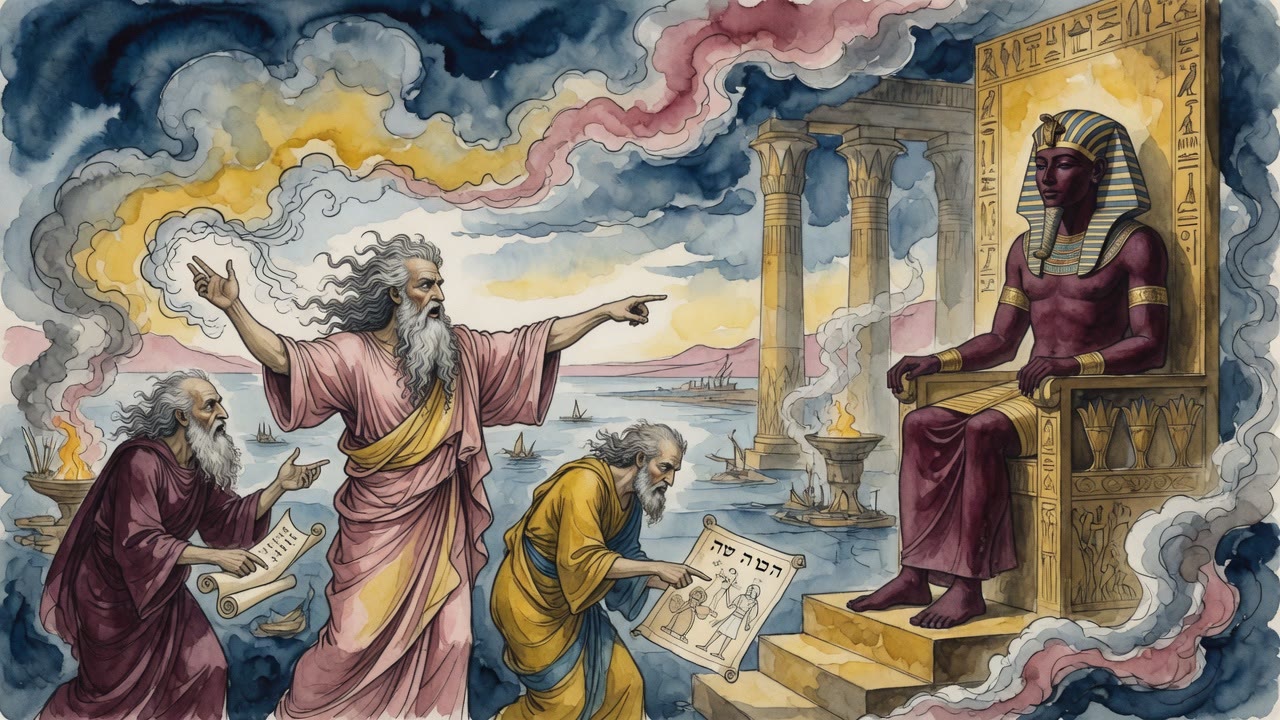
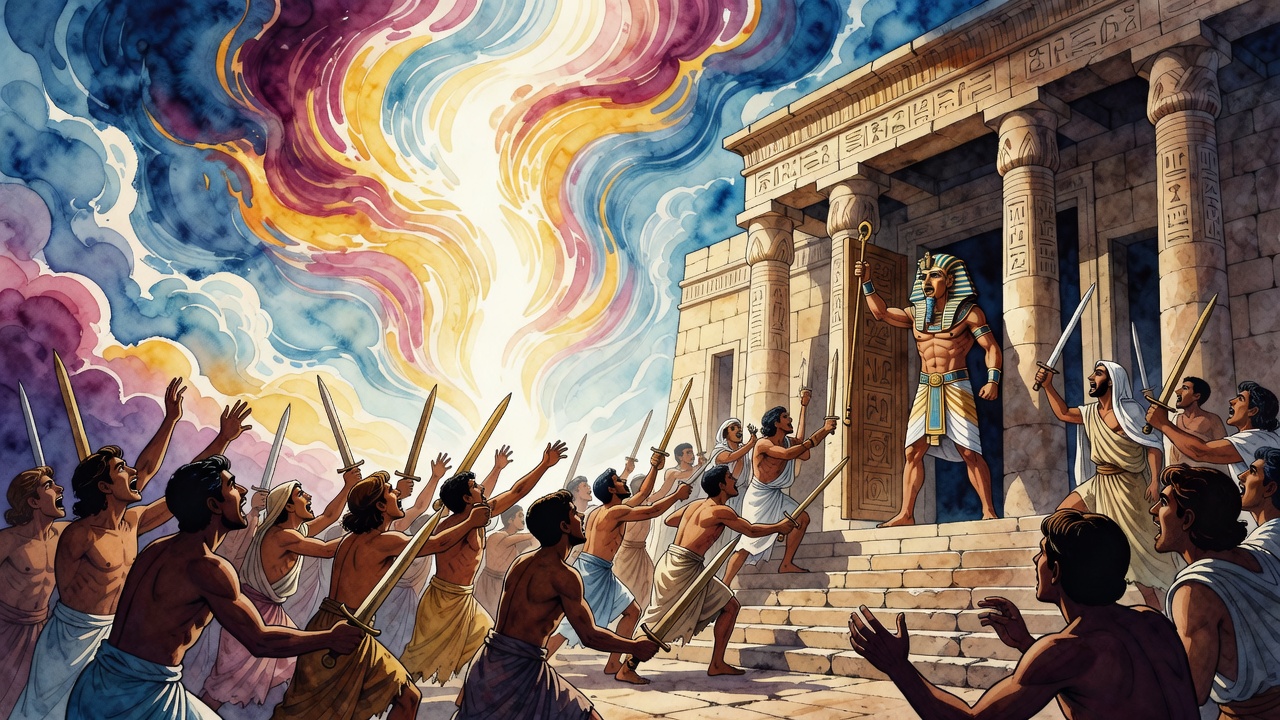
Moses stood in the palace and took the last illusion out of Pharaoh's mouth. One more stroke, greater than all that had come. Afterward the king would not grant a permit. Driving, he would drive them forth. The enslaver would shove the enslaved toward the door, desperate to be rid of the people he had refused to free.
 Click for full size
"At this hour tomorrow night," Moses said, "I will be revealed in the midst of Egypt." Not a distant blow. A revelation in the streets. Every firstborn would die, from the son who should sit on Pharaoh's throne to the son of the woman grinding behind the mill, and the firstborn of the cattle with them. A cry would rise that had no match before it and would have no match after it.
Against Israel a dog would not lift its tongue, not against man, not against beast, so the distinction would be loud in a country that had spent years pretending there was none. Pharaoh's jaw set. The warning entered the room anyway. Moses went out from him in great anger.
Midnight Turned the Houses
When the blow fell, every Egyptian house found its own private end. Cry rose from brick and from gold. Pharaoh did not send a polite messenger at dawn. He hunted Moses and Aaron through the dark and thrust freedom at them like a coal he could no longer hold.
"Go," he said. "Go serve your God. Take the flocks. Take the herds. Take everything." The words tumbled. The man who had said "Who is the Lord?" now wanted the Hebrews gone before another hour could invent a worse plague.
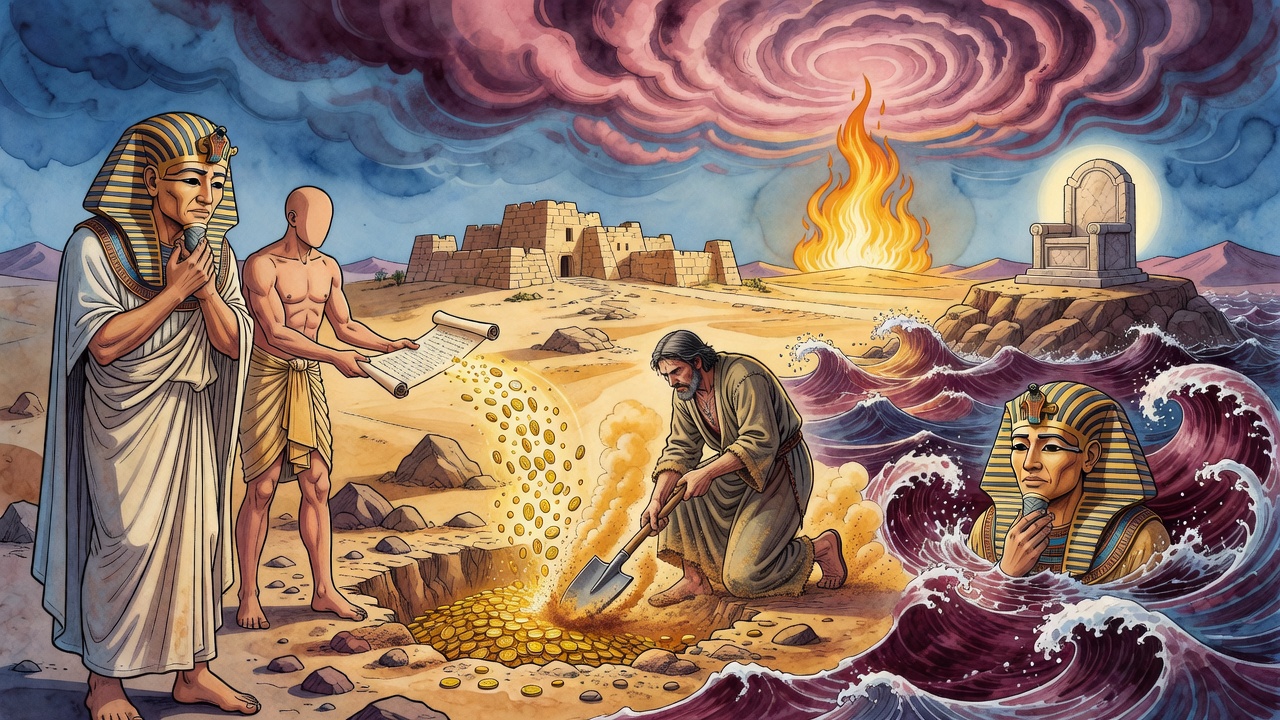
In the Israelite quarters, mothers shoved dough into bundles and woke children who had learned to sleep through overseer shouts. No one had packed for glory. They packed for road. Egypt's silver and gold clung to their hands because they had asked, and the asking had been granted. A man who had never owned his own morning suddenly owned a direction.
Pharaoh Drove Them Out
They left with dough unfinished and dignity unfinished, a nation mid-sentence. The night road filled with carts, children, and the stunned quiet of people who had expected to die slaves and were instead being expelled into covenant. Pharaoh had been told he would drive them out. He did. He had not been told that driving them out would not be the same as defeating them.
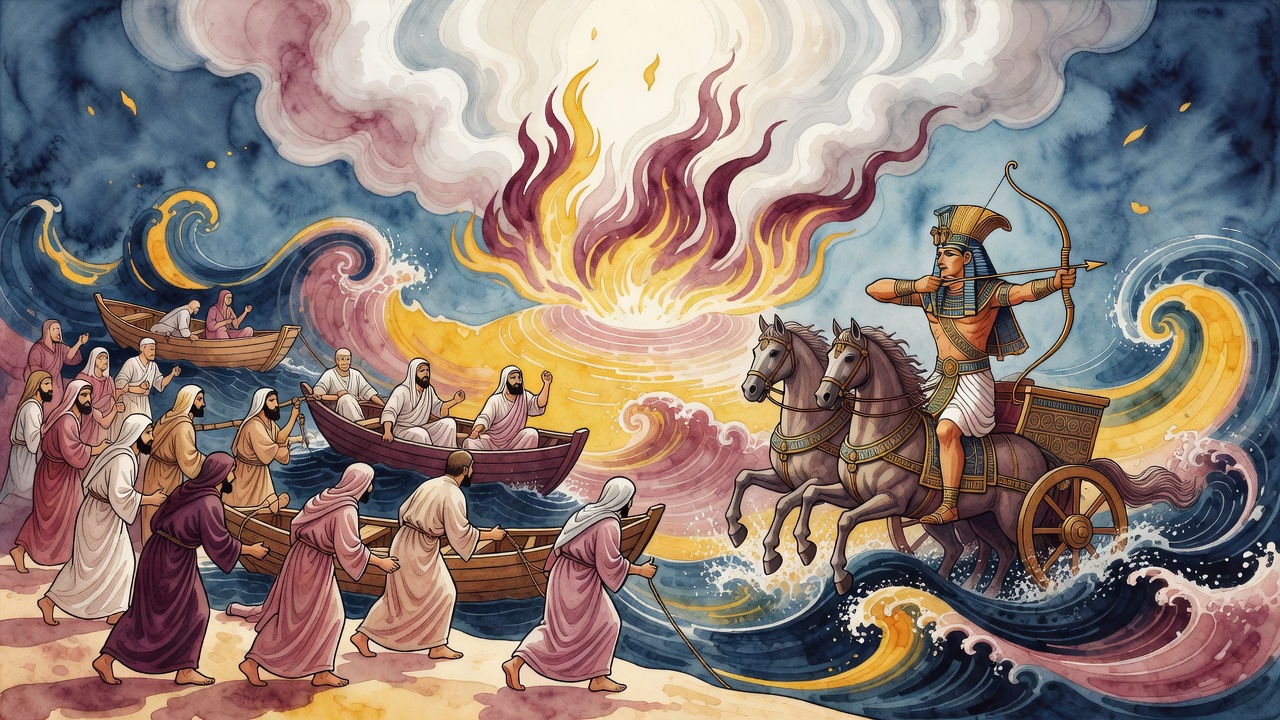
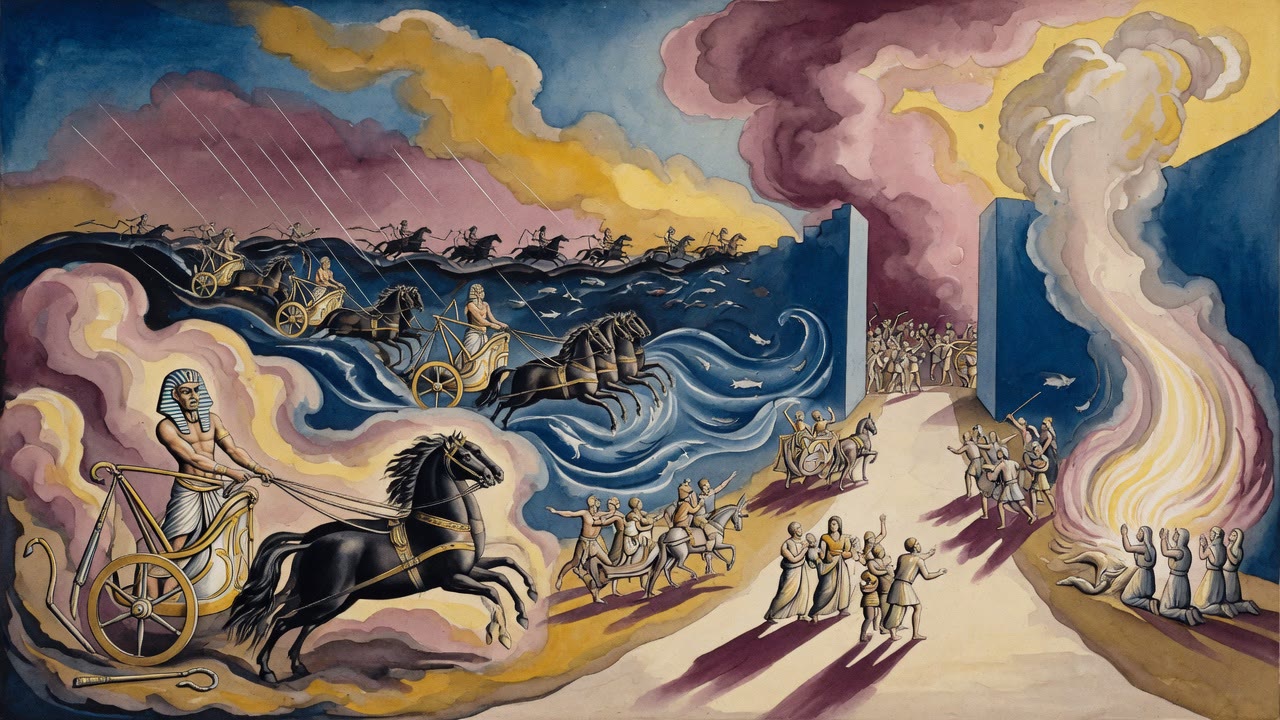
Regret arrived on chariot wheels. He harnessed what was left of the army and poured after the people he had shoved into the dark, as if slavery could be put back on by speed. Israel camped by the sea. They lifted their eyes and saw Egypt coming, and the old fear climbed their throats.
"Was it because there were no graves in Egypt that you took us to die in the wilderness?" they said to Moses. Better to serve Egypt than to die here. Moses told them to stand still and see the Lord's deliverance. As you have seen the Egyptians this day, you will see them no more forever. The Lord will fight. You be quiet.
The Sea Stood Up
The angel who had gone before the camp passed behind them. The column of cloud moved with him. To Egypt it was darkness. To Israel it was light all night, and the two camps did not touch.
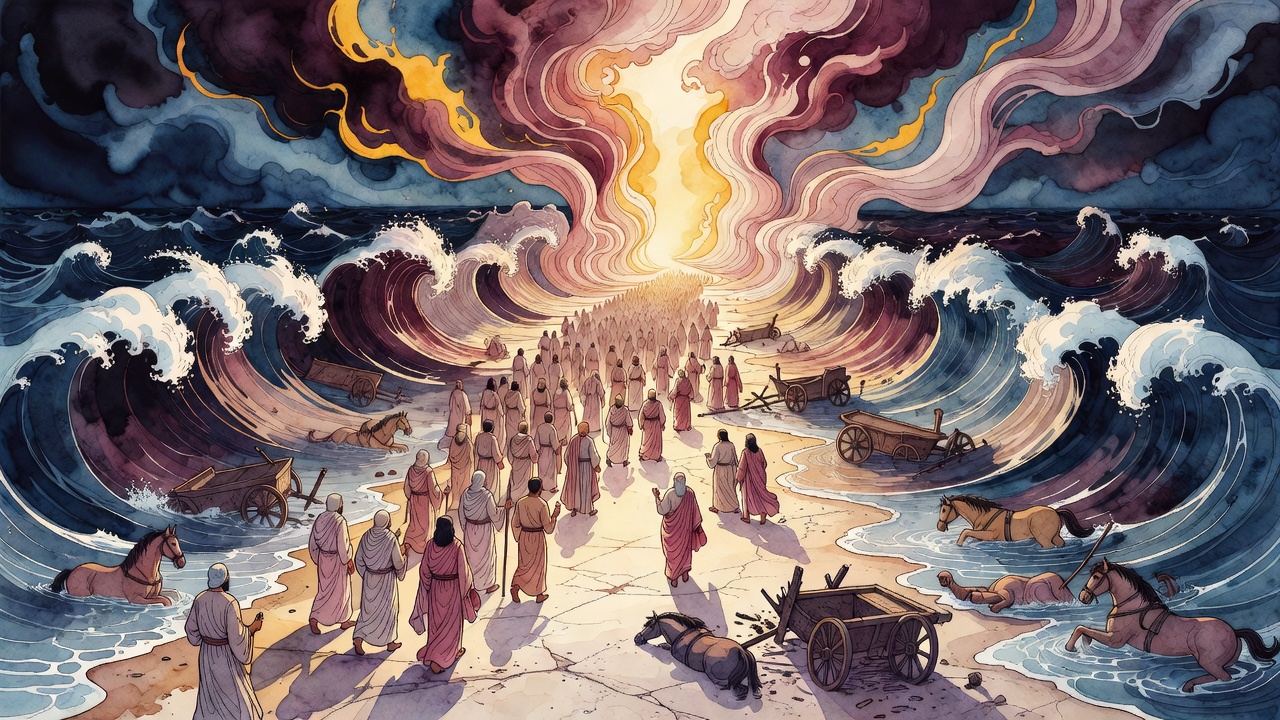
Moses stretched his hand over the sea. The Lord drove the water with a mighty east wind all night and made the sea dry. The waters split. Israel walked on ground that should have been fish-country, a wall of water on the right and a wall on the left. The same path invited Egypt's horses.
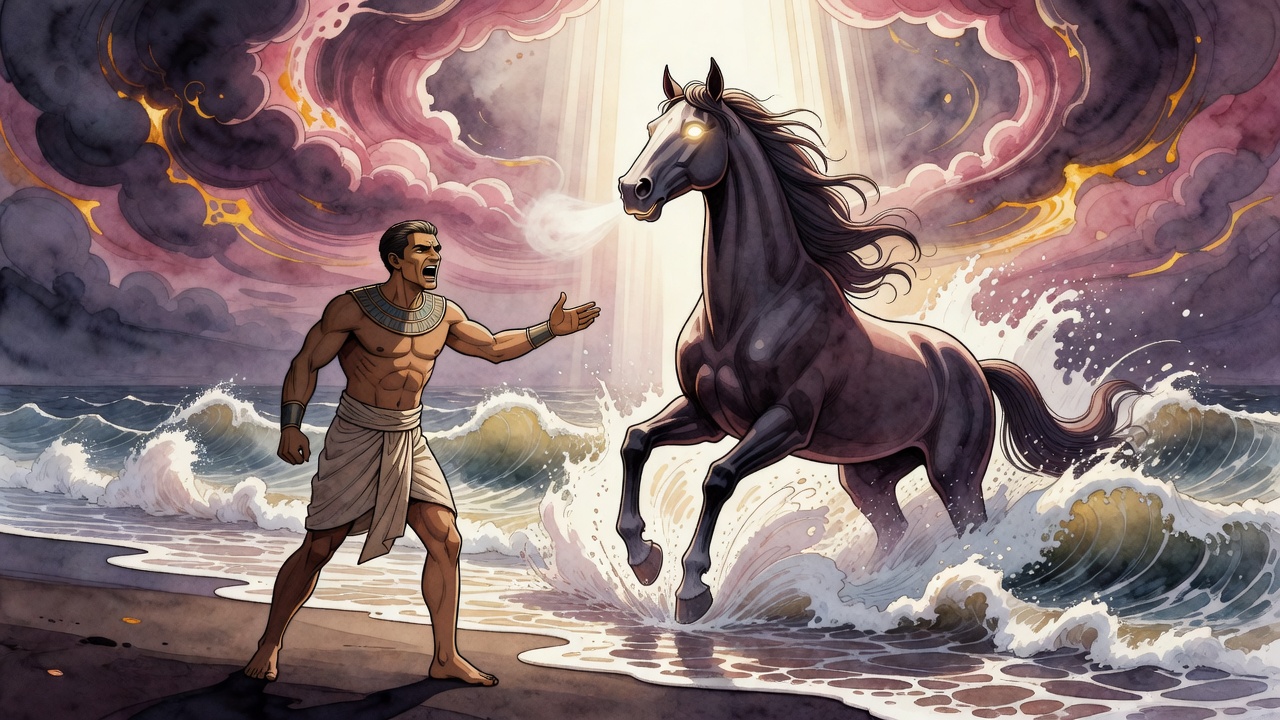
Wheels locked. Chariots heavy with empire sank. The Lord spoke, and the sea covered them. They went down like stone. They sank like lead in the mighty waters. Pharaoh had driven Israel out, then chased them into a road that remembered it was water. The king who would not release them watched his power drown in the path of his own pursuit.
Miriam Took the Timbrel
On the far shore, wet ankles and dry mouths found music. Moses and the people sang. "We will sing and give thanks before the Lord, because He is magnified upon the mighty, and the power is His own. The horse and his rider hath He cast into the sea." The Lord is the Lord of Victory in battles. The Lord is His Name. Pharaoh's chosen warriors drowned in the Sea of Suph. The depths covered them.
By the word of His mouth the waters stood up like a wall, and the depths congealed in the heart of the sea. The adversary had said, I will pursue, I will overtake, I will divide the spoil, I will draw my sword. The sea covered them instead.
Miriam the prophetess, sister of Aaron, took the timbrel in her hand. The women went out after her with timbrels and choruses. She answered them: sing and give thanks, for He has magnified Himself upon the proud, and the horse and his rider He has cast into the sea.
Behind them, Egypt's shore held wreckage. Ahead, a desert waited with no water for three days. Between wreckage and thirst, the song held. Moses looked once at the closed sea, then forward. The night of expulsion had become a morning of a people. Pharaoh's hands hung empty of slaves.
← All myths