Pharaoh Boasted, Then the Sea Held Him Under
Sand in front. Chariots behind. They told Moses they had already chosen Egypt over a death in the open desert.
Table of Contents
Sand in front. Chariots behind. The people turned on Moses with a sentence they had already spoken in Egypt.
 Click for full size
"Was not this the word we said to you in Mizraim? Let us alone. We would rather serve Egypt than perish in the desert."
They had once wanted the Lord to side against Moses and command them to remain slaves. Slavery had food and graves. Freedom looked like open sand and a pursuing army. Four hundred years had taught them that chains were safety (Exodus 14:12).
Horses Saved for the Wrong Hunt
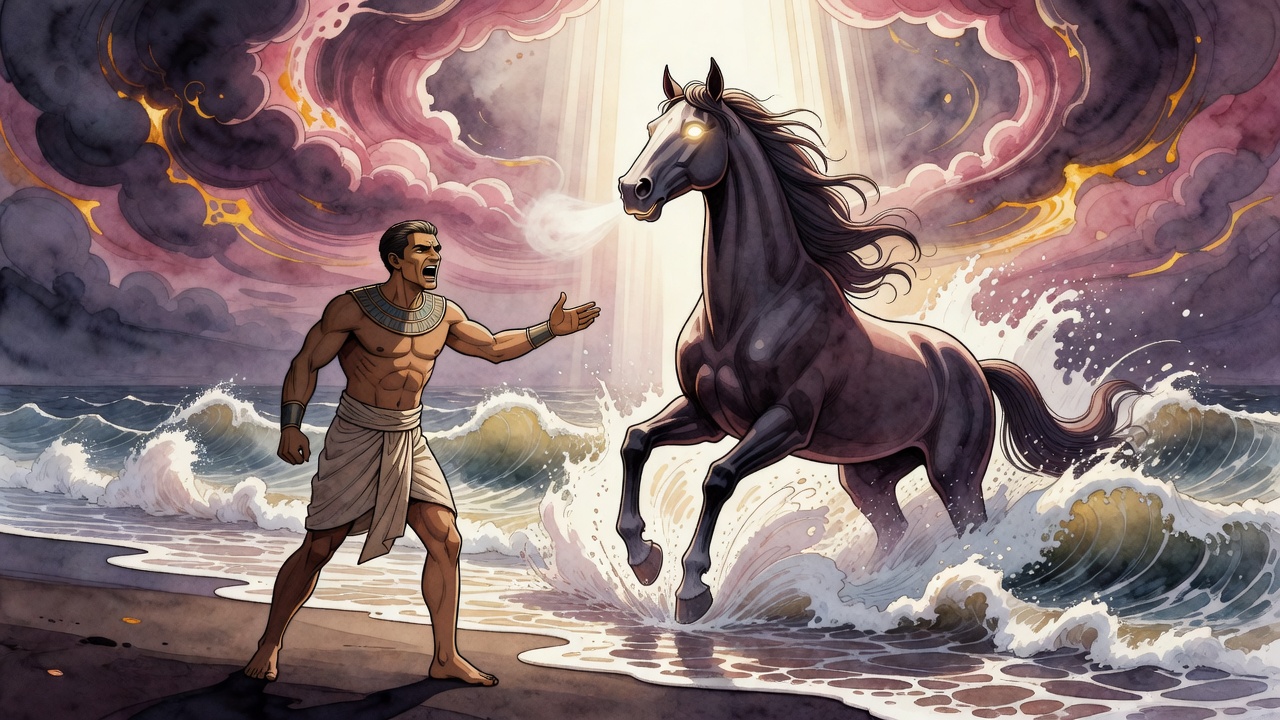
Pharaoh took six hundred choice chariots and all the chariots of his servants. After pestilence and hail, the horses should have been gone. They were not.
The servants who had feared the Word of the Lord during the plagues had sheltered their animals indoors. Partial obedience had saved livestock. Now that livestock pulled the army that chased the people whose God they had half believed. A third mule for swift drawing was added to each chariot.
Fear of God without loyalty to God still left a man available for a tyrant's draft. A spared horse can still drag a wheel toward a crime.
Moses Raised the Engraved Rod
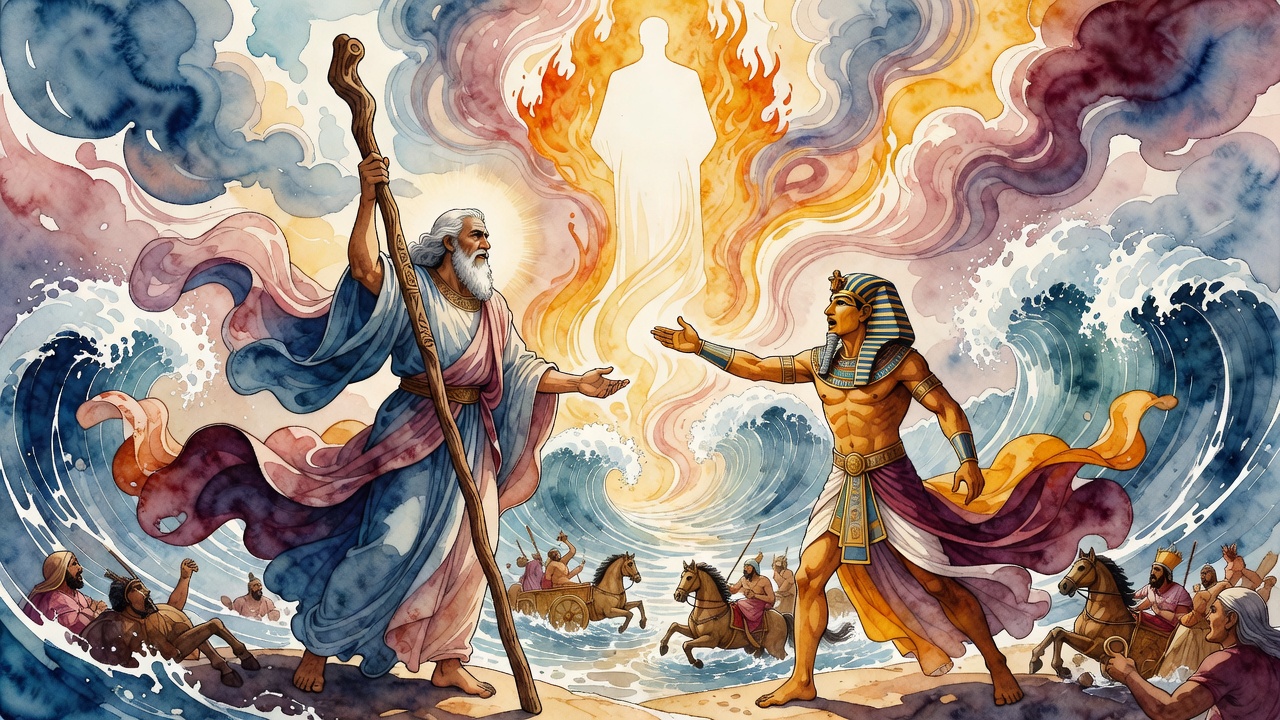
Moses stretched his hand over the sea with the great and glorious rod created at the beginning, one of the things shaped in the twilight before the first Sabbath. On it were engraved the Great Name, the ten signs that struck Egypt, the three fathers, the six mothers, and the twelve tribes of Jacob.
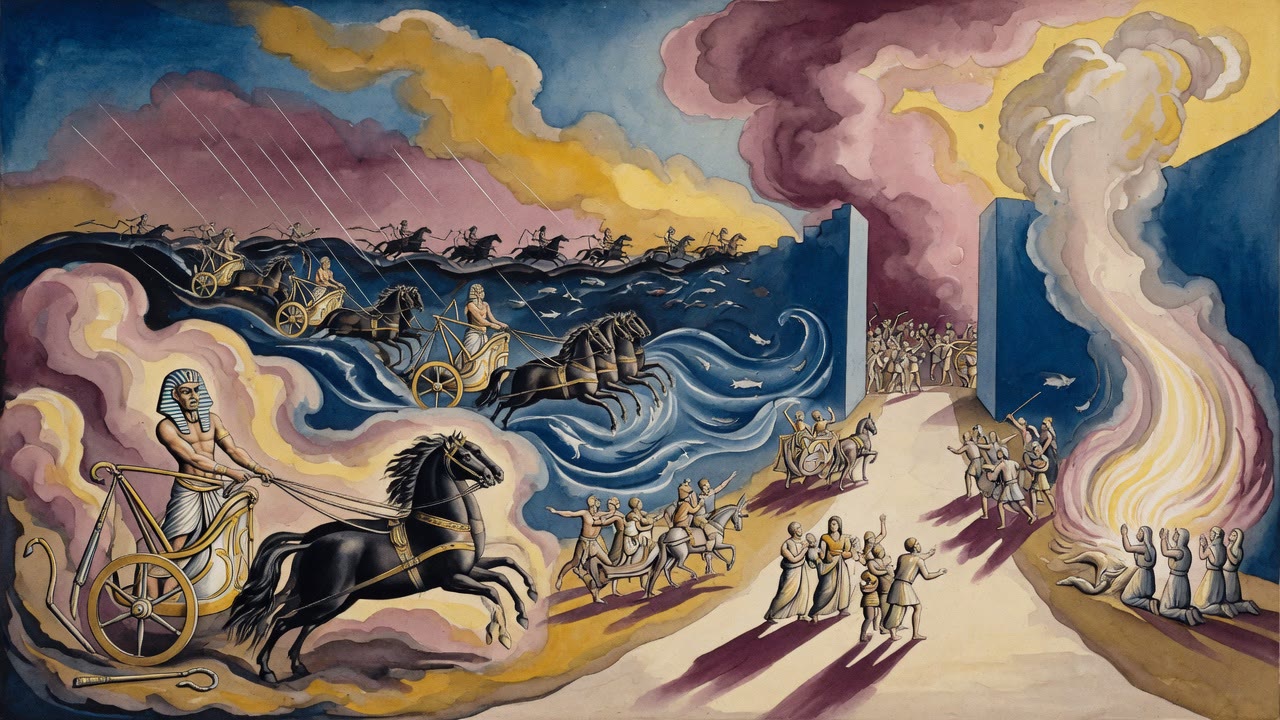
His fingers found the grooves as he lifted. A vehement east wind blew all night. The sea dried. The waters divided into twelve paths, one for each tribe. The names on the wood held those paths open.
Inside the twelve roads, children held their parents' hands and watched fish frozen mid-swim in walls of water. Elders counted tribal banners and found a road for each. Redemption pressed the whole past into one raised arm.
Eight Futures From a Dying King
On the far edge, before the waters closed, Pharaoh spoke in his own mouth.
"I will follow. I will lay waste their camp. I will set war. I will kill small and great. I will despoil. I will bring them back into captivity. I will divide their substance. When my soul is satisfied with blood, I will sheathe my sword, having destroyed them with my right hand."
Eight first-person futures stacked like spears. He had not caught anyone, and already he was dividing loot. He claimed a right hand that only heaven may claim. A tyrant's boast lives in the future tense. Thanksgiving lives in the past.
Behind Israel the boast still rode the wind in pieces: I will kill, I will divide, I will sheathe. Ahead, the far shore looked thin and real enough to taste with salt already on the lips.
Strengthened to Feel the Water
Moses stretched his hand again. The sea returned at morning to its strength. The Mizraee fled from the waves. Then the Lord strengthened them in the midst of the sea so they would not die quickly, that they might receive the punishment sent to them.
They had drowned Hebrew infants in the Nile. Now drowning became duration, not only death. Measure for measure, exact without theater. The morning continued. The boast's eight verbs went silent. The only right hand left standing was never Pharaoh's.
When the water returned, some Egyptians tried to climb the air with their eyes. The strengthening that kept them alive longer was not kindness they could thank. It was attention. The Nile's old crime came due in salt.
Moses did not sing yet. He waited until the last chariot wheel stopped spinning under foam, then let the song begin in other throats while the primordial rod hung heavy and engraved in his fist.
Egypt Still Sat in Their Mouths
Israel stood on the far shore with salt on their lips and Egypt still half inside their fear. A people can leave in a night. Egypt leaves them only after a longer road.
The horses that pulled those chariots had survived pestilence because their owners feared the Word enough to shelter them. Partial fear without loyalty had saved livestock for a tyrant's last hunt. Survival is not righteousness.
On the shore, some Israelites still tasted the old sentence: better Egypt than death in sand. The sea had answered Pharaoh's eight futures. The desert would have to answer Israel's one past.
Moses lowered the rod. Names of fathers and mothers caught the morning light on the wood. Behind him the water closed like a mouth finished with justice. Ahead lay hunger, thirst, and the long work of getting Egypt out of a people who had already gotten out of Egypt.
← All myths