Parshat Shemot5 min read

Moses Begged God to Send Another Leader Instead

At the bush Moses asked God to send someone else. God sent him anyway, and eighty-year-old Moses walked Egypt into plagues and a split sea.

Curated by Arthur · Told by Maggid ·
Table of Contents
  1. The Bush and the Refusal
  2. The Mission That Would Not Transfer
  3. Madness to Despair After Miracles
  4. Twelve Paths Through Congealed Water
  5. From Send Another to Stand Still
Moses Begged God to Send Another Leader Instead Click for full size

The Bush and the Refusal

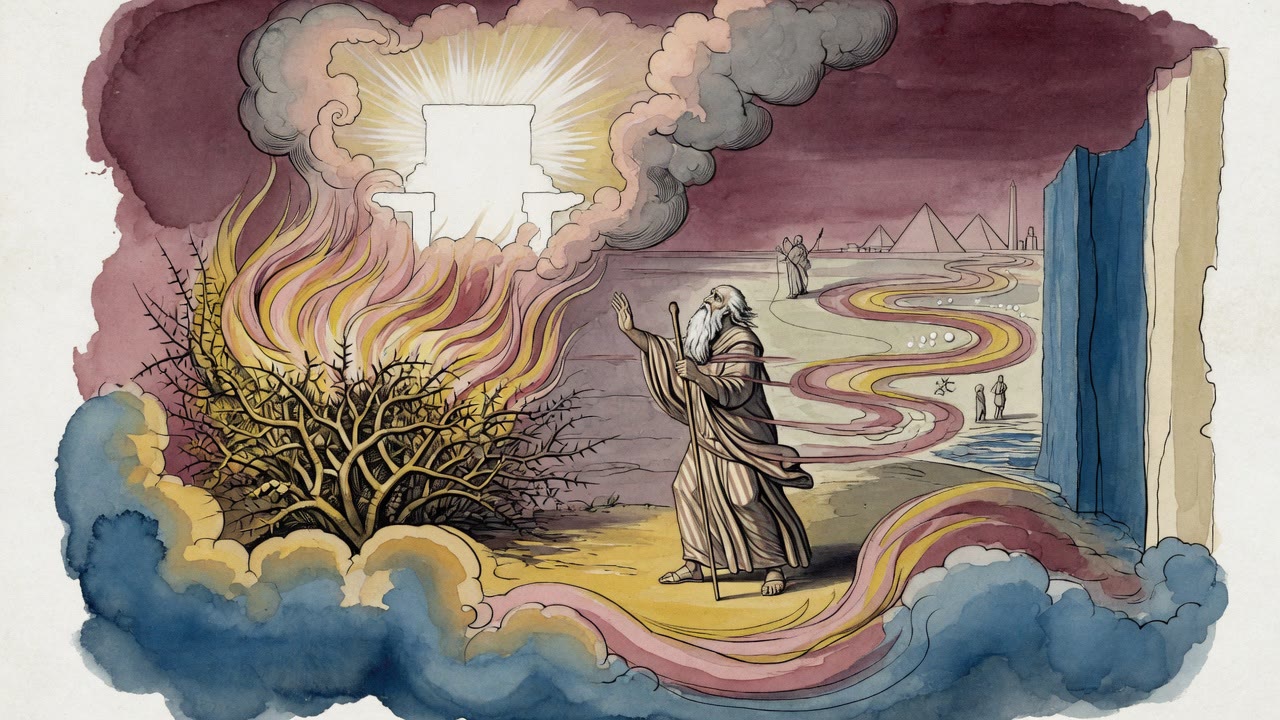
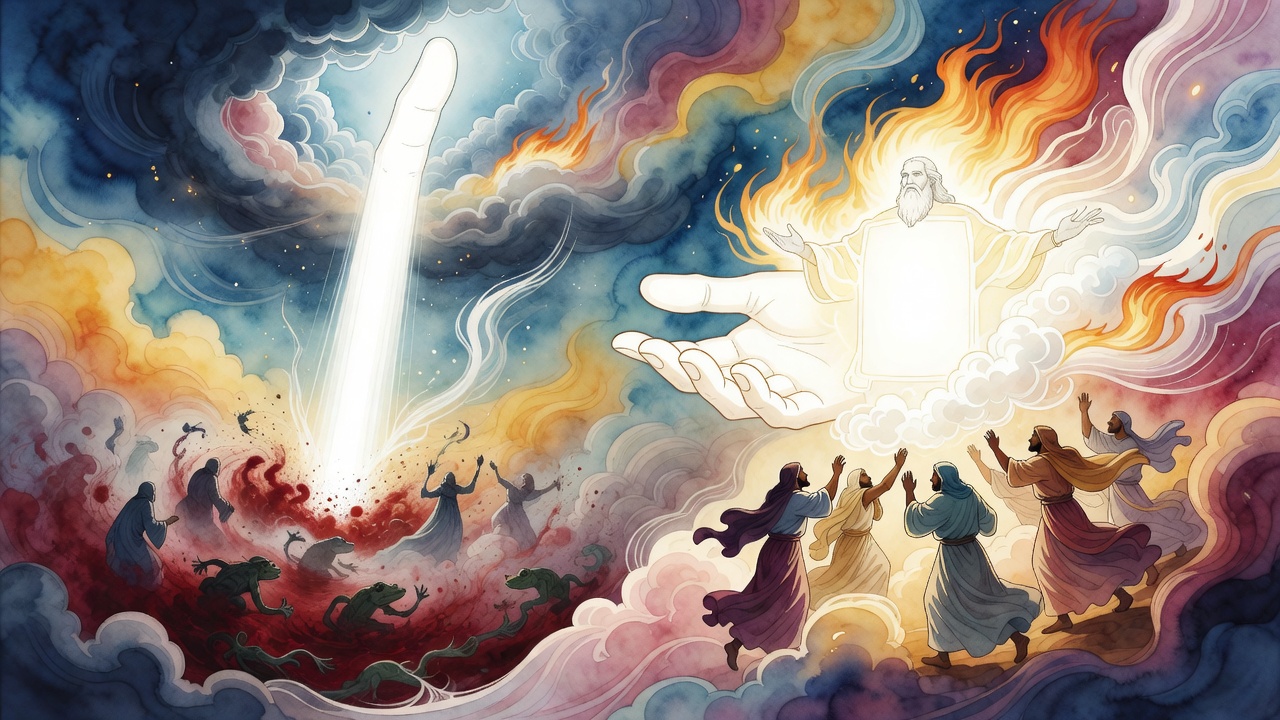
Fire held a bush and did not eat it. God called from the midst of the flame and sent Moses to Pharaoh. "Come and I will send thee unto Pharaoh" (Exodus 3:10). Moses shrank as if the sand itself had grown too hot for standing. "Send by the hand of him whom thou wilt send" (Exodus 4:13). Send someone else. Send the one You will send in a future hour. Not this mouth that claims heaviness. Not this staff of a shepherd. Not this man who felt already diminished by years of Midian and by the memory of a blown mission in his youth.

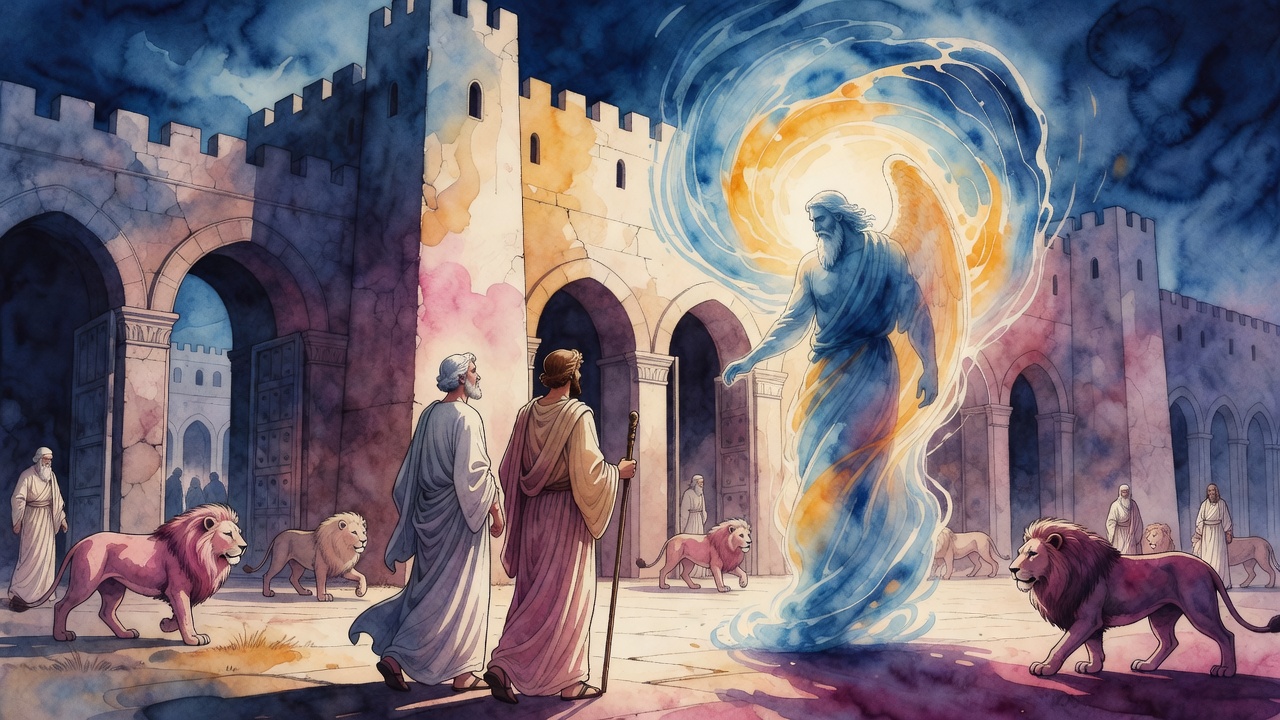
Pirkei DeRabbi Eliezer frames loss of wealth as a kind of death, a stripping that leaves a person as if already buried. Moses heard a mission that could strip him of everything if it failed before a throne and a people. Reluctance was not only humility of the sort later ages praise. It was the weight of a nation and a king and a Name he would have to carry into a throne room that worshiped the river and called the river its own.

The Mission That Would Not Transfer

God did not accept the deferral as final. Aaron would speak beside him when words stuck. Signs would answer disbelief: staff to serpent, hand to leprous white and back again. Elijah would come in another age to turn hearts of fathers and children before a great and terrible day. That future did not cancel the present hour at the bush. Each generation keeps its calling. Moses took the staff and the road back to Egypt at eighty years of age, wife and sons on the way, the Name newly spoken into his fear.

Pharaoh's heart would harden through plague after plague until the land reeked and the firstborn lay still. Josephus counts the army that later chased the freed people after a broken promise: six hundred chariots, fifty thousand horsemen, two hundred thousand infantry. Three days after release, Egypt pursued. The Hebrews found mountains on both sides, sea ahead, the greatest force of the age behind. They turned on Moses with the amnesia of panic, ready to stone the man who had pulled them from brick and whip.

Madness to Despair After Miracles

Moses stood in the terror and spoke sense sharp enough to cut fear without mocking it. It is madness to despair of God's providence after all that has been done in Egypt's face. God does not specialize in small rescues that flatter human planning. He acts when human eyes see no exit and the maps are all dead ends. The mountains and the sea that looked like a trap would become the stage of a judgment Egypt had earned by oath-breaking.

They had left on the fifteenth of Nisan, four hundred thirty years after Abraham entered Canaan. They carried Joseph's bones to keep a promise older than their slavery. They ate bread that never had time to rise because haste was the only dough they owned. Six hundred thousand men of fighting age moved without weapons enough for the force behind them. Moses had chosen the wilderness road partly so that pursuit would meet judgment, not only geography and Philistine spears on the coastal way.

Twelve Paths Through Congealed Water

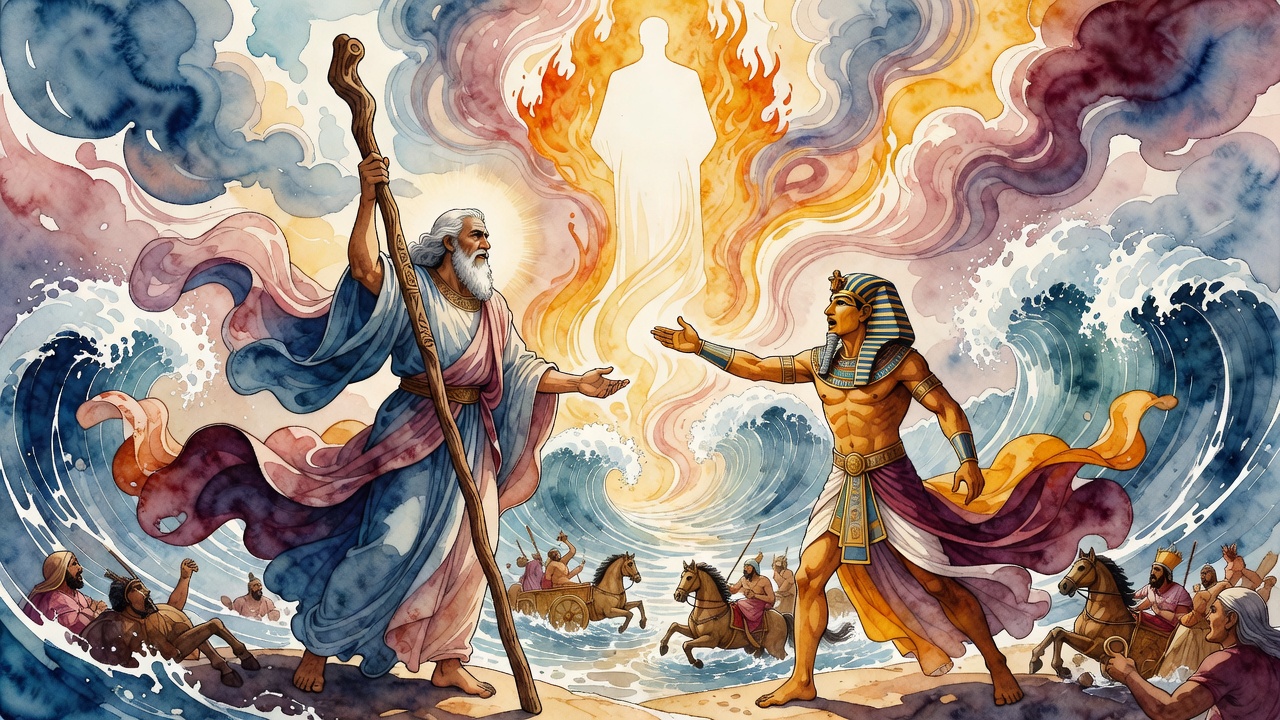
When the sea split, Pirkei DeRabbi Eliezer does not describe a single corridor for a frightened herd. The waters congealed into twelve valleys, one for each tribe, walls of water between them clear enough that tribe saw tribe marching in parallel awe. They saw the Holy One walking before them on a path whose footsteps remained unknown, as (Psalm 77:20) says: "Thy way was in the sea, and thy paths in the great waters, and thy footsteps were not known."

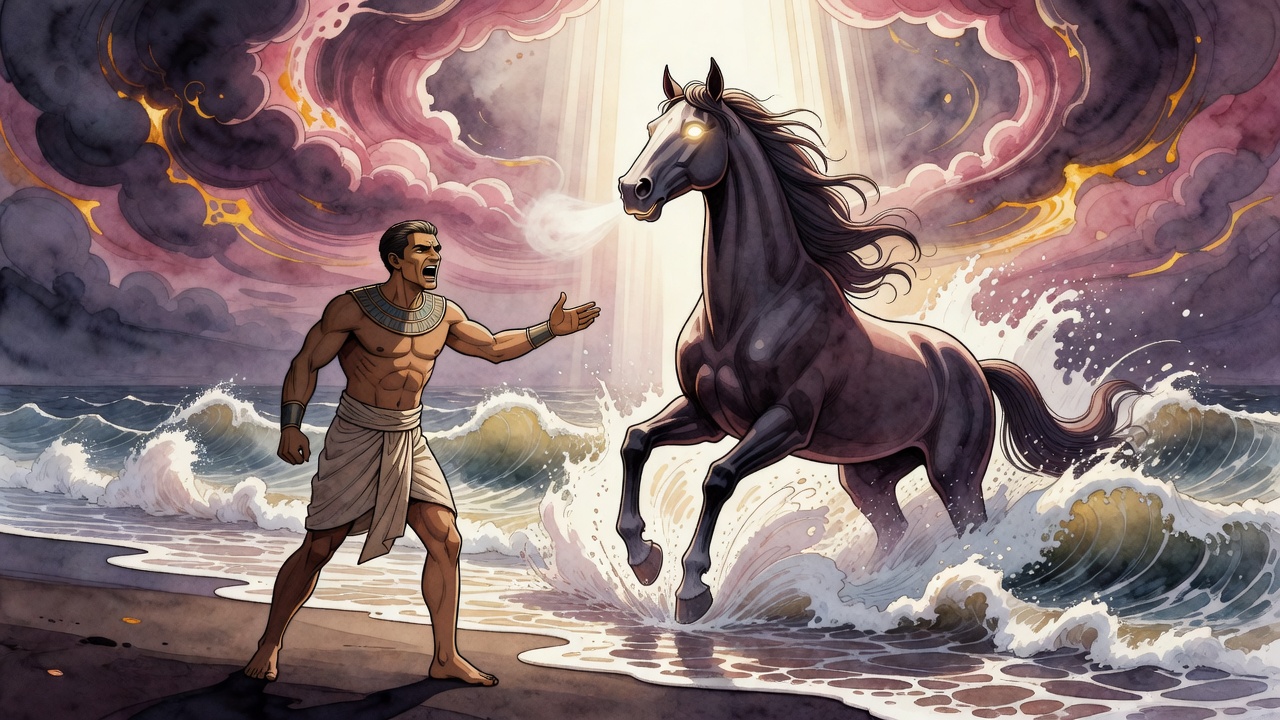
The man who had begged to be replaced walked those paths as leader still, staff in hand, people around him who had been ready to kill him an hour before. Pharaoh's host followed onto ground that was not ground for them and found no footing when the walls remembered they were water. The river-king who had said the Nile was his own learned the sea's answer in a single night of drowning iron and horse.

From Send Another to Stand Still

The arc from bush to beach is the education of a reluctant mouth. Moses asked for another hand. God put the staff in his and refused to transfer the hour. Moses faced a people ready to stone him between mountain and surf. God put a road through water under his feet and under twelve tribal columns at once. The plagues broke Egypt's pride by stages that left no god of theirs unchallenged. The sea finished what the plagues began and closed the door of return.

Reluctance does not disqualify. It records the size of the task honestly. The bush still burns in the telling because the refusal was human and the obedience, when it came, was complete enough to split a sea into twelve roads and drown a chariot force that thought Hebrew blood was a resource to reclaim. Eighty years old, still arguing at the start, still standing at the end while Egypt sank behind him.


← All myths
From the tradition

Sources

3 sources

The texts behind this telling. Some cards carry a translation of the source; others are our own retelling of it, and each card says which. Every card links out to the original.

Pirkei DeRabbi Eliezer 40:7Pirkei DeRabbi Eliezer

Retold in our words. Read the original at the link below.Pirke de Rabbi Eliezer, trans. Rabbi Gerald Friedlander, London (1916) · CC-BY

That feeling, that sense of profound loss, isn't just a modern phenomenon. Our Sages wrestled with it too. Pirkei DeRabbi Eliezer, a fascinating and often imaginative work of Jewish literature, explores this very idea. It poses the question: what does it truly mean to be diminished? The text answers with a startling assertion: "all who lose their wealth are as though they were dead."

Heavy stuff. But it sets the stage for a powerful moment in the story of Moses. Moses, the reluctant leader, the man who stammered, the shepherd who would become the liberator. God appears to him at the burning bush, commissioning him to free the Israelites from slavery. "Come and I will send thee unto Pharaoh" (Exodus 3:10), God commands.

Moses hesitates. He shrinks back. "Send by the hand of him whom thou wilt send" (Exodus 4:13), he pleads. In other words, "Please, God, send someone else. Send someone you will send in the future."

What’s going on here? Why is Moses, this figure we revere, so resistant?

The text offers a powerful insight into Moses's reluctance. It wasn't just about his perceived inadequacies. It was about the immense weight of the task, the potential for failure, the risk of losing everything. Maybe, just maybe, Moses felt that loss already – a kind of spiritual or emotional poverty that made him question his ability to lead.

God, in his infinite patience, responds with clarity. "I have not said, 'Come and I will send thee to Israel,' but 'Come and I will send thee unto Pharaoh.'" (Exodus 3:10). The mission is specific, the challenge immediate. God isn't asking Moses to solve all the world's problems, just to take the first, crucial step.

And what about Moses's plea to send someone else, someone destined for the future? God addresses that too, hinting at the coming of Elijah the Prophet: "Behold, I will send you Elijah the prophet before the great and terrible day of the Lord come" (Malachi 4:5). "And he shall turn the heart of the fathers to the children, and the heart of the children to their fathers" (Malachi 4:6).

Elijah, the harbinger of redemption, will have his own role to play, his own mission to fulfill. But that doesn't diminish the importance of Moses's present task. Each generation, each individual, has their own calling.

So what does this ancient text, this glimpse into the conversation between God and Moses, tell us today? Perhaps it's this: even when we feel diminished, even when we doubt our abilities, we are still called upon to act. To step forward, to answer the call, to play our part in the ongoing story of redemption. And sometimes, just sometimes, that first step is all that's asked of us.

Full source
Antiquities II.15Antiquities of the Jews (Josephus)

Retold in our words. Read the original at the link below.Antiquities of the Jews, trans. William Whiston · Public Domain

Six hundred chariots. Fifty thousand horsemen. Two hundred thousand infantry. That was the army Pharaoh sent racing after the Hebrews barely three days after letting them go. And he had them cornered between mountain ridges and the sea with no way out.

The Hebrews had left Egypt in the month of Nisan, on the fifteenth day, exactly 430 years after Abraham first entered Canaan. Moses was eighty years old. They carried with them the bones of Joseph, fulfilling a promise made generations earlier (Genesis 50:25). They ate unleavened bread, flour barely warmed over gentle heat, because they had fled too quickly to prepare real food, and their supplies from Egypt lasted only thirty days. Six hundred thousand men of fighting age marched out, not counting women and children.

Moses deliberately chose a route through the wilderness rather than the coastal road through Philistine territory. Partly to avoid a hostile nation that had long quarreled with the Hebrews. Partly because God commanded him to bring the people to Mount Sinai. But also. And this is the detail Josephus emphasizes. So that if the Egyptians pursued them, they would walk straight into divine punishment for breaking their promise.

The trap worked exactly as planned, though not in the way the Hebrews expected. When the Egyptian army appeared on the horizon, the people panicked completely. Mountains blocked them on both sides. The sea blocked them ahead. The greatest military force in the ancient world blocked them behind. They had no weapons. No provisions. They turned on Moses, forgot every miracle God had performed, and were ready to throw stones at the man who had freed them.

Moses did not flinch. Standing in the middle of the terrified crowd, he gave a speech that Josephus records in full: "It is madness to despair of God's providence now, after everything He has done. God does not give help in small difficulties. He acts when no human being can see any possibility of rescue. These mountains, if God commands, will become flat ground. This sea will become dry land."

Full source
Pirkei DeRabbi Eliezer 42:5Pirkei DeRabbi Eliezer

Retold in our words. Read the original at the link below.Pirke de Rabbi Eliezer, trans. Rabbi Gerald Friedlander, London (1916) · CC-BY

Rabbi Eliezer, in Pirkei DeRabbi Eliezer, a fascinating work of Jewish aggadah (non-legal rabbinic narrative) and folklore, paints a breathtaking picture. It's more than just a simple parting of the waves. He describes a truly miraculous event, one that resonates with profound symbolism.

In Rabbi Eliezer, on the very day God commanded, "Let the waters be gathered together" (Genesis 1:9), the waters didn't just part. They congealed. They transformed into twelve distinct valleys.

Why twelve? To correspond to the twelve tribes of Israel, of course! Each tribe had its own path, its own way through the sea.

That's not all. These paths weren't just empty corridors. They were separated by walls of water. Solid, towering walls.

And here's where it gets truly remarkable. Rabbi Eliezer says that the people could see one another through these watery partitions. They could see members of other tribes, marching alongside them in this incredible journey. Think about the sense of shared destiny, the collective awe and wonder they must have felt!

Even more astonishing, they saw God.

Not in some abstract, theological sense, but actually saw Him. Rabbi Eliezer says they saw the Holy One, blessed be He, walking before them, leading the way. It's a powerful image of divine guidance and protection.

But there's a curious detail. They didn't see His footsteps. Why not? Rabbi Eliezer grounds this in (Psalm 77:20): "Thy way was in the sea, and thy paths in the great waters, and thy footsteps were not known." The path of God is mysterious, beyond our full comprehension. Even in the midst of such a clear miracle, some aspects of the divine remain hidden.

What does this image of twelve paths through the sea evoke for you? Perhaps it's a reminder that even when we face seemingly insurmountable obstacles, there's a path forward, and we're not alone on the journey.

Full source