Parshat Beshalach6 min read

Were There No Graves Left for Us in Egypt

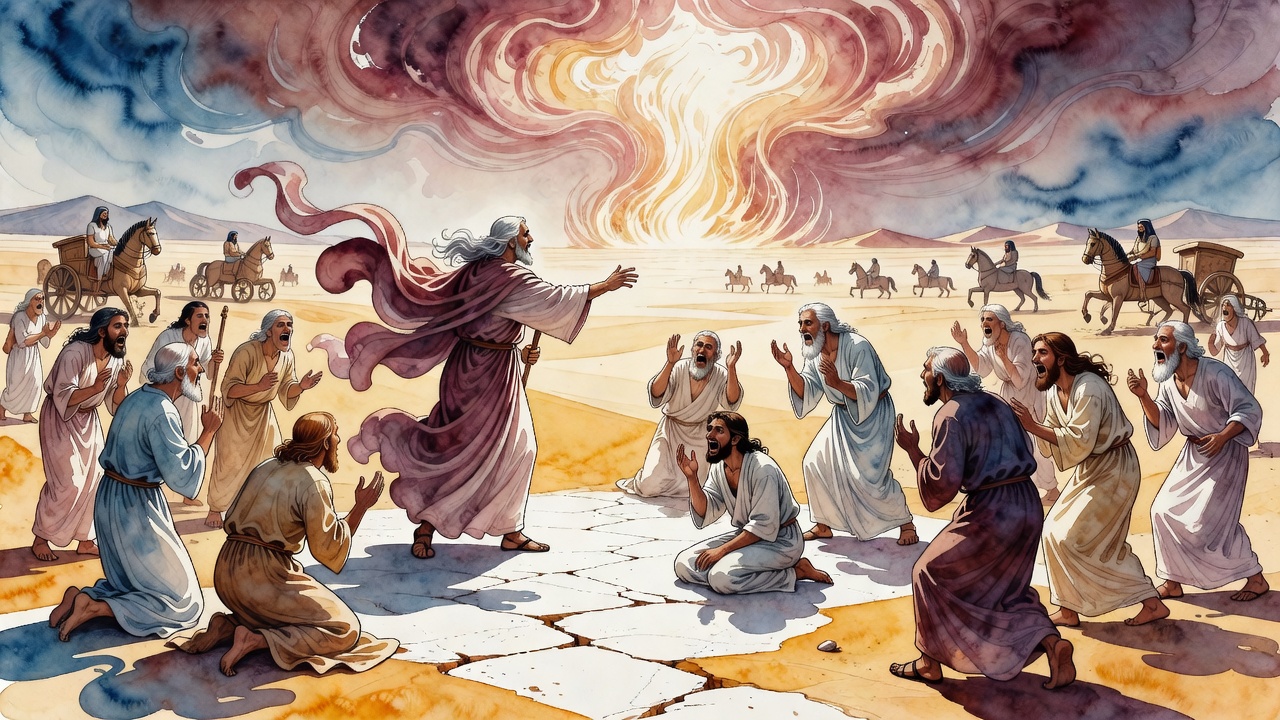
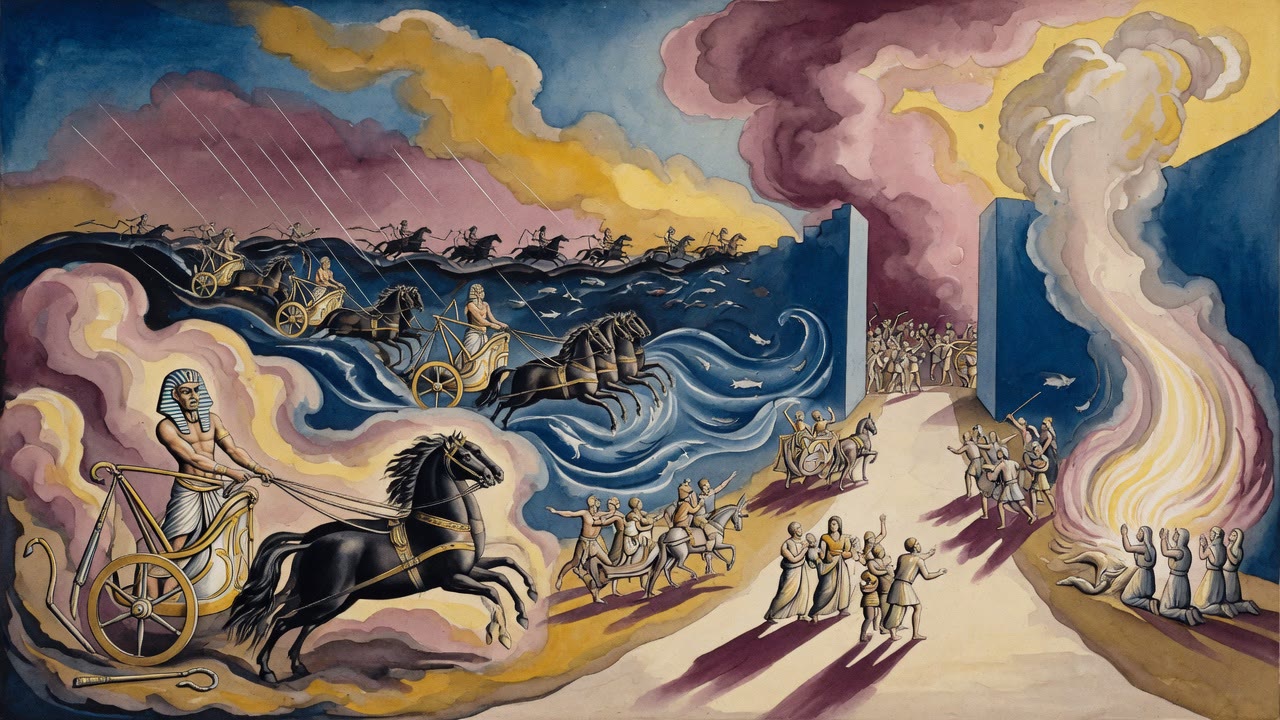
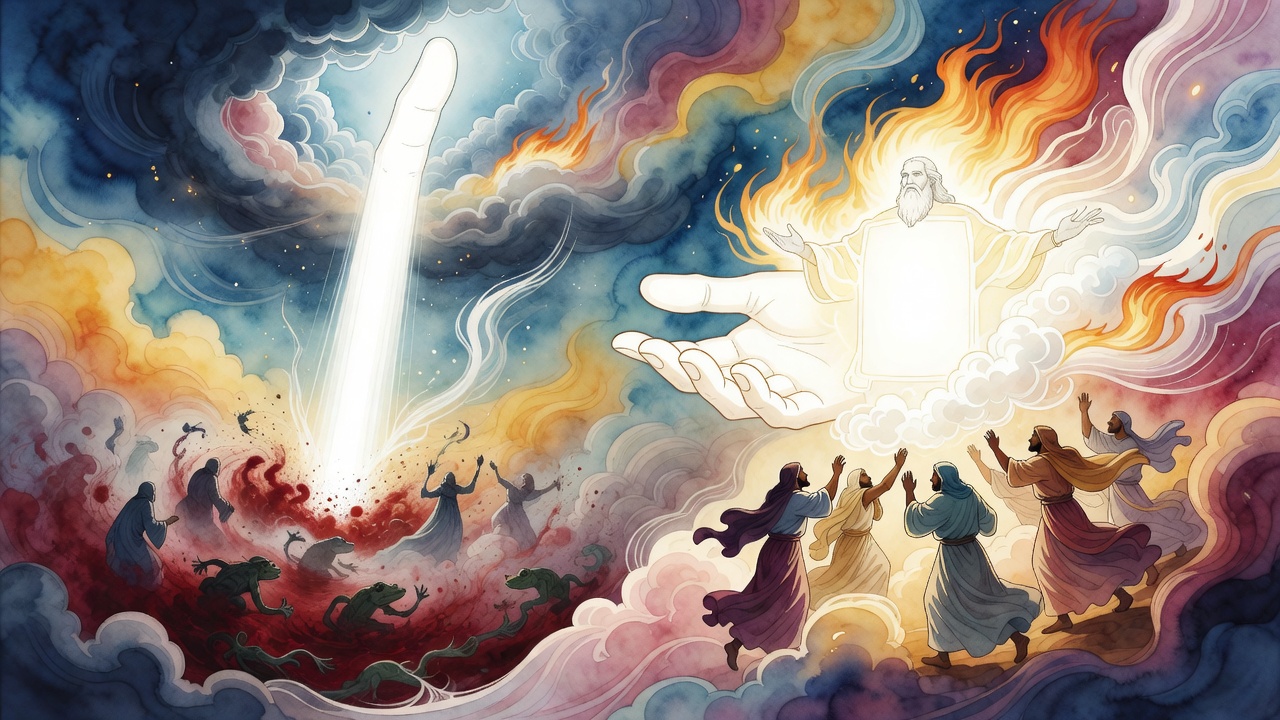
Chariots at their backs, the people turn on Moses. Death in the open desert, they cry, is worse than bondage with a proper burial.

Curated by Arthur · Told by Maggid ·
Table of Contents
  1. Old Leaven at the Waterline
  2. Who Told the King
  3. Staff Against the Pull Home
  4. What the Graves Meant
  5. Sand After the Song
Were There No Graves Left for Us in Egypt Click for full size

Old Leaven at the Waterline

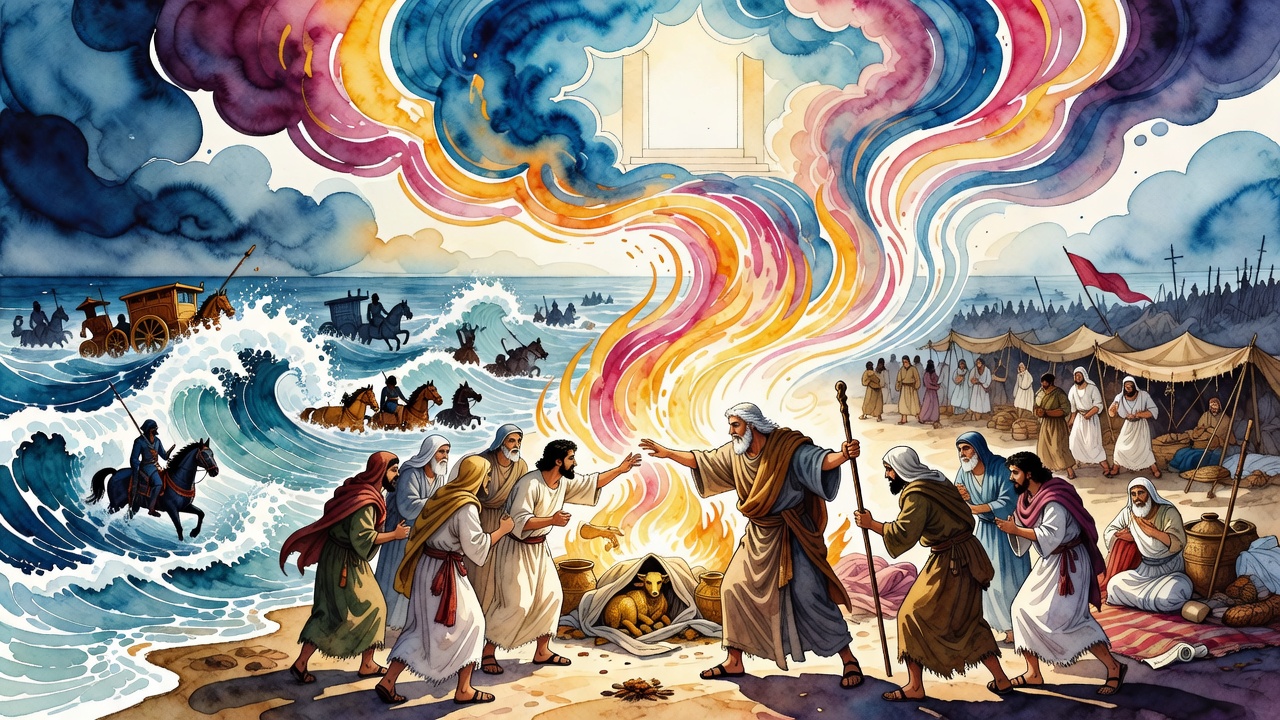
The army is close enough to taste dust from its wheels. At the edge of the sea the people turn on Moses with words that have been souring since the first days of freedom. They remind him they warned him in Egypt, when he and Aaron first arrived and the bricks only got harder under new orders.

Were there no graves in Egypt that you brought us to die in the wilderness? The question is panic, and it is also a theory of dignity. Death under bondage at least meant mourning among their own. Brothers who fell in the plague of darkness, the tradition says, were buried with rites while Egyptians could not even see to count their dead. Here the sun will scorch and the frost will bite, and bodies will lie without names on open sand.

Death in the wilderness, they insist, is harder to bear than slavery they already knew. Fear sharpens into comparison. The midrash lets the complaint stand long enough to show what free people still fear: not only dying, but dying without a grave, without a stone, without a voice to say who they were. Mothers clutch children as if arms could be tombs. Men spit salt and blame.

Who Told the King

Behind the verse sits a hidden day on the road. Egypt thought the departure was a three-day furlough into the wilderness. When overseers came to march them back, Israel answered that the moment they left Egypt they left Pharaoh's authority for good. Willing or not, the overseers said, you will return. The old tone of the brick pits rode in their mouths.

Israel rose and struck them. Survivors carried the report to the palace. That, the sages say, is who told the king of Egypt. The news is not a gentle rumor of missing labor. It is blood on the road and a people that will not come home on anyone's schedule but heaven's.

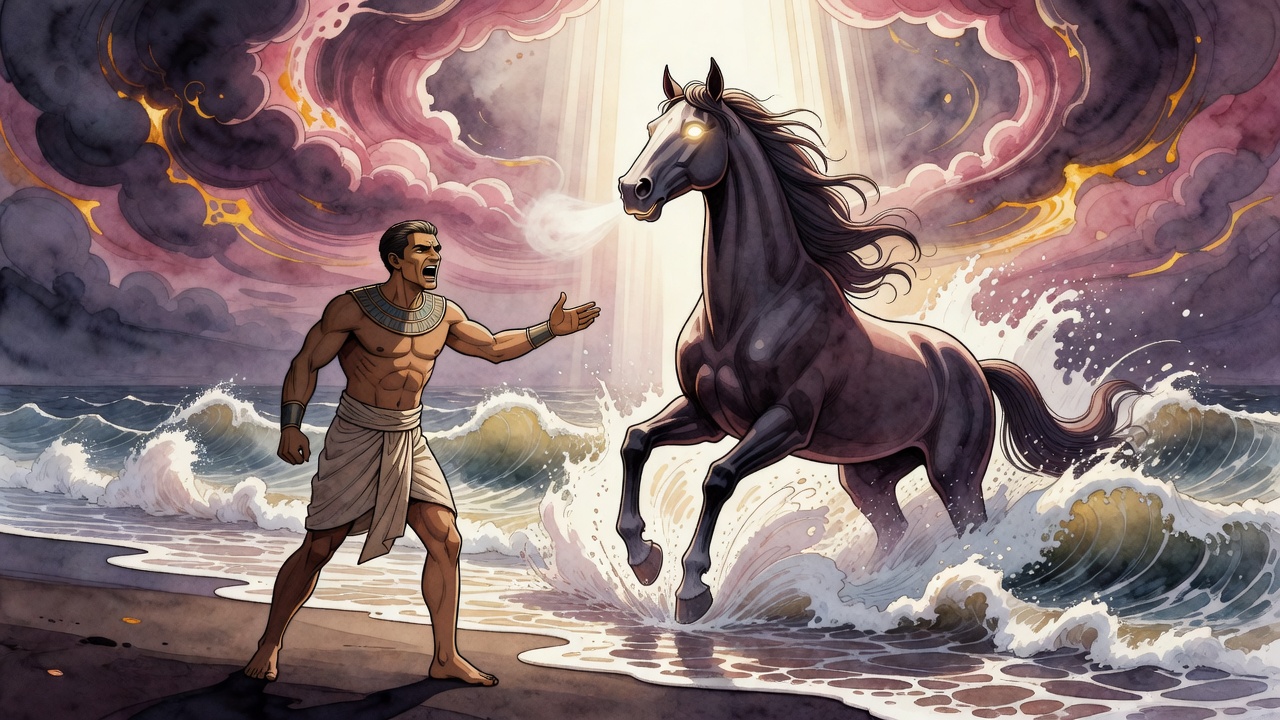
Egypt tallies losses like a man caught in a cruel bargain. A king sends a servant for a fish, then offers three punishments: eat the rotten fish, take a hundred lashes, or pay a hundred coins. The servant suffers all three. So Egypt is struck, releases its slaves, and loses its wealth in one chain of regret. Pursuit becomes the only answer the palace can still invent, and the army that invents it is already late for its own funeral.

Staff Against the Pull Home

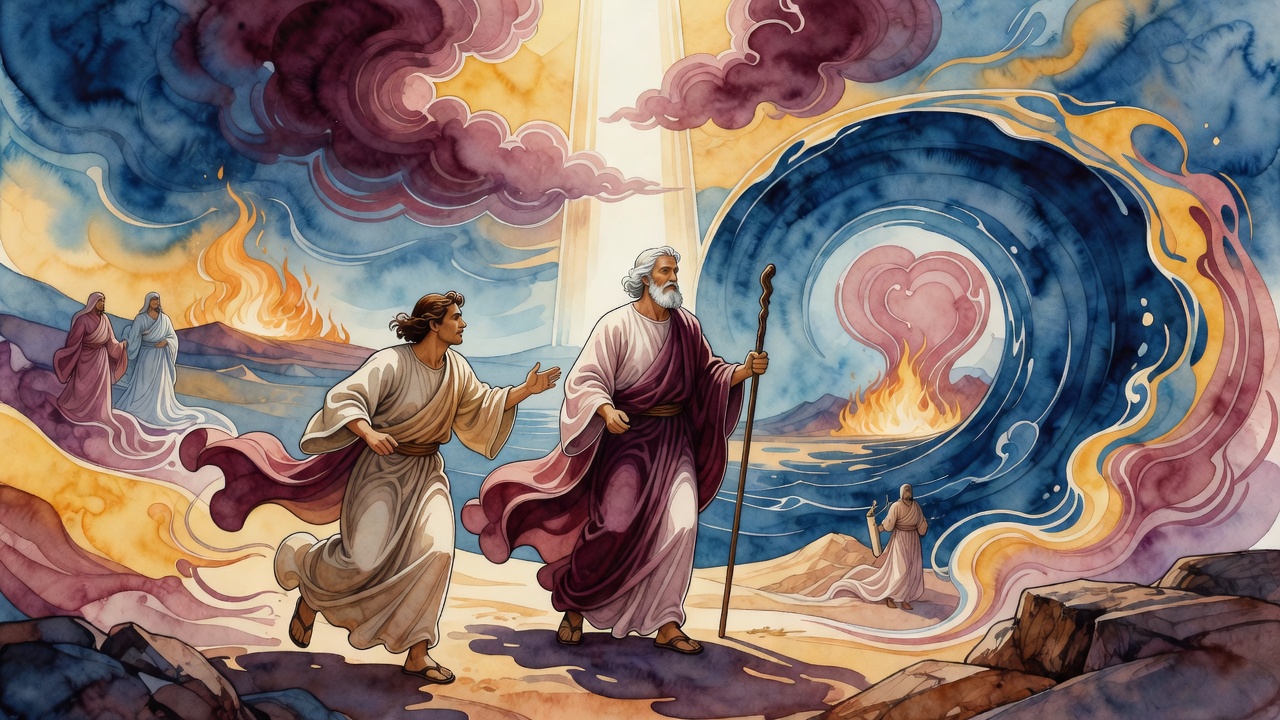
After the sea splits and the bodies of overseers wash up, some in the camp look back and see an Egypt empty and undefended. Let us make an idol and go back. The pull of slavery is that strong even after the water stood in walls. One word in the next march, "led," starts a quarrel among teachers. Elsewhere the cloud lifts and they follow. Here Moses must drive them forward against their will with a staff.

He leads the rebelliousness out of them, drawing off what they carried since the shore. Ahead lies the wilderness of Shur, vast, swarming with snakes and scorpions, home to a viper whose shadow alone drops a bird from the sky in pieces. A man whose hair fell out for life after standing near a sleeping serpent becomes a warning the camp can almost smell on the wind.

Three days without water will follow. The complaint at the sea was not the last cry. It was the first shape of a mouth that will keep testing whether freedom is worth the sand. Moses walks as if the staff were a rope pulling a reluctant animal. The animal is a nation. The rope is mercy disguised as force.

What the Graves Meant

Moses does not answer with a map of cemeteries. He answers with a path through water and then with a staff that will not let them turn the miracle into a round trip. The people wanted a grave with rites. Heaven offers a road with risk. Dignity will have to be rebuilt on the far side, not recovered by crawling back under Pharaoh's lists of names and quotas.

The brothers buried in Egypt stay buried. The living walk. The complaint remains honest about the body and dishonest about the alternative. Bondage with a funeral is still bondage. Open sand with a future is still open sand. Both truths press at once on the waterline until the water itself chooses.

When the last chariot sinks, the question about graves does not vanish. It travels into the snake-filled desert as a memory of how close free mouths came to choosing the known whip over the unknown road. Moses keeps walking. The staff stays ready. Children ask where the dead of Egypt will sleep. No one has a soft answer. Only a direction.

Sand After the Song

Song will rise on the far bank, but the midrash refuses to pretend the fear was fake. They had already grieved unseen losses in the darkness plague. They had already argued with Moses in Egypt. The sea only boiled the old leaven to the surface. Freedom does not erase memory. It tests which memories will rule the next step.

The camp learns, slowly, that a grave in Egypt was never the prize the sea was opened to protect. Life without a tombstone on foreign sand still outweighs a well-tended death under a master's eye. That lesson will need repeating at Marah, at Massah, in every place where thirst invents a better past.

Moses does not celebrate the complaint's honesty. He survives it. The staff points forward. Snakes wait. Water waits to be bitter and then sweet. The graves of Egypt stay behind with the drowned army, and the living carry only the question, which is already becoming a story they will tell against themselves whenever fear dresses up as wisdom.


← All myths
From the tradition

Sources

3 sources

The texts behind this telling. Some cards carry a translation of the source; others are our own retelling of it, and each card says which. Every card links out to the original.

Mekhilta DeRabbi Shimon Ben Yochai 14:11Mekhilta DeRabbi Shimon Ben Yochai

Translation of the source text.Mechilta de-Rabbi Simon b. Jochai, ed. D. Hoffmann, Frankfurt 1905 · Public Domain

"And they said to Moses, Is it because there are no graves in Egypt that you have taken us to die in the wilderness?" (Exodus 14:11). [Like] our leaven in the dough [the lingering grievance], they went off to Moses. "Is this not the word that we spoke to you in Egypt?" What did they say to Moses in Egypt? Behold it says, "And they met Moses and Aaron standing to meet them" (Exodus 5:20). They said to him: We were already in anguish over our servitude in Egypt; our death in the wilderness is harder for us than our servitude in Egypt. We were already in anguish over the death of our brothers in the darkness [the plague of darkness, when many Israelites died]; our death in the wilderness is harder for us than the death of our brothers in the darkness. For our brothers were lamented and buried, but as for us, the carcass of us, your enemies, will be cast out to the heat by day and to the frost by night.

Full source
Mekhilta DeRabbi Shimon Ben Yochai 14:5Mekhilta DeRabbi Shimon Ben Yochai

Translation of the source text.Mechilta de-Rabbi Simon b. Jochai, ed. D. Hoffmann, Frankfurt 1905 · Public Domain

"And it was told the king of Egypt" (Exodus 14:5). The children of Israel traveled from Rameses to Succoth, and from Succoth to Etham, and from Etham to Pi-hahiroth: the eve of Sabbath, the Sabbath, and the first day of the week, which are the fifteenth, the sixteenth, and the seventeenth. On the second day of the week, which was the fourth day of their journey, being the eighteenth, Israel were saddling their cattle and readying their gear to go out. The overseers said to them: The term of your leave [furlough] has arrived to return to Egypt, as it is said, "a journey of three days will we go into the wilderness" (Exodus 8:23). They said to them: Once we went out of Egypt, we went out from the authority of Pharaoh. They said to them: Whether you wish it or not, in the end you will return and fulfill the words of the kingdom. Israel rose against them and struck some of them and wounded some of them and killed some of them; and they went and told Pharaoh. Therefore it is said, "And it was told the king of Egypt." Who told him? The overseers who were with them. And some say he had scouts. And some say Amalek told him.

"That the people had fled" (Exodus 14:5). But were they fleeing? Has it not already been said, "and the children of Israel went out with a high hand" (Exodus 14:8)? Rather, since they had killed the overseers, these went and said to Pharaoh: they have struck us and wounded us, and they have neither ruler nor officer, as it is said, "The locust has no king, yet they all go forth in ranks" (Proverbs 30:27).

"And the heart of Pharaoh and of his servants was turned against the people" (Exodus 14:5). Yesterday: "And Pharaoh's servants said to him, How long shall this man be a snare to us? Let the men go" (Exodus 10:7); and today: "And the heart of Pharaoh and of his servants was turned against the people."

"And they said, What is this we have done, that we have let Israel go?" They said: had we let them go and not been smitten, it would have been enough; but we both let them go and were smitten. Had we been smitten and not let them go, it would have been enough; but we were smitten and let them go. Had we let them go and been smitten yet not had our money taken, it would have been enough; but we let them go, were smitten, and had our money taken.

A parable. To what may this be compared? To a king of flesh and blood who said to his servant, Bring me a fish from the market. He went and brought him a spoiled fish. He said: The decree is, either you eat the fish, or you take a hundred lashes, or you pay a hundred maneh. He said: I will eat the fish. He had not finished it before his stomach turned against him. He said: I will take the hundred lashes. He was lashed sixty or seventy and could bear no more. He said: I will pay the hundred maneh. So it was done to the Egyptians: they were smitten, they let Israel go, and their money was taken. Therefore it is said, "What is this we have done, that we have let Israel go?"

Another interpretation: "And they said, What is this we have done?" This teaches that once Israel went out of Egypt, the labor of Egypt ceased. "From serving us" (Exodus 14:5). Who will serve us now? Now all the nations of the world will clang against us like a bell and say: If these who were in their power they released and let go, how then can we send to Aram-naharaim and to Aram-zobah to bring us up tribute and to send us male and female slaves? This teaches that Pharaoh ruled from one end of the world to the other, and he had governors from one end of the world to the other, for the sake of the honor of Israel. Of him it is said, "He sent a king and released him, the ruler of peoples, and set him free" (Psalms 105:20). You have no nation or kingdom that subjugated Israel that did not rule from one end of the world to the other, for the sake of the honor of Israel. Of the king of Assyria it says, "And my hand found, like a nest, the wealth of the peoples; and as one gathers forsaken eggs, I gathered all the earth" (Isaiah 10:14). Of the kingdom of Babylon it says, "And the nation and the kingdom that will not serve Nebuchadnezzar king of Babylon, and that will not put its neck under the yoke of the king of Babylon, that nation will I punish with the sword and with famine and with pestilence, says the LORD, until I have consumed them by his hand" (Jeremiah 27:8). Of the kingdom of Media it says, "Then Darius the king wrote to all the peoples, nations, and tongues that dwell in all the earth: May your peace be great" (Daniel 6:26), and it says, "And king Ahasuerus laid a tribute upon the land and the isles of the sea" (Esther 10:1). Of the kingdom of Greece it says, "and the beast had four heads, and dominion was given to it" (Daniel 7:6). Of the fourth kingdom it says, "and it shall devour the whole earth and trample it down and crush it" (Daniel 7:23). Behold, you have no nation or kingdom that ruled over them that did not rule from one end of the world to the other, for the sake of the honor of Israel. Therefore it is said, "And they said, What is this we have done?"

Another interpretation: "And they said, What is this we have done?" They said: was it not for their sake that good came upon us? Rabbi Yose used to make of it a parable. To what may this be compared? To one who had a field sown with a kor of grain and sold it for a trifle; the buyer went and opened in it springs and planted in it gardens and orchards, and the seller began to choke with regret. So the Egyptians: they sent them away and did not know what they were sending away. And so it says, "Your shoots are an orchard of pomegranates with precious fruits, henna with spikenard" (Song of Songs 4:13). Rabbi Shimon used to make of it a parable. To what may this be compared? To one to whom a palace fell as an inheritance in a land across the sea, and he sold it for a trifle; the buyer went and found in it treasures of silver and gold and precious stones and pearls, and the seller began to choke with regret. So it was done to the Egyptians: they were smitten and they let them go and their money was taken. Therefore it is said, "And they said, What is this we have done?"

Full source
Mekhilta DeRabbi Shimon Ben Yochai 15:22Mekhilta DeRabbi Shimon Ben Yochai

Translation of the source text.Mechilta de-Rabbi Simon b. Jochai, ed. D. Hoffmann, Frankfurt 1905 · Public Domain

"And Moses led Israel onward from the Sea of Reeds" (Exodus 15:22). Rabbi Yehoshua says: this journey Israel made by the word of Moses, for all the other journeys they made only by the word of the Divine Might, but this journey they made only by the word of Moses; therefore it is said, "And Moses led." Rabbi Eliezer says: they journeyed by the word of the LORD, for we find in two, three, and four places that they journeyed only by the word of the Divine Might, as it is said, "At the command of the LORD the children of Israel journeyed, and at the command of the LORD they encamped" (Numbers 9:18), and it says, "Sometimes the cloud was upon the Tabernacle a number of days... at the command of the LORD they encamped and at the command of the LORD they journeyed" (Numbers 9:20), and it says, "At the command of the LORD they encamped and at the command of the LORD they journeyed, keeping the charge of the LORD" (Numbers 9:23); this one too they journeyed by the word of the Divine Might. If so, why is it said "And Moses led"? Rather, he led them onward against their will with a staff. When they saw the corpses of the men who had enslaved them with mortar and bricks and every labor in the field, they said: it seems no man is left in Egypt; let us make an idol and return to Egypt, as it is said, "Let us appoint a chief and return to Egypt" (Numbers 14:4). One might think they said it but did not act; therefore Scripture teaches, "They appointed a chief to return to their bondage in their rebellion" (Nehemiah 9:17). Rabbi Yehudah son of Rabbi Ilai says: idolatry was in Israel's hands, and Moses led them onward at that hour. Another interpretation: "And Moses led Israel onward from the Sea of Reeds": he led the rebelliousness out of them, the rebellion they had rebelled at the Sea of Reeds, as it is said, "They rebelled at the sea, at the Sea of Reeds" (Psalms 106:7).

"And they went out into the wilderness of Shur." This is the wilderness of Kuv. They said of the wilderness of Kuv that it stretches eight hundred parasangs by eight hundred parasangs, and it is all full of snakes and scorpions, as it is said, "who led you through the great and terrible wilderness, with serpent, fiery serpent, and scorpion" (Deuteronomy 8:15), and it says, "the burden of the beasts of the Negev, through a land of trouble and anguish, of lioness and lion, of af'eh and flying fiery serpent" (Isaiah 30:6). The af'eh is nothing other than the ikhaos [a viper-like serpent]. They said of this ikhaos: when it sees the shadow of a bird flying through the air, that bird is consumed and its limbs drop away one by one. And so it says, "They did not say, where is the LORD who brought us up from the land of Egypt, who led us through the wilderness, through a land of deserts and pits, a land of drought and the shadow of death" (Jeremiah 2:6), a place where the shadow itself brings death. Rabbi Abba said: my great teacher told me this. There was a man in the Land of Israel named Merita. And why did they call him Merita [the plucked one]? Because once he went to gather wood from the mountain and saw a snake asleep, and the snake did not see him, and all his hair fell out, and no hair grew on him again until the day of his death, and so they called him Merita.

"And they went three days in the wilderness and found no water." Rabbi Yehoshua says: in order to wear them out. Rabbi Eliezer the Modaite says: but is there not water beneath the feet of Israel? For the earth floats only upon the water, as it is said, "who spread out the earth upon the waters" (Psalms 136:6). What then does "and found no water" teach? In order to test them. Others say: the water they had taken from between the split walls of the sea ran out at that place, as it is said, "and found no water," and even in their vessels they found none, as in the matter said, "their nobles sent their servants for water; they came to the cisterns and found no water; they returned with their vessels empty" (Jeremiah 14:3). The expounders of hidden meanings said: these are words of Torah, which are compared to water, as it is said, "Ho, everyone who thirsts, come to the water" (Isaiah 55:1); because they had separated from the words of Torah for three days, they therefore rebelled. Accordingly the prophets among them instituted that they should read from the Torah on Sabbath, and on Monday and Thursday. How so? They read on the Sabbath and skip Sunday; they read on Monday and skip Tuesday and Wednesday; they read on Thursday and skip the eve of the Sabbath.

Full source