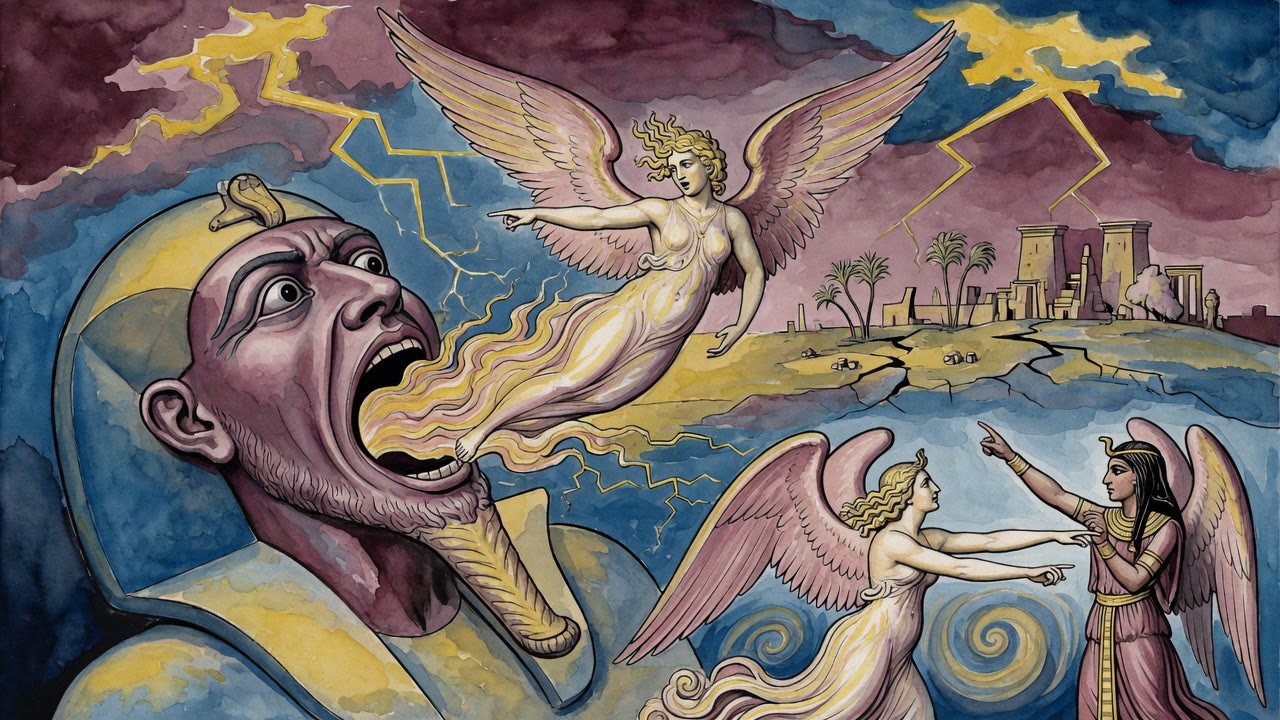
Jochebed Hid Moses Before Pharaoh's Watchers Could Count
The watchers came on the month the ledger named. They found a daughter, a small son, and no baby. The infant was already on the river.
Table of Contents
 Click for full size
Nine Months Arranged in the Wrong Order
Jochebed carried the child six months, and then he came.
Six, not nine. She looked at the small thing in her arms and did not see something too early to live. She saw a child of steadfast life, bar kayyama (בר קיימא), one who would hold. So she took the three months she had just been handed and spent them.
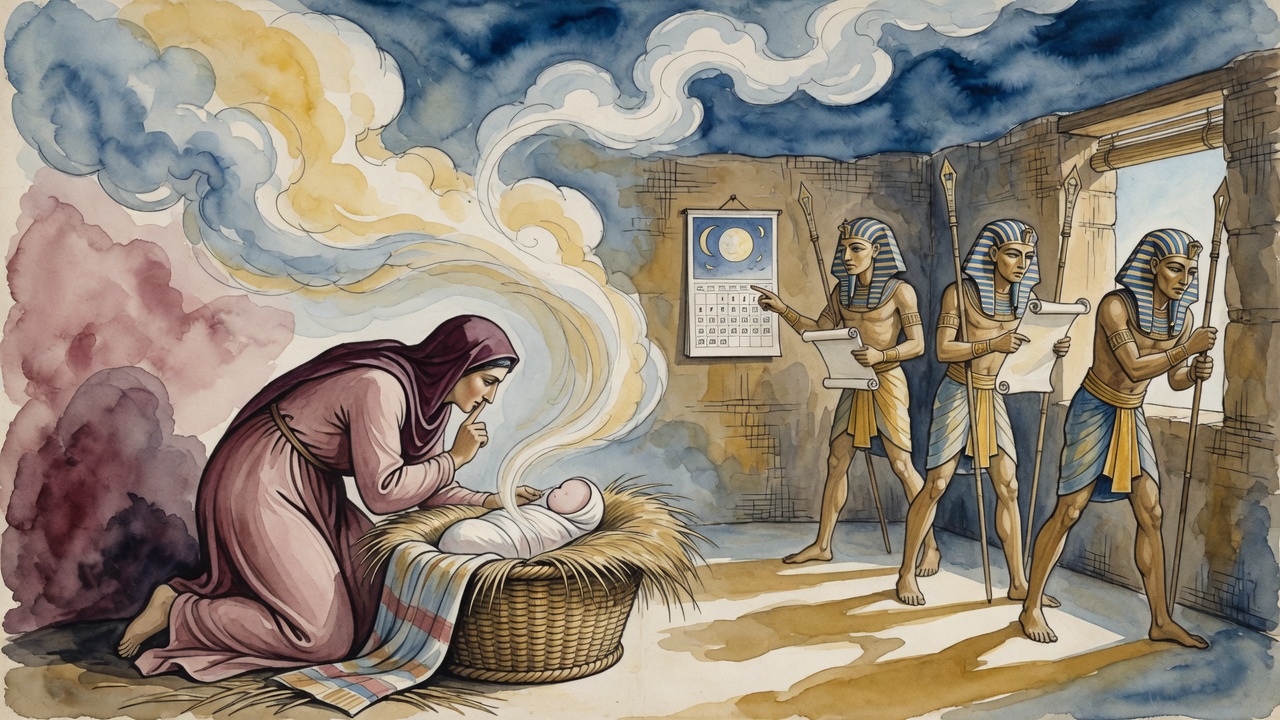
Egypt ran on records. A slave population is a ledger, and the watchers who enforced the decree against Hebrew boys worked from a calendar. A woman known to be carrying in one month was expected to deliver in another. They came when the calendar told them to come.
Jochebed's count did not run the way the ledger said. Six months in the womb and three months in the house came to nine, the right total, distributed wrong. When the watchers arrived to look for a newborn, the newborn was a season old and was not in the room they had been sent to search.
Three Months of Keeping a Baby Quiet
Ninety days is a long time to keep an infant from being heard through a mud wall.
Miriam was old enough to understand what the silence was for. Aaron was three, and three years old is not an age that keeps secrets well. Whatever the household did about the crying, it did it every day, in a quarter full of neighbors who had all lost boys to the river.
Jochebed nursed him in the dark. She walked him when the house next door was loud enough to cover a sound. She fed him before the hunger could turn into a wail. The walls were thin. The river was close. Every Hebrew mother on that street knew what a boy's cry was worth.
Then the concealment ran out. The Egyptians found out about the child. After that no amount of quiet was going to help. The watchers would not come on a calendar this time. They would come because someone had heard him, or seen him, or counted the months and found the arithmetic wrong in the other direction.
The Chest She Coated Herself
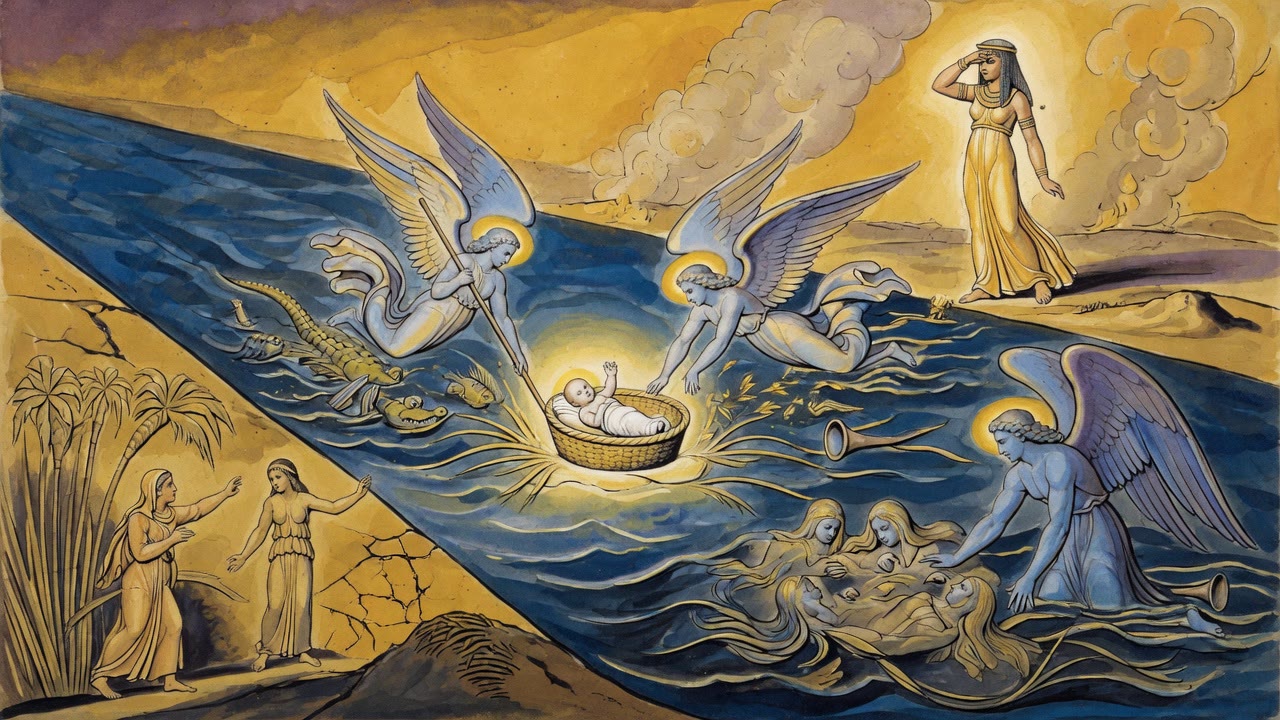
She took papyrus and built a chest out of it.
She coated it with bitumen and pitch, the tar that came out of Egypt's own kilns, and worked the seams until they would hold water. Then she put her son inside and closed it. The lid sat down on a boy who had already outlived the date the ledger had given him.
She carried it down to the river that had been swallowing Hebrew boys for years, and she laid it among the reeds on the bank. Not out in the current. In the reeds at the edge, where a floating thing snags and stays, where somebody walking down to the water would have to step around it.
The same word the Torah uses for Noah's ark sat on this small box. A family again. Water again. A chest smeared with pitch, set on a flood that was not rain this time but a decree.
What the Reeds Held
Miriam stayed back at a distance to see what would happen to him. She did not go home. She did not sit with her mother. She watched the reeds.
Pharaoh's daughter came down to bathe. She saw the chest among the reeds, sent her maid out into the shallows to bring it in, lifted the lid, and heard a Hebrew infant crying. The river that was supposed to drown him had held him still for her hands.
Miriam stepped forward and asked if a Hebrew nurse might be fetched. The princess said yes. Miriam went and brought Jochebed, and the mother who had just given her son to the water took him back under a royal wage, inside the house of the man who had ordered him dead.
Whenever the watchers finally came with their calendar, they found a woman with a daughter and a small son and no baby at all. The nine months had already been spent. The boy the decree had been written for, the one Pharaoh's daughter would name Moses, was inside the house of the man who wrote it, and the river that was supposed to drown him had carried him the last hundred cubits of the way.
← All myths