5 min read

Joshua Pressed All Israel Between the Poles of the Ark

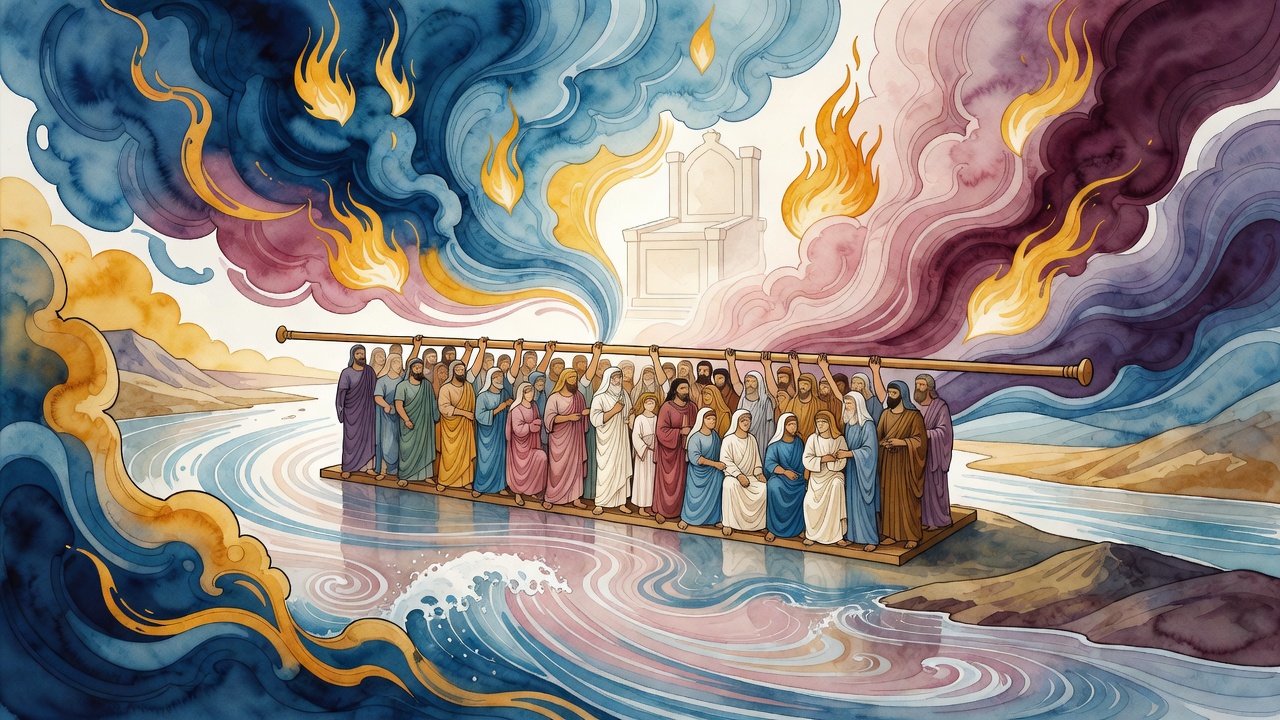
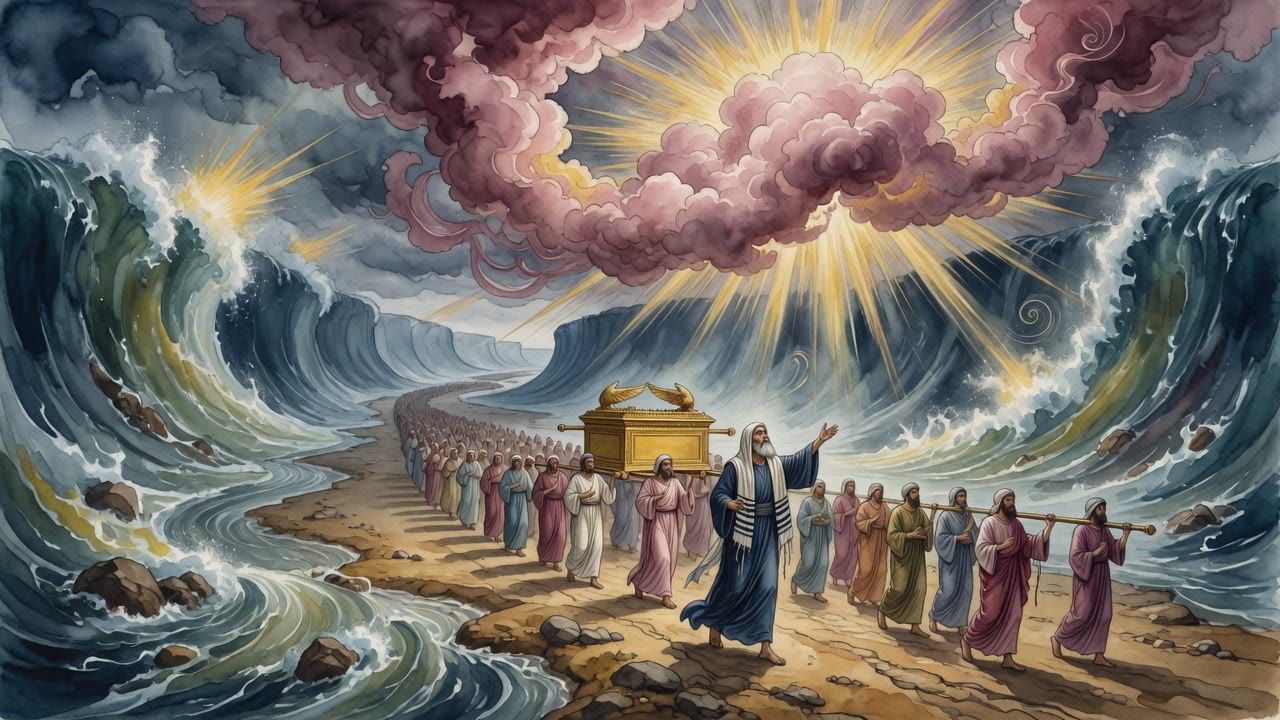
Joshua marched the whole nation into the hand's breadth between the Ark's two poles, and the small space held the many while the Jordan stood still.

Curated by Arthur · Told by Maggid ·
Table of Contents
  1. The River Reared Back and Stood
  2. Two Thousand Cubits and a Place to Pray
  3. Come Near, He Said, and the Nation Folded Inward
  4. The Lord of All the Earth Uproots and Plants
  5. Out of the Water on the Tenth of the Month
Joshua Pressed All Israel Between the Poles of the Ark Click for full size

The River Reared Back and Stood

The Jordan was over its banks. It was harvest time, when the river came down swollen and brown, tearing at its own edges and dragging whole trees toward the sea. The priests reached the water carrying the Ark of the covenant on their shoulders, and they did not stop at the edge. They walked in.

The moment the soles of their feet touched the flood, the water remembered what it carried past. The current coming down from above rose up and stood in a single heap, far off, and the water running to the sea drained away and was cut off. Between them the riverbed lay bare. The priests walked to the middle of it and stood, and the whole weight of the flood hung above their heads and did not fall.

Two Thousand Cubits and a Place to Pray

Joshua had already told the people how to follow. "Keep a space between yourselves and the Ark," he had said, "two thousand cubits by measure, and no farther, in every direction." He was not only guarding them from the holiness that had killed men who came too close. He was measuring out a life. "You are going to rest in this land and keep the Sabbath in it. On the day of rest a man may not walk far, and a man must still be able to reach the Ark and pray before it. So keep two thousand cubits, and no more, and you will always be near enough to pray." Their fathers had pitched their tents in the wilderness facing the Ark from exactly that distance, every standard turned inward toward the poles.

Come Near, He Said, and the Nation Folded Inward

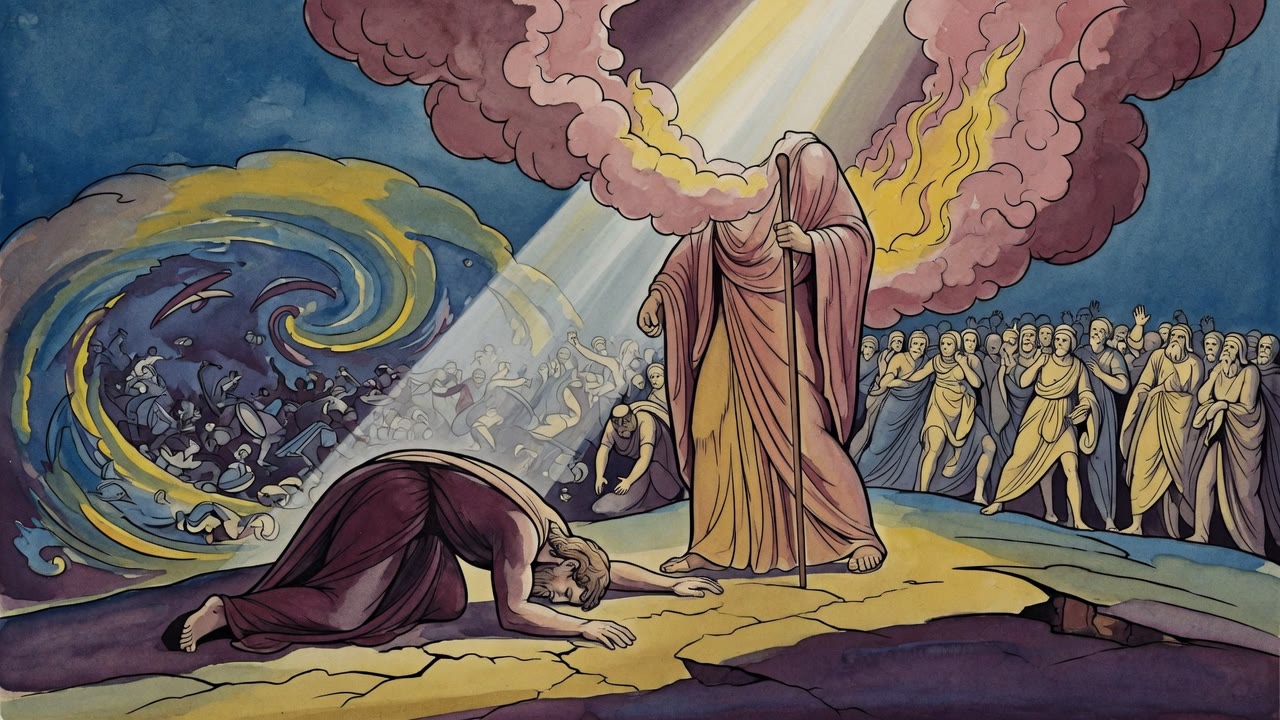
Then, at the river, he called them the other way. "Come near here," Joshua said, "and hear the words of the LORD your God." And he brought them near. Not near in the way a crowd gathers. He stood the whole nation upright in the space between the two carrying-poles of the Ark, propped them there, pressed them in, until every last Israelite stood in a gap no wider than a man's reach.

It held. Six hundred thousand and their households, packed into the breath of space between two gold-sheathed poles, and the poles held them. "You wanted a sign that the living God is in your midst," Joshua told them. "Here it is. The small has held the many. Look where you are standing."

It was the same wonder that had gathered all the waters under heaven into one place at the beginning, pouring a full world into a full vessel and finding room. It was the wonder that once stood Moses and Aaron and the whole assembly before a rock in a space no bigger than the mouth of a sieve. The riverbed was dry, the flood stood waiting, and the nation stood folded into a handbreadth and was not crushed.

The Lord of All the Earth Uproots and Plants

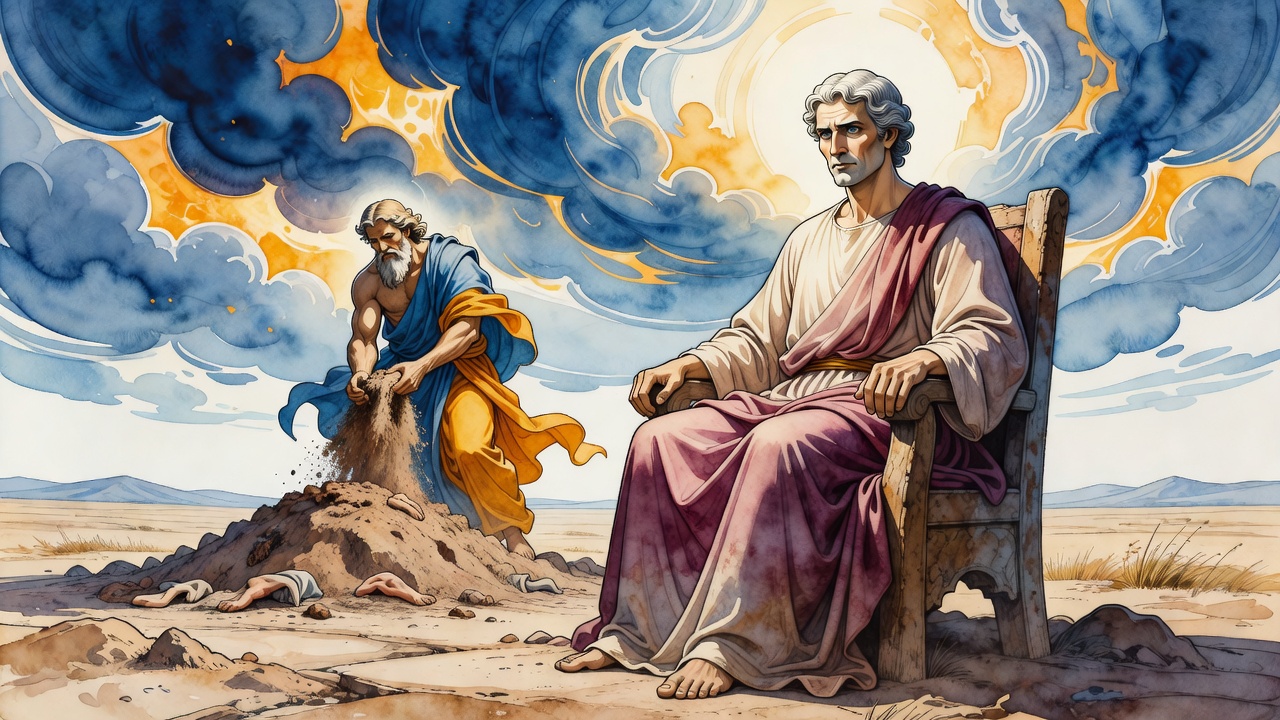
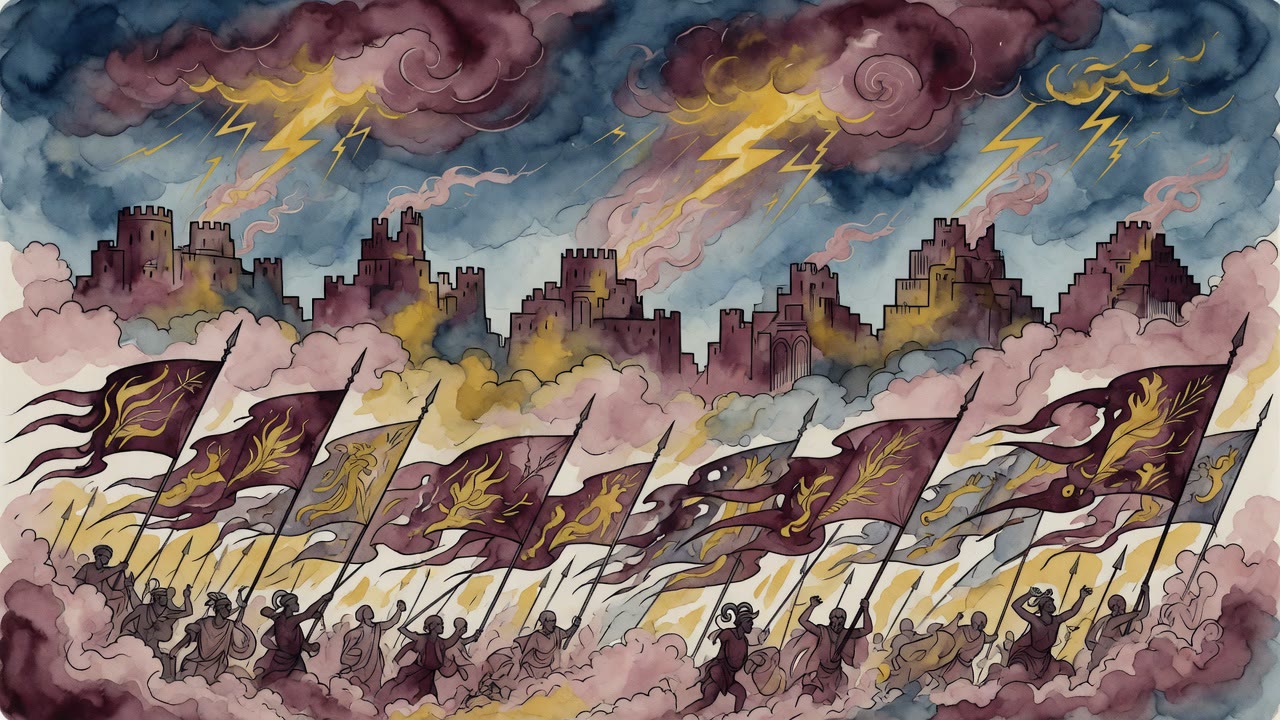
The Ark they were pressed around had a name that day. "The ark of the covenant of the Lord of all the earth," the criers called it as it went before them into the river. Wherever that title is spoken, it does one thing. The Lord of all the earth evicts. He tears one people out of a land by the roots and settles another in its place, and this was the day He did it. On the far side, the kings of the Canaanites heard that the Jordan had dried before Israel, and their hearts turned to water and there was no spirit left in them. They felt the eviction before they saw a single sword. The Ark was the deed to their country, and it had just entered the door.

Out of the Water on the Tenth of the Month

The people came up out of the Jordan on the tenth day of the month. It was not an ordinary date. On the tenth of the month, generations before, their fathers in Egypt had been commanded to take a lamb into their houses and keep it for the Passover. That old act of obedience had not expired. The merit of taking the lamb crossed the river with them and stood by them on the bank, so that the same day that once began their redemption now planted them in the land.

They came up weak from the crossing and still uncircumcised, too worn from the road to bear the knife along the way. Even so, uncircumcised, they received the sprinkling of purification, water flicked from hyssop that made an unclean people clean. Then, at Gilgal, on the near edge of their inheritance, they took the flint and circumcised themselves, and immersed, and when the fourteenth came they kept their Passover in purity, clean flesh and clean bodies, in a land that a day before had belonged to someone else.


← All myths
From the tradition

Sources

4 sources

The texts behind this telling. Some cards carry a translation of the source; others are our own retelling of it, and each card says which. Every card links out to the original.

Yalkut Shimoni on Nach 13:2Yalkut Shimoni on Nach

Translation of the source text.Yalkut Shimoni on Nach (Sefaria) · CC-BY-NC

"Yet there shall be a space between you and it, about two thousand cubits by measure" (Joshua 3:4). Joshua said to them: You are destined to stand there and to keep the Sabbath there; do not go farther from the Ark than two thousand cubits in every direction, so that you will be permitted to come and pray before the Ark on the Sabbath.

And so you find that when the Holy One, blessed be He, told Moses that they should make standards for themselves, He said to them: Set your standards toward the Ark in every direction, as it is said, "every man by his own standard, with the ensigns" (Numbers 2:2). Here it is written, "and she sat over against him, a good way off, as it were a bowshot" (Genesis 21:16), and elsewhere it is written, "over against the tent of meeting round about" (Numbers 2:2). We learn the meaning of "over against" -- a good way off -- from "over against" [in the other verse], teaching the measure of distance.

Full source
Yalkut Shimoni on Nach 14:1Yalkut Shimoni on Nach

Translation of the source text.Yalkut Shimoni on Nach (Sefaria) · CC-BY-NC

"And Joshua said to the children of Israel, Come near here" (Joshua 3:9). Rabbi said: He stood them upright between the two poles of the Ark. Rabbi Acha bar Rabbi Chanina said: He propped them between the two poles of the Ark. The Rabbis said: He compressed them between the two poles of the Ark. Joshua said to them: From the fact that the two poles of the Ark held you, you know that the living God is in your midst -- from here that the small held the many.

And like it: "Let the waters under the heaven be gathered together unto one place" (Genesis 1:9). It is the way of the world that a person empties a full vessel into an empty vessel; does one empty a full vessel into a full vessel? So too the world was water within water, yet you say "unto one place" -- from here that the small held the many. And like it: "And Moses and Aaron gathered the assembly together before the rock" (Numbers 20:10). Rabbi Chanina said: It was the size of the mouth of a small sieve, yet all Israel stood there -- from here that the small held the many. And like it: "Take to you your hands full" (Exodus 9:8); now does Moses' double handful hold eight ordinary handfuls? A double handful is not like a single handful; the double handful is twice the single, and it is written, "and Moses sprinkled it" -- so Moses' double handful held eight handfuls -- from here that the small held the many. And like it: "the length of the court a hundred cubits" (Exodus 27:18), yet all Israel stood there -- from here that the small held the many.

And Jerusalem too is so, as we have learned: they stood pressed together, yet bowed down with room to spare, four cubits for each one on every side, so that one should not hear his fellow's prayer. So too in the time to come: "At that time they shall call Jerusalem the throne of the LORD, and all the nations shall be gathered unto it" (Jeremiah 3:17). Rabbi Yochanan was going up [to Jerusalem]; one said to him: Is it set by fixed measure for them? He said to him: The Holy One, blessed be He, says, Lengthen, widen, receive your multitudes -- "Enlarge the place of your tent... for you shall break forth on the right hand and on the left" (Isaiah 54:2-3).

Full source
Yalkut Shimoni on Nach 14:2Yalkut Shimoni on Nach

Translation of the source text.Yalkut Shimoni on Nach (Sefaria) · CC-BY-NC

"Behold, the ark of the covenant of the Lord of all the earth" (Joshua 3:11). Rabbi Shmuel bar Nachmani said: Wherever "Lord" (Adon) is said, He uproots inhabitants and brings in inhabitants. And this is the governing principle for them all: He uproots the Canaanites and brings in Israel. And so it says, "Therefore says the Lord, the LORD of hosts, the Mighty One of Israel... and I will restore your judges as at the first" (Isaiah 1:24, 26).

Full source
Yalkut Shimoni on Nach 15:2Yalkut Shimoni on Nach

Translation of the source text.Yalkut Shimoni on Nach (Sefaria) · CC-BY-NC

"And the people came up out of the Jordan on the tenth of the month" (Joshua 4:19). Rabbi Levi said: The taking of the Passover lamb stood by them at the Jordan, as it is written, "On the tenth of this month they shall take to themselves" and so forth, and it is written there, "And the people came up out of the Jordan on the tenth of the month." The eating of the Passover stood by them in the days of Haman, as it is written, "On that night sleep fled" and so forth. Rabbi Yochanan said in the name of Rabbi Bena'ah: An uncircumcised man receives sprinkling, for so we find with our forefathers that they received sprinkling while they were uncircumcised, as it is said, "And the people came up out of the Jordan on the tenth of the month." On the tenth they were not circumcised, because of the weakness of the journey; when did they perform the sprinkling? Was it not while they were uncircumcised? But perhaps they did not perform the Passover at all? That cannot enter your mind, for it is written, "And they kept the Passover." But perhaps they performed a Passover brought in impurity? Rav Ashi said: It is taught explicitly in a baraita: They circumcised and immersed and kept their Passovers in purity.

Full source