6 min read

Joshua Wrote a Letter Before He Raised His Spear

Before the first wall fell, Joshua sent every nation a letter with three choices. One nation left. The others forced his arm into the sky.

Curated by Arthur · Told by Maggid ·
Table of Contents
  1. The Nation That Read the Letter and Believed It
  2. The Fall of Jericho and What Came After
  3. The Arm That Could Not Come Down
  4. The Day the Sun Stopped Over Gibeon
  5. What the Letter and the Spear Have in Common

Joshua did not send the army first. He sent a letter.

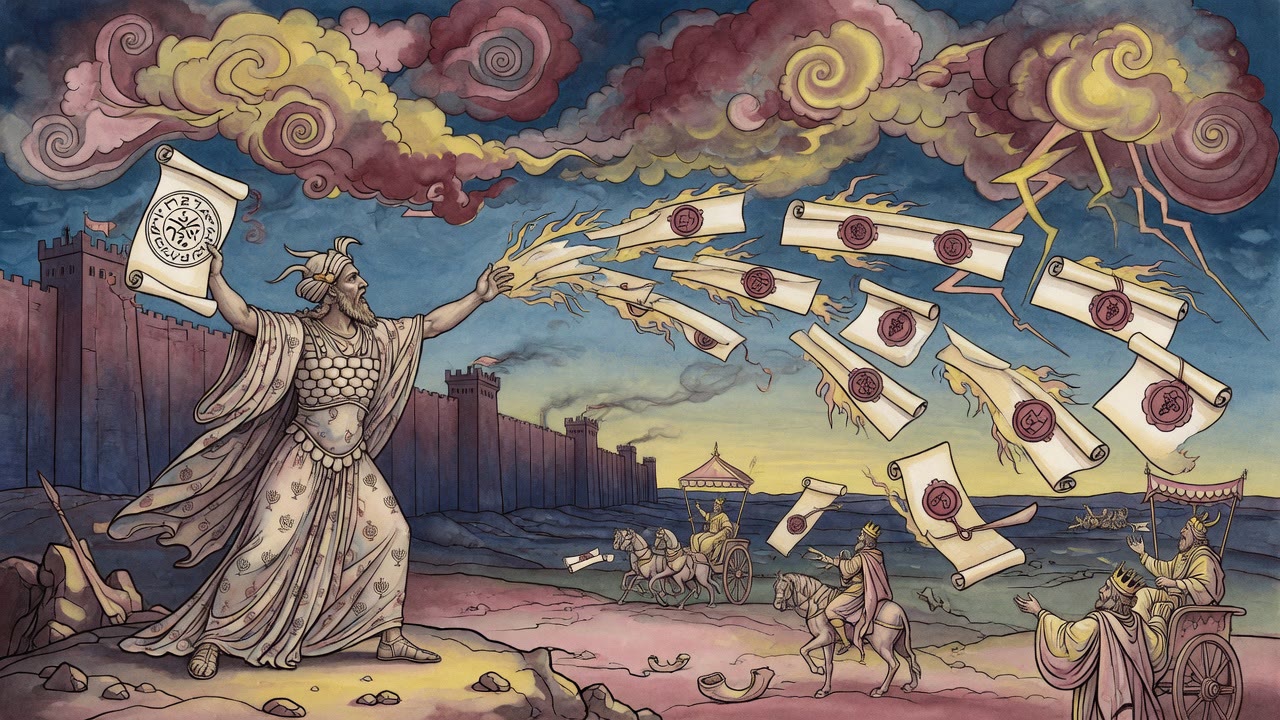
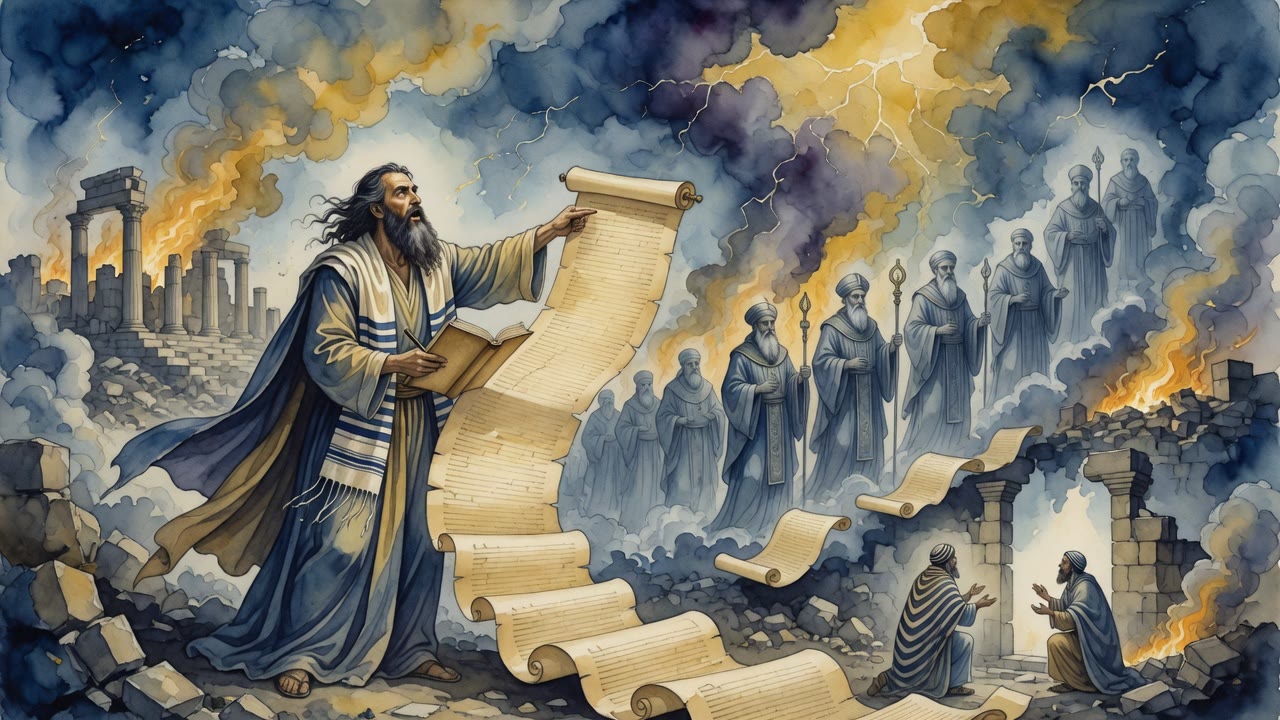
Before a single trumpet sounded at Jericho, before the first sandal crossed the Jordan in force, Joshua sat and composed a message addressed to every people whose land Israel was about to enter. The letter was not a threat. It was a recounting, the plagues in Egypt laid out in plain language, the sea that split open, the manna that fell each morning in the wilderness, the water struck from rock. Forty years of impossible history, and at the end of it an army camped on the bank of the Jordan, waiting. He was telling the nations who they were dealing with, and he was giving them a choice before the spear was ever lifted.

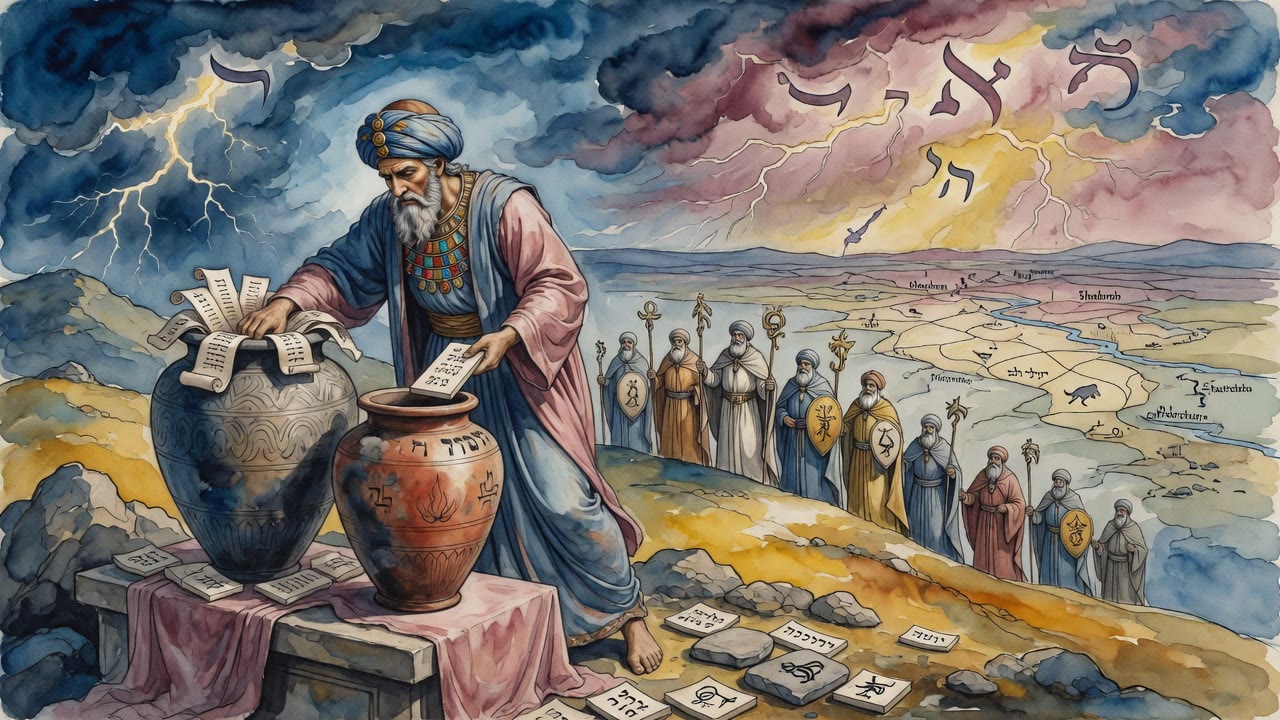
Three options. Leave, and go in peace. Stay, and make peace. Or stay, and fight.

The Nation That Read the Letter and Believed It

The Girgashites read it and left.

There is almost no drama in that sentence, which is exactly the heart of it. A whole people, with houses and fields and the weight of generations in the soil, looked at the record of what God had done for Israel and made the simplest calculation available to them. They packed. They went. The letter declared that if the hero Japheth is with you, we have in our midst the Hero of heroes, the Highest above all the high. The Girgashites took that seriously. They became, in the tradition, a kind of negative proof: the war that never happened because one nation chose to read carefully.

The others did not read it that way. Some negotiated, some stalled, some reached for weapons. The army moved (Joshua 2:1).

The Fall of Jericho and What Came After

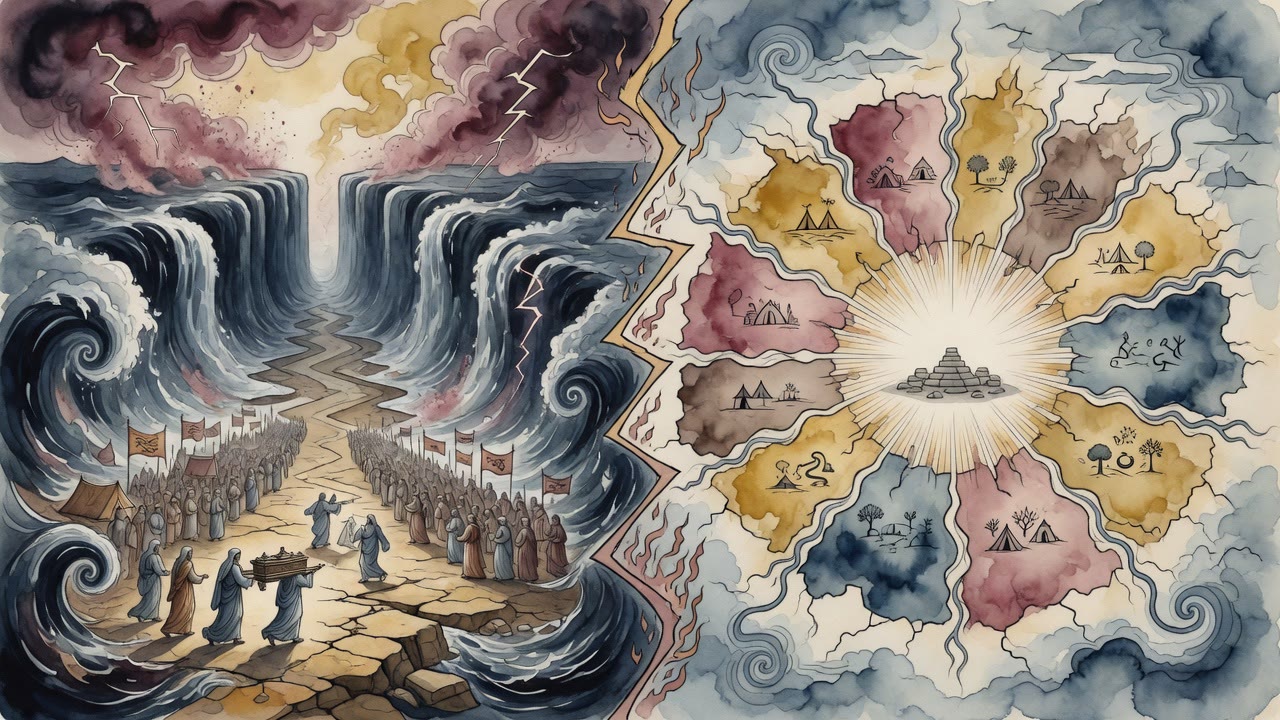
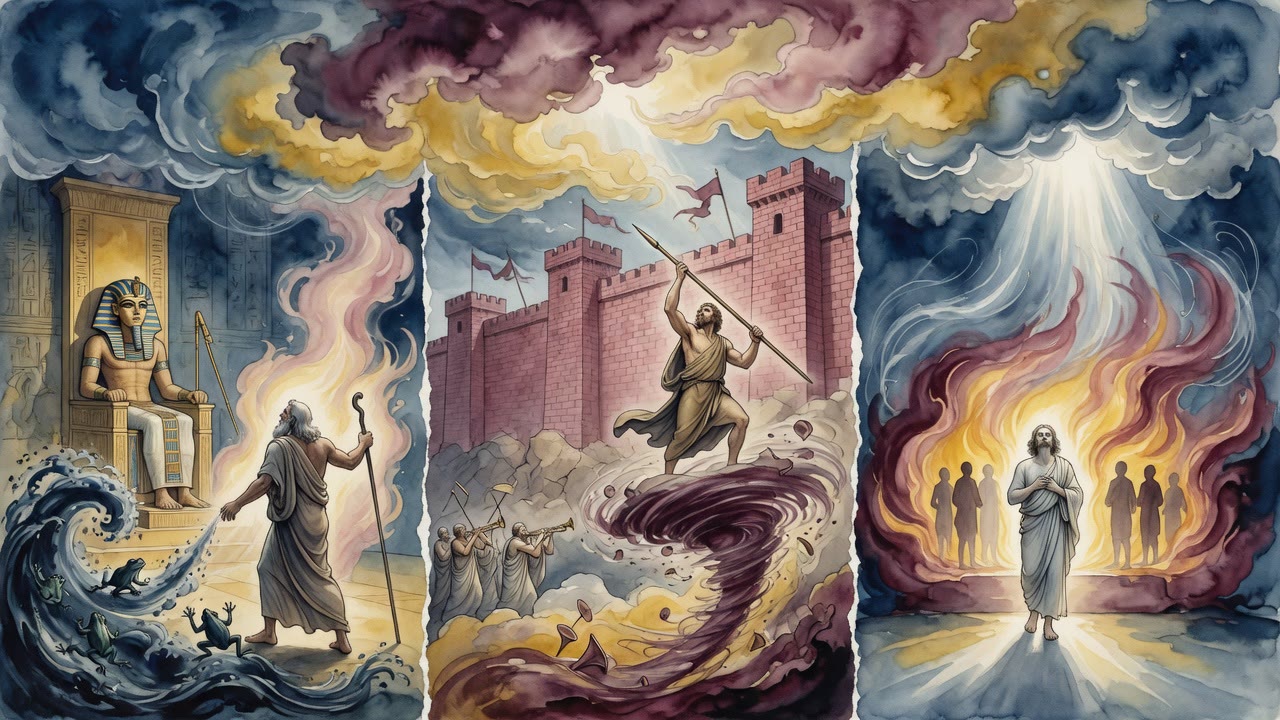
Jericho required no javelin and no conventional siege. The walls came down under a seven-day ritual of trumpets and silence and marching, and the city was devoted to destruction in a single afternoon (Joshua 6:20). No human commander could claim that victory as the result of skill or strategy. The signal it sent to every remaining city in Canaan was not that Israel had a good general. It was something colder and harder to answer.

But the next battle, at Ai, nearly broke the campaign.

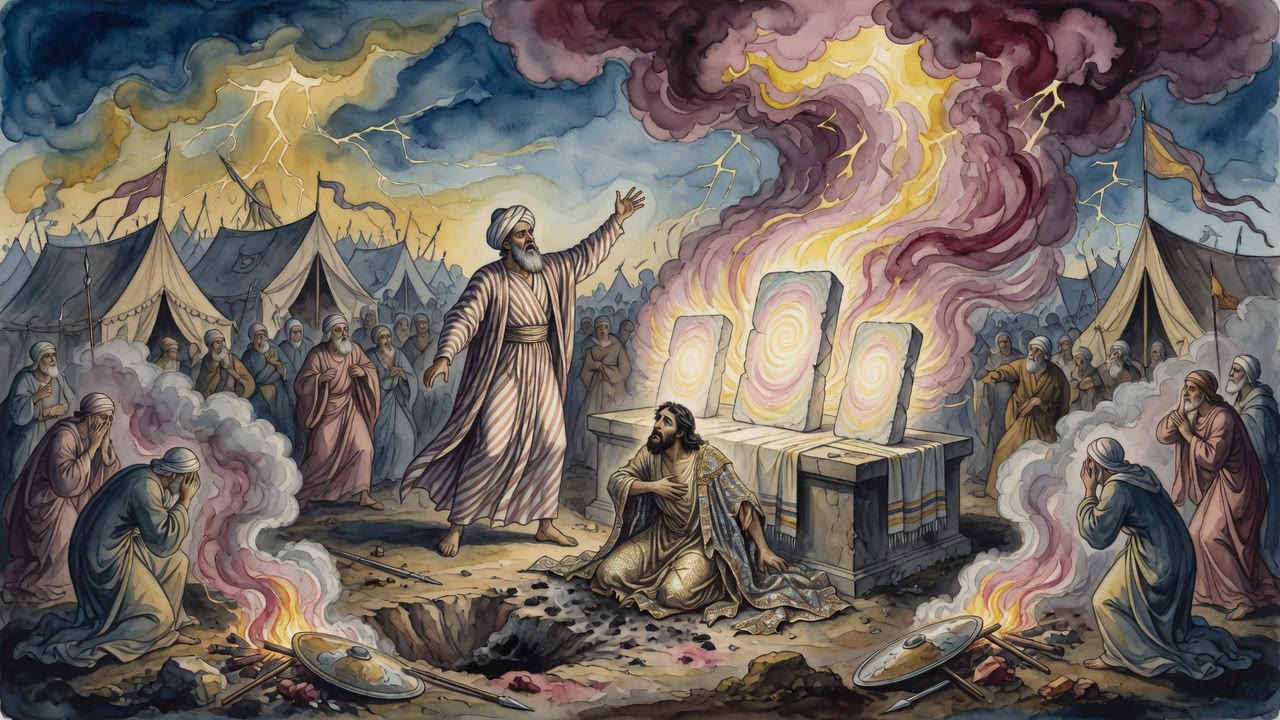
The first assault on Ai failed. Thirty-six men died, and the rest fled, and Joshua tore his garments and fell on his face before the ark until evening (Joshua 7:6). The defeat came from a concealed violation inside the camp, a man named Achan who had taken from the devoted things at Jericho. Once the source of the rupture was found and dealt with, God spoke to Joshua again. Go up to Ai. I have given it into your hand. Take all the people of war.

The Arm That Could Not Come Down

The strategy for Ai was an ambush. Joshua positioned a large force in hiding to the west of the city while he approached from the north with the main army, drew the garrison out by feigning retreat, and waited for the hidden force to move.

The signal was his arm.

God told him to stretch out the spear he held toward the city, and God would deliver it (Joshua 8:18). Joshua raised his arm. The ambush force saw the signal and rose from their positions and entered Ai and set it on fire. The garrison of Ai, caught between two forces with their own city burning behind them, had nowhere to turn.

Joshua did not lower his arm.

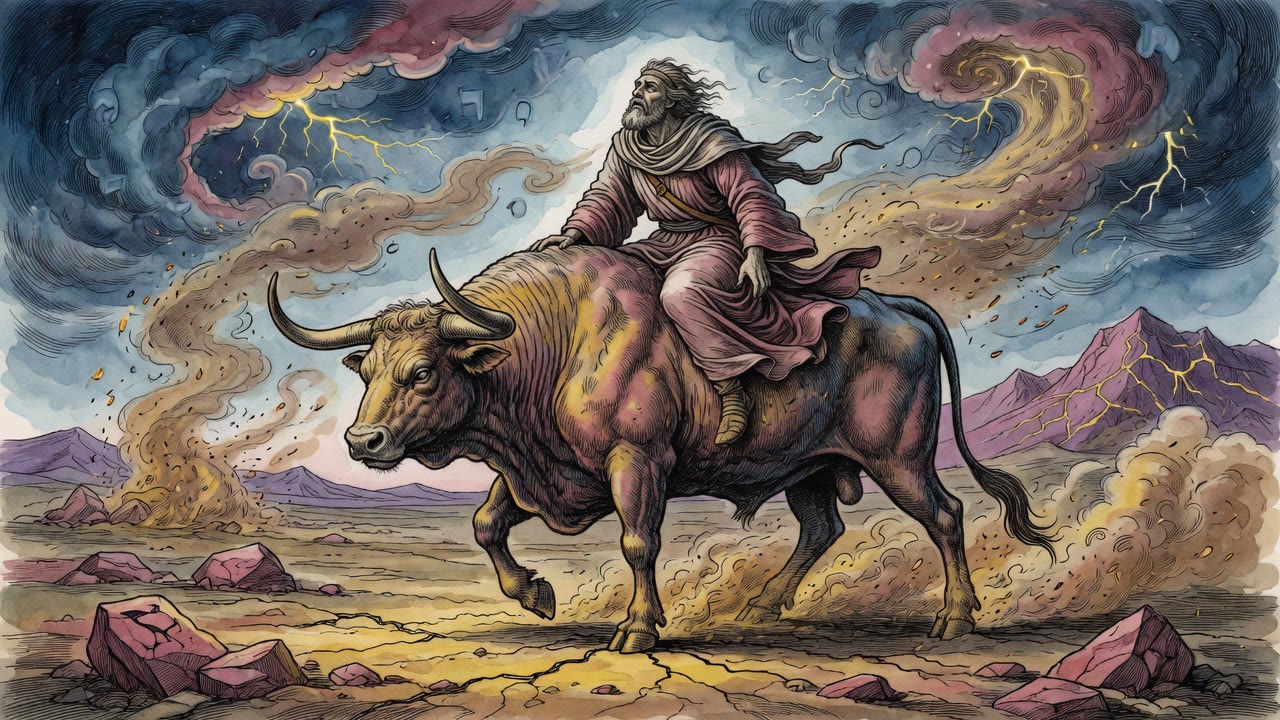
All morning, all afternoon, with the smoke going up from Ai, with the fighting continuing in the valley below, he held the spear extended (Joshua 8:26). This was not a detail about endurance, a fact noted to illustrate his strength. Something else was happening. The spear arm was not a signal given and then withdrawn. It was continuous. The battle would continue while the arm was up. The city would fall while the arm was up. He would hold it until there was nothing left to hold it for.

He drew it back when Ai was gone.

The Day the Sun Stopped Over Gibeon

Ai was not the last time Joshua's arm would govern what happened around him. When the five Amorite kings attacked Gibeon, a city that had made peace with Israel, Joshua marched his army through the night from Gilgal and struck the coalition at dawn. God threw down great hailstones from the sky on the retreating kings, and more died from the hailstones than from swords (Joshua 10:11).

But there was still not enough day left to finish what needed finishing.

Joshua spoke to the Lord, and then he spoke in the hearing of all Israel. He commanded the sun to stand still over Gibeon, and the moon to halt in the valley of Ajalon (Joshua 10:12). The sun stood still. The moon did not move. A full day stretched where only an afternoon had been. Ben Sira, in the second century BCE, set the image plainly: Joshua stretched out his hand and waved his javelin at a city, and who could stand against him, for the wars of Adonai were fought (Ben Sira 46:6).

That question was not rhetorical. It had a demonstrated answer. No one could stand against him. Not because Joshua was the greatest soldier in the world. Because when Joshua raised his arm, the sun waited.

What the Letter and the Spear Have in Common

The letter Joshua sent before the campaign and the spear Joshua held over Ai are not opposite things. They are the same posture from two different directions. The letter asked the nations to reckon honestly with who they were dealing with. The spear demonstrated it for the ones who would not reckon. In both cases, the human action, writing, raising an arm, was the frame through which something larger operated. Joshua did the part that was his to do. The rest was not withheld.

The Girgashites understood the letter. The garrison of Ai understood the spear. The kings at Gibeon understood the sky going dark as the sun refused to set. Every one of them received the same information. It was only the form of delivery that changed.


← All myths

From the tradition

Sources

3 sources

The texts this telling draws on, in full. Open a card to read inline, or expand it for a wider, quieter read.

Legends of the Jews 1:47Legends of the Jews

The familiar story is this: – the Exodus, the wandering in the desert, and finally, the moment to claim their inheritance. But it wasn’t just a simple walk in the park. There were nations already there, powerful and not exactly thrilled to see the Israelites arriving. And Joshua, ever the strategist, knew that words could be just as important as swords.

In Legends of the Jews, compiled by Rabbi Louis Ginzberg, Joshua sent a letter ahead to these nations, a kind of "heads up" before they arrived. It wasn't just a polite invitation; it was a powerful declaration. He reminded them of all the miracles God had performed for Israel, a history of divine intervention that should make anyone think twice before messing with them. And he ended with a bold statement: "If the hero Japheth is with you, we have in the midst of us the Hero of heroes, the Highest above all the high."

Can you imagine receiving that letter? The reaction of those "heathen" nations must have been a mix of fear and disbelief. And it only intensified when Joshua's messenger started talking about the Israelite army's discipline, the sheer size of Joshua himself – reportedly five amot (ells) tall!, his regal attire, and a crown inscribed with the very Name of God. It was a full-on intimidation tactic.

Words can only go so far. After seven days, Joshua appeared with twelve thousand troops. And that’s when things got really interesting.

Enter the mother of King Shobach, described as a powerful witch. Not one to back down from a challenge, she used her magic to trap the Israelite army within seven walls. Talk about a magical checkmate! What could Joshua do?

He sent a carrier pigeon – yes, a carrier pigeon!, to Nabiah, king of the tribes east of the Jordan, urging him to come quickly with the priest Phinehas and, crucially, the sacred trumpets, the shofarot (plural of shofar).

Nabiah didn't waste any time. But before he even arrived, Shobach’s mother, the witch, realized her magic was failing. She saw a star rising in the East, a sign that her power was useless against the divine force backing the Israelites. In a fit of rage, Shobach threw his own mother from the wall! He didn't last much longer himself, falling to Nabiah in battle.

Finally, Phinehas arrived with the shofarot. And here's where the story takes a truly wondrous turn. At the sound of those trumpets, a blast of sacred sound, the walls toppled! Just like that.

A pitched battle followed, and according to the legend, the heathen were completely annihilated.

What does this all mean? It's more than just a war story. It's a reminder that even when we feel trapped, walled in by seemingly insurmountable obstacles, there's always hope. Joshua's story reminds us of the power of faith, of strategic thinking, and of the unwavering belief in something greater than ourselves. And maybe, just maybe, the right sound at the right time can bring down even the strongest walls.

Full source
Ben Sira 46:6Ben Sira

Ben Sira turns to Joshua Raised His Javelin Against the City.

Ben Sira, in his wisdom, certainly did. He paints a picture of Joshua in chapter 46 that's nothing short of awe-inspiring.

"To avenge vengeance on the enemies, and to inherit Israel. How admirable when he stretched out his hand, when he waved his javelin at a city." Can you just see that image? Joshua, hand outstretched, javelin raised, a figure of righteous fury and divine purpose.

It wasn't just about brute strength. Ben Sira asks, "Who is it who could stand against him? For the wars of ADONAI were fought." That's Adonai, Hebrew for "Lord," often used as a substitute name for God. This wasn't just Joshua's fight; it was God's. He was an instrument, a conduit for divine will.

And here's where it gets really interesting. "Was it not by his hand that the sun stood still, a single day as if it were two?"

Now, that's a story you might remember. It's the miracle recounted in the Book of Joshua itself ((Joshua 10:1)3). The sun and moon stopped in the sky, allowing Joshua and his army to complete their victory against the Amorites. Ben Sira emphasizes that this wasn't just some lucky break. This was a direct intervention, a bending of the very laws of nature.

Why?

Because, as Ben Sira tells it, "For he called to God the Highest, as his enemies surrounding forced him; and God the Highest answered him, with stones of ice and hail." Joshua cried out in desperation, and God responded with a literal storm of divine force. "He threw them down on the enemy nation, and as they fled destroyed them all; so that all battling nations knew, that ADONAI guards their wars."

It's a powerful reminder that even in the face of overwhelming odds, faith and righteous action can bring about the seemingly impossible. It's also a potent image of God's active involvement in the world, protecting those who fight for what is right.

But what does it mean for us, today? Are we meant to expect the sun to stand still when we face our own challenges? Probably not literally. But perhaps the story of Joshua and his divinely-aided battles is a call to have faith in the face of adversity, to trust that even when we feel surrounded, we are not alone. And maybe, just maybe, to remember that sometimes, the greatest victories are won not through our own strength, but through the power of something much, much larger than ourselves.

Full source
Devarim Rabbah 5:14Devarim Rabbah

Devarim Rabbah turns to Joshua's Surprising Call for Peace Before Battle.

(Deuteronomy 20:10) tells us, "When you approach a city to wage war against it, you shall call to it for peace." Seems a bit counterintuitive, doesn't it? But the rabbis of Devarim Rabbah, a collection of homiletic interpretations on the Book of Deuteronomy, saw profound wisdom in this verse. They asked: Who actually did this? Who embodied this call for peace before war?

The answer? Joshua son of Nun.

Rabbi Shmuel bar Naḥman paints a vivid picture of Joshua's approach. Before engaging in battle, Joshua would issue a public decree in every place he intended to conquer. This wasn't just a formality. It was a genuine invitation, a three-pronged offer: "Anyone who wishes to leave, let him leave; whoever wishes to make peace let him do so; and whoever wishes to wage war, let him do so.” He gave the inhabitants a choice. It wasn't just about brute force. It was about offering options, respecting agency, and perhaps, even minimizing bloodshed.

So, what happened?

Well, the Girgashites, one of the Canaanite nations, took Joshua up on his offer. They chose exile. They evacuated their land and, according to the midrash (rabbinic interpretive commentary), were blessed by God with a land just as beautiful as their former home – Africa. Yes, Africa! Imagine that – a whole continent blessed because its inhabitants chose peace over war.

The Givonites, on the other hand, chose a different path. They opted for peace treaties. And Joshua, true to his word, honored their decision and made peace with them.

But what about those who chose war? The thirty-one kings who decided to fight Joshua? Devarim Rabbah tells us that the Holy One, blessed be He, caused them to fall into Joshua's hands. The text references (Deuteronomy 3:3), "We smote him until we left him no remnant," to illustrate the completeness of their defeat.

So, what does this tell us? It's not just a simple war story. It's a story about choices. A story about the potential for peace, even in the face of conflict. It's a story about how offering alternatives can lead to unexpected outcomes, both for those who choose to fight and those who choose to flee. And perhaps most importantly, it's a story reminding us that even in times of war, the call for peace should always be the first, and perhaps most powerful, weapon.

Full source