Judah Stood Before Joseph and Both Men Raged Like Kings
Isaac asked God for suffering and went blind on purpose. His grandsons inherited the blindness and walked in and out of Egypt without seeing Joseph.
Table of Contents
 Click for full size
Isaac Asked God for Suffering
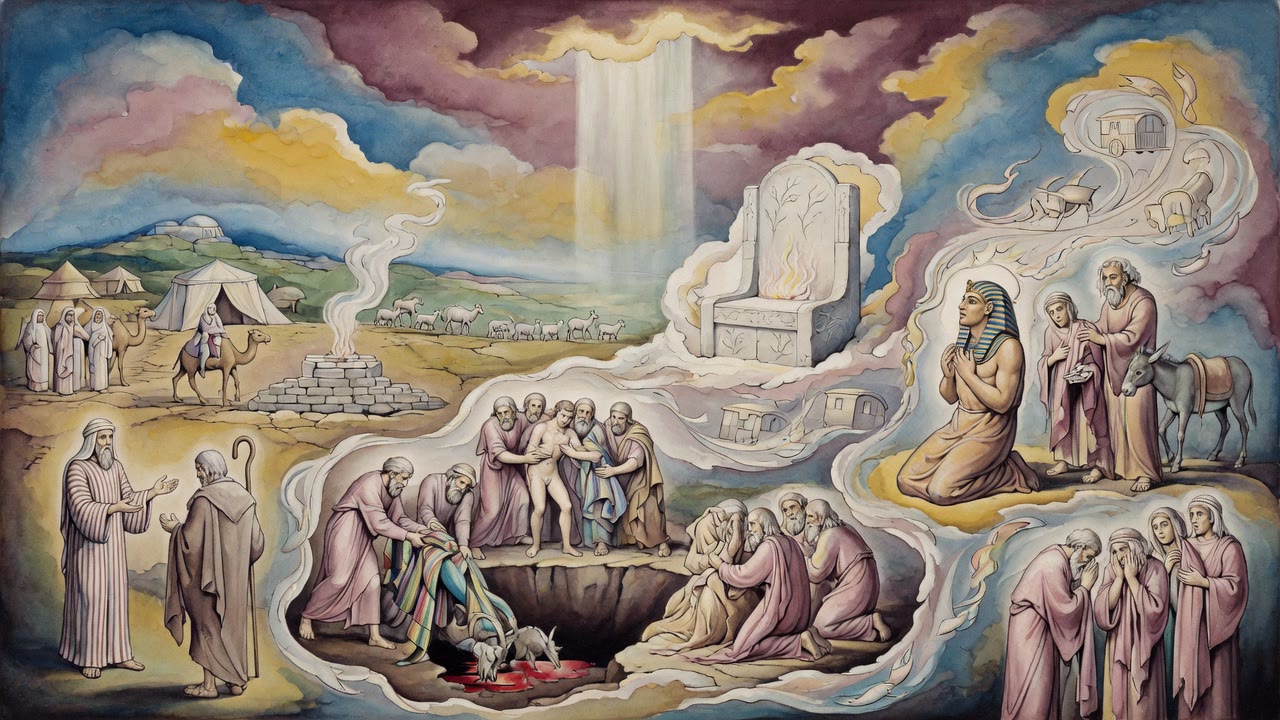
Abraham stood before God and asked to be made old. "A man and his son walk into a room together," he said, "and nobody knows which of the two to honor. Put white in a man's beard and the room will know." God told him he had asked for a good thing and that it would start with him. Nobody in the world had been old before. Abraham went out of that conversation with age on him.
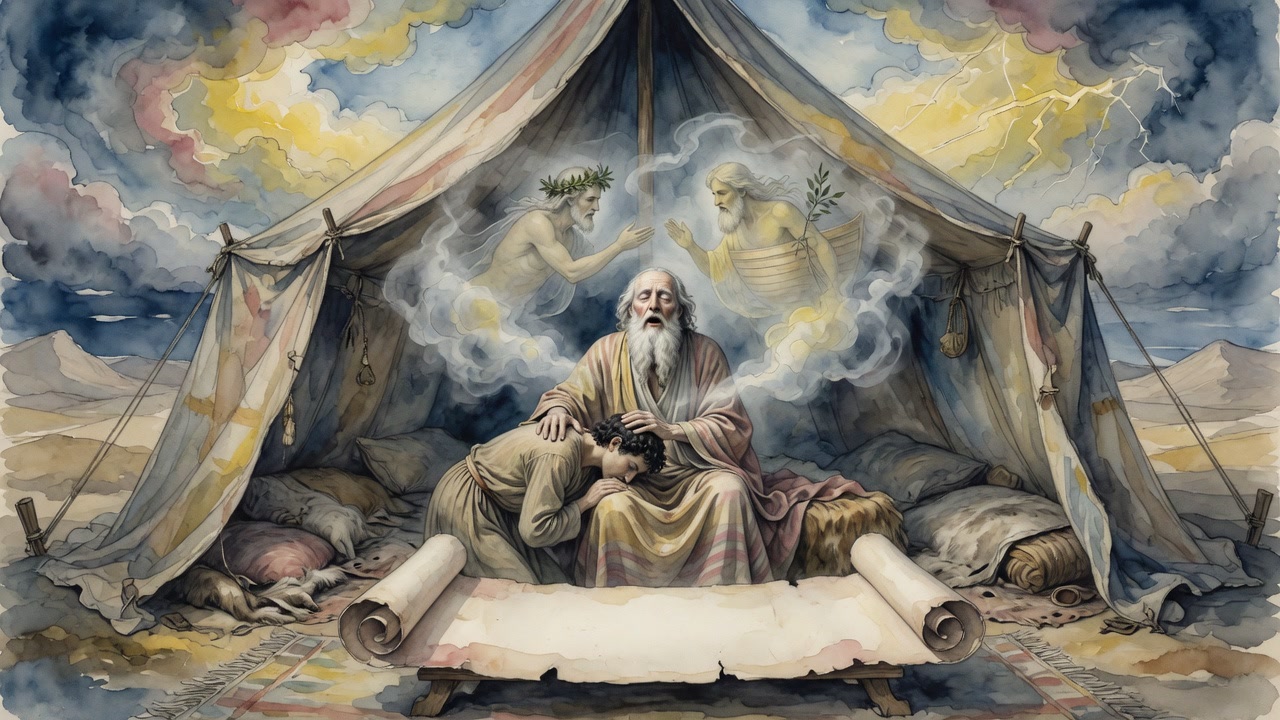
Isaac came next and asked for something worse. "A man dies with nothing wrong with him," he said, "and justice is stretched out against him the whole way. Send him suffering first and it is not." God said the same words back. You have asked for a good thing, and I will begin with you. Not long after, Isaac sat in his tent and the light went out of his eyes, and a son in goatskin came through the door and took a blessing meant for his brother.
Jacob asked third. "A man drops dead and never settles matters between his children. Lay him up for two or three days and he settles them." Granted, and it began with him. The first man in the world reported sick was Jacob, and the message went to Egypt, and the son who came running was Joseph.
Jacob Caught His Sons Staring at Each Other
The famine reached Canaan and the grain did not. Jacob walked in on his ten grown sons standing in a circle saying nothing, each one waiting for someone else to move, and he lost patience with them. "Why are you making a spectacle of yourselves?" he said. "There is grain in Egypt. Go down."
He knew more than he could say. God had dimmed him the way a lamp is turned down, not out. Something in him held on to the idea that Joseph was alive and would not surrender it, and something else refused to let it come clear enough to speak. His sons had no such trouble. Their sky had been sealed. They walked down into Egypt, bought grain, walked out again, came back, stood in front of the man who ran the country, and never once saw their brother in his face.
Two Kings Raged and No Breath Passed Between Them
The second visit went badly. Simeon was already in an Egyptian cell. Benjamin had been dragged along against Jacob's judgment. A silver cup came out of Benjamin's sack on the road home and the guards marched them all back.
Then Judah stepped forward, and the room changed temperature.
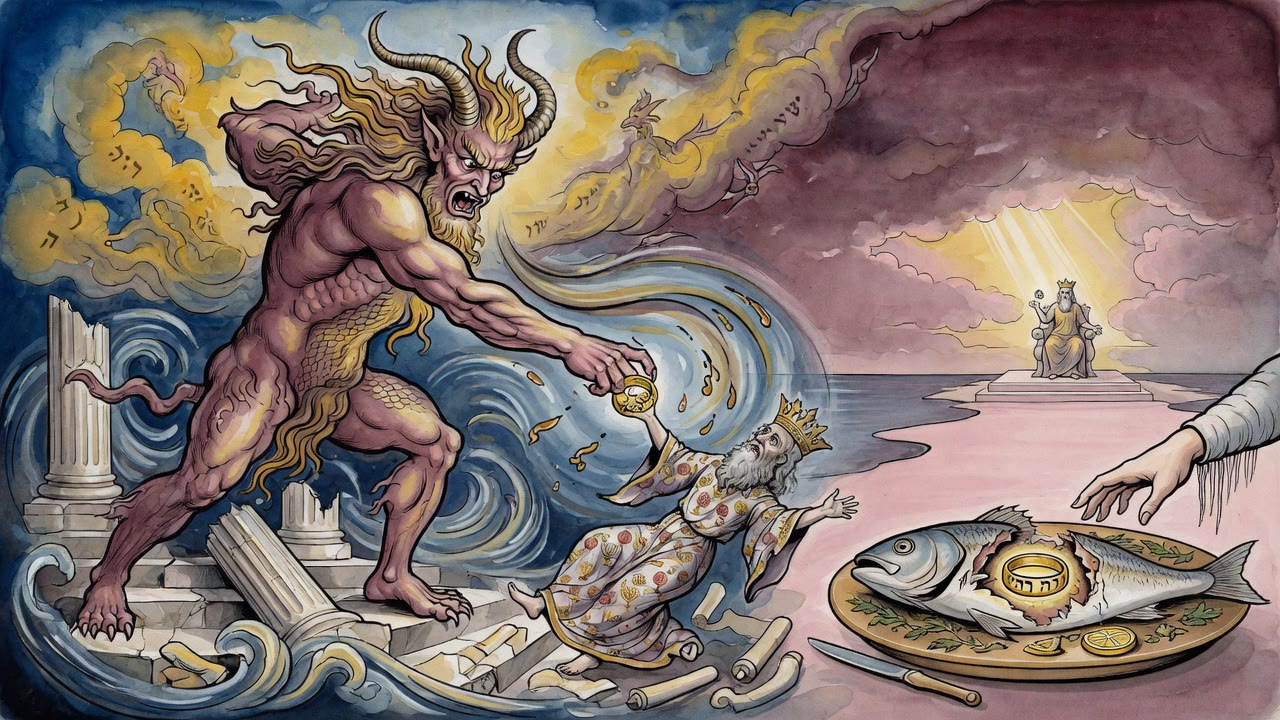
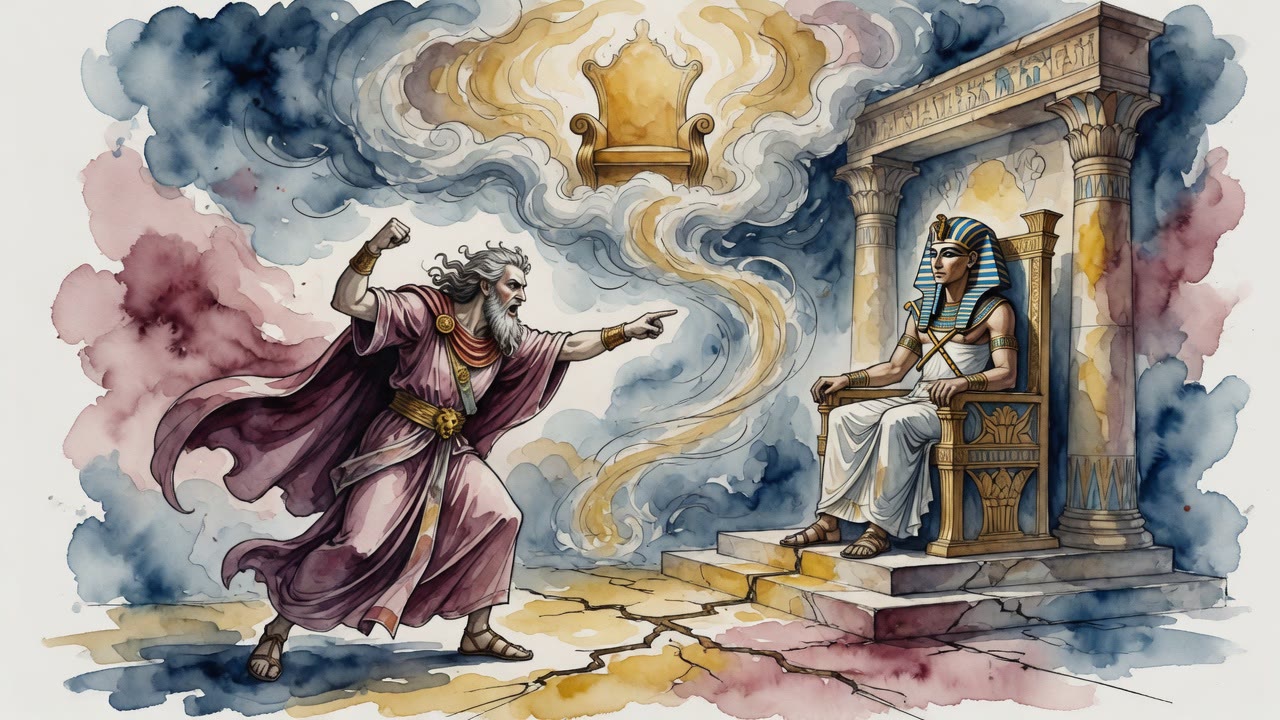
He came so close to the Egyptian that the two of them were nearly touching, and both men were shaking with fury. Judah had a promise to keep and a father who would die if he broke it. The man opposite him had spent twenty-two years arranging this exact moment. Neither knew the other. Both were past caring what it cost.
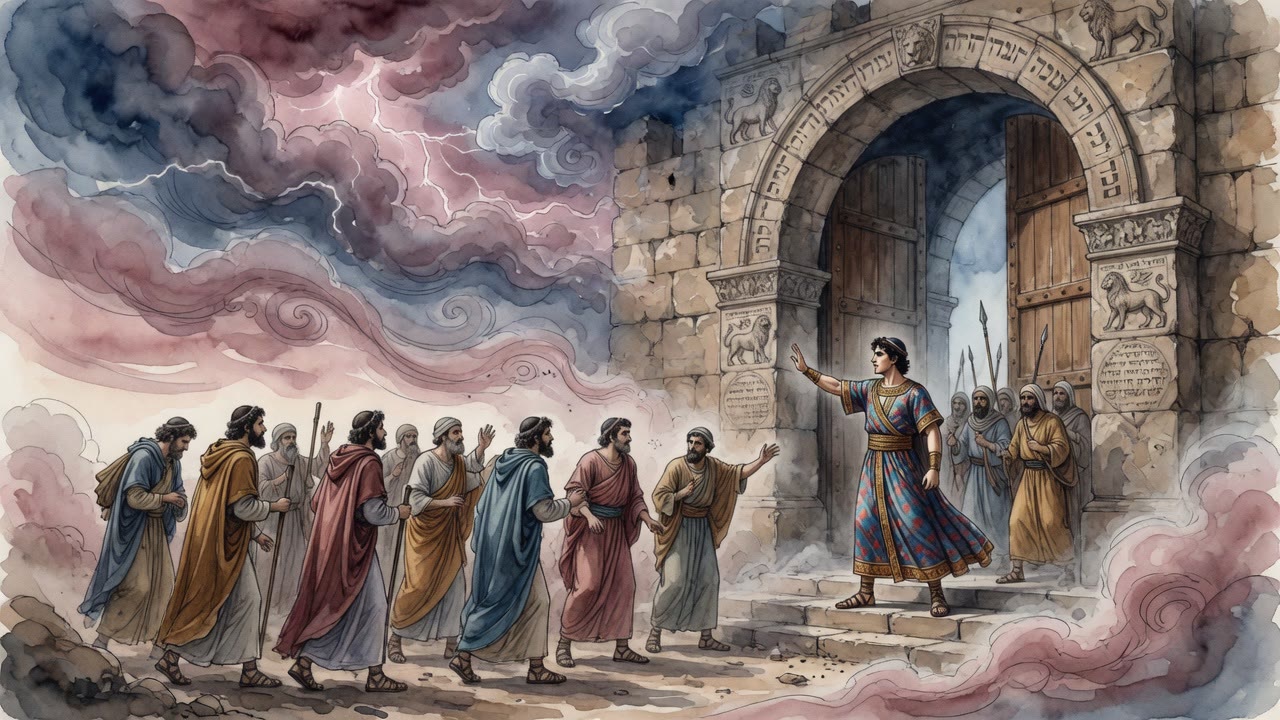
The brothers backed off and left them to it. Kings are fighting, they said among themselves. What business is that of ours? Let a king fight a king. Later teachers reached for a line about the sea beast whose scales lock so tight that no air gets through, and put Judah and Joseph in the place of the scales and the ten brothers in the place of the air. Nothing could get between them. Nobody tried.
I Am Joseph
Joseph cleared the room of every Egyptian and broke.
"I am Joseph," he said. "Is my father still alive?"
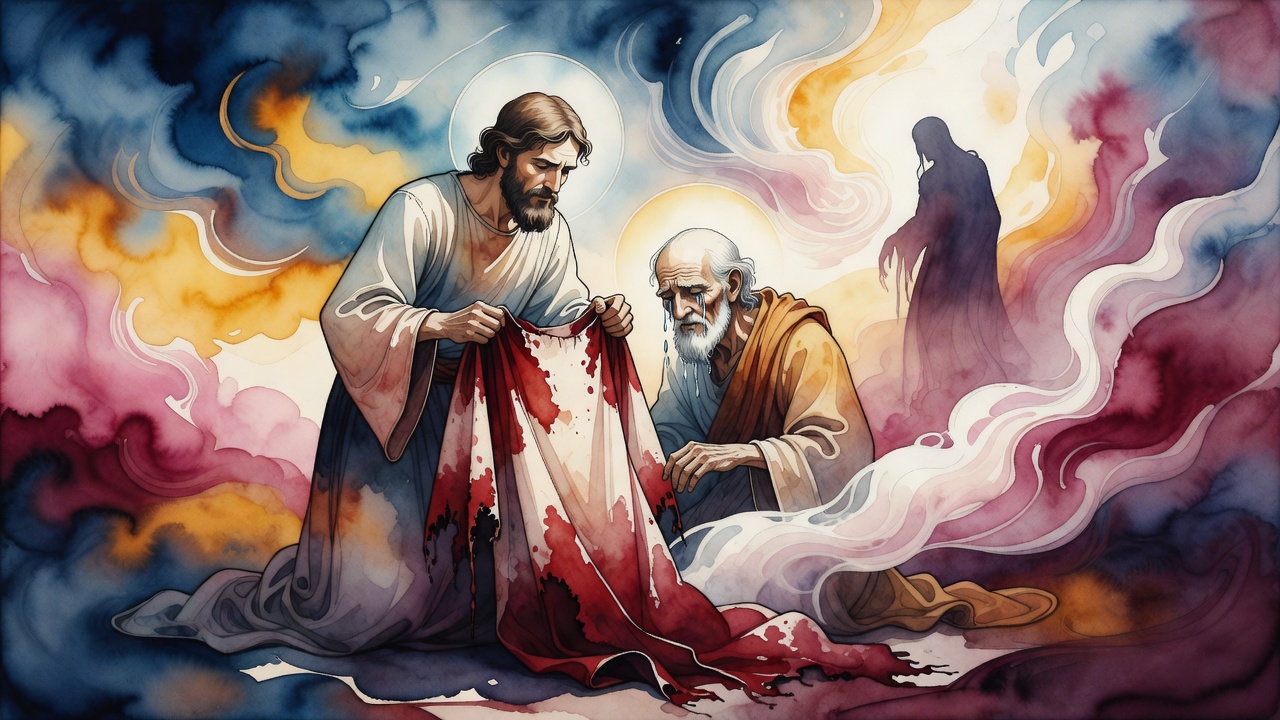
Not one of them answered him. They stood in front of the most powerful man in Egypt with their mouths open and nothing coming out, and the terror in the room was not fear of execution. It was the arithmetic running backward: the pit, the coat, the silver, the years of watching their father refuse to be comforted, and this man in linen and gold who had been at the bottom of that pit listening to them eat lunch.
They had wondered at his table the night before, when he seated them oldest to youngest and they could not work out how he knew. They had wondered without ever once wondering the right thing.
The Field With a Deed Signed in Heaven
Years before any of it, on the way back from Laban, Jacob had pitched his tent outside Shechem and then done something no wanderer does. He bought the ground. A hundred kesita, counted out to the sons of Hamor, for a patch of field he had already camped on for free.
Rabbi Yudan bar Simon counted three plots in the whole land that no nation on earth can ever call stolen goods, because the money is written into the record: the cave at Machpelah, which Abraham weighed out silver for; the threshing floor David paid Ornan six hundred shekels of gold to own; and this field, bought for a hundred kesita by a man with no country. Rabbi Berekhya went further and said the two small letters buried inside the word kesita are the divine name, because God wrote the bill of sale Himself and then witnessed it.
Joseph's bones came up out of Egypt generations later, carried the whole way through the wilderness, and went into the ground there. The brothers who sold him for silver ended up burying him in the one field their father had refused to take for nothing.
← All myths