Judas Maccabee Told the Few Not to Count the Many
Judas Maccabee takes his fighters to prayer and fasting before battle, then tells them victory belongs to heaven, not to numbers.
Table of Contents
 Click for full size
His Name Grieved Kings and Gladdened Jacob
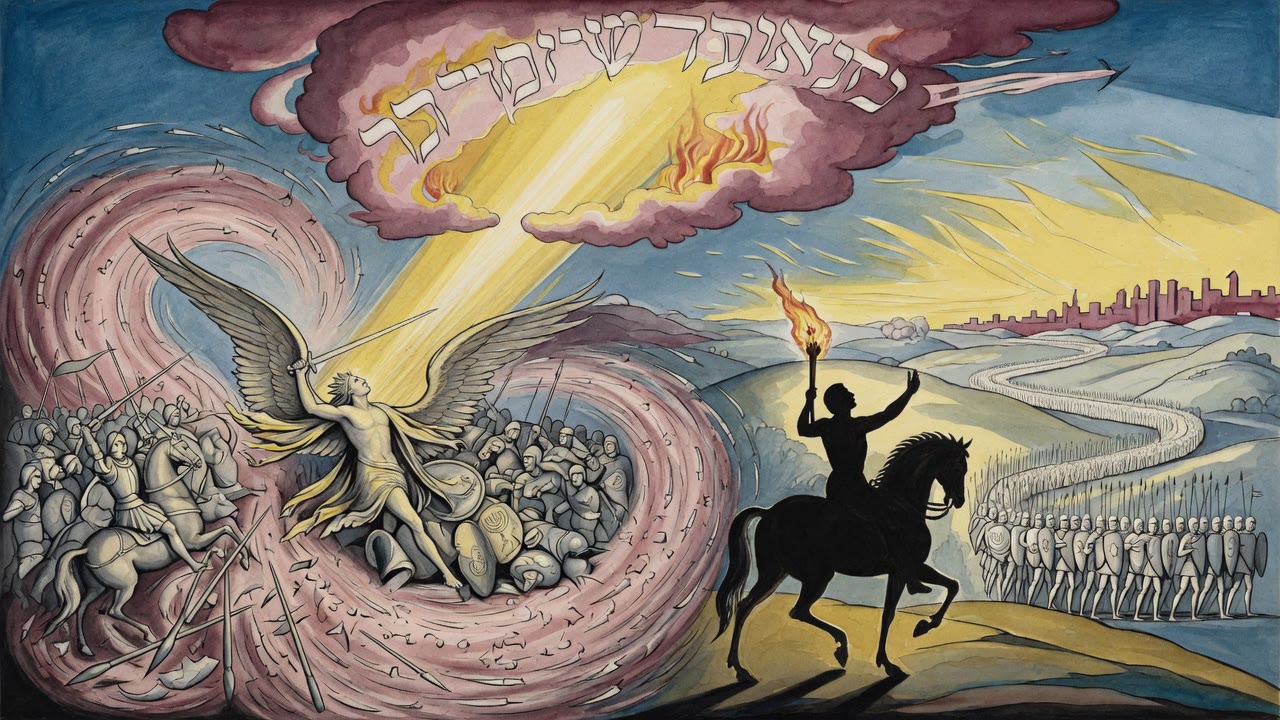
Before Judas Maccabeus had faced any of the great armies, he had already become something difficult to ignore. He grieved many kings and made Jacob glad by his deeds. The sentence in First Maccabees sounds almost liturgical: on one side, mourning kings; on the other, a people who had been ready to perish finding a defender. His memorial is blessed forever.
Then Apollonius gathered a great host and went out against Israel. Judas went out to meet him, struck him down, and took the field. Apollonius fell. Judas took his sword and fought with it all his life. The empire's weapon changed hands. What the Seleucid army had meant to use against Israel became Israel's instrument every time Judas drew it.
The Sword of the Fallen Enemy Stayed With Him
News of Judas spread. Seron, a prince of the Syrian army, heard that a band of faithful men was gathering around him, men who went out to war. Seron decided this was his opportunity to build a reputation. He would make a name for himself by fighting Judas and those with him who despised the king's commandment.
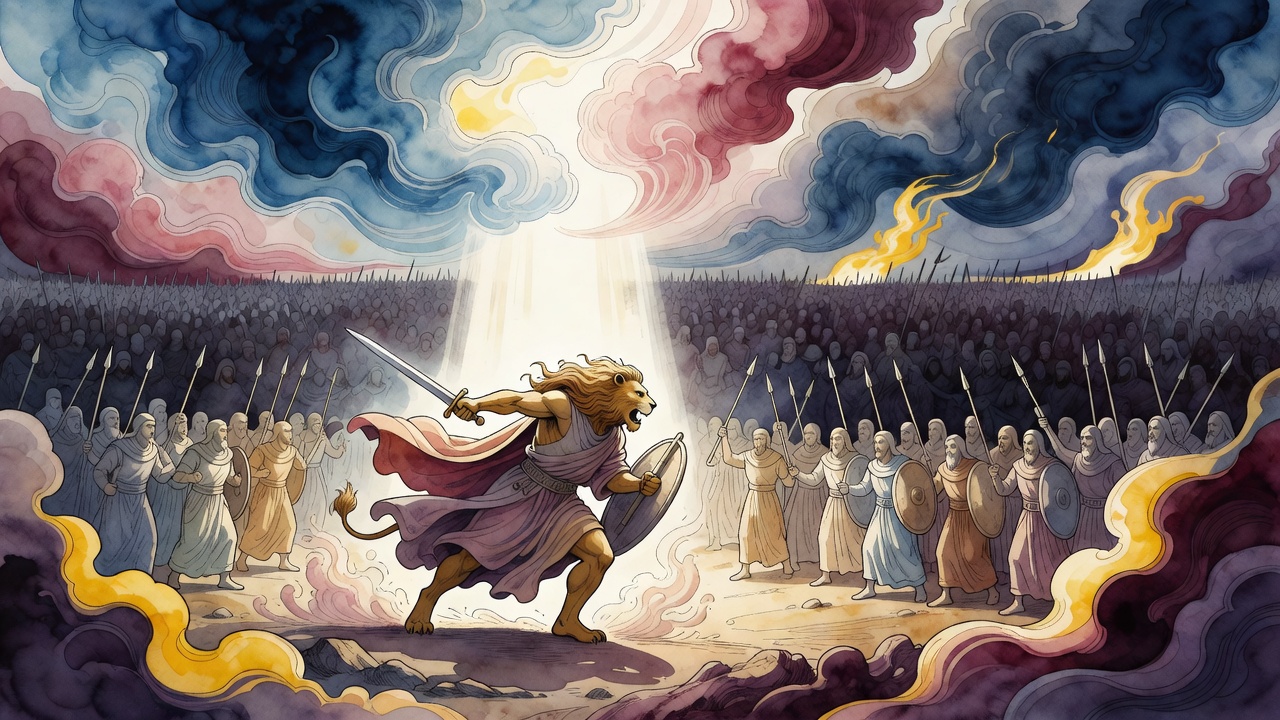
Seron came up with a strong army. When Judas's men saw the force coming against them, they said to him: how can we, being so few, fight against so great a multitude, so strong, when we are ready to faint with fasting this day? Judas did not dismiss the fear. He answered it directly. It is not hard, he said, for many to be shut up in the hands of a few. With heaven it is all one, to deliver with a great multitude or a small company. For the victory of a battle does not come from the size of an army, but from strength that comes from heaven.
Lysias Received Orders to Wipe Out Judea
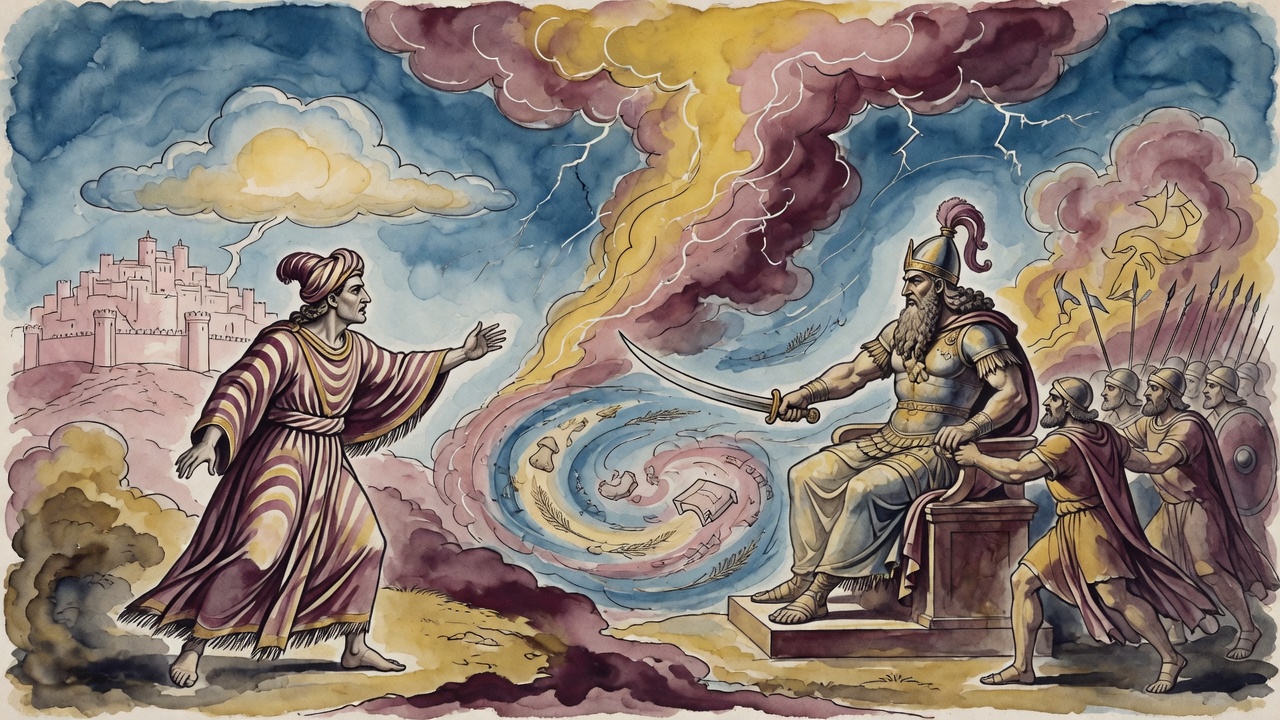
The empire's response was to scale up. Antiochus chose Lysias, a nobleman of the blood royal, and gave him half the army with orders to destroy and root out the strength of Israel from Jerusalem and blot out their memory from that place. Lysias took forty thousand infantry and seven thousand cavalry and marched into Judea.
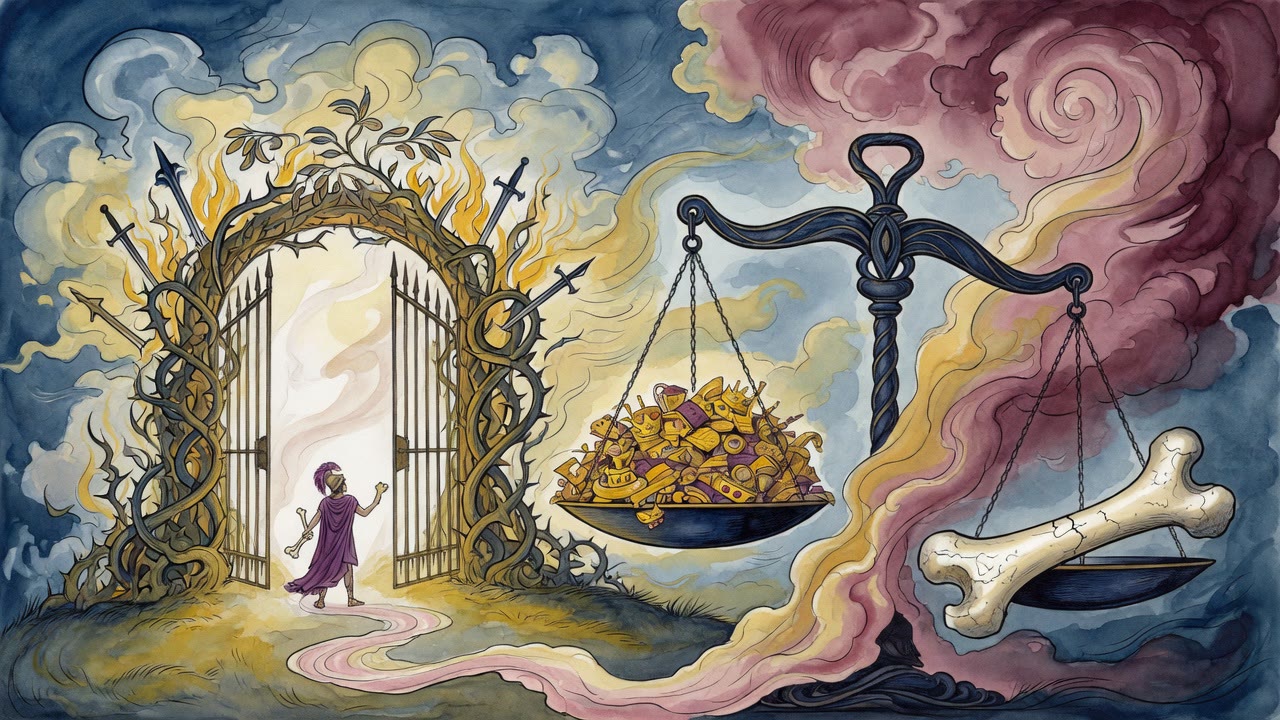
Merchants heard what was coming and brought silver and gold in great quantities, ready to buy Israelite captives for slaves. The neighbors of Israel, the power also of Syria and the land of the Philistines, joined themselves to the Seleucid side. The force assembling against a handful of fighters in the hill country was not a border skirmish. It was an organized extermination with commercial backing.
They Prayed Before They Fought
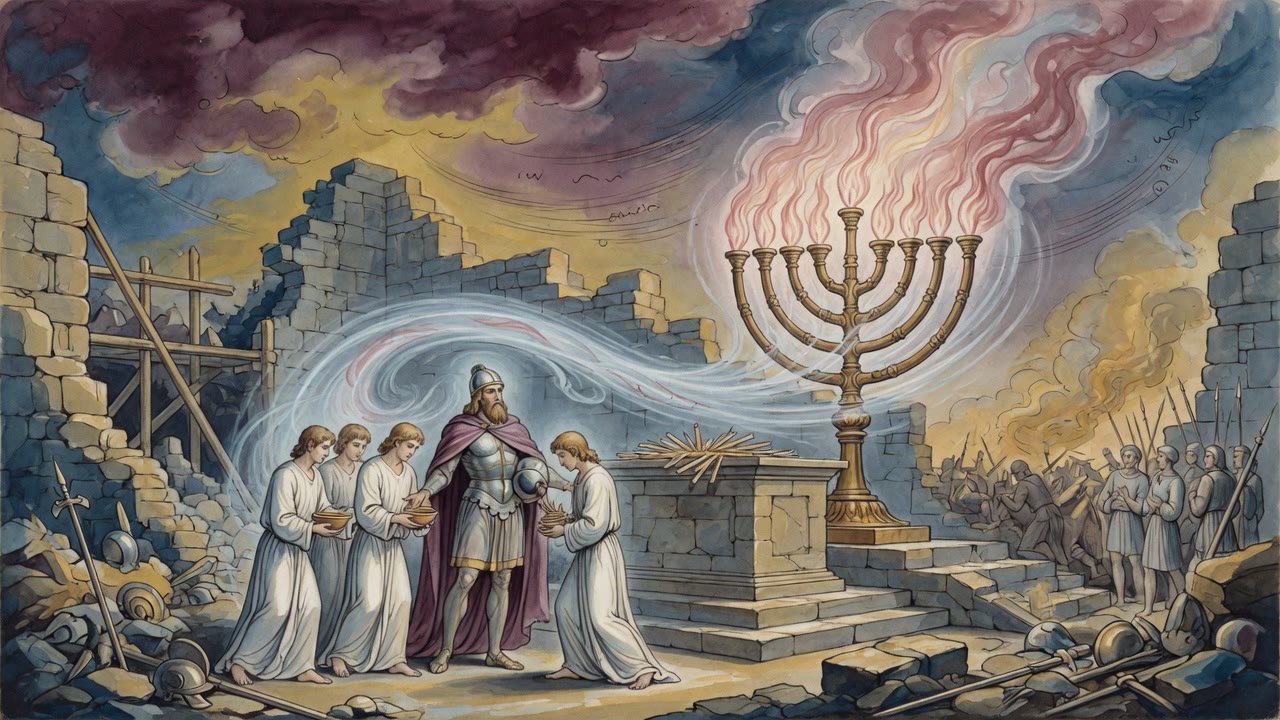
Jerusalem lay empty as a wilderness. None of her children went in or out. The sanctuary was trodden down. The pipe with the harp had ceased. Then those who remained said one to another: let us restore the decayed fortune of our people, and let us fight for our people and the sanctuary.
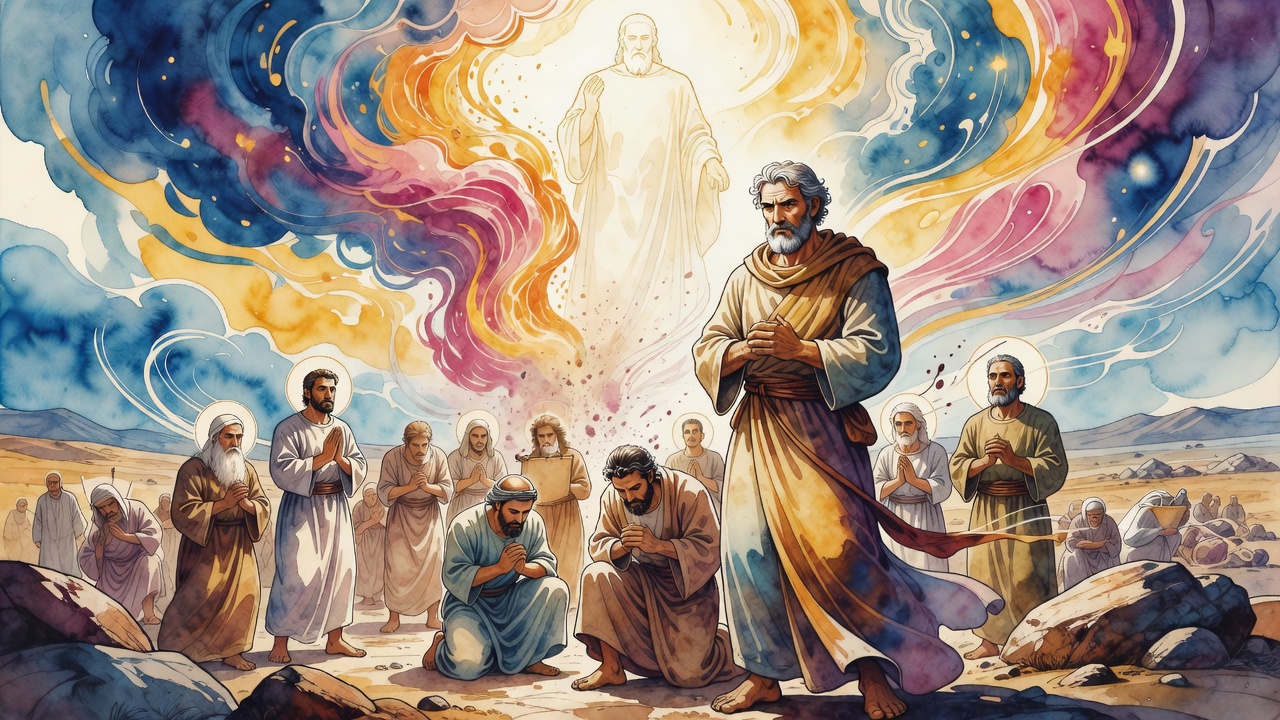
So they assembled and came to Mizpah, over against Jerusalem. They fasted that day and put on sackcloth and cast ashes on their heads and tore their clothes. They spread out the book of the law, those things in which the heathen had sought to paint the likeness of their idols. They brought the priestly vestments, the firstfruits, and the tithes. Then they cried to heaven and asked: what shall we do with these, and where shall we carry them? The sanctuary is trodden down and profaned, and your priests are in heaviness and brought low. And now the Gentiles are assembled against us to destroy us.
Judas told them what he told every army he commanded: do not be afraid of the multitude and do not be afraid of their assault. Remember how the fathers were delivered at the Red Sea when Pharaoh pursued them with an army. Let us cry to heaven, if perhaps he will have mercy on us, and remember the covenant of the fathers, and destroy this army before us today. Then all the nations will know that there is one who redeems and saves Israel.
← All myths