5 min read

Judgment Burned Like Youth and Cooled with Age

A young man's judgment flared like fire that would not listen. Years later the same fire sat lower in him, still hot, no longer wild enough to burn the house.

Curated by Arthur · Told by Maggid ·
Table of Contents
  1. Fire with a Young Hand on the Bellows
  2. Why the World Was Worth the Risk
  3. The Face That Broadcast the Inner Order
  4. Age as a Kind of Mercy

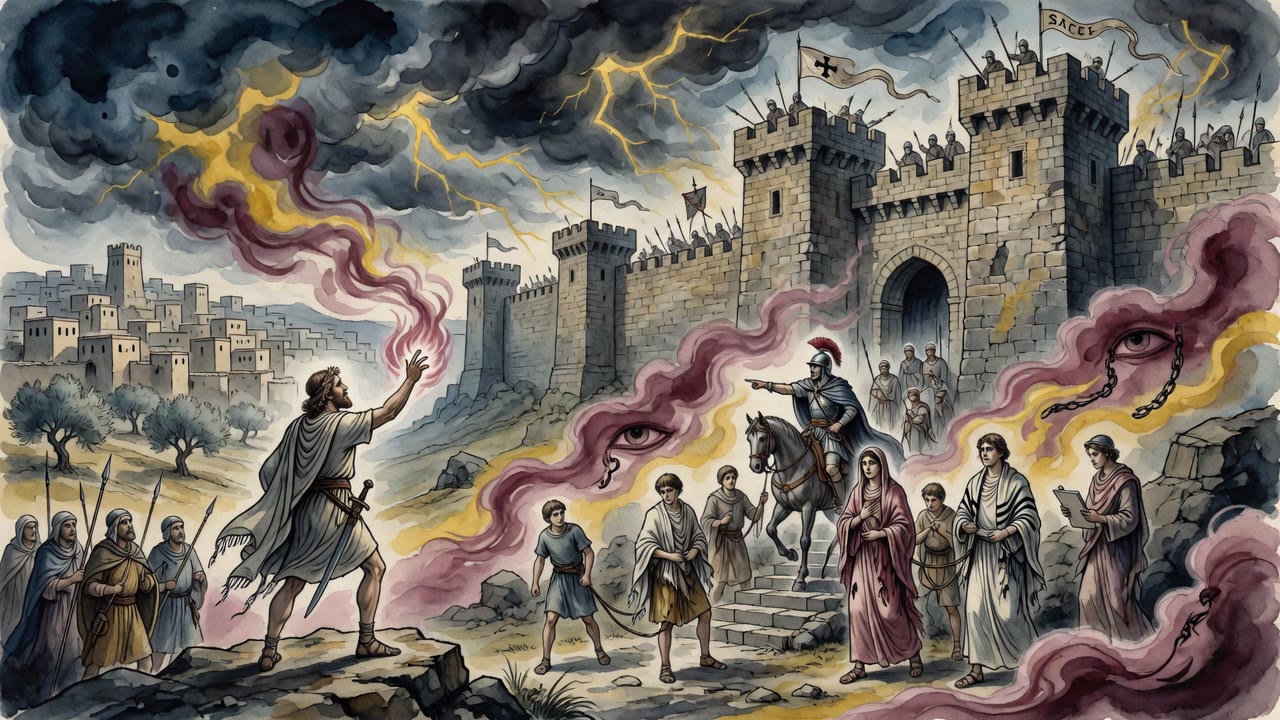
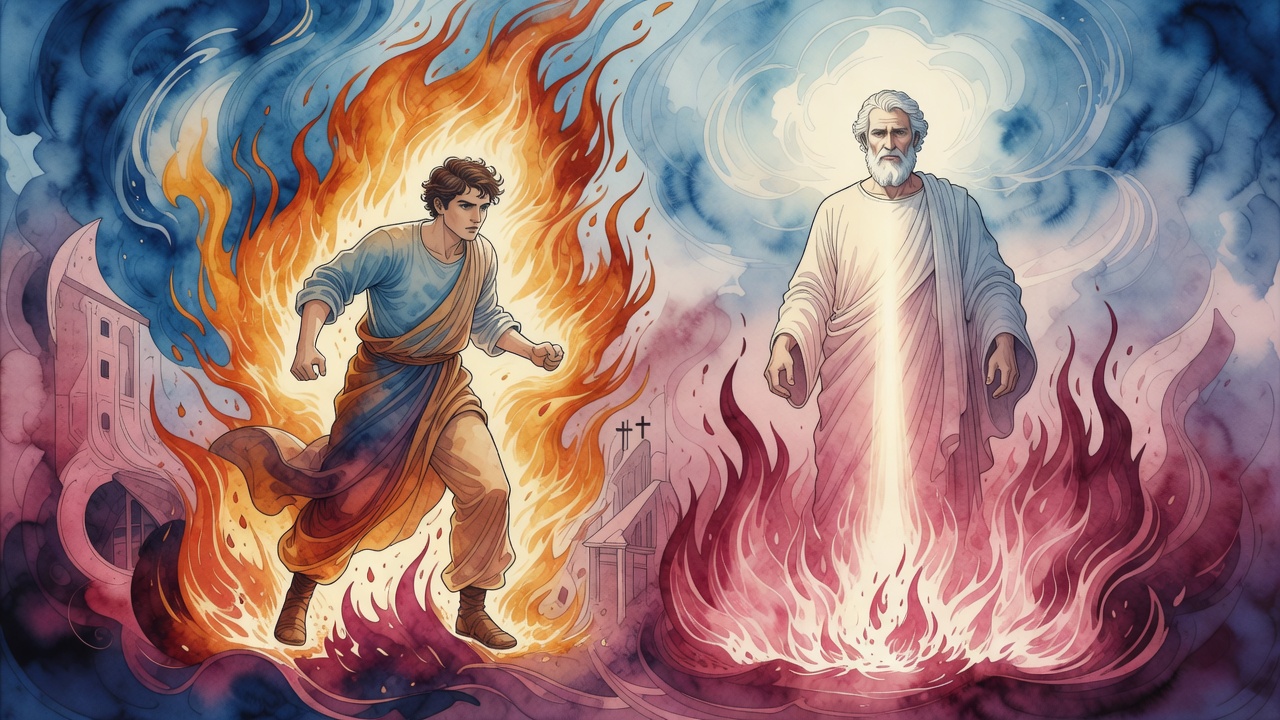
The boy slammed the door so hard the latch spark jumped. Heat rose in his chest before any thought finished forming. He called it justice. His mother called it a fever. The fire did not care what either of them named it.
Judgment Burned Like Youth and Cooled with Age Click for full size

Years later the same man stood in the same doorway and felt the flare start, then settle. The fuel was still there. The rage no longer owned the room.

Between those two doorways lay a long education in heat.

Fire with a Young Hand on the Bellows

In youth, judgment behaves like a blaze fed by dry wind. It jumps to the next beam before the first has finished catching. A slight becomes a war. A rule becomes a whip. The boy who slammed the door believed he was defending truth. He was also defending the pleasure of being right while the wood still smelled of smoke.

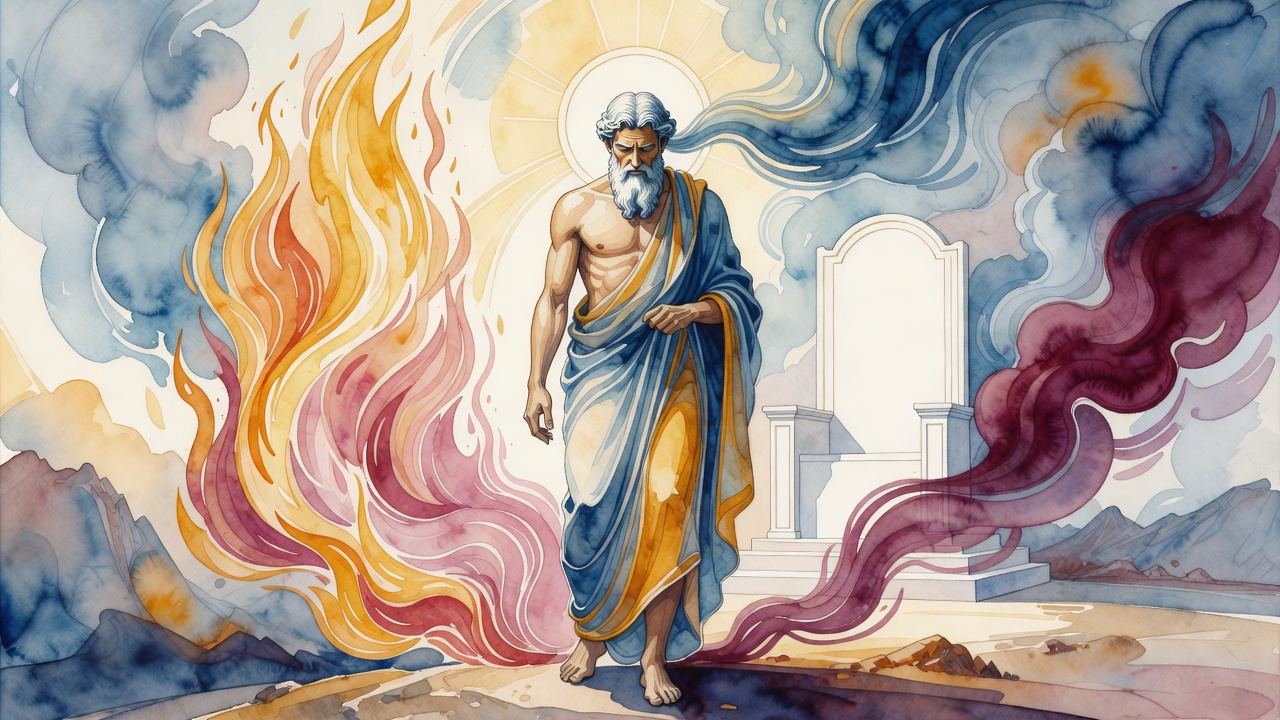
Heaven knows this pattern. Strict judgment, Gevurah (גבורה), is not evil. Unmeasured, it scorches the very goodness it claims to guard. The sources picture judgment as fire that rages hard in early years and, if life is granted and wisdom enters, subsides without going out.

He hurt people he loved because the flame moved faster than mercy. Afterward he slept badly and called the insomnia proof of his seriousness. His brother stopped arguing with him. His friends learned the routes around his temper the way travelers learn the routes around a swamp.

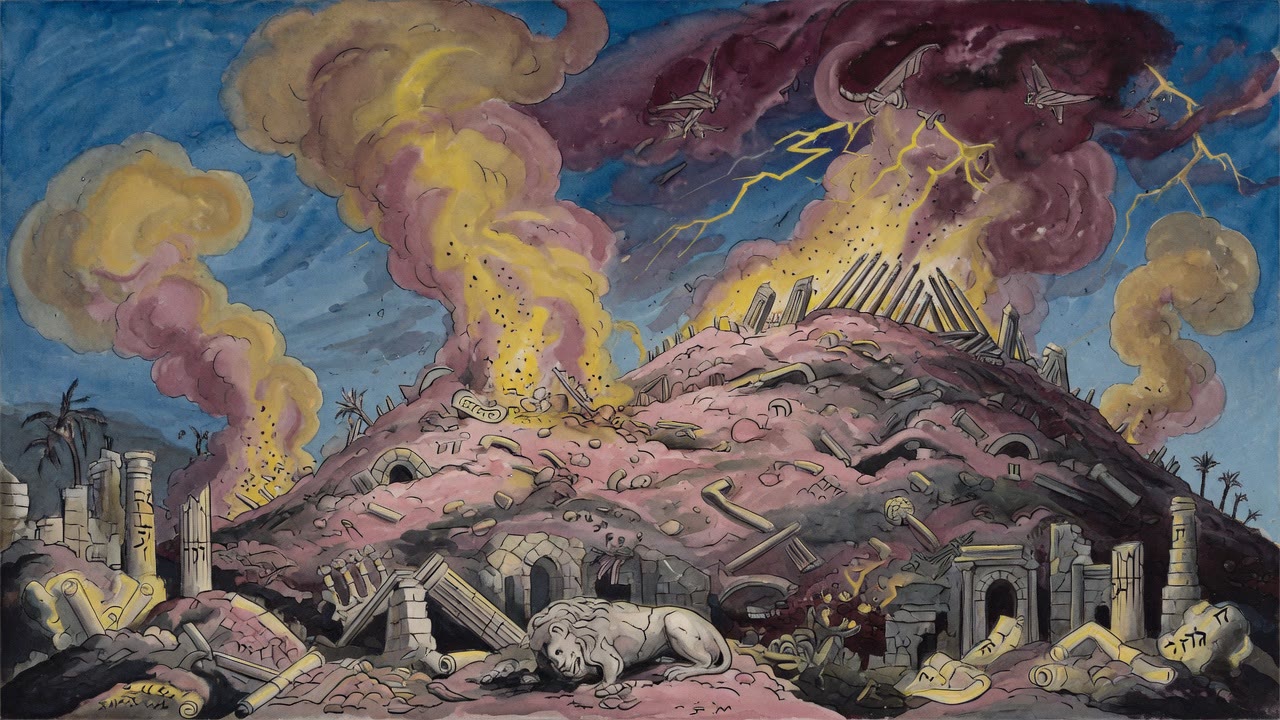
Once he broke a cup to win a point about purity. The shards said more about him than the point did. He swept them up with shaking hands and still did not repent until much later, when the sound of breaking returned in a dream and would not leave.

Why the World Was Worth the Risk

Far above his small doorway, another question burned. Why create at all if creatures can fail this way? God needed nothing. No loneliness, no hunger for praise, no missing piece that humans could supply. Creation was not a repair of divine lack. It was a choice to share goodness.

Goodness shared requires a receiver who can refuse it. Refusal brings judgment. Judgment brings fire. The fire tests whether the gift can still be given without turning into a bribe or a threat. Testing by fire is not cruelty for sport. It is the hard edge of a gift that must remain free.

The boy did not know that theology. He only knew the heat. The heat was already part of the same story. A world without the possibility of his slammed door would also be a world without the possibility of his later gentleness. The Unlimited chose the risk. Creatures live inside it.

When he first heard that God creates to bestow, not to complete Himself, he scoffed. Scoffing is a young fire's hobby. Later the idea sat in him like a coal that warms without leaping.

The Face That Broadcast the Inner Order

His face told on him. The order inside a body leaks through the senses. Vision, hearing, smell, and speech are not only ways of taking the world in. They are ways the inner world walks out. False fire shows in the eyes. True restraint shows in a mouth that closes before the lash falls.

People learned to read him. They stepped back when his jaw set. They stepped closer when age taught him to breathe through the first surge. The four worlds of the senses did not change their names. He changed what he poured through them.

A prophet can wear a false face of vision. A young judge can wear a false face of zeal. Both are emissions from a disordered inside. Both can be repaired when the inside is reordered and the fire is given a hearth.

He began to notice other faces in the market. A merchant whose smile never reached the eyes. A widow whose quiet was not peace but ash. Reading faces became a moral act, not a game, because he remembered how his own face had lied with righteousness.

Age as a Kind of Mercy

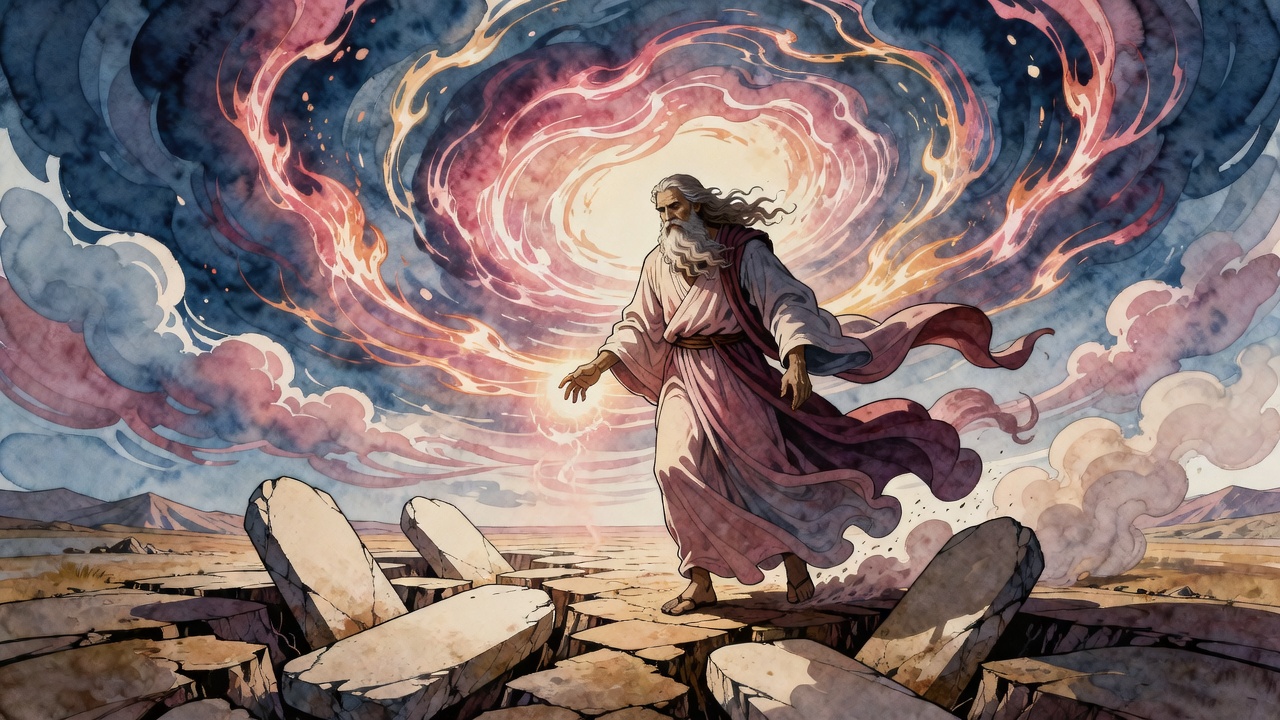
He did not become soft. Softness would have been another lie. The fire still rose when injustice walked past him. It rose lower, slower, with a chimney. He could aim it. He could wait a night. He could ask whether the person before him was a target or a soul under the same test.

On a quiet evening he opened the old door gently. The latch did not spark. His chest still warmed. He thanked the warmth for remaining, and he thanked the years for teaching it manners.

Somewhere in the larger design, the Unlimited still governed the realm of limitation, the way an artist governs stone by choosing where to cut. His small mastery of temper was a pale echo of that governance, and still it mattered, because a creature's free choice is the point of the whole costly gift.

His mother, old now, watched him pause before answering a slight and nodded once, as if a long fever had finally broken. He did not perform the pause for her. He needed it. That was the proof it was real.

At night he sometimes still dreamed of the slammed door. In the dream he caught the latch before it sparked. Waking, he smiled at the ceiling in the dark, a small victory no court would record and heaven might.


← All myths
From the tradition

Sources

3 sources

The texts behind this telling. Some cards carry a translation of the source; others are our own retelling of it, and each card says which. Every card links out to the original.

Kalach Pitchei Chokhmah 123:7Kalach Pitchei Chokhmah

Retold in our words. Read the original at the link below.138 Openings of Wisdom, trans. Rabbi Avraham Greenbaum, Azamra Institute (2005) · CC-BY

We all have. But where does it come from, and what happens to it as we age?

The Kalach Pitchei Chokhmah, or "Hall of the Openings of Wisdom," wrestles with this very question, using a powerful metaphor: judgment as fire. It paints a picture of judgment as something that, like a flame, can either rage uncontrollably or gently subside. It’s not just some abstract concept either; it's deeply embedded within us. Remember being young? That feeling of absolute certainty, that unwavering conviction in your own rightness? The text suggests this is the fire of youth, burning bright and hot… and, perhaps, not always tempered with mercy. The text draws a direct parallel from (Numbers 11:2), "the fire subsided," connecting it directly with the diminishing of judgment.

What happens as we get older? The Kalach Pitchei Chokhmah proposes that, as we age, this fire gradually diminishes. Experience, perhaps, tempers our judgment. We begin to see the world in shades of gray, understanding the complexities and nuances that were invisible to our younger selves. The text says, "the older they become, the more this fire subsides and they become filled with mercy." We become more compassionate, more understanding. It’s why, the text suggests, elders are often full of mercy – because the fiery anger of youth has calmed.

This isn't to say that judgment disappears entirely. The text makes it clear: "When Judgment subsides, it does not cease altogether but is diminished." It’s not about becoming passive or indifferent. It's about refining our judgment, tempering it with wisdom and compassion. It's about moving from a fiery, impulsive reaction to a more considered, thoughtful response.

Perhaps it's a call for patience – with ourselves and with others. To recognize that the fire of judgment burns differently at different stages of life. To strive for that balance: a judgment that is both just and merciful. It's a lifelong process, a constant tending of the inner flame, ensuring that it warms and illuminates, rather than scorches and destroys. Perhaps as we age, we aren't just getting older, but hopefully, wiser. And maybe, just maybe, a little more merciful too.

Full source
Kalach Pitchei Chokhmah 3:4Kalach Pitchei Chokhmah

Retold in our words. Read the original at the link below.138 Openings of Wisdom, trans. Rabbi Avraham Greenbaum, Azamra Institute (2005) · CC-BY

The answer, in its purest form, is surprisingly simple: God wanted to share the goodness.

That's the core idea we find in Kalach Pitchei Chokhmah, a Kabbalistic text whose name literally means "A Treasury of the Openings of Wisdom." It’s all about understanding the Divine plan, and it starts with the very beginning.

After laying the groundwork for faith in God, the text turns to His works. Why did God even bother creating a world in the first place?

The answer isn't about God needing something from us. Absolutely not. As the text emphasizes, God has no needs. He's not lonely, doesn't require validation, and certainly isn't looking for a cosmic back-scratcher.

So why create?

Because, as Kalach Pitchei Chokhmah tells us, it was for God "to bestow… not for His own need… but in order to benefit His creatures… in accordance with His good desire." Think of it like this: a baker bakes a cake not because they're starving, but because they want to share something delicious with others. It's an act of pure generosity.

But where does this "good desire" come from?

The text cuts right to the chase: "That which is good desires to bestow good." The Supreme Will is the ultimate good. If so, His desire is to bestow good – the ultimate good, because He is the ultimate good, and therefore His desire is to bestow the ultimate good."

It's circular, in a way, but beautifully so. God, being the embodiment of goodness, naturally wants to share that goodness.

This desire to bestow the "ultimate good" is why the world is the way it is. It explains why we have free will, and why there's a system of reward and punishment. These aren't arbitrary rules, but rather the means through which we, as creatures, can actually reach that ultimate good. It's a path, not just a destination. If we were simply programmed robots, incapable of making choices, could we truly experience goodness? Could we appreciate it? Could we earn it? The answer, according to this view, is no.

So, the next time you're pondering the big questions – the meaning of life, the universe, and everything – remember the simple, profound answer offered by Kalach Pitchei Chokhmah: it all started with a desire to share the ultimate good. And that, perhaps, is something to strive for ourselves.

Full source
Kalach Pitchei Chokhmah 32:25Kalach Pitchei Chokhmah

Retold in our words. Read the original at the link below.138 Openings of Wisdom, trans. Rabbi Avraham Greenbaum, Azamra Institute (2005) · CC-BY

The answer is a resounding YES.

The Kalach Pitchei Chokhmah, a Kabbalistic text, suggests that what we see on the outside, on our face, specifically, is a direct reflection of the order existing inside our very bodies. It's not just a vague connection, either.

The notion that your inner world is somehow broadcasting itself, subtly and constantly, through your very being.

It doesn't stop there. This radiance, this inner light, doesn't just sit passively. It emanates. And according to the Kalach Pitchei Chokhmah, these emissions emerge from each of our sense organs. Vision, hearing, smell, speech..they're not just ways we perceive the world; they're channels through which our inner selves express themselves.

Think of it like this: the face gives us a general overview, but the sensory faculties offer a more refined, detailed picture. And from these faculties, four "worlds" emerge: the worlds of Vision, Hearing, Smell, and Speech.

Now, hold on a second. These aren't just the physical acts of seeing, hearing, smelling, and speaking. No, no. These are worlds, emanations, expressions, and all that is fit to be revealed through these four sensory avenues. Why just four? The text emphasizes that these four are the complete set. All that is meant to be revealed can be revealed through these four channels.

So, what does this all mean? It's an invitation, really, to look deeper. To see the face, and the senses, not just as tools for working through the external world, but as portals to understanding the hidden depths within ourselves and others. It suggests that paying attention to these subtle emanations can unlock a profound understanding of the intricate connection between our inner and outer realities. Maybe the next time you meet someone new, you'll see them a little differently, not just as a face, but as a map of a hidden world.

Full source