The Condemned City Burned to Eternal Heap
Scouts return with proof of a city's idolatry, courts dig until truth holds, and fire claims the square while holy writings are hidden from the flames.
Table of Contents
 Click for full size
Rumors Are Not Enough
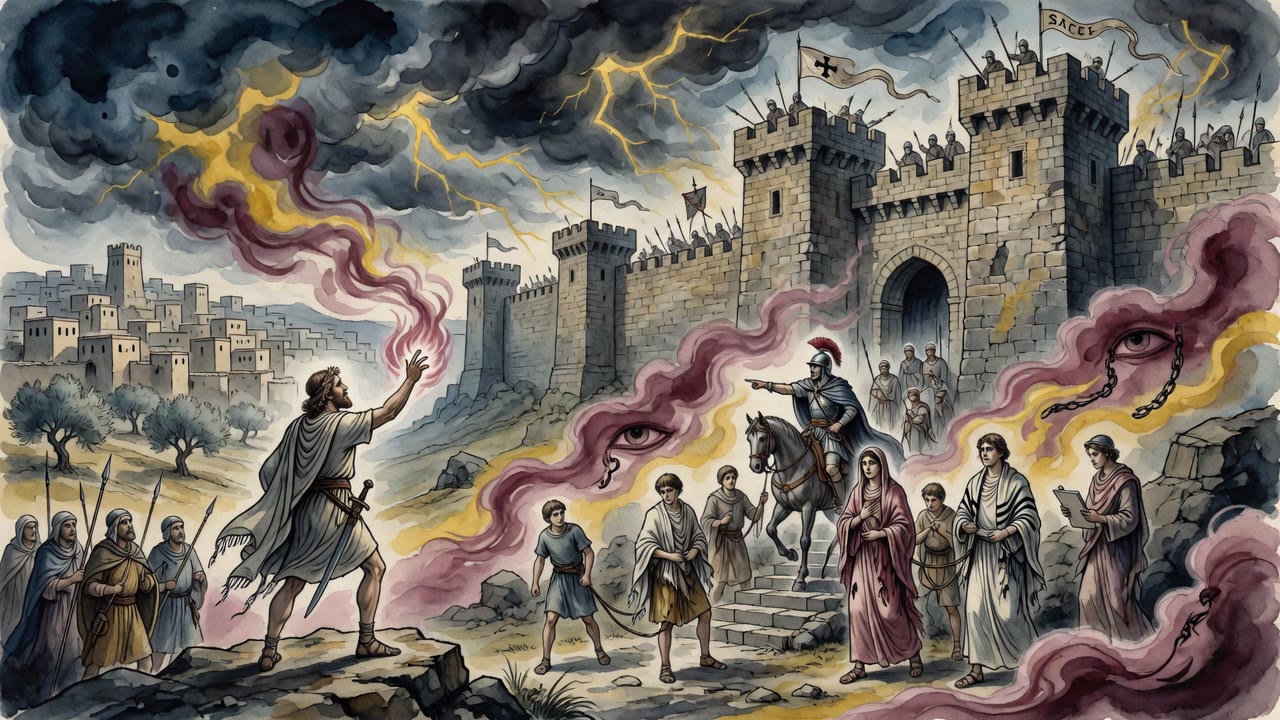
Word reached the judges first as a smell of panic. Men had gone out from one of Israel's own cities and drawn neighbors after other gods. Some wanted torches that same hour. Some wanted to sleep and hope the rumor died. Deuteronomy refused both. You shall inquire, you shall search out, you shall ask well (Deuteronomy 13:15). Three verbs, one fear. A whole city can die on a bad report if the court is lazy, and a whole land can rot if the court is cowardly.
One city may become a condemned city, an ir ha-nidachat. Not three at once. Not Jerusalem, which was never carved into tribal lots for ordinary dwelling. Not a town outside the land the LORD gave. The midrash draws the map with cold care before any torch is lit. Geography is part of guilt. Borders are part of mercy.
Who May Go Out to Dig
"There have gone out men." The verse that opens the investigation is itself a rule. Men, not women, not minors. Men, not fewer than two. The law will not let a single angry voice invent a massacre. It will not let children carry the weight of a capital inquiry that can erase a place from the map of the living.
Then the examinations begin in a room that smells of sweat and oil. Chakirot, the sharp questions of time and place, can kill a testimony if one witness says "I do not know." Bedikot, the wider probing of small details, can survive a gap of memory if the core still holds true and correct. If the witnesses refute each other, the whole structure falls and the city lives another day. The midrash is not hunting a pyre for sport. It is hunting a truth solid enough that fire will not be a lie told in God's name.
Thirty Days on the Road
An ass-caravan or a camel caravan rests inside the walls and is turned astray with the locals. How long did they stay? The midrash counts nights the way a merchant counts nights at an inn. Thirty days or more, and the travelers die by the sword with the inhabitants, their possessions lost with the city's. Less than thirty, and they die by stoning, a different death for a thinner bond, while their goods "escape" the fire's claim.
"The inhabitants of that city" means those of that city, not visitors from another town found inside the walls on the wrong week. "Lay waste it" does not reach out to seize the property of righteous people who live outside and merely stored grain in the doomed streets. The lines keep being drawn while the sentence waits in the doorway like a held breath.
Fire in the Square
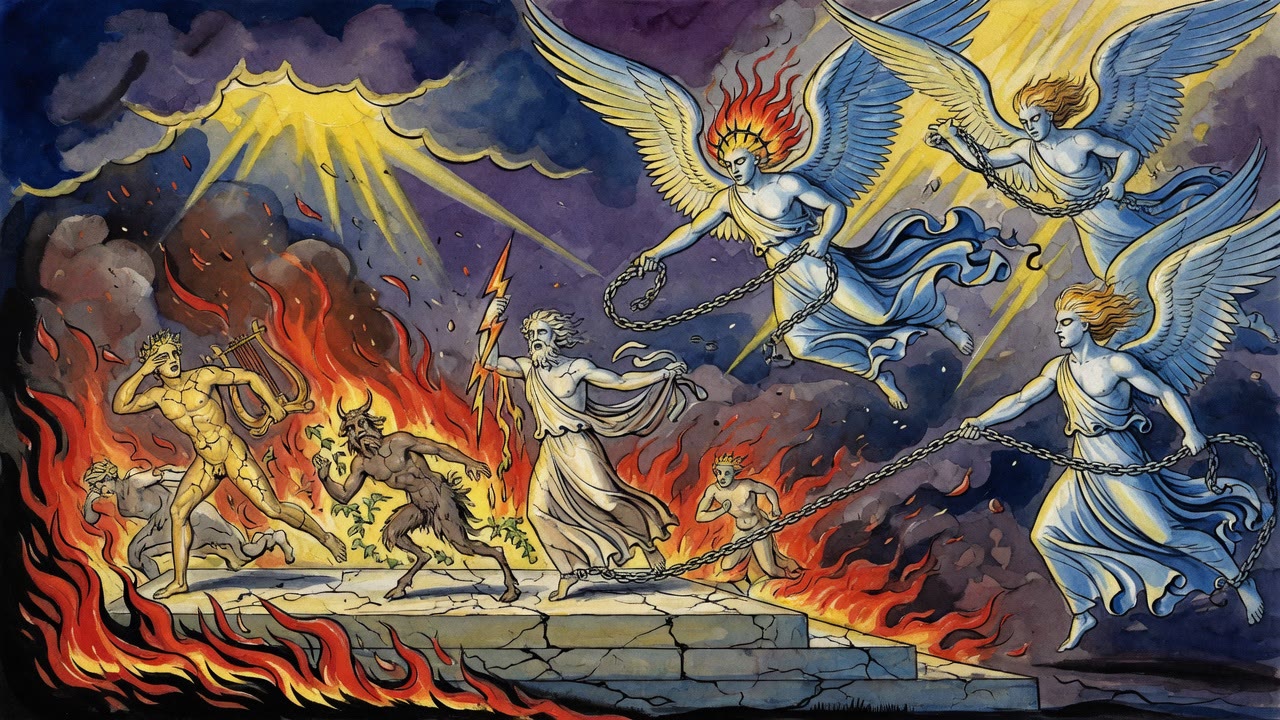
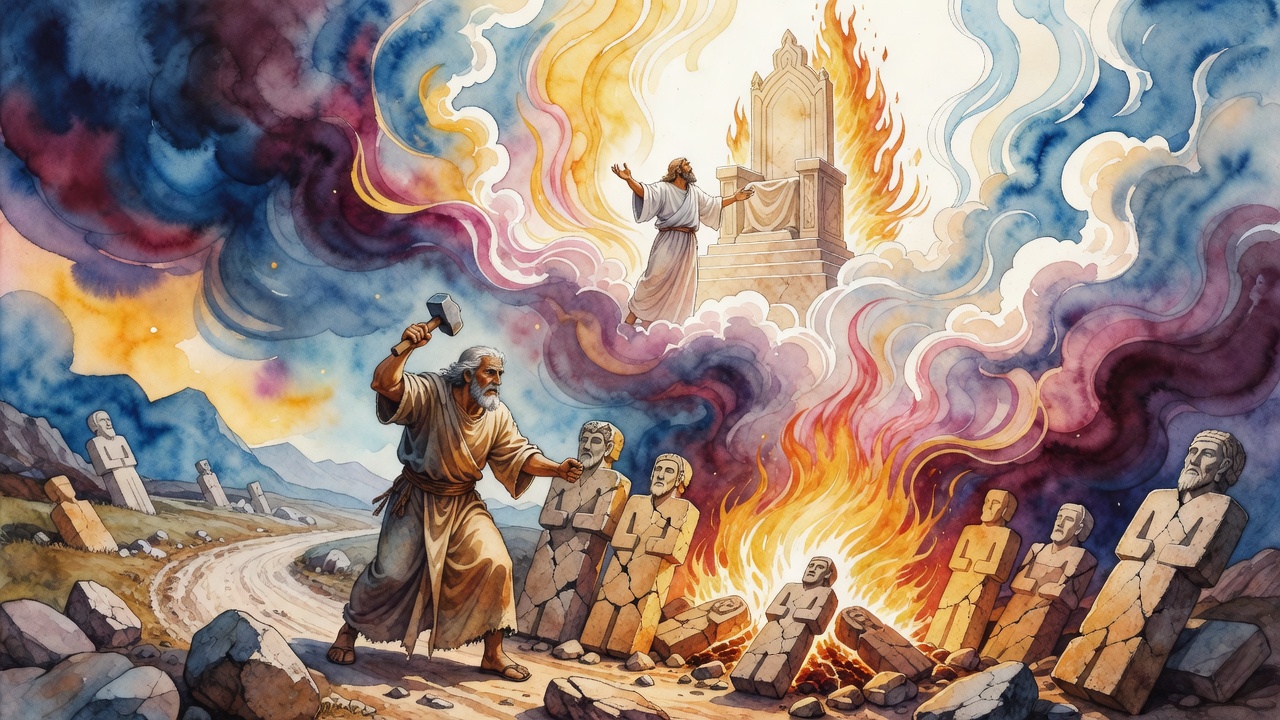
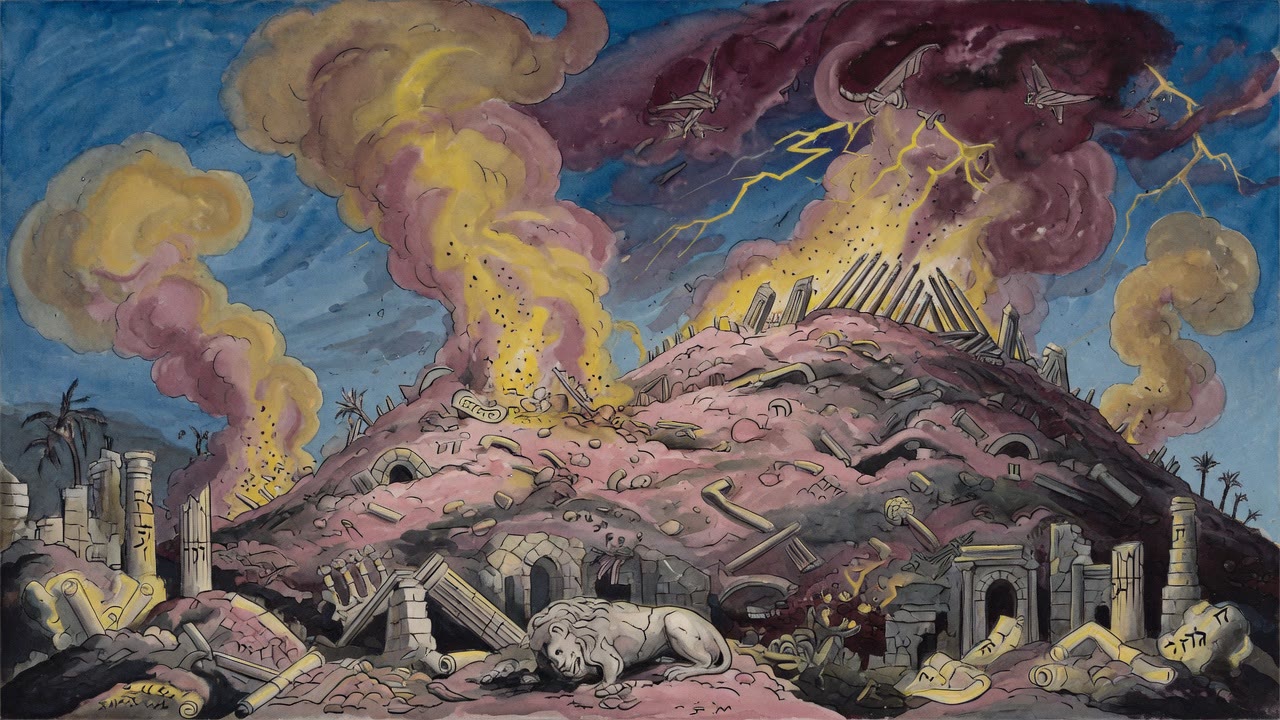
If the city has no square, one is made for it. If the square lies outside the walls, the spoil is gathered into the midst. Geography will not spare the judgment with a clever map. You shall burn with fire the city and all of its spoil, entirely, for the LORD your God. The midrash hears a strange comfort inside the horror. If you execute judgment against a condemned city, it is accounted as if you offered a burnt-offering entire before Him. The ash is not only destruction. It is a terrible worship that refuses to let idolatry keep a foothold in the land of the covenant.
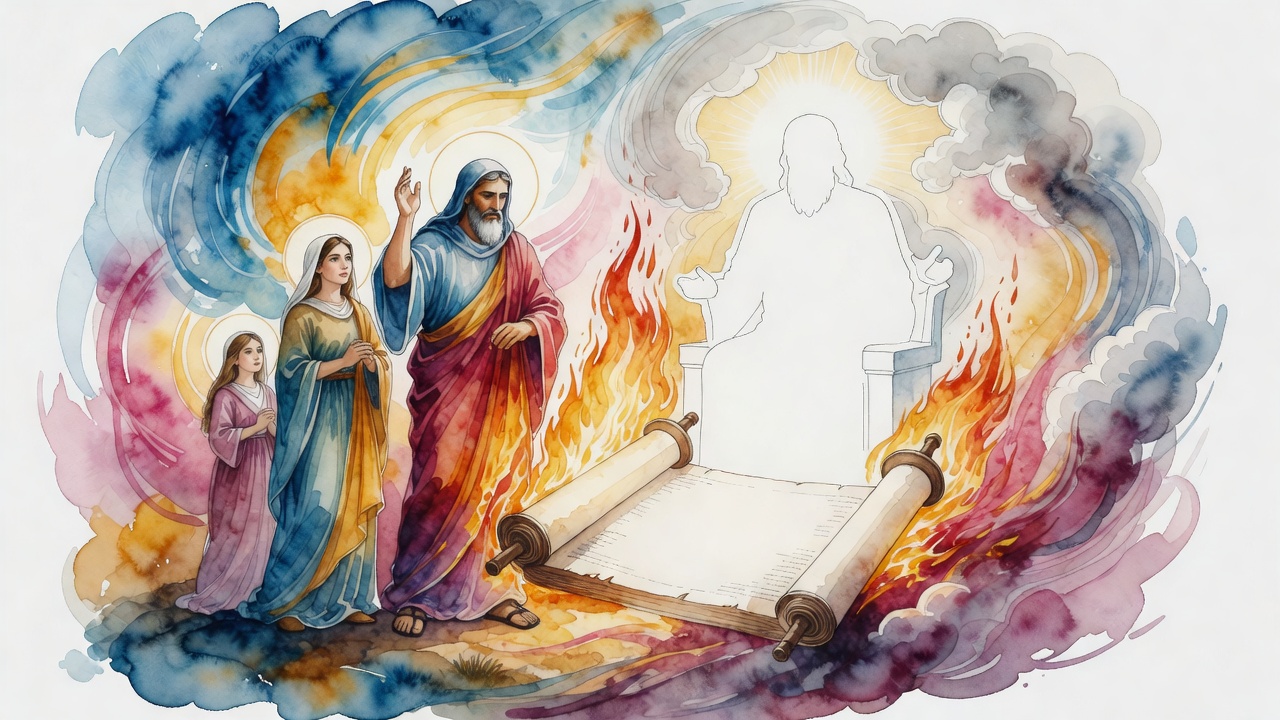
Not everything burns the same way. Spoil of Heaven is set apart. Consecrated objects are redeemed for their sacred price. Terumot are left to spoil rather than fed into common flame. Second tithe and holy writings are secreted, hidden away from the fire that takes ordinary wealth. Scrolls do not become fuel for a purity theater. The fire is precise. It is not a riot with a verse stapled to it.
The Righteous House Inside the Walls
Here the law turns cruel in a different direction. All that is in it includes the property of the righteous who live in the city. Their goods burn with the wicked's. Live outside and your property may escape. Live inside and your honesty does not save your storeroom. The beasts of the city go up in the sentence, but beasts already consecrated as offerings do not. The wicked's property, whether found inside or outside, is destroyed. Righteousness protects a body from the sword more readily than it protects a chest of grain from the flame.
And it shall be a heap forever. The midrash reaches for Jericho, where Joshua swore that the man who rebuilds the city is cursed. Not only must the pile not rise again under the same name. Another city must not be built and called by that name either. Erasure is part of the sentence. Memory of the place becomes a warning stone, not a real-estate plan for the next generation's ambition.
What the Ashes Teach
A people that can burn its own city for idolatry is a people that fears no tribe more than it fears the soft slide into foreign worship. The condemned city is not a foreign capital stormed in war. It is "one of your cities," a place that once said the Shema (Hear O Israel) at dusk and then said something else under a different moon. The investigators walk in with questions that hurt. They walk out with a map of who dies, what burns, what is hidden, and what must never be rebuilt.
The heap remains under open sky. Wind moves ash. Children of other towns are told not to play-act its name. The land is told, again, that covenant is not a slogan painted on a gate. It is a line fire can still enforce when a city chooses other gods and the court, after long digging, cannot look away.
← All myths