4 min read

Chanina Burns Beside His Scroll and Still Blesses

They seize Rabbi Chanina ben Teradyon; he burns with his Torah scroll and still blesses the Judge. His wife and daughter answer after him.

Curated by Arthur · Told by Maggid ·
Table of Contents
  1. The Decree Lands Like Iron
  2. Wife and Daughter Take Their Sentences
  3. Heaven Spoke and Earth Answered
  4. The Philosopher Stands Up
  5. Ash and Inheritance
Chanina Burns Beside His Scroll and Still Blesses Click for full size

The Decree Lands Like Iron

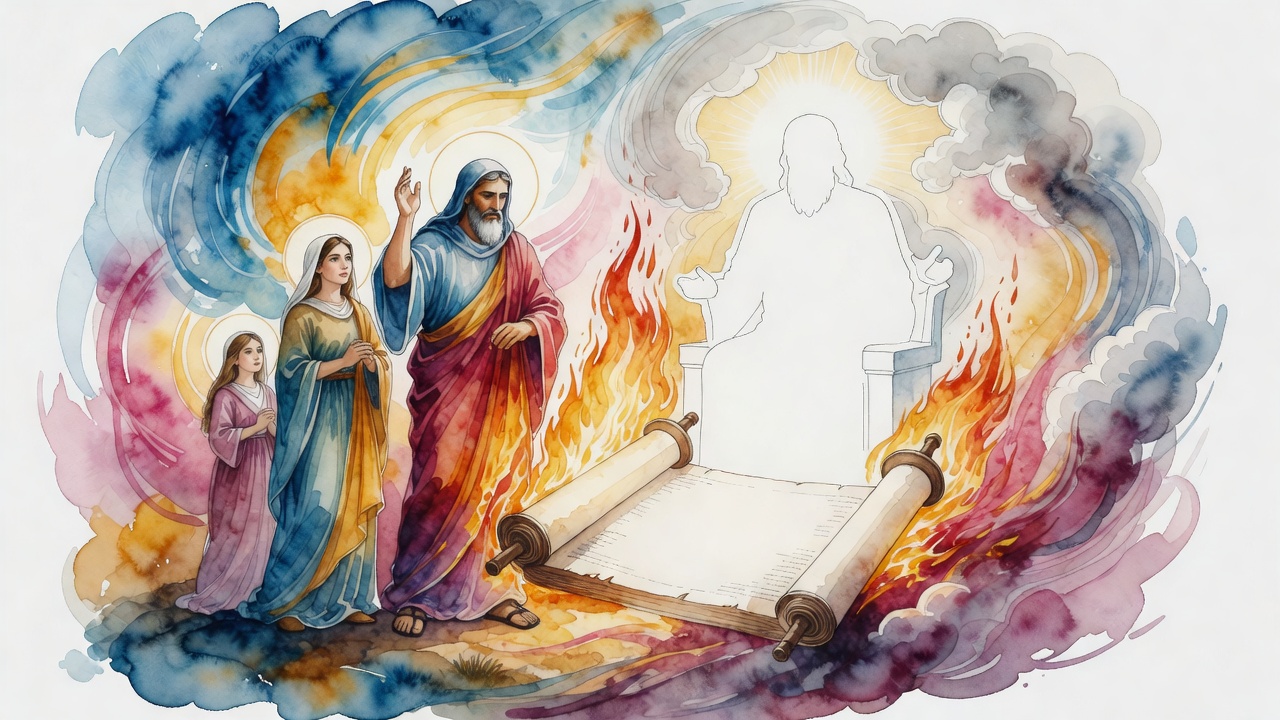
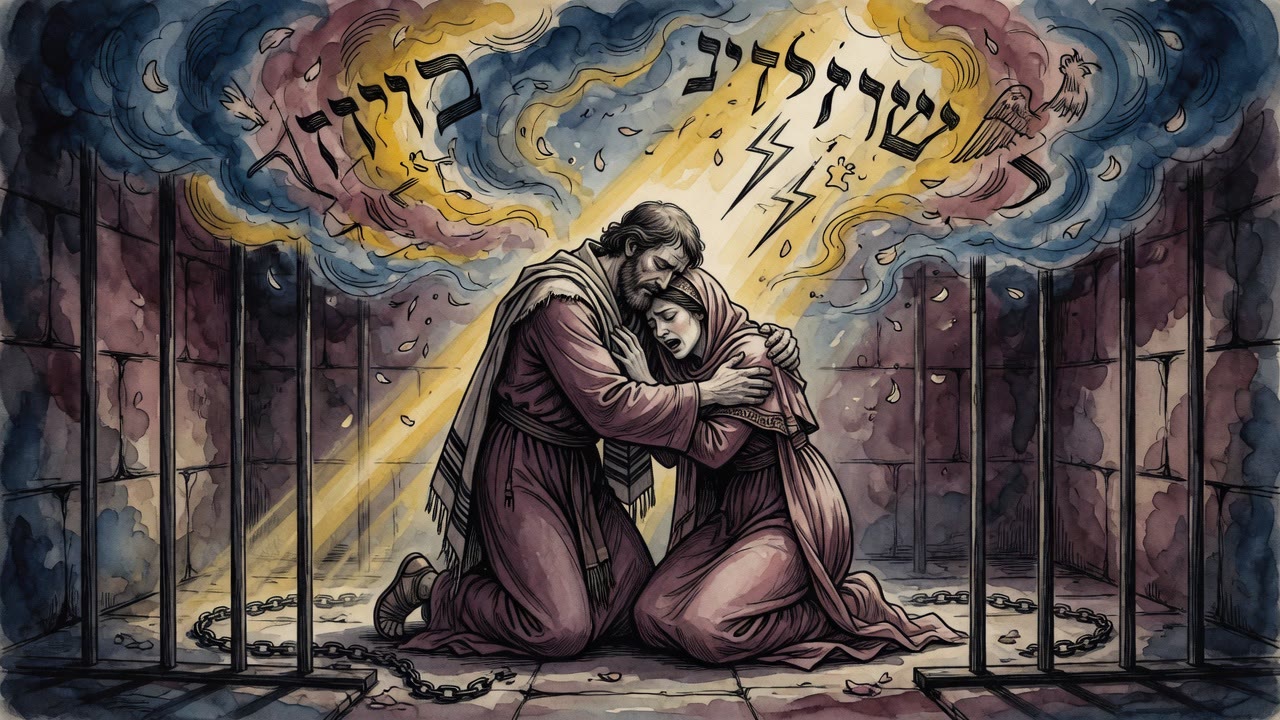
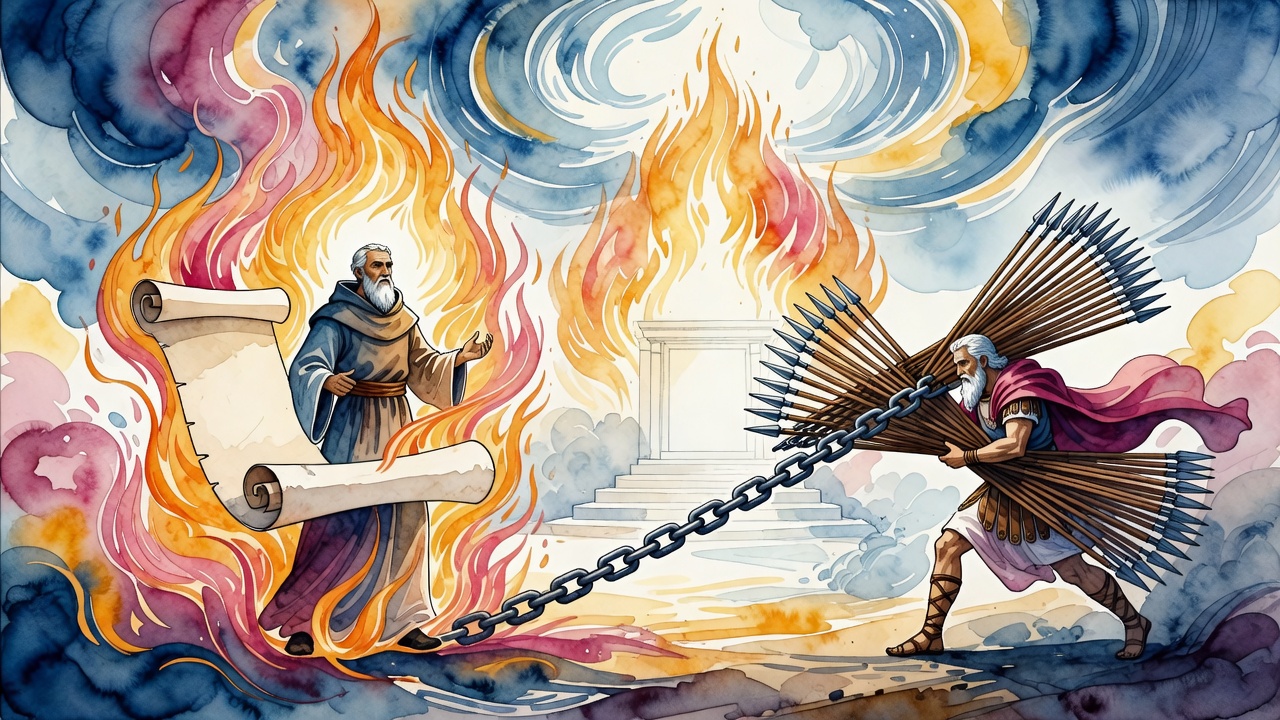
They seized Rabbi Chanina ben Teradyon in the open street. Soldiers bound him with the Torah scroll he would not abandon. He had carried it under his arm through alleys and study houses. Now the parchment pressed against his ribs like a second chest. The decree was plain: he burns with the letters. Smoke from other fires already stained the afternoon. He did not bargain. He lifted his face and spoke the words that make a courtroom of the heart: "The Rock, perfect is His work."

A soldier laughed and struck the side of his head. Chanina turned back toward the wood being stacked. He did not call the fire a mistake. He called the Judge perfect while the kindling still waited for a torch.

Wife and Daughter Take Their Sentences

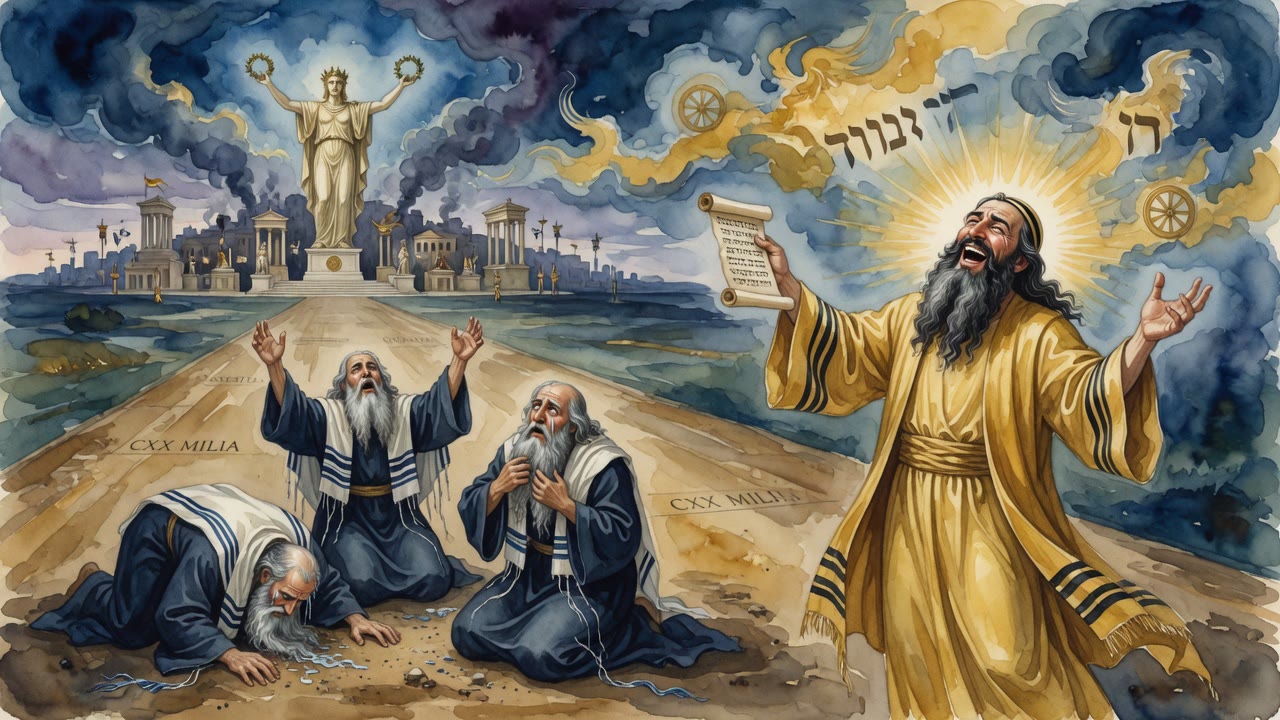
They turned to his wife. Her husband would burn with his scroll. She would be executed. She stood without theater and answered: "He is a God of trust, without wrong." Her voice cracked once. She steadied it. She raised her chin as if the scaffold were a bimah.

They turned to his daughter. Father burned. Mother killed. She would sit in a hovel of harlots. She closed her eyes, then opened them, and answered from Jeremiah: great in counsel, mighty in deed, eyes open to all the ways of men, to give each according to his ways and the fruit of his deeds. Three mouths. Three verses. One family directing its heart upward while the empire tried to write the last line.

Rebbi later said how great these righteous ones were, who in the hour of affliction were given three verses of vindication of judgment such as are not found together elsewhere. The praise is not soft. It names the skill of justifying God while the body breaks.

Heaven Spoke and Earth Answered

Long before this fire, Israel stood under a mountain and heaven spoke. Torah came from the heavens, and a people standing on the earth answered, "We shall do and we shall hear." That old answer still lived in Chanina's mouth. He did not invent a new theology for the stake. He stood on the earth and kept the contract that came from above.

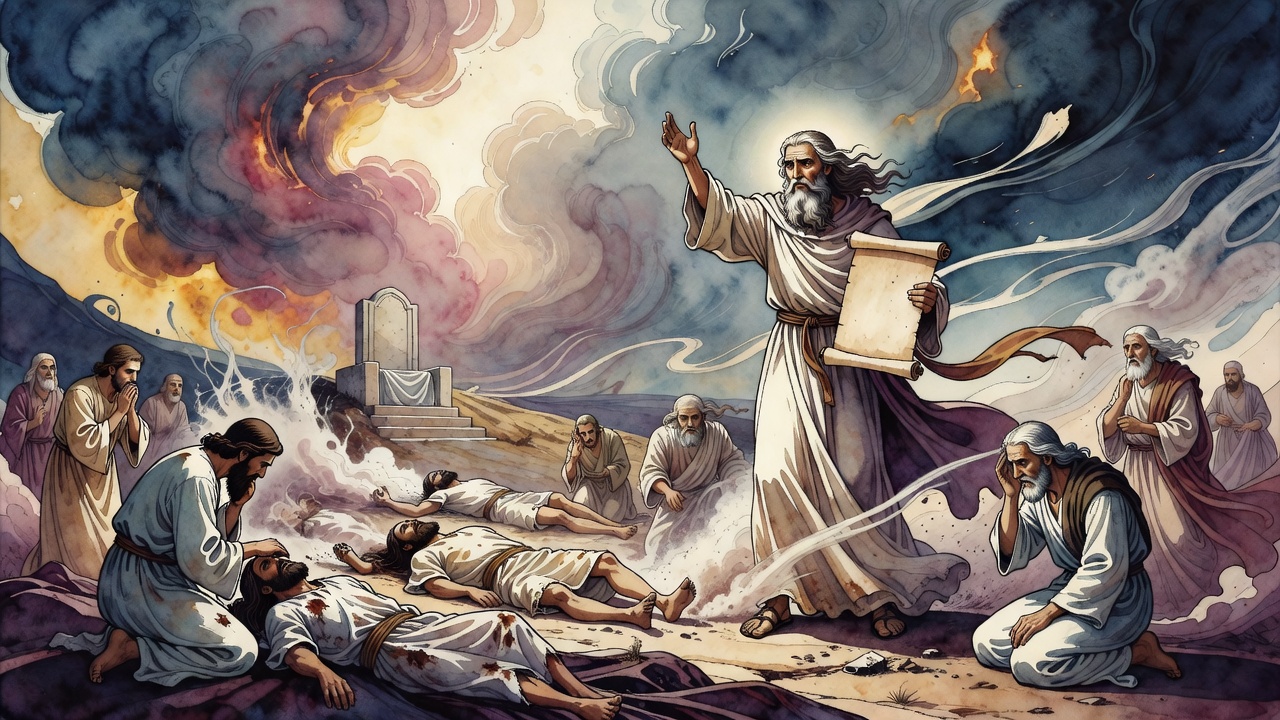
The soldiers lit the pile. Parchment curled. Letters blackened and rode the heat. Chanina sang under his breath until smoke took the song. A man who had lived by "listen, O heavens" became a witness that earth can still hear when the mouth is full of ash.

The Philosopher Stands Up

A philosopher watched the consul preen over the burned scroll. He stood against him in the open court. "Do not let your head swell," he said, "for having burned the Torah. As soon as you left, it returned to its Father's house." The consul turned red and answered with tomorrow's threat: your fate will be as theirs. The philosopher smiled the hard smile of a man who has chosen a side. "Glad tidings. Tomorrow let my portion be with those in the world to come."

Rome can stack wood. Rome can write decrees. Rome cannot keep a scroll from its Father once the fire has done its worst. Chanina's body fell. The teaching did not. The family that justified the Judge had already turned the scaffold into a house of trust.

Ash and Inheritance

Night came. The place of execution cooled. Someone poured water on the last coals. Somewhere a student repeated a law Chanina taught without needing the original parchment. Somewhere a daughter, if she lived, carried three verses like a hidden amulet under fear. The empire counted a win. Heaven counted a different ledger: hearts that did not accuse the Rock while the Rock allowed the flame.

In the morning the street still smelled of burned hide and ink. A child asked why the old man had held the scroll so tight. His father answered that some men hold a book the way other men hold a child. The scroll had gone home. The philosopher walked toward the same fire with open eyes. The first sentence spoken over stacked wood still hung in the air like heat that refuses to leave a stone.


← All myths
From the tradition

Sources

2 sources

The texts behind this telling. Some cards carry a translation of the source; others are our own retelling of it, and each card says which. Every card links out to the original.

Sifrei Devarim 307:14Sifrei Devarim

Retold in our words. Read the original at the link below.Sifrei by Rabbi Shraga Silverstein · CC-BY

The story of Rabbi Chanina ben Teradyon, as told in Sifrei Devarim 307, is a stark and powerful example. It's not an easy story to hear, but it’s evidence of unwavering belief in the face of unimaginable suffering.

Rabbi Chanina, a revered scholar, was arrested and sentenced to be burned alive, along with his Sefer Torah (Torah scroll). As the flames approached, they told him of his fate. His response? He recited, "The Rock, perfect is His work" (Deuteronomy 32:4). An affirmation of God's absolute justice and perfection, even in this moment of utter devastation.

The tragedy doesn’t end there. The authorities then turned to his wife, telling her that she too would be executed because of her husband's actions. Her reply echoed his sentiment: "He is a G-d of trust, without wrong" (Deuteronomy 32:4). Again, acknowledging God's trustworthiness and righteousness.

If that wasn't enough, their daughter was told that her fate would be even crueler: she was to be forced into prostitution. Despite this horrific pronouncement, she too found strength in faith, reciting a verse from Jeremiah (32:19): "Great in counsel and mighty in deed, Your eyes are open to all the ways of men to give to a man according to his ways and according to the fruit of his deeds." Even in her despair, she affirmed that God sees all and judges justly.

Rebbi, the redactor of the Mishnah (the earliest code of rabbinic law), reflecting on this story, exclaimed: “How great are these righteous ones, who were presented in the time of their affliction with these three verses of vindication of (G-d's) justice (tzidduk hadin), (the likes of) which are not to be found in all of the writings!” Each family member, faced with their unique and terrible fate, found solace and strength in affirming God's justice, offering a tzidduk hadin, a vindication of God's judgment.

But there's one more layer to this story. A philosopher, witnessing this horrific scene, challenged the consul who had ordered the execution. He said: "Don't let your head swell over having burned the Torah scroll. As soon as you left, it (the Torah) returned to its Father's house." The consul, enraged, decreed that the philosopher would share the same fate as Rabbi Chanina and his family. The philosopher's response? "Glad tidings! Tomorrow, let my portion be with those in the world to come!" He saw his impending death not as a punishment, but as an opportunity to join the righteous in Olam Ha-Ba, the World to Come.

This story is difficult. It forces us to confront profound questions about faith, justice, and suffering. But it also reveals the incredible strength and resilience of the human spirit, the unwavering belief that can sustain us even in the face of unspeakable horror.

Could we, in the darkest of times, still find the strength to say, "The Rock, perfect is His work"?

Full source
Sifrei Devarim 306:14Sifrei Devarim

Retold in our words. Read the original at the link below.Sifrei by Rabbi Shraga Silverstein · CC-BY

It starts with the verse, "Listen, O heavens, and hear, O earth, the words of My mouth." (Deuteronomy 32:1).

What does it really mean? Why the heavens and the earth?

Sifrei Devarim offers a stunning interpretation. It suggests that the Torah calls upon the heavens as witnesses, because the Torah itself was given from the heavens! Remember the awe-inspiring moment at Mount Sinai? "You have seen that from the heavens I spoke to you," (Exodus 20:19) the Israelites proclaimed.

The earth? The earth is called upon to listen because the Jewish people, Israel, stood upon the earth and declared, "All that the L-rd has spoken, we shall do and we shall hear.” (Exodus 24:7). A complete commitment, a binding contract witnessed by the very ground beneath their feet.

But the commentary doesn’t stop there. It digs deeper, offering another, more nuanced reading.

“Listen, O heavens,” it says, because the people had not observed mitzvot (commandments) pertaining to the heavens. What does that even mean? Well, The Jewish calendar, the rhythm of our year, is intimately connected to the celestial bodies. The intercalation of years – adding a leap month to align the lunar and solar cycles – and the determination of New Moons, Rosh Chodesh, were all crucial. "And let them (the luminaries) serve for signs, and for festivals, and for days, and for years," (Genesis 1:14) the Torah tells us. So, in a sense, the heavens are called to listen because the people weren't fully attuned to their celestial responsibilities.

And “hear, O earth,” because the people had not observed mitzvot pertaining to the earth. These are the agricultural commandments, the ones that ensure fairness and compassion in the harvest. Things like leket (gleanings left for the poor), shikchah (forgotten sheaves), peah (the corner of the field left unharvested), terumot (gifts to the priests), ma'aserot (tithes), shemittim (Sabbatical years), and yovloth (Jubilee years). These laws were intended to create a just and sustainable society, rooted in the land.

So, what’s the takeaway?

This passage from Sifrei Devarim invites us to consider our relationship with both the heavens and the earth. Are we paying attention to the rhythms of the universe, the cycles of time? Are we fulfilling our earthly responsibilities, ensuring justice and compassion in our communities? It's a call to be mindful of the divine presence in every aspect of our lives, from the grand expanse of the cosmos to the smallest seed we plant in the ground.

It's a living, breathing guide for how to live a more meaningful and connected life. And it's a story that continues to unfold, with each of us playing a part.

Full source