4 min read

Rabbi Ishmael's Children Were Locked in One Cell Overnight

Two masters compared their most beautiful slaves and struck a business arrangement. Neither of them knew the boy and the girl came out of one house.

Curated by Arthur · Told by Maggid ·
Table of Contents
  1. Sold Into Different Cities
  2. An Arrangement Between Two Owners
  3. Two Corners, All Night
  4. First Light
  5. What the Masters Found
Rabbi Ishmael's Children Were Locked in One Cell Overnight Click for full size

Sold Into Different Cities

After the Temple burned, the traffic in people out of Judea ran for years. The son of Rabbi Ishmael went into it, and so did the daughter, and they were bought by different men in different towns.

Both of them were famous for the same thing. There was no one in the world, people said, whose beauty was like his. There was no one in the world whose beauty was like hers. In a slave market that was the only fact about either of them with a price attached.

Their father was a priest out of the line of high priests. What the two children carried out of that house, past the burning and the auction block, was a set of rules about their own bodies that nobody had thought to confiscate.

An Arrangement Between Two Owners

The two masters met and got to talking, the way men talk about property.

"I have a male slave. There is nothing like him for beauty in the whole world."

"I have a female slave. There is nothing like her for beauty in the whole world."

"Then let us marry the two of them to each other, and divide the children between us."

It was clean arithmetic. Neither man had ever asked either slave a single question about where they came from, so neither man understood what he was arranging.

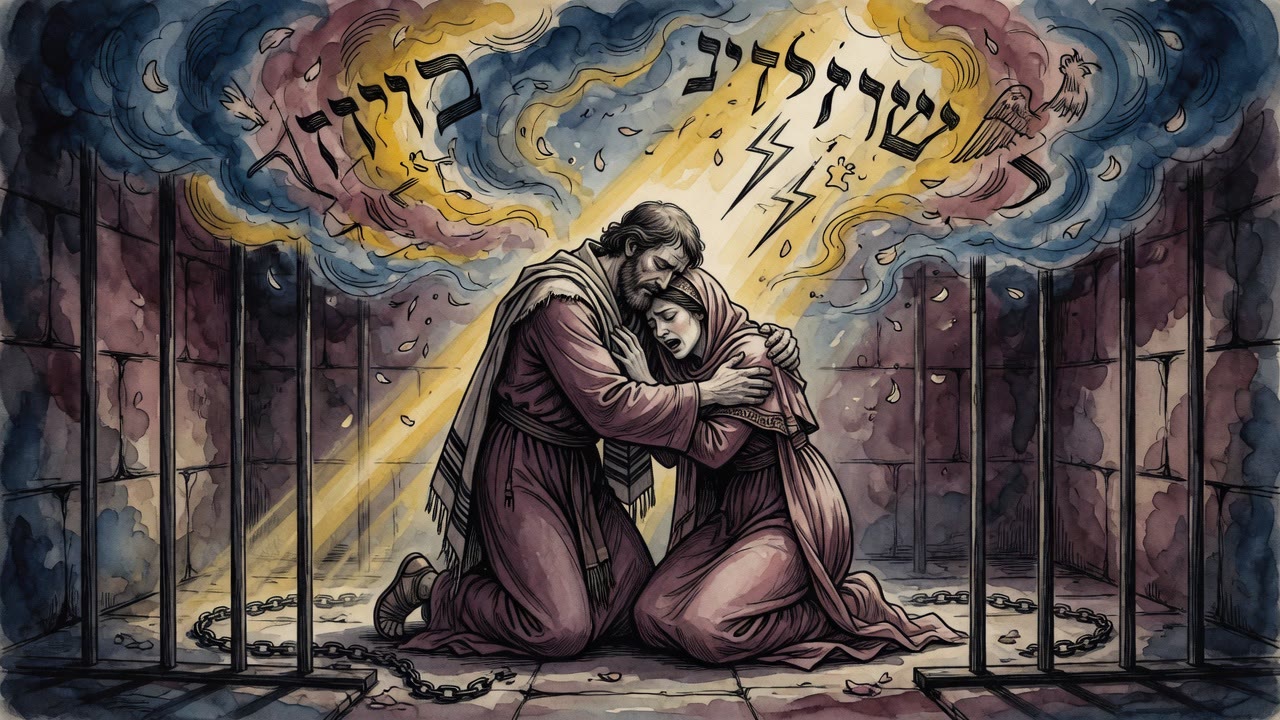
They put the two of them into one room and locked the door for the night.

Two Corners, All Night

It was dark. Neither of them could see the other's face.

The boy went to one corner and sat down against the wall and said it out loud, to nobody. "I am a priest, from the line of high priests. Am I going to marry a slave woman?"

The girl went to the far corner and sat down against the wall and said it out loud, to nobody. "I am a priest's daughter, from the line of high priests. Am I going to be married off to a slave?"

Neither of them crossed the floor. There was nothing between them but a few paces of stone and it held for the whole night.

They wept. Both of them, on opposite walls, in the dark, until morning.

First Light

Light came in over the door, enough to see by.

He looked across the room and knew her. In the same second she looked back and knew him. There was a sister in that corner. There was a brother in this one. They had been carried out of the same house and sold on the same day, and each of them had just spent a night refusing the other in order to keep faith with a father they would not see again.

They came off the walls. They got hold of each other in the middle of the floor and did not let go. They wept, holding on, and their souls went out of them, and they died there with their arms around each other.

What the Masters Found

The men came in at their own convenience to check on an investment.

What was on the floor was not merchandise and was never going to produce any. The two they had priced were dead, and they had died of recognizing each other, which was not a category any market had a column for. There was no one to charge and nothing to sell.

Rome had taken the city, the house, the courts, the altar, and the children of the men who served at it. It had not taken the sentence the boy said out loud in the dark to a room he believed was empty. An empire could buy a priest's son outright and get no use out of him at all.

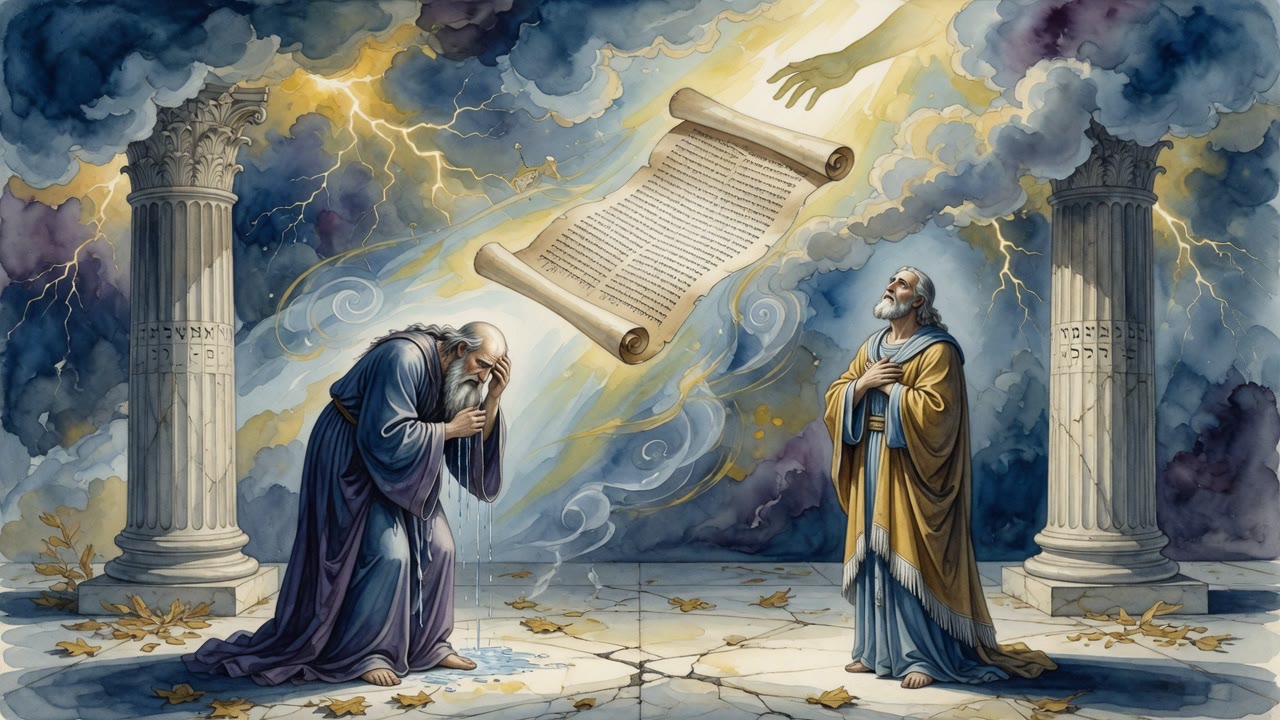
For these things I weep, says the lament over the ruined city, and that line was fastened to this room. It was written for burned cedar and stripped gold, and it reaches further than that. Stones can be raised again. What happened behind that door cannot.


← All myths
From the tradition

Sources

3 sources

The texts behind this telling. Some cards carry a translation of the source; others are our own retelling of it, and each card says which. Every card links out to the original.

Exempla of the Rabbis, No. 59Exempla of the Rabbis (Gaster, 1924)

Retold in our words. Read the original at the link below.The Exempla of the Rabbis, Moses Gaster (1924) · Public Domain

The destruction of Jerusalem did not end when the Temple burned. In the years that followed, the Romans hunted down the children of the sages, enslaving some, executing others, scattering the survivors across the empire. The Talmud (Gittin 58a) preserves the heartbreaking story of the children of Rabbi Ishmael ben Elisha the High Priest.

Two of his children were taken captive and sold to different masters in different cities. Years later, by a twist of fate. Or by the hidden hand of divine providence, their masters decided to breed them together, not knowing they were brother and sister. They were placed in a room together in the darkness.

Each sat in a separate corner and wept through the night. "I am a priest's child," the boy cried, "descended from High Priests. Shall I marry a slave woman?" In the other corner, the girl wept identically: "I am a priest's daughter, descended from High Priests. Shall I be given to a slave?"

When dawn broke and light entered the room, they recognized each other. They fell upon each other's necks and wept until their souls departed. They died in each other's arms rather than transgress.

Over them, the prophet Jeremiah had already cried: "For these things I weep; my eye, my eye runs down with water" (Lamentations 1:16). The sages said that this was the deepest wound of the destruction, not the burning stones of the Temple, but the shattered lives of the innocent children who inherited a catastrophe they never caused.

Full source
Gaster, Exempla no. 59; cf. Gittin 58aThe Exempla of the Rabbis (1924)

Retold in our words. Read the original at the link below.The Exempla of the Rabbis, Moses Gaster (1924) · PD-US-pre-1929

When the wicked kingdom destroyed the Temple and carried the people into slavery, the son and daughter of Rabbi Ishmael, both famous for their beauty, were seized and sold to different Roman masters.

The masters, who did not know they were siblings, met and schemed together. "Let the boy and girl be locked in one room overnight," they said. "From such perfect beauty we will breed children still more beautiful, and make a great profit when we sell them at market." So the two young captives were pushed into a single cell and the door was barred.

Neither knew who the other was. Each, raised in the home of Rabbi Ishmael, understood the Torah's laws of modesty and intimacy. All through the night they sat at opposite walls, weeping quietly and refusing even to speak, lest they be drawn into sin.

At dawn the first light fell across the cell, and in that light each looked up, and in that same instant each recognized the other's face. Brother and sister. They rushed across the room and fell into each other's arms, and their hearts broke, broke so violently from grief and relief together that their souls left their bodies where they stood. They died, the sages say, in one embrace.

The Exempla preserves the tale as an indictment of the cruelty of Rome and as evidence of the holiness of Rabbi Ishmael's house, where the children, even naked and alone, kept the law of their father so faithfully that death found them clean.

(From The Exempla of the Rabbis, Moses Gaster, 1924, no. 59, based on the martyrological traditions of Gittin 58a.)

Full source
Exempla of the Rabbis, No. 51Exempla of the Rabbis (Gaster, 1924)

Retold in our words. Read the original at the link below.The Exempla of the Rabbis, Moses Gaster (1924) · Public Domain

This entry gathers a cluster of tales about three clever Jewish slaves who were sold into captivity after the destruction of the Temple and the fall of Jerusalem. Carried off into the Roman world, they had lost everything except their minds, and it was by their minds alone that they overcame their captors. Each of the three was handed an impossible assignment by his master, a riddle or a task meant to break or shame him, and each one turned the trap back upon the man who had set it, answering the challenge so deftly that the master was left outwitted by his own slave.

The Talmud records their exchanges in tractate Sanhedrin 104b and in Lamentations Rabbah 1:4, placing them within the long lament over the exile. There they serve a pointed purpose. The destruction had stripped the people of land, sovereignty, and the sacred house, and the conquerors might imagine that Israel was finished. These stories answer that the sharpness of Jewish wisdom could not be sold, chained, or conquered. The same motif of the captive who triumphs by wit traveled widely and surfaces in many later collections, but in its rabbinic setting it carries a particular consolation: a defeated nation kept the one possession that no army could seize, the keenness of a learned and disciplined intelligence.

Full source