6 min read

Moses Named Heaven and Earth to Outlive Him

Moses nears death and fears Israel will deny the Torah after he is gone. He binds sky and soil as witnesses, then points the people toward return.

Curated by Arthur · Told by Maggid ·
Table of Contents
  1. Witnesses That Do Not Bury Themselves
  2. What the People Had Failed Above and Below
  3. Mountains That Teach How to Return
  4. The Song and the Crossing
  5. Dust, Sky, and a Road Still Open

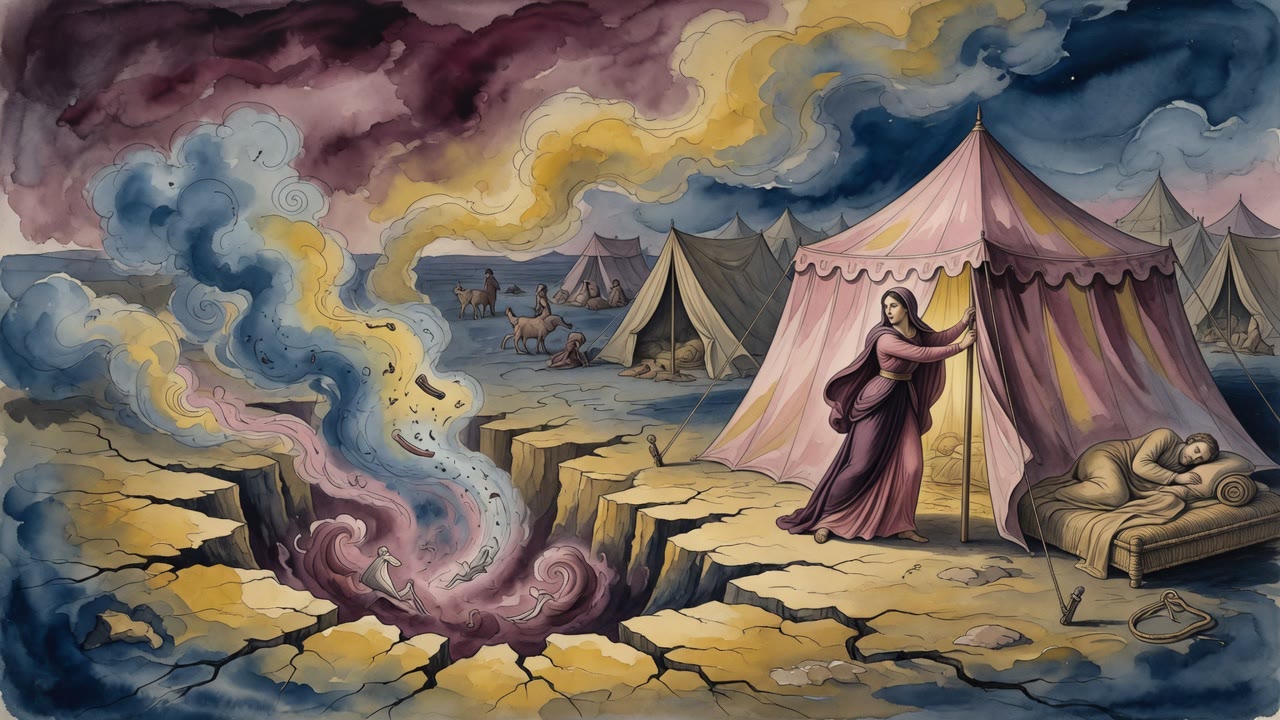
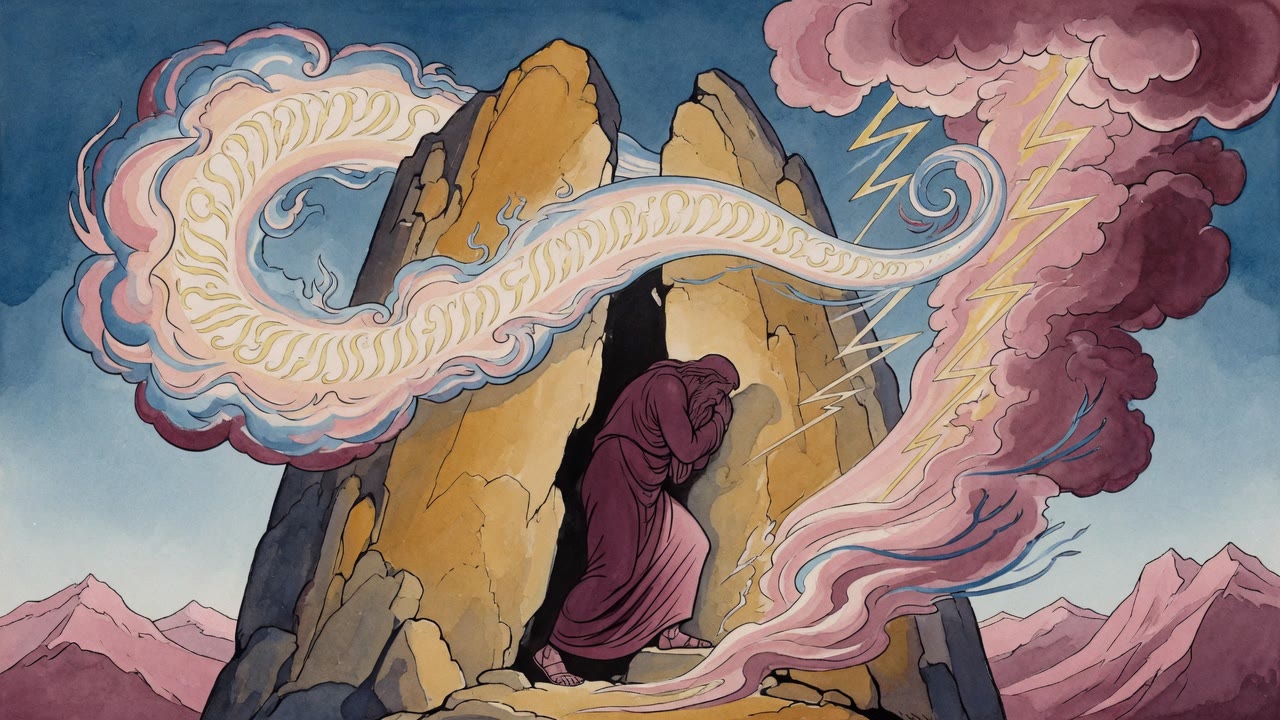
Moses stood on the plains of Moab with death already counted in his bones. The people filled the camp behind him, tents, livestock, children who had never seen Egypt. He could still speak. He could not stay. What he needed was a witness that would not lie down when he did.

Moses Named Heaven and Earth to Outlive Him Click for full size

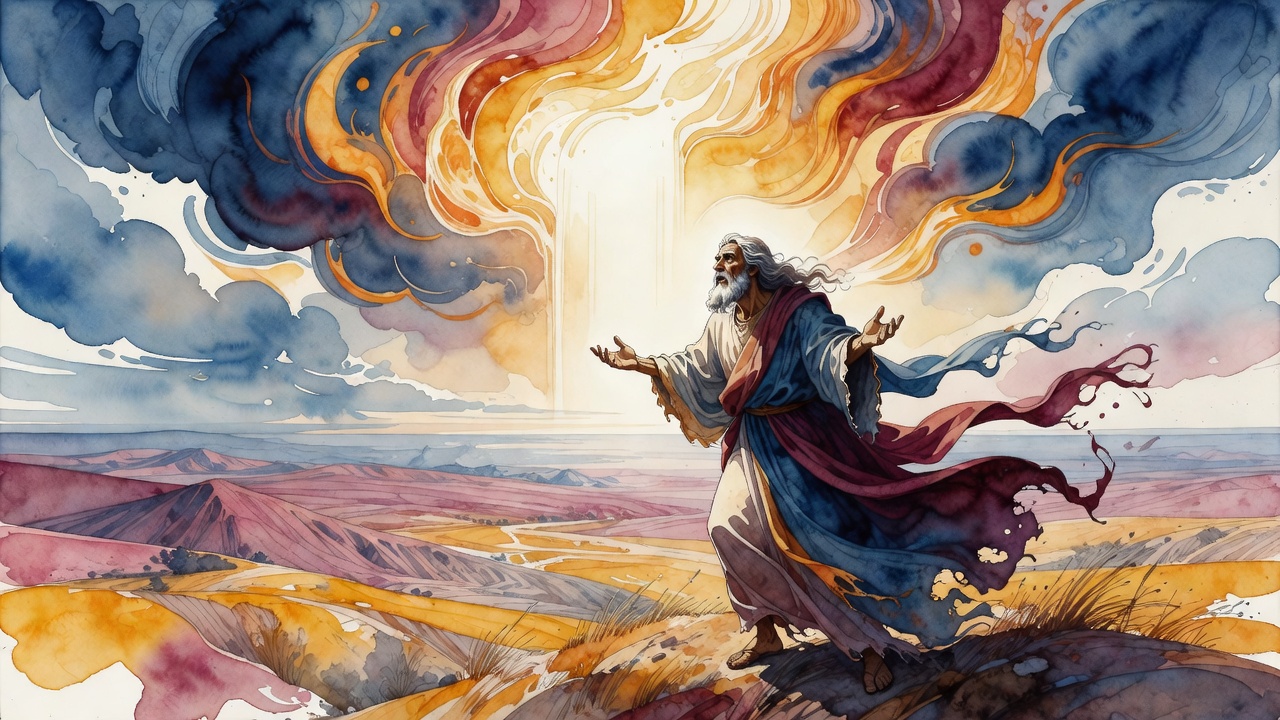
He lifted his face and named the two things that would outlast every funeral in that valley.

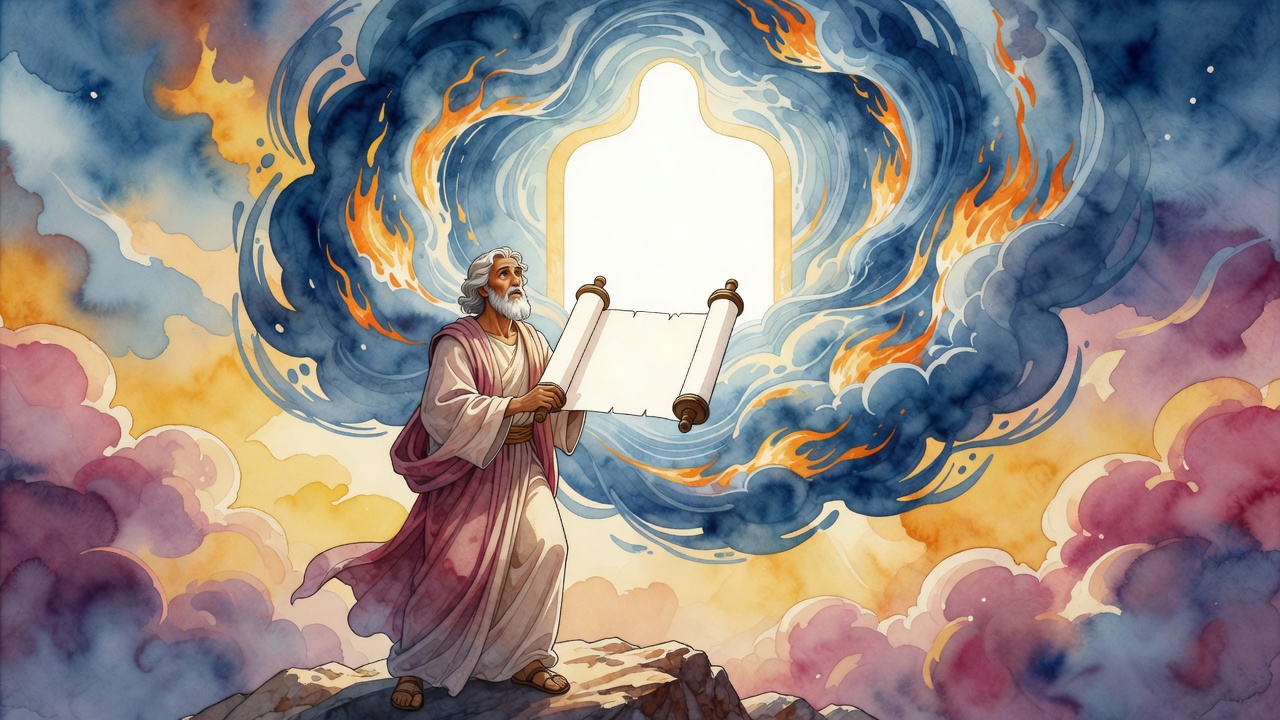
"Listen, O heavens, and hear, O earth, the words of my mouth" (Deuteronomy 32:1).

Witnesses That Do Not Bury Themselves

Flesh fails. Scrolls tear. Leaders die on a mountain no one will ever mark with a stone he can visit. Moses refused to leave the covenant hanging on his own reputation. After he was gone, someone would say the Torah never arrived, that the fire on the peak was rumor, that the people never pledged. He wanted mouths that could answer without blood.

Heaven had already spoken once. "You have seen that from the heavens I spoke to you" (Exodus 20:19). The voice that shook Sinai came from above, not from a man's private dream. Earth had already held the crowd when they answered, "All that the Lord has spoken, we shall do and we shall hear" (Exodus 24:7). Feet on dirt. Mouths open. Contract sealed under open sky.

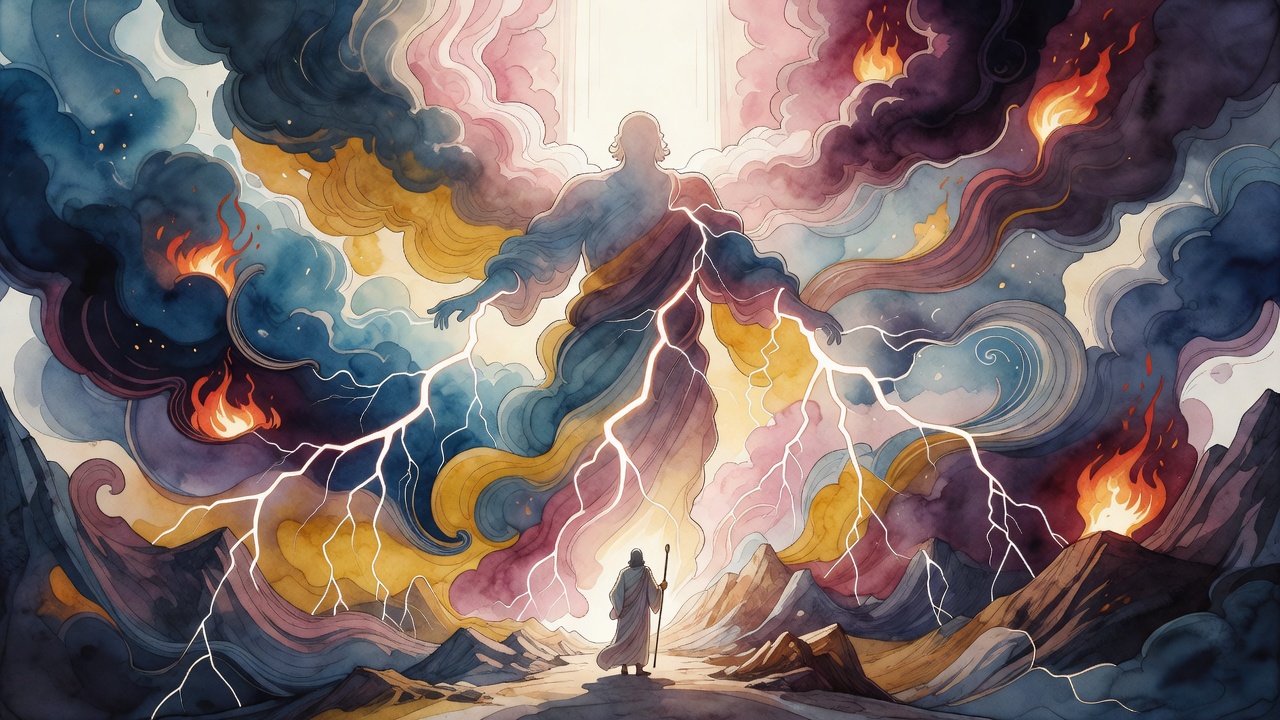
So Moses called both. Heaven because the Torah was given from the heavens. Earth because Israel stood on the earth and bound itself. If a generation later denied the gift, the sky that had carried the voice and the ground that had taken the pledge could still be summoned. The song would not depend on Moses breathing.

Wind moved the edge of his cloak. Dust rose and settled on sandals that would not walk much farther. He did not soften the call into poetry. He treated sky and soil like court.

What the People Had Failed Above and Below

The summons also cut. "Listen, O heavens," because the people had not kept the mitzvot (commandments) that touch the heavens, the work of moons and years, the signs for festivals and days that the luminaries were set to serve (Genesis 1:14). Calendars neglected are not small errors. They unhook feast from sky.

"Hear, O earth," because they had not kept the mitzvot of the earth either. Gleanings left for the poor. Forgotten sheaves. The corner of the field unharvested. Tithes. Sabbatical years. Jubilees. Soil was not only floor for tents. Soil was a ledger of mercy and theft. When the field was stripped to the last stalk, earth had something to say about it.

Moses did not lecture with a pointing finger alone. He put the people between two witnesses that had already been wronged. The song pressed from both directions. Above and below. Soul of the calendar and body of the harvest.

Mountains That Teach How to Return

Across the Jordan waited other stone witnesses. Eival and Gerizim would hold blessing and curse when the people crossed. Rabbi Elazar once measured the verses against maps and found friction: across the Jordan, the way of the setting sun, the land of the Canaanite, the plain, opposite Gilgal. Geography argued with memory. The text refused to act like a surveyor's scroll.

Rabbi Eliezer ben Yaakov refused the panic that the Torah had misdrawn a map. He heard a different pressure: the verses were training a people how to return. Not a tourist's route. A soul's route. He reached back to the day Moses sent spies into Canaan and pulled three orders out of the scouting charge (Numbers 13:17-20).

Go by the beaten path. Do not cut through the fields like thieves inventing a road. Go through habitation, not through empty desert where no neighbor can correct you. Go by the plain, not by the mountain that looks brave and breaks the ankle. The spies needed those instructions to live. A generation that had broken calendar and field needed them to come home.

A man who has left the path does not invent a pure new trail out of pride. He finds the road that already holds footprints. He seeks a house of study and a table, not a private wilderness of stubbornness. He takes the lower grade first, the plain where the body can still move, before he climbs for glory.

The Song and the Crossing

On the plains, Moses finished the summons. Heaven and earth stood in the song as permanent ears. Across the river, two mountains would stand as permanent stages for blessing and curse. Between those frames walked a people that could still fail the sky's feasts and the field's corners, and could still turn around by the beaten path.

He did not promise they would never stray. He promised they would never lack a witness or a route back. When a later mouth claimed the Torah was never given, the heavens that spoke could be named. When a later heart claimed return was impossible, the spy-road still lay open: path, habitation, plain.

Children in the camp kicked a loose stone. An old woman dried her hands on her apron and listened without blinking. Moses kept speaking until the last lines of the song were in their ears like grain in a sack, dense, not pretty. Death waited on the mountain he would climb alone. The witnesses he had named would not climb with him. They would stay.

Dust, Sky, and a Road Still Open

When the speech ended, the sky looked the same color it had before. Earth did not tremble for theater. The power was not spectacle. It was jurisdiction. From that hour the covenant could be called to account without Moses present to shout. From that hour a lost Israelite could still hear the three orders that save a scout and a sinner alike: stay on the road, find people, choose the plain first.

Eival would later take the curses. Gerizim would take the blessings. Neither mountain needed Moses's body under them to do their work. Heaven and earth had already been sworn. The man who refused to leave the Torah hanging on his own breath left the camp lighter by the weight of that fear, and heavier by the knowledge that the people could still walk away from both witnesses if they chose.

He chose the witnesses anyway. Sky. Soil. A road that remembers how to return.


← All myths
From the tradition

Sources

2 sources

The texts behind this telling. Some cards carry a translation of the source; others are our own retelling of it, and each card says which. Every card links out to the original.

Sifrei Devarim 306:14Sifrei Devarim

Retold in our words. Read the original at the link below.Sifrei by Rabbi Shraga Silverstein · CC-BY

It starts with the verse, "Listen, O heavens, and hear, O earth, the words of My mouth." (Deuteronomy 32:1).

What does it really mean? Why the heavens and the earth?

Sifrei Devarim offers a stunning interpretation. It suggests that the Torah calls upon the heavens as witnesses, because the Torah itself was given from the heavens! Remember the awe-inspiring moment at Mount Sinai? "You have seen that from the heavens I spoke to you," (Exodus 20:19) the Israelites proclaimed.

The earth? The earth is called upon to listen because the Jewish people, Israel, stood upon the earth and declared, "All that the L-rd has spoken, we shall do and we shall hear.” (Exodus 24:7). A complete commitment, a binding contract witnessed by the very ground beneath their feet.

But the commentary doesn’t stop there. It digs deeper, offering another, more nuanced reading.

“Listen, O heavens,” it says, because the people had not observed mitzvot (commandments) pertaining to the heavens. What does that even mean? Well, The Jewish calendar, the rhythm of our year, is intimately connected to the celestial bodies. The intercalation of years – adding a leap month to align the lunar and solar cycles – and the determination of New Moons, Rosh Chodesh, were all crucial. "And let them (the luminaries) serve for signs, and for festivals, and for days, and for years," (Genesis 1:14) the Torah tells us. So, in a sense, the heavens are called to listen because the people weren't fully attuned to their celestial responsibilities.

And “hear, O earth,” because the people had not observed mitzvot pertaining to the earth. These are the agricultural commandments, the ones that ensure fairness and compassion in the harvest. Things like leket (gleanings left for the poor), shikchah (forgotten sheaves), peah (the corner of the field left unharvested), terumot (gifts to the priests), ma'aserot (tithes), shemittim (Sabbatical years), and yovloth (Jubilee years). These laws were intended to create a just and sustainable society, rooted in the land.

So, what’s the takeaway?

This passage from Sifrei Devarim invites us to consider our relationship with both the heavens and the earth. Are we paying attention to the rhythms of the universe, the cycles of time? Are we fulfilling our earthly responsibilities, ensuring justice and compassion in our communities? It's a call to be mindful of the divine presence in every aspect of our lives, from the grand expanse of the cosmos to the smallest seed we plant in the ground.

It's a living, breathing guide for how to live a more meaningful and connected life. And it's a story that continues to unfold, with each of us playing a part.

Full source
Sifrei Devarim 56:4Sifrei Devarim

Retold in our words. Read the original at the link below.Sifrei by Rabbi Shraga Silverstein · CC-BY

Sifrei Devarim turns to Eival at the Dawn of Creation.

The passage kicks off with a bit of geographical debate. Rabbi Elazar questions whether the mountains Eival and Gerizim mentioned are the same ones located near the Cuthites, an ancient people. He points out discrepancies between the biblical description and the actual location. The text specifies they should be "across the Jordan" – near the Jordan, "after the way of the coming of the sun" – the place where the sun sets, "in the land of the Canaani" – but isn't that the land of the Chivi? "who inhabits the plain" – but don't they dwell among mountains and hills? "opposite Gilgal" – but isn't the Gilgal seen from there? It's a whole series of "wait a minute…" moments.

So, what's going on here? Is the Torah getting its geography wrong?

Rabbi Eliezer ben Yaakov steps in with a profound explanation. He suggests that the Scripture's purpose isn't to provide a precise map, but rather to teach us a deeper lesson about how to "return." Return to what, you ask? To the right path. To a state of clarity. He connects this passage back to Numbers (Bamidbar) 13:17-20, where Moses sends spies to scout out the land of Canaan.

And here's where it gets really interesting. Rabbi Eliezer ben Yaakov extracts instructions from that earlier scouting mission, offering them as metaphorical guidelines for navigating life's complexities.

What are these instructions?

"Go by the way (i.e., by the beaten path) and do not go through the fields." In other words, stick to established routes. Don't try to blaze a completely new trail without understanding the risks. There's wisdom in the well-worn path.

"Go through the habitation and not through the desert." Seek out community and connection. Don't isolate yourself in the wilderness. We need each other for guidance and support.

"Go by way of the plain and not by way of the mountains." Choose the path of least resistance, at least initially. Avoid unnecessary obstacles and challenges. Sometimes, the simplest route is the best one.

These aren't just directions for spies; they're directions for life. When we feel lost, overwhelmed, or unsure of what to do, these simple principles can help us find our way back to ourselves, back to our purpose, and back to a sense of direction.

Maybe the next time you're facing a difficult decision, you could pause and ask yourself: Am I trying to cut through the fields when there's a perfectly good road available? Am I isolating myself when I should be seeking counsel? Am I making things harder than they need to be?

Sometimes, the most profound wisdom is hidden in the most unexpected places. And sometimes, the best way to find our way forward is to look back at the lessons of the past.

Full source