The Gods Fled the Fire and the Angels Brought Them Back
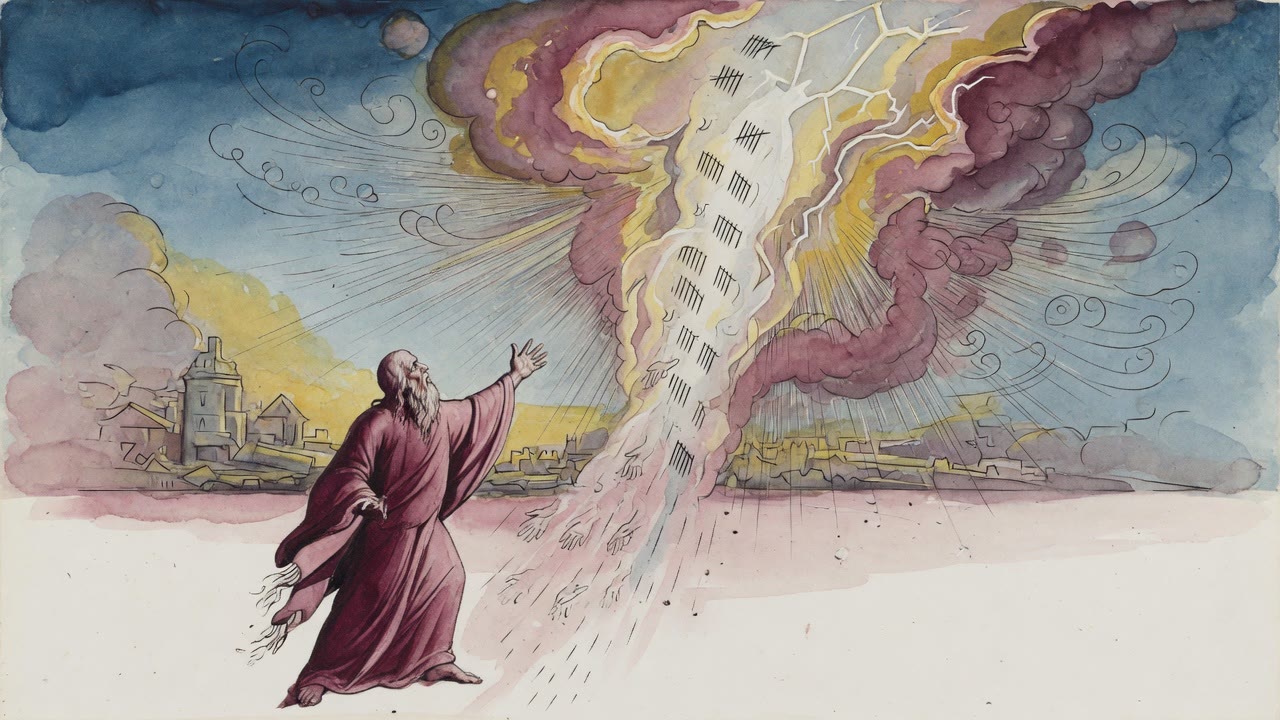
At the end of days the nations are tried beside their idols, and when the carved gods fly out of the flame, angels go up after them with chains.
Table of Contents
The fire was already burning when the nations came up the road, and their gods came up the road behind them.
 Click for full size
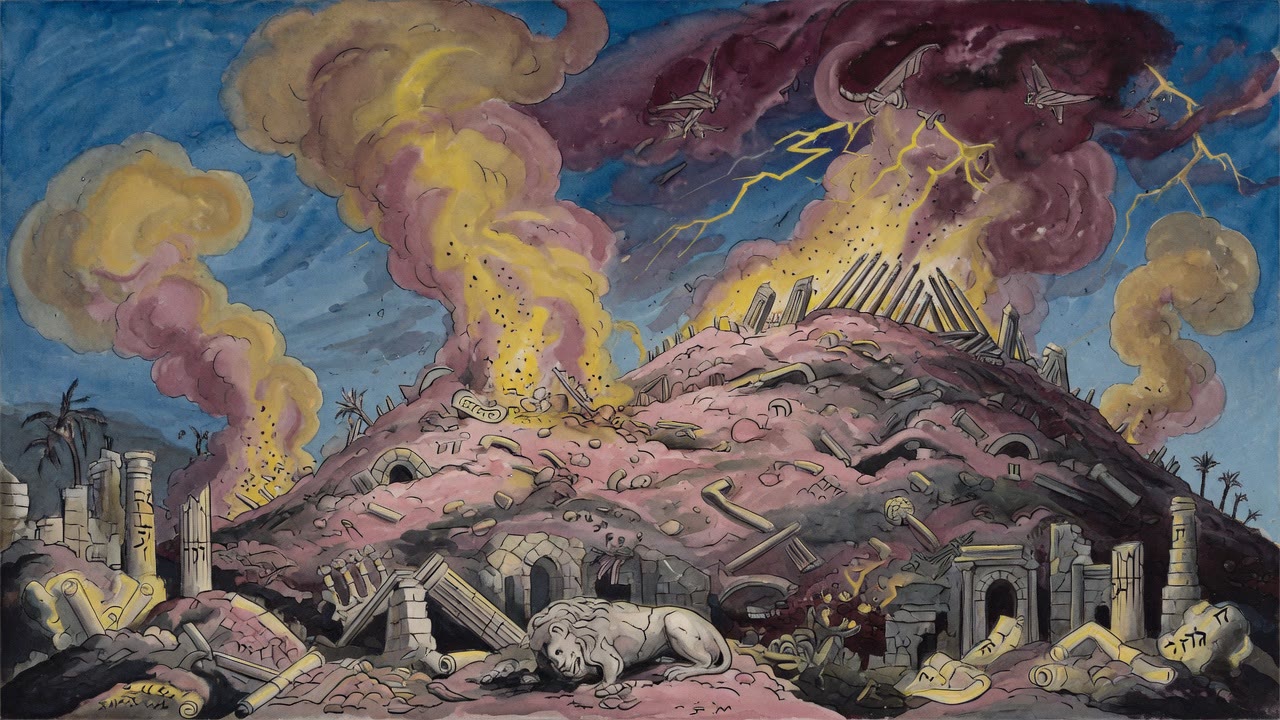
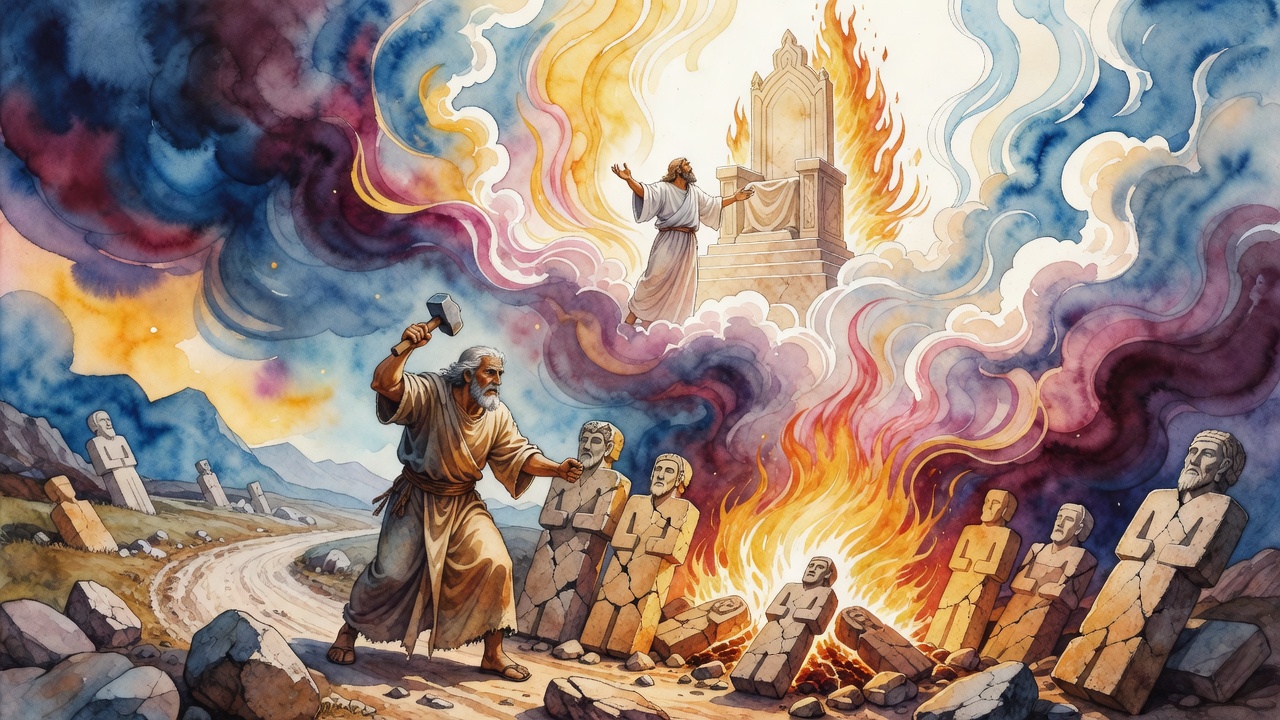
God had promised a judgment by fire, and the peoples had understood that to mean the peoples. Nobody had told the carved things. They came anyway, roped at the neck and hauled on sledges, the small household gods of baked clay, the civic ones with gilded beards and silver eyes, the great seated ones that eight men had carried out of their temples into the ash. Whatever a mouth had ever prayed to stood in the open now, waiting to answer for the praying.
Collars and Chains for the Gods That Ran
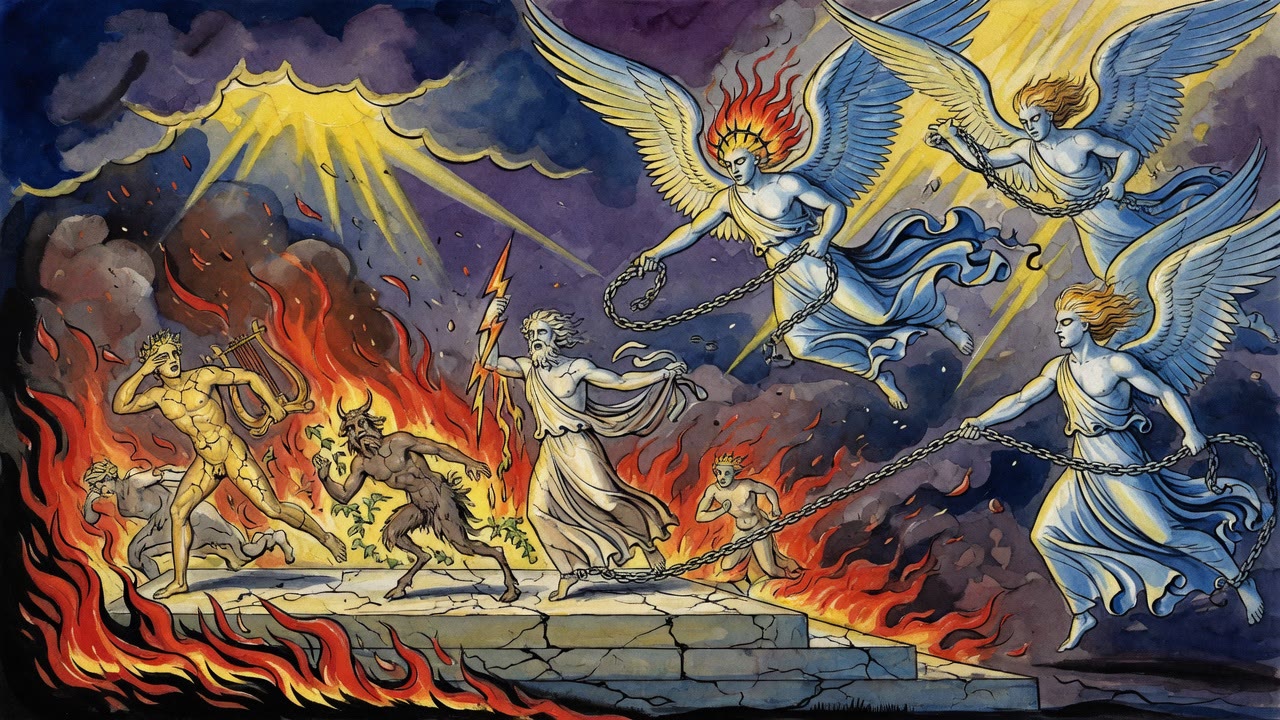
The first rank went into the flame and could not stand in it. Seams split. Silver ran. And because a thing that cannot stand will do the one other thing left to it, the idols went up. They flew. Out of the fire and over the heads of the people who had shaped them, the whole carved population of the world rising like startled birds.
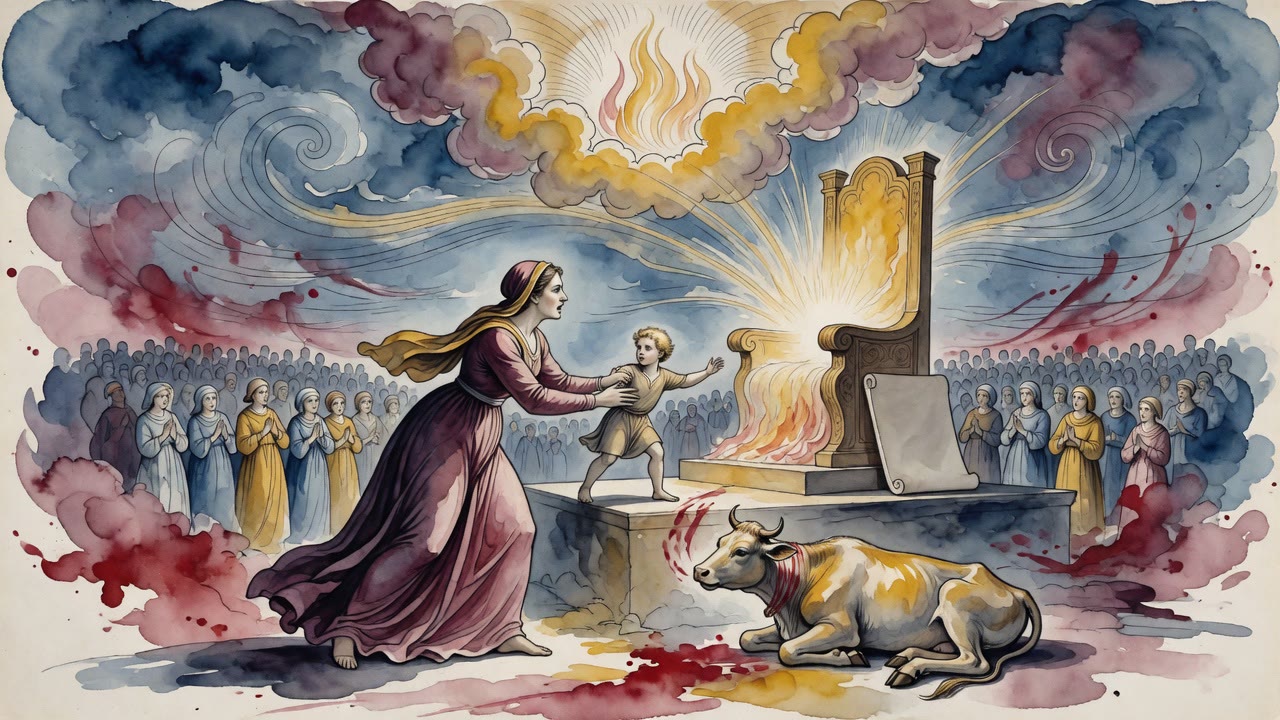
God sent angels after them. The angels carried collars and chains, the kind a herdsman keeps for an animal that will not be led, and they took the gods out of the air one at a time. A collar around a marble throat. A chain through the eye socket of a bronze bull. They brought them down and threw them into the middle of the burning, and this time nothing flew.
The nations watched their gods come back to them in irons.
The Stars Came Down Out of Their Courses
Fire had done this work before, in the valley of the Kishon.
Sisera had ground Israel down for twenty years, and the iron was never the worst of it. The worst came out of his mouth, revilings against the people and blasphemies against the One who had given him the chariots. So the answer came as fire. Not lightning, not hail. The stars left their fixed courses and came down and fought him (Judges 5:20), burning out of the sky he had been shouting at.
David Asks for the City That Torments
Long before that fire, a man sat with a harp across his knees and asked for a city.
"Who will lead me to the fortified city?" said David. The city he wanted had no walls yet and no name in any mouth. Rome. Fortified on every side, fortified out of the treasuries of every nation that fed it, a city that would torment Israel and by the tormenting drive them back and make them hard to break.
"If only I could exact the punishment myself," David said.
God asked whether he was equal to it.
"The One who already gave me dominion over Edom will give me dominion over this great one." He had set netzivim through Edom, officers by one reading of the word and statues by another, David in stone at the crossroads of his enemy's country.
"I know your hands are quick," God said, "and I want My world subdued by them." Then the rest of it. "David, I need Edom for the generations."
The same refusal had already gone to Moses, who wanted to march through Edom and finish the matter there. "You have circled this mountain enough" (Deuteronomy 2:3). It sounded like release. It was an order to keep circling. The account stayed open.
Esau Wraps Himself Like a Lion
It stayed open until the day of the fire, and on that day the reckoning came for Esau.
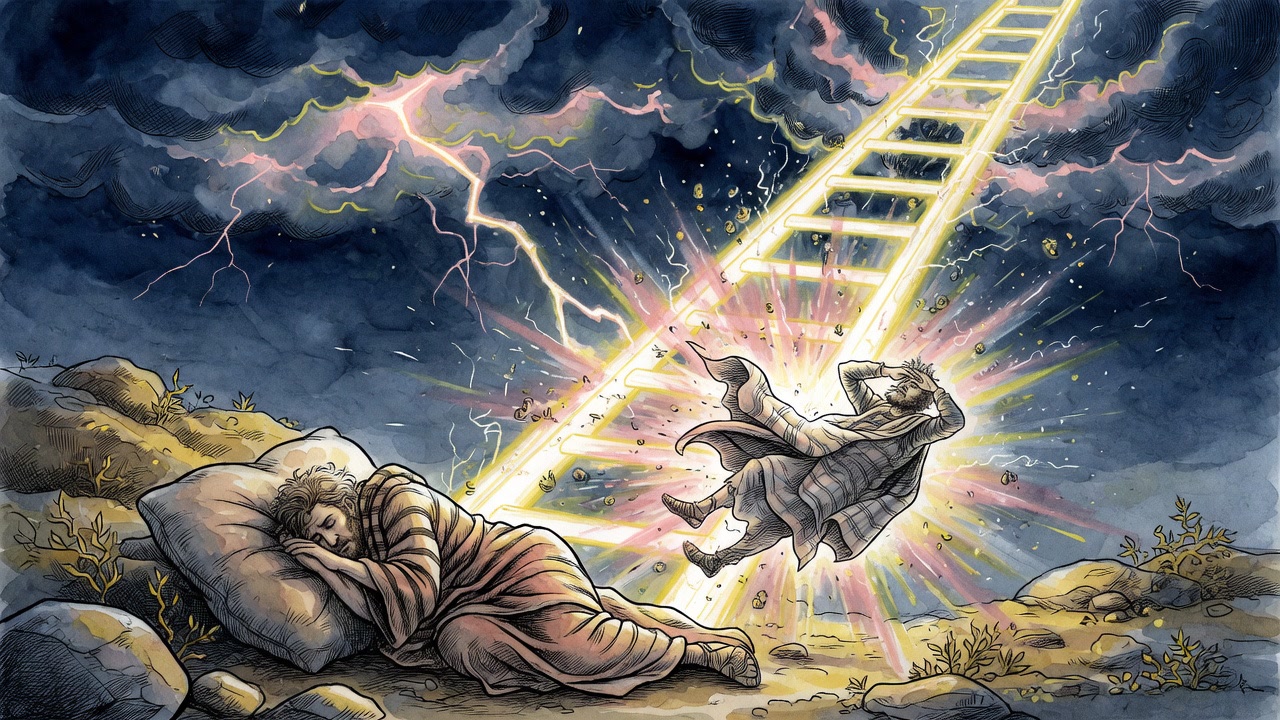
He did not run and he did not deny. He took up a tallit (טלית), a prayer-shawl, and wrapped himself in it the way a lion folds itself down into tall grass, all that weight going low and quiet, and sat down beside Jacob.
He had a claim. The same grandfather had been taken outside one night and told to look toward heaven and count the stars (Genesis 15:5), and Esau was under that sky too. He sat close, a brother arriving late at a family table.
Jacob did not move over.
"My brother," Jacob said, "you will not be like me."
"Your own decrees are burning in that fire. You decreed that I bow to idols. Bow, and Heaven takes my life. Refuse, and you take it. My brother, your words are death. My brother, your ruin is Sheol."
The prayer-shawl did not help him. Esau went down to Sheol (the pit of the dead), where his own sentence had been waiting, and Jacob was left alone.
The Beam and the Emptied Quiver
Two parts of the land were cut off and died, and the third was left (Zechariah 13:8), and the third was Israel.
Everything that had ever been overturned stayed overturned. The generation of the flood was blotted out and never recovered. Sodom went over and remained over. Egypt went into the water and not so much as one of them came out. Babylon lost its name and its remnant and its posterity, and none of the four ever stood again.
Israel fell and stood, fell and stood. "Rejoice not over me, my enemy," the assembly said out of the dirt. "Though I have fallen, I shall arise" (Micah 7:8).
God said it plainly. "I have never struck a nation and struck it a second time. My arrows are spent on you, and you are not consumed."
Out in a field a strong man had planted a beam upright in the ground, walked off his distance, and shot at it until his quiver was empty. The arrows lay all around the foot of the beam, shafts snapped, iron bent back on itself. The beam stood where he had set it.
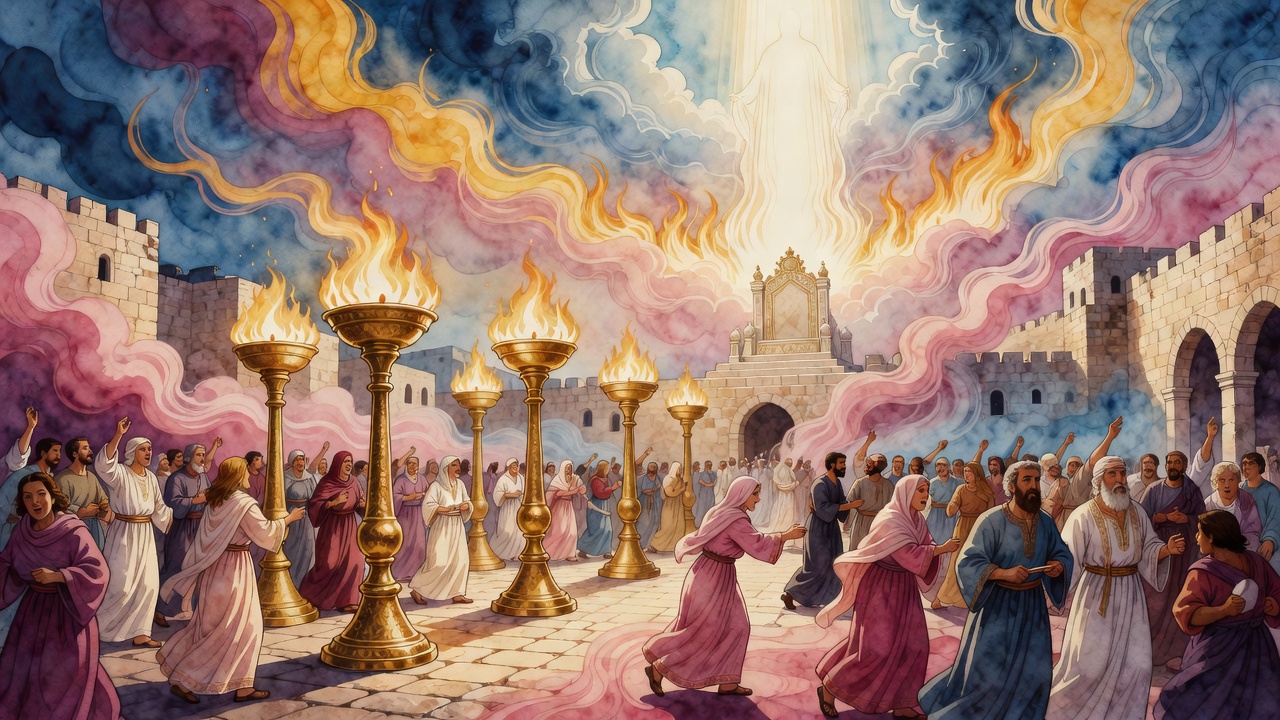
Around what was left of Israel the fire that had eaten the gods came in close and stopped being a judgment. It rose on every side and became a wall, and the glory stayed inside it, and in all that light there was no foreign god at all.
← All myths