Sukkot Lamps Lit Every Courtyard in Jerusalem
Four golden lampstands made Jerusalem glow at the water drawing. Beyond that joy, God Himself will teach Torah by heart.
Table of Contents
 Click for full size
Ladders into Gold
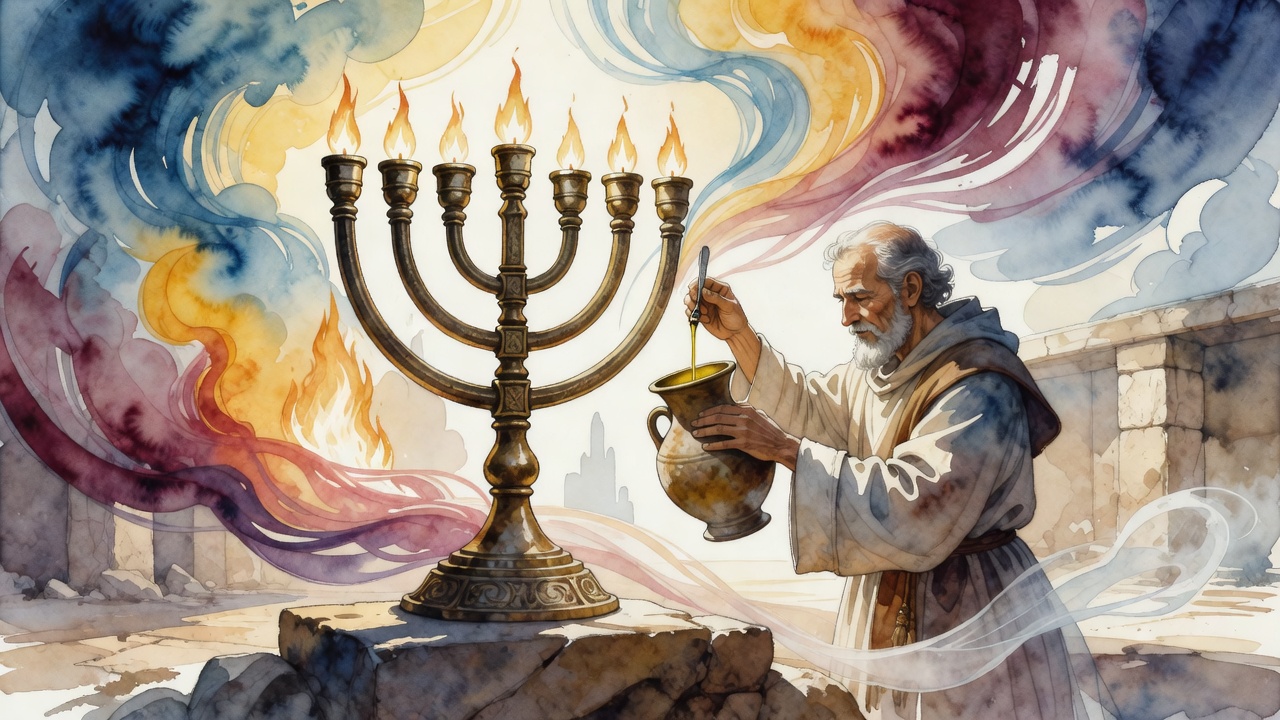
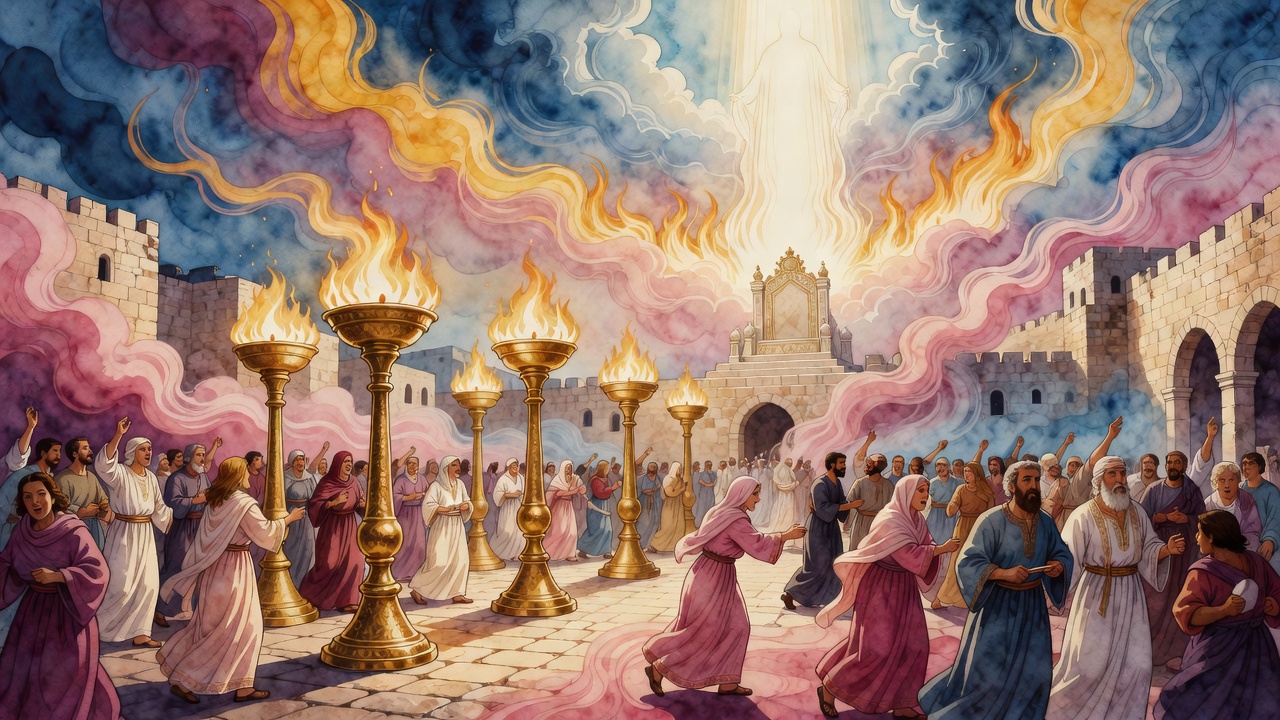
On the nights of Sukkot (the autumn festival of booths) the Court of the Women held four giant golden lampstands, each crowned with four golden bowls. Four ladders leaned against them. Four young priests climbed with cruses of oil, each cruse holding one hundred and twenty log. The wicks were cut from the worn drawers and girdles of the priests themselves, cloth that had served at the altar and now burned as light.
When the bowls caught, there was not a courtyard in all Jerusalem that stayed dark. The Rejoicing of the House of the Water Drawing turned the city into one room with many windows. Alleys that knew only shadow for most of the year suddenly shared the glow of the Temple courts. A child far from the steps could still see the gold reflected on a neighbor's wall.
Torches and Steps
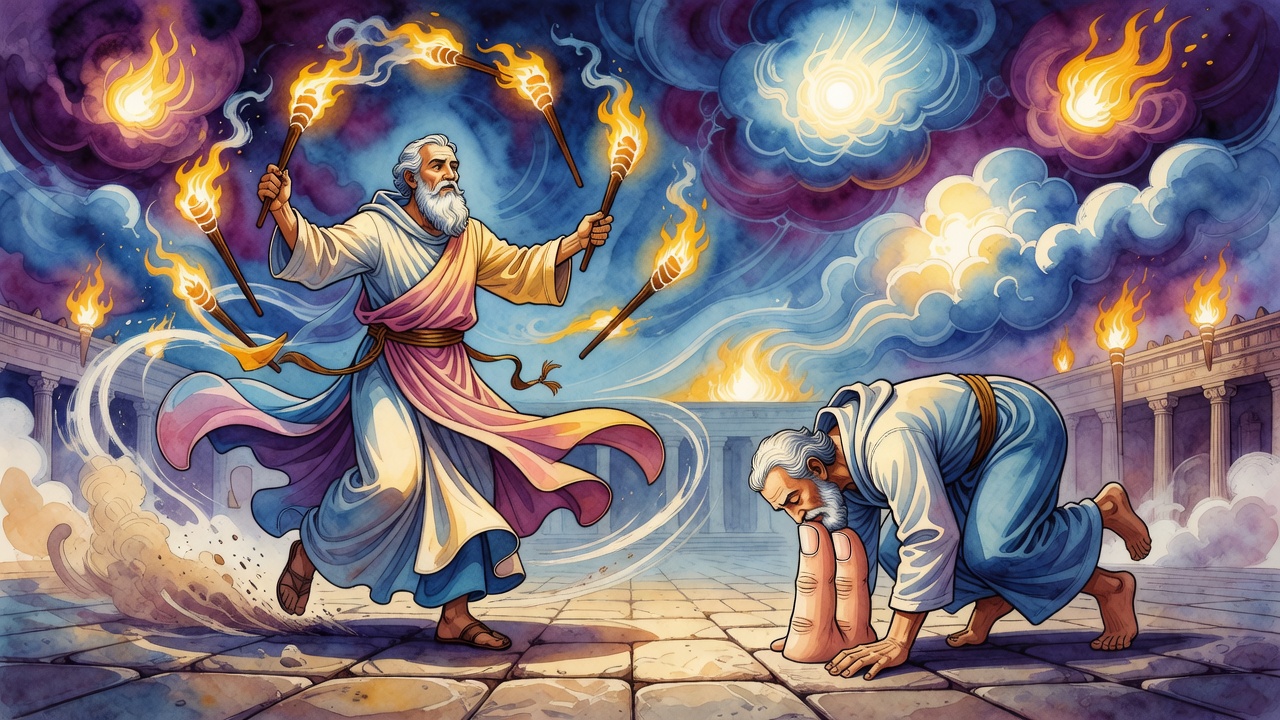
Holy men danced with flaming torches in their hands, turning in circles until sparks wrote brief letters in the air. Levites stood on the fifteen steps between the Court of Israel and the Court of the Women with harps, lyres, cymbals, trumpets, and instruments without number. At the upper gate two priests held silver trumpets. When the rooster crowed they blew a long blast, a broken blast, a long blast. The procession moved east, sounding every few steps, as if the city itself were being counted by sound.
At the East Gate they turned west toward the Temple and said what the night required. "Our fathers stood here and turned their backs to the Temple, faces to the rising sun. We, our eyes are toward God." Rabbi Yehudah has them repeat it: "We are for God, and unto God are our eyes directed." The words corrected a history of sun-worship with bodies still warm from dancing.
Joy as Worship
The light was not decoration. It was argument. The ancestors had chased a star with their backs to the Presence. These nights faced the House and burned oil until the poorest alley shared the glow. Song and dance became the form of loyalty. A city learned that joy can be a kind of prayer when it refuses the sun-cult of the past and keeps its eyes on the place of the Name.
Children who could not enter the inner courts still saw their walls turn gold. The festival made privacy public for a few nights each year. Pilgrims who left after the week carried the afterimage of gold on ordinary walls and kept a small lamp longer than thrift required, as if the Court of the Women had loaned them a habit of light.
The Teacher Beyond the Festival
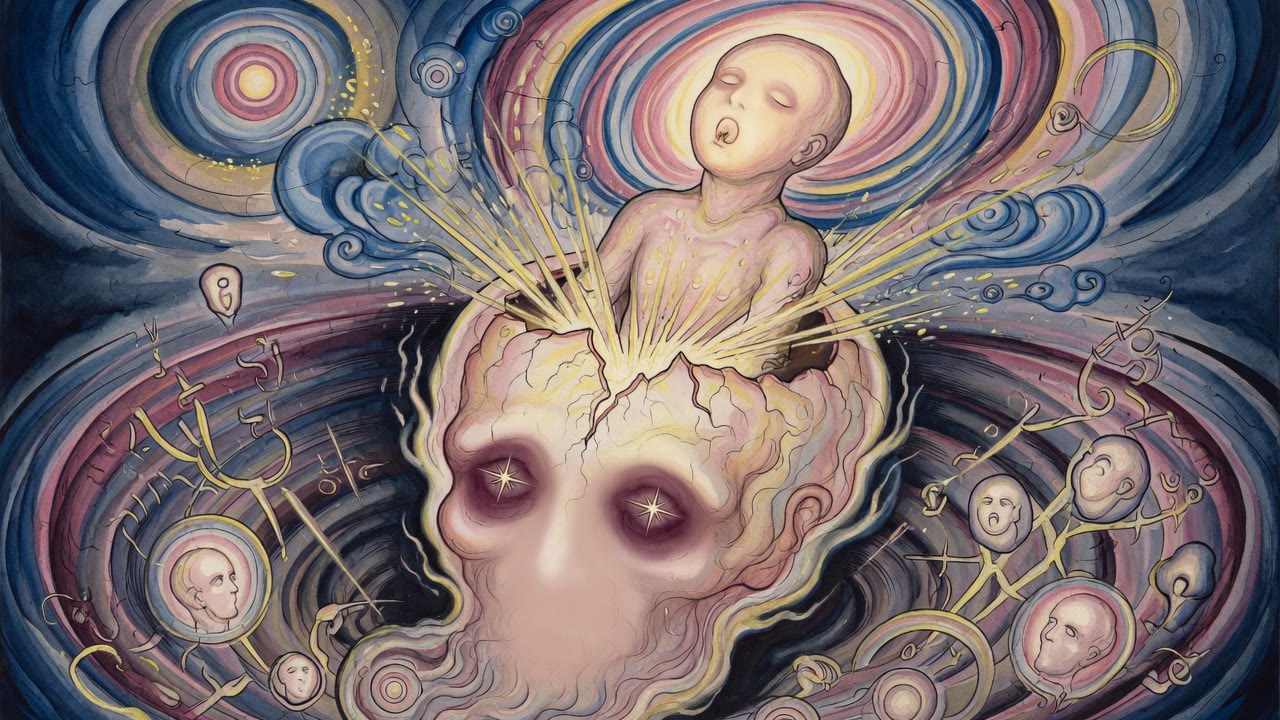
Far past the last trumpet of those nights, another promise waits. God told Abraham that as Abraham taught his household Torah in this world, God Himself would teach all Israel in the World to Come, and they would not forget, because the teaching would be written on the heart. Joel's outpouring of spirit, Isaiah's disciples of the Lord, Jeremiah's Torah in the inward parts, all are read as that future classroom where the Teacher is not a sage on a ladder but the Holy One.
The festival lamps are a rehearsal of attention. The final study hall is attention made permanent, with no courtyard left in shadow because the light is no longer only oil in bowls. Prophecy's wide pour narrows through history, but the promise of direct teaching widens again at the end.
From Courtyard to Heart
Jerusalem once glowed because priests climbed with oil and Levites would not stop playing. The same people is promised a day when no one forgets a page, because the page is written inside. Between those two lights stands every ordinary night of learning that still turns a face toward the House instead of toward a borrowed sun.
The wicks were once priests' old clothes. The last wick is a heart that no longer goes dark between festivals. Every night of study is a quieter water drawing: eyes turned the right way, waiting for a light that does not go out when the rooster crows and the silver trumpets fall silent.
Between the last festival torch and the final written heart stands a long chain of ordinary nights. Someone opens a book after work. Someone repeats a verse to a child. Someone turns a face toward the place of the Name when it would be easier to face a brighter fashion. Those small turns are how the water drawing continues without silver trumpets.
The promise that God will teach does not cancel those small lamps. It completes them. Festival joy faces the House instead of the sun. Final study needs no ladder because the oil is no longer outside the person. The city that once glowed from four giant stands is training for a light that does not depend on bowls, ladders, or the crow of a rooster.
← All myths