5 min read

Every Deed Returned and Asked Him to Sign

After death each deed steps forward, names its day, and demands a signature. Job learned how eating and ease can open a house to the wind that takes all.

Curated by Arthur · Told by Maggid ·
Table of Contents
  1. The Court That Follows the Body
  2. Righteous and Just
  3. Job's Children at the Table
  4. Tribes on Ivory Beds
  5. Before the Wind, While There Is Time
Every Deed Returned and Asked Him to Sign Click for full size

The Court That Follows the Body

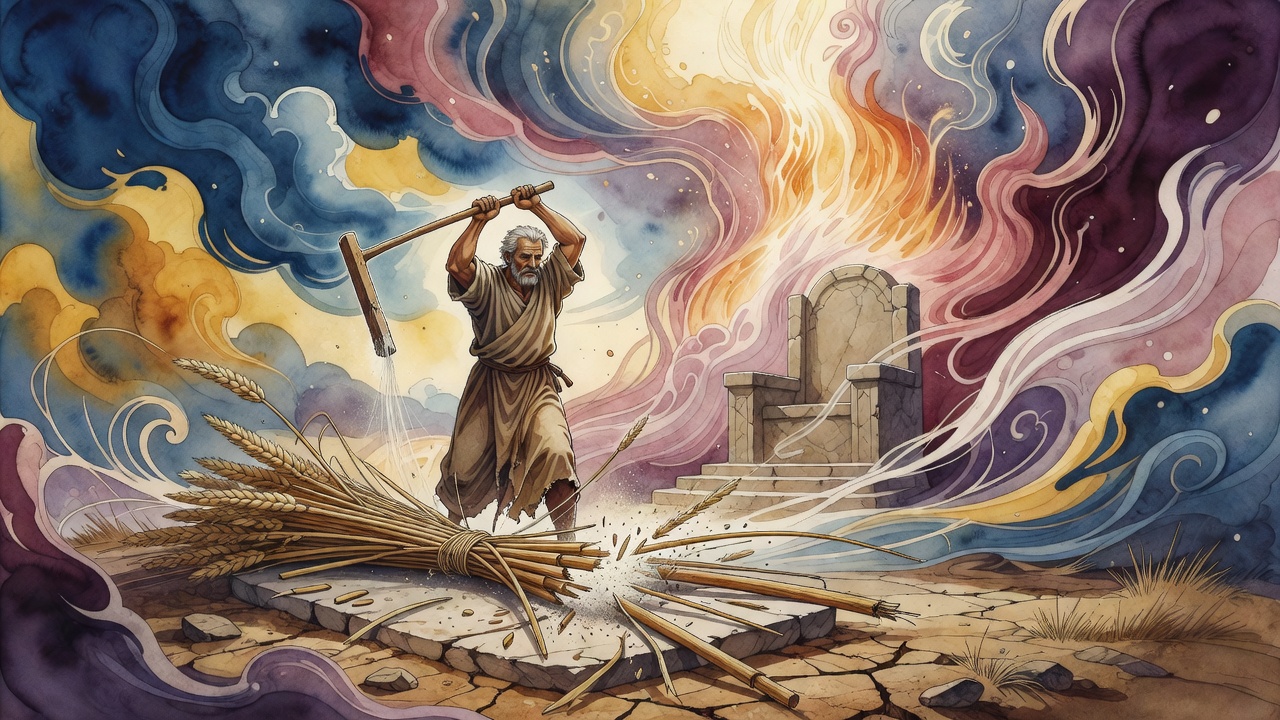
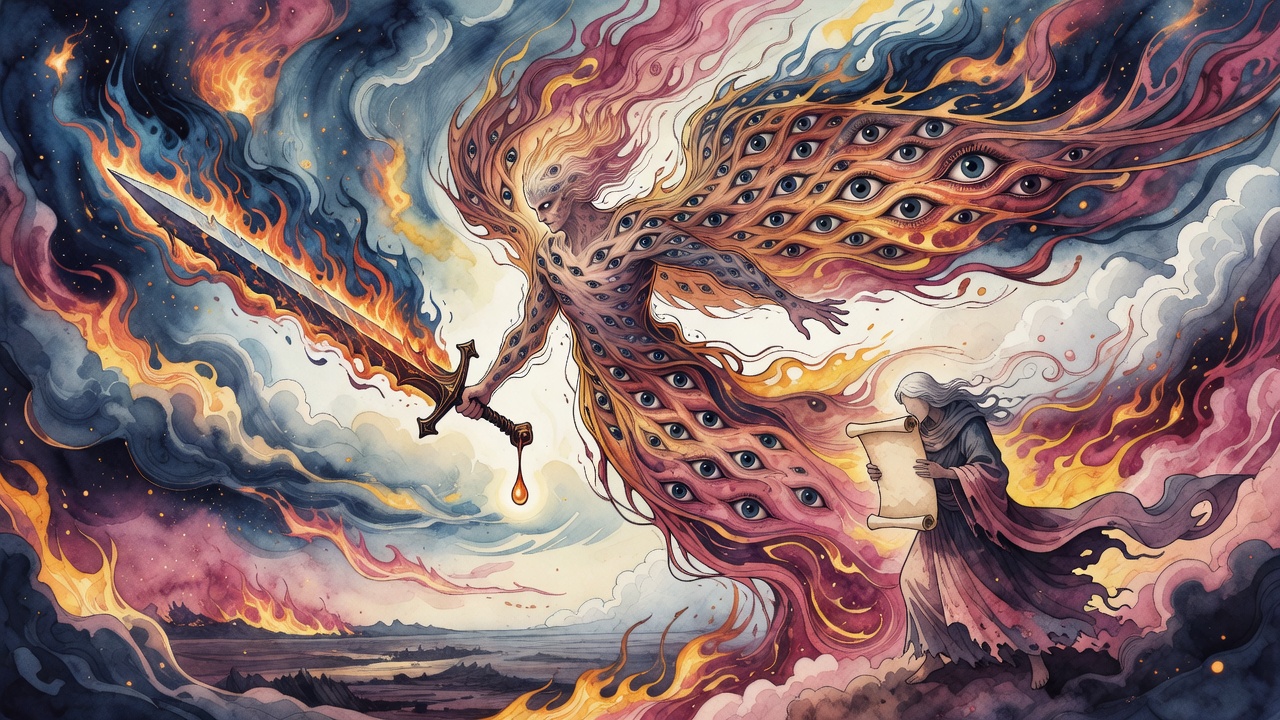
A man dies, and the story is not over. His deeds come back one by one like claimants who know his name and his street. Each stands before him and speaks without a lawyer. "This is what you did on this day. Do you believe it?" If he says yes, the deed answers, "Sign." The hand that once chose must seal the choice (Job 37:7). There is no clerk to forge the name. There is only the life, returned as witnesses who refuse to be cross-examined into silence.
The scene is not soft. It is exact. Heaven does not gossip. It inventories. A kindness arrives with its date. A cruelty arrives with its hour. The soul discovers that memory was never only private. It was always evidence waiting for a quieter room.

Some deeds arrive dressed as triumphs and leave as accusations. Some arrive looking small and turn out to have moved whole houses. The court does not care about the soul's preferred costume for its past. It cares about the act, the day, the signature.

Righteous and Just

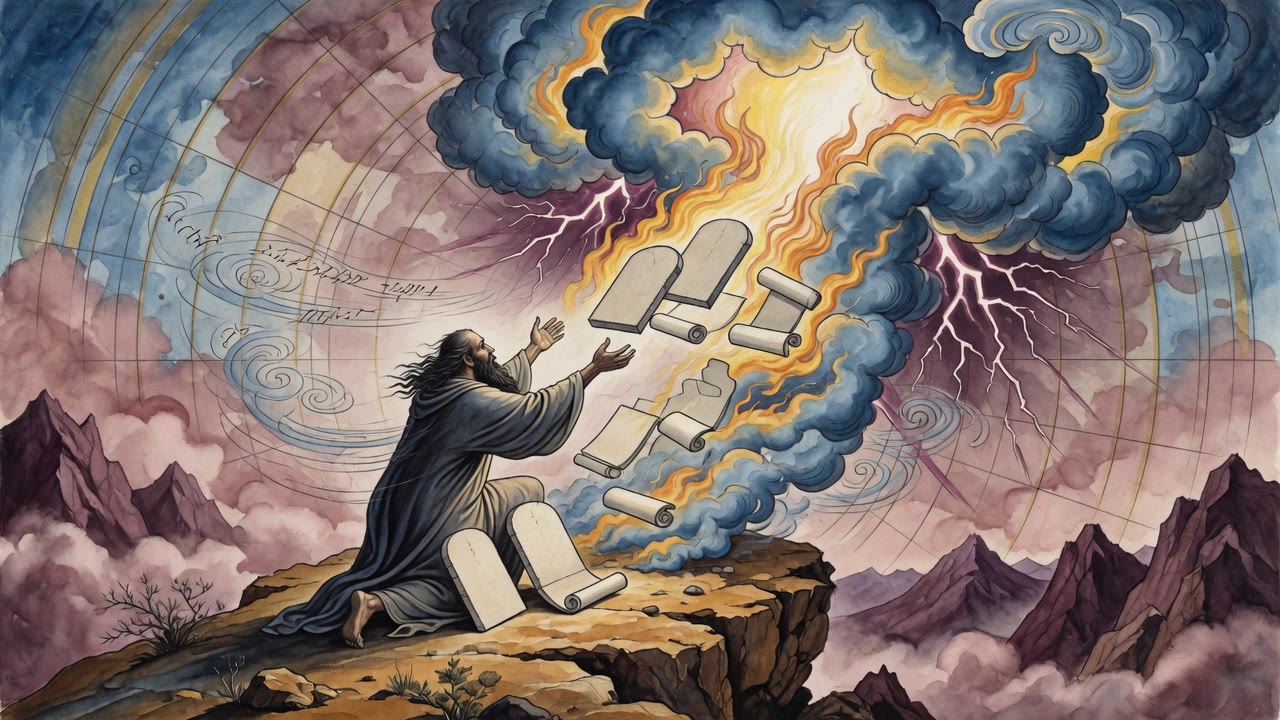
After the signatures comes the harder sentence. The soul says of the Judge, "Righteous and just is He. Correctly did You judge me." Even the verdict must be owned. (Psalm 51:6) already knew that vindicating God's judgment is part of truth. The midrash puts that vindication in the mouth of the judged, not only in the mouth of the choir.

A person can spend a life arguing with outcomes, stacking excuses like furniture against a door. At the end the argument folds into acknowledgment, or it fights the ledger and loses anyway. The signing is not theater. It is the last honesty a life can still perform.

There is no second table of negotiation after the pen. There is only the record, and the mouth that must agree the Judge did not invent the lines.

Job's Children at the Table

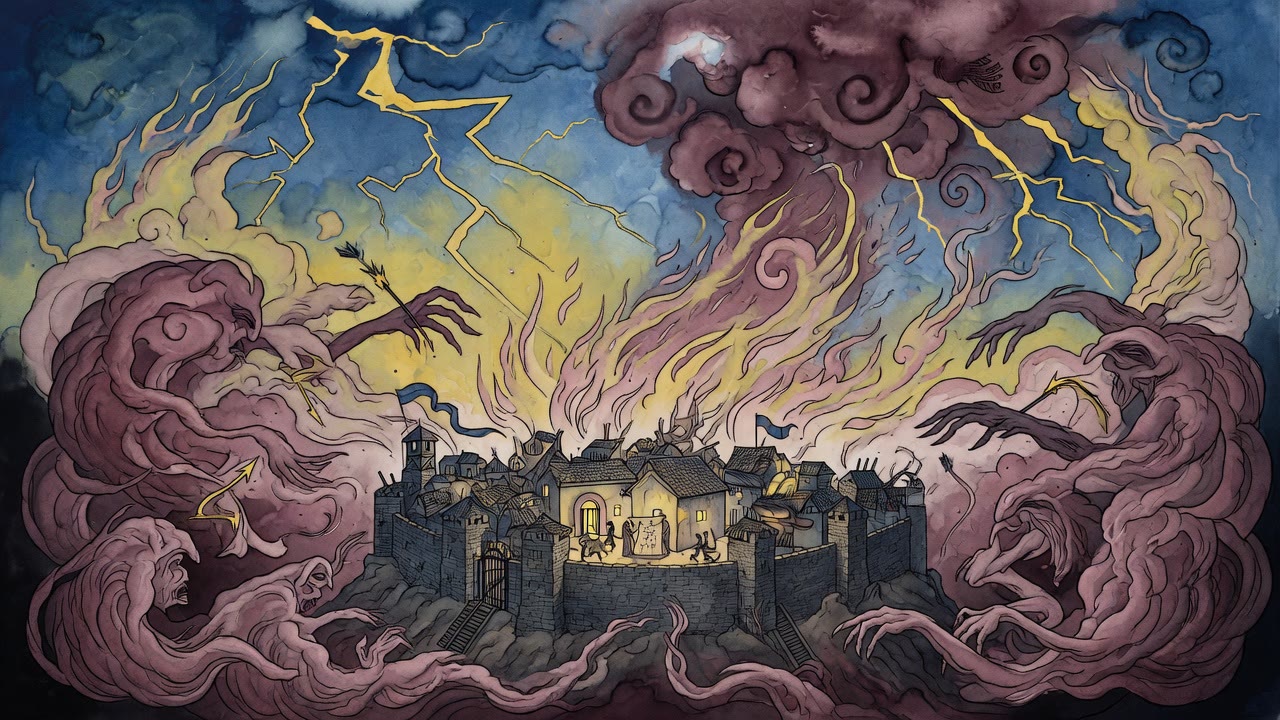
Job was righteous, and tragedy still found the door through "eating, drinking, and tranquility." The messengers ran across the yard with dust on their tongues: your sons and daughters were eating and drinking wine in their eldest brother's house when a mighty wind struck the four corners and the house fell (Job 1:18-19). The feast was not named as filth. It was named as unguarded ease. Joy without watch can open a roof to the wilderness wind.

Job tore his robe with a mind that still blessed the Name. He sat in ashes while the inventory of his life rearranged itself around absence. The midrash keeps the warning beside the grief. Comfort is not sin. Comfort that forgets can become a hinge for loss. The same table that held celebration became the stage the wind chose.

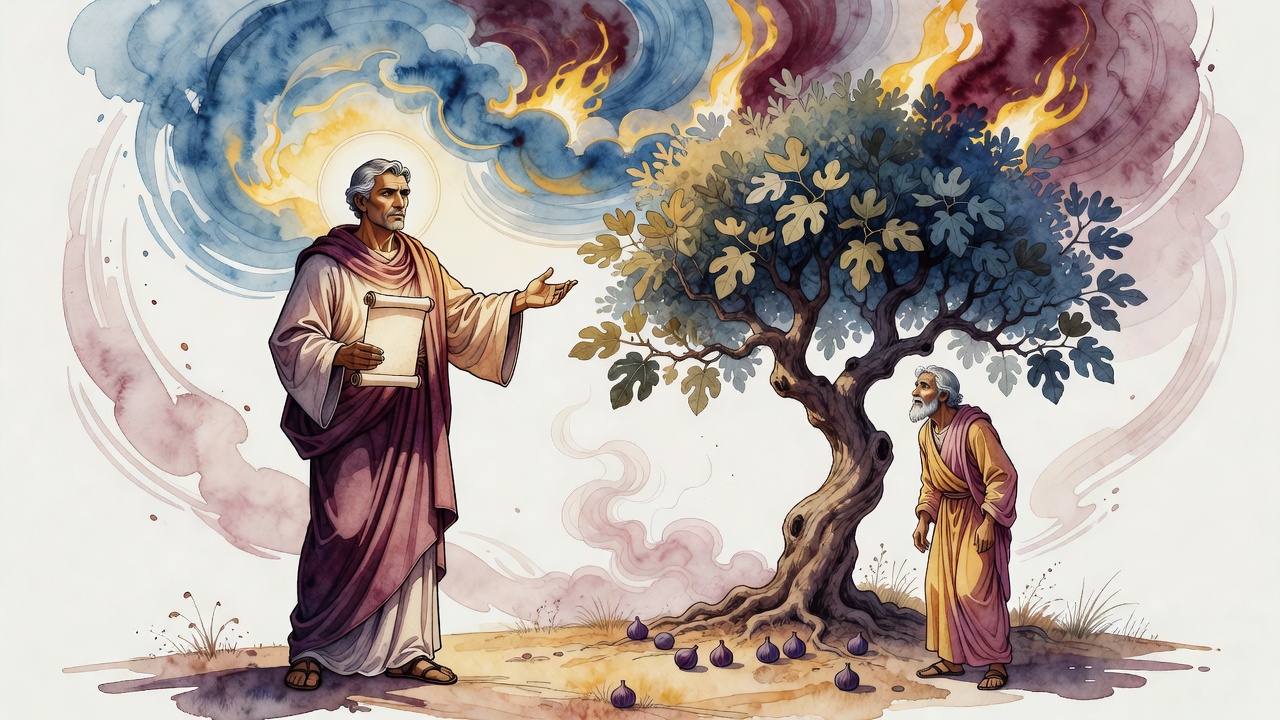
Imagine him in the ash after the wind, still alive, while the feast house is only timber and silence. The deeds of that day are already learning their lines. The wine poured. The door left unwatched. The father's righteousness that could not cover a house that had forgotten how to tremble. He cannot sign yet. He still has breath. The court waits with a patience that is not kindness and is not cruelty. It is accuracy deferred.

Tribes on Ivory Beds

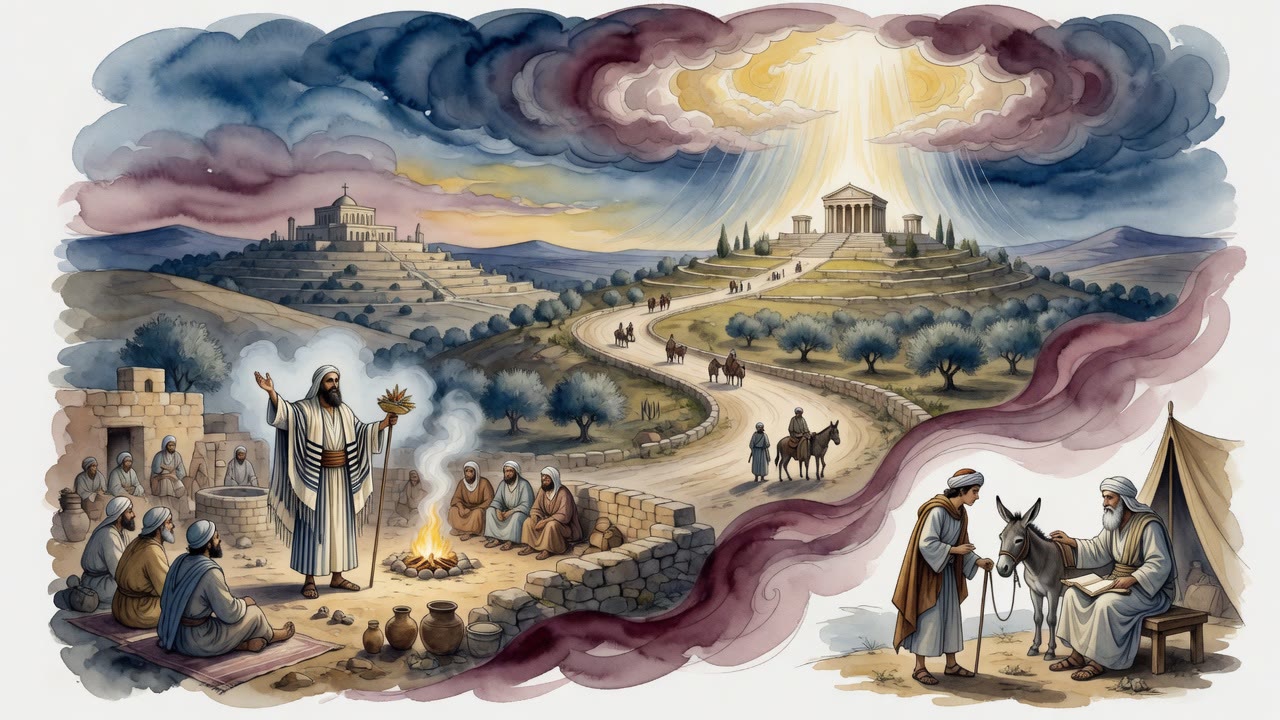
The same pattern climbs into national history like damp into walls. Exile comes on the back of eating, drinking, and tranquility. Amos saw them sprawled on ivory beds, drinking from bowls, singing idle songs, and promised they would go out at the head of the exiles (Amos 6:4-7). Yeshurun grew fat and kicked (Deuteronomy 32:15). Fullness turned into a hoof against the Giver.

What fell on Job's house in one wind can fall on a people in a slower weather. Banquets continue. Prophets are ignored. The deeds stack quietly, each one learning the speech it will use later: this is what you did on this day. Sign.

Nations on ivory beds rarely believe such courts exist. They believe only in cushions and songs. Then exile arrives as a slow signature collection, and the midrash's warning stops sounding like poetry. Eating, drinking, and tranquility without memory are not neutral joys. They are apprenticeships in forgetting, and forgetting is how a ledger fills with lines no one meant to write.

Before the Wind, While There Is Time

Teshuvah (repentance, the turn back toward God) means the inventory can still change while breath remains. A deed not yet done cannot stand up on that last stage. A deed repaired can arrive smaller, or arrive as mercy's exhibit instead of accusation. The terror of the signing is also a mercy in advance. It tells the living to handle their days as if each one will speak, because each one will.

Job's story and the final court share one pressure: ease is a test, and every table is training for a later word. Eat. Drink. Remember the corners of the house. Remember the poor outside the song. Remember the Name that gives the wine. The wind knows the difference between a feast that blesses and a feast that sleeps. So does the court that follows the body, patient as dust, exact as a seal.


← All myths

From the tradition

Sources

2 sources

The texts behind this telling. Some cards carry a translation of the source; others are our own retelling of it, and each card says which. Every card links out to the original.

Sifrei Devarim 307:13Sifrei Devarim

Retold in our words. Read the original at the link below.Sifrei by Rabbi Shraga Silverstein · CC-BY

Forget the pearly gates and harps for a minute. Jewish tradition offers some pretty intense, deeply personal, and let's be honest, slightly terrifying visions of the afterlife.

One of the most striking images comes to us from Sifrei Devarim, a collection of legal and ethical teachings related to the Book of Deuteronomy. Here, in section 307, we get a glimpse of what might await us as we leave this world.

You've lived your life, with all its ups and downs, triumphs and stumbles. And then, the moment comes. You pass on. But you're not quite done yet. According to Sifrei Devarim, all your deeds, every single one, come back to you. They appear before you, one by one, like characters in a play of your own making. Each deed speaks, presenting itself: "This is what you did on this and this day. "

Having to confront every choice, every action, laid bare before you? There's no hiding, no excuses. It's just you and the truth of what you did.

And if you acknowledge it, if you say, "Yes, I did that," then comes the clincher: "Sign!" The deed demands your signature, your ultimate acceptance of responsibility. The text even references (ob 37:7) to illustrate this point: "He makes the hand of every man sign." for a second. Every. Man. Sign.

But it doesn't end there. It's not just about acknowledging our deeds, but also about acknowledging the justice of the ultimate judgment. The passage continues: "Righteous and just is He." The text suggests that we ultimately vindicate God’s judgment, saying, "Correctly did You judge me." It's about recognizing the divine order, even when it's difficult to accept. This idea resonates with (Psalm 51:6), which states, "So that You are (found) righteous in Your words, vindicated in Your judgments."

So, what does this all mean? Is it a literal description of the afterlife? Maybe. Maybe not. But it certainly serves as a powerful reminder of the weight of our actions. It pushes us to consider the impact we have on the world, and to strive to live a life worthy of that final, ultimate accounting.

It’s a call to be mindful, to be present, and to make choices that we can stand by, not just in this life, but in whatever comes next. It also speaks to the Jewish concept of tshuvah, often translated as repentance, but more accurately understood as return, the idea that it’s always possible to turn back to the right path. Even knowing that our deeds will one day confront us, we have the power to shape those deeds for the better, to create a legacy we can be proud of.

This passage from Sifrei Devarim invites us to live with intention, with integrity, and with a deep awareness of the consequences of our choices. Because one day, we may just have to sign for them.

Full source
Sifrei Devarim 318:2Sifrei Devarim

Retold in our words. Read the original at the link below.Sifrei by Rabbi Shraga Silverstein · CC-BY

He was a righteous man, tested beyond measure. But how did tragedy initially strike his family? As we learn in Sifrei Devarim, it wasn't due to any inherent sinfulness on their part, but rather through "eating, drinking, and tranquility." Remember the verse from Iyyov 1:18-19? "This one was still speaking when another came and said, 'Your sons were eating and drinking wine, when suddenly a mighty wind came from the wilderness. It struck the four corners of the house, etc.'" It’s a stark reminder that even in moments of joy and celebration, we must remain mindful.

It’s a theme that repeats itself in our history. Consider the twelve tribes. What led to their exile? Again, Sifrei Devarim points to "eating, drinking, and tranquility." The prophet Amos (6:4-7) rebukes them: "They lie on ivory beds… they drink (straight) from the wine bowls… therefore, they shall now be exiled at the head of the exiles." Comfort and luxury had lulled them into a false sense of security, blinding them to the needs of others and their connection to God.

Why is this the case? Perhaps because ease can breed complacency. When we're comfortable, we might forget to be grateful. We might become less aware of the suffering around us. We might lose sight of our spiritual purpose.

It doesn't stop there. Sifrei Devarim warns us that even in the time leading up to the days of the Messiah, similar pitfalls await. The Jewish people are destined to rebel because of "eating, drinking, and tranquility." The verse, "And Yeshurun grew fat and it kicked," (Deuteronomy 32:15) paints a vivid picture of a nation grown arrogant and ungrateful due to its prosperity. Yeshurun is a poetic name for Israel. It implies that when we become overly comfortable, we risk losing our way, forgetting our values, and ultimately, rebelling against the very source of our blessings.

This isn't a call for asceticism or a condemnation of joy. We're not meant to live lives of deprivation. But it is a call for mindful living. A reminder that true fulfillment comes not from material possessions or fleeting pleasures, but from a life of purpose, gratitude, and connection to something larger than ourselves. It’s about finding balance, appreciating the good in our lives without letting it distract us from our responsibilities to ourselves, to our community, and to God.

Are you using your blessings wisely? Are you staying connected to your values? Are you remembering those who are less fortunate? Perhaps the key to avoiding the pitfalls of "eating, drinking, and tranquility" lies in cultivating a spirit of gratitude, generosity, and unwavering commitment to living a meaningful life.

Full source