The Kenites Who Traded Jericho's Gold for a Seat in the Study House
Jethro's children walked away from the richest land in Canaan to sit in the dust at Jabez, and from that seat a nation of wandering sages was born.
Table of Contents
 Click for full size
The Richest Square in the Promised Land
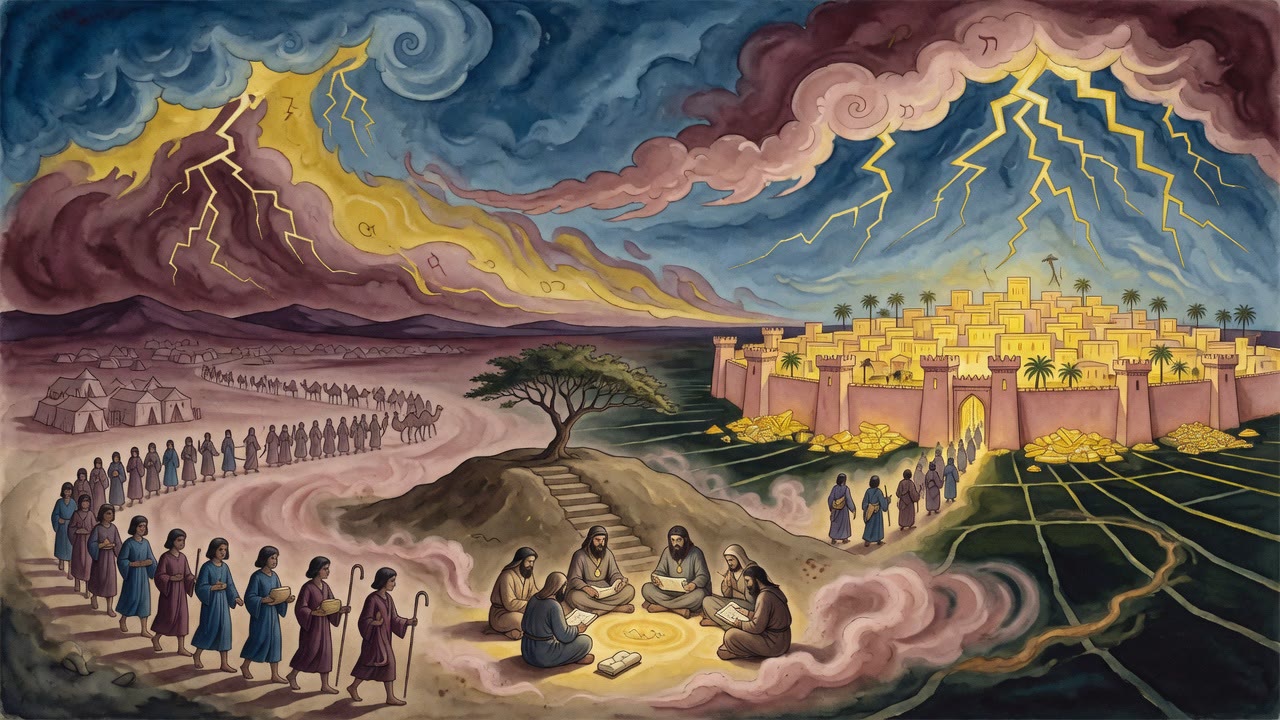
When Israel carved up the conquered land, one plot was too valuable to hand out with the rest. They measured off the heart of Jericho, five hundred cubits by five hundred cubits, the city of palm trees, its soil so rich a man grew fat on its air. No tribe claimed it. They swore a vow over the square and left it standing empty, a prize with no owner. "Whoever has the Chosen House built in his portion," they said, "shall take the rich land of Jericho." Until the Temple found its ground, it would belong to no one and to everyone.
Into that unclaimed wealth walked the family of Jethro, the Midianite priest who had once counseled Moses in the wilderness. His children, the Kenites, were handed the produce of Jericho to enjoy while the generations waited for the House to rise. And enjoy it they did, for four hundred and forty years, dates and balsam and fat harvests all flowing to the children of a convert.
The Day Benjamin Came to Collect
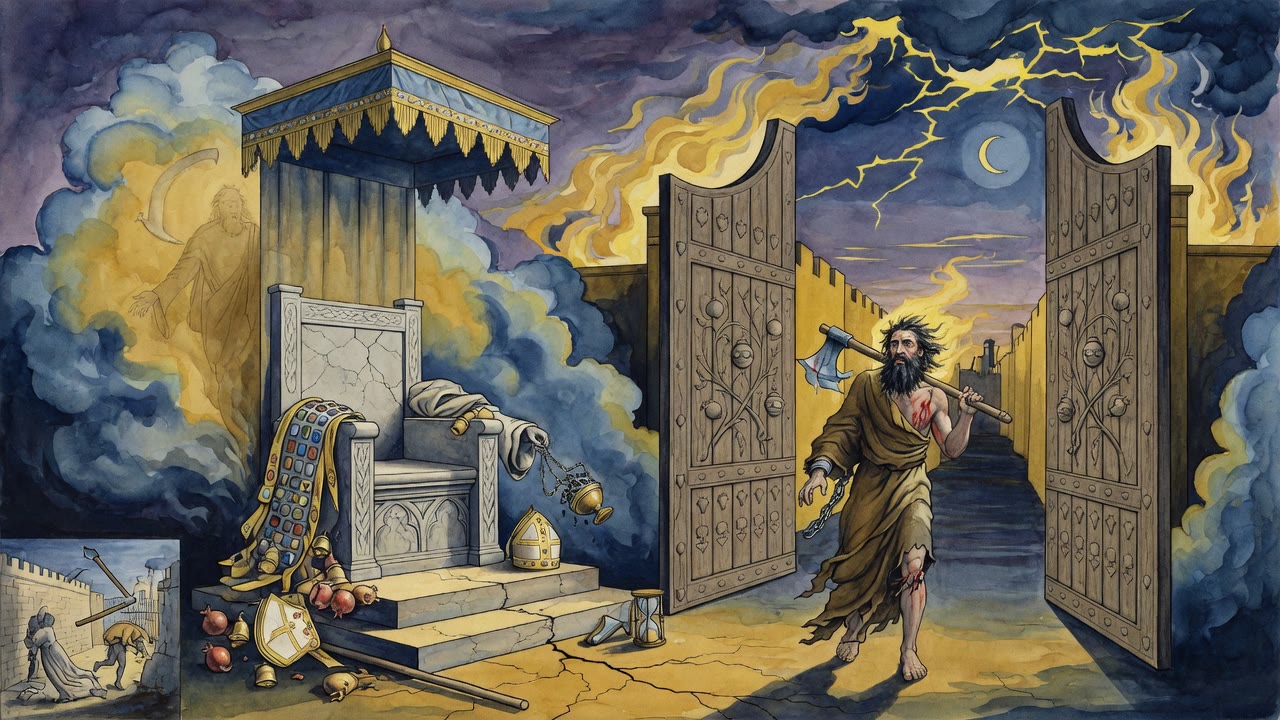
Then the House rose. The Divine Presence came down and settled in the portion of Benjamin, and the old vow came due. The sons of Benjamin walked into Jericho and cleared the Kenites out. Four hundred and forty years of possession, ended by a single line in an ancient promise.
They could have fought for it. Instead they packed what they could carry and turned their backs on the richest ground in the world. They went up to Arad, to the academy of a man named Jabez, whose prayer God had already answered, and they sat down in the dust to learn beside him.
The Vow They Would Not Break
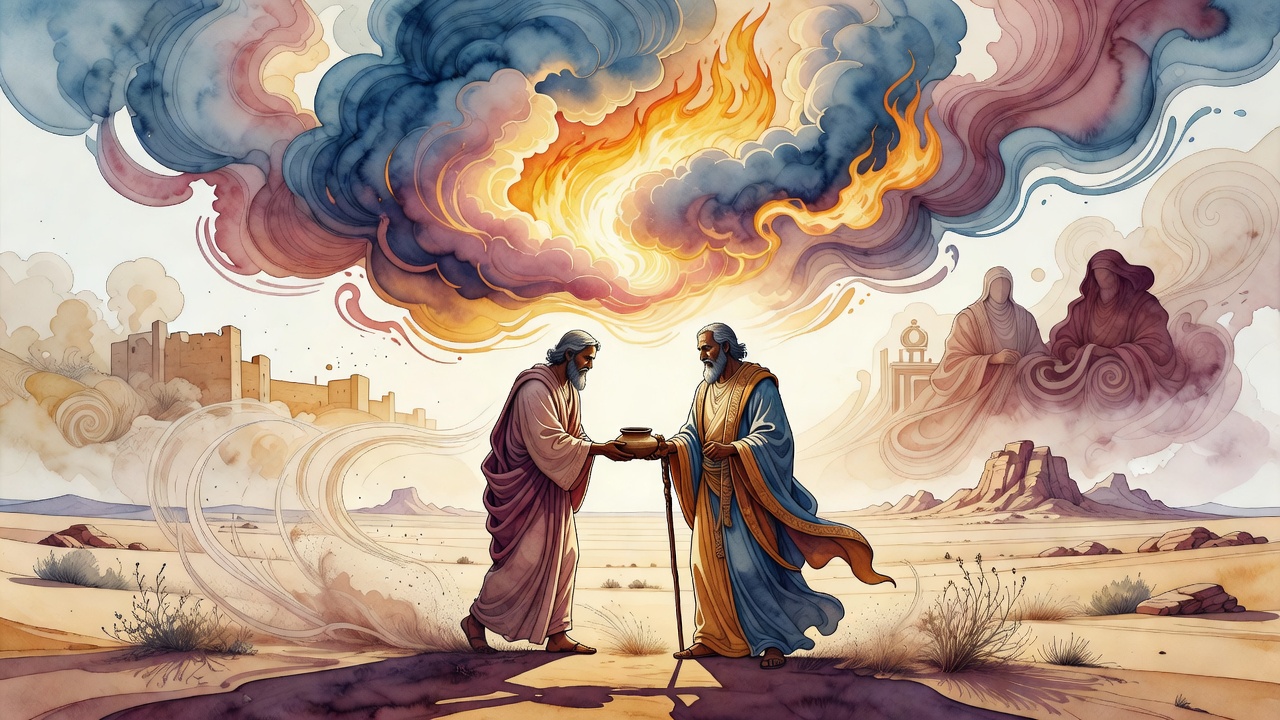
These were the Rechabites, sworn men. Generations back their father Jonadab son of Rechab had bound them by an oath. No wine, no vineyards, no houses of stone. Only tents, and the open road. They kept it. When a prophet later set pitchers of wine before them to test them, none would touch a drop. And they had a stranger reason for their wandering than obedience. "Since this House is one day to be pulled down," they said of the Temple itself, "we hold it pulled down already, and we will not build in stone what stone cannot keep." They slept in booths because they had already mourned a ruin no one else could yet see.
For that they earned names that were really scars. Tirathites, because they had shaved their heads in grief and sat at the gates of Jerusalem, and because when they cried out heaven answered them. Shimeathites, because their fathers had stood at the mountain and heard the ram's horn sound at Sinai. Suchathites, because they never rubbed oil into their skin and slept under branches.
Rabbi Nathan weighed their covenant against the one made with kings and found it heavier. God's promise to David carried a condition. Keep My covenant, or feel the rod. The promise sworn to the house of Rechab carried none. "Jonadab son of Rechab shall not lack a man to stand before Me all the days." Converts, someone objected, do not enter the Sanctuary. True, came the answer. Neither do most of Israel. But these men sat in the Sanhedrin (the high rabbinic court in Jerusalem) and taught Torah, their daughters married into the priesthood, and their grandchildren laid offerings on the altar.
The Scholars Who Rode the White Donkeys
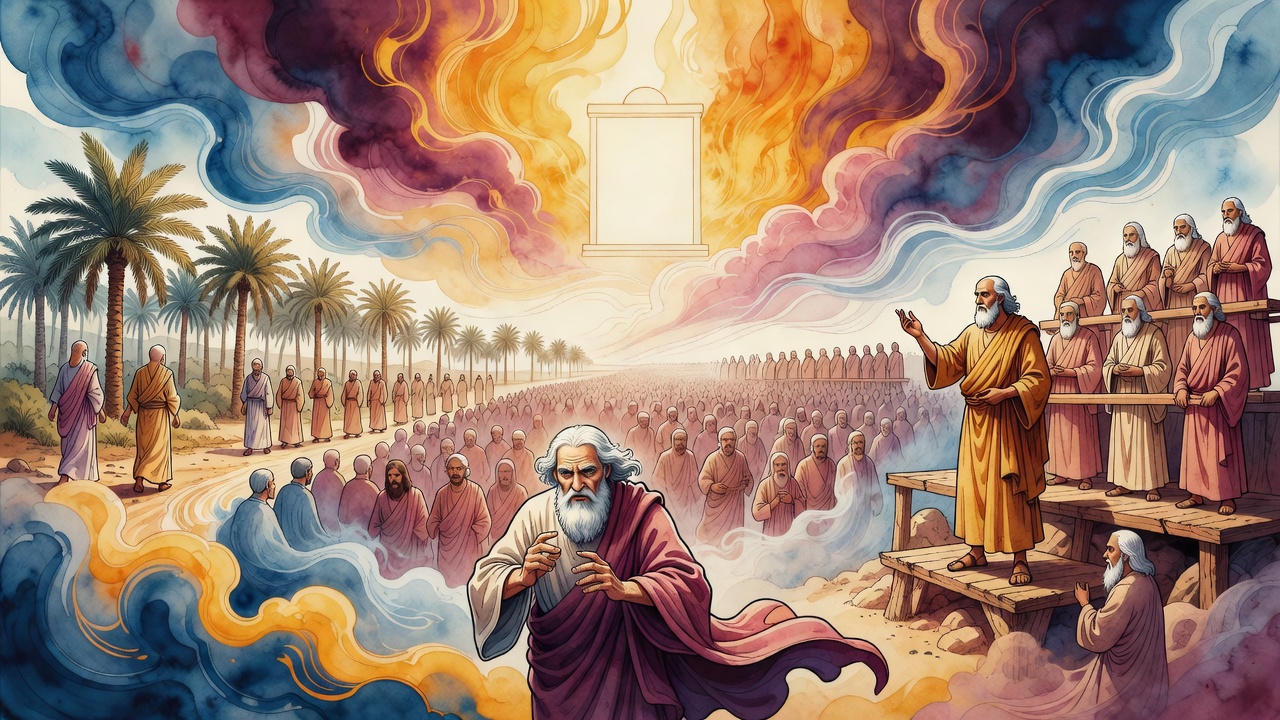
From that seat in the dust at Jabez a whole roving nation of learning was born. The families who settled beside him became the scribes, and their sons took the road their fathers had never left. Long after, Deborah sang her victory over Sisera and called out to them by their mounts. "You who ride on white donkeys," she sang, and the school of Rav Anan knew exactly whom she meant. The disciples of the sages, who go from city to city and province to province with Torah in their saddlebags, and wherever they stop to teach they make the place blaze like noon.
White, because their hands were clean of robbery. The masters of Scripture walked the road, the masters of Mishnah walked it beside them, and the masters of the Gemara opened their mouths, and even their idle talk turned out to be Torah. In their courts they set the matter squarely on the law, and the world leaned its whole weight on them and did not fall.
The Backwater That Made Heaven Answer
There was a small town in Israel, a nothing place, a place no victory song remembers. Its people rose one morning and built a synagogue. Then they built a house of study. They hired a cantor to carry the prayers and teachers to sit the children in rows, and out of that one poor town more houses of study opened across the land than anyone could count.
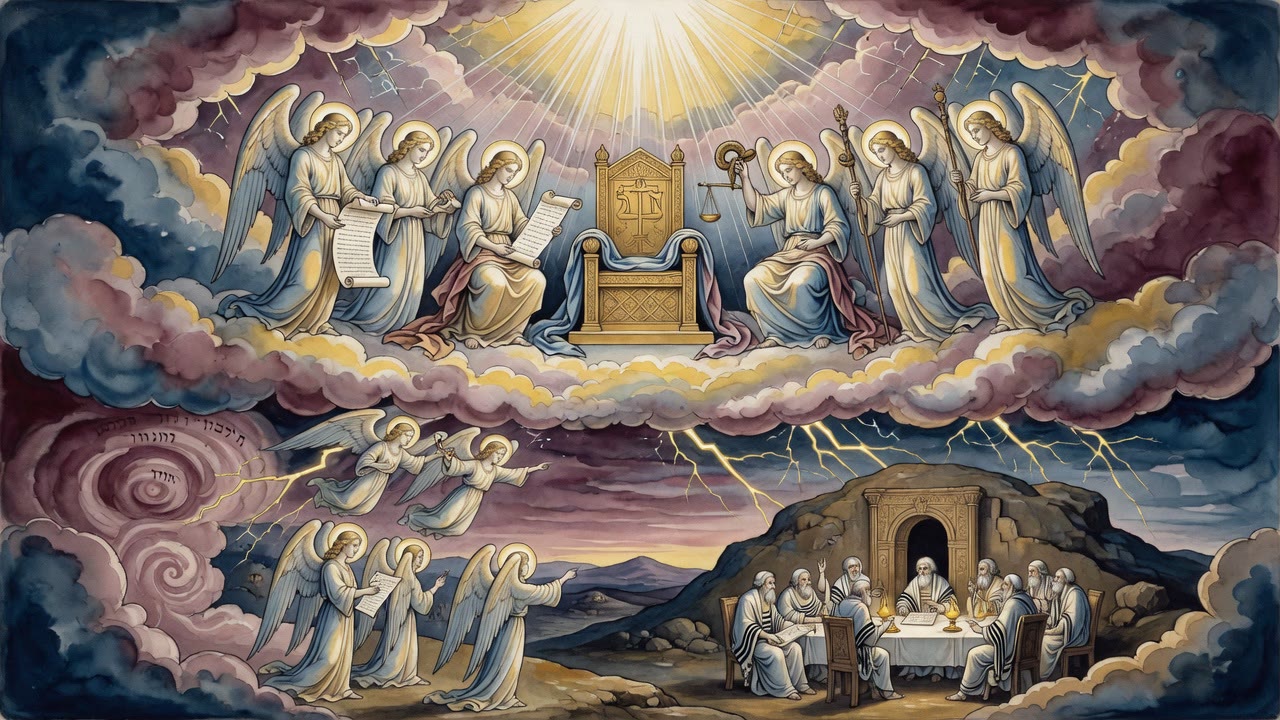
A promise waited inside the smallest of those acts. Any man who opened his mouth and drew out a word of Torah that had never been spoken quite that way before, from his own lips, in his own poverty, was counted as though the words had been proclaimed to him from heaven. A voice came down to such a man, and it carried the weight of the Throne. "Thus said the Holy One, blessed be He," it told him, "build Me a house, for its reward is great." Jethro's children had walked away from the richest square in the world, and heaven had answered by making every dusty study house the one possession no army could ever come to collect.
← All myths