Jethro Tested Every Idol Then Named One God
The last clay god sat silent. A rider brought news of a split sea. Jethro spoke three words he had never given any shrine.
Table of Contents
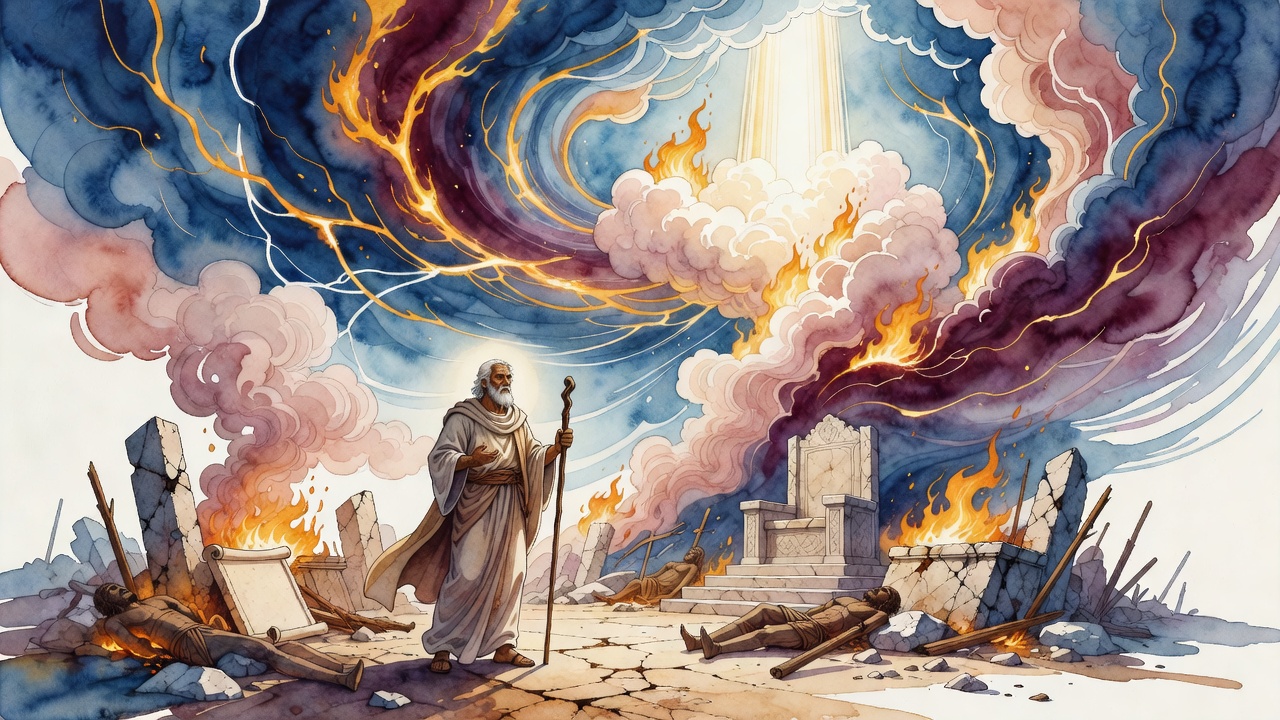 Click for full size
The Last Idol Goes Silent
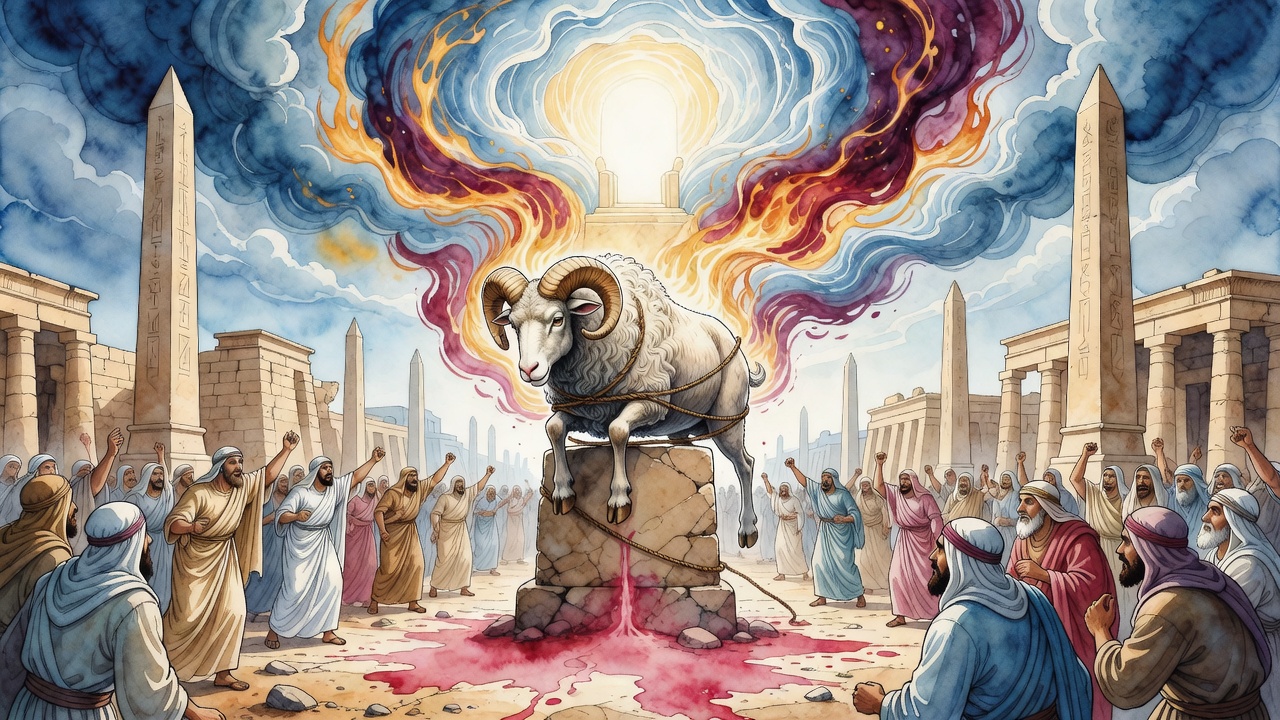
Jethro set the last clay god on the shelf and waited. Oil in the lamp. Wine in the bowl. He had done this in Midian, and on the caravan roads that fed Egypt, and in courtyards that smelled of frankincense and goat. No voice answered. No oil caught on its own. The clay face stared past him the way a stone stares.
He was a priest of Midian. He had poured fat on more altars than he could count. Each silence sat heavier than the last. When his daughter Zipporah spoke of a man who had fled a palace and married into the tents, Jethro listened the way a craftsman listens to a tool that might still cut.
The man's name was Moses. He kept sheep. He did not speak of gods unless asked.
Three Words After the Sea
A rider came from the west with salt still in his clothes. Six hundred thousand had walked out of Egypt. Egypt, where a slave could not slip a border, had opened its front gate under a pillar of fire. Water had stood like walls. The army that designed a river grave for Hebrew boys had gone into the same water and not come up.
Jethro's mouth shaped three words he had never spent on any of his gods.
"Now I know."
Until that hour he had not admitted what his experiments already proved. He had not left a single idol untested. When he said the Lord is greater than all gods, he spoke as a man who had sampled the field and found it empty (Exodus 18:11).
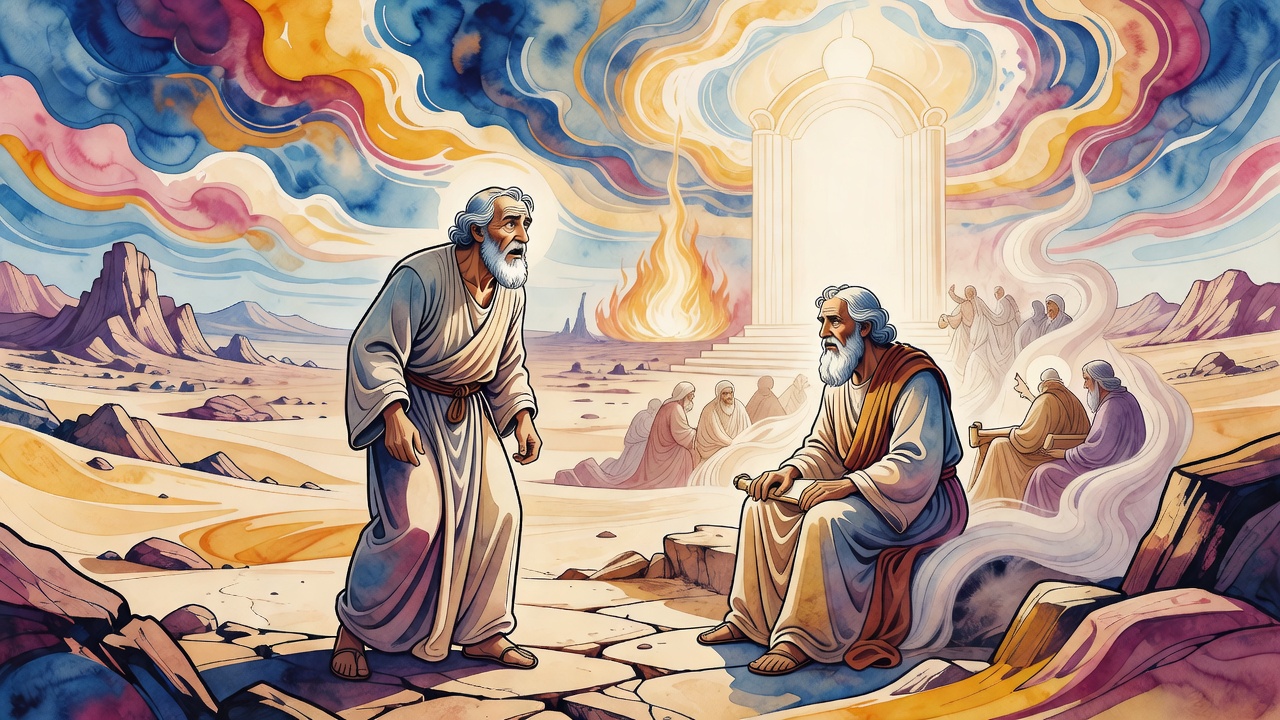
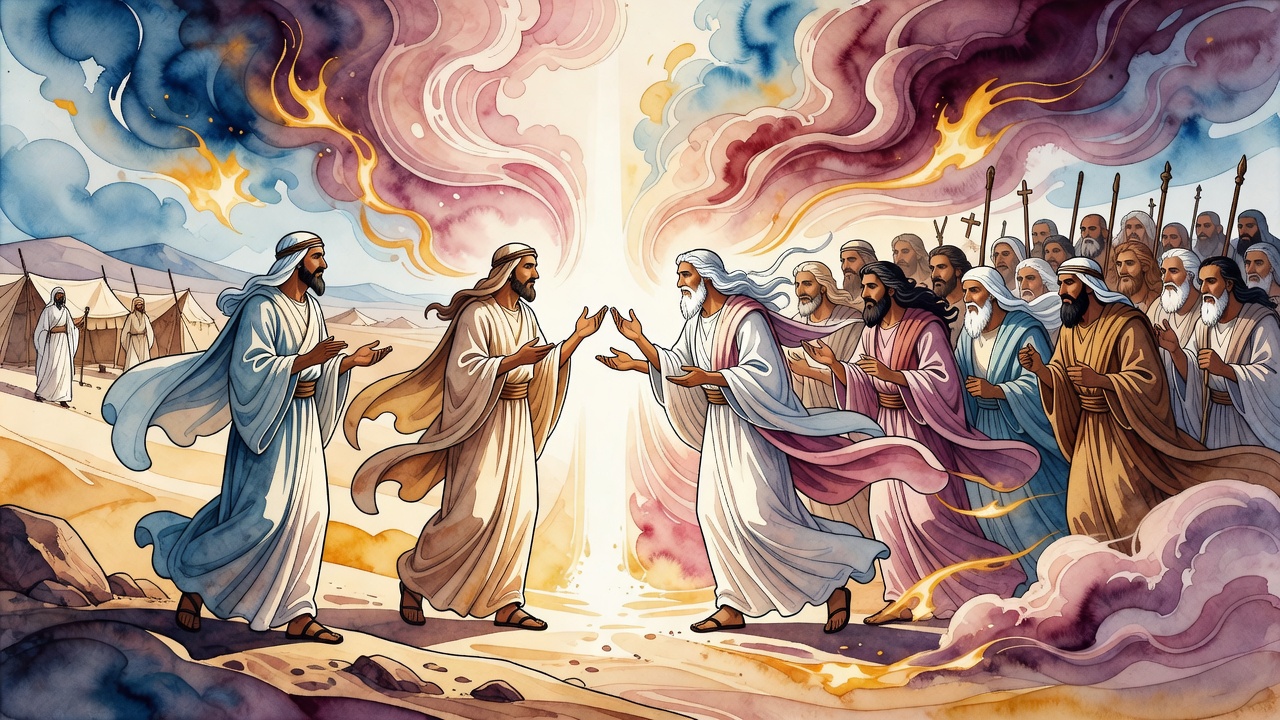
He traveled toward the camp with Zipporah and the boys. The desert wind smelled of dried reed and far salt. Moses came out to meet him. The tent filled with the plagues told again, not as rumor but as family report. Jethro bowed. Blessing rose in him like heat. Measure for measure, he said. The plot that drowned infants had drowned its plotters.
He offered sacrifices. He ate bread with Aaron and the elders before God. The feast was not a treaty with Midian's idols. It was a guest meal under the Name he had finally confessed.
Do Not Pull Their Altars Indoors
Later Israel stood on the edge of the land, and the same knowledge walked ahead of them as a warning. God told them not to strike a covenant with the peoples who served other gods. A treaty is a rope. Pull it, and foreign altars slide into the courtyard. Their habits sit at the table. Their children marry into the tents, and the One Name thins into many names until the household no longer knows which fire it tends.
Jethro had lived on the other side of that rope. His confession did not ask Israel to make peace with Midian's gods. Arrival is the soft hour. That is when a handshake looks cheap and costs everything. He had tried those shrines. He knew how friendly they sound on the first visit.
He said as much before he left. Keep distance where distance protects the Name. He had wasted years on friendly silence. He would not watch Israel buy that silence with a treaty.
Men Who Hate a Gift
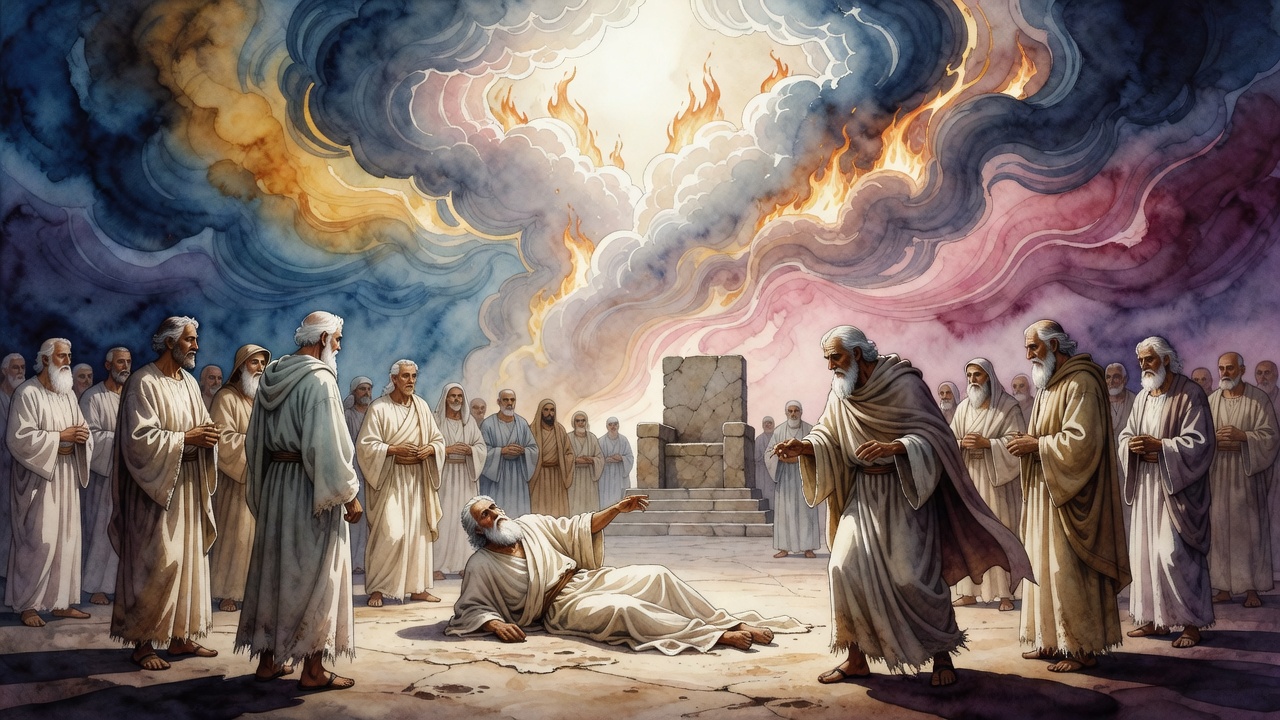
In the camp, cases piled from dawn until the people stood around Moses like a wall. A man with a torn cloak waited. A woman with a disputed goat waited. Moses heard them one by one until his voice went thin. Jethro watched his son-in-law grow smaller under the work and spoke as a father who had run a household of shepherds and strangers.
"Choose men of ability," he said. "Men who fear God. Upright men. Men who hate dishonest gain."
Hate, not merely refuse. A judge who finds a bribe flattering will one day take it. A judge who hates the mammon of falsehood, mamon d'shikra, has no open door for it. Ability without fear becomes clever theft. Fear without uprightness is a show. Uprightness that still loves a gift will bend when the gift is heavy enough. The four traits have to sit in one body, or the court becomes a market with better words.
Then set them over thousands, hundreds, fifties, tens. No quarrel more than a short climb from a human face. Justice should not drown in one exhausted man while lesser cases rot in the dust. Moses listened. He did not argue for the honor of doing it all himself. The next morning the lines looked different. Authority had branches.
Afterward Jethro returned to his own land. The shelf of failed gods stayed behind him. He left them without a farewell speech. He had already given them years. They had given him nothing back but practice for recognizing a true voice when it arrived through a sea story and a tired son-in-law's face.
← All myths