5 min read

Kindness and Judgment Met in the Middle as Mercy

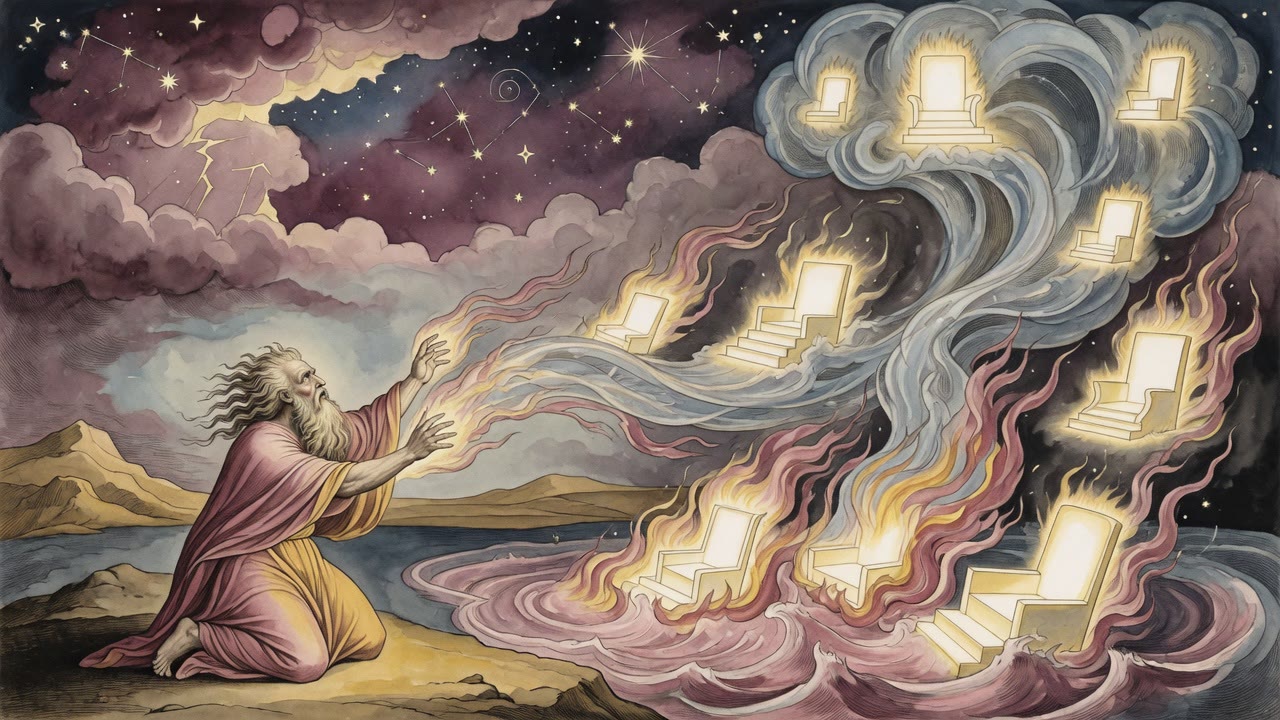
Right-hand light poured without limit. Left-hand light cut hard borders. Between them mercy stepped in, and only then could a stable world hold both gifts.

Curated by Arthur · Told by Maggid ·
Table of Contents
  1. The Right Hand Opens
  2. The Left Hand Cuts
  3. Mercy in the Center
  4. Facets That Need Each Other
  5. A World That Can Hold Both
Kindness and Judgment Met in the Middle as Mercy Click for full size

The Right Hand Opens

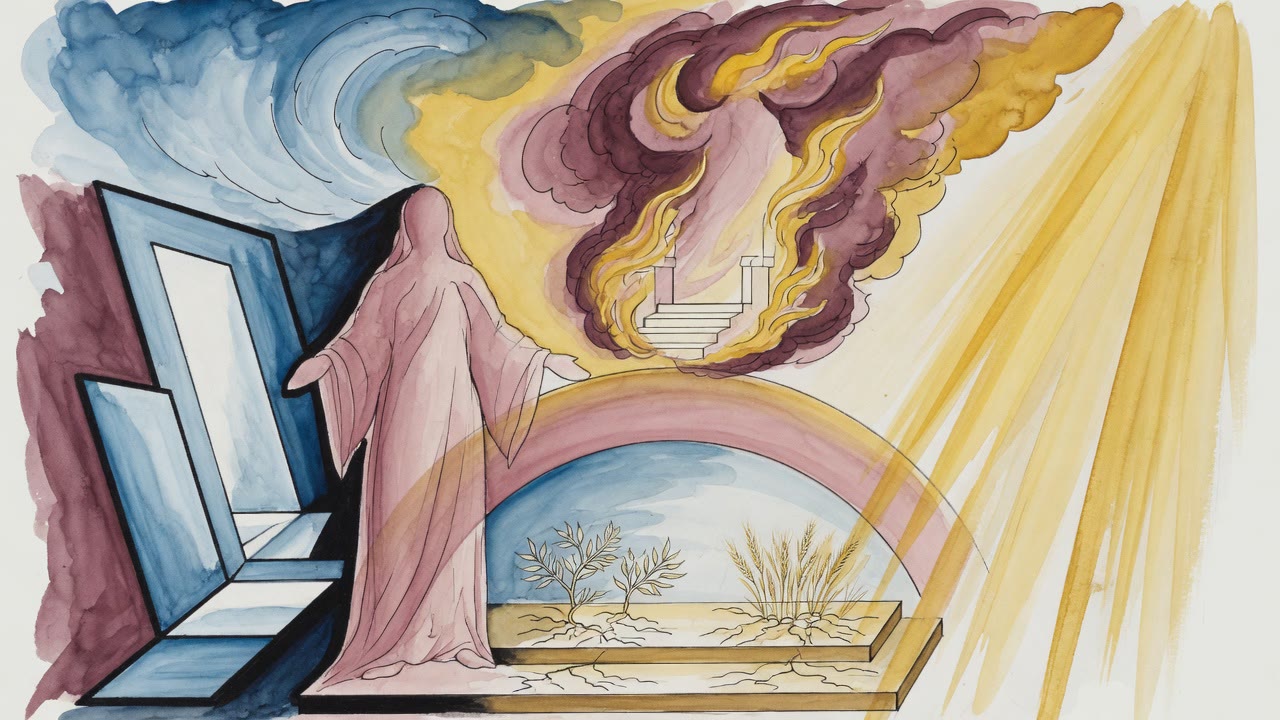
Chesed poured. Kindness without edge, gift without measuring cup. If that flood alone ruled, forms would dissolve in too much giving. A world of pure expansion cannot keep a cup, a body, or a name. Everything would blur into bright soup.

Still the right hand opened, because without gift there is nothing to save. The first flash of wisdom, Chochmah, is that kind of sudden generosity: insight before outline, seed before plan, yes before map.

A man who only gives and never stops will empty his house and call the emptiness love. Heaven refuses that error even while it blesses generosity.

The Left Hand Cuts

Din, judgment, answered from the left. It cut borders. It said no. It forced shape onto flood. Without judgment, kindness is a sea that drowns the swimmer it meant to carry.

Binah took wisdom's spark and built steps, definitions, plans. Understanding is kindness disciplined into a path a mind can walk. The left hand is not cruelty for its own sake. It is the knife that lets bread be sliced and shared without waste.

Seeking that understanding is not optional for those who study governance of the worlds. Raw potential needs form. Form is a kind of love that lasts.

Mercy in the Center

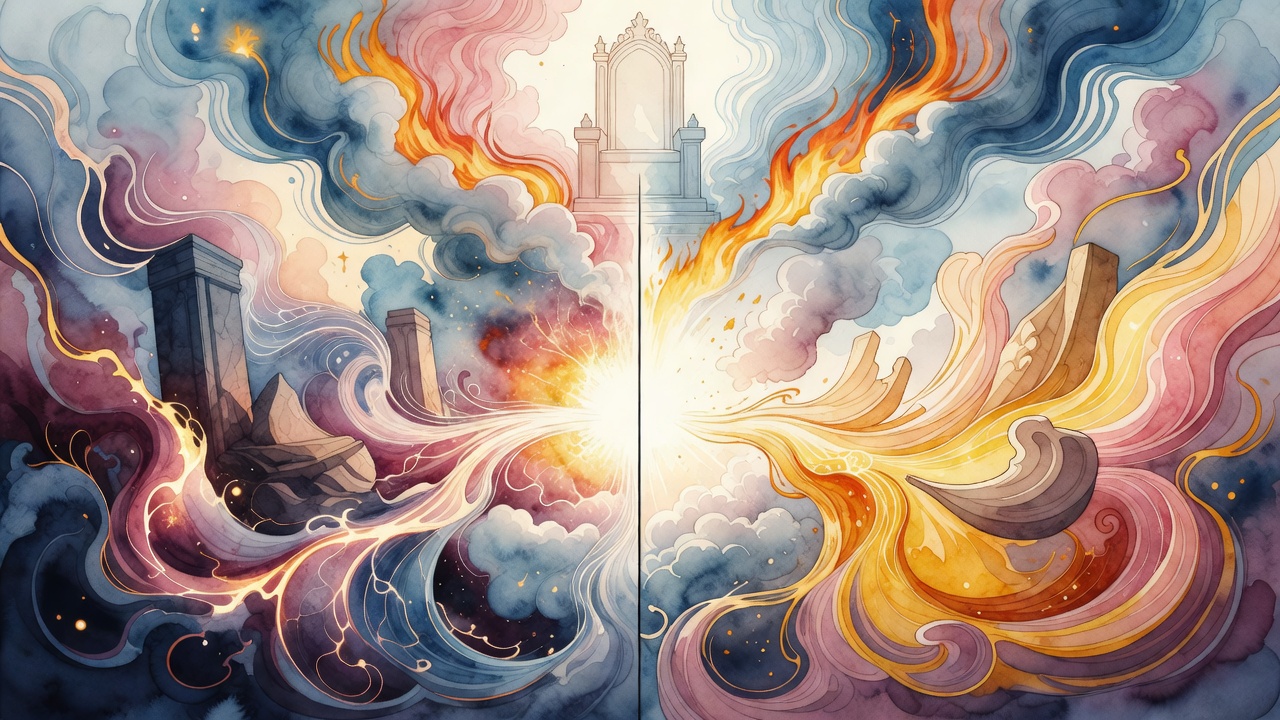
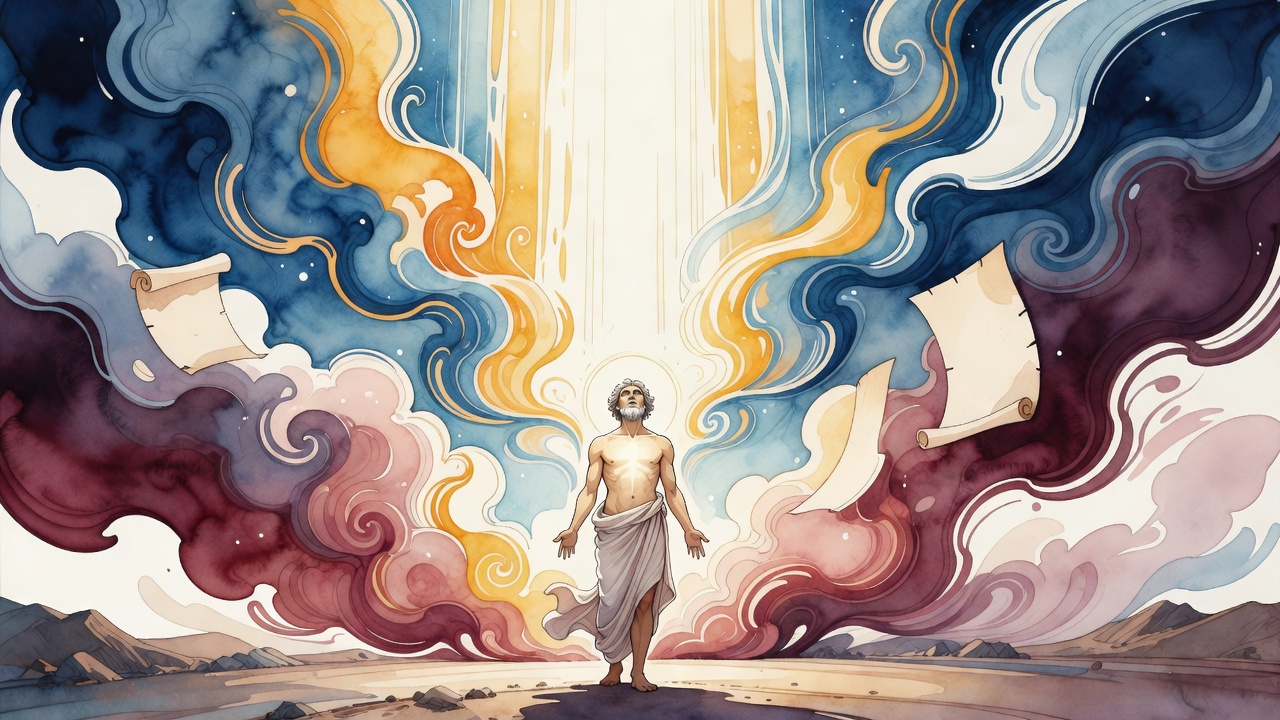
Between right and left, Rachamim (mercy) stepped into the middle column. Not a soft blur that erases both. A third law that lets them work as partners. Right, left, and center: the entire key to how letter-orders and light-orders arrange themselves.

Every Hebrew letter, in this map, is a small pact among the three. Expansive stroke, limiting stroke, balancing stroke. The alphabet is a training ground for cosmic politics written in black fire on white fire.

When the middle holds, a stable effect appears. When the middle fails, kindness and judgment become enemies instead of hands of one body.

Facets That Need Each Other

The sefirot (divine emanations) are facets of one infinite light, six hundred thirteen lights echoing six hundred thirteen mitzvot (commandments), parts aimed at one purpose. They interweave. Visibility itself was willfully instituted. Only the minimal power of limits was made seeable, so creatures could stand without burning.

When middle powers gather as Zeir Anpin and face the feminine receiver, the drama of kindness and judgment becomes a household of forces, not a war of two gods. One will, three modes, countless combinations.

A facet alone is a spark. Facets in covenant are a face that can rule a day.

A World That Can Hold Both

A judge who only punishes empties the city. A giver who never limits bankrupts the storehouse. Mercy is the meeting that keeps streets and storehouses both alive. Parents learn this without books. The letters learned it before parents existed.

So the middle holds. A child receives a rule and a kiss in the same hour and learns, without theory, what the openings already map: right and left must meet, or nothing human lasts.

Evening comes. Someone sets a boundary and still leaves food on the table. The small scene is the large one in miniature. Kindness. Judgment. Mercy between them, making a home possible.

A court that forgets mercy becomes a machine. A house that forgets judgment becomes a ruin of good intentions. The middle column is not a compromise that weakens both sides. It is the only way either side stays true.

In the body, heart and boundary and breath practice the same triad without needing the names. The names simply tell the truth about what the body already does when it loves well.

Time moved. The pressure did not. What had been mapped in light still demanded a body to answer it, and the answer had to be lived rather than merely named. That living is the rest of the story after every diagram ends.

A last sound hung in the air like a held note. Then ordinary life resumed, carrying secret architecture in its pocket: bread, breath, a name, a choice. The openings had done their work if even one of those became heavier with meaning.

A market needs both open hands and firm prices. A covenant needs both promise and sanction. The middle column is already practicing in every honest trade and every kept vow.

When Zeir Anpin faces the receiver, the triad stops being theory and becomes relationship. Kindness offers. Judgment shapes. Mercy lets the two share one house without burning it down.

Pressure held in the chest of the scene. The next required motion was still the same: live the measure, do not only name it. What light began, a body must finish in time.


← All myths

From the tradition

Sources

4 sources

The texts behind this telling. Some cards carry a translation of the source; others are our own retelling of it, and each card says which. Every card links out to the original.

Kalach Pitchei Chokhmah 20:4Kalach Pitchei Chokhmah

Retold in our words. Read the original at the link below.138 Openings of Wisdom, trans. Rabbi Avraham Greenbaum, Azamra Institute (2005) · CC-BY

There's a hidden architecture, a secret code woven into their very essence.

The Kalach Pitchei Chokhmah, a Kabbalistic text whose title literally translates to "40 Gates of Wisdom," gives us a peek behind the curtain. It suggests that the secret to understanding the letters – and therefore, understanding the universe – lies in three fundamental principles: Kindness, Judgment, and Mercy.

Think of it like this: every single thing that exists is a result of these three forces interacting. Kindness, or Chesed, is the expansive, giving force. Judgment, or Din, is the limiting, defining force. And Mercy, or Rachamim, is the balancing force that harmonizes the two.

That "the entire key to the organization of the various orders or arrangements constituted by the letters lies in the secret of Kindness, Judgment and Mercy – right, left and center."

So, how do these principles relate to the letters themselves? Well, each letter is seen as a unique arrangement of light, organized according to a specific law. This law dictates how the lights work together to achieve a particular effect. And at the heart of this organizational law are, you guessed it, Kindness, Judgment, and Mercy.

Imagine these qualities as the very DNA of each letter. They combine in different ways, sometimes with more closure and compression, other times with more opening and unfolding. It’s like the difference between a tightly coiled spring and one that’s fully extended. The "line and the dot," as the text puts it, represent these variations.

These three qualities also correspond to right, left, and center – the very sides of the letters themselves. Could it be that the shapes we see are visual representations of these divine forces in action? That the alef, the bet, the gimmel, and all the rest are physical manifestations of Kindness, Judgment, and Mercy dancing together?

That the very letters we use to write and read, to create and communicate, are rooted in these fundamental principles of the universe. What happens when we begin to see the Hebrew alphabet not just as a means of communication, but as a map of creation itself?

Full source
Kalach Pitchei Chokhmah 26:17Kalach Pitchei Chokhmah

Retold in our words. Read the original at the link below.138 Openings of Wisdom, trans. Rabbi Avraham Greenbaum, Azamra Institute (2005) · CC-BY

In the Kabbalah, the Jewish mystical tradition, we find some truly fascinating answers.

We've talked before about the Sefirot (the divine emanations), those divine emanations, the ten attributes or aspects through which the Eyn Sof, the Infinite, the ultimate Divine Reality, reveals itself. But even these aren't inherently visible, are they? They are aspects of something much grander, a power beyond comprehension.

The Kalach Pitchei Chokhmah, a key text in Kabbalistic thought, offers a profound insight here. It builds on an idea we touched on earlier (in Opening 5, if you're following along) that even with the Sefirot, their visibility, their capacity to be perceived, wasn't just a given. It was, in fact, "willfully instituted." It's not that they are visible, but that they were made visible.

The Eyn Sof, in its infinite wisdom, chose to make visible only "the minimal power that constitutes the realm of limits and boundaries." What lies beyond those limits? Well, that remains intentionally hidden.

This is where the concept of "Residue" comes into play. We're talking about that limited power, that aspect of the Divine that's been subsumed within the limitless power of the Eyn Sof. The Supreme Will, the ultimate Divine intention, desired that this limited power, this "residue," be capable of being seen.

Why? That's the question that keeps me up at night. What is the significance of this curated visibility? Is it a hint, a breadcrumb trail leading us back to the source? Or is it a protective measure, shielding us from the overwhelming totality of the Divine?

Perhaps it’s both. Perhaps the visible world, with all its limitations and boundaries, is precisely what allows us to glimpse the infinite, the Eyn Sof, without being consumed by it. It is a carefully calibrated revelation, a divine whisper in a language we can almost understand. And maybe, just maybe, in contemplating what is visible, we can begin to sense the immensity of what remains hidden.

Full source
Kalach Pitchei Chokhmah 15:7Kalach Pitchei Chokhmah

Retold in our words. Read the original at the link below.138 Openings of Wisdom, trans. Rabbi Avraham Greenbaum, Azamra Institute (2005) · CC-BY

Not only that, but we're actually encouraged – obligated, even – to try and decipher it.

The text It speaks of Chochmah, Binah (Understanding), Zeir Anpin, and Nukvah, terms that might sound like a mouthful, but represent fundamental aspects of how creation unfolds.

Chochmah, often translated as "wisdom," is that initial flash of insight, the seed of an idea. It's pure potential, vast and undifferentiated. moment before you can even articulate it. And when it comes to understanding how the worlds are governed, as detailed in Chochmah, seeking knowledge isn't just a good idea, it’s a mitzvah, a positive commandment! We have a DUTY to seek understanding!

Raw potential needs form. That's where Binah, "understanding," comes in. Binah is the elaboration of Chochmah, taking that initial spark and developing it into a coherent concept. It’s like taking that "aha!" moment and turning it into a detailed plan, figuring out all the steps involved. Binah brings forth what was hidden within Chochmah, giving it definition and structure.

Now, the text goes on to mention Zeir Anpin, which means "Small Face," and Nukvah, "the Female." These represent the practical application of all this divine wisdom and understanding in the world. Zeir Anpin is often associated with the six Sefirot (divine attributes) of Chessed (loving-kindness), Gevurah (strength/judgment), Tiferet (beauty/harmony), Netzach (endurance), Hod (splendor), and Yesod (foundation), while Nukvah is typically associated with Malchut (kingship/manifestation).

Together, Zeir Anpin and Nukvah represent the totality of governance, the way the divine plan actually plays out in creation. They're like the executive branch, putting the laws and policies into action.

Here's the key: all of this – the entire system of governance – is already rooted in Chochmah. The seeds of how the world will function are present in that initial flash of wisdom. But it's Binah that brings everything forth individually, each aspect in its proper place. Binah is the organizer, the architect, ensuring that everything fits together according to the divine plan.

So, what does this all mean for us?

Perhaps it suggests that the answers to the big questions, the secrets to governing our own lives and communities effectively, are already present within us, within that initial spark of inspiration. But it takes effort, contemplation, and a willingness to explore the depths of understanding – to engage with Binah – to bring those answers to fruition. It takes work to take abstract wisdom and make it real.

And isn't that a beautiful, challenging, and ultimately hopeful thought? That the potential for a better world, a more meaningful life, is already there, waiting to be unlocked.

Full source
Kalach Pitchei Chokhmah 14:11Kalach Pitchei Chokhmah

Retold in our words. Read the original at the link below.138 Openings of Wisdom, trans. Rabbi Avraham Greenbaum, Azamra Institute (2005) · CC-BY

One of the keys to unlocking that blueprint? It lies in understanding the Sefirot (the divine emanations).

What are the Sefirot? Imagine them as divine emanations, like facets of God's infinite light. Each Sefirah (singular) has its own unique quality, its own flavor. Think of it like this: one might be pure loving-kindness, another might be strict judgment, and still another might be perfect beauty. They're all interconnected, all working together.

Why are they all arranged like this? What's the point? Well, according to texts like Kalach Pitchei Chokhmah (Wisdom), it’s about more than just the individual Sefirot themselves. It's about the purpose of all their parts.

Here's where it gets really interesting. These parts are described as 613 lights. Sound familiar? That number should, because it mirrors the 613 mitzvot, the commandments, in the Torah. But the connection goes even deeper. These lights are also said to parallel the 248 limbs and 365 interconnecting channels of the human body. Our physical form, with all its intricate details, is seen as a reflection of the divine structure! We’re not just bodies walking around; we're living embodiments of a cosmic design.

But it doesn't stop there. These lights, these aspects of the Sefirot, don't just exist in a vacuum. They function according to laws. These are the “various properties” mentioned in Kalach Pitchei Chokhmah, and they're said to be parallel to the natural laws that govern us. Just as there are rules that dictate how the physical world operates, so too are there rules governing the flow of divine energy.

And finally, we arrive at what the text calls "all their interconnections." This refers to the different states of the Partzufim (a divine configuration), which are divine "faces" or configurations, and how they "garb" in one another. It's a complex concept, but essentially it describes how different aspects of the divine interact and influence each other. Imagine a beautiful dance, where each movement affects the entire choreography.

So, what does it all mean? This intricate system of Sefirot, lights, laws, and interconnections reveals a profound truth: everything is connected. The divine and the human, the physical and the spiritual, the individual and the cosmos – it’s all interwoven.

Understanding the Sefirot isn't just an intellectual exercise. It's a path toward understanding ourselves, our place in the universe, and our connection to the divine. It’s a reminder that we are, in a very real sense, walking, breathing reflections of the divine blueprint. A blueprint we can strive to understand, and in doing so, come closer to understanding the very nature of existence itself.

Full source