Retold in our words. Read the original at the link below.Sefaria Community Translation · CC0
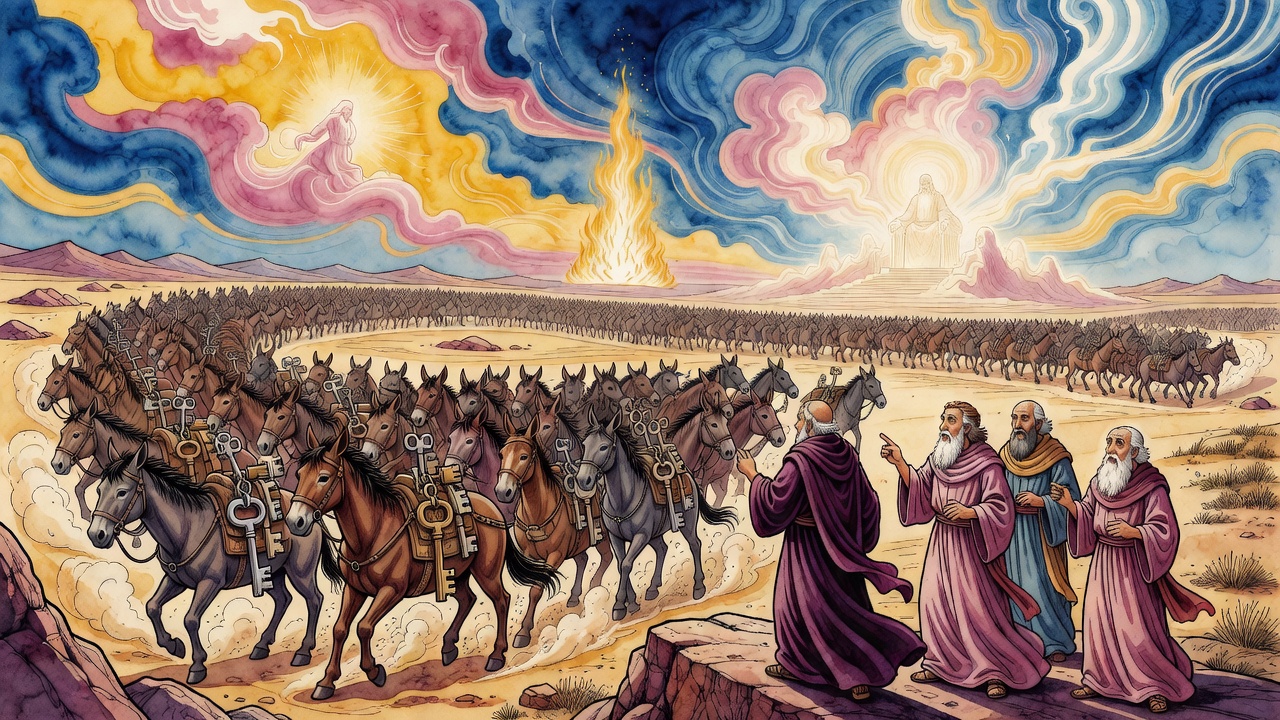
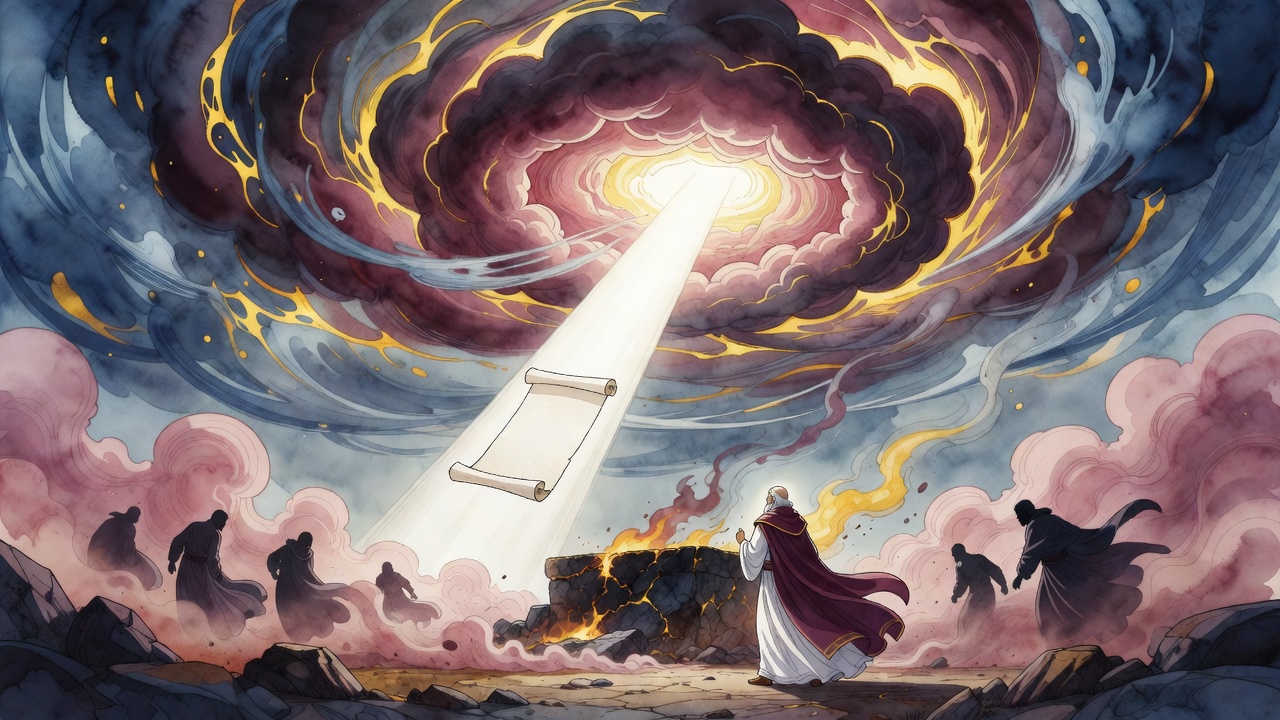
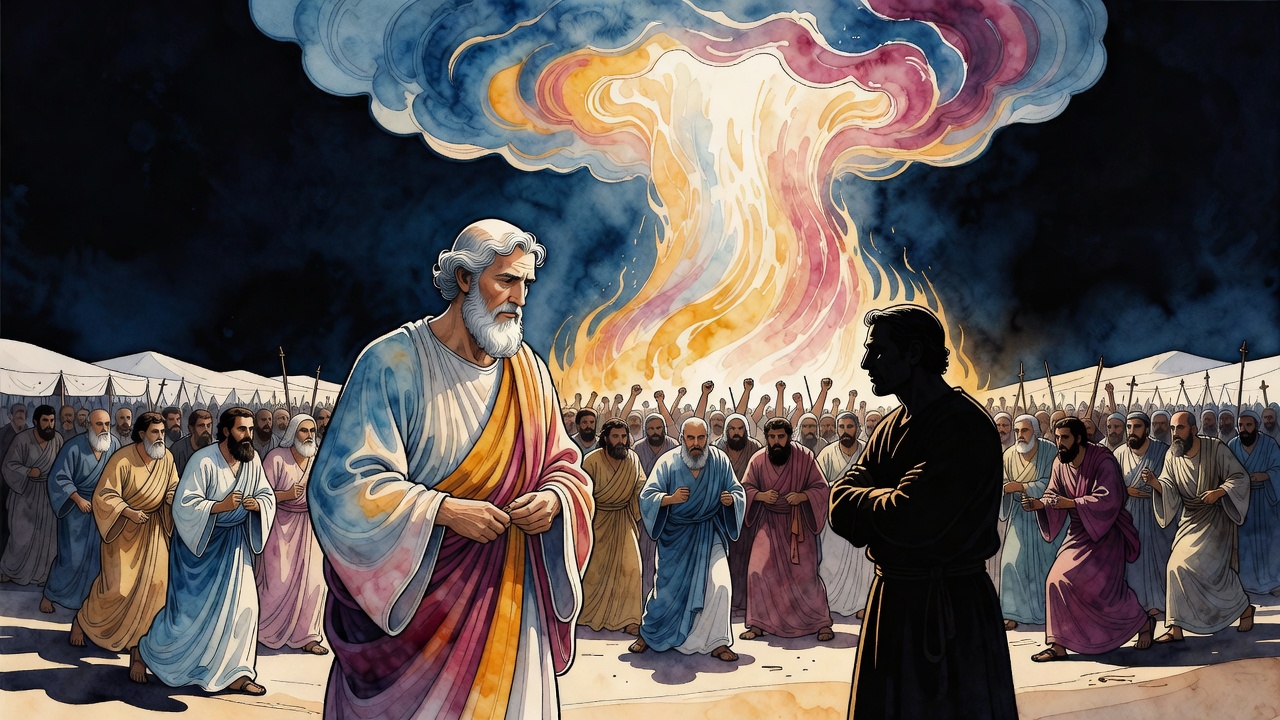
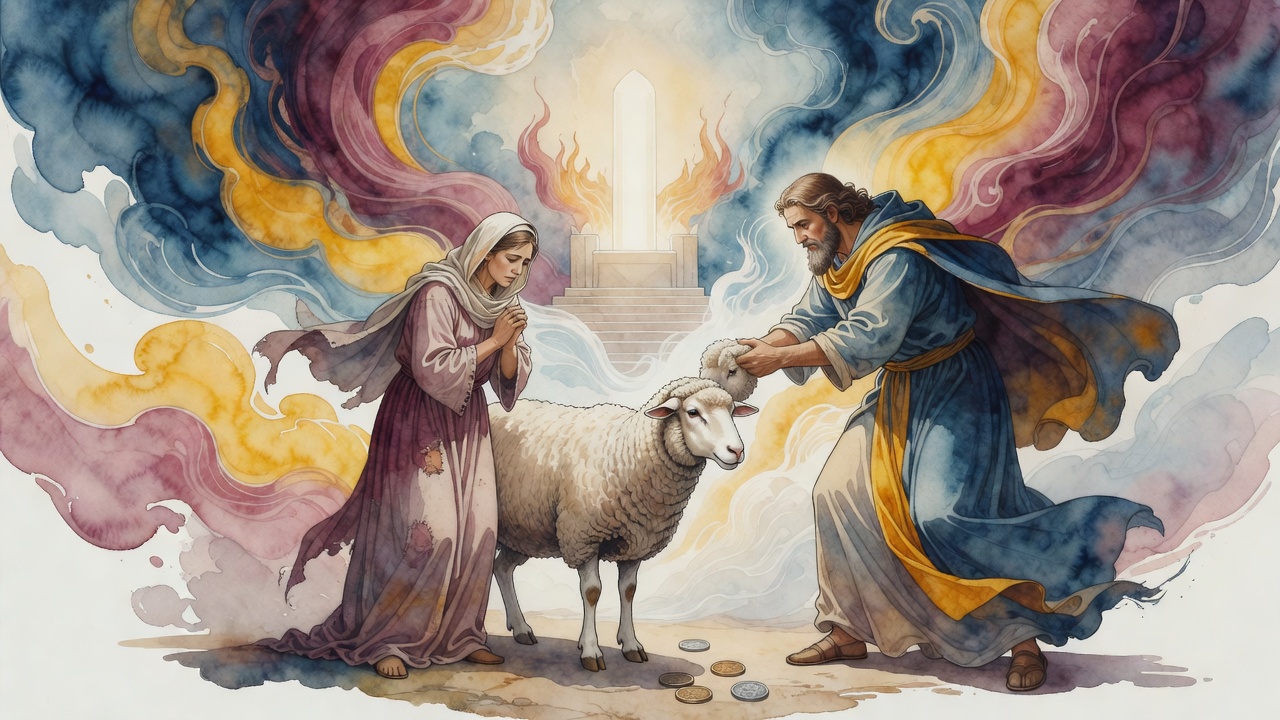
"Let not the rich person glorify themselves with their wealth (Yirm 9:22)." This [refers to] Korach the Levite, who had three hundred mules just to carry the load of the keys to his hidden storehouses. His wealth was so much the more so, wondrous and vast. Where did he get all this? It was the money that Yosef had collected in Egypt [in return for distributing the stored grain during the seven years of famine], which had filled three towers. Each tower was a hundred amot [about 180 feet] deep and a hundred amot wide. As soon as Korach found one of these towers, he became proud of his wealth. Another one was found by Antiochus, and the third is hidden for the World to Come. The origin of Korach's dispute was a widow who had a single ewe. When she came to shear it [for the first time], Aharon heard and took the wool. She went to Korach and wept before him, telling him, "This and this has Aharon done to me." Korach came by Aharon and said to him, "What have you done by this widow, to take her wool?" Aharon said to him, "It is mine according to the Torah, for as it says, 'the premier-part of the shearing of your sheep you are to give him' (Dev 18:4)." So Korach took four silver [coins] and gave [them] to her. The days [passed] and the ewe gave birth to its first-born. Aharon heard and took the lamb. She went and wept before Korach. Korach said to Aharon, "What is it for you and for this widow, to take the son of the ewe?" He said to him, "It is mine according to the Torah, for as it says, 'every firstling that is born in your flock and in your herd, the male-one, you are to hallow to ha-Shem your God' (Dev 15:19)." Korach went to him, full of anger. When the widow saw this, she sent and slaughtered the ewe. Aharon heard, and came and book the shankbone, the jawbone, and the rough-stomach. Korach said to him, "What is it for you, by this widow?" He said to him, "They are mine according to the Torah, for as it says, 'the priest is to be given the shankbone, the jawbone, and the rough-stomach' (Dev 18:3)." When the widow saw this, she stood and specially-devoted the meat. Aharon heard and took the meat. Korach said to him, "It wasn't enough, everything that you took from her? Now even the meat?" He said to him, "It is mine according to the Torah, for as it says, 'everything specially-devoted in Israel, it is for you' (Bam 18:14, Parshat Korach)." He [Korach] said to him [Moshe], "Why have you, son of Amram, established authority over us, and been raised up over us?" Moshe said to him, "Unto the morrow, judgement." In the morning, Korach had gathered to him 250 men with [fire-]pans and smoking-incense. Immediately Moshe stood before the Holy One of Blessing and said, "Multiplier of Universes, is this prophecy you have sent me true?" Ha-Shem replied to him, "It is true. And now you will see what I will do to Korach, and why his name is called Korach. For in his days, there will be made baldness in Israel." Immediately the Holy One of Blessing instructed the ground and it swallowed them [Korach and his followers] up to their navels. Korach cried out and said, "Moshe! Have mercy on us!" Moshe said to them, "'Too much is yours, Sons of Levi!' (Bam 15:7)." Immediately they were swallowed up [by the earth], and the rest were burned up [by fire]. Those that were swallowed [by the earth] reasoned that they would never rise up [again]. Until Hannah came and prophesied for them, as it [the song of Hannah] says, 'ha-Shem brings death and gives life, lowers to Sheol and raises up (Shmuel I 2:6).' But in all this they didn't believe, until the Beit ha-Mikdash destroyed. [For the earth] swallowed the gates of the Beit ha-Mikdash, and they [the gates] came by Korach and he grabbed hold of them. They [Korach and his followers] said, "When these gates rise up, so too we will be brought up with them." [ed. Jellinek: And they were appointed the guardians, or, those who carried out the observances, over the gates until they rise up.] Therefore we say, 'Let not the rich person glorify themselves with their wealth,' for all wealth belongs to the Holy One of Blessing. As it says, 'Mine is the silver and mine is the gold, the word of ha-Shem, Master of Legions (Hag 2:8). And it says, 'One who pursues righteousness and kindness will find life, righteousness, and honor (Mish 21:21).'. "Let not the rich person glorify themselves with their wealth (Yirm 9:22)." This [refers to] Korach the Levite, who had three hundred mules just to carry the load of the keys to his hidden storehouses. His wealth was so much the more so, wondrous and vast. Where did he get all this money? From the money that Yosef the Righteous had collected in Egypt [in return for distributing the stored grain during the seven years of famine], which had filled three towers. Each tower was a hundred amot [about 180 feet] deep, a hundred amot wide, and one hundred amot inside. Yosef gave them all to the house of Pharaoh, and did not give his children even five silver [coins]. For what reason? Because he proceeded faithfully, as it says (Ber 47:14), "Yosef brought the silver into Pharaoh's house." When Korach found one of these towers, he became proud of his wealth. Another one was found by Antoninus, and the third is hidden for the World to Come. What was the origin of Korach's dispute with Moshe and with Aharon? It was for the sake of a particular widow who had a single ewe. When she came to shear it [for the first time], Aharon heard and took the wool. She went to Korach and cried out and wept, telling him, "This and this has Aharon done to me." Korach came by Aharon and said to him, "What is it with you and this widow, that poor woman? Return to her her wool!" Aharon said to him, "It is mine according to the Torah, for as it says, 'the premier-part of the shearing of your sheep you are to give him' (Dev 18:4)." What did Korach do? He took four silver [coins] and gave [them] to her. She went off, and Korach went full of anger. The days [passed] and the ewe gave birth to a [first-born] male. Aharon heard and took the lamb. She went before Korach, crying out and weeping. Korach said to Aharon, "What is it with you and the poor woman, this widow?" He said to him, "It is mine according to the Torah, for as it says, 'every firstling that is born in your flock and in your herd, the male-one, you are to hallow to ha-Shem your God' (Dev 15:19)." Korach went on his way, full of anger. When the widow saw this, she went and slaughtered the ewe. Aharon heard, and came and took the shankbone, the jawbone, and the rough-stomach. Korach said to him, "What is it with you and this widow?" He said to him, "They are mine according to the Torah, for as it says, 'the priest is to be given the shankbone, the jawbone, and the rough-stomach' (Dev 18:3)." And Korach went, full of anger. When the widow saw this, she stood and made an oath, saying the meat of this ewe is set-aside for me. Aharon heard and took all the meat, as it says, 'everything specially-devoted in Israel, it is for you' (Bam 18:14, Parshat Korach)." He [Korach] said to him [Moshe], "Why should you, son of Amram, establish authority over us?" [not in ed. Jellinek: 'Should you pluck out the eyes of these men, we will not come up.' They said this verse specifically against Moshe and Aharon.] Moshe said to him, "To the morrow, judgement." In the morning, Korach had gathered to him 250 men (and alongside Moshe and Aharon, all the prophets), these with their fire pans, these offering sacrifices and these burning incense. Immediately Moshe Rabbeinu stood in prayer before ha-Shem and said, "Multiplier of Universes, is this prophecy you have sent us true?" Ha-Shem replied to him, "It is true. And you will see what I will do to Korach." This is why he was named Korach, for in his days, 'a void was created in Israel' (Sanhedrin 109b). Moshe said further before the Holy One of Blessing, "If these die as all people do, if their lot be the common fate of all humanity, ha-Shem did not send me (Bam 16:29)." The Holy One of Blessing said to Moshe, "You have rejected a major principle of faith" (Passover Haggadah (non-legal rabbinic narrative), Maggid, Four Children; and Yer. Sanhedrin 10:1, 50a). Moshe said before the Holy One of Blessing, "Multiplier of Universes, 'if ha-Shem creates a new creation..' (Bam 16:30). The Holy One of Blessing said to him, "I will do according to your will." Immediately the Holy One of Blessing hinted to the ground and it swallowed them [Korach and his followers] up to their navels. Korach and all his household cried out and said, "Moshe! Moshe! Have mercy on us!" Moshe said to them, "'Too much is yours, Sons of Levi!' (Bam 16:7)." Immediately they were swallowed up [by the earth], and the rest were burned up [by fire], as it says, 'so they went down, they and all theirs, alive, into Sheol; the earth covered them (Bam 16:33).' And it is written, 'fire went out from before the presence of ha-Shem and consumed the fifty and two hundred men, those who had brought-near the incense.' Those that descended below the earth remained there. And they reasoned that they would never rise up [again]. Until Hannah came and prophesied for them, as it [the song of Hannah] says, 'ha-Shem brings death and gives life, lowers to Sheol and raises up' (Shmuel I 2:6). But with all this, they didn't believe that they would rise again, until the Beit ha-Mikdash was destroyed and the gates of the Beit ha-Mikdash were swallowed up, as it says, 'her gates have sunk into the ground' (Eichah 2:9). They [the gates] came by Korach and he grabbed hold of them. Immediately they believed and said, "When these gates rise up, so too will we rise up with them." And they were appointed the guardians [or, those who carried out the observances] over those gates until they rise up. Thus was Korach and his wealth obliterated from among the community. Therefore it says, 'Do not praise the wealthy for their wealth,' for all wealth belongs to the Holy One of Blessing. As it says, 'Mine is the silver and mine is the gold, the word of ha-Shem, Master of Legions' (Hag 2:8). [ed. Jellinek: And it says, 'One who pursues righteousness and kindness will find life, righteousness, and honor' (Mish 21:21).]

 Click for full size