5 min read

Labbiel Saves His Host and Receives a New Name

Earlier angel bands fell for mocking man. Labbiel yields, becomes Raphael the healer, and Ben Nez pins the south wind so the world can stand.

Curated by Arthur · Told by Maggid ·
Table of Contents
  1. The First Bands Fall Silent
  2. Labbiel Speaks to His Troop
  3. The Name That Heals
  4. Wings Against the South Wind

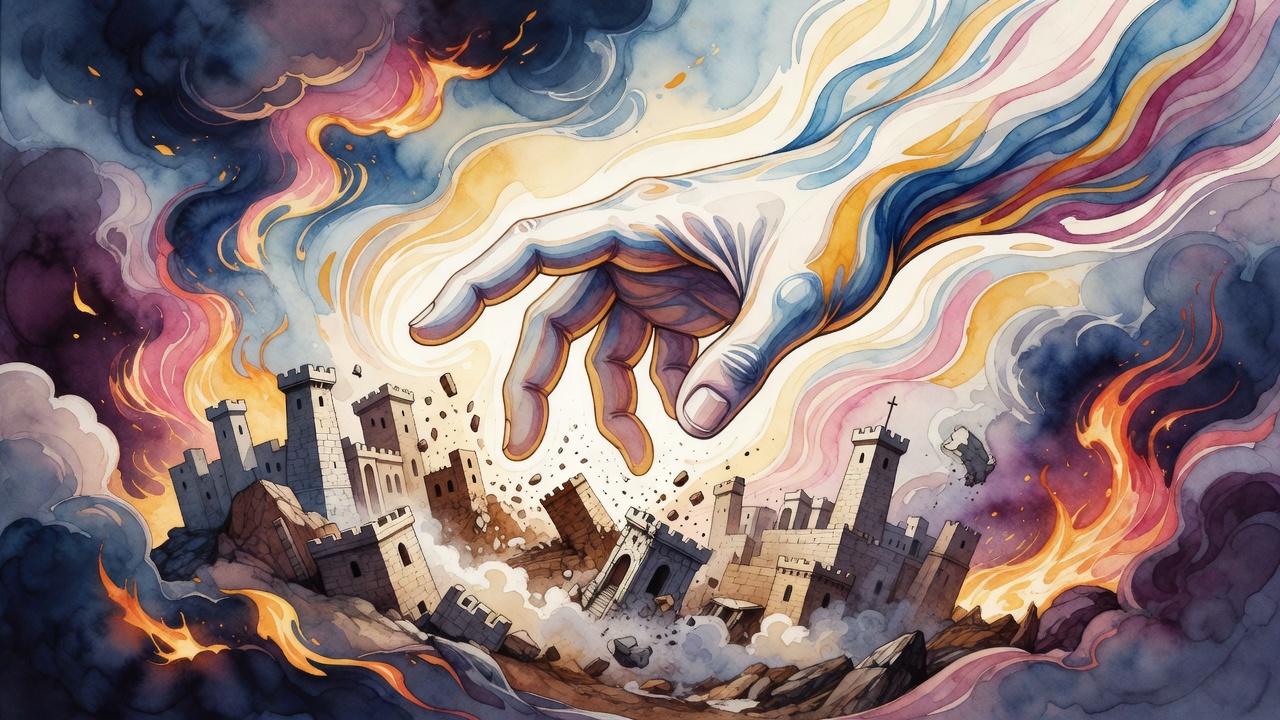
Before the first human breath, the court above already had scars. Bands of angels had been asked whether man should be made. Some answered with the verse that cuts, "What is man, that Thou art mindful of him?" (Psalm 8:5). They learned the price of that mockery. Their places went cold. Their names stopped being spoken in the ranks.
Labbiel Saves His Host and Receives a New Name Click for full size

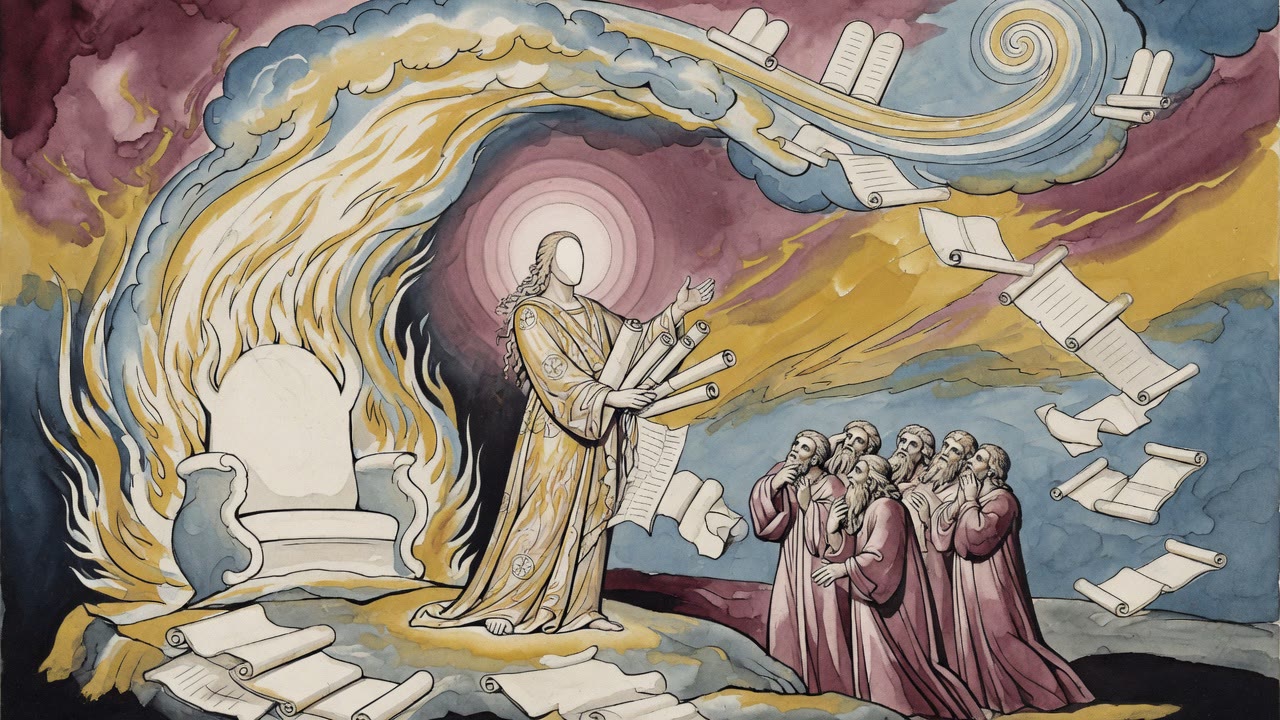
Labbiel commanded the third band called in for counsel. He had watched the earlier troops fall. He gathered his own host in the height and did not waste words on pride.

The First Bands Fall Silent

God had already decided to create man. The consultations were not votes that could overturn the plan. They were tests of whether the servants would stand with the Maker or against the dust He loved. The first speakers treated man as a threat and a joke. Misfortune took them. The firmament kept their warning the way a burned beam keeps the shape of fire.

Labbiel felt that heat on his troop. Angels do not bleed the way men do, but they know ruin. He had no wish to lead a host into the same pit. He also had no power to stop the decree. Between those two facts he chose the only road left open: yield early, yield clean, and keep his company alive.

Labbiel Speaks to His Troop

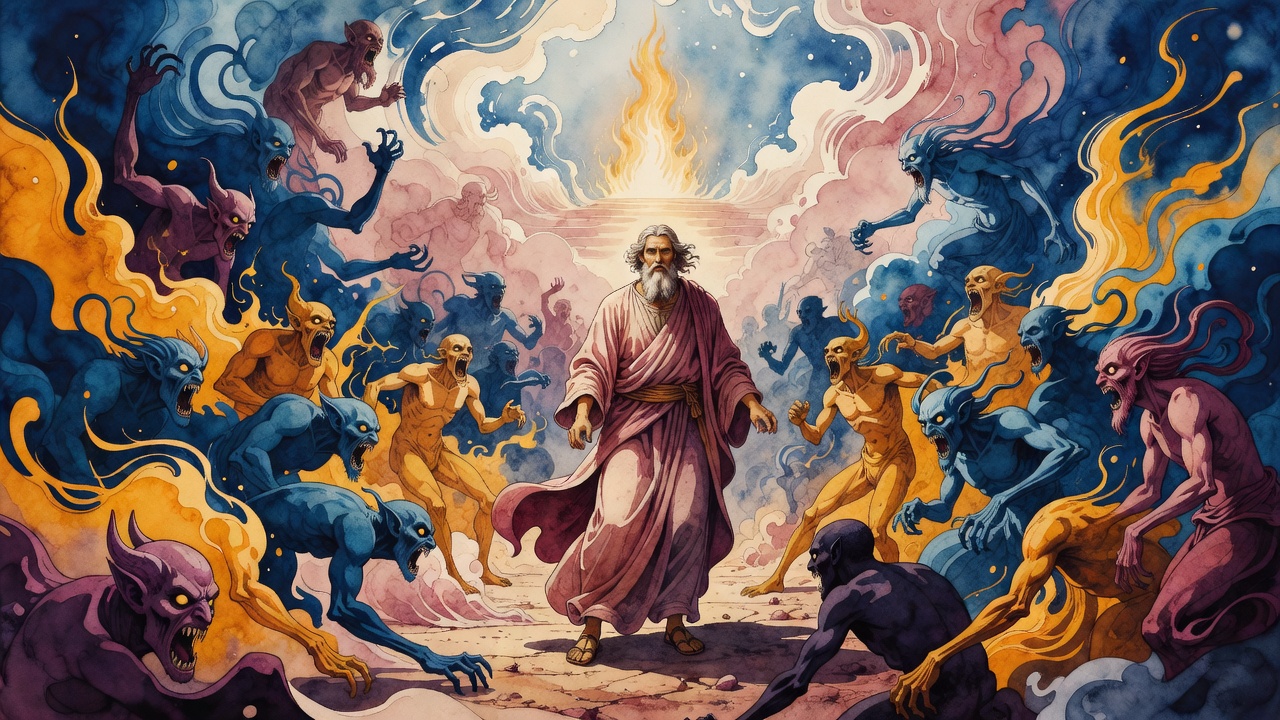
He stood before them and named the dead lesson.

"You have seen what misfortune overtook the angels who said, 'What is man, that Thou art mindful of him?' Let us have a care not to do likewise, lest we suffer the same dire punishment. For God will not refrain from doing in the end what He has planned. Therefore it is advisable for us to yield to His wishes."

No angel in that line argued for a second experiment in scorn. They had seen the experiment fail. When they answered God, their speech was short and full of service.

"Lord of the world, it is well that Thou hast thought of creating man. Do Thou create him according to Thy will. And as for us, we will be his attendants and his ministers, and reveal unto him all our secrets."

They offered not only consent but labor: attendance, ministry, the opening of secrets that heaven holds above human skill. The words were not flattery. They were a binding. Labbiel had saved them from the fate of the mockers by teaching them to stand on the side of the plan before the plan crushed them.

The Name That Heals

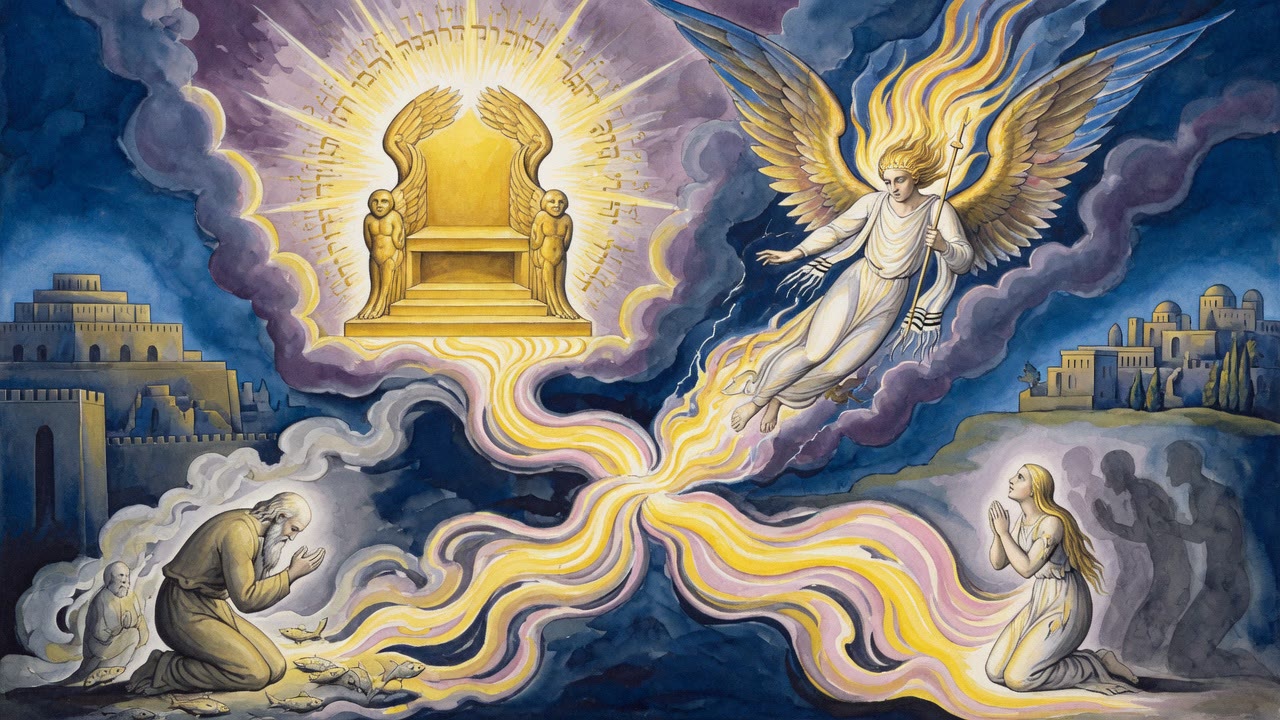
God was pleased. He did not leave Labbiel under the old name. He renamed him Raphael, the Rescuer, because the host had been rescued by his counsel. The new name also means "God heals." Raphael was set as the Angel of Healing, keeper of the celestial remedies, the one who holds the patterns of medicines that later rise in the world below.

The angel who had feared to speak wrong now carried every cure in his charge. The troop that had almost repeated a fatal question became ministers to the creature they had accepted. Man would sicken. Man would break. Raphael's appointment was the answer built into creation itself: the court that allowed human flesh also appointed a healer for that flesh.

The mockers had asked why God should mind man. Raphael's office is the long reply. God minds man enough to stock heaven with remedies before the first fever.

Wings Against the South Wind

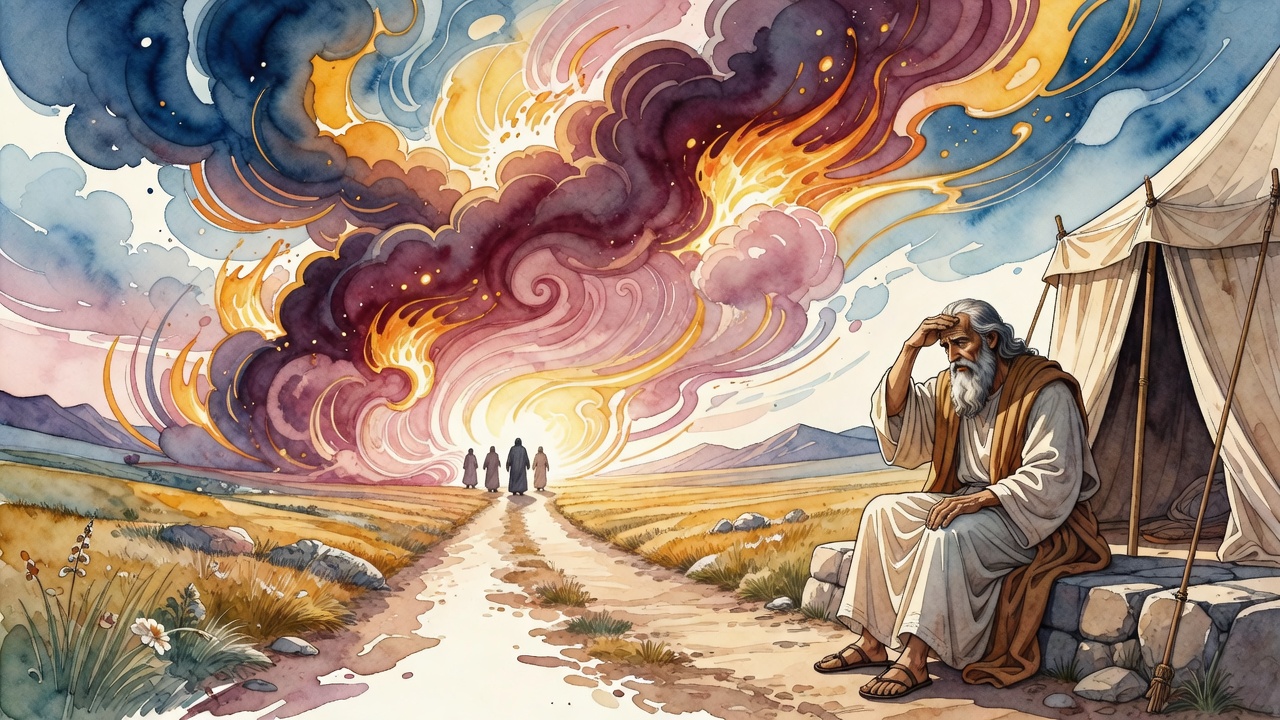
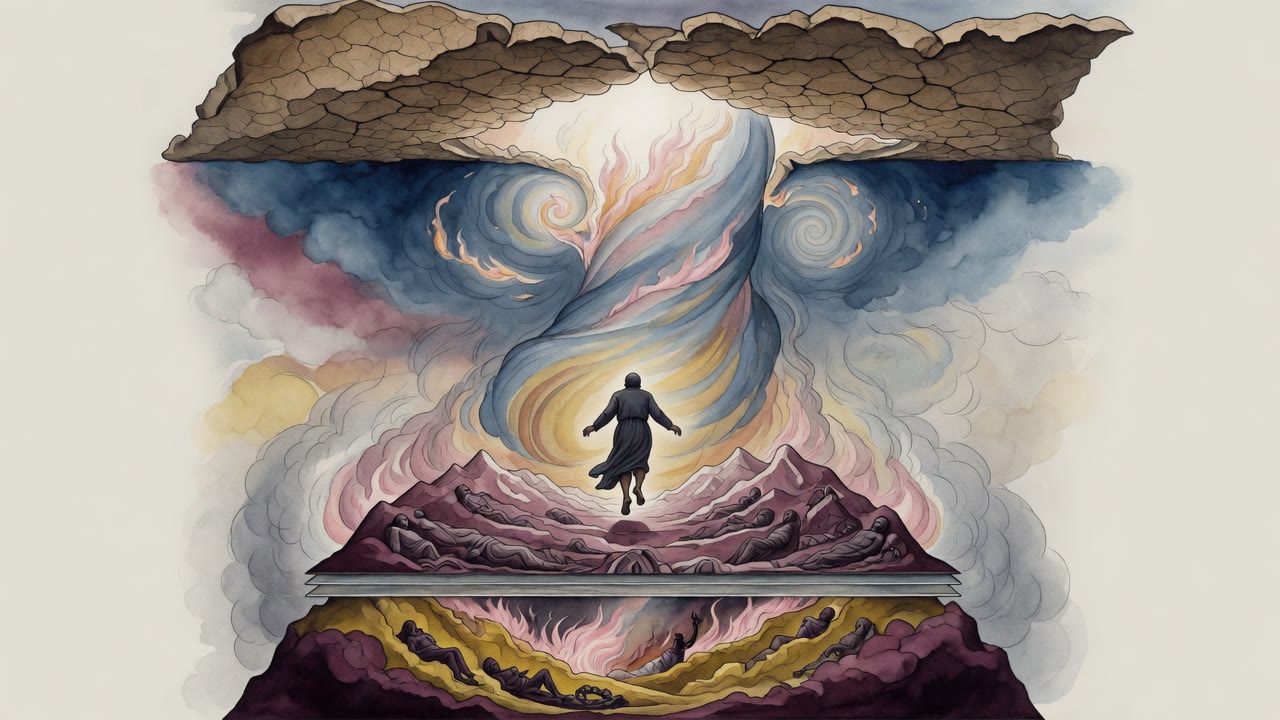
Acceptance in the council was not the end of pressure on the servants who keep the world livable. Far below the debate halls, the map of creation runs hard. East of the settled lands lies Gan Eden (the Garden of Eden, paradise of the afterlife) with its seven sections for the pious. West lies ocean and islands, then barren steppes thick with serpents and scorpions. North holds the stores of snow, hail, smoke, ice, darkness, and storm, and the range of demons so wide it would take five hundred years to cross before hell itself. South holds a chamber of heat, a cave of smoke, and the forge of blasts and hurricanes.

From that southern forge a wind rises that would strip the earth bare. Without the angel Ben Nez, "the Winged," pinning that south wind with his pinions, the whole world would burn. He holds. The north wind moderates. Heat and cold trade their watch so that the human dust Labbiel accepted can walk without catching fire.

Five hundred years from earth to the first heaven. Five hundred years to cross a heaven. Five hundred years to the next. On that scale Ben Nez's wings are a small motion. On the scale of a village roof under a summer sky, they are the whole difference between harvest and ash. Raphael heals what breaks inside a body. Ben Nez holds back what would break every body at once.

Labbiel's turning point was the new name and the office of healing. Ben Nez's turn never ends. He keeps his wings against the south so that the man the third band accepted still has ground to stand on. The mockers fell. The rescuers remain at work.


← All myths
From the tradition

Sources

2 sources

The texts behind this telling. Some cards carry a translation of the source; others are our own retelling of it, and each card says which. Every card links out to the original.

Legends of the Jews 2:14Legends of the Jews

Retold in our words. Read the original at the link below.The Legends of the Jews by Louis Ginzberg (1909) · Public Domain

It’s not all harps and halos, let me tell you. Some of them… well, they weren’t exactly thrilled with the idea.

The Ginzberg's says retelling in Legends of the Jews, there were celestial debates, heavenly consultations, before we even arrived on the scene. Imagine the divine boardroom, angels gathered around, God presenting the "Human Project." Not everyone was sold.

We’ve already heard about the angels who questioned God's plan, who dared to ask, "What is man, that Thou art mindful of him?" (Psalm 8:5). And, boy, did they pay the price for their skepticism!

Then comes the story of the angel Labbiel. He commanded the third band of angels consulted about humanity’s creation. Smart guy, this Labbiel. He learned from the mistakes of those who came before him. He gathered his troop and gave them a serious pep talk.

"You have seen what misfortune overtook the angels who said 'What is man, that Thou art mindful of him?'" he warned. "Let us have a care not to do likewise, lest we suffer the same dire punishment. For God will not refrain from doing in the end what He has planned. Therefore it is advisable for us to yield to His wishes."

The weight of that decision? Labbiel, understanding the divine will, urged his angels to accept God's plan. It's a fascinating moment of celestial diplomacy, a recognition that sometimes, you just have to trust the process.

And so, warned and wiser, Labbiel’s angels spoke: "Lord of the world, it is well that Thou hast thought of creating man. Do Thou create him according to Thy will. And as for us, we will be his attendants and his ministers, and reveal unto him all our secrets."

Their acceptance pleased God so much that He changed Labbiel's name to Raphael, the Rescuer. Why Rescuer? Because his host of angels had been rescued by his sage advice. Raphael, the name itself, means "God heals." He was then appointed the Angel of Healing, the one who holds all the celestial remedies. Think of him as the divine doctor, keeper of the blueprints for all the medicines we use on Earth.

One that reminds us that even in the face of uncertainty, wisdom and acceptance can lead to unexpected blessings. And that perhaps, just perhaps, we’re all a little bit connected to the healing touch of an angel named Raphael.

Full source
Legends of the Jews 1:22Legends of the Jews

Retold in our words. Read the original at the link below.The Legends of the Jews by Louis Ginzberg (1909) · Public Domain

The sages of old grappled with this very question, and their answers… well, they’re mind-boggling.

Some accounts say it takes five hundred years just to walk from the earth to the heavens. Not a quick elevator ride, but a five-century long trek! And that’s just to get to the first heaven. To cross from one end of a heaven to the other? Another five hundred years. And then, another five hundred years to get to the next heaven! It’s a scale that dwarfs our modern conceptions of space.

What about our own world? Of all this vastness, only about a third is actually inhabited. The rest? Divided equally between water and desolate wilderness. we’re just a tiny speck on a tiny speck, relatively speaking.

The world doesn't end there. Beyond the inhabited lands to the east, there's Gan Eden (the Garden of Eden, paradise), Paradise, with its seven sections. Each one is reserved for the pious, those who have lived righteous lives, and each level corresponds to a different degree of piety. The holiest get the penthouse, so to speak.

To the west lies the great ocean, dotted with countless islands inhabited by all sorts of different peoples. And beyond that? Endless steppes, barren and desolate, teeming with serpents and scorpions, devoid of any plant life. Not exactly a vacation destination.

But the real extremes lie to the north and south. To the north, we find the reserves of hellfire: snow, hail, smoke, ice, darkness, and raging storms. It’s a veritable freezer of fury! And it's where all sorts of demons and malign spirits make their home. Their territory is vast, so vast that it would take five hundred years to traverse it, before you even get to hell itself. Talk about a commute!

Then, to the south, is the opposite extreme: a chamber of intense heat, a cave of smoke, and the forge of blasts and hurricanes. According to this tradition, the wind blowing from the south brings heat and sultriness to the earth. And here's where it gets interesting: we’re told that without the angel Ben Nez, "the Winged," holding back the south wind with his powerful pinions, the entire world would be consumed by fire! The fury of the southern blasts is constantly tempered by the north wind, which acts as a moderator, no matter which other wind is blowing. A divine thermostat, if you will.

These ancient descriptions, filled with angels and demons, vast distances, and elemental forces, are more than just primitive cosmology. They're a way of understanding our place in the universe, of confronting the immense power and mystery that surrounds us. They remind us that there are forces beyond our control, both benevolent and malevolent, and that the balance between them is delicate and precious.

So, the next time you feel overwhelmed by the vastness of the universe, or the challenges of daily life, remember the legends. Remember the angels holding back the winds, the journey to the heavens, and the delicate balance that keeps our world from being consumed. It’s a perspective that can both humble and empower us, reminding us of both our insignificance and our importance in the grand scheme of things.

Full source