Levi ben Sisi Forgot Torah on the Road to Honor
Sent to lead a town, Levi finds every answer gone from his mouth after pride rose on the walk from his master's house to theirs.
Table of Contents
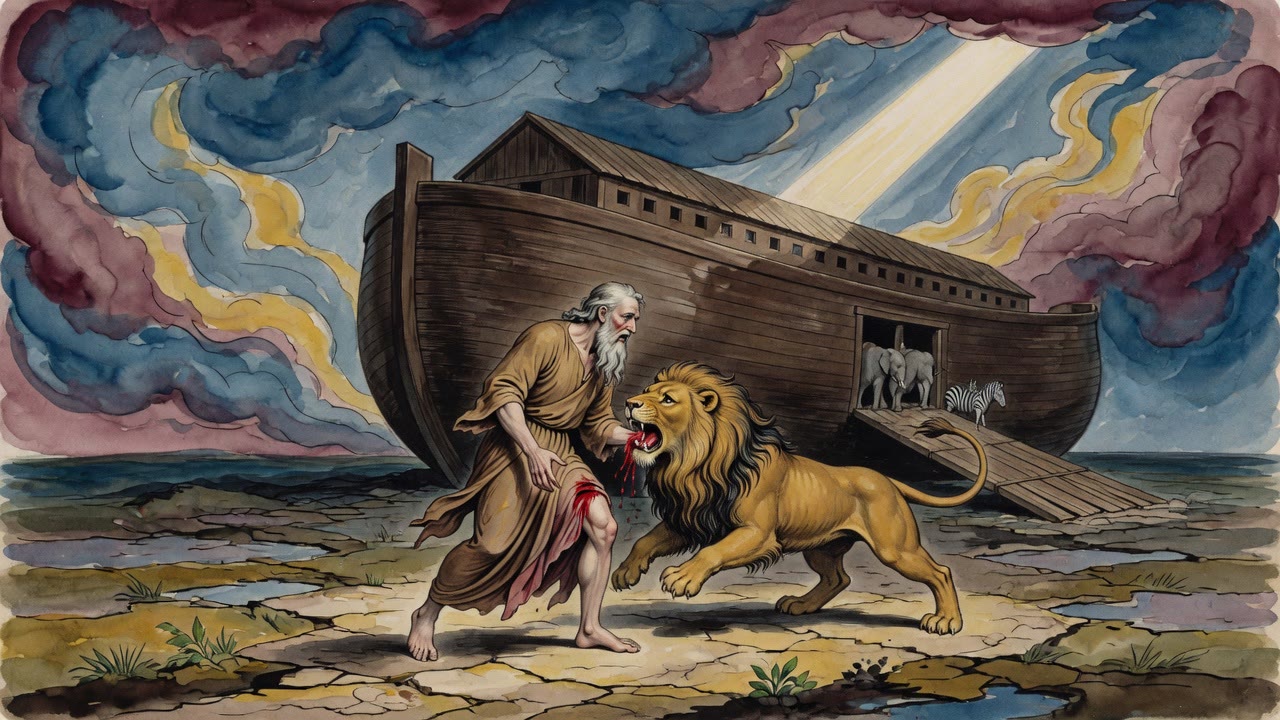
Levi ben Sisi walked toward Simonias with his teacher's appointment warm in his pocket and a new thought already forming in his chest: he was the man the great Rabbi had chosen.
 Click for full size
Rabbi Yehudah ha-Nasi had sent him to the Galilean town to serve as teacher and judge. The townspeople were so excited to receive a student of Rabbi himself that they organized a welcome and lined up their questions in advance. Children ran ahead. Elders stood in the square. Levi arrived under their eyes like a man walking onto a stage.
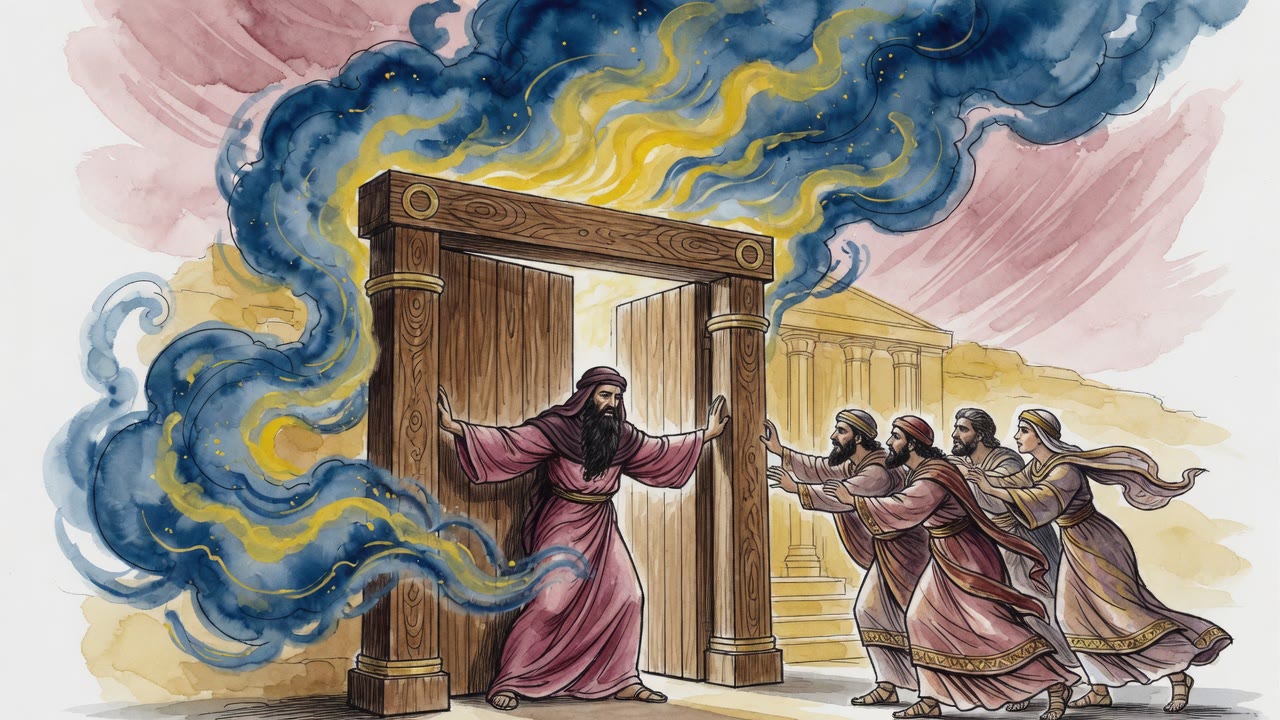
They asked. He could not answer. Not a single one. Some questions were simple matters any yeshiva student could have handled. Others were well-known disputes in the Mishnah. Levi stood blank. Knowledge he had carried for twenty years had vanished as if someone had cut the strings of his mind. The silence in the square grew heavier than the welcome had been bright.
The Diagnosis of a Swollen Walk
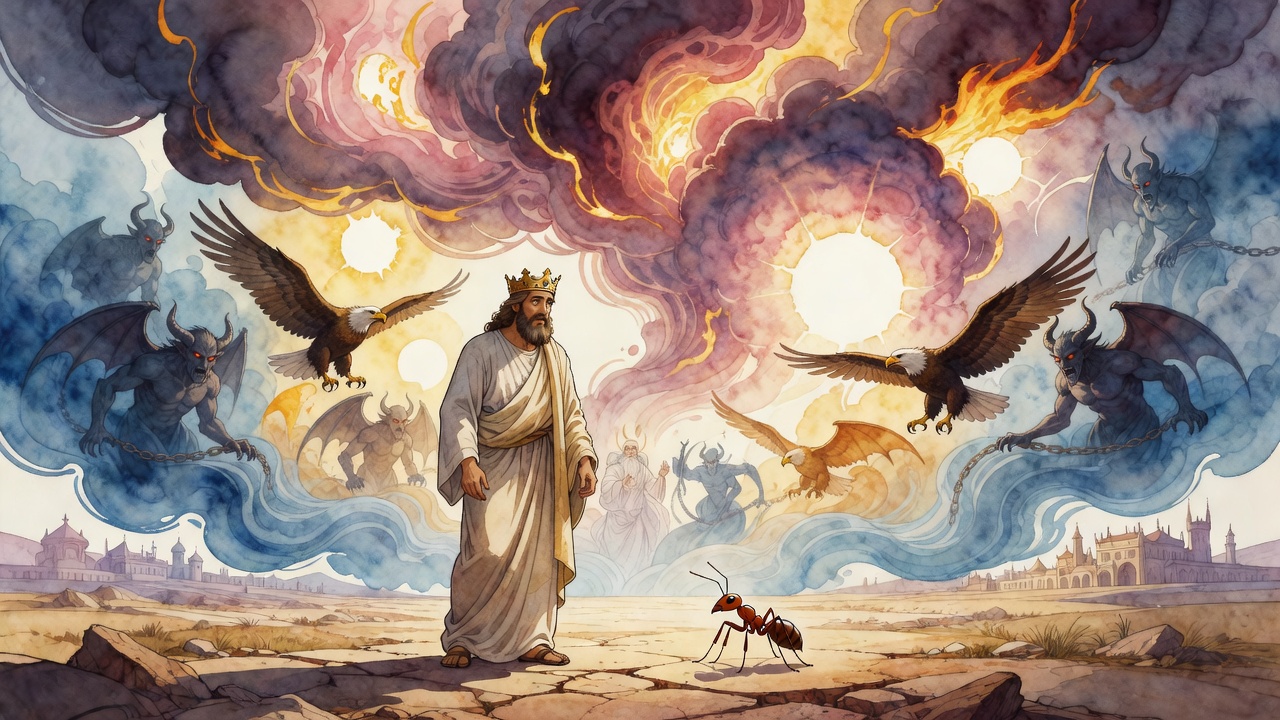
Word returned to Rabbi Yehudah. He was puzzled. He had trained Levi and knew the mind he had sent. Finally the diagnosis emerged. Levi had grown proud on the walk from the academy to the town. The honor of the appointment had risen in him like yeast. By the time he reached the gate, the self that meant to impress had crowded out the self that knew how to open a text.
The midrash is merciless and precise. Forgetting here is not age and not accident. It is the tax pride levies on memory. The town that wanted a scholar received a man who had already begun to worship his own selection. Between the master's house and the students' need, Levi had installed a mirror and lost the book.
Rabbi Yanai and the Guest in Fine Clothes
Rabbi Yanai once saw a man dressed in impressive clothes and assumed he was a Torah scholar. He invited him home. At the table he tested him on Bible, Mishnah, Aggadah, and Talmud. The man knew nothing. Frustrated, Yanai asked him to lead the Grace after Meals. The guest refused: "Let Yanai recite the blessing in his house." Sarcasm rose. Yanai told him to repeat, "The dog ate Yanai's piece of bread."
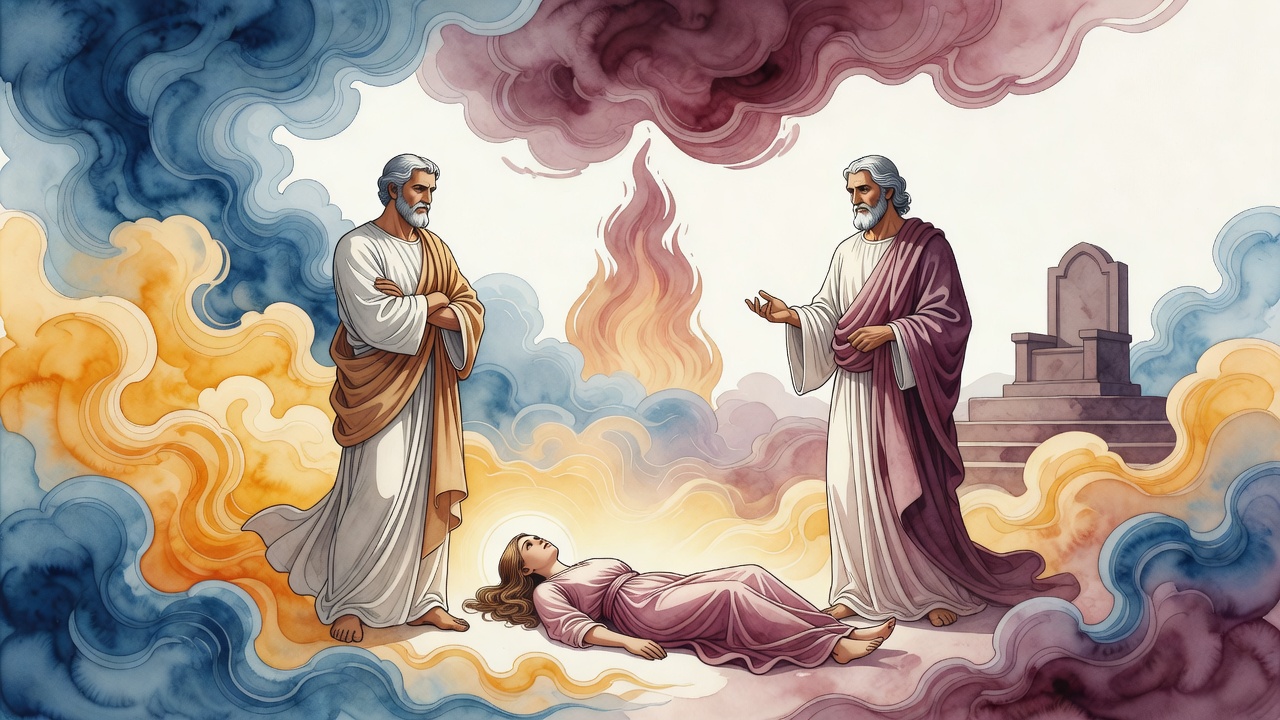
The guest seized him. "My inheritance is with you, and you are preventing me from it!" The Torah is the inheritance of the congregation of Jacob, he said, not the congregation of Yanai. He had once passed a school and heard children recite that verse. By calling him a dog, the host had denied him his share.
Yanai asked why the man had merited a seat at his table. "In all my days," the guest said, "I never heard a bad word and repeated it, and I never saw two people quarreling without making peace between them." Yanai recoiled from his own insult. Civility, the midrash adds, preceded Torah by twenty-six generations. The path to the tree of life is manners before the tree itself is learning. Fine clothes can lie. Quiet peace-making can tell the truth a syllabus misses.
A Face That Shines Without Boasting
Rabbi Judah ha-Nasi was famous for wealth and immaculate appearance, yet the tradition insists his splendor came from inner purity expressed outward. When he emerged from the bathhouse, his face was said to glow until students compared it to Moses descending Sinai. A Torah scholar who appeared in public with stained garments brought disgrace upon the Torah itself. The sages who pressed clean clothes often lived in poverty. They washed and pressed not for vanity but because the outside teaches others how to receive the inside.
Levi's failure was the reverse image. He carried the appointment like a clean garment of rank and lost the content the garment was meant to cover. Appearance without substance offends. Substance that swells into pride empties itself. The middle path is a scholar who looks like he honors Torah and still remembers that every answer is borrowed. Judah could shine after water and soap. Levi could not shine after a swollen thought.
What the Town Was Owed
Simonias did not need a man impressed with himself. It needed a judge who could still hear a baraita (an outside tannaitic teaching). Yanai's guest did not need a sarcastic host. He needed a seat that did not depend on pedigree. Judah's students did not need luxury. They needed a face that made holiness look possible in a body.
Levi's blank silence is the story's warning bell. Honor on the road can cost you the very Torah you were sent to give. The cure begins before the gate: walk as a student still, even when the letter in your pocket says master. If you must rehearse anything on the way, rehearse the questions of the weak, not the applause of the square. The town will forgive a modest teacher. It cannot use an empty one.
When the tale ends, the appointment still exists on paper. The knowledge has to be won back the hard way, through humility that reopens what pride sealed. That is the only road back to Simonias that counts.
← All myths