5 min read

The Guest Seized Yanai Over Jacob's Torah

Rabbi Yanai invited fine clothes to his table, tested the guest, and said a dog had eaten his bread. The man seized him by the inheritance of Jacob.

Curated by Arthur · Told by Maggid ·
Table of Contents
  1. Four Tests at the Table
  2. The Inheritance on the School Wall
  3. Why He Sat at the Table
  4. The King and the Last Crowd

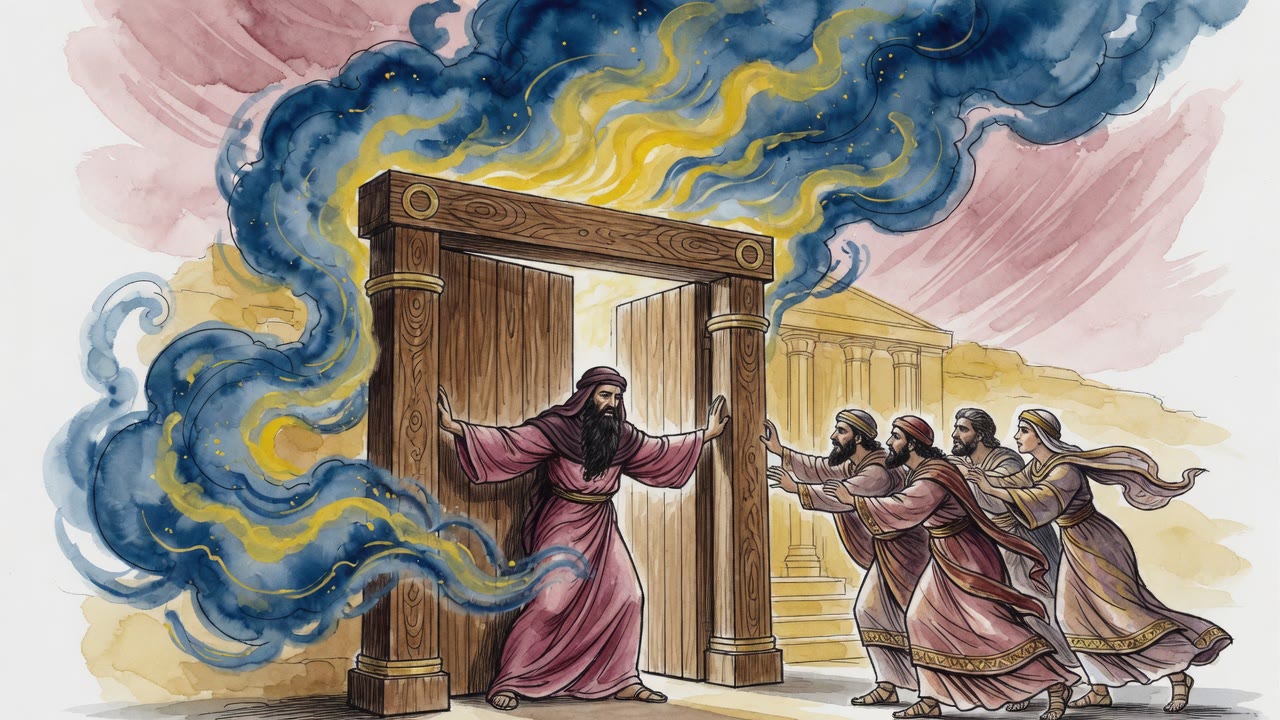
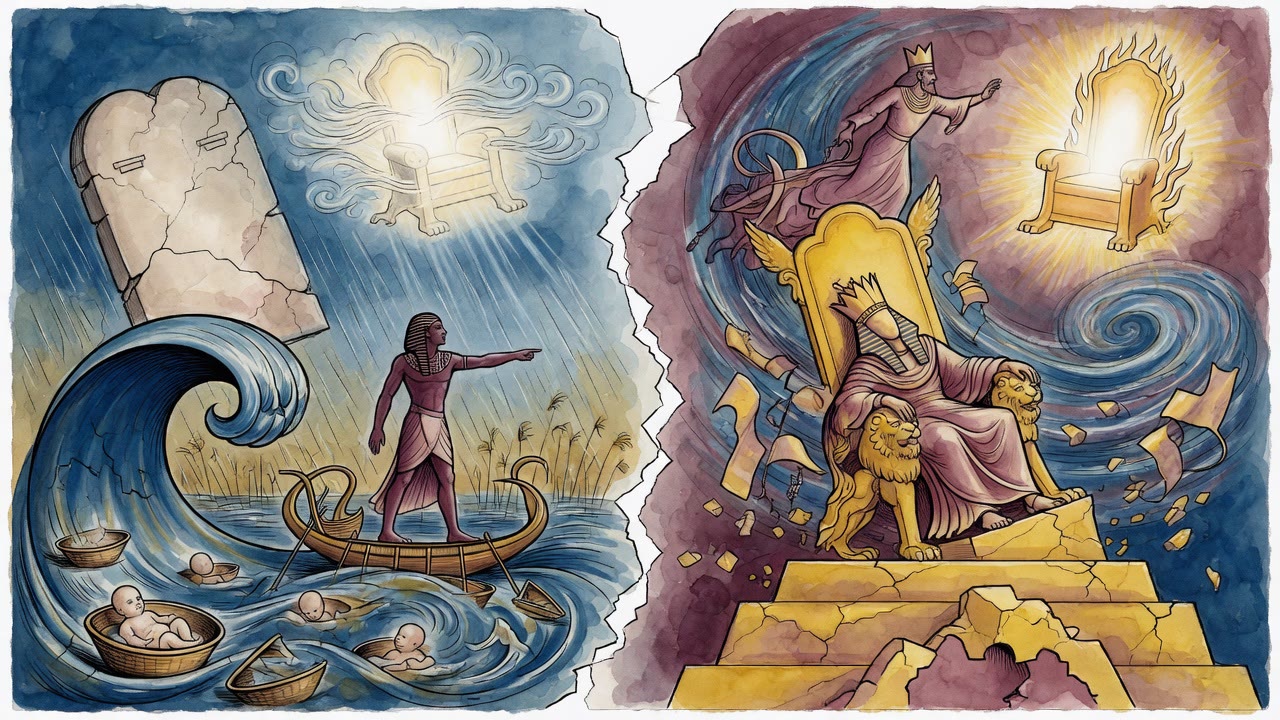
Rabbi Yanai was walking when he saw a man dressed as if the market had emptied its best cloth for him alone. Fine weave. Clean hem. The look of a scholar who had somewhere to be. Yanai stopped him in the road and spoke as one host speaks to another teacher. "Would the rabbi be received as a guest with us?"
The Guest Seized Yanai Over Jacob's Torah Click for full size

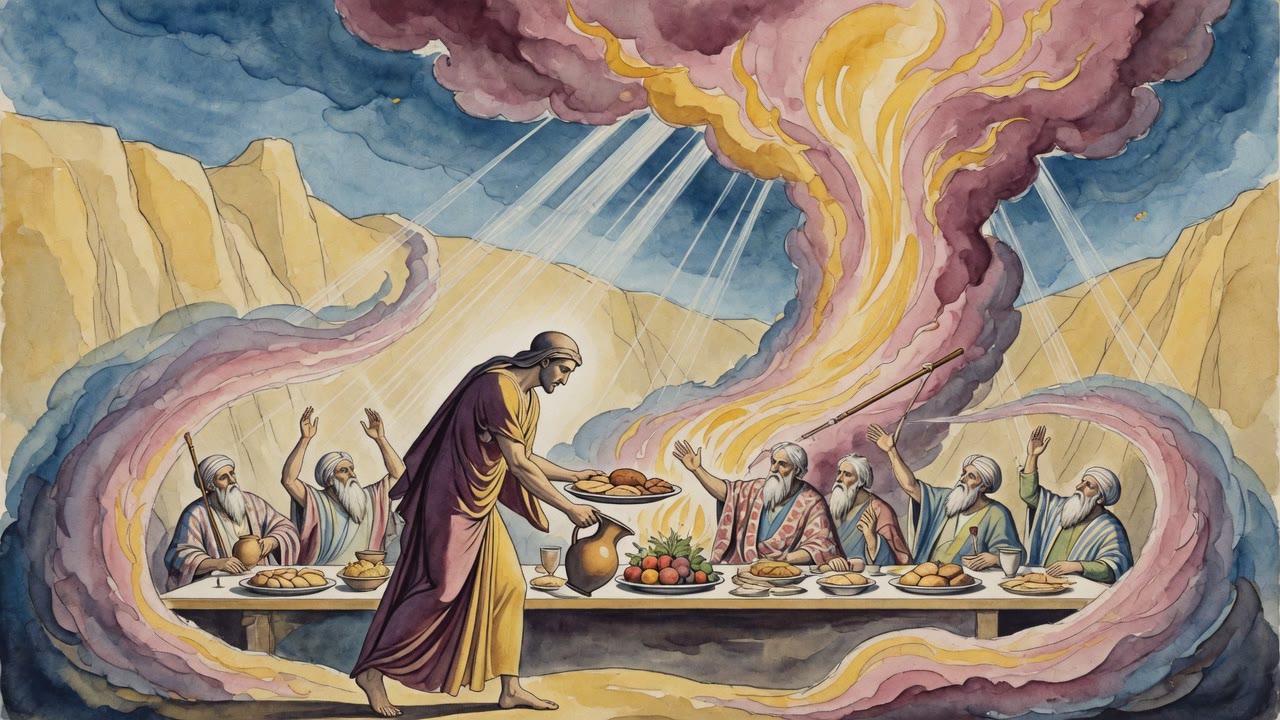
The man accepted. He followed Yanai home and sat where guests sit, and the table filled, and the bread came warm. Yanai watched him eat and felt the quiet pride of a man who had chosen well. A house that feeds Torah men feeds itself.

Four Tests at the Table

After the meal, Yanai turned conversation into examination. He asked about the written books. The guest shook his head. He asked about the Mishnah. Nothing. Aggadah (the storytelling lore of the rabbis). Silence. Even the give-and-take of the learning hall left the man's mouth empty. Yanai's face tightened. The fine clothes sat there like a borrowed name.

He asked the guest to lead the blessing after the meal. The man refused. "Let Yanai recite the blessing in his house." The refusal landed hard. Yanai's voice went thin with sarcasm. Could the guest at least repeat words after him? The man said he could. Yanai set the trap with care.

"Say, the dog ate Yanai's piece of bread."

The guest did not smile. He did not shrug. He rose and seized Yanai, hands locked on the host who had fed him and then unmade him with a single line.

The Inheritance on the School Wall

"My inheritance is with you," the man said, "and you are preventing me from it!"

Yanai stared. "In what sense is your inheritance with me?"

The guest's breath came rough. He had passed a school once and heard children chanting. The verse was not soft. Moses commanded us Torah, an inheritance for the congregation of Jacob (Deuteronomy 33:4). Not the congregation of Yanai. Not a closed table of men who can quote chapter and chapter again. Jacob's congregation. The whole people. The man who had never opened a page still held a share, and the insult had tried to snatch it from his mouth.

Yanai felt the room change. The joke that had tasted sharp on his tongue now sat like grit. He had measured a man's worth by answers and then by cloth, and both measures had failed him in opposite directions.

Why He Sat at the Table

Yanai asked, quieter now, why this man had merited to eat at his table at all.

The guest did not reach for learning. He reached for his days. In all his life he had never heard a bad word and repeated it. He had never seen two people quarreling without stepping between them until the quarrel broke. That was his claim. Not a verse he owned, but a peace he kept. Yanai heard it and had no clever reply left. The bread he had called dog's food had gone to a man who stopped fights in the street.

Outside, the road still held the dust of their walk home. Inside, the host who assessed paths for a living found his own path cracked open under his feet.

The King and the Last Crowd

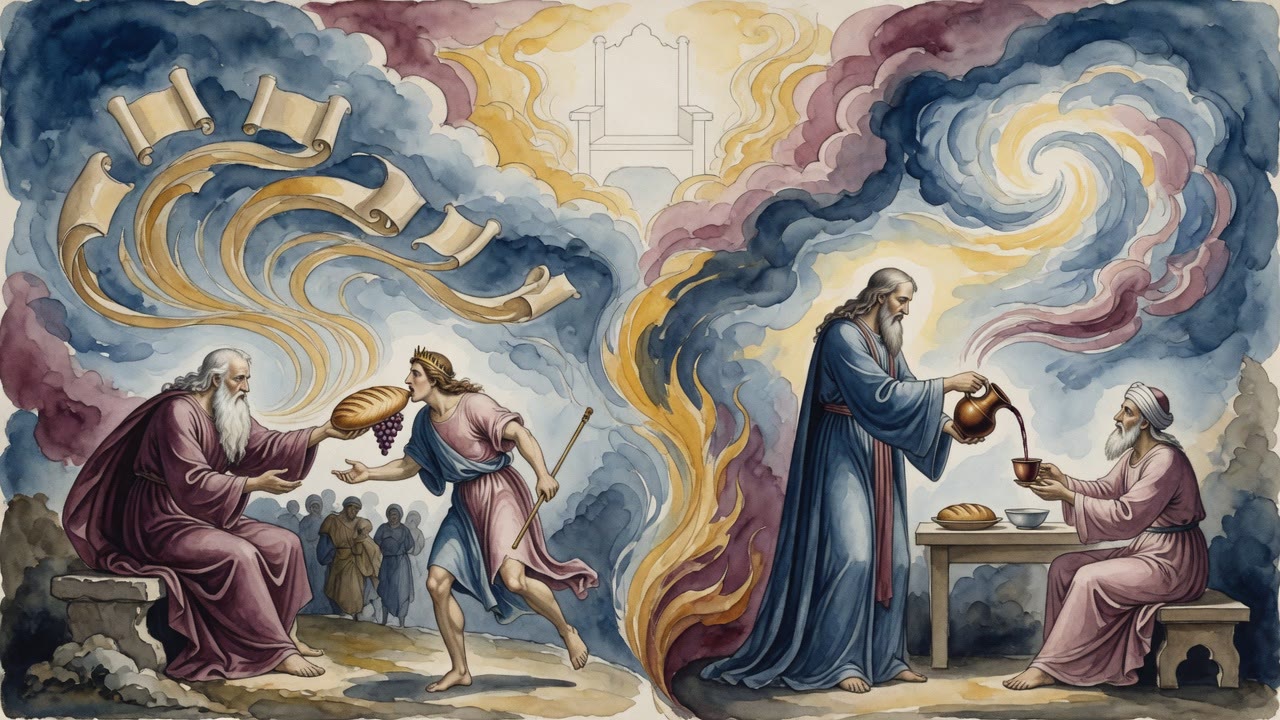
Far from that table, another scene holds the same pressure from the other side. A king approaches a province that owes him taxes. Ten mil out, the elite ride to meet him and sing. He forgives a third of the debt. Five mil out, the middle ranks come with their praise. Another third falls away. When the king finally enters the gates, everyone pours out: men, women, children, the ones who waited until the dust of the royal procession touched their own street. The king looks at that last crowd and wipes the slate clean. "What has passed has passed," he says. "From here we will begin a new account."

So the High Holy Days move, step by step, toward a full reset. Leaders fast early. Individuals take on the hard days between the New Year and the Day of Atonement. On the day itself the whole camp stands together, and the account opens again from zero. The last arrivals are not shut out because they came late. The late full crowd is the point.

Yanai had invited the early look of scholarship and mocked the late learner. The guest had arrived last in books and first in peacemaking. At that table the inheritance did not wait for the elite ten mil out. It waited for Jacob's name, spoken by children who did not yet know how to keep a scholar out.

Yanai stood in his own house with a man still gripping the truth of a verse, and the sarcasm died in his throat. The path he thought he had set was being assessed in front of him. The guest released him only after the claim was spoken. Torah as inheritance. Bread as insult withdrawn. A host who would never again confuse fine clothes with a finished share.


← All myths
From the tradition

Sources

2 sources

The texts behind this telling. Some cards carry a translation of the source; others are our own retelling of it, and each card says which. Every card links out to the original.

Vayikra Rabbah 9:3Vayikra Rabbah

Retold in our words. Read the original at the link below.The Sefaria Midrash Rabbah, 2022 · CC-BY

It happens. But sometimes those moments can teach us something profound about ourselves and the world. Let me tell you a story from Vayikra Rabbah that really hit home for me.

It starts with the verse, "And for one who sets [vesam] his path..." Now, Rabbi Yanai, a wise sage, makes a clever play on words here. He points out that the word vesam can also be read as vesham. With that slight change, the verse can be understood as saying that one who assesses [deshayem] his path, his value is great. Intriguing. It’s all about taking stock, being mindful of the road we’re on.

So, Rabbi Yanai is walking along one day, and he sees a man dressed in very fine clothes. Rabbi Yanai, assuming the man is a Torah scholar because of his impressive appearance, invites him home for a meal. "Would the Rabbi be received as a guest with us?" he asks. The man accepts.

Here's where things get awkward. Rabbi Yanai, trying to make conversation, tests the man's knowledge. He asks him about Bible, Mishna (the oral law), Aggadah (stories and legends), and even the Talmud (the body of Jewish law and tradition). The man knows absolutely nothing!

Rabbi Yanai, clearly frustrated, asks the man to lead Grace after Meals – to recite the blessing after the meal. The man refuses, saying, "Let Yanai recite the blessing in his house.” Rabbi Yanai, getting a bit sarcastic, asks if the man can at least repeat after him. The man says he can. So Rabbi Yanai says, "Say, the dog ate Yanai's piece of bread." Ouch.

Big mistake. The guest is deeply offended. He grabs Rabbi Yanai, saying, "My inheritance is with you, and you are preventing me from it!" Rabbi Yanai is bewildered. "In what sense is your inheritance with me?" he asks.

The guest explains that once, he was passing by a school and heard the children reciting, "Moses commanded us Torah, the inheritance of the congregation of Jacob" (Deuteronomy 33:4). He points out that it doesn’t say "the congregation of Yanai," but "the congregation of Jacob." In other words, the Torah belongs to everyone, not just the scholars. And by calling him a dog, Rabbi Yanai was denying him his rightful share. According to Matnot Kehuna, the guest felt he had just as much a stake in the Torah as the Torah scholars.

Rabbi Yanai is taken aback. He then asks the guest, "Why did you merit to eat at my table?" The man replies, "In all my days, I never heard a bad word and repeated it, and I never saw two people quarreling and did not make peace between them."

Wow. Talk about a mic drop. Rabbi Yanai realizes he completely misjudged this man. "You have so much civility to your credit, and I called you a dog?" he exclaims, clearly remorseful.

Rabbi Yanai then reflects on the verse, "And for one who sets his path" – realizing that one who assesses his path, his value is indeed great. This is amplified by Rabbi Yishmael bar Rav Naḥman, who said that civility preceded the Torah by twenty-six generations! As it says, “To guard the path to the tree of life” (Genesis 3:24), where “path” is civility, and then “the tree of life,” which is the Torah.

The story ends with a quote from (Psalms 50:23), "I will show him the salvation of God." Rabbi Abahu interprets this as one of the verses where the salvation of God is the salvation of Israel. Or, as he puts it, "Our salvation is Yours."

So, what's the takeaway? This story from Vayikra Rabbah reminds us that appearances can be deceiving. It’s easy to judge a book by its cover, but true worth lies in character, in how we treat others, and in our commitment to peace. And sometimes, the people we least expect can teach us the most valuable lessons. Maybe, just maybe, taking a moment to vesham, to assess our own path, is the most important thing we can do.

Full source
Vayikra Rabbah 30:7Vayikra Rabbah

Retold in our words. Read the original at the link below.The Sefaria Midrash Rabbah, 2022 · CC-BY

It offers us not just one, but three opportunities for a fresh start each year during the High Holy Days season.

How does it all work? Vayikra Rabbah, a Midrash on the book of Leviticus, offers a fascinating analogy to explain this process of divine forgiveness. The text focuses on the seemingly odd phrase "on the first day" in relation to Sukkot, which falls on the fifteenth of Tishrei – so, why "the first day?"

Rabbi Mana of She’av and Rabbi Yehoshua of Sikhnin, citing Rabbi Levi, tell a story of a king visiting a province that owes him taxes. As the king approaches, different groups of people come out to greet him, each receiving a different level of forgiveness for their debts.

First, when the king is ten mil (approximately 9 miles) away, the province's elite come out to sing his praises. As a reward for their initiative, the king forgives them one-third of their tax debt. Not bad. Then, at five mil, the middle class emerges to greet him. Their efforts earn them another third of their debt being wiped clean. The story is building, the forgiveness is flowing.

Finally, as the king enters the province, everyone – men, women, and children – come out to celebrate his arrival. Overwhelmed by their collective display of respect, the king forgives them everything. And then he says something truly remarkable: "What has passed has passed; from here we will begin a new account."

This, Vayikra Rabbah suggests, is a parable for our relationship with the Holy One, blessed be He. The High Holy Day season is structured to offer incremental opportunities for repentance and forgiveness.

The story continues, drawing a direct parallel to the Jewish calendar. In the days leading up to Rosh Hashanah, the Jewish New Year, the prominent leaders of the community often fast. This act of collective repentance leads to God forgiving one-third of the people's iniquities, mirroring the king's initial act of clemency.

Between Rosh Hashanah and Yom Kippur, the Day of Atonement, many individuals take it upon themselves to fast and pray. This personal effort results in another third of the collective sins being forgiven.

And finally, on Yom Kippur itself, when the entire community – men, women, and children – fasts and prays together, the Holy One, blessed be He, declares, "What has passed has passed; from here we will begin a new account," just like the king in the parable. A complete reset.

But the story doesn't end there! From Yom Kippur until the festival of Sukkot, everyone is busy with mitzvot (good deeds, commandments). Some are building their sukkahs (temporary dwellings), others are preparing their lulavim (palm branches) and etrogim (citrons). Then, on the first day of Sukkot, everyone stands before God, waving their lulavim and etrogim in joyful celebration. God, seeing their dedication and joy, says once again, "What has passed has passed; from here we will begin a new account."

So, what's the point of all this? Why these repeated opportunities for forgiveness?

Rav Aḥa, quoting (Psalm 130:4), offers a powerful explanation: "For forgiveness is with You… so You will be feared." According to Rav Aha, as it says in Psalms, forgiveness isn't just a gift; it's a tool to inspire yirat Hashem – awe and reverence for God. The repeated acts of repentance and forgiveness throughout the High Holy Days season aren’t just about wiping the slate clean; they're about deepening our relationship with the Divine and inspiring us to live better, more meaningful lives. The fear of God, in this context, isn't about terror, but about recognizing the weight of our actions and striving to live up to our potential. The High Holy Days aren't just about asking for forgiveness. They're about recognizing the power of a fresh start, and the responsibility that comes with it. They’re about inspiring us to live lives worthy of that divine gift. A clean slate isn't just an end; it's a beginning.

Full source