6 min read

Lot Fled to Zoar While His Daughters Planned

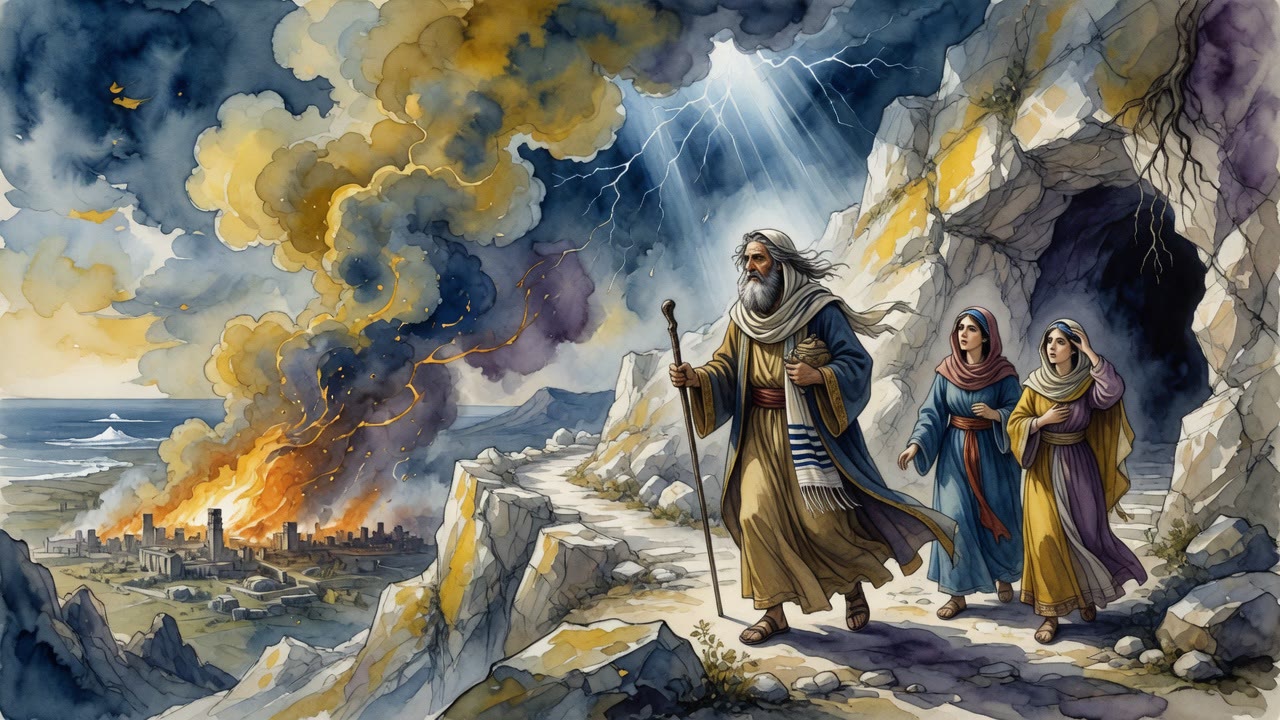
Smoke rose behind them as Lot begged for a little town. In the cave his elder daughter organized a second night of wine, sure she was saving the human race.

Curated by Arthur · Told by Maggid ·
Table of Contents
  1. The Town That Was Young
  2. The Elder Sister Plans the Second Night
  3. When the Household Tilts
  4. Favor, Fire, and the Morning After

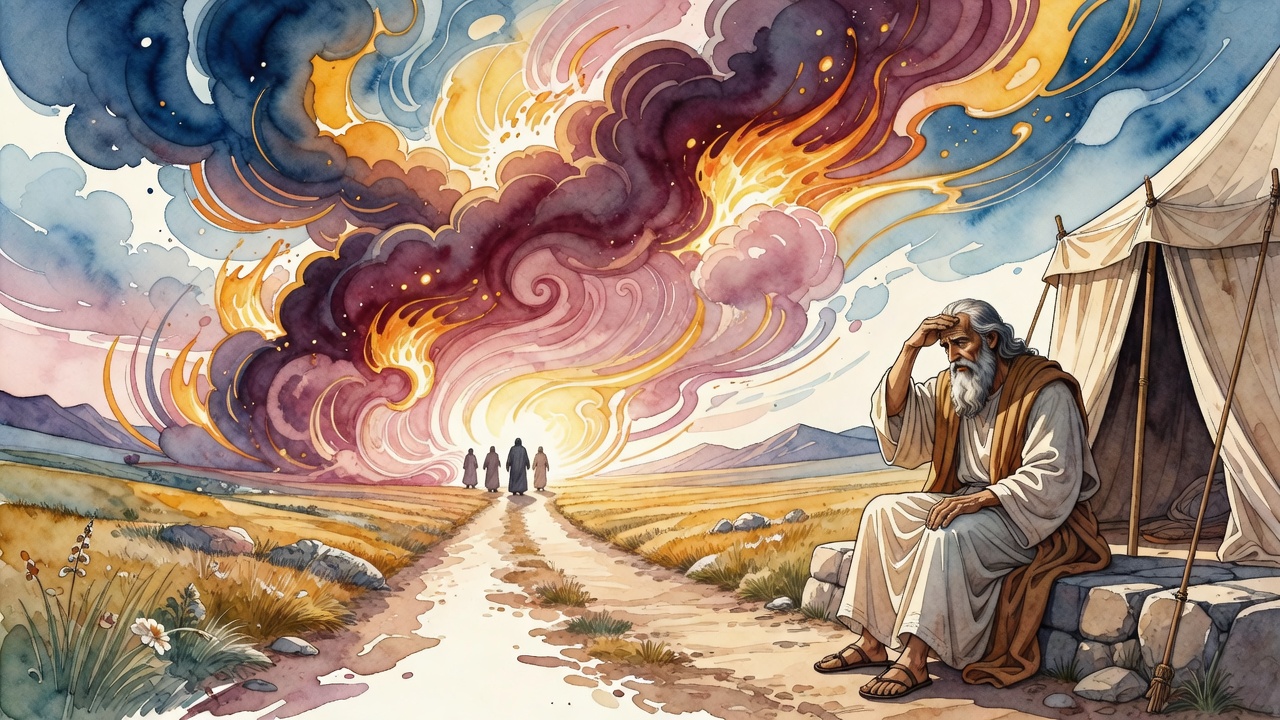
Lot ran with fire at his back and the taste of sulfur in his throat. He begged for a little town, Zoar, near enough to reach, small enough to hope. Behind him Sodom unmade itself. Ahead of him a cave waited, and in that cave his daughters would decide that the world had ended.

Lot Fled to Zoar While His Daughters Planned Click for full size

The Town That Was Young

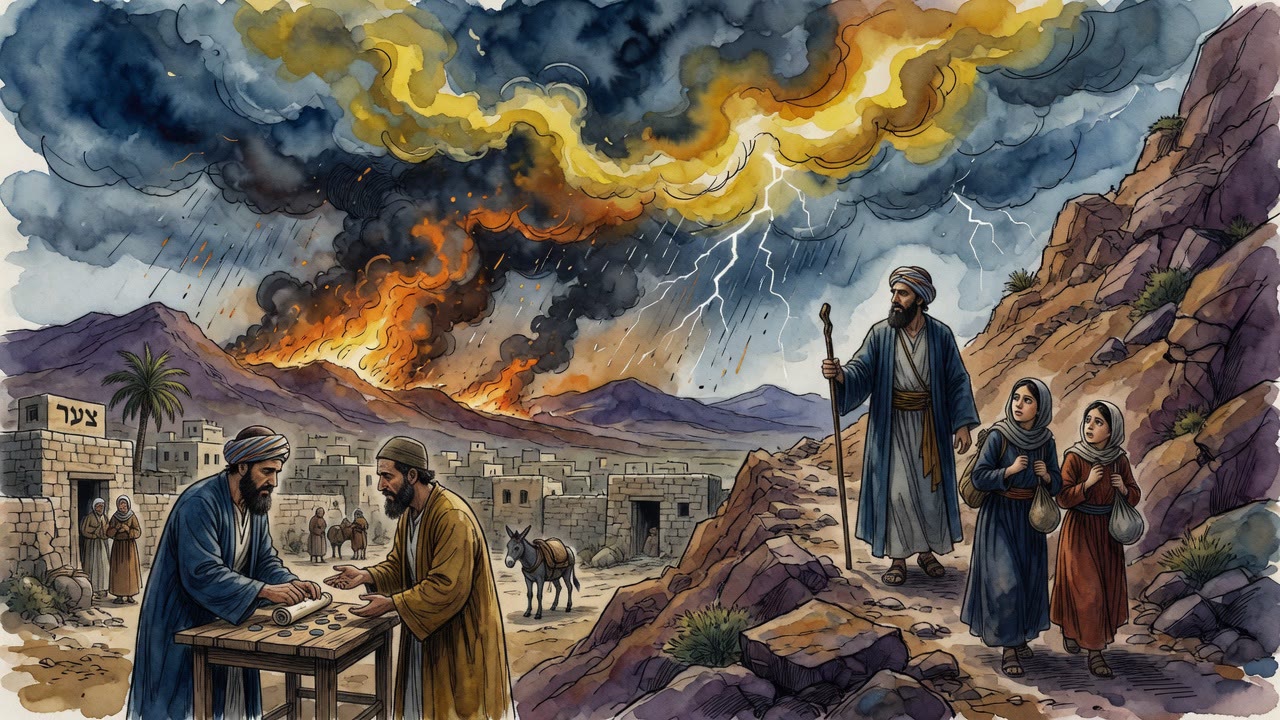
When Lot says his servant has found favor, the sages hear the word spoken to God, not only to angels, because only the One who kills and makes alive can grant that favor. Rav draws counsel from Zoar: settle in a city newly founded, for a young settlement has had less time to pile up sins. Lot calls Zoar "near," and the rabbis hear nearness in age. By their count Zoar had stood fifty-one years, Sodom fifty-two. One year of difference, and one town burns while the other holds.

The angel tells Lot, "I have lifted your face." Rabbi Chalafta reasons from the small to the great: if God lifted Lot's face because he honored a single angel, how much more will He lift the face of Israel, who honor Him and stand on the merit of their ancestors. The priestly blessing later says the same: "the LORD lift up His face toward you" (Numbers 6:26).

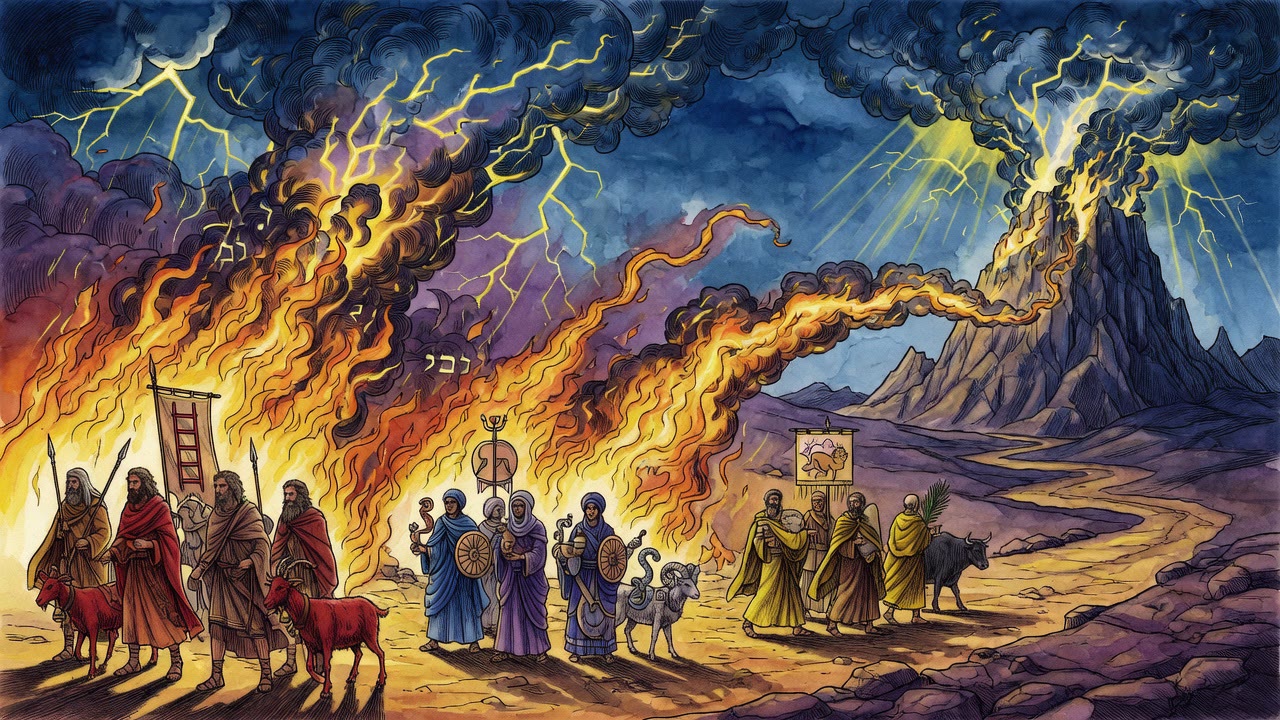
Even the hour of Sodom's ruin was chosen with cold precision. Some Sodomites worshiped the sun, some the moon. Strike by day and they blame the missing moon; strike by night and they blame the missing sun. God chose the sixteenth of Nisan, when both hang in the sky, so no idol could steal the credit.

The Elder Sister Plans the Second Night

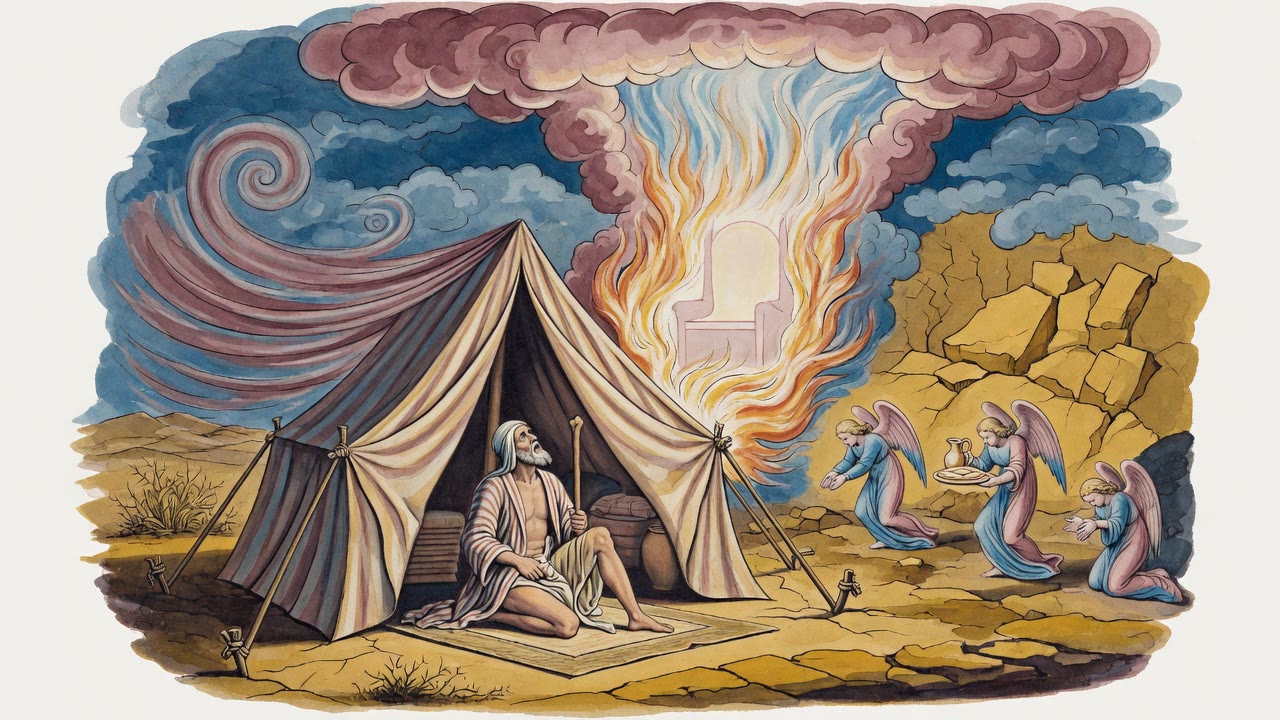
In the cave the elder daughter does not whisper shame. Targum Pseudo-Jonathan slows the verse so we hear her report: she lay with the father the night before; let them make him drink again; let the younger go in; let them raise up seed from their father. In their minds the cave is Noah's ark. They believe they are the remnant of the human race. They are not, in their own story, committing incest. They are saving the world.

The Talmud notes the names. The elder names her son Moab, "from the father," with open mouth. The younger softens hers to Ben-Ammi, "son of my people." One has no shame left. One still has a little. Later history will remember both nations with the complexity those names already carry.

Wine does the work the daughters plan. Lot, who fled fire, does not flee the cup. The man who bargained for Zoar cannot bargain with sleep.

When the Household Tilts

Proverbs names the things that make the earth shudder. Among them is a servant raised to be king, and a maidservant who pushes aside her mistress. Rabbi Alexandrai asks where we see it and points to Hagar. Sarah gave her maid to Abraham. Once Hagar conceived, the tent trembled. The servant carried what the mistress longed for. Jealousy and grief shook the ground of a single home until the proverb had a body.

Lot's cave is another tilt of order. Daughters take the place of wives. A father becomes the instrument of a plan he does not consent to while awake. The earth does not only tremble under empires. It trembles under tents and caves when roles invert without wisdom.

Favor, Fire, and the Morning After

Lot's face was lifted. Zoar was spared. The daughters woke into a future they had forced. Mercy and catastrophe share the same dawn. The story refuses to be only judgment on Sodom or only scandal in the cave. It is a family running from one moral collapse into another, still touched by a lifted face, still capable of plans that mix terror with a twisted hope of life.

The little town stands. The big city is ash. The cave holds the next chapter of nations that will meet Israel on the road for centuries.

Lot's legs were still shaking when he bargained for Zoar. He had offered his daughters to a mob in Sodom on a worse night, a fact the tradition never quite washes off him. Now those same daughters took the planning into their own hands in the dark of a cave. The family that could not protect boundaries in the city could not find them in the mountain either.

Favor had still been spoken. A face had been lifted. Zoar stood. That is the scandal of mercy. It does not wait for a clean recipient. It falls on a man who hesitates on the plain, argues for a small town, and later drinks himself into a plot he does not choose while conscious. Mercy is not a medal for the pure. It is a decision on heaven's side of the fire.

The elder daughter's frankness is almost administrative. Night one done. Night two scheduled. Wine as tool. Seed as goal. She believes the human story will end without her. Terror makes planners of people who would otherwise never speak so plain. The younger softens a name. Shame still flickers. The midrash will remember that flicker when it weighs Moab and Ammon in later law and story.

Hagar's tent and Lot's cave rhyme. Orders invert. Servants rise. Daughters rule a night. The earth trembles not only under boots of kings but under private revolutions of role. Proverbs only names what Genesis already lived. The traveler through these chapters should expect the ground to move when someone seizes a place that was never theirs to seize, even if they seize it out of fear for life itself.


← All myths

From the tradition

Sources

3 sources

The texts behind this telling. Some cards carry a translation of the source; others are our own retelling of it, and each card says which. Every card links out to the original.

Targum Pseudo-Jonathan on Genesis 19:34Targum Pseudo-Jonathan on Genesis

Retold in our words. Read the original at the link below.The Targum of Jonathan ben Uzziel, trans. J. W. Etheridge, London, 1862 · Public Domain

(Genesis 19:34) is a verse most readers speed past. Targum Pseudo-Jonathan slows down and lets us hear the elder daughter plan.

"And it was the day following, and the elder said to the less, Behold, now, I lay my evening with the father; let us make him drink wine this night also, that he may be drunk; and go thou and lie with him, that we may raise up sons from our father."

The Aramaic preserves a chilling element the English translation only hints at: the elder admits, openly and without shame, what she did the night before. "I lay my evening with the father." She is not apologizing. She is reporting, and she is organizing.

The phrase "that we may raise up sons from our father", in Aramaic, u-n'qayyem zar'a me-abuna, is the daughters' stated purpose throughout this whole episode. They believe they are the remnant of the human race and that their cave is Noah's ark. In their minds, they are not committing incest. They are saving humanity.

The rabbis of the Talmud (Horayot 10b) made a striking observation. The elder daughter openly names her son Moab, "from the father", while the younger daughter will soften the name of her son to Ben-Ammi, "son of my people." The elder had no shame; the younger still had some. And because of that difference, later Jewish law would treat the two peoples differently. Moabites excluded more harshly, Ammonites somewhat less (Deuteronomy 23:3-6).

The rabbis were not excusing either sister. They were reading the Torah's moral fingerprints carefully.

The takeaway: the way you name what you have done is already part of the judgment that follows.

Full source
Yalkut Shimoni on Torah 84:9Yalkut Shimoni on Torah

Translation of the source text.Torat Emet (Yalkut Shimoni) · CC-BY-NC

All the names spoken of regarding Lot are ordinary [not divine names], except this one: "Behold now, your servant has found favor in your eyes" (Genesis 19:19), since the One who has the power to kill and to make alive is the Holy One, blessed be He.

(Genesis 19:20) Rav said: A person should always try to settle in a city whose settlement is recent, for since its settlement is recent its sins are few. Rav Chanan said: What is the verse? As it is written, "Behold now, this city is near" (Genesis 19:20). What does "near" mean? If you say it means it is close by and small, then look, he could see it. Rather, since its settlement is recent its sins are few. And Rabbi Yitzchak said: The settlement of Zoar was fifty-one years, for it is said, "let me escape there" (Genesis 19:20), and the word "there" [na] in gematria is fifty-one; and that of Sodom was fifty-two, and its tranquility was twenty-six, as it is written, "twelve years they served" and so on (Genesis 14:4).

(Genesis 19:21) "And he said to him, Behold, I have lifted your face" and so on. Rabbi Chalafta of Caesarea said: If for Lot, because he honored an angel, He lifted his face, then to you shall I not lift My face, on account of you and on account of your fathers? As it says, "The LORD lift up His face toward you" (Numbers 6:26).

(Genesis 19:23-24) "Hasten, escape there." This is like a province that had two patrons, one a native of the province and one a city dweller, and the king was angry and sought to chastise the people of the province. The king said: If I chastise them in the presence of the native, the people will say, had the city dweller been here he would have stood up for us; and if I chastise them in the presence of the city dweller, they will say, had the native been here he would have stood up for us. So it was that some of the Sodomites worshiped the sun and some the moon. The Holy One, blessed be He, said: If I chastise them by day, they will say, had the moon been here it would have protected us, and if I chastise them by night, they will say, had the sun been here it would have protected us. Rather, I will chastise them on the sixteenth of Nisan, at the hour when both stand together in the firmament. This is the meaning of what is written, "The sun was risen upon the earth" (Genesis 19:23), and it is written, "and the LORD rained upon Sodom" (Genesis 19:24).

Full source
Midrash Mishlei 30:6Midrash Mishlei

Translation of the source text.Midrash Mishlei (Buber) · CC-BY

"Under three things the earth trembles" (Proverbs 30:21); "under a servant when he becomes king" (Proverbs 30:22); "under a hated woman when she is married, and a maidservant when she dispossesses her mistress" (Proverbs 30:23) - Rabbi Alexandrai said: From where do we learn this? From Hagar, the maidservant of Sarah.

Full source