Lot's Herdsmen Claimed the Land Before God Gave It
Abram's men tied muzzles on the cattle. Lot's men did not. They called the grass theirs because a barren uncle would leave no heir.
Table of Contents
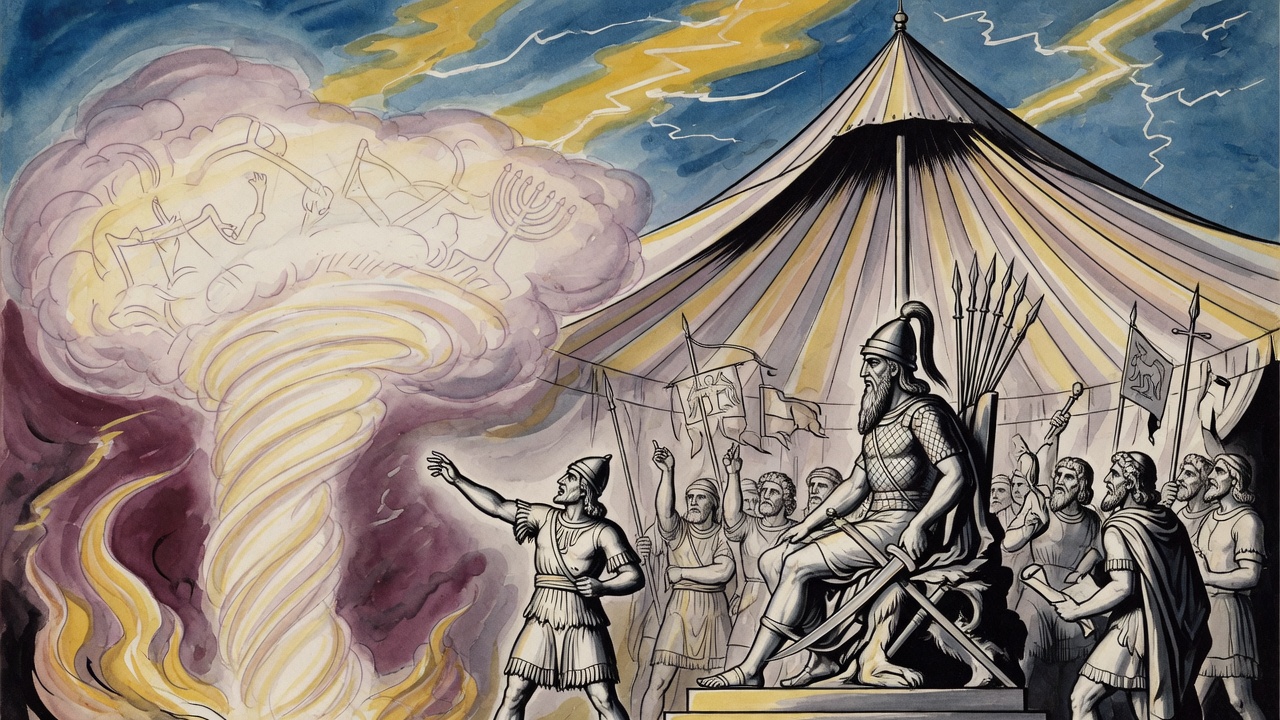
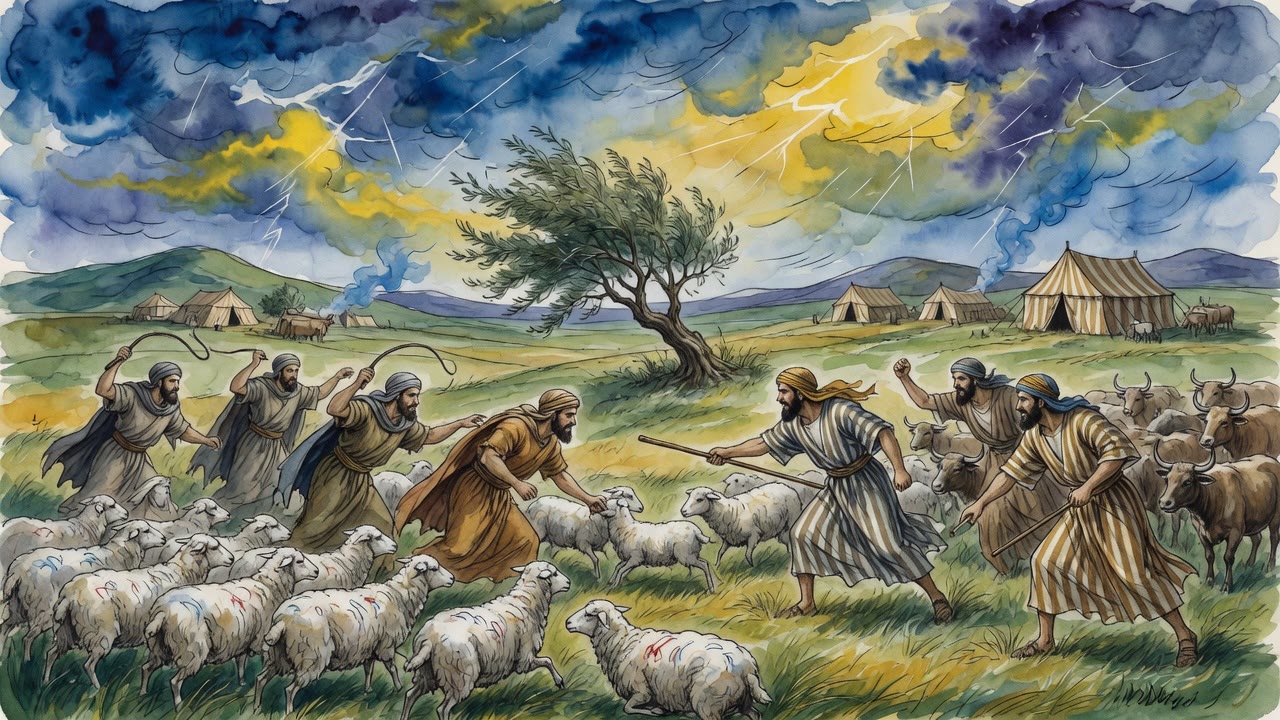
Dust hung between the two camps on the hills of Canaan. Abram's shepherds walked the cattle out with leather strapped over their mouths. The beasts could not drop their heads into a neighbor's standing grain. Lot's shepherds left the mouths open. Their flocks tore at whatever green they found, as if the whole ridge already wore their brand.
 Click for full size
"Why do you turn your cattle loose unmuzzled," Abram's men said, "letting them eat what is stolen?"
Lot's men did not lower their voices. "You think we wrong you. Do you not know the Lord has promised this whole land to Abraham? And Abram is a barren mule who will leave no son. Lot is the heir. Whatever our flocks eat, they eat from what is already his. There is no theft here at all."
Abram heard his own name used that way and did not answer the employees. He kept the muzzle on his animals and kept walking the line between the camps.
Heaven Heard the Claim
The Holy One heard the reasoning before any human court was called. The land was not yet theirs to spend.
"The Canaanite and the Perizzite still dwell in the land," God said, "and you already divide it as Abram's inheritance?"
In that hour some of those nations had already entered and broken an oath they had sworn. Other peoples had not yet come. The promise stood. The hour of possession had not arrived. Lot's men had taken a gift still in the Giver's hand and written a deed with it. Abram's men kept the leather on.
The dust did not settle. Cattle still moved. Only the argument had been answered from above, and Lot's camp did not put the muzzles on.
The Rock Who Had No Son
Long before those flocks argued, the Holy One sat and looked across generations that had not yet been born. The age of Enosh. The Flood. Sodom. How bring forth a world for such provocation? Then the gaze fell on one man who would rise and proclaim the oneness of the Name.
"Behold," He said, "I have found that upon which I may set the world."
The rock is Abraham. Not the many. The one who would know the Maker. That same man now stood childless on a Canaanite ridge, hearing employees call him a mule, and still tying leather over the mouths of his own cattle because the Canaanite still dwelled in the land.
When Balaam later looked from the tops of rocks and saw Israel, that foundation showed again. From the hills, the Matriarchs. A people dwelling alone, never counted among the nations the way the nations count themselves. The quarrel on the grass sat on top of that older decision. The man with no son was already bearing a house that had not yet been built.
Hunger on the Promised Soil
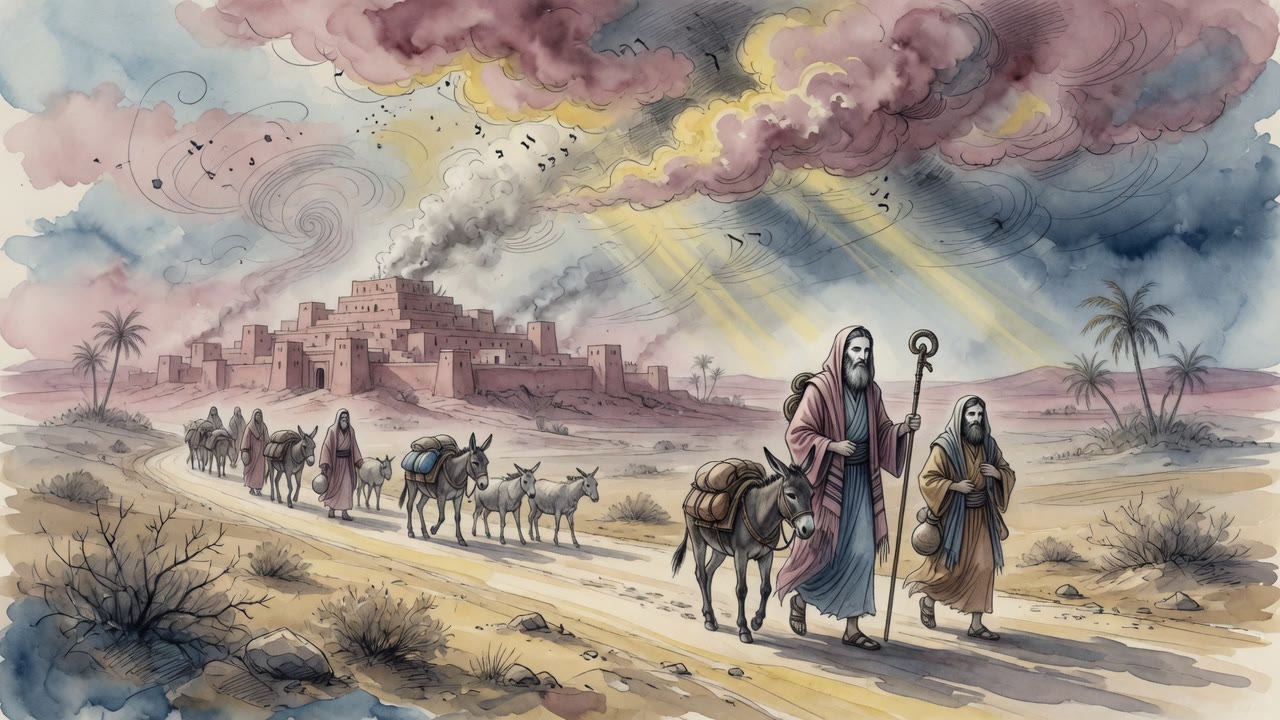
Hunger came for Abram not long after the quarrel. The soil that had been promised did not feed him. He went down toward Egypt with the same mouth that had refused stolen grass. He did not open his animals on the road because his stomach was loud.
The same fire would find Isaac, "besides the first famine" (Genesis 26:1). Jacob would send sons so they might live and not die. David would watch three years of empty fields from a throne. Want refined them the way fire refines silver. What the empty tables purchased was not gold. It was Torah. Merit deposited for children not yet born. Endurance by which a people would one day stand at Sinai and receive the words.
Lot's herdsmen had claimed land early. The fathers would wait through hunger without turning a promise into a license for the mouth.
They Parted on the Path
Abram walked the ridge a last time and heard his name used as an excuse for open mouths. Barren mule, the sneer said. Heir of Lot, the count said. He went to Lot rather than to a judge.
"Let there be no strife between me and you, and between my herdsmen and your herdsmen, for we are kinsmen. Is not the whole land before you? Separate yourself from me. If you take the left, I will go to the right. If you take the right, I will go to the left" (Genesis 13:8-9).
Lot lifted his eyes to the Jordan and chose the green because it looked like Egypt. He took the well-watered plain and the cities on it. Open-mouthed living would cost him later, when those cities burned and his wife looked back. Abram kept the muzzle on and looked at stars already numbered for a seed he could not yet hold.
At night the two camps put distance between their fires. Abram still had no son. Lot's fires receded into the green. Abram's cattle chewed what was theirs, mouths bound, and the Canaanite still dwelled in the land.
← All myths