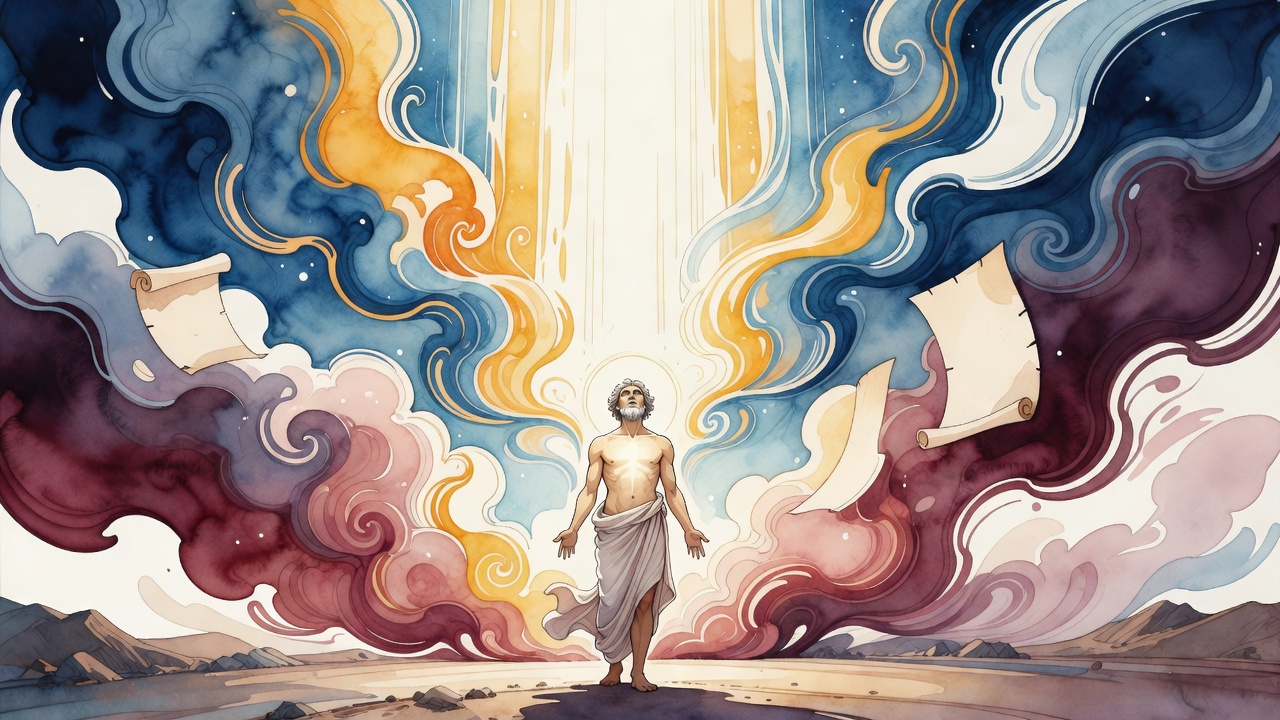
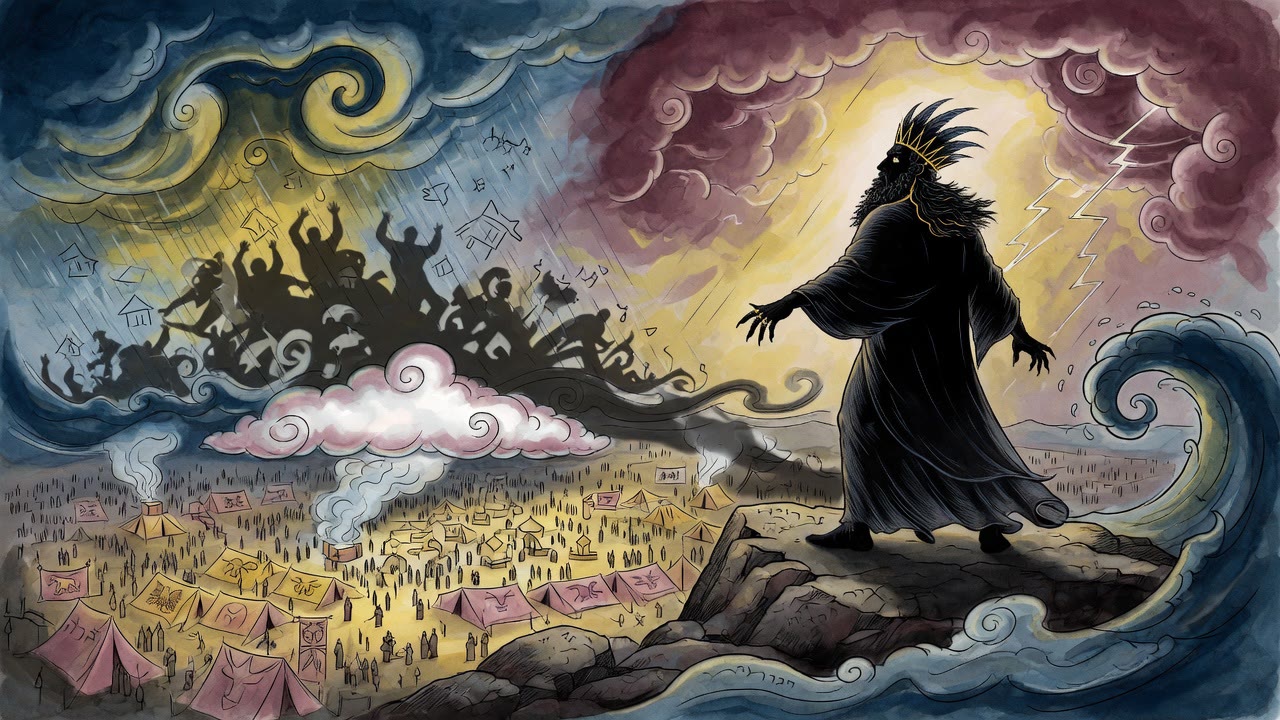
Moses Tried to Climb Past Malchut, the Last Vessel
"Show me Your glory," he said. The last vessel would not move. He fell in the cleft and tasted dust that still belonged to her.
Table of Contents
"Show me Your glory," Moses said.
 Click for full size
He had come down from one seeing and wanted the next. The rock was already warm from Presence. He took a step as if he could climb past the last shape God would let flesh bear.
His knees went first.
The Last Vessel Took the Field
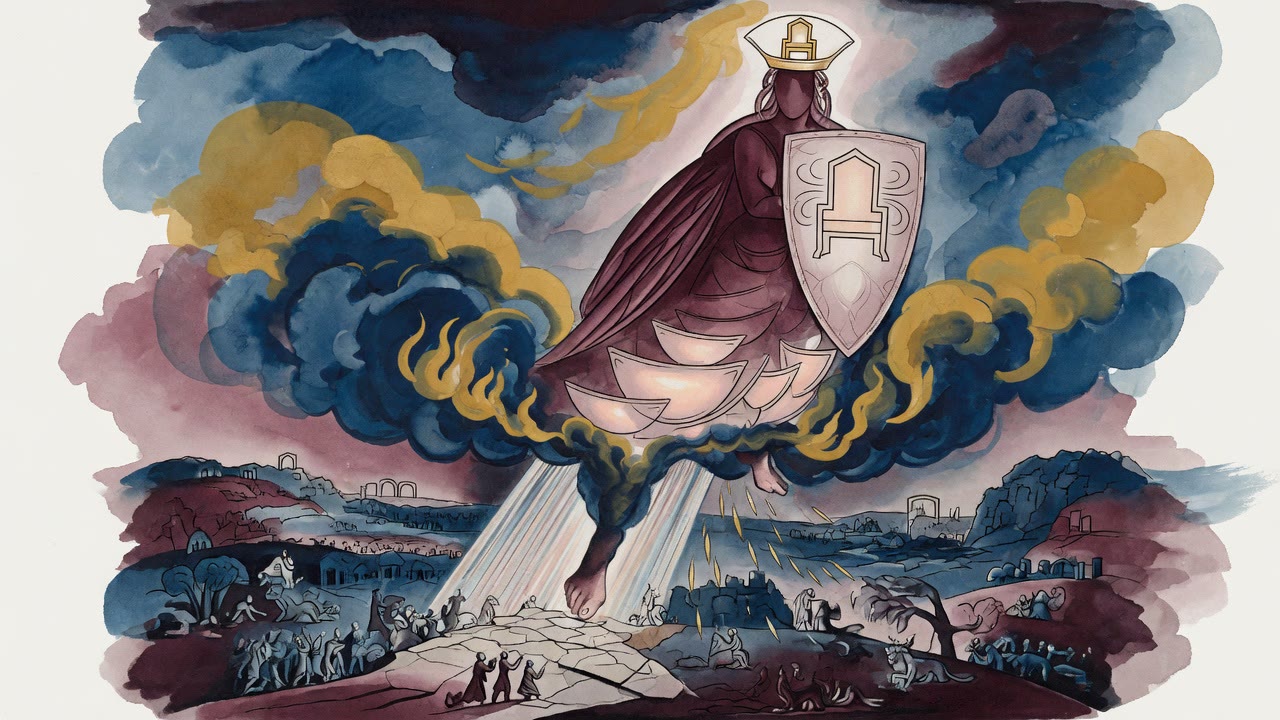
Malchut (מלכות), kingdom, the last sefirah (ספירה), one of the ten channels of divine power, did not arrive as a queen on a balcony. She took the field as the last vessel in a war of forms. Above her, nine lights poured force that had no edges a human eye could love. Below her, soil, cities, and bodies waited for a shape they could inhabit without dying of glory.
Moses wanted the raw light. He wanted to skip the gate. The path closed. You do not go up, and you do not receive, except through Malchut. The gate is not optional. The gate is the mercy that keeps infinity from erasing the finite.
He already knew the verse that named his portion. With him God speaks mouth to mouth, and he beholds the likeness of God (Numbers 12:8). He had taken that likeness for a ladder. It was a wall. The likeness was her. Root of the lower realms. Printing press of divine will into matter. What is inscribed in her as spirit later appears as apple, ear, silver, law.
He raised his face again and tried the private step. Malchut held.
Shechinah Met the Fall of Light
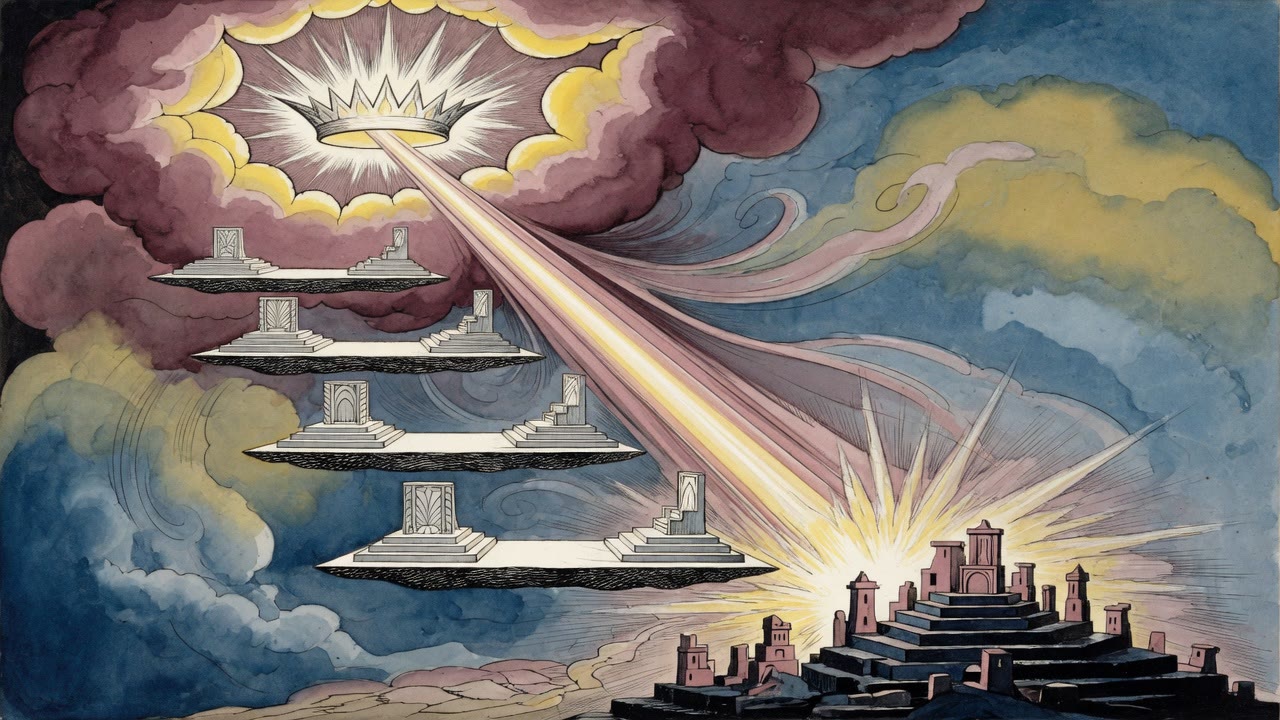
Higher lights fell like a waterfall of simple brightness. The Shechinah (שכינה), the Divine Presence, met that fall inside Malchut's power to make images. She forged bonds, contracted brightness, translated what cannot be borne into what can be received. Mist, rock, shaped channel. The metaphor is crude and still truer than silence.
When sustenance descends, it does not skip the kingdom. The Shechinah governs through Malchut, standing between flow from above and appetite below. Creatures in the lower worlds are bound to her qualities the way rivers are bound to beds.
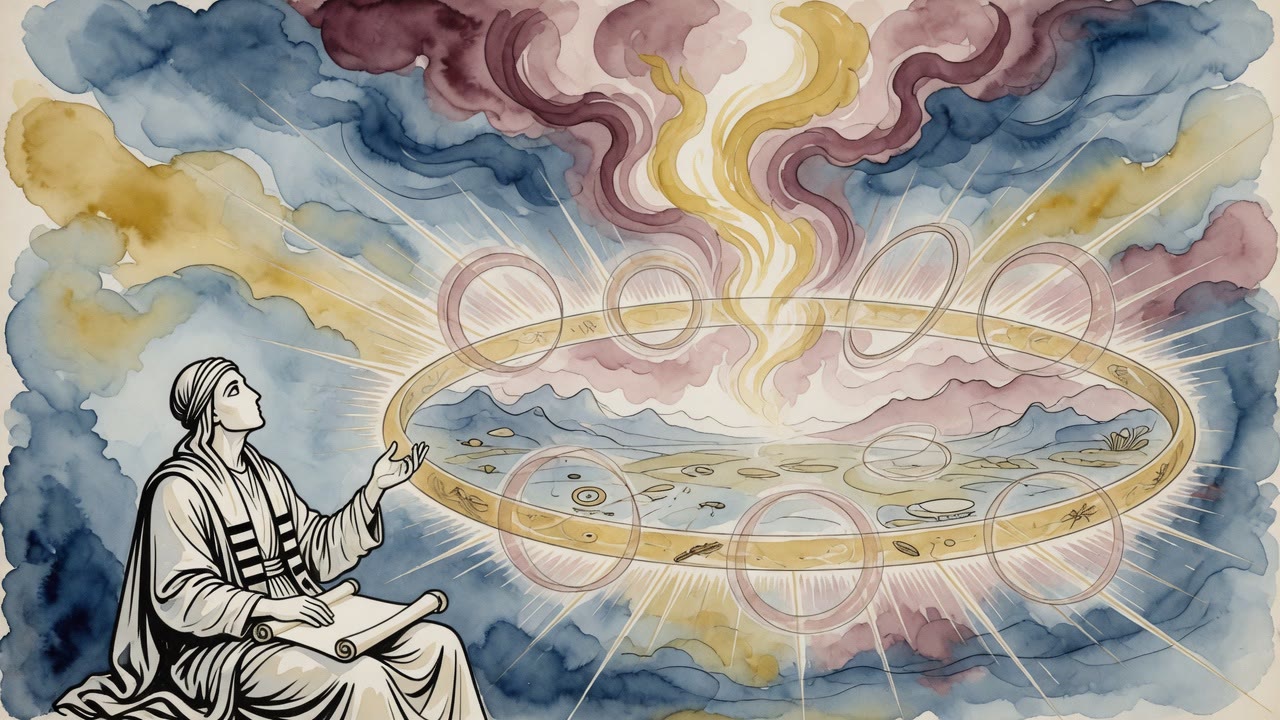
Moses saw animals, thrones, and wheels, and wanted to call them the essence of heaven. The vision corrected him. They were governance made visible, instruction in the language of forms, not God cut into livestock and metal. He reached for the source behind the forms. His hand closed on air. The looking glass would not come off the world.
Clarity or blur in that glass decides how much of the upper powers a generation can know. A dirty glass still reflects. A shattered one multiplies lies. Moses began to fear a shattered seeing more than plain dust.
The Cleft Instead of the Face
He asked again to see above Malchut without her. The request died in his mouth. There is no such seeing for flesh. God set him in the cleft of the rock, covered him with a hand, and passed. Moses saw the back, not the face (Exodus 33:18-23). The last vessel had kept the field because someone must.
Other forces wanted the glass cracked. If Malchut blurs, prophecy lies, law softens into fashion, and the lower worlds fill with images that teach false government. Moses felt that battle in his own breath. He had nearly become the crack, a prophet trying to storm the upper rooms without the kingdom's door.
He fell and tasted dust. Dust is also under her rule. Even dust carries inscription if the glass holds. He pressed his palm to the rock and left a mark of sweat. The rock did not open further.
He Came Down With the Back, Not the Face
He did not tell the camp he had tried to skip the gate. He came down carrying what he had been allowed: a Name that passed, a back, a cleft that had saved his life by refusing him. Night after night he returned in prayer to that rock. Some nights the glass shone. Some nights it smoked. He learned to fear smoke more than silence.
When smoke came, he repaired a wrong in the camp. He returned a matter to its owner. He spoke for a widow. He refused a bribe that would have been easy to dress as judgment. The glass cleared a fraction. He did not pretend the fraction was full noon. He took what light the vessel could hold.
Through the images that rise from her, knowledge of upper powers becomes possible. Not their private essence. Their government. How the Shechinah must act in a season of famine or a season of song. All are made in the form in which they are made through her. Polish is repentance, justice, and the refusal to crown the image as the Thing.
Morning Under the Same Sky
When the immediate battle eased, Malchut remained at the bottom of the tree, still last, still necessary. The nine above did not become accessible by charm. They became approachable by fidelity to the tenth. Moses taught the hard loyalty without naming the sefirah in the marketplace. Love the gate. Do not replace the King with the gate. Do not try to storm the upper rooms without the kingdom's door.
Morning opened under the same sky. Apples, ears of grain, silver weights. Each one an echo of a spiritual print. Malchut's war continues wherever form either serves truth or sells a counterfeit heaven.
He blessed the dust on his tongue and went down from the rock. In the path he met a child carrying water and stepped aside, as if even a jug might be kingdom work if the vessel stays honest. The last vessel had taken the field. Moses walked home inside her rule, alive because she had not moved.
← All myths