Merari Hauled the Beams Without a Raised Head
The beam bit his shoulder before dawn. Kehat walked ahead with the covered Ark. Merari's work never raised a head in honor.
Table of Contents
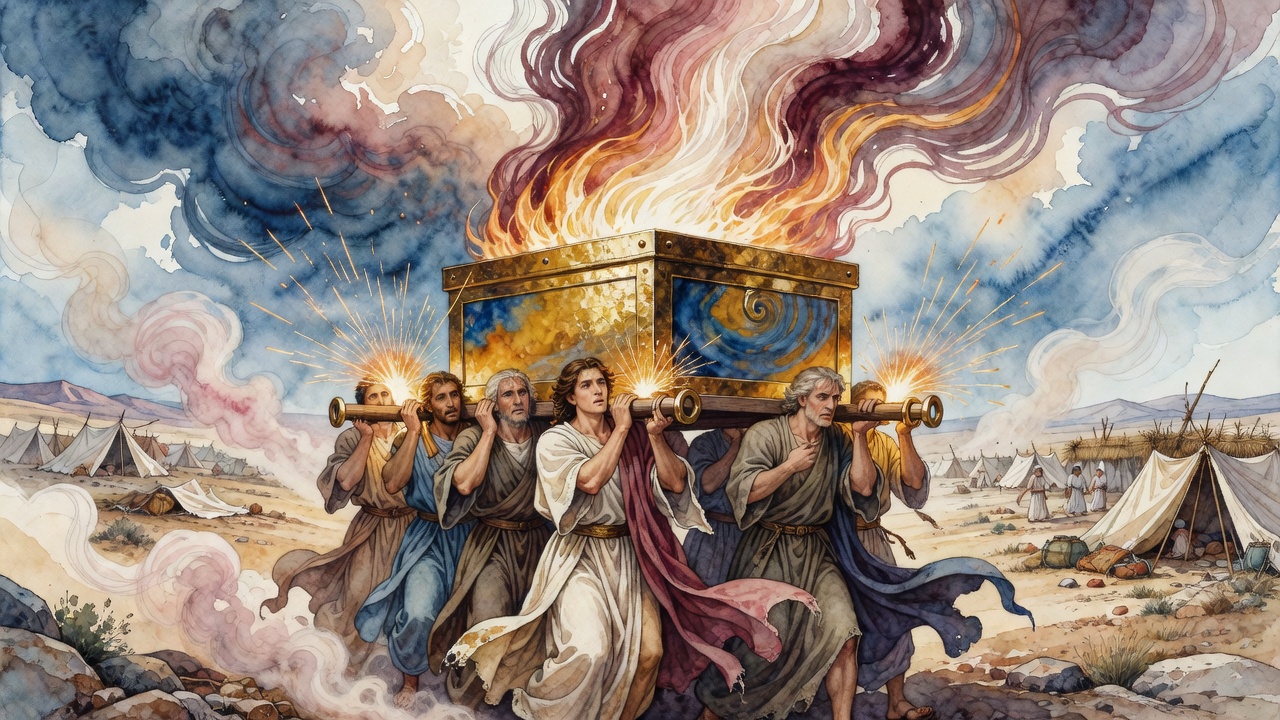
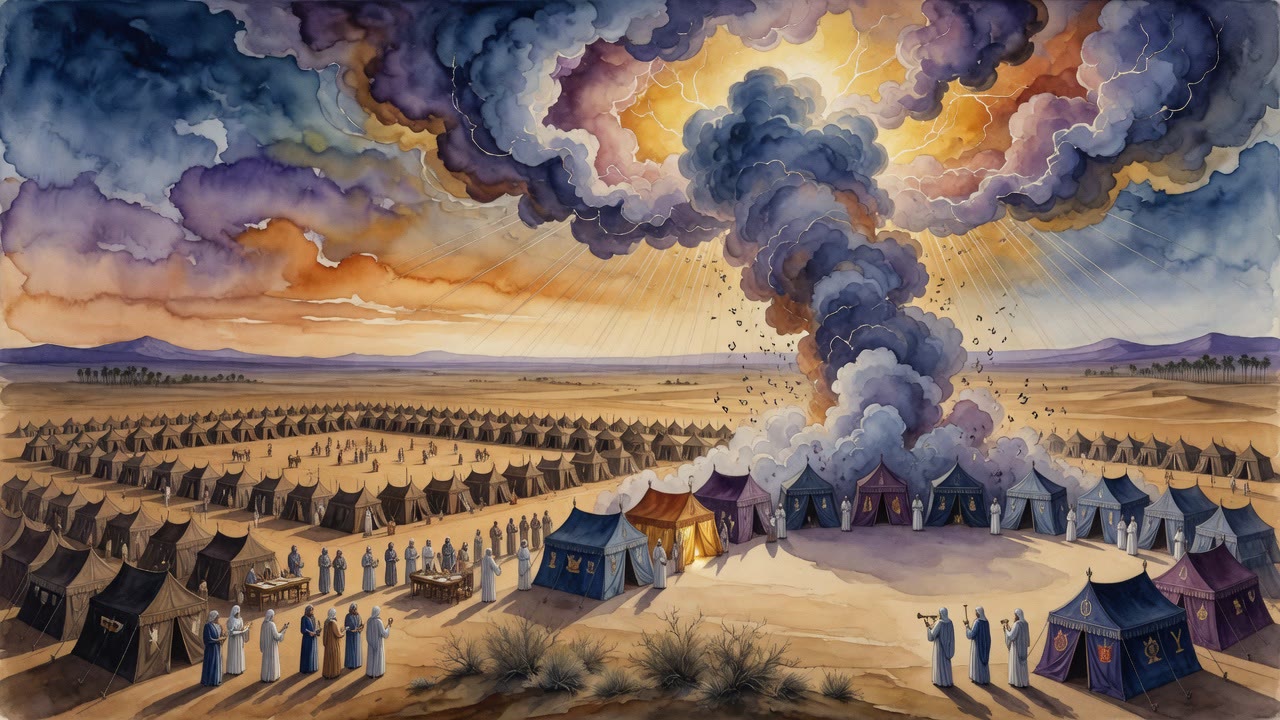
The beam bit into his shoulder before dawn. A son of Merari braced his feet in the wilderness dust and waited for the signal. Around him other Merarites lifted bars, pillars, and sockets. These were the bones of the Tabernacle, the parts that never glittered when the camp settled and the Presence filled the curtains.
 Click for full size
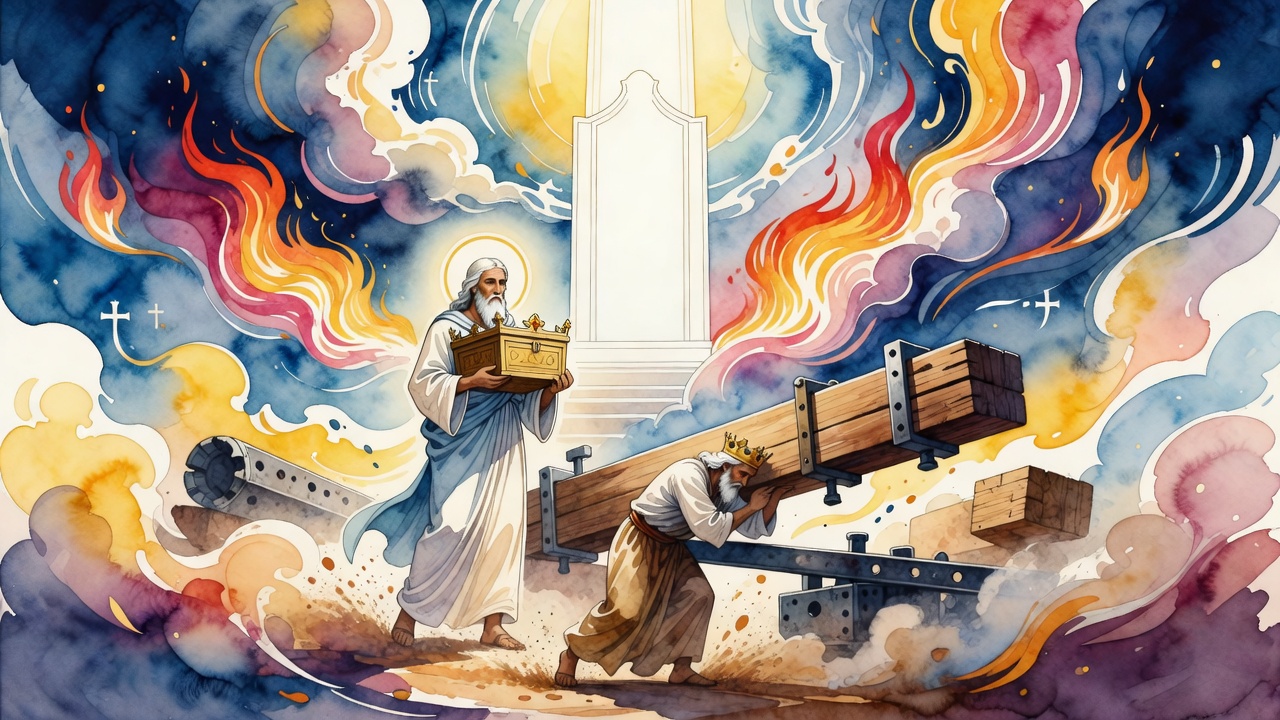
Ahead, the sons of Kehat walked with covered holy things. The Ark went under cloth and poles. Their load was lighter in the arms and heavier in the risk. Fire had a way of noticing mistakes near the Ark. When the Torah counted them, it raised their heads with honor. The Merarite felt the beam, and the silence where that honor did not fall.
This and None Other
Moses and Aaron ordered the Levite work by the word of God. Kehat bore the Ark and the altar. Gershon, firstborn line, took curtains and coverings. Merari took the beams of the Tabernacle, its bars, its pillars, and its sockets (Numbers 4:31).
"This is the commission of their burden," the verse said, and the edge was sharp. This and none other. A Merarite could not guard what Gershon guarded. He could not drift toward the Ark for a day's prestige. Ambition had nowhere legal to climb. A man who wanted the Ark would have to be born into another father's house.
For Kehat and Gershon the Torah speaks of nesiut rosh (נשיאת ראש), a raising of the head. For Merari the phrase falls away. Kehat's standing rises from the Ark. Gershon's standing rises from firstborn blood. Merari's standing is the work: haul what holds the house upright, set it down, haul it again when the cloud lifts.
Aaron Named Each Bearer of the Ark
Aaron himself walked the Kehat line man by man. So-and-so for the Ark. So-and-so for the altar. Careful mouths. Careful hands. The most sacred vessels could not be grabbed in a heap.
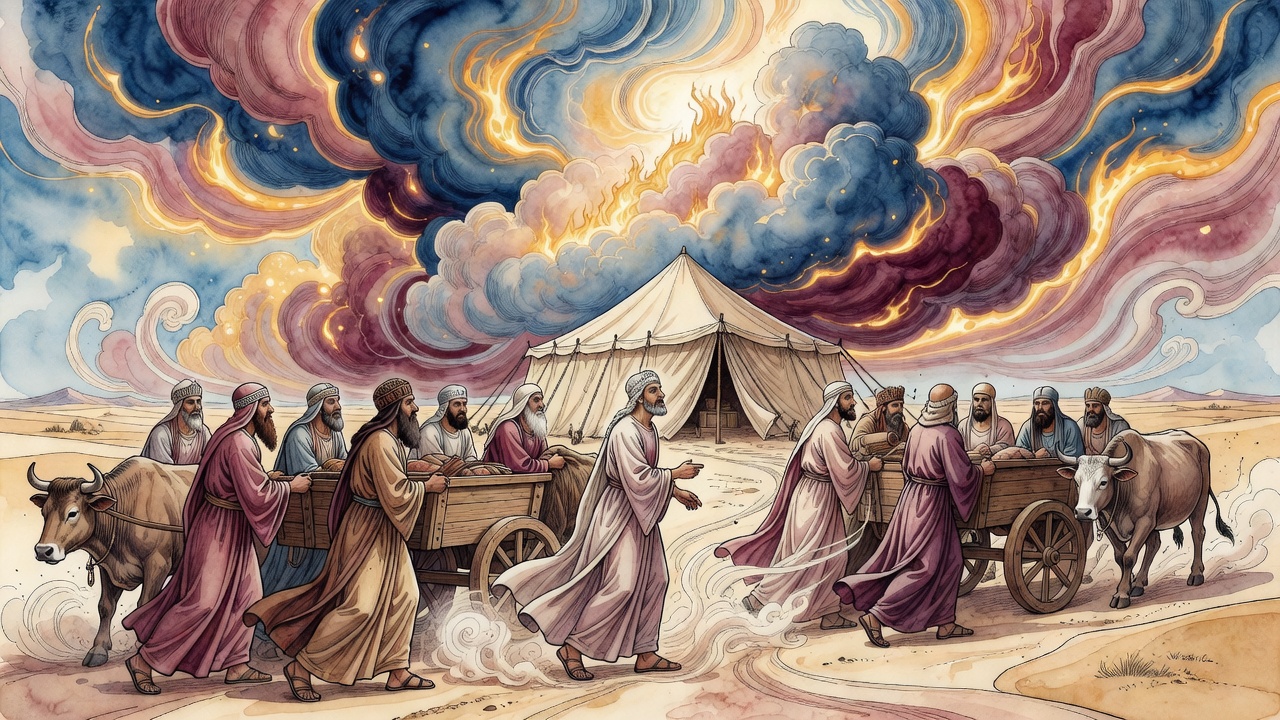
Merari got the inventory of weight. Forty-eight beams. Fifteen bars. A hundred and five sockets. Fifty-six pillars around the court. Moses named the instruments of their burden by name, the way a man names tools he cannot afford to lose. The camp needed both houses. Only one of them made a man feel watched by heaven when he lifted.
Dust rose. A socket wagon groaned. Children of Israel watched the holy furniture pass and barely saw the timber that would hold the curtains tomorrow. The Merarite kept walking.
Counted Twice Because They Were Dear
When the census closed, the Levites numbered eight thousand five hundred eighty (Numbers 4:48). Heaven did not treat that total as cold arithmetic. A person who owns things fine and dear counts them separately and then together, and rejoices in the full number. God counted the Levites that way: family by family, burden by burden, then the whole house of service as one joy.
The man under the beam was inside that joy even when the poetry of honor went elsewhere. He was household to the Holy One. Upright. Dear. Not a spare part. The same God who wrote generations from Adam through Noah to Moses, who sealed a royal line from Perez and a priestly line from Aaron, sealed Levite service in the wilderness count as if each shoulder mattered (Numbers 3:1; Genesis 5:1; Genesis 6:9).
The Skeleton Stood Before the Gold
At a rest stop he set the beam down and flexed blood back into his fingers. A Kehatite passed with poles balanced, face tight with the knowledge of what rode between them. They nodded. No quarrel. The Torah had already divided the world of service into lanes that did not cross.
When the cloud stopped, Merari raised the skeleton of the dwelling first. Beams locked. Pillars stood. Sockets bit the earth. Only then could curtains fall and holy things enter. Without Merari, Kehat had nowhere safe to set the Ark down.
That was the turn the camp never sang. The unraised head held up the raised one. Honor had a vocabulary. Necessity had a backbone. God used both.
Splinters After the Beauty
Years of marches taught the same lesson in the same groove of muscle. At night the Merarite slept on his side because the other shoulder still burned. He dreamed of sockets and woke to the cloud already lifting. He stood. He lifted. The beam found the old place.
Somewhere ahead lay a land of fixed houses, where wagons might ease the work. For now the wilderness still needed men who would carry the bones of holiness without a crown.
When the Tabernacle finally stood and the Presence filled it, the Merarite stood at the edge of the court with splinters in his palms. The gold caught the sun. The beams he had hauled disappeared under beauty. The work vanished into the house, and the house stood because the work had not refused the dust.
← All myths