6 min read

Moses Froze When the Princes Brought Their Wagons

Twelve tribal princes haul carts and oxen to the Tent. Moses will not take them until God speaks, fearing the spirit has left him for their hands.

Curated by Arthur · Told by Maggid ·
Table of Contents
  1. The Silence Between the Wagons and the Tent
  2. Words of Comfort Before the Reins
  3. The Fear of a Broken Cart
  4. Seventy Hands for a Weight Too Large

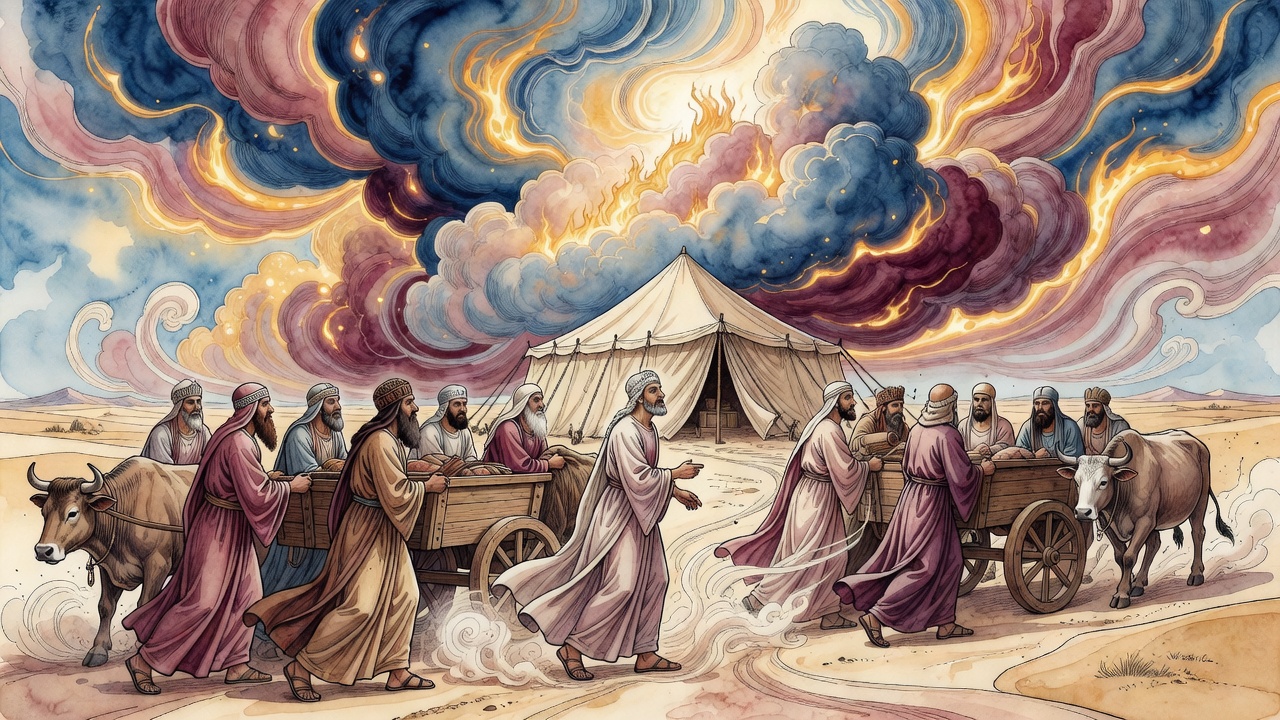
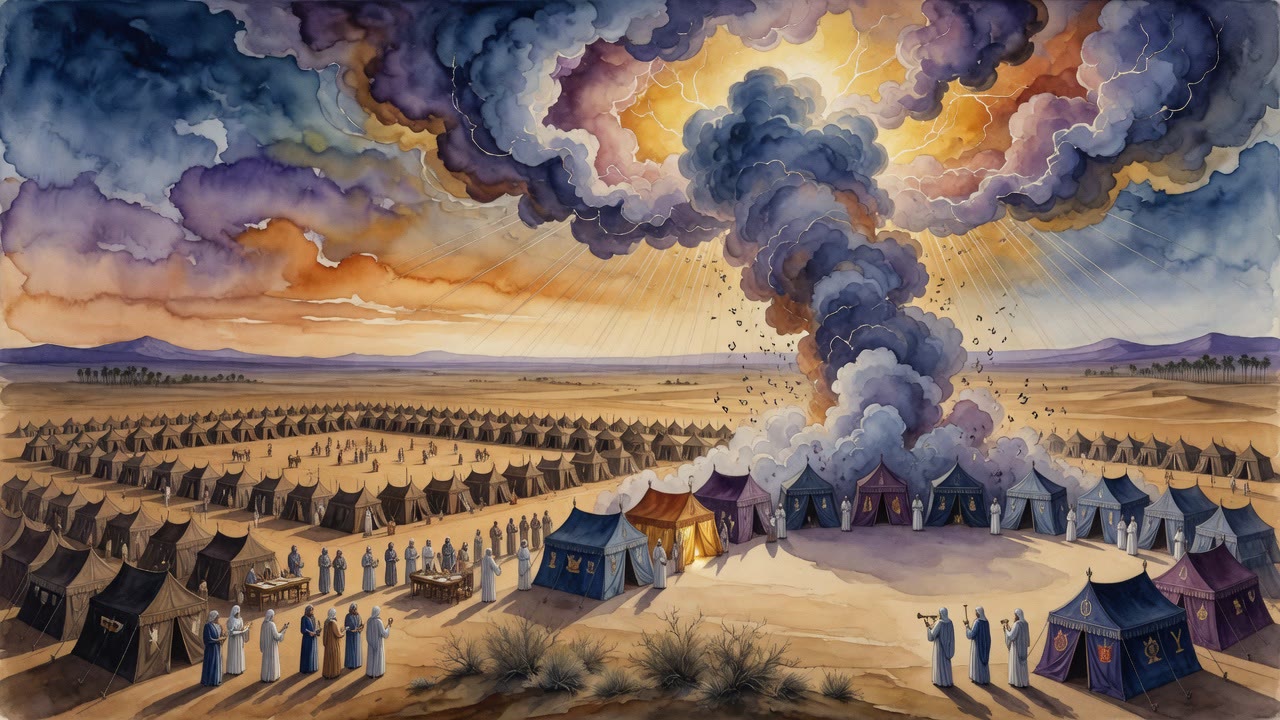
Dust rose around twelve pairs of wheels. Oxen lowed and jerked against the yokes. The princes of Israel had dragged carts and bulls to the open ground before the Tent of Meeting and left them there like a question no mouth dared ask aloud. Incense still hung from the morning service. Levi's sons watched from the ropes. Moses stood between the offerings and the entrance and did not move.

Moses Froze When the Princes Brought Their Wagons Click for full size

"They brought their offering before the Lord" (Numbers 7:3). The carts waited. The oxen stamped. The princes stood with open hands and closed throats. Moses did not take a single rein.

The Silence Between the Wagons and the Tent

The princes had planned this without a prior command. Six covered wagons and twelve oxen for the service of the Tent. They had given the gifts into the people's sight and then walked them to the Tabernacle itself. Moses looked at the wood, the leather, the living muscle under the yokes, and held still. He had taken tablets from fire. He had taken a staff that drank blood. He would not take a cart until the mouth that owned the Tent said the word.

Hours stretched. A fly walked a prince's wrist. No one slapped it. The sun climbed the hide of the nearest bull. Still Moses waited. In the camp behind them, women ground grain and children chased goats, unaware that the whole transport of the Sanctuary hung on one man's frozen wrist.

Then the word came. "The Lord spoke to Moses, saying: Take from them, and they shall be to perform the service of the Tent of Meeting, and you shall give them to the Levites, each according to his service" (Numbers 7:4-5). The freeze broke, but not cleanly. Inside the command sat a second edge. Lemor. Saying. Go out and say more than a receipt.

Words of Comfort Before the Reins

Rav Hoshaya taught what that extra word demanded. The Holy One told Moses to leave the doorway and speak conciliation and comfort to the princes. Their initiative had stood exposed under a silent sky. Pride and fear can share the same sweat. Moses had to put language on the acceptance so the gift did not feel like a mercy begged from a cold leader.

He walked out among the carts. Leather creaked. He told them the offering was taken. He told them the thought that had moved their hands had matched the thought on High. He did not hurry the words. A prince's jaw unclenched. Another wiped grit from his eyes with the back of a hand still smelling of ox.

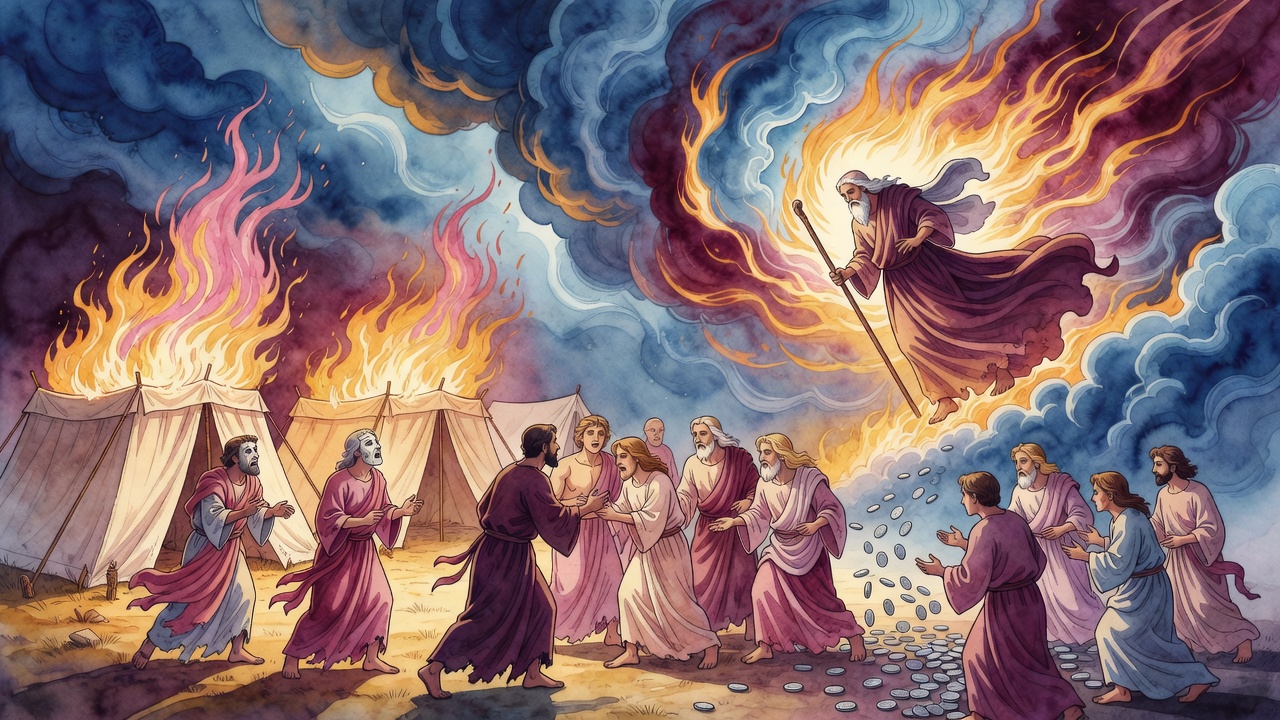
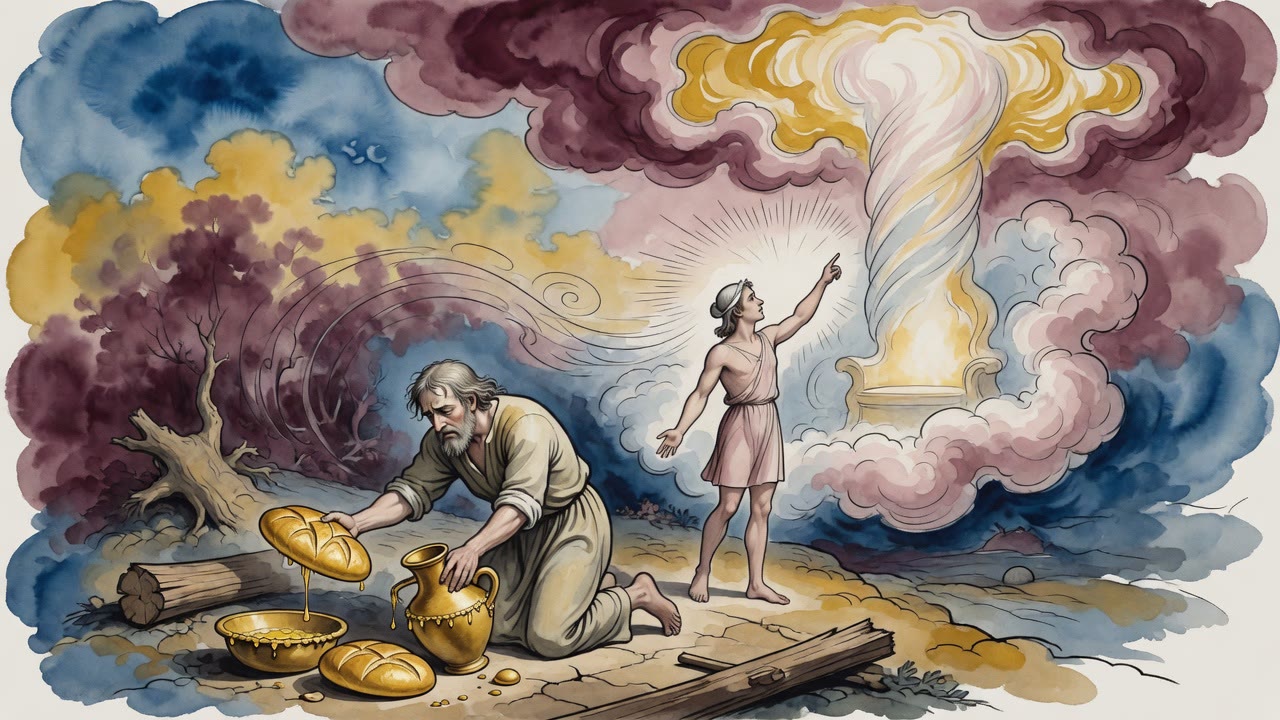
Even then Moses's own fear rose hard. Perhaps the Divine Spirit had left him and rested on the princes. Perhaps heaven had shifted the channel of command overnight, and these twelve men with carts already knew what he no longer heard. He stood among the yokes and tasted the terror of a prophet whose line to the Throne might have gone quiet without a sound.

God answered that fear without theater. Had the Holy One wished the princes to bring the carts by order, the order would have run through Moses's mouth first. "Take from them" meant the matter had risen from their own hearts, and those hearts had aligned with heaven. The spirit had not abandoned Moses. The princes had simply thought in the same direction as the One who filled the Tent.

The Fear of a Broken Cart

A second dread followed the first. What if one cart cracked on the way to the Levites? What if an ox dropped dead between the stakes? Would the whole princely offering fall as disqualified wreckage, and would Moses be the man who had accepted a gift that heaven then spoiled in transit?

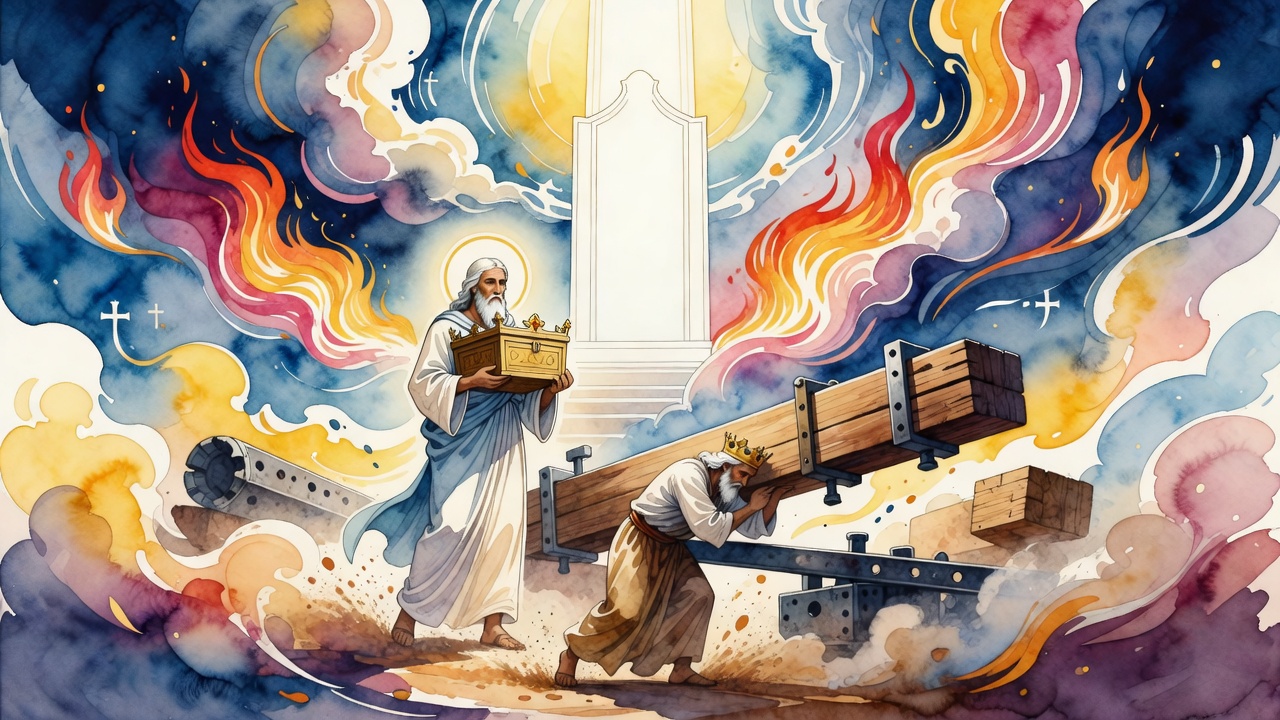
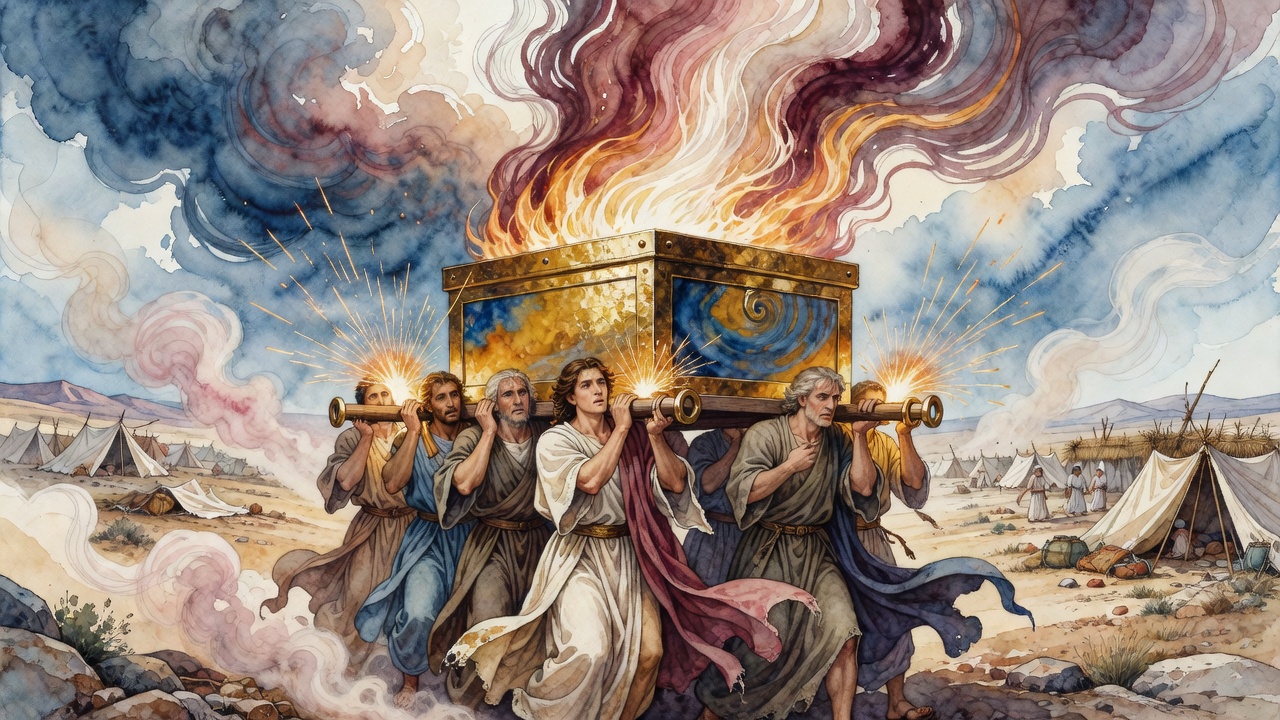
He counted axles with his eyes. He watched flanks rise and fall. The animals looked sound. Sound is not a guarantee. He took them anyway, because the command left no room for a perfect inventory of the future. "Moses took the carts and the bulls, and gave them to the Levites" (Numbers 7:6). Judgment now meant allotment: two carts and four bulls to the sons of Gershon for their lighter loads of curtains and coverings, four carts and eight bulls to the sons of Merari for the heavy frames and bars. The sons of Kohath received none. Their burden was the holy furniture itself, borne on shoulders, not wheels.

The princes watched their wood and muscle vanish into other men's hands. The gift had been accepted. The fear of a dead ox would ride every road the Tent ever took, but the freeze at the doorway was over.

Seventy Hands for a Weight Too Large

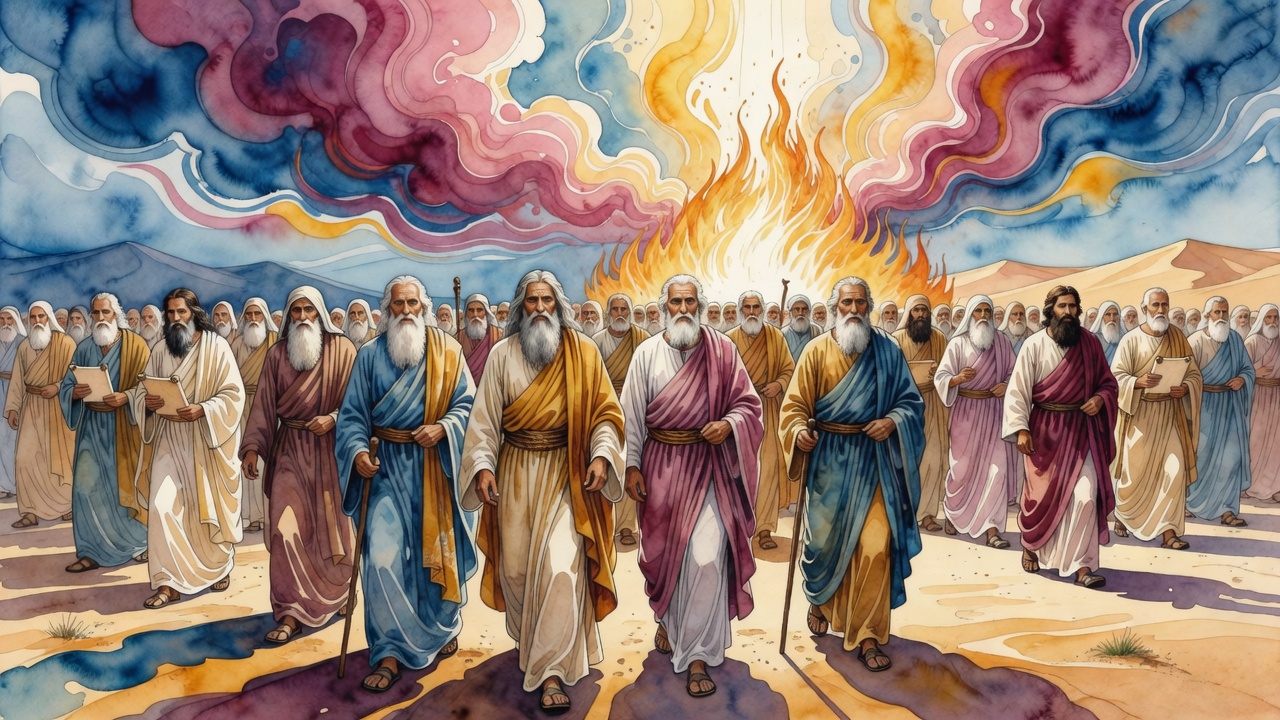
Later the pressure changed shape. The people complained. Moses broke under the load of a nation that wanted meat and ease and an easier prophet. God said, "Gather to Me seventy men" (Numbers 11:16). Not a second Moses. Seventy who could hold a share of the spirit without stealing the source.

The words of the wise are like goads, like nails driven deep, given from one shepherd (Ecclesiastes 12:11). The commandments at Sinai had been tossed like a girl's ball, hand to hand, not locked in a single fist. The collectors of wisdom would sit as a court. One would forbid while another permitted. Rabbi Eliezer would bind and Rabbi Yehoshua would free. House would clash with house. Still the clash rises from one shepherd. Disagreement is not a second god. It is the ball in motion under a single thrower.

Moses, who had once feared the spirit had left him for twelve princes with carts, now had to pour spirit outward on purpose. The man who froze before unauthorized wagons became the man ordered to authorize a bench. He gathered the seventy. The spirit rested. The camp did not get a quieter Moses. It got a wider one.

Years later, when the Tent rose and fell across the wilderness, Merari's frames rode those princely carts, and Gershon's cloths rode beside them. Kohath still walked with the ark poles biting his shoulder. Somewhere between a frozen doorway and a circle of seventy elders, Moses learned that heaven could accept a gift he had not ordered and still keep him as the mouth that named the acceptance.


← All myths

From the tradition

Sources

2 sources

The texts behind this telling. Some cards carry a translation of the source; others are our own retelling of it, and each card says which. Every card links out to the original.

Bamidbar Rabbah 12:18Bamidbar Rabbah

Retold in our words. Read the original at the link below.The Sefaria Midrash Rabbah, 2022 · CC-BY

Bamidbar Rabbah turns to Tribal Princes Bring Wagons to Serve the Tent of Meeting.

" The context is the dedication of the Mishkan, the Tabernacle, and the princes of the tribes are bringing offerings – specifically, carts and oxen – to help with its transport.

"They brought their offering before the Lord," the text notes (Numbers 7:3). But, according to Bamidbar Rabbah, God didn't immediately accept the offering! The princes brought the carts and oxen, presented them before the Tabernacle, but nothing happened until God explicitly told Moses, "Take from them." Why the hesitation?

This leads to a fascinating question. What was the significance of God saying to Moses, “lemor: Take from them…” (Numbers 7:4)? Lemor is a Hebrew word that doesn't just mean "saying," but implies something more. Rav Hoshaya, quoted in the Midrash (rabbinic interpretive commentary), suggests that God was instructing Moses to offer words of conciliation and comfort to the princes. Perhaps they were feeling insecure about their role, or perhaps Moses needed to reassure them that their contribution was truly valued.

Moses himself seems to have had some anxieties. "Take from them," God commands. And at that moment, Moses was concerned. "Perhaps," he worried, "the Divine Spirit has departed from me and rested upon the princes." Imagine the scene! Moses, the great leader, wondering if he was being superseded.

But the Holy One, blessed be He, reassures him. "Moses," God says, "had I wished to tell them that they should bring, I would have said it to you so you would say it to them. Rather, 'take from them' – this matter was from them, and their thought accorded with the thought on High." In other words, the princes' initiative was divinely inspired; their hearts were in the right place. Their offering wasn't just accepted, it was validated as coming from a place of pure intention.

Moses had another concern: "Say that, perhaps, one of the carts broke or one of the oxen died, the result being that the offering of the princes would be disqualified." It’s a practical worry! What if something goes wrong? But God reassures him again: "They shall be to perform the service of the Tent of Meeting." This wasn't just about a one-time donation; God granted them a kind of eternal existence, ensuring their continued service.

So, how long did these carts and oxen last? The Midrash offers several opinions. Rabbi Yuda, in the name of Rabbi Shmuel ben Rabbi Naḥman and Rabbi Ḥoneya in the name of bar Kappara, suggest they lasted until "at Gilgal they slaughtered bulls" (Hosea 12:12). Other rabbis pinpointed different locations where the sacrifices might have taken place: Nov, Givon, or even the eternal Temple itself, referencing King Solomon's offerings (II Chronicles 7:5).

But the most astonishing teaching comes in the name of Rabbi Meir: "Until now the carts and the oxen are in existence. They have not been blemished, have not aged, have not been mauled, and have not been broken."! The carts and oxen used for the Mishkan, the portable sanctuary in the desert, are still around today, perfectly preserved.

And what's the takeaway from all this? The Midrash draws a powerful a fortiori argument, a "how much more so" conclusion. If these carts, associated with the labor of the Tent of Meeting, were granted eternal existence, then surely Israel, who cleave to the Holy One, blessed be He, are even more deserving of eternal life, as it is stated: "But you, who cleave to the Lord your God, [all of you are alive today]" (Deuteronomy 4:4).

Finally, the passage concludes with the practical application of distributing the carts and oxen to the Levites, "each according to his service" – ensuring that those with heavier burdens received more assistance.

So, what do we learn from this little-known passage in Bamidbar Rabbah? It's about the importance of intention, the reassurance of divine validation, and the enduring nature of service to God. And perhaps, most importantly, it's evidence of the eternal bond between God and the people of Israel.

Full source
Bamidbar Rabbah 15:22Bamidbar Rabbah

Retold in our words. Read the original at the link below.The Sefaria Midrash Rabbah, 2022 · CC-BY

In Bamidbar Rabbah – that’s a collection of rabbinic teachings connected to the Book of Numbers – there's a fascinating passage about how God commanded Moses to gather seventy men. Why seventy? What was so special about that number?

The verse in question, from Ecclesiastes (12:11), says, "The words of the wise are like prods [kadarvonot], and like implanted nails are the collectors of wisdom; they were given from one shepherd." The text compares the words of the wise to a “girl’s ball [kadur shel banot].” Now, picture a group of girls playing with a ball. They toss it back and forth, here and there. In the same way, the mitzvot – the commandments – were "tossed" at Sinai. the Torah wasn't just handed down on a silver platter. It required interpretation, discussion, and application to ever-changing circumstances. It needed to be "tossed around" to truly understand its depth. As it says in Shir Hashirim Rabbah, the Song of Songs commentary, they were tossed about like a maiden's ball.

The verse also uses the image of "implanted nails [kemasmerot]." The rabbis connect this to the prohibition of reading "external literature." Why? Because, they argue, just as the priestly watches [mishmarot] are twenty-four, so too are the books of the Tanakh (the Hebrew Bible). The nail is firmly planted, fixed. This implies a boundary, a limit to what we should be focusing on. There's a hint here of prioritizing our own sacred texts. That is, the twenty-four books of the Tanakh.

Then comes the real kicker: "Collectors of wisdom" – these, says the text, are the Sanhedrin (the supreme rabbinic court). The Sanhedrin was the ancient Jewish high court, a group of scholars responsible for interpreting and applying Jewish law. But what happens when they disagree?

Imagine this: One rabbi prohibits something, another permits it. One disqualifies, another validates. One declares something ritually impure, another declares it pure. Rabbi Eliezer says you’re liable, while Rabbi Yehoshua says you’re exempt. Beit Shammai – the House of Shammai – disqualifies, while Beit Hillel – the House of Hillel – validates. Who are you supposed to listen to? It's enough to make your head spin!

And the answer? The Holy One, blessed be He, says: "Nevertheless, they all 'were given from one shepherd.'"

Even amidst disagreement, there's a unifying source. Even when interpretations clash, they all stem from the same divine revelation. This isn't about blind obedience or stifling intellectual debate. It's about recognizing that different perspectives, even conflicting ones, can enrich our understanding of the Torah. They are all part of a larger, divine tapestry.

So, the next time you find yourself confronting complex questions or conflicting opinions, remember the image of the girl's ball being tossed in the air. Remember the implanted nails. Remember the debates of the Sanhedrin. And remember that even in disagreement, there can be unity, because ultimately, everything comes from one shepherd.

Full source