5 min read

Mordecai Bowed Only to the God Who Bound the Sea

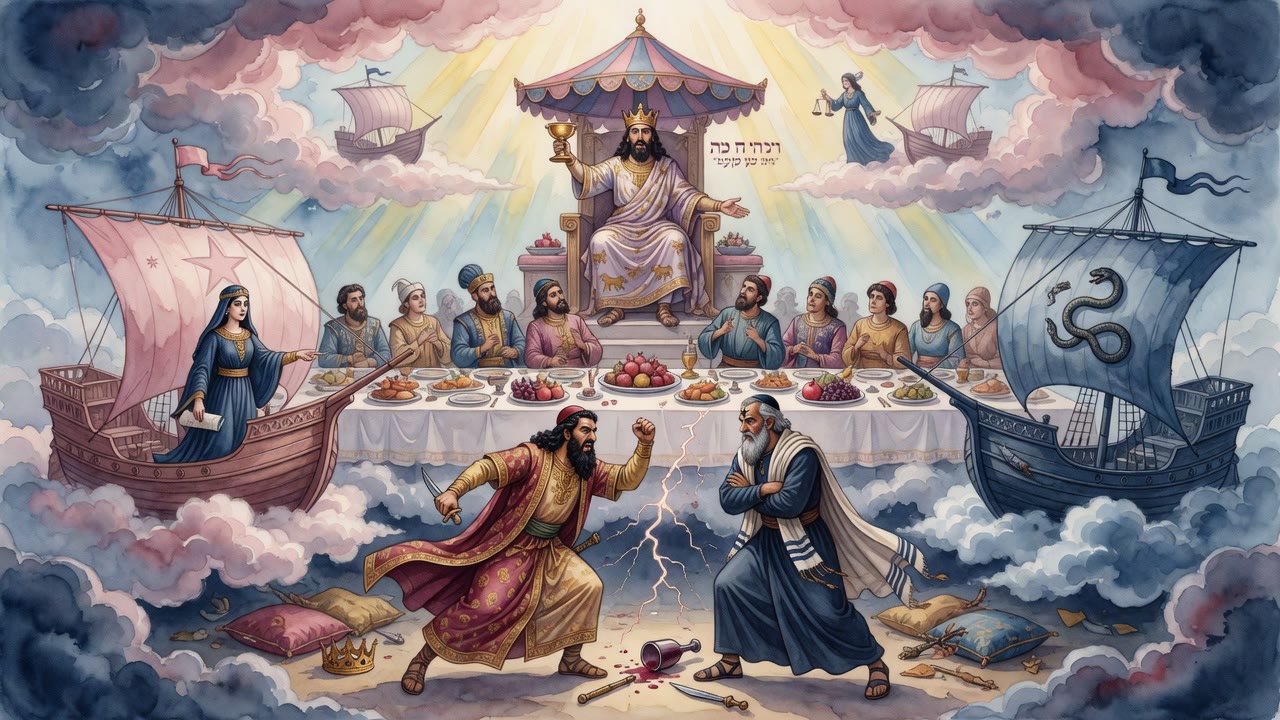
Mordecai's refusal to bow widened into a vision of God binding sea, sky, and stars, until Haman had to honor him in public.

Curated by Arthur · Told by Maggid ·
Table of Contents
  1. The Gate Became a Test
  2. Mortal Dust Could Not Receive His Knee
  3. The Sea Stayed Chained
  4. The Stars Kept Running
  5. The Parade Turned the Words Around

Mordecai did not make a scene at the palace gate. He simply stayed upright.
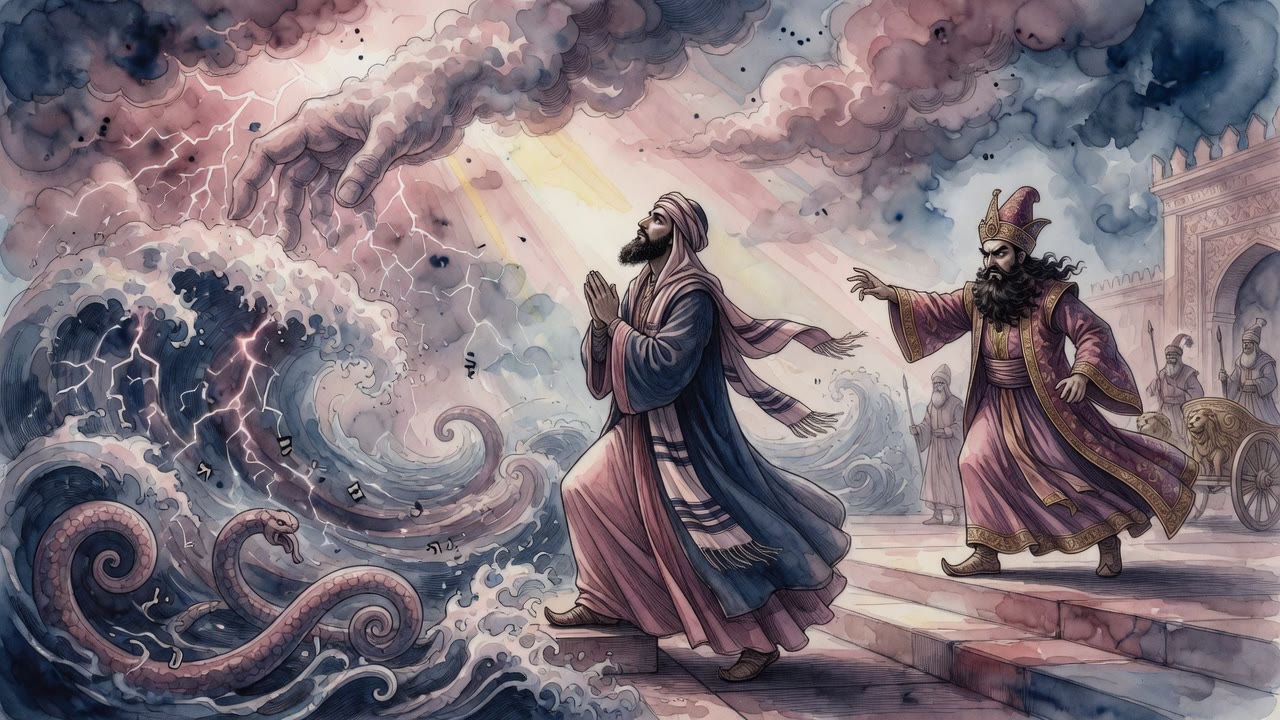
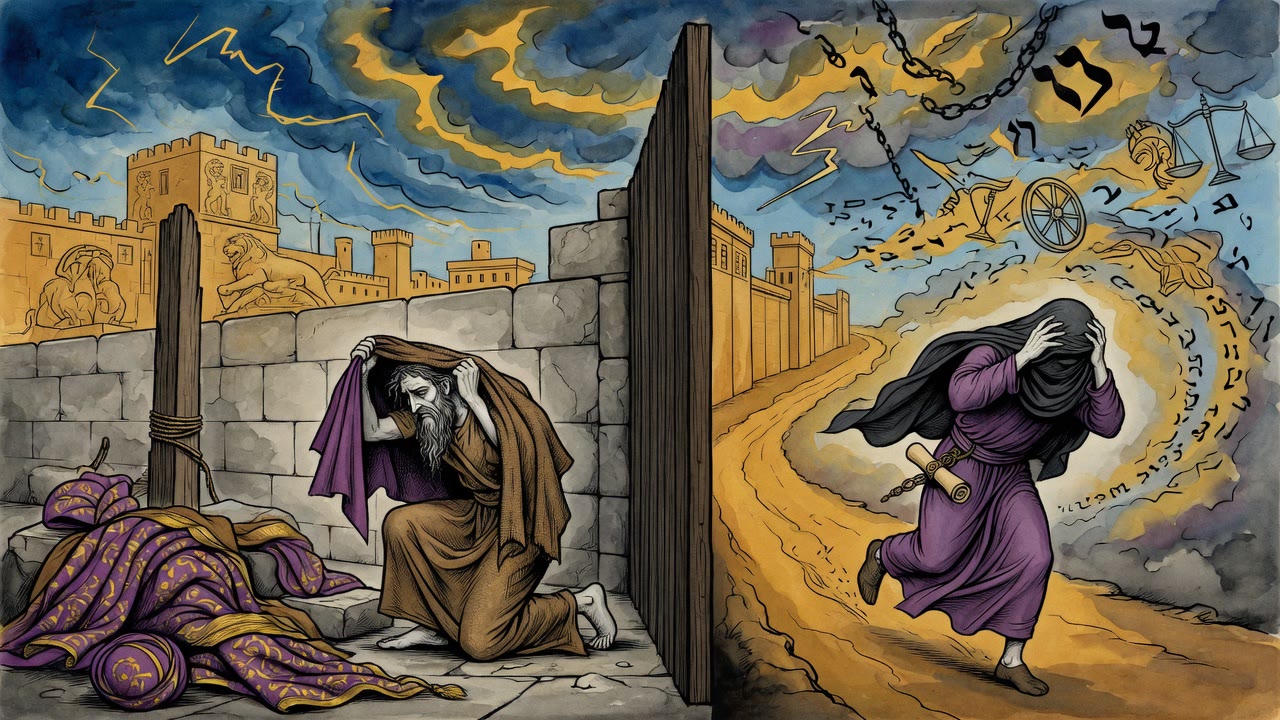
Everyone else bent when Haman passed. Robes folded. Knees touched stone. Faces lowered before the king's favorite, and the daily motion became part of the gate's rhythm.

Mordecai broke the rhythm by refusing to move.

The Gate Became a Test

The servants at the royal gate watched until irritation overcame silence. They had obeyed. They had given Haman the honor commanded by the palace. Mordecai sat among them as if a different command ruled his bones.

At last they pressed him. Where was his superiority over them, that they should bow and he should not. The question carried envy, but also fear. One man standing could make all the bowed men look small.

Haman's honor had become a public test. Each body at the gate had to answer before witnesses. Bowing was no longer only movement. It was agreement, a visible surrender to the claim that power could demand reverence.

Mordecai answered with heat. He called them fools without understanding and demanded that they listen. He did not begin with Haman's office, or the king's order, or his own danger. He began with the human body.

Mortal Dust Could Not Receive His Knee

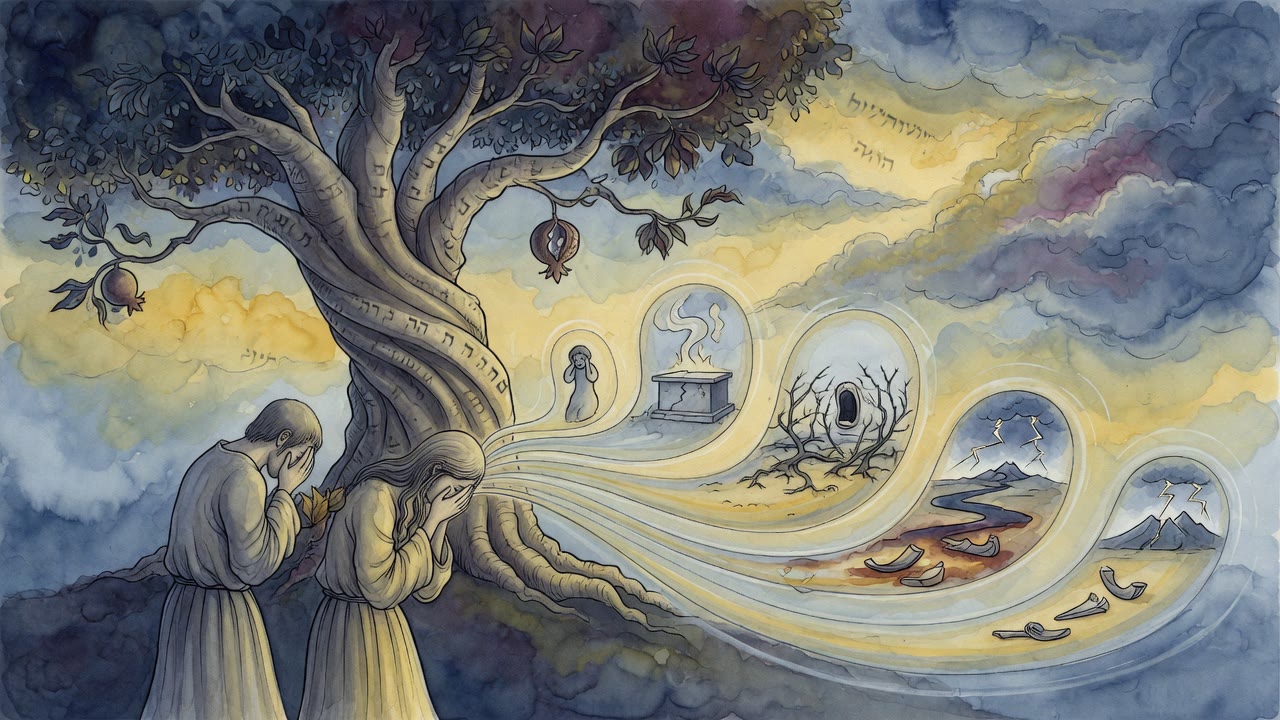
"Man is born from a woman into crying and pain," Mordecai said. Youth comes with groaning. Days fill with trouble. The body rises, eats, boasts, plots, and returns to dust.

That was Haman under the robes. That was every officer at the gate. That was Mordecai himself. A creature whose beginning was labor and whose end was earth had no claim on worship.

Mordecai would bow, but not to a man inflated by rank. His knee belonged to the living God alone, the One who burned hotter than fire and held the earth in His arms.

The Sea Stayed Chained

Then the refusal became a world.

God stretched the heavens by His might. He darkened the sun when He desired and filled darkness with light. He commanded sand to hold back the seas. He made the waters salt and gave their waves an aroma like wine.

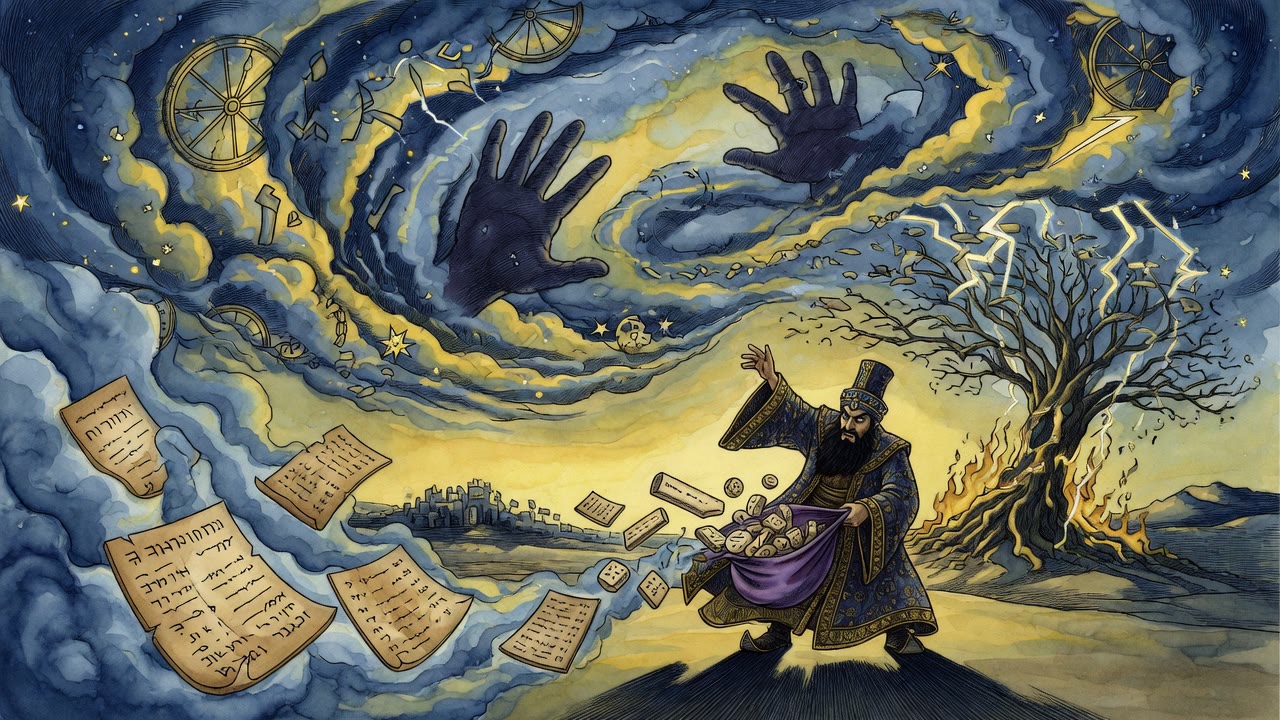
The sea raged, but it did not pass its border. It strained against its measure like a beast in iron, chained in the depths so it could not drown the land. Haman could rage too. The court could swell around him. A decree could travel through a kingdom. None of that made him worthy of a bowed head.

The Stars Kept Running

Mordecai lifted the gate's quarrel higher.

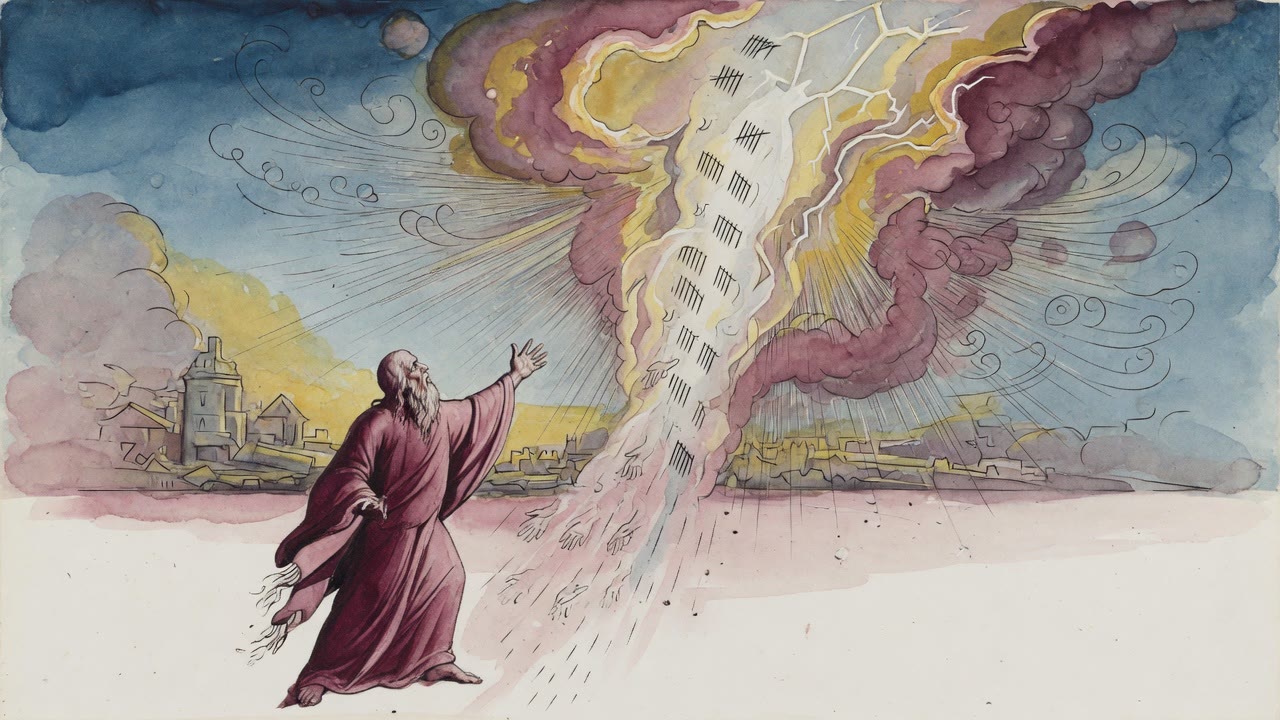
With a word, God made the firmament and spread it like a cloud, like a dark vault, like a tent over the earth. Above and below held together because He held them. The sun, the moon, and the Pleiades did not rest. Stars and planets ran as messengers, turning right and left to do the will of the One who made them.

The servants had asked about palace etiquette. Mordecai answered with creation moving under command. If the heavens themselves ran only for God, a Jew at the gate could not fall before Haman.

The men around him could still see Haman's ring, his clothing, his access to the king. Mordecai made them look past all of it, toward a sky no vizier could fasten and a sea no official could loosen.

The Parade Turned the Words Around

Later, Shushan heard a different sound.

Haman walked through the city leading Mordecai, the man he hated, mounted in royal honor. Before them marched twenty-seven thousand youths from the court. In one hand each carried a golden cup. In the other, a golden beaker. Their voices rose with the proclamation Haman was forced to cry: "thus shall be done to the man whom the king delights to honor."

Jews joined the procession, but they bent the words toward the One Mordecai had named at the gate. Their cry did not stop with the Persian throne. "Thus shall be done," they called, "to the man whose honor is desired by the King who created heaven and earth."

Haman had wanted a bowed body. He received a citywide answer. The man who demanded reverence had to walk beside the proof that reverence could be refused.


← All myths
From the tradition

Sources

3 sources

The texts this telling draws on, in full. Open a card to read inline, or expand it for a wider, quieter read.

Legends of the Jews 12:96Legends of the Jews

Servants murmur, frustration simmering beneath the surface. They approach Mordecai, their voices laced with a mix of resentment and curiosity. "Wherein art thou better than we," they demand, "that we should pay reverence to Haman and prostrate ourselves, and thou doest naught of all commanded us in the matter?"

It’s a fair question, isn't it? Why should Mordecai be different? Why should he refuse to bow before Haman, the king's powerful vizier, when everyone else does?

Mordecai's response, as recorded in Legends of the Jews, isn't one of arrogance or superiority. Instead, it's a powerful declaration of faith and humility. "O ye fools without understanding!" he begins, his voice ringing with conviction. "Hear ye my words and make meet reply thereunto."

He asks them, and in turn, us, to consider the very nature of humanity. "Who is man that he should act proudly and arrogantly," he asks, "man born of woman and few in days? At his birth there is weeping and travailing, in his youth pain and groans, all his days are 'full of trouble,' and in the end he returns unto dust. Before such an one I should prostrate myself?"

He’s not denying Haman's power or position. He’s questioning the very idea of worshipping a mortal man. He’s reminding them, and perhaps reminding himself, of the fleeting nature of earthly authority.

"I bend the knee before God alone," Mordecai proclaims, "the only living One in heaven." And then, he launches into a breathtaking description of the Divine, a poetic tapestry woven with awe and reverence.

He describes a God "who is the fire consuming all other fires; who holds the earth in His arms; who stretches out the heavens in His might; who darkens the sun when it pleases Him, and illumines the darkness; who commanded the sand to set bounds unto the seas; who made the waters of the sea salt, and caused its waves to spread an aroma as of wine; who chained the sea as with manacles, and held it fast in the depths of the abyss that it might not overflow the land; it rages, yet it cannot pass its limits."

This isn't just a list of divine attributes. It’s a vivid portrait of God's power, His control over the very fabric of existence. As Mordecai continues, the imagery intensifies. "With His word He created the firmament," he says, "which He stretched out like a cloud in the air; He cast it over the world like a dark vault, like a tent it is spread over the earth. In His strength He upholds all there is above and below."

He speaks of the celestial bodies, the sun, the moon, and the Pleiades, all moving in perfect harmony, fulfilling their divine purpose. "The stars and the planets are not idle for a single moment; they rest not, they speed before Him as His messengers, going to the right and to the left, to do the will of Him who created them."

Mordecai's refusal to bow wasn't simply an act of defiance. It was an act of profound faith, a recognition of a higher power. It was a declaration that earthly authority is fleeting, while divine authority is eternal. "To Him praise is due," Mordecai concludes, "before Him we must prostrate ourselves."

So, what does Mordecai's unwavering stance teach us? Perhaps it's a reminder to examine our own values, to question the authorities we blindly follow, and to remember that true allegiance lies with something greater than ourselves. It is a call, even now, to stand firm in our convictions, even when the pressure to conform is overwhelming. What would you stand up for?

Full source
Legends of the Jews 12:225Legends of the Jews

Haman had to lead Mordecai through Shushan and praise him in the king's name.

That's what Haman must have felt as he led Mordecai, the man he despised above all others, through the streets of Shushan, the capital city. He was forced to proclaim, "Thus shall it be done unto the man whom the king delighteth to honor!"

It’s a scene straight out of the Book of Esther, but the Legends of the Jews, that incredible compilation of rabbinic lore by Louis Ginzberg, fills in the details, painting a richer, more vibrant picture.

In Ginzberg, this wasn't just a small parade. Twenty-seven thousand youths, hand-picked from the royal court, marched alongside them. Each held a golden cup in one hand and a golden beaker in the other, echoing Haman's words: "Thus shall it be done unto the man whom the king delighteth to honor!"

The sheer scale of it! The opulence! It's almost unbelievable. But the story gets even more interesting.

We’re told that amongst the crowd, there were Jews. And they, too, were shouting. But their proclamation wasn't quite the same. Instead of praising the earthly king, Ahasuerus, they cried out: "Thus shall be done unto the man whose honor is desired by the King that hath created heaven and earth!" In the midst of this forced display of royal favor, these Jews subtly, but powerfully, shifted the focus. They acknowledged the earthly king, yes, but they made it clear where their true allegiance lay: with the King of Kings, the ultimate authority.

It’s a powerful act of resistance, isn't it?

A reminder that even in the face of overwhelming power, faith and identity can endure. That even when forced to participate in a charade, one can still find a way to proclaim their own truth.

It makes you wonder: in what seemingly small ways can we assert our values, our beliefs, in a world that often demands conformity? How can we be like those Jews in the streets of Shushan, subtly shifting the narrative, pointing to a higher power, a greater truth?

Full source
Targum Sheni on Esther 3:3:3Targum Sheni on Esther

Mordecai refuses to bow because he knows what real power looks like.

In Targum Sheni on (Esther 3:3), the royal servants press him to kneel before Haman. Mordecai answers with a vision of the One before whom every created thing moves. He bows only to the living God in heaven, whose angels are fire, who holds the earth, spreads the heavens, darkens the sun, lights the darkness, and binds the sea within its borders.

The speech is cosmic because the pressure is political. Haman's greatness is an order of the court. God's greatness is the order of creation itself. Mordecai points to the sun, moon, stars, planets, sea, firmament, and angels as witnesses that no mortal official deserves worship.

His refusal is not stubbornness for its own sake. It is a hierarchy of reverence. A human king may command service. An officer may demand honor. Bowing belongs somewhere higher. Mordecai stands at the palace gate and answers empire with creation.

Full source