5 min read

Mordecai the Jew Who Refused to Bow to Haman

Mordecai's name carried pure myrrh, opened gates, and the first human dust. That ancestry made Haman's demand impossible.

Curated by Arthur · Told by Maggid ·
Table of Contents
  1. The Name Smelled of Myrrh
  2. The Jew Stood in Shushan
  3. Seventy Tongues Filled His Mouth
  4. The Servants Demanded an Answer
  5. The Garden Was Still in His Blood

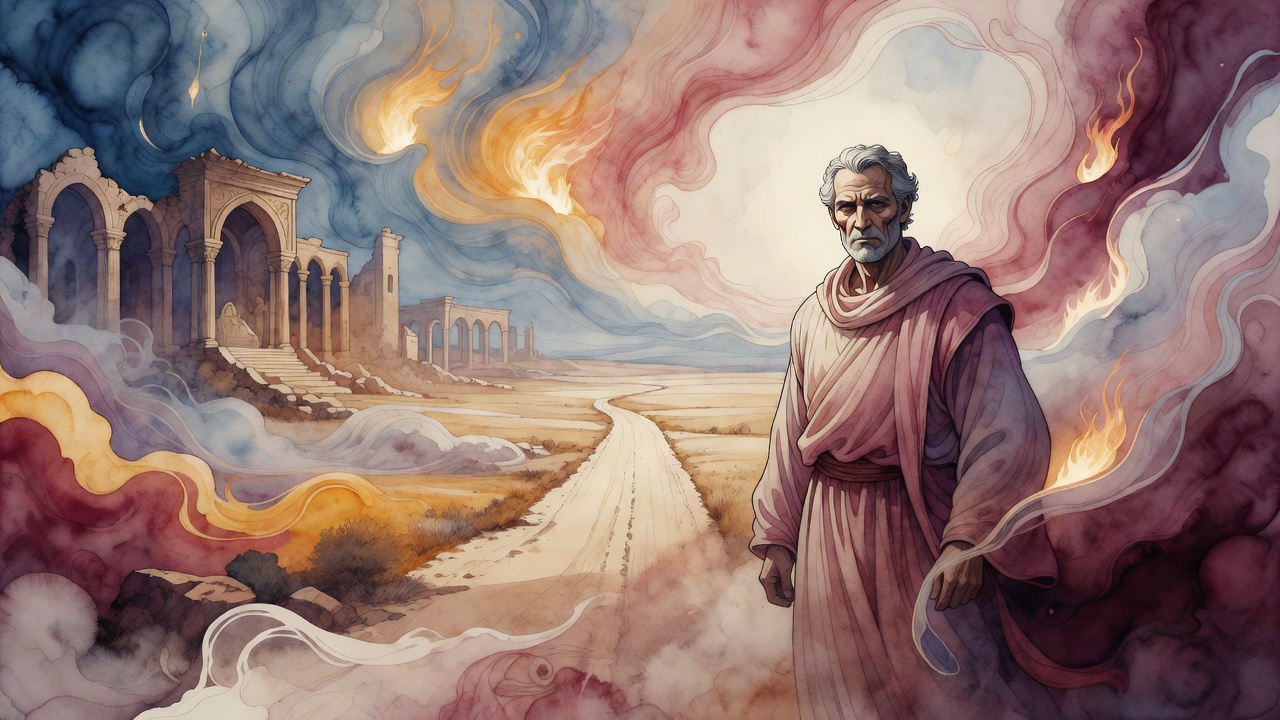
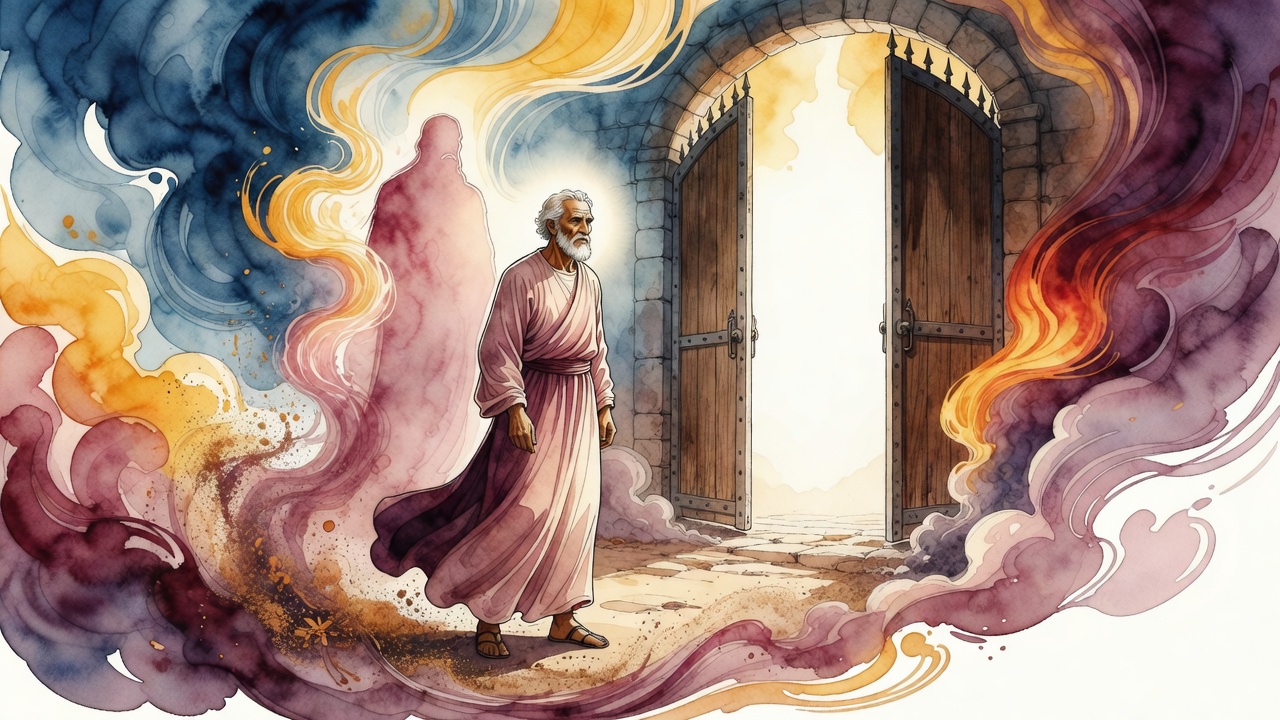
Mordecai did not begin at the palace gate. Before the courtiers watched him stand while every other back bent toward Haman, his name already carried the scent of the sanctuary. Pure myrrh. Sharp, costly, prepared for holy use. A name like that did not belong in the dust before a man swollen with office and rage.
The Name Smelled of Myrrh

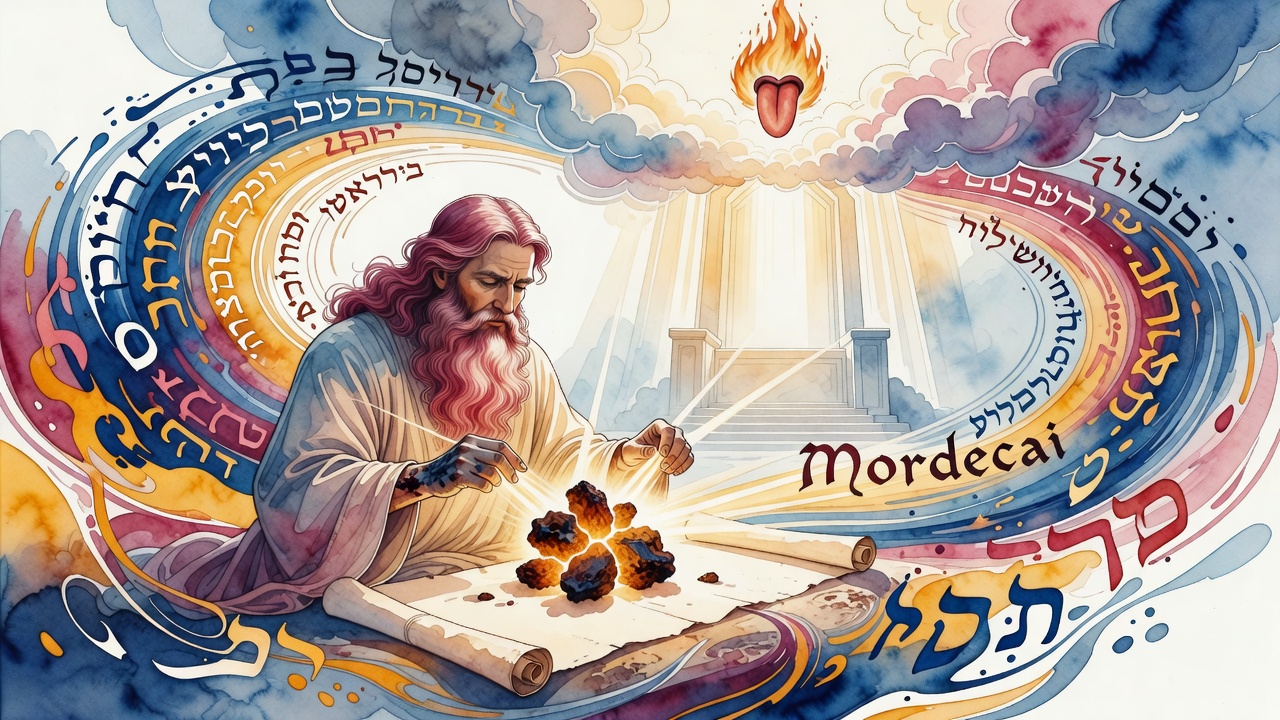
His name opened like a sealed spice box. Mor was myrrh, bitter and clean. Decai was purity. Together they made him a man whose very name resisted corruption. The court could dress him in foreign garments, place him under a foreign king, and make him breathe the air of Shushan, but the name still rose from him like incense.

Other names gathered around him, each one another lamp. Ben Jair, because he brought light to Israel's eyes when fear made everything dim. Ben Kish, because when he knocked at the gates of mercy, the gates opened. Ben Shimei, because God heard the voice that came from his mouth. Names were not ornaments. They were records of what heaven had already seen.

The Jew Stood in Shushan

Shushan held many Jews, but Mordecai carried the name HaYehudi, the Jew, as if the whole people had been pressed into one standing body. He did not hide himself at the king's feast. He would not eat what defiled him. The tables glittered with royal vessels and forbidden food, but his hunger did not become permission.

He studied Torah until the days took their shape from it. His lineage ran back through royal blood and the patriarchs, but lineage alone was too thin a reed to hold him up before Haman. A man can inherit a noble name and still sell it cheaply. Mordecai made his ancestry visible by refusing the terms of the palace.

Seventy Tongues Filled His Mouth

The court heard many languages. Traders, guards, messengers, and spies carried words from every province. Mordecai understood them. Seventy tongues moved through the empire, and he could follow each one. That mastery was not a trick for palace intrigue. It belonged to the discipline of judgment, the wide hearing expected from a sage who sat among the elders of Israel.

A man who knows only one language can mistake his own fears for the whole world. Mordecai listened across borders. He heard servants mutter, nobles bargain, enemies plan, and frightened Jews whisper behind closed doors. Nothing in Shushan was merely noise to him. Speech became warning. Warning became action. Action became rescue waiting for its hour.

The Servants Demanded an Answer

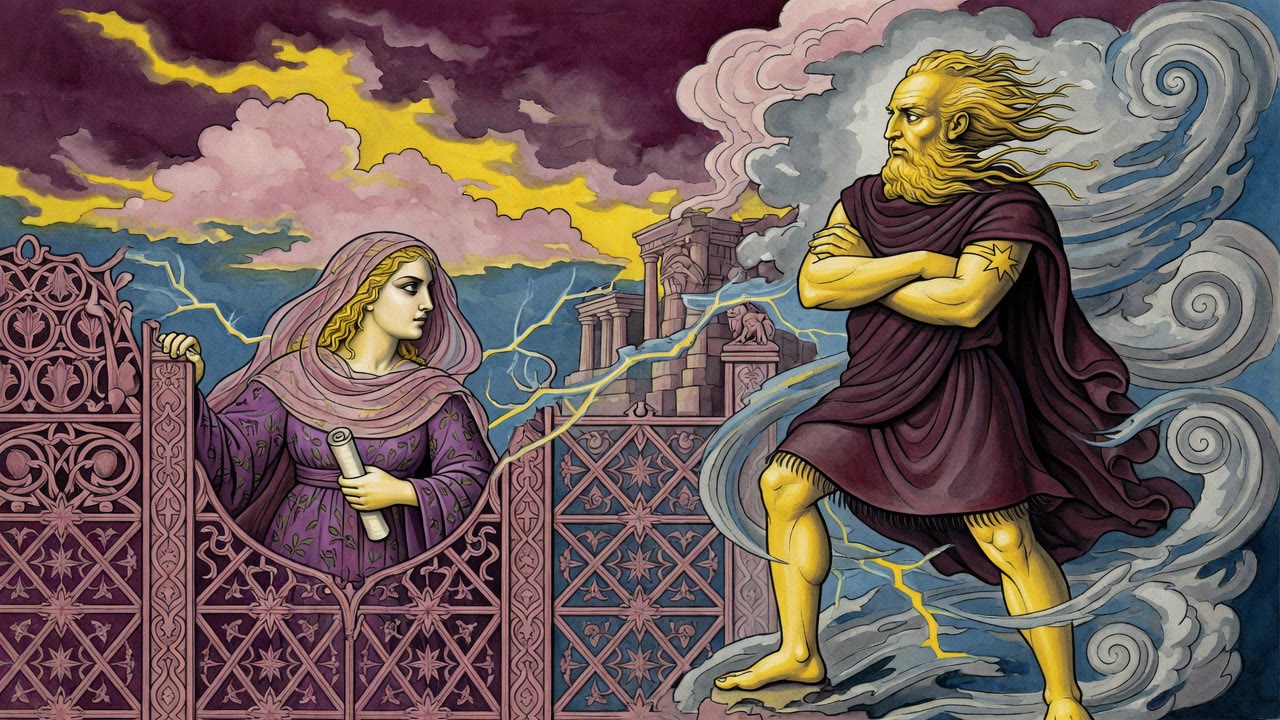
Then Haman rose. The order passed through the gate like a blade. Bow. Every servant knew what to do. Knees bent. Foreheads lowered. The great minister crossed the courtyard and received the posture he believed the world owed him.

Mordecai stayed upright.

The servants could not bear it. His stillness accused their obedience. They crowded near him and demanded to know why he was different from them. They had bent because the king commanded it. They had bent because Haman had power over life and death. They had bent because surviving in a palace often meant teaching the body to lie before the mouth had time to speak.

Mordecai answered with the dust of the first man. Who was a human being, that he should swell with pride? What was a minister, however richly dressed, beside the breath God had loaned him? Haman had a mother, a beginning, a body, and an end. He ate, aged, feared, and would return to earth. No flesh born from Adam could claim the reverence that belonged to heaven.

The Garden Was Still in His Blood

Behind Mordecai's refusal stood a memory older than Persia. The first human had been formed from dust and animated by divine breath. Every crown, sword, decree, and banquet took place inside that fact. A person could rule provinces and still be clay. A person could command a court and still be breath in borrowed lungs.

That memory made Mordecai dangerous. Haman wanted a political gesture. Mordecai heard a spiritual demand. The servants saw one Jew risking his neck for stubbornness. Mordecai saw the old boundary between a human body and divine honor, and he would not move it an inch.

So he stood at the gate with the fragrance of myrrh in his name, the languages of the world in his mouth, the gates of mercy behind him, and Adam's dust beneath his feet. Haman passed by expecting the world to fall flat. One man remained upright, and the whole palace had to notice.


← All myths
From the tradition

Sources

3 sources

The texts this telling draws on, in full. Open a card to read inline, or expand it for a wider, quieter read.

Legends of the Jews 12:52Legends of the Jews

Legends of the Jews turns to Mordecai in Paradise.

For starters, the text emphasizes his strong Jewish identity. He was, in every sense, a son of Judah, unafraid to identify as a Jew. And according to the legends, he even refused to partake in non-kosher food at King Ahasuerus' banquet!

Names in Jewish tradition are never just labels; they're packed with meaning. "Mordecai" itself, So, Mordecai was as refined and noble as pure myrrh. Isn't that beautiful?

He’s also called Ben Jair. Why? Because, as the text says, he "illumined the eyes of Israel." He brought clarity and understanding to the people. He's also referred to as Ben Kish, because when he knocked on the gates of Divine mercy, they opened for him. And linked to this is the name Ben Shimei, hinting that God heard his prayers. See how these names build on each other, layering our understanding?

But perhaps one of the most fascinating aspects of Mordecai, according to tradition, was his linguistic prowess. One of his epithets was Bilshan, "master of languages." the verse says that as a member of the great Sanhedrin (the Jewish high court), he understood all seventy languages spoken in the world!

But it gets even wilder. He supposedly understood the language of the deaf and mute! Ginzberg, in Legends of the Jews, recounts some incredible stories displaying this ability. Imagine this: once, there was a shortage of new grain at Passover time. A deaf mute communicated with Mordecai using hand gestures, pointing to the roof with one hand and to a cottage with the other. Mordecai, understanding these signs, realized they were referring to a place called Gagot-Zerifim, Cottage-Roofs. And guess what? New grain was indeed found there for the Omer offering!

Another time, a deaf mute pointed to his eye and then to the staple of a door bolt. From this, Mordecai deduced they were referring to a place called En-Soker. Now, En in Aramaic means both "eye" and "spring," and Sikra can mean both "staple" and "exhaustion." Thus, the place name was "dry well." Just incredible.

These aren't just interesting anecdotes. They paint a picture of Mordecai as not just a political figure, but as a deeply wise and perceptive individual, connected to people on a profound level. Someone who could understand not just words, but the unspoken needs and desires of his community.

So, the next time you read the Book of Esther or celebrate Purim, remember these legends. Remember the Bilshan, the master of languages, the one who illuminated the eyes of Israel. It adds a whole new dimension to the story, doesn't it? It makes the story of Purim even more incredible.

Full source
Pirkei DeRabbi Eliezer 50:1Pirkei DeRabbi Eliezer

Rabbi Shema'iah, in Pirkei DeRabbi Eliezer (chapter 50), asks a pretty sharp question: Was Mordecai really the only Jew in the entire city of Shushan? I mean, ((Esther 9:1)5) clearly mentions "the Jews that were in Shushan"!

So, what's going on here? Why single out Mordecai like that?

Rabbi Shema'iah doesn't think it's a simple oversight. He suggests that Mordecai was called "a Jew" – HaYehudi, the definitive article making it "The Jew" – for a very specific reason. It wasn't just about his lineage, though that played a role. He was a direct descendant of the patriarchs, no small thing. And he was also of royal blood. Impressive. But it was more than just pedigree. Mordecai dedicated his life to Torah study. He immersed himself in the wisdom and teachings of his tradition. And, crucially, he maintained his integrity. He didn't defile himself with forbidden foods. In other words, he lived a life of consistent adherence to Jewish law, halakha.

So, what does this mean for us?

The rabbis aren't just giving Mordecai a pat on the back. They're subtly challenging us. Are we just among the Jews, or are we truly a Jew in the way Mordecai embodied? It's a powerful distinction.

It’s easy to get lost in the crowd, to simply identify with a group without truly embodying its values. Mordecai, according to this reading, wasn't just a statistic. He was a living example of what it meant to be Jewish – through lineage, learning, and righteous living. He stood for something.

This passage from Pirkei DeRabbi Eliezer invites us to consider what it truly means to identify with something – a faith, a community, a cause. It’s not enough just to be present. It's about actively living the values we claim to hold dear. Are we, like Mordecai, striving to be more than just a face in the crowd? Are we striving to be, in the truest sense, a Jew?

Full source
Legends of the Jews 12:96Legends of the Jews

Servants murmur, frustration simmering beneath the surface. They approach Mordecai, their voices laced with a mix of resentment and curiosity. "Wherein art thou better than we," they demand, "that we should pay reverence to Haman and prostrate ourselves, and thou doest naught of all commanded us in the matter?"

It’s a fair question, isn't it? Why should Mordecai be different? Why should he refuse to bow before Haman, the king's powerful vizier, when everyone else does?

Mordecai's response, as recorded in Legends of the Jews, isn't one of arrogance or superiority. Instead, it's a powerful declaration of faith and humility. "O ye fools without understanding!" he begins, his voice ringing with conviction. "Hear ye my words and make meet reply thereunto."

He asks them, and in turn, us, to consider the very nature of humanity. "Who is man that he should act proudly and arrogantly," he asks, "man born of woman and few in days? At his birth there is weeping and travailing, in his youth pain and groans, all his days are 'full of trouble,' and in the end he returns unto dust. Before such an one I should prostrate myself?"

He’s not denying Haman's power or position. He’s questioning the very idea of worshipping a mortal man. He’s reminding them, and perhaps reminding himself, of the fleeting nature of earthly authority.

"I bend the knee before God alone," Mordecai proclaims, "the only living One in heaven." And then, he launches into a breathtaking description of the Divine, a poetic tapestry woven with awe and reverence.

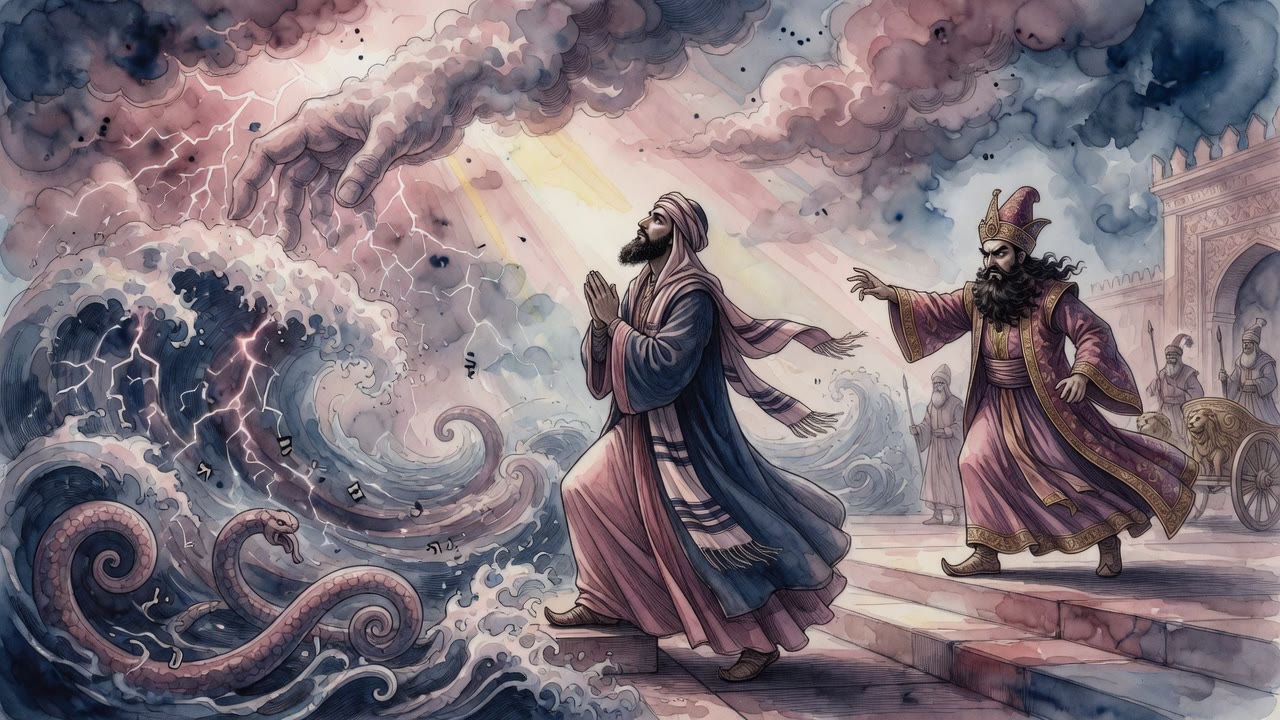
He describes a God "who is the fire consuming all other fires; who holds the earth in His arms; who stretches out the heavens in His might; who darkens the sun when it pleases Him, and illumines the darkness; who commanded the sand to set bounds unto the seas; who made the waters of the sea salt, and caused its waves to spread an aroma as of wine; who chained the sea as with manacles, and held it fast in the depths of the abyss that it might not overflow the land; it rages, yet it cannot pass its limits."

This isn't just a list of divine attributes. It’s a vivid portrait of God's power, His control over the very fabric of existence. As Mordecai continues, the imagery intensifies. "With His word He created the firmament," he says, "which He stretched out like a cloud in the air; He cast it over the world like a dark vault, like a tent it is spread over the earth. In His strength He upholds all there is above and below."

He speaks of the celestial bodies, the sun, the moon, and the Pleiades, all moving in perfect harmony, fulfilling their divine purpose. "The stars and the planets are not idle for a single moment; they rest not, they speed before Him as His messengers, going to the right and to the left, to do the will of Him who created them."

Mordecai's refusal to bow wasn't simply an act of defiance. It was an act of profound faith, a recognition of a higher power. It was a declaration that earthly authority is fleeting, while divine authority is eternal. "To Him praise is due," Mordecai concludes, "before Him we must prostrate ourselves."

So, what does Mordecai's unwavering stance teach us? Perhaps it's a reminder to examine our own values, to question the authorities we blindly follow, and to remember that true allegiance lies with something greater than ourselves. It is a call, even now, to stand firm in our convictions, even when the pressure to conform is overwhelming. What would you stand up for?

Full source