Mordecai Found Courage in Three Children's Verses
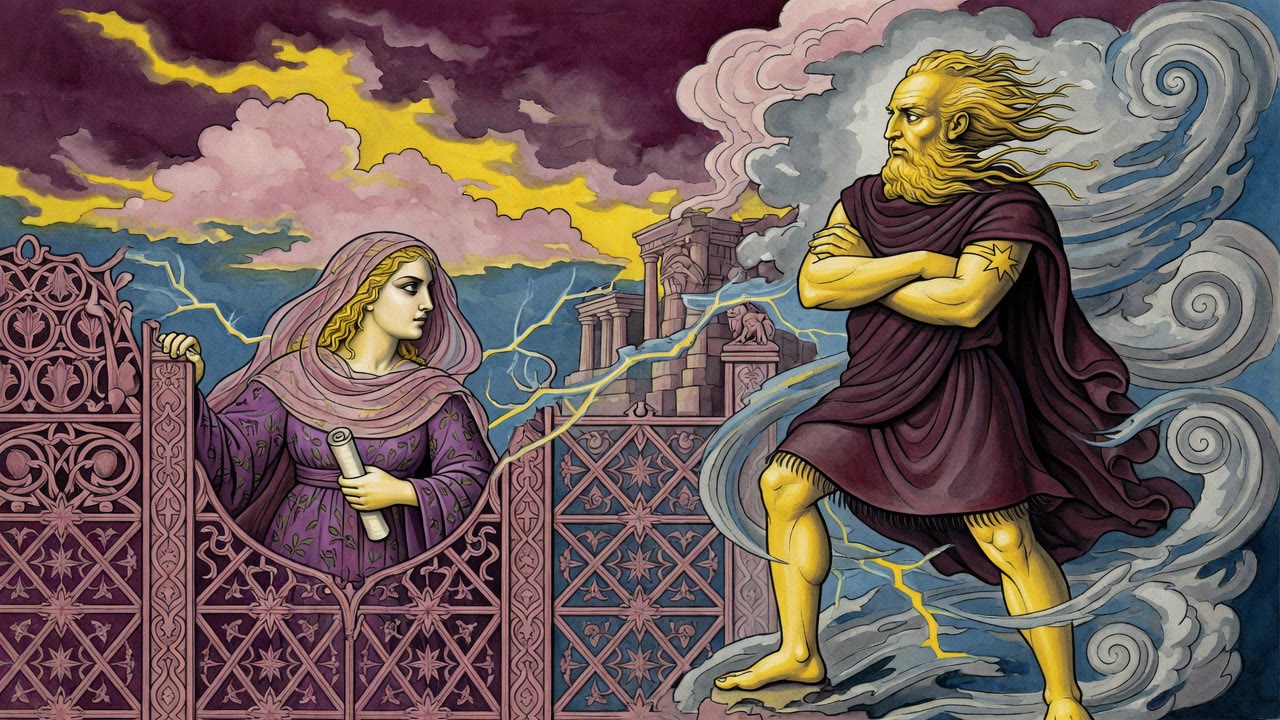
After Haman's decree, men in the market told Jews: wait until tomorrow, then I kill you and take your money. Mordecai left the court and met schoolchildren.
Table of Contents
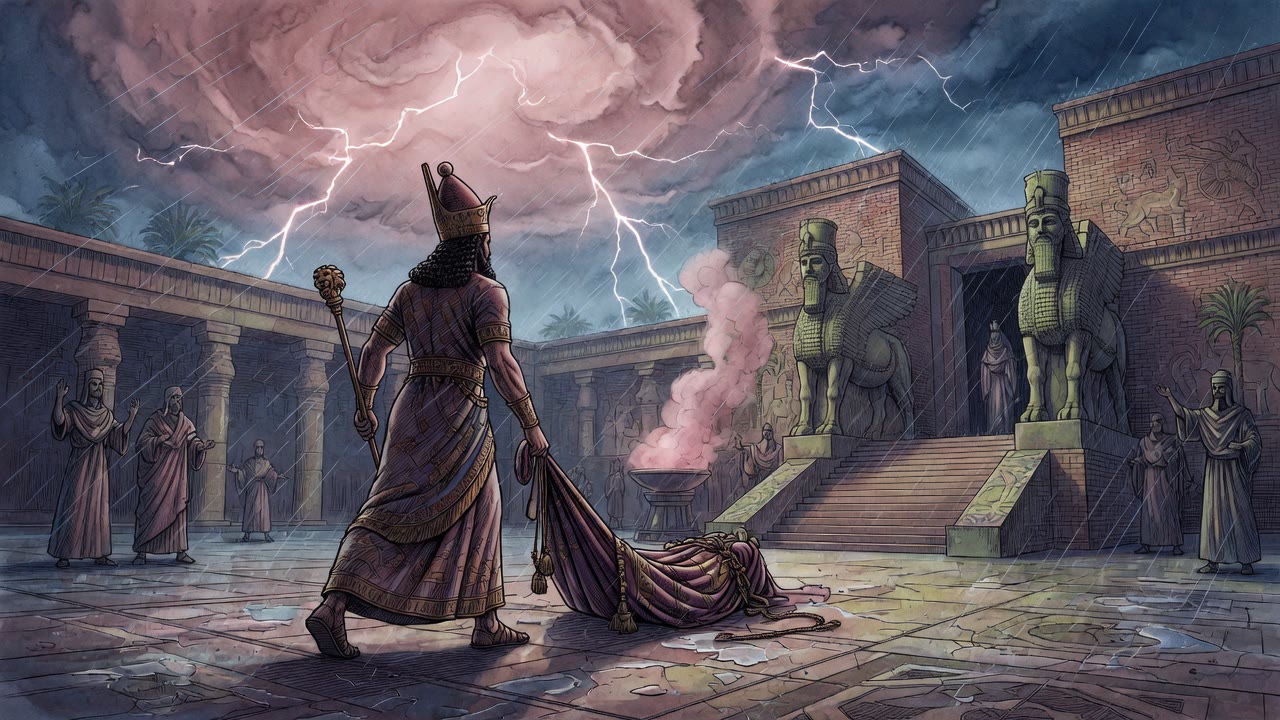
Mordecai came to the palace at night with knowledge he should not have had.
 Click for full size
The city slept around the royal house. Behind its doors, two chamberlains whispered treason into the dark. Bigthan and Teresh had service close enough to the king to turn access into a weapon, and they thought their words belonged only to themselves.
The Guards Looked Away
Mordecai had the gifts a court needed. He knew seventy languages. He had sat among sages. If the plot had reached him through a strange tongue at the gate, no one would have been surprised.
But the knowledge came another way. God placed the warning in his path before skill could claim credit. Mordecai arrived at the palace, and the men at the gates did not see him. No guard lifted a hand. No voice challenged him. The doors that should have stopped him gave way, and the words of the conspirators reached him whole.
The king's life hung on the breath of two servants. Mordecai carried their secret out of the palace before it could harden into murder.
The King Had to Live
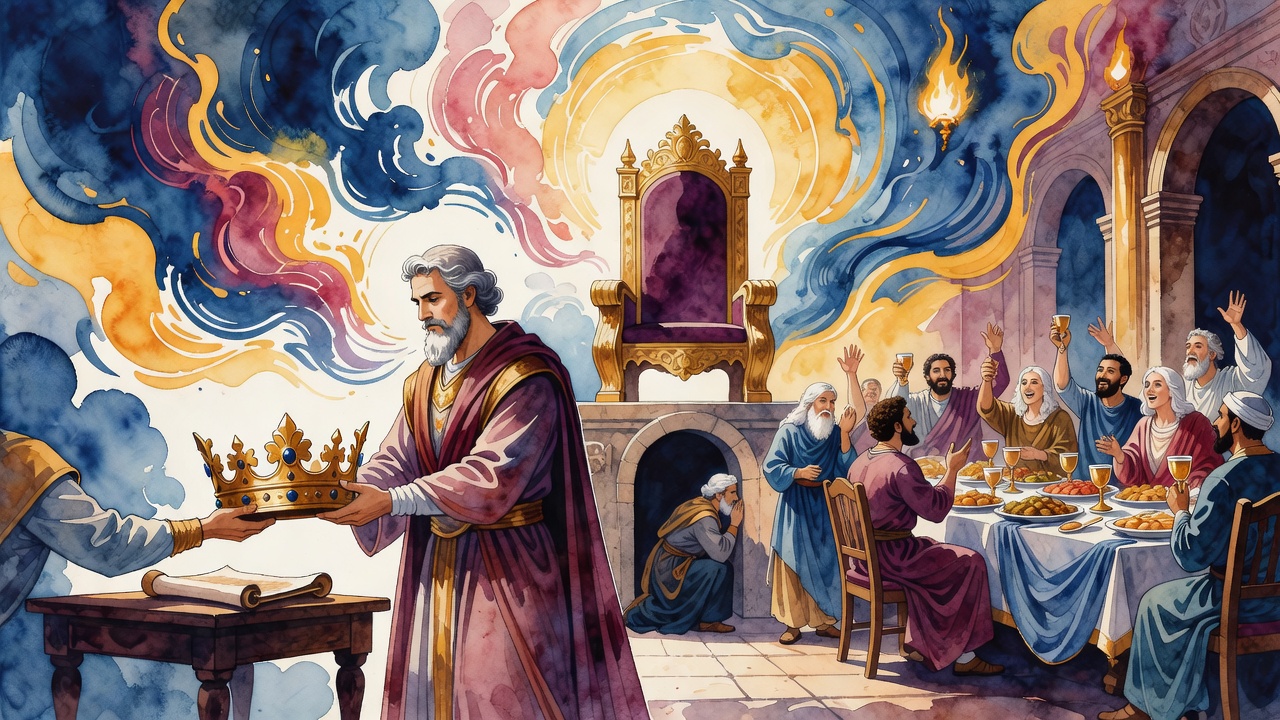
Ahasuerus was no innocent man in a clean world. Still, Mordecai needed him alive.
The Jews stood in a dangerous place, too visible when blamed, too useful when needed, too exposed when the court changed mood. Esther had only recently become queen. Mordecai had only recently risen. If the king fell dead so close to their ascent, suspicion would not need evidence. It would run straight toward the Jews.
Mordecai also had Jerusalem before his eyes. The Temple still waited in ruin and hope. A living king could be won, petitioned, moved toward permission. A murdered king would leave only panic, accusation, and men eager to attach Jewish names to royal blood.
So Mordecai saved the throne without mistaking it for salvation. He protected the king because his people's breath was caught in the king's survival.
The Decree Entered the Streets
Then Haman's decree went out, and every Jewish door in Persia became thin.
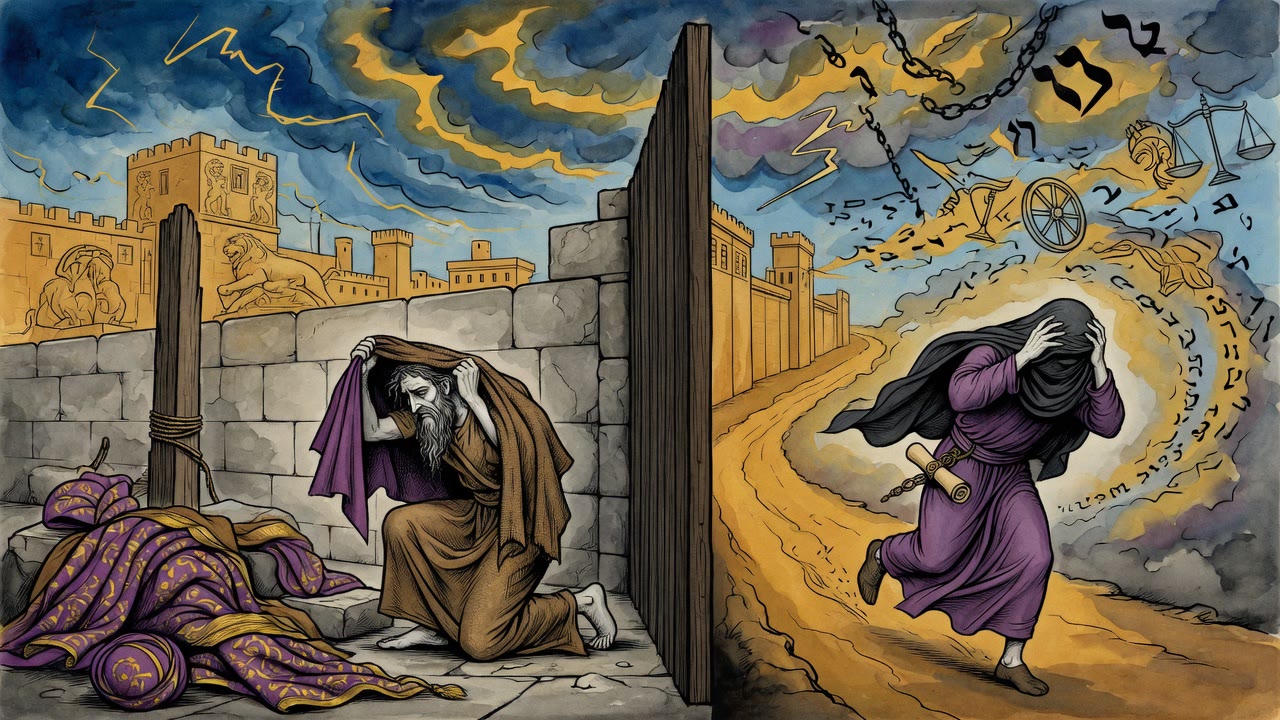
The danger did not stay inside scrolls and seals. It entered the market. A Jew who went out to buy what his family needed could be seized almost by the throat. Men who had been neighbors spoke like owners of tomorrow's corpses. "Wait until tomorrow," they said. "Then I will kill you and take your money."
Even slavery closed its door. A desperate Jew could offer his body for sale and find no buyer, because no one wanted to purchase a man already marked for death. Freedom could not protect him. Poverty could not hide him. Humiliation could not ransom him.
A royal decree did not wait politely for its date. It changed how people looked at a Jewish face. The murder was scheduled for tomorrow, but the contempt arrived at once. Men rehearsed theft before blood had been spilled.
Haman and his men rejoiced in the order they had secured. They wanted Mordecai to hear it from their mouths.
Three Children Carried Three Verses
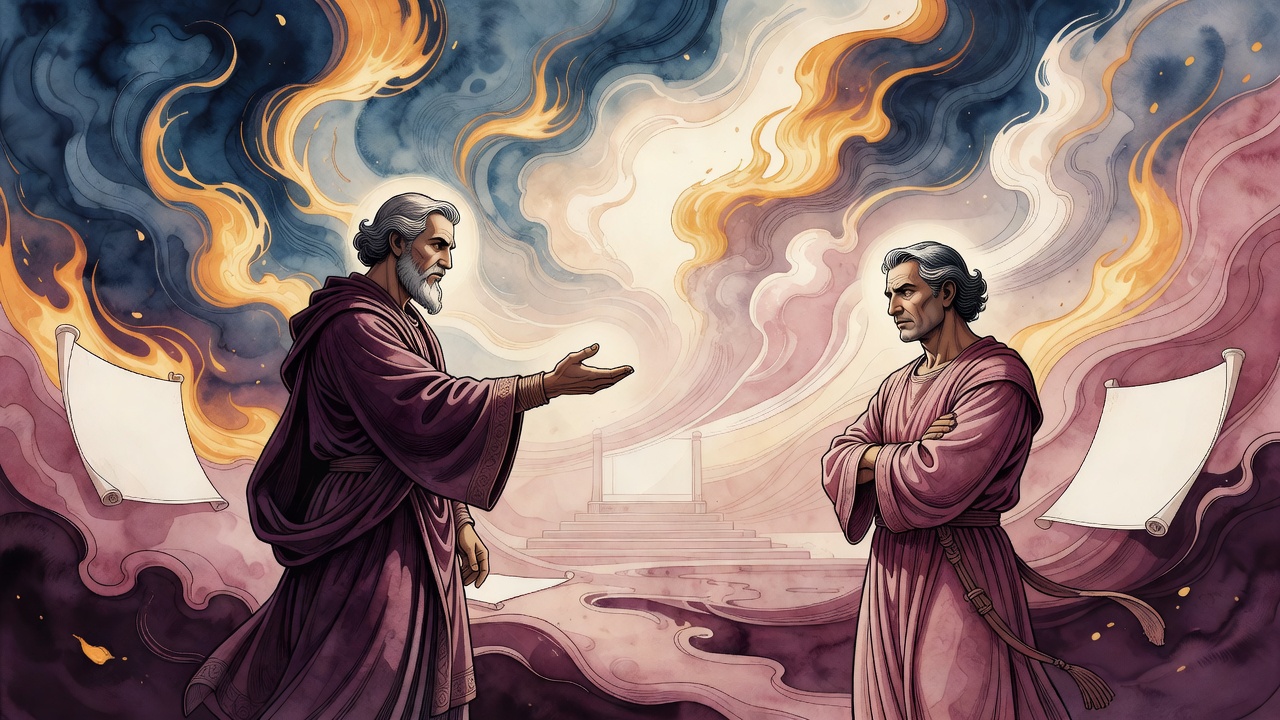
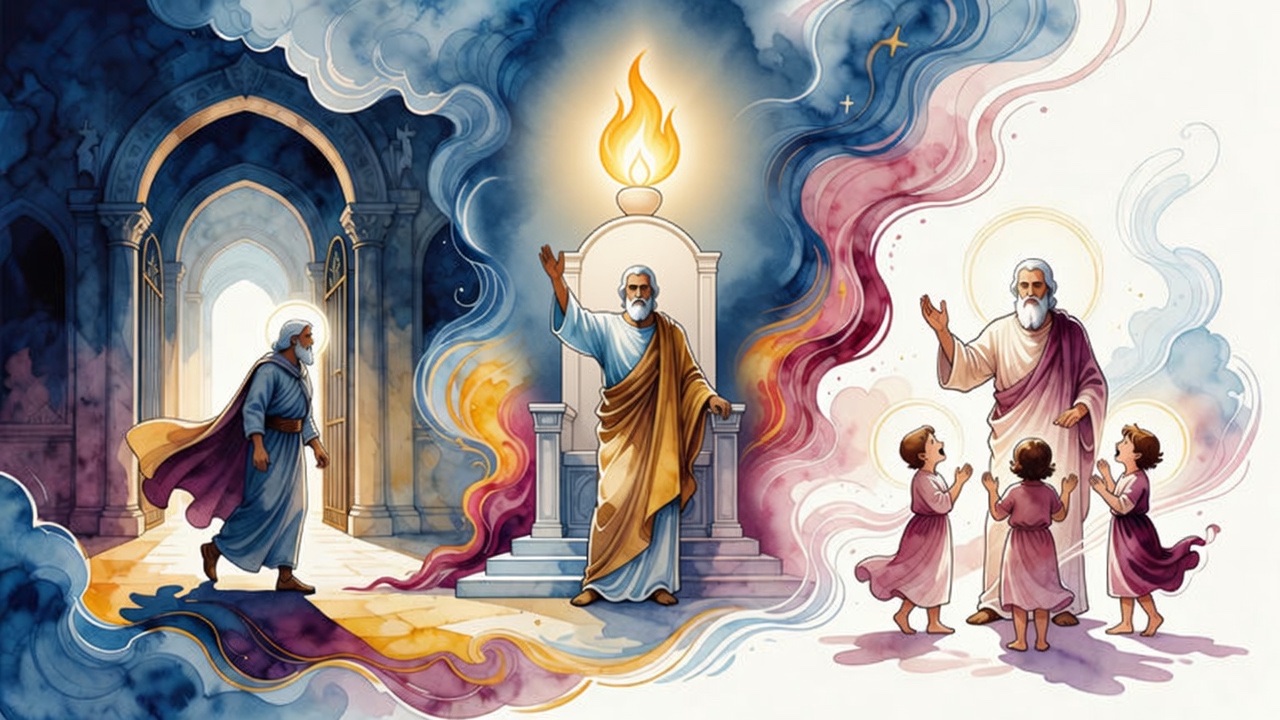
Mordecai left the court and met children coming from school.
He did not ask them for rumors from the street or news from the palace. He asked for the words still warm in their mouths, the verses their teachers had placed there before the decree could poison the air.
Their small voices still carried the sound of memorized Scripture. He stopped the first child and asked what verse had been learned that day. The child answered, "Be not afraid of sudden fear, neither of the desolation of the wicked when it cometh."
Mordecai turned to the second. The child gave him another line: "Let them take counsel together, but it shall be brought to naught; let them speak the word, but it shall not stand; for God is with us."
The third child spoke last. "And even to old age I am He, and even to hoar hairs I will carry you: I have made and will bear; yea, I will carry and will deliver."
The palace had given Mordecai the sound of treason. The street had given him the sound of terror. The children gave him three answers, one after another, and each answer stood taller than the decree.
Mordecai walked on with the king still alive behind him, Haman's paper before him, and the breath of schoolchildren carrying words no empire could strangle.
← All myths