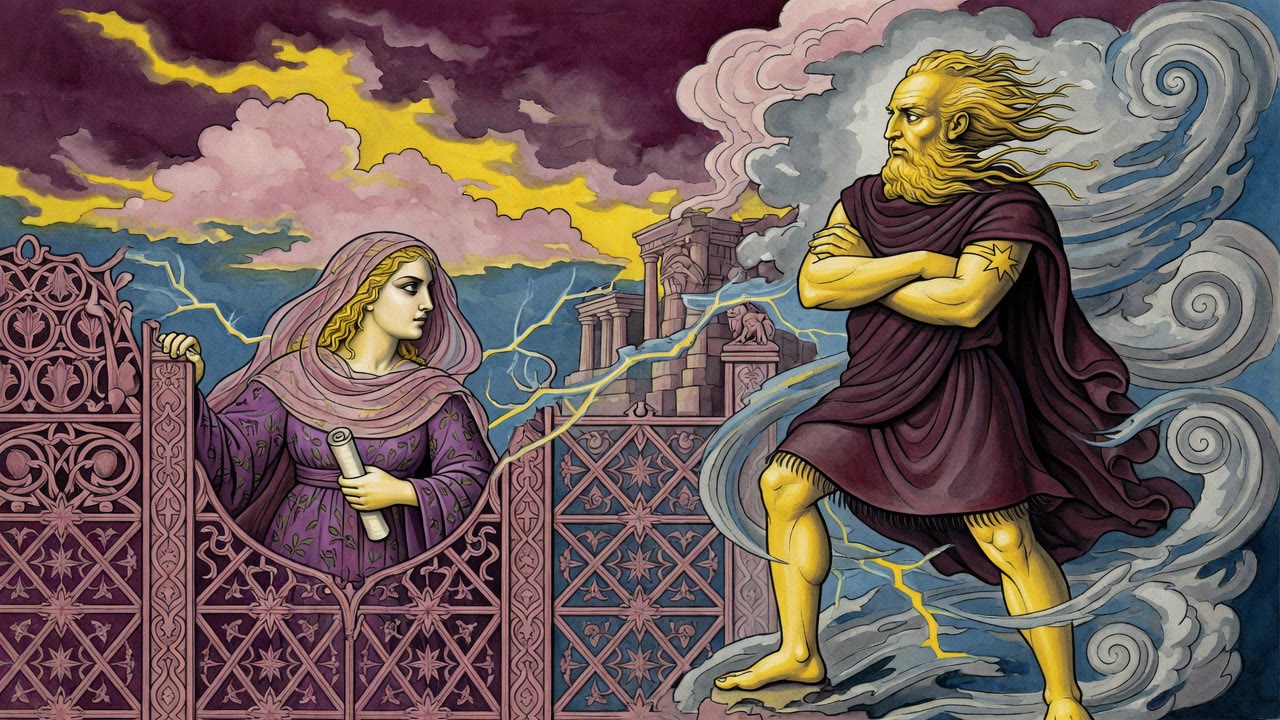
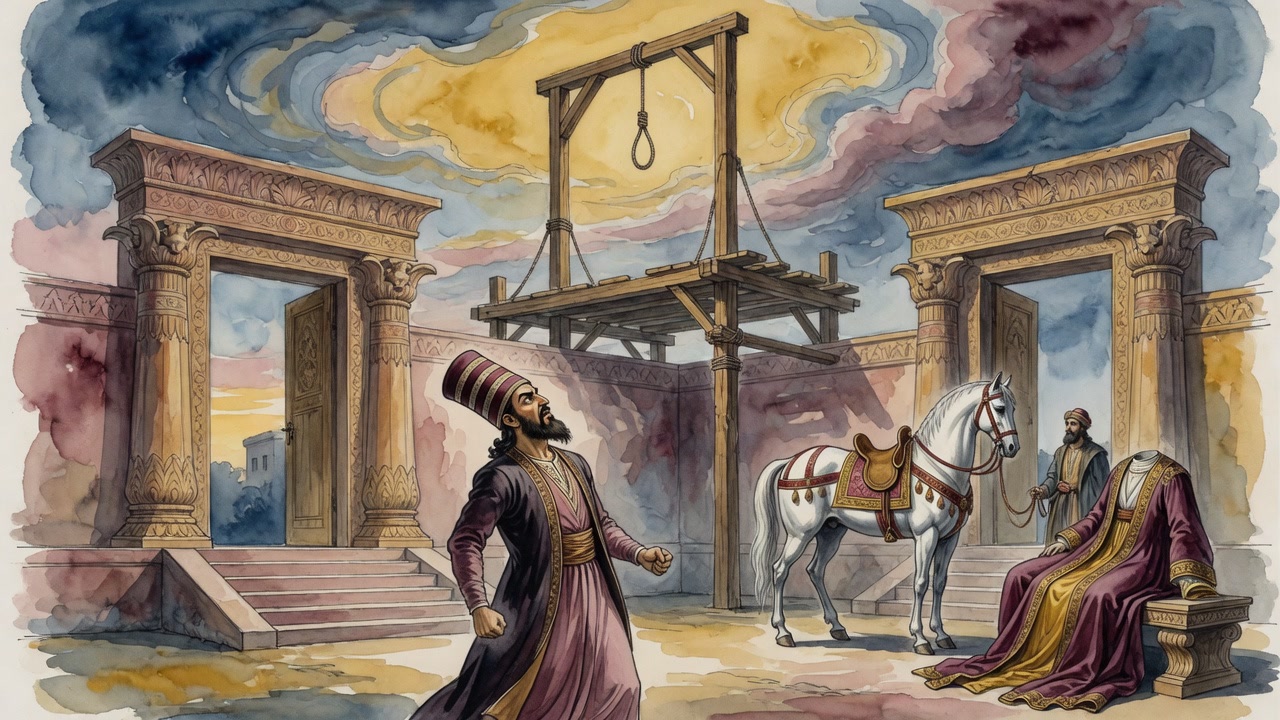
Mordecai Redeems Israel Sold Cheap in Media
Israel grew poor through sin and sold itself in Media under Haman. Mordecai, nearest redeemer, covers a people that ate at the wrong tables.
Table of Contents
 Click for full size
When the Relative Becomes Poor
Israel did not look poor in the streets of Shushan. Some sat at Ahashverosh's second banquet, great and small, for seven days after the nobles had already drunk their fill. The midrash is harsher than the furniture. "When your relative becomes poor" is Israel, who became poor through their iniquity. "And sells some of his property" is the sale in Media in the days of Haman. The people had already put themselves on the block before Haman paid the silver.
They had eaten cooked food of star worshipers at the king's tables. That meal stuck to the teeth of the story. Slaughter was not only Haman's idea. It was a bill coming due.
Poverty here is not empty pockets. It is empty defenses. The meal at mixed tables stuck to the teeth of the story like grease that will not wash. Slaughter was a bill coming due, not only a villain's whim.
The Redeemer Steps In
"Then his redeemer shall come." This is Mordecai. "And redeem what his relative has sold." He covered the sins of Israel when they all deserved slaughter. Haman cast the pur, the lot, and tormented them. Due to Mordecai's merit the opposite happened, and the Jews gained control over their enemies. The law of land redemption in Leviticus became a map of Purim: a people sold, a kinsman who buys them back, a transfer written in blood and fasting instead of shekels.
Another voice in the same teaching says the Redeemer is the Holy One, blessed be He, mighty, the Lord of hosts, the One near to His people. Mordecai on the ground and God above do not cancel each other. The human redeemer moves because the near God has not stepped away.
Kinship is a legal category and a burning in the chest. Mordecai used both. God near above and the cousin near on the ground do not cancel each other. The human redeemer moves because the near God has not stepped away from the sale.
The Banquet That Priced Them
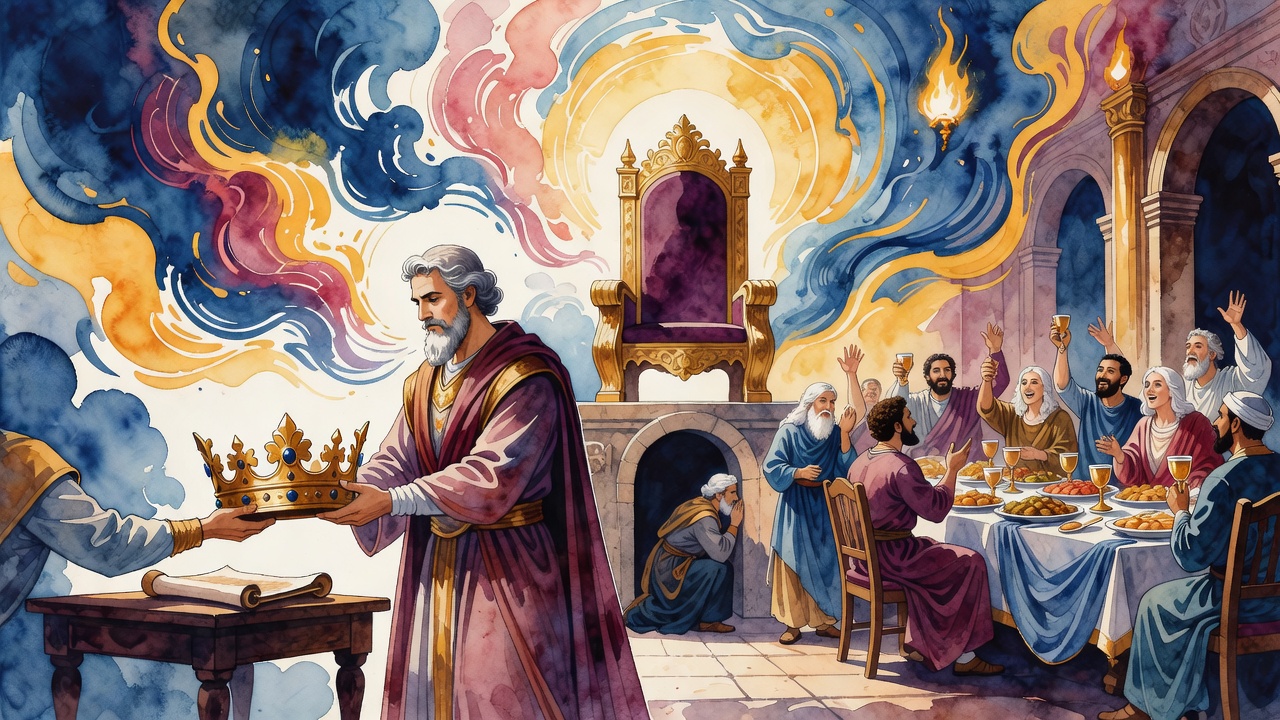
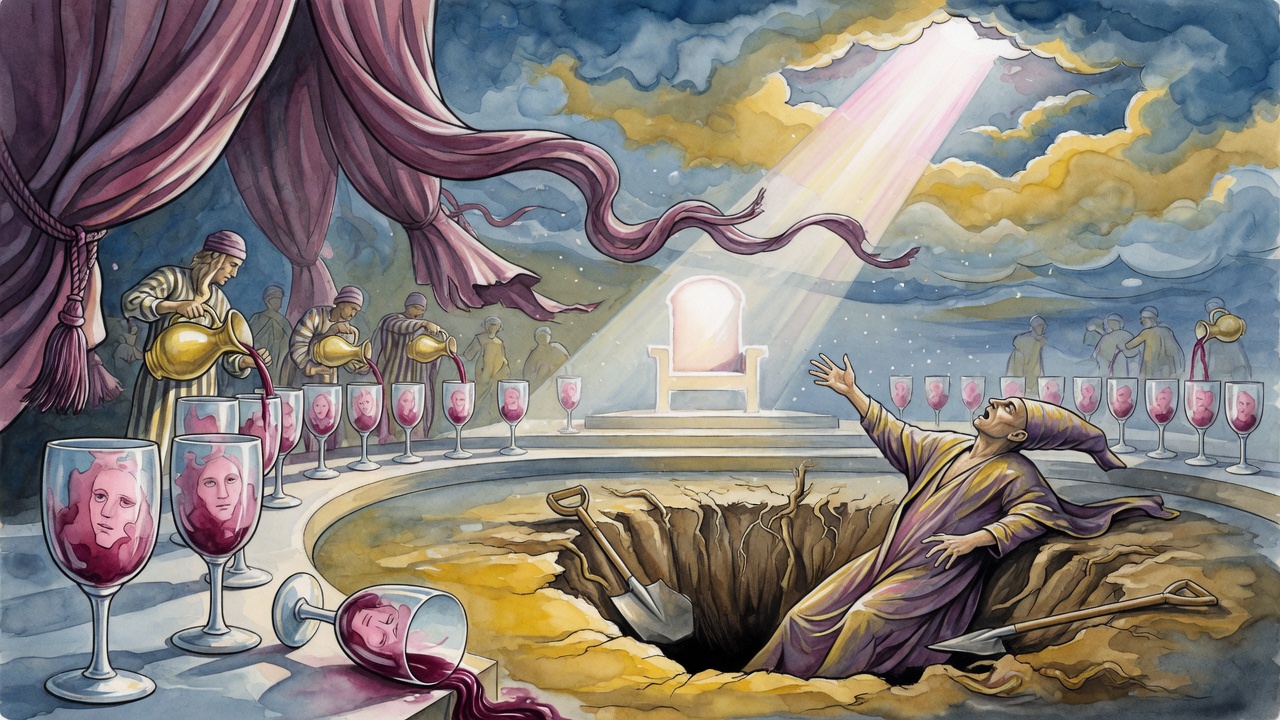
Ahashverosh had poured wine according to the king's own hand, matching every guest. The generosity was a kind of trap. When the days of drinking closed, the city still held the taste of mixed tables. Haman did not invent contempt for Jewish daughters; the midrash says the nations demeaned them as ugly, so heaven answered with a dragnet of virgins into Hegai's custody. Media rose against those who had once ravished women in Zion, not for silver or gold, but for the bow and the womb.
A people that had sat at the wrong feast discovered that the empire's appetite had shifted from gold to bodies. Mordecai's pacing at the harem was already a kinsman's move toward property sold too cheap.
The price of a nation is never posted on a single board. It is paid in small shames first. Media's appetite shifted from gold to bodies, and Mordecai's pacing was already a kinsman's claim on property sold too cheap.
The Lot and the Covering
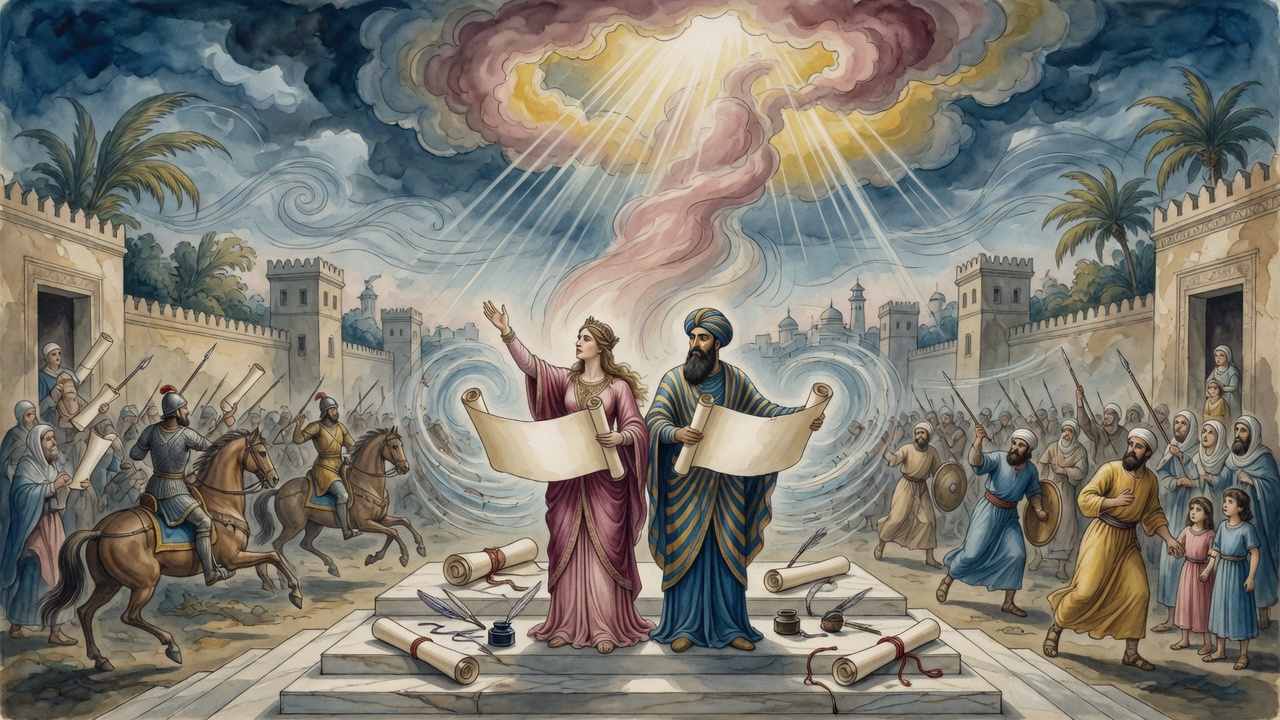
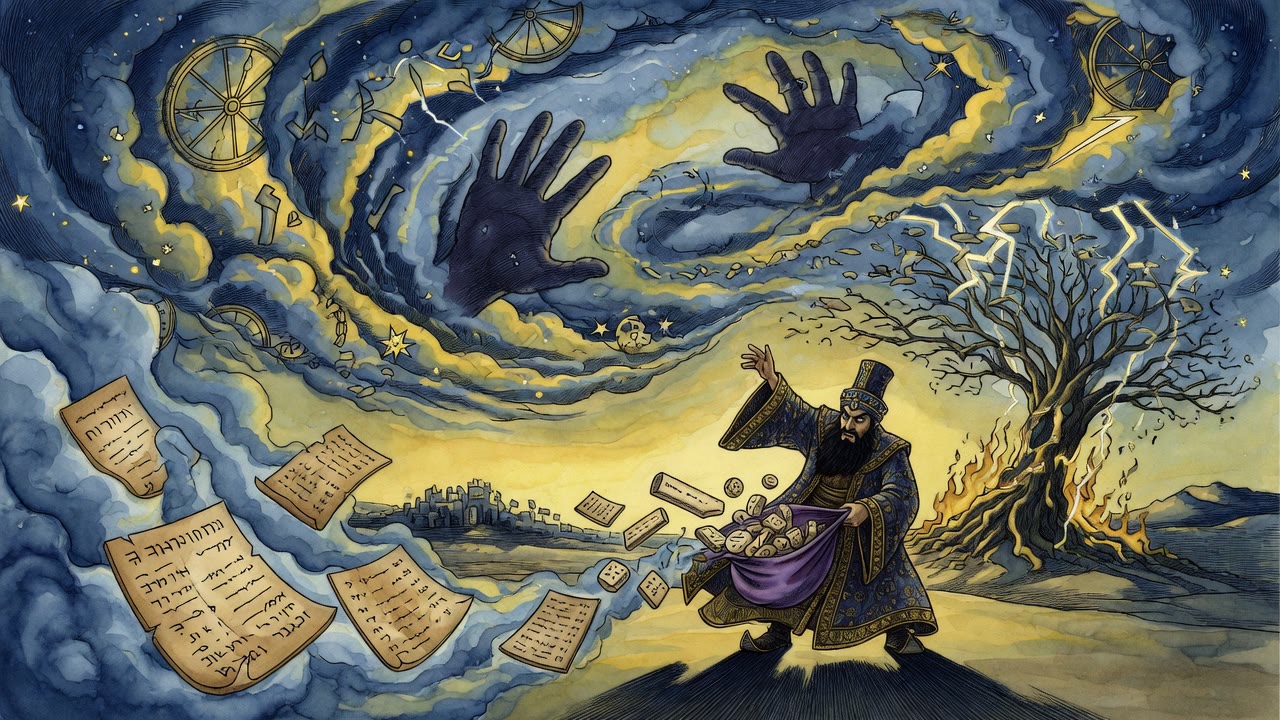
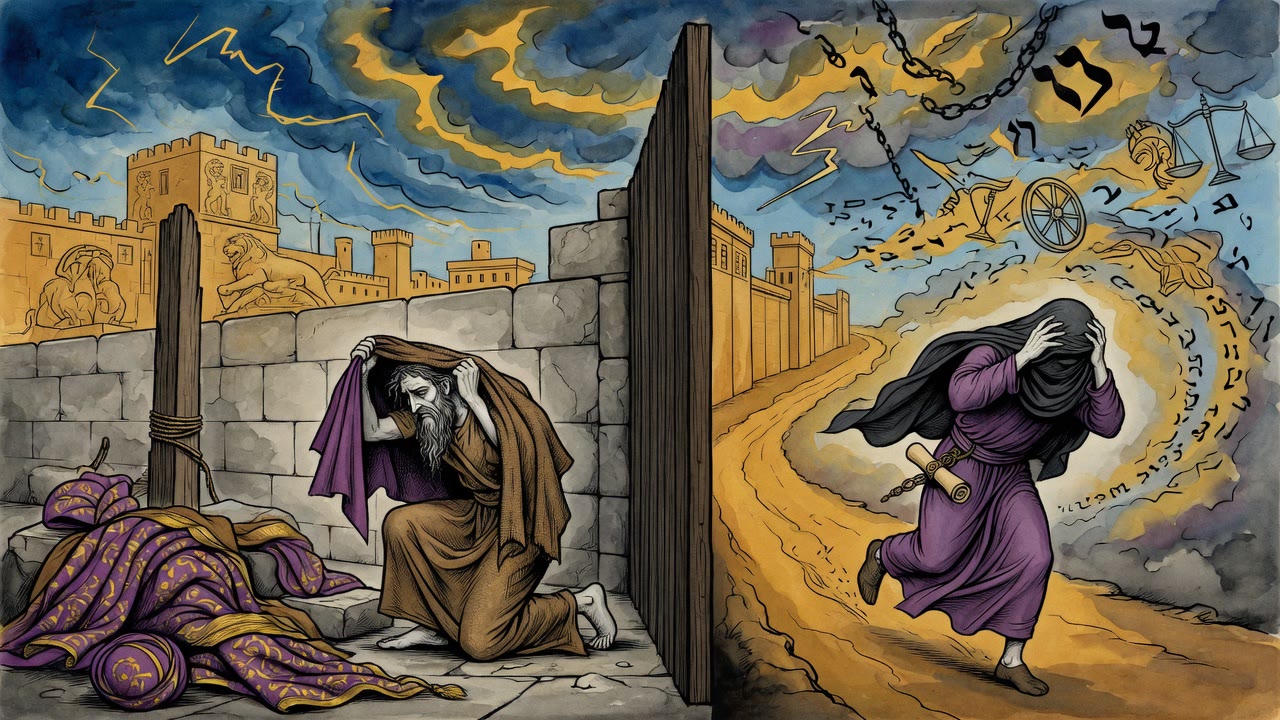
Haman's lot clattered. Dates for killing filled the calendar. Mordecai tore clothes, sat in ash, and pushed Esther toward the throne room where law said she could die for entering. The redemption did not look like a quiet land deal at the city gate. It looked like three days without food, a scepter tipped forward, a second pair of letters racing the first.
What had been sold was not a field in Judah. It was the right of a people to wake up. Mordecai bought that right back with stubbornness and with a queen who finally named her people.
Covering sins means standing between the bill and the body until the bill changes hands. Three days without food, a scepter tipped forward, letters racing letters: that was the price of repurchase in Persian roads.
Near Kin
"The one most closely related to him" is also a name for God, who raised a horn for His people, a people near to Him. Purim keeps both nearnesses on the page: the cousin who will not stop walking the courtyard, and the Redeemer whose name is hosts. Israel had sold itself in Media. The repurchase left them armed on the day that was meant to erase them.
Poverty through iniquity. Sale. Redeemer. The statute of Behar put on Persian clothes and walked into the citadel.
Near is a distance measured in risk, not in miles. The statute of Behar put on Persian clothes and walked into the citadel, and the city learned that a sold people can still have a kinsman who reads the fine print of heaven.
← All myths