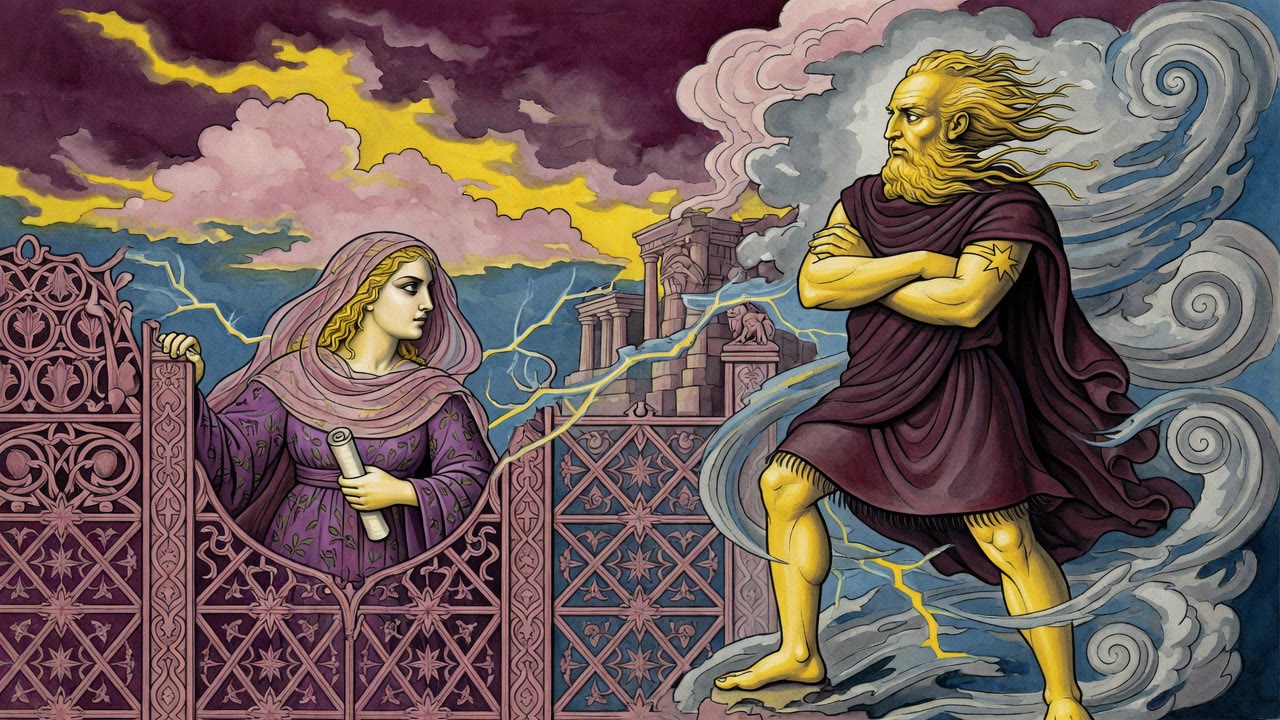
Mordechai Walked the Harem Courtyard and Read God's Hint
Every day Mordechai walked the harem courtyard. The eunuchs thought he was a frightened uncle. He was reading a hint from God.
Table of Contents
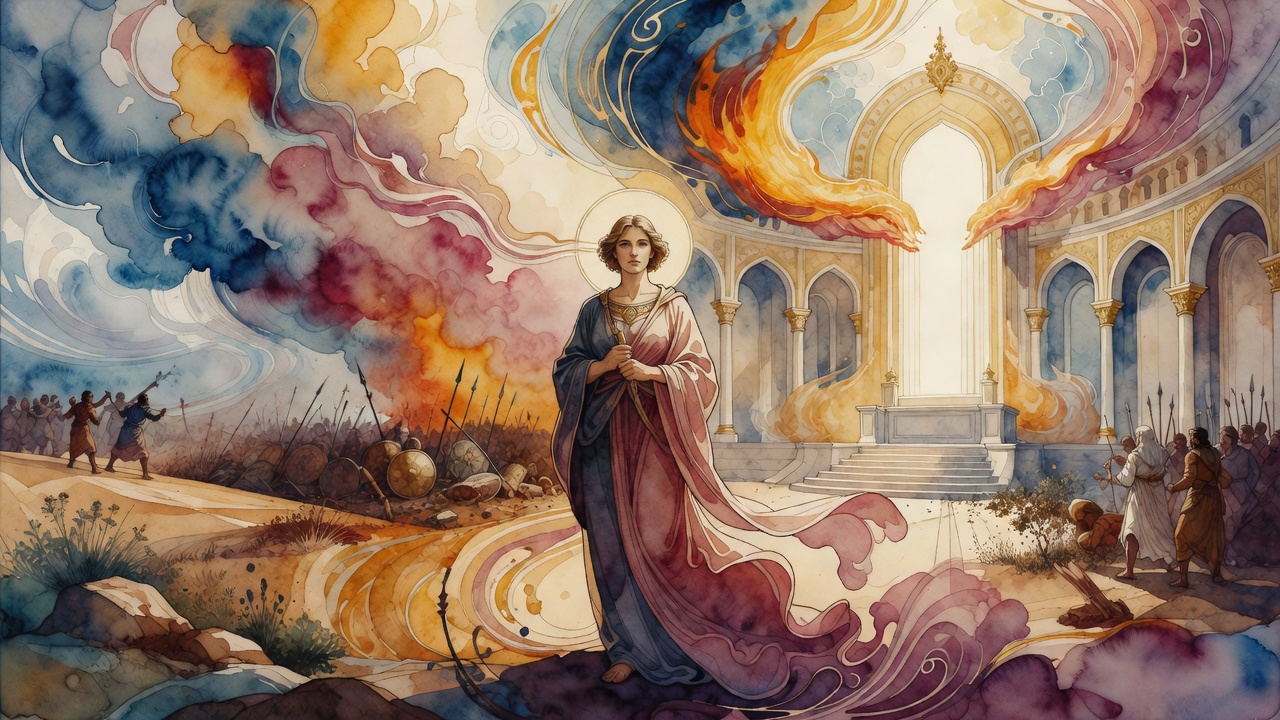
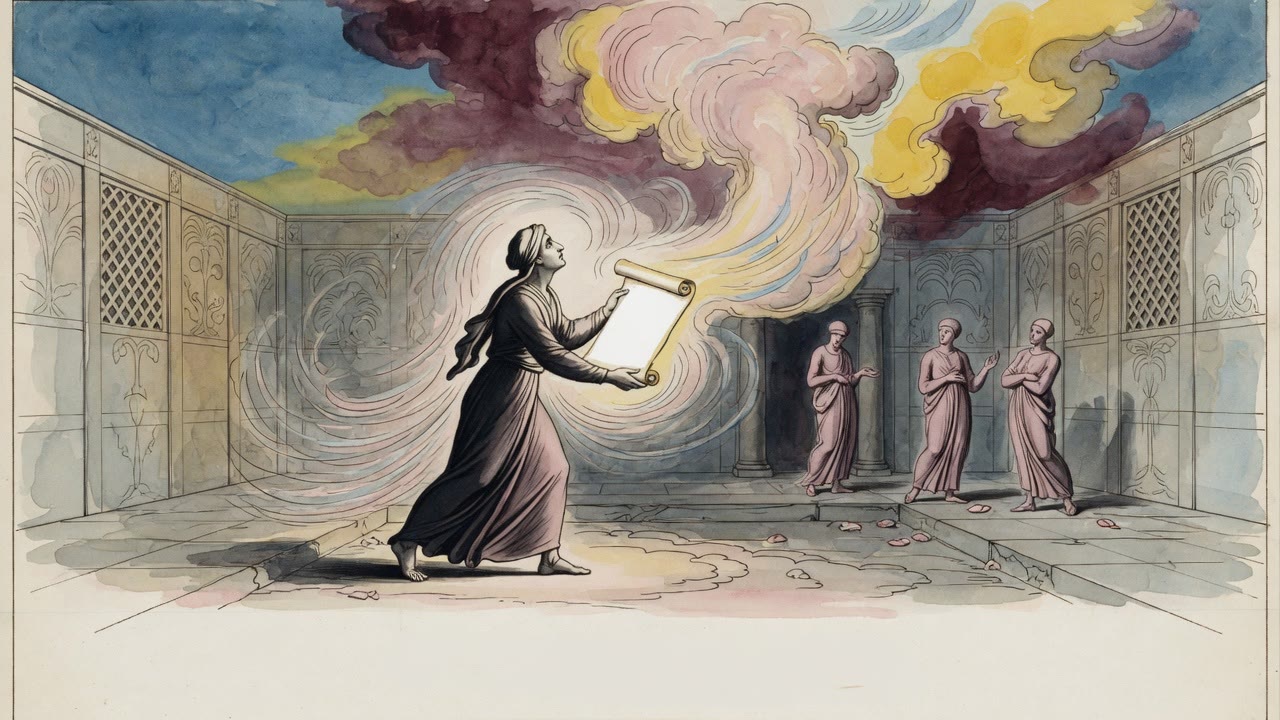
The eunuchs at the gate of the women's house knew him by now. The same man, the same hour, the same slow circuit of the courtyard where the king kept his collected women behind whitewashed walls. They watched him from the shade and traded the obvious story between themselves. A relative. Some uncle or cousin who had lost his girl to the royal draft and could not stop coming back to the wall that swallowed her. Worried sick, they said. Pacing like a man at a sickbed.
 Click for full size
They had the gesture right and the meaning wrong.
The Eunuchs Read Him as a Frightened Uncle
Mordechai walked the dust of that courtyard once a day, every day, for a full year. From outside he looked exactly like dread wearing a man's body. The scripture itself almost insists on it. "Every day Mordechai walked before the courtyard of the women's house, to know how Esther did and what would become of her" (Esther 2:11). To know how she did. The line reads like a question asked into a locked room by someone afraid of the answer.
He was not afraid. His feet moved through the same loop because his mind was working a problem, and the courtyard was where he could stand closest to the evidence. He knew the girl behind that wall. He had raised her. He knew what she was.
The Question He Asked Himself at the Wall
Esther was righteous. That was not a hope of his or a fond exaggeration. It was the one fixed fact he carried, the thing he was surest of in a palace built on uncertain things. And a righteous woman had been carried off into the bed of Achashverosh, a king who served nothing Mordechai's people served, an uncircumcised foreigner who collected wives the way other men collected horses.
So he walked, and the question turned over with each pass of the wall. Is it conceivable, he asked himself, that this righteous woman is destined to end as the wife of this man? He could not make the pieces sit still together. A righteous daughter of his people did not vanish into a pagan harem by accident. The world did not run that way. Things that looked like ruin were not always ruin.
Therefore the conclusion came to him cleanly, the way an answer arrives when the question has finally been asked the right way. Something momentous was being set in motion for his people. Esther had not been taken from him. She had been placed. And through her, redemption was coming.
The Hint Read Like Dread From Outside
This is the strange thing the eunuchs could never have seen. A hint from God does not announce itself with thunder. It looks like an ordinary event refusing to make ordinary sense. A girl swept into a king's house. A righteous one, where no righteous one should be. The wrongness of it was the message. Mordechai walked the courtyard not because he was waiting for news but because he had already read the news in the shape of the thing itself, and he was holding his post like a man who had been told to wait and trust the waiting.
He was not the first to be handed such a thing and understand it before anyone spoke a word of explanation. He stood at the end of a short line of people who had caught a divine hint and acted on what they caught.
Three Men Who Caught the Hint Before Him
There was Jacob, who heard his sons come back from Egypt with sacks of grain and a tangled story about a hard ruler who knew too much about their family, and who felt the hint move under their words before it surfaced.
There was Judah, brought up short when a woman held out a seal, a cord, and a staff and asked him to recognize whose they were. "Discern, I pray thee, whose are these" (Genesis 38:25). He looked at his own pledge in her hand and the truth landed on him at once, and he named it aloud rather than let it be buried.
There was David, the youngest, out with the sheep while the prophet stood in his father's house running his eyes down a row of tall older brothers and rejecting each one. "Are these all the children?" the prophet kept asking, until the only answer left was the boy in the fields (I Samuel 16:11). David, when he was finally sent for, took the hint the moment it reached him.
Jacob took it slow and Judah took it under pressure and David took it the instant it touched him. Mordechai was the fourth of them, and like David he recognized it immediately. No prophet stood in the courtyard to spell it out. He read it off a wall and the shape of a wrong that could not be a wrong.
Why He Held His Post for a Year
That is why the pacing never stopped and never quickened into panic. A frightened uncle wears himself thin. Mordechai walked like a man keeping a watch he had been assigned, steady, daily, patient with the slowness of a plan he could feel but not yet see. He did not know the night the king would not sleep, or the gallows that would be built and then misused, or the decree that would turn back on its author. He knew only the first letter of the thing. A righteous woman in the wrong house meant his people would be carried through whatever was coming, and carried by her.
So he kept his circuit. The eunuchs went on pitying the worried relative. And inside the wall the woman they were guarding was already, though none of them could have said it, the door through which an entire people would walk out alive.
← All myths