5 min read

Michael Lifts Esther's Hand to the Scepter

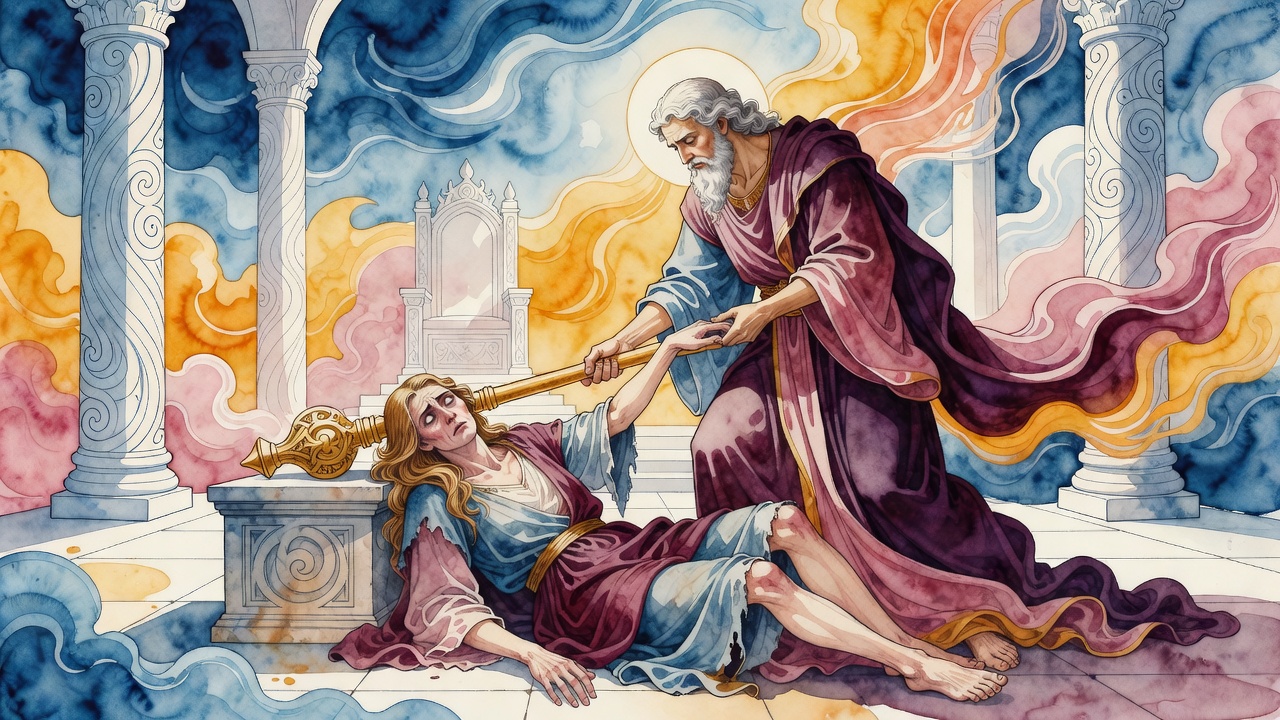
After three days without food or water, Esther reaches the king's court too weak to move until Michael draws her hand toward the scepter.

Curated by Arthur · Told by Maggid ·
Table of Contents
  1. Three Days Without Bread
  2. The Court Opens
  3. Michael Takes Her Hand
  4. The King Names the Boundary
  5. The Sleepless Palace

Esther had emptied herself before she entered the king's court.

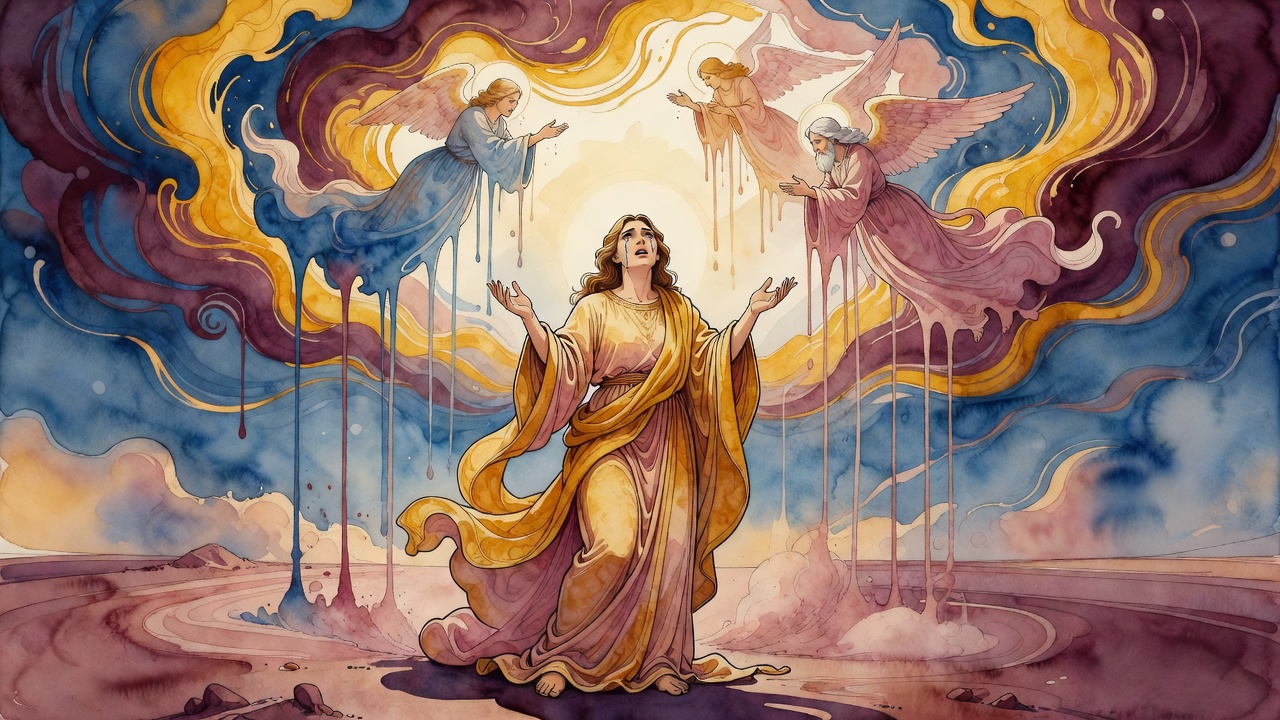
Three days without bread. Three days without water. Three days of prayer rising from a body that had stopped asking for comfort and wanted only one thing left: room for Israel to live.

Three Days Without Bread

The palace did not become gentler because she fasted. Its floors still gleamed. Its guards still watched. Its doors still opened only for power. Esther put royal clothing over a weakened body, and the garments lied for her. Silk can hide shaking. Gold can make hunger look like majesty.

She had asked her people to fast with her, and now the fast had done its work too well. It had stripped away the last illusion that courage is the same as strength. Courage brought her to the threshold. Strength did not come with her.

Behind the walls, the decree against the Jews had already traveled farther than any messenger. It had been sealed below, but it also pressed upward, as though a sentence against Israel had weight in heaven. Children who did not know Haman's name were already caught inside his plan. Their mothers would have no argument to make before the sword. Their fathers would have no ransom large enough.

The Court Opens

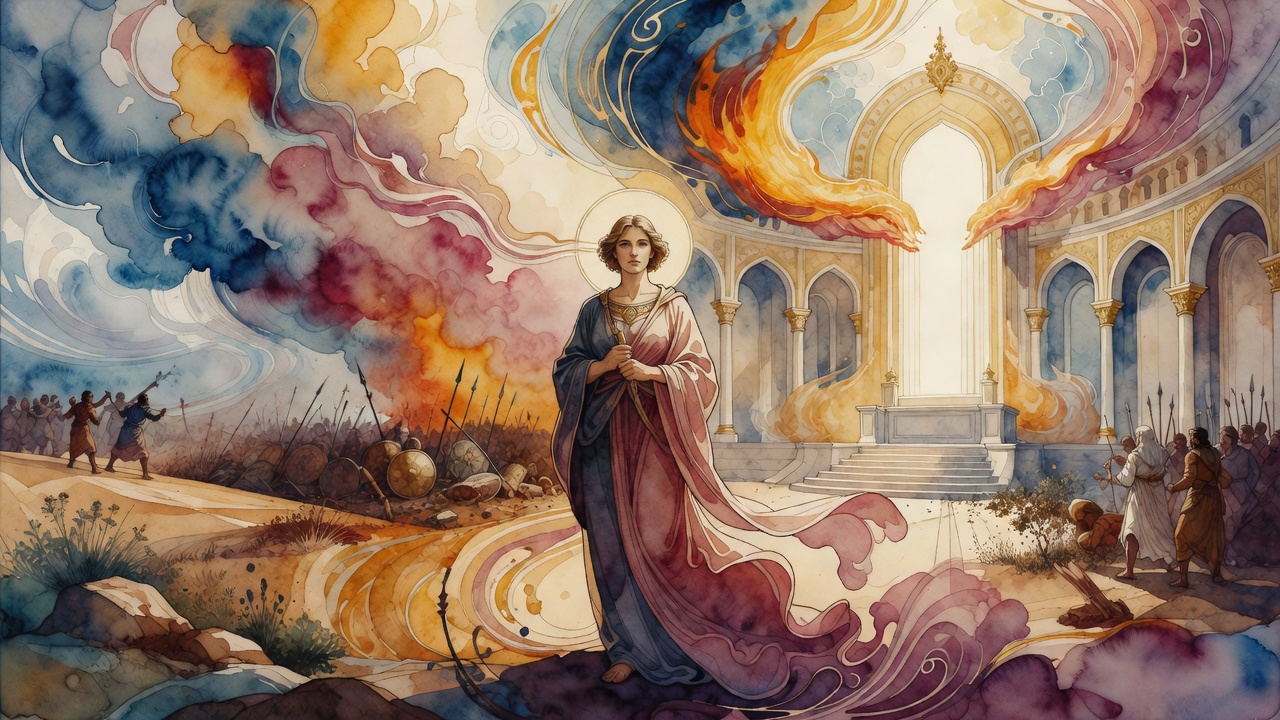
The inner court waited like a mouth.

No one entered uncalled and trusted the law to pity them. The king's favor was not a rule. It was a weather change. A face could live or die by the slight movement of his hand. Esther stepped into the open space anyway, carrying a secret large enough to overturn a kingdom.

The king saw her.

That was the first mercy. He did not look away. He did not summon the guards. He lifted the golden scepter, and a path appeared where a moment earlier there had been only danger.

Esther had to reach it.

Michael Takes Her Hand

Her arm would not rise.

All the fasting, all the fear, all the nights of prayer had come due in a single motion. The hand that had to touch the scepter hung useless at her side. The court could see the queen. It could not see the battle inside her flesh. One more inch might save Israel, and her body could not give it.

Then Michael moved.

The angel did not split the ceiling or fill the chamber with fire. He gave no speech for the courtiers to misunderstand. He drew her close enough to the scepter. He lent her the motion she lacked, not instead of her courage, but because her courage had carried her as far as a human body could go.

Her fingers reached the gold.

The King Names the Boundary

The danger did not vanish. It changed shape.

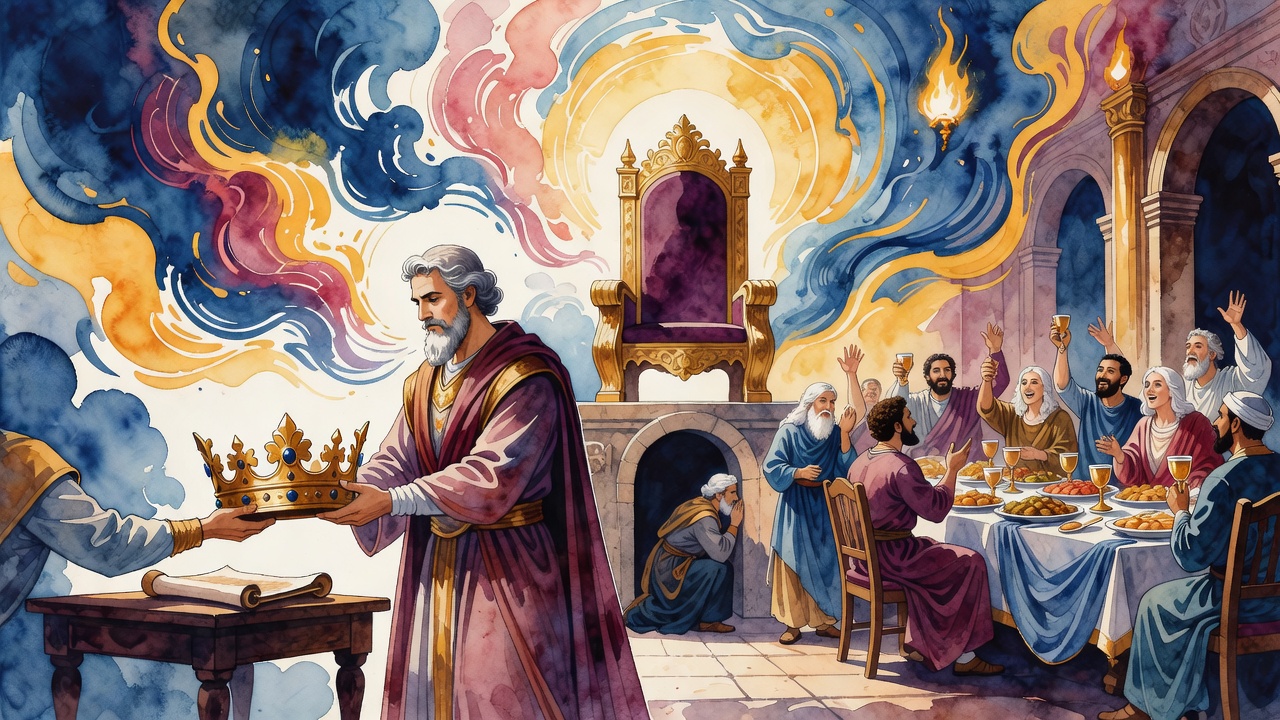
The king spoke generously, as kings do when generosity costs less than truth. He would give her half the kingdom, he said. The words filled the court with ease. Half the kingdom sounded like everything a person could ask.

But he knew the forbidden center of his own promise. Not the Temple. Not the thing tied to Jerusalem, memory, and return. Some vows in a palace are made before a queen ever enters the room, and rulers remember them when mercy gets too close to rebuilding what exile destroyed.

Esther did not spend her request too soon. A starving person may grab at bread, but a queen saving her people must know when to wait. She asked for a feast. She invited the king and Haman together. She turned the court from a place of sudden death into a room where Haman would walk willingly toward his own exposure.

The Sleepless Palace

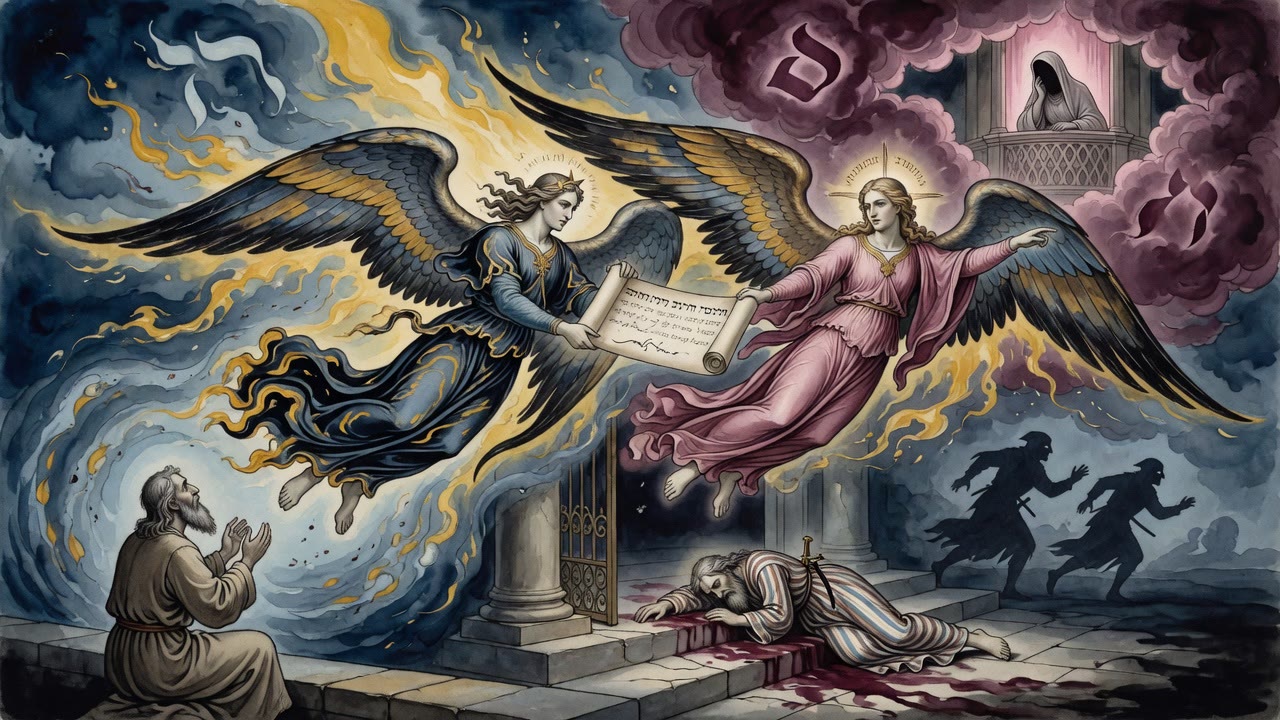
Above the palace, the sealed decree began to fail.

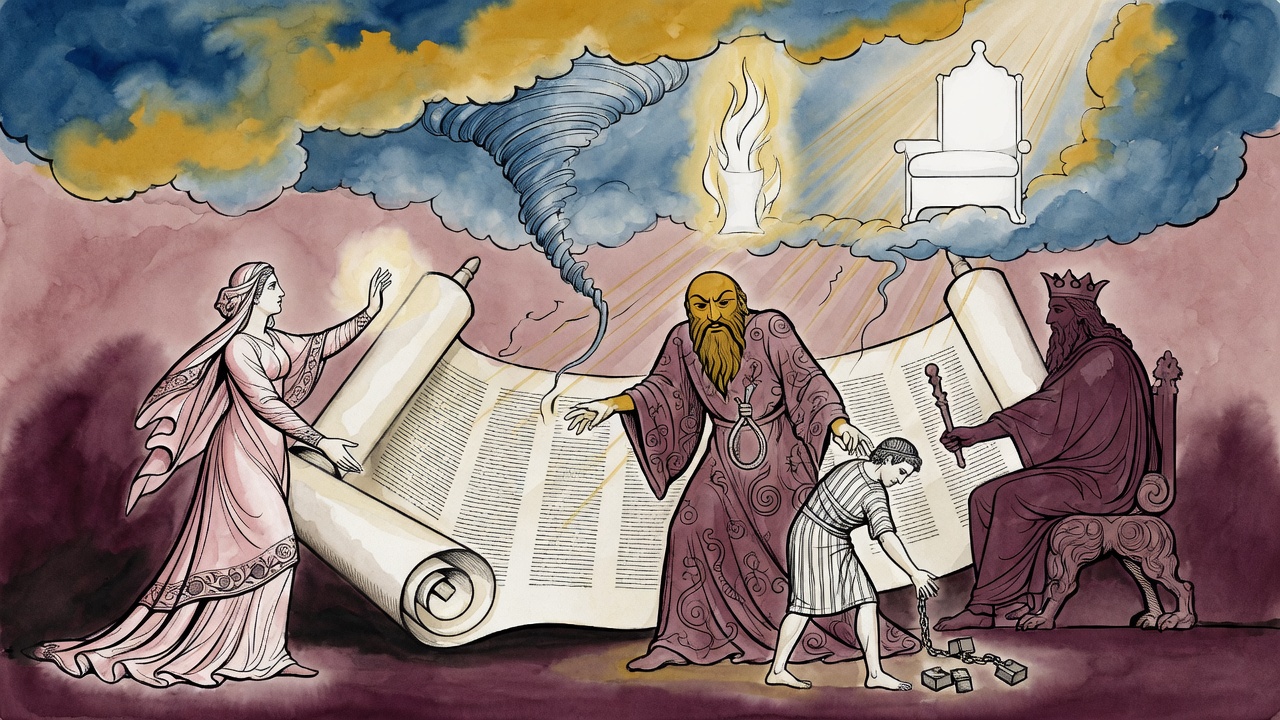
God saw the children under the sentence and tore at what had been fixed against them. Compassion did not remain an idea in heaven. It became a rip through the decree itself. Below, the king's night broke open too. Sleep left him. The royal bed, built for rest, became a bench of judgment.

A sleepless king called for records. A forgotten act of Mordecai rose from the scrolls. Haman, who had come to ask for a hanging, found himself ordered to honor the man he hated. The serpent had not yet been crushed, but the wind had shifted.

Esther's hand had touched the scepter. Michael had withdrawn. The queen still had to speak, and the feast still had to become a trap. But the body that failed at the threshold had already crossed it, and the decree that seemed sealed had already begun to tear.


← All myths

From the tradition

Sources

2 sources

The texts this telling draws on, in full. Open a card to read inline, or expand it for a wider, quieter read.

Legends of the Jews 12:196Legends of the Jews

After Haman's wicked plot to annihilate the Jews was set in motion, sealed with a heavenly decree, things seemed pretty bleak. But the Almighty, blessed be He, wasn't about to let that happen.

The Megillah, the Scroll of Esther, tells us the story of Esther and Mordechai, but it only hints at the celestial drama unfolding behind the scenes. It just says that the king couldn’t sleep. But the midrashim (rabbinic interpretive commentary), those beautiful rabbinic interpretations and expansions of the biblical text, fill in the gaps and show us the full picture.

In Legends of the Jews, drawing from various midrashic sources, God’s compassion was stirred by the plight of Israel, especially thinking of the innocent children who would suffer. And so, God intervened. The text says He broke the seal on that terrible decree of annihilation and tore it to shreds. That’s a pretty powerful image, isn’t it?

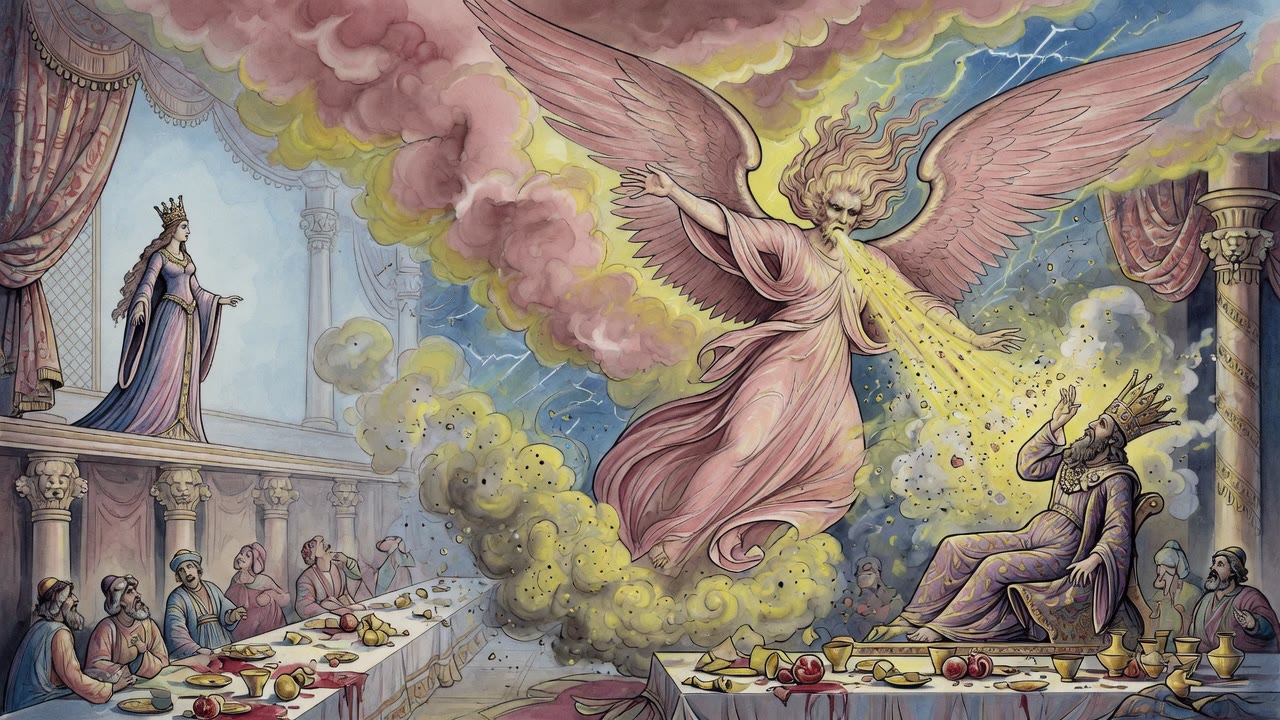
How to set things in motion on Earth? That’s where the angels come in. Michael, the leader of the heavenly host of Israel, was dispatched to keep sleep far from Ahasuerus’s eyes. Imagine trying to get some shut-eye with Michael the Archangel standing guard, making sure you stay awake!

But that’s not all! Gabriel, another powerful archangel, descended as well. And, get this, he threw the king out of his bed – not once, not twice, but a whopping three hundred and sixty-five times! As Ginzberg retells it in Legends of the Jews, Gabriel continually whispered in the king's ear, "O thou ingrate, reward him who deserves to be rewarded."

Talk about divine intervention! It’s like a cosmic wake-up call, designed to shake Ahasuerus out of his complacency and make him realize the injustice that was about to be perpetrated.

Now, we might ask: why such dramatic measures? Why not just tell the king directly? Well, the midrashim often highlight the idea that God works in mysterious ways. Sometimes, the most effective way to change someone's heart is to create a situation where they are forced to confront the truth themselves. And a king deprived of sleep, tormented by nagging whispers and being tossed from his bed, is certainly in a state ripe for a change of heart!

This story reminds us that even when things seem hopeless, there might be unseen forces working on our behalf. The Megillah focuses on the actions of Esther and Mordechai, their courage and cleverness. But behind their efforts, according to the tradition, was a divine hand, arranging events in ways we can only begin to imagine.

So, the next time you have a sleepless night, remember Ahasuerus. Maybe, just maybe, there's an angel whispering in your ear, nudging you towards a better path. Or perhaps it's simply a reminder that even in the darkest of times, hope remains.

Full source
Legends of the Jews 12:184Legends of the Jews

The familiar story centers on Purim. But have you ever stopped to think about the sheer physical and emotional toll it must have taken on her?

In Legends of the Jews, Ginzberg's masterful retelling of rabbinic lore, Esther was so weakened by her extended fast – a fast undertaken in solidarity with her people and in preparation for this fateful meeting – that she literally lacked the strength to even reach out and touch the king's scepter. You've built up all your courage, you've prepared yourself spiritually, but your body just… fails.

So, how did she manage? Did she collapse in despair? Not quite.

The archangel Michael himself intervened. Michael, one of the most powerful angels, had to actually draw her closer to the scepter. Think about the imagery there! It wasn't just about physical strength; it was a moment of divine assistance, a reminder that even when we're at our weakest, we are not alone.

And what of Ahasuerus? He recognizes the gravity of the situation. He sees Esther's distress, her sacrifice. "I see," he says, "thou must have a most important request to prefer, else thou hadst not risked thy life deliberately." He’s even willing to give her half his kingdom! That’s some serious royal generosity… or maybe just a sign of how captivated he was by Esther.

But then comes the kicker. There's one thing, just one thing, he can't grant: the restoration of the Temple in Jerusalem. Why? Because he made a promise – an oath – to Geshem the Arabian, Sanballat the Horonite, and Tobiah the Ammonite. He feared that a rebuilt Temple would incite the Jews to rebel against him.

It’s a fascinating detail, isn’t it? It highlights the complex political landscape of the time, the delicate balance of power, and the ever-present tension between the Jewish people and the surrounding empires. It also emphasizes that even the most powerful rulers are often bound by their own commitments and fears.

So, what does this little story within the bigger Purim story tell us? Maybe it’s about the power of perseverance, even when we feel utterly depleted. Maybe it’s about the importance of divine assistance in our moments of greatest need. Or maybe it's a reminder that even the most powerful people are constrained by their own limitations.

Whatever your takeaway, it's a powerful reminder that even in the face of seemingly insurmountable obstacles, hope – and a little help from above – can make all the difference.

Full source