6 min read

Moses and David Will Shepherd Israel at the End of Days

A verse in Micah names seven shepherds who will lead Israel in the messianic age, and Moses and David stand together at the end of the list.

Curated by Arthur · Told by Maggid ·
Table of Contents
  1. A Verse in Micah and a Roster of the Dead
  2. The Man Who Could Not Cross the River
  3. What Moses Was Watching From the Mountain
  4. David in the Context of Moses
  5. The Shepherds Who Did Not Stop

A Verse in Micah and a Roster of the Dead

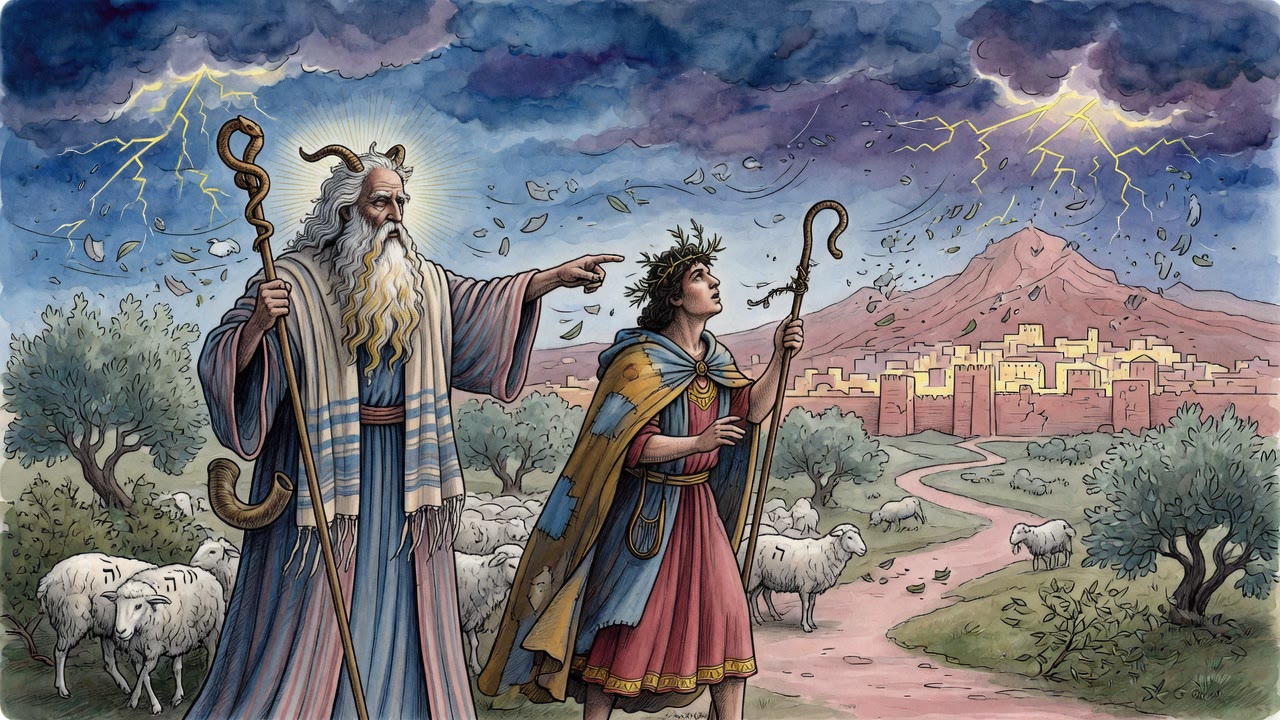
The prophet Micah looked forward to the messianic age and described it in terms of shepherds. He saw the Messiah and then beneath him seven men who would lead Israel in the final era. He gave them titles but not their names. The rabbinic tradition took that verse and filled in the names: Adam, Seth, Methuselah, Abraham, Jacob, Moses, David.

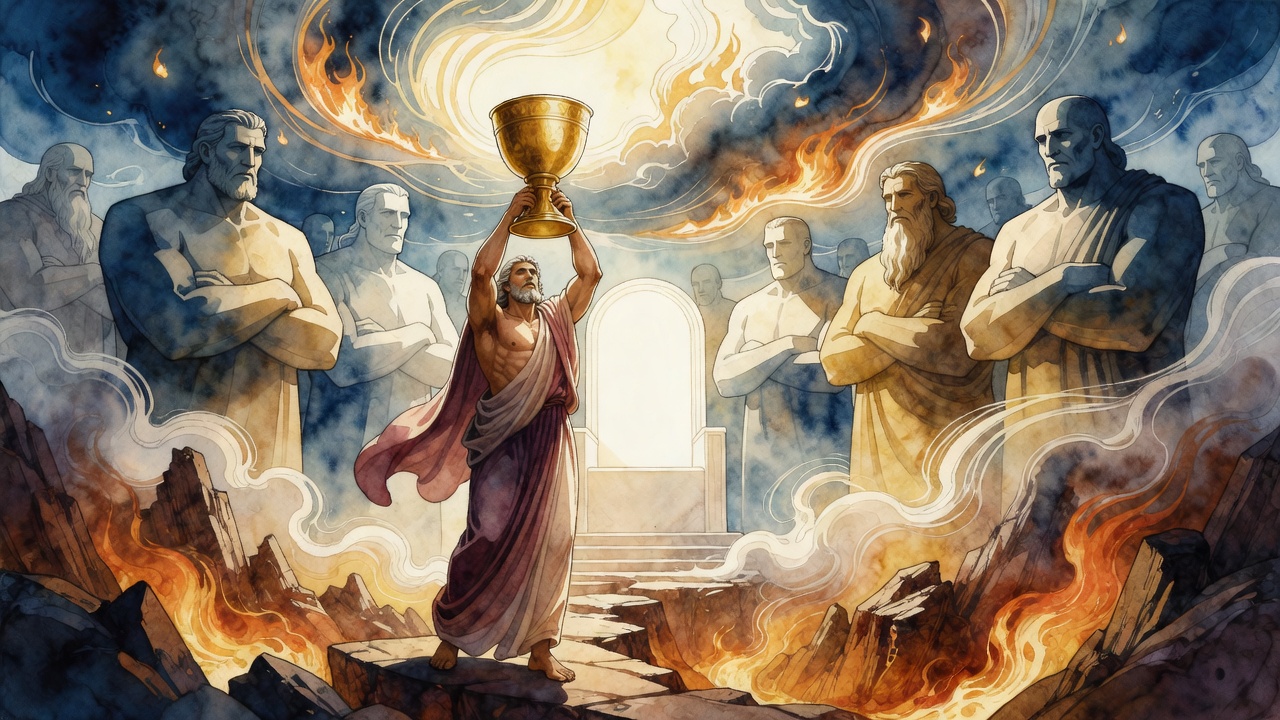
Seven men spanning the entire arc of human history, from the first human to the last king. The Messiah leads, and beneath him these seven shepherd Israel into whatever comes after the redemption. Moses is the sixth. David is the seventh. They stand at the end of the list, the two men whose stories most directly shaped the Torah and the kingdom that would carry it.

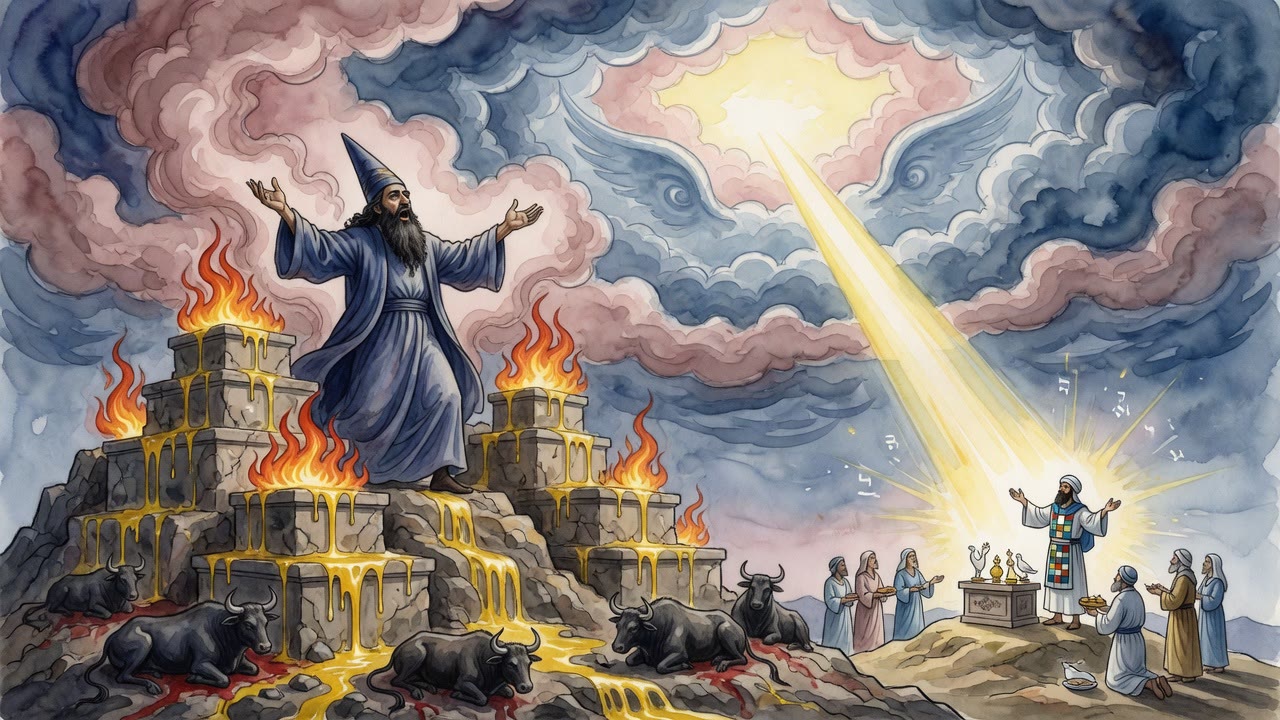
Moses never entered the land. He died on the mountaintop east of the Jordan with his eyes fixed on the horizon he would not cross. David died in Jerusalem, in the city he had established. Now, in the final accounting of the tradition, they will stand together as shepherds in the age when all of that unfinished business is completed.

The Man Who Could Not Cross the River

Moses had spent forty years leading Israel through the wilderness. He had received the Torah at Sinai, judged the people's disputes, managed their rebellions, argued with God on their behalf when God threatened to destroy them for the golden calf. He had been with them every step of the way from Egypt to the edge of the promised land.

Then God told him: your time is approaching. Go up to the mountain and see the land, because you will not cross the Jordan.

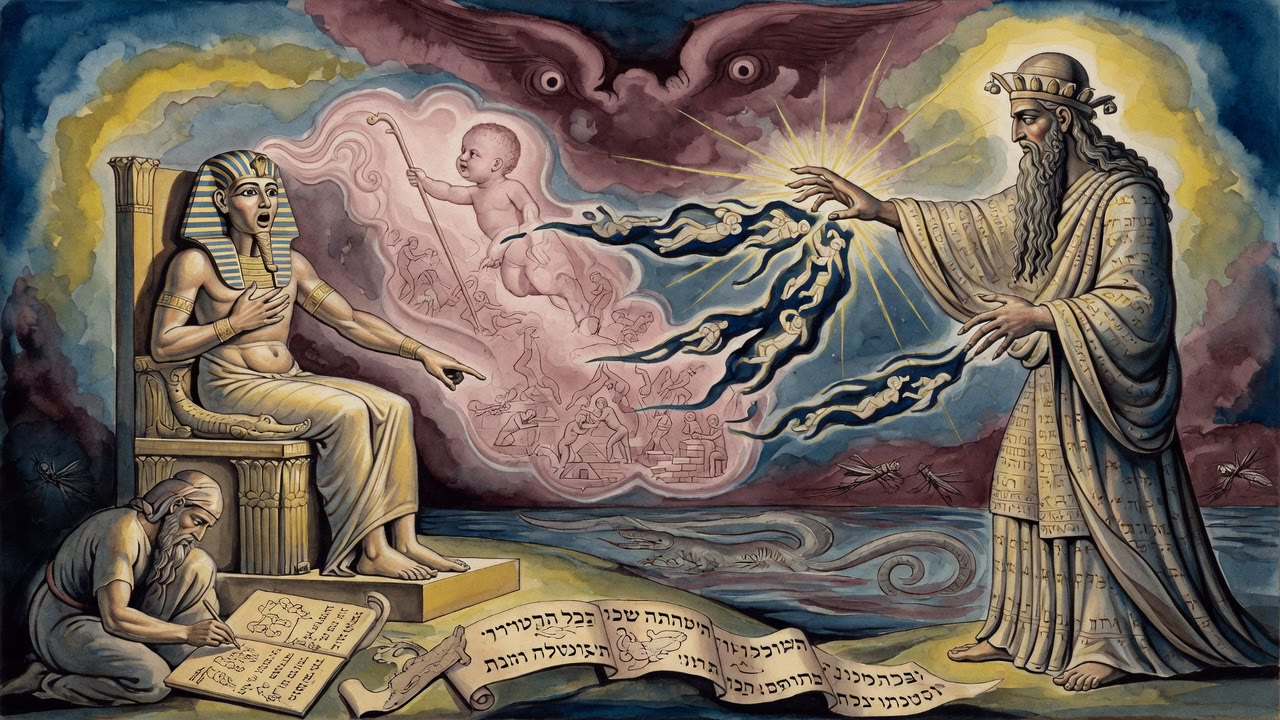
The tradition in Devarim Rabbah records what Moses did with that verdict. He did not simply accept it. He composed five hundred and fifteen prayers, one for each word of the prayer that begins: I pleaded with God. He stood at the edge of every argument he could construct for why he should be allowed to enter the land, and he made each one. The tradition says he pleaded in the form of every living creature, every form of petition available in the universe, trying to find an angle of approach that would move the decree.

God answered: enough. Stop praying about this.

What Moses Was Watching From the Mountain

God showed Moses the land from the summit of Pisgah. All of it, north and south, east and west, the territories that would be settled by each tribe, the cities that would rise, the people who would fill them. Moses saw all of this and then he died there, on the mountaintop, with the view in front of him.

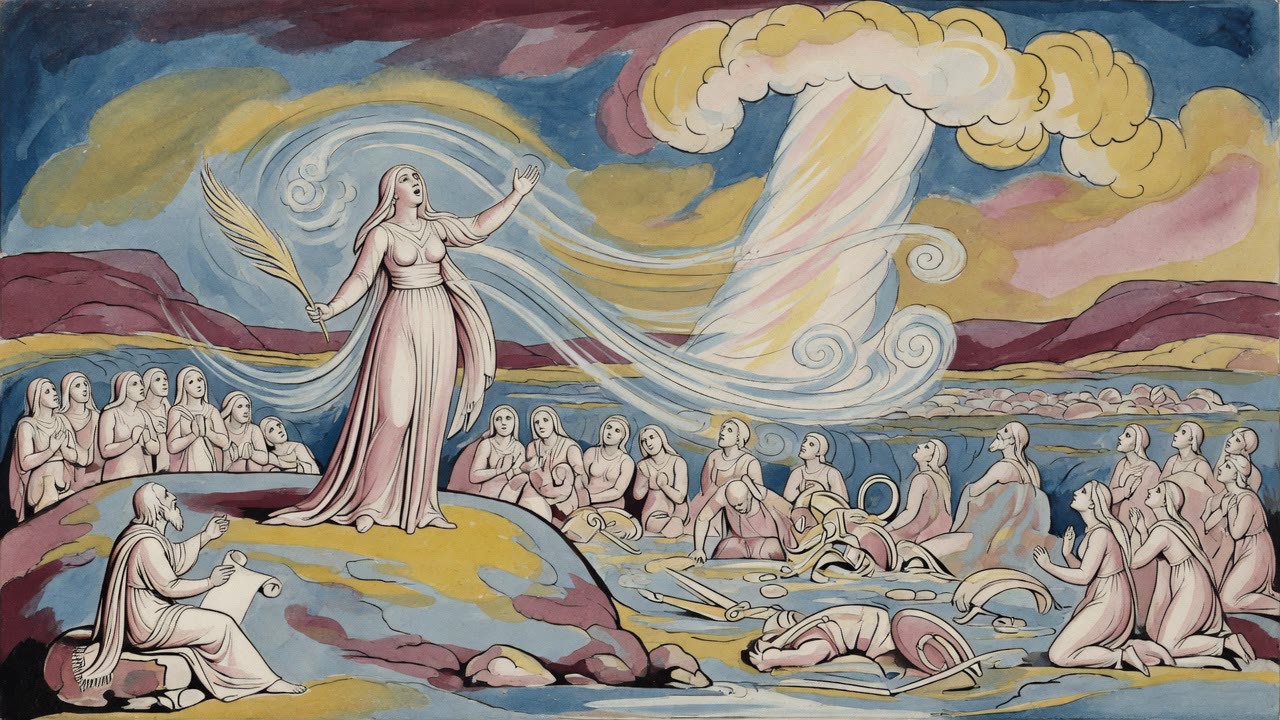
But the rabbinic tradition does not let Moses's story end at Pisgah. Shemot Rabbah, the Palestinian midrash on Exodus, reads the word az that appears when Moses led the song at the sea, and finds in that tiny word a connection to a verse in Psalms: your throne is established of old. The throne that was established in eternity is the same throne that was established when Israel sang at the sea. Moses's song at the sea and the eternal throne are part of the same moment. The man who died on the mountain looking at a land he could not enter was also the man whose song established something in the architecture of creation that has not been dismantled.

David in the Context of Moses

David comes last in the list of seven shepherds, and his presence at the end of it is not accidental. Moses gave Israel the Torah. David gave Israel the Psalms. Together they gave the tradition its two central modes of engagement with God: the law that structures life and the song that expresses what the law cannot contain. The Torah is Moses. The Psalms are David. Both will be needed in the messianic age.

A teaching preserved in the tradition imagines Moses in David's court, or rather imagines a scene in which the two men's missions are understood to be complementary from the beginning. Moses looked at the nations surrounding Israel and felt the weight of their numbers. What does God tell Moses in Deuteronomy immediately after the fear enters him? Do not be afraid of them. The tension between the feeling of being overwhelmed and the command not to be afraid is the same tension David would articulate in the Psalms, using different language for the same condition.

The Shepherds Who Did Not Stop

Adam, Seth, Methuselah: the antediluvian patriarchs, men who lived for centuries in a world before the flood had reorganized human mortality. Abraham, Jacob: the architects of the covenant. Moses: the law. David: the throne.

The list reads as a compressed history of everything that was built before the messianic age. Each shepherd represents not just a person but a phase of the relationship between God and Israel. The final age will require all of them, the tradition says. Not any one of them. The redemption will be complete only when all the threads of the relationship are held simultaneously, and there will be shepherds enough to hold them.

Moses on one side of the final listing, David on the other, the law and the Psalms bracketing the age that comes after everything else has been resolved.


← All myths

From the tradition

Sources

5 sources

The texts this telling draws on, in full. Open a card to read inline, or expand it for a wider, quieter read.

Legends of the Jews 4:196Legends of the Jews

It's going to be quite the leadership gathering.

Legends tell us that in that Messianic era, Moses himself will be one of the seven shepherds guiding Israel, right alongside the Messiah. Moses! Back in the fold, helping to lead the way to a perfected world. It’s an amazing thought, isn’t it?

Let's rewind a bit, back to the very beginning of Moses's incredible journey. Remember that burning bush?

As the story goes, when Moses famously "turned aside to see the great sight, that the bush was not consumed," he heard a voice booming out, "Draw not nigh hither." (Exodus 3:5). Simple enough. But there's so much more layered into those words.

According to the ancient sages, this wasn't just a warning about getting too close to a divine phenomenon. It was a profound lesson about humility, leadership, and knowing your place. The message, they say, was that the immense dignity and honor God intended for Moses was meant for him and him alone. It wasn't something to be passed down to his descendants as an inherited right.

More than that, Moses was being cautioned, in a way, not to overstep. He was being warned "not to arrogate honors appointed for others," as Ginzberg's retelling in Legends of the Jews beautifully puts it. See, the priesthood? That was destined for Aaron and his lineage. And royalty? That belonged to David and his royal house.

It's a crucial reminder, isn’t it? Even for someone as chosen and powerful as Moses, there were boundaries. There was a divine order to things. We all have our unique roles to play. Our own burning bushes, if you will. And it's up to us to recognize them, to step up, but also to respect the roles and callings of others.

So, next time you read the story of the burning bush, remember it's not just about a miraculous flame. It's a lesson in humility, boundaries, and the beautiful pattern of leadership that God weaves throughout history. And perhaps a glimpse into that future era, when figures like Moses will once again guide us.

Full source
Devarim Rabbah 11:8Devarim Rabbah

At the time when the days of Moses drew near for him to depart from the world, the Holy One, blessed be He, said to him: "Behold, your days draw near" (Deuteronomy 31:14). He said before Him: Master of the universe, after all this toil You say to me, "Behold, your days draw near"? "I shall not die but live, and recount the deeds of the LORD" (Psalms 118:17). He said to him: You cannot, "for this is the whole of man" (Ecclesiastes 12:13). Moses said: Master of the universe, one thing I ask of You before my death, that I may enter, and that all the gates in the heavens and the depths may be split open, and they will see that there is none beside You. From where? As it is said: "And you shall know this day, and lay it to your heart" and so forth, "there is none else" (Deuteronomy 4:39). The Holy One, blessed be He, said to him: You said "there is none else," so I too say: "And there arose no prophet again in Israel like Moses" and so forth, "for all the signs and the wonders" and so forth, "and for all the great terror which Moses wrought before the eyes of all Israel" (Deuteronomy 34:10-12).

Full source
Devarim Rabbah 2:2Devarim Rabbah

Deuteronomy, or Devarim in Hebrew, is full of Moses' final words, his reflections on a lifetime of leadership. And within the rabbinic compilation called Devarim Rabbah, a midrash – a kind of interpretive commentary – on Deuteronomy, we find a powerful exploration of just that theme.

It all starts with the verse, “I pleaded with the Lord” (Deuteronomy 3:23). But the rabbis don't just take it at face value. They delve deeper, connecting it to a verse from Psalms (39:12): “You chastise a man with punishments for iniquity, consuming his delight like a moth. Surely man is mere nothingness.” What's the link?

The midrash argues that Moses is being "chastised with punishments for iniquity" because of one specific moment. Remember when Moses, frustrated with the Israelites, called them "defiant ones" (Numbers 20:10) before striking the rock to bring forth water? That, the midrash suggests, was Moses' iniquity.

Who is this "man" being spoken of? The midrash is clear: it's none other than Moses himself, "the man Moses [who] was very humble" (Numbers 12:3). So, even the humblest among us, the greatest prophet, can stumble.

But what about the "consuming his delight like a moth" part? What delight are we talking about? According to the midrash, it's Moses' deepest desire: to enter the Land of Israel. Just as a moth slowly eats away at a garment, so too did Moses’ sin prevent him from reaching his ultimate goal. As we find in Jeremiah (3:19), God promises to give "a land of delight..." – the very thing denied to Moses.

It's a harsh interpretation, isn't it? One slip-up, and a lifetime of longing goes unfulfilled. But the midrash doesn't stop there. It uses Moses’ experience to make a broader point: if this is what happened to righteous Moses, how much more so are the rest of us destined for "nothingness" and judgment?

Rav Aḥa adds a final, poignant layer to this interpretation. He points out that Moses, who was once elevated to the status of a god – elo’ah in Hebrew, as it says, "I have put you as a god [elohim] for Pharaoh" (Exodus 7:1) – is now pleading and prostrating himself. Even someone who held such a high position is brought to his knees in supplication.

So, what do we take away from this midrash? Is it a warning about the severity of divine judgment? Perhaps. But maybe it's also a reminder of our shared humanity. Even the greatest among us are fallible, subject to mistakes and their consequences. And even in the face of those consequences, there's still room for pleading, for repentance, and for striving to be better. It's a humbling thought, isn't it? It reminds us that even when we feel like we're being eaten away by the "moths" of our own mistakes, we can still turn to something greater than ourselves.

Full source
Midrash Tehillim 3:9Midrash Tehillim

Even Moses, leading the Israelites out of Egypt, felt that way. He looked at the nations surrounding them, nations far more numerous, and thought, "These nations are more numerous than me" (Deuteronomy 7:17). It's right there in the Torah. But what does God tell him immediately after? "You shall not be afraid of them" (Deuteronomy 7:18).

That tension – the feeling of being overwhelmed versus the call to courage – is at the heart of our reading today, a passage from Midrash Tehillim, a collection of rabbinic interpretations on the Book of Psalms.

The Rabbis find layers and layers of meaning in these words. It's not just about physical battles, but also about the struggles we face throughout history, and even the battles within ourselves.

The Psalm continues, "Arise, O Lord; save me, O my God!" Rabbi Pinchas, quoting Rabbi Hoshea, points out that David, traditionally considered the author of the Psalms, uses this very verse five times in the first book of Psalms. And what do these five instances represent? According to this Midrash (rabbinic interpretive commentary), four correspond to the four empires that oppressed Israel – Babylon, Persia, Greece, and Rome. And the fifth? It represents Gog and Magog, the ultimate battle at the end of days. So, even in David’s time, these words echoed with a sense of past oppressions and future anxieties.

And then comes the line, "For You have struck all my enemies on the cheekbone." This one is fascinating. Rabbi Levi interprets this as a plague of the mouth. He connects it to a verse that says, "And he commanded his house, and they strangled him." It’s a bit cryptic, isn’t it? The idea seems to be that the enemies are silenced, their power of speech and influence taken away.

Rabbi Ahava offers a different, equally compelling take. He says it refers to those who acted like mighty men, like Samson, drawing a parallel to the story where Samson defeats his enemies with the jawbone of a donkey. "And he found a fresh jawbone of a donkey..." (Judges 15:15). Two wicked people were shattered. In both interpretations, there's a sense of divine justice, of God intervening to protect the vulnerable.

The passage concludes with a powerful sentiment: "If you act in this way for the Lord, your blessing will be upon your people. Selah." Selah – a word we find throughout the Psalms, often interpreted as a pause, a moment for reflection. What are we meant to reflect on here? Perhaps it’s the idea that our actions, our courage in the face of adversity, can bring blessings not just to ourselves, but to our community, to our people.

So, what do we take away from this ancient text? Maybe it’s the reminder that we all face moments of feeling outnumbered, outmatched. But within those moments, there's also the potential for courage, for faith, and for the belief that even in the face of overwhelming odds, we are not alone. And that our actions, inspired by faith and a commitment to justice, can bring blessings to the world around us.

Full source
Shemot Rabbah 23:1Shemot Rabbah

Pay close attention to that little word, "Then" – in Hebrew, az. "Az Moses sang.." That tiny word holds a universe of meaning, according to Shemot Rabbah, a collection of rabbinic interpretations on the Book of Exodus.

Shemot Rabbah 23 draws a profound connection between that moment of song and a verse from Psalms: "Your throne is established of old [me’az]; [You have existed from eternity]" (Psalms 93:2).

Rabbi Berekhya, quoting Rabbi Abahu, offers a stunning idea: Even though God has existed eternally, His throne wasn't truly settled, He wasn't fully known in the world, until His children sang that song. It was only then, with that az, that things shifted. Think of it like this, and this analogy comes straight from Shemot Rabbah: Imagine a king who goes to war and wins. Before the victory, he’s still a king, sure. But afterward? They make him an emperor.

What's the difference? Well, a king is often depicted standing, ready for battle. But an emperor? He's shown seated, having already conquered his enemies, at rest upon his throne. He's established.

The text contrasts the Hebrew words me’az (from then) and az (then). Before creation, before the splitting of the sea, God was. But there’s a distinction. The text implies God was, “as it were, standing,” as it says in (Habakkuk 3:6), "He stood and measured the earth."

But when the Israelites stood at the sea and sang that song, with that powerful word "az," then God's kingdom was settled. Then His throne was established. "Your throne is established of old [me’az]," because "az Moses sang."

What does this all mean? It suggests that our praise, our acknowledgment of God's power and presence in the world, isn't just a one-way street. It actually establishes God's reign in a new way. Our song, our gratitude, our very recognition of the Divine, solidifies the throne. As Ginzberg retells it in Legends of the Jews, the song elevated God's status in the eyes of the world.

It's a participatory relationship. It's not just about God acting upon us, but about us, through our actions and especially through our expressions of faith, creating a space for the Divine to be fully realized.

Food for thought, isn't it? Next time you sing a prayer, or express gratitude, remember the Song at the Sea. Remember az. You're not just reciting words; you're helping to establish the very throne of God in the world.

Full source