Moses Carried the Whole Torah on One Set of Shoulders
Moses refused to weigh the Tabernacle silver unless another man stood in the room and wrote the numbers down beside him.
Table of Contents
 Click for full size
He Would Not Count It Alone
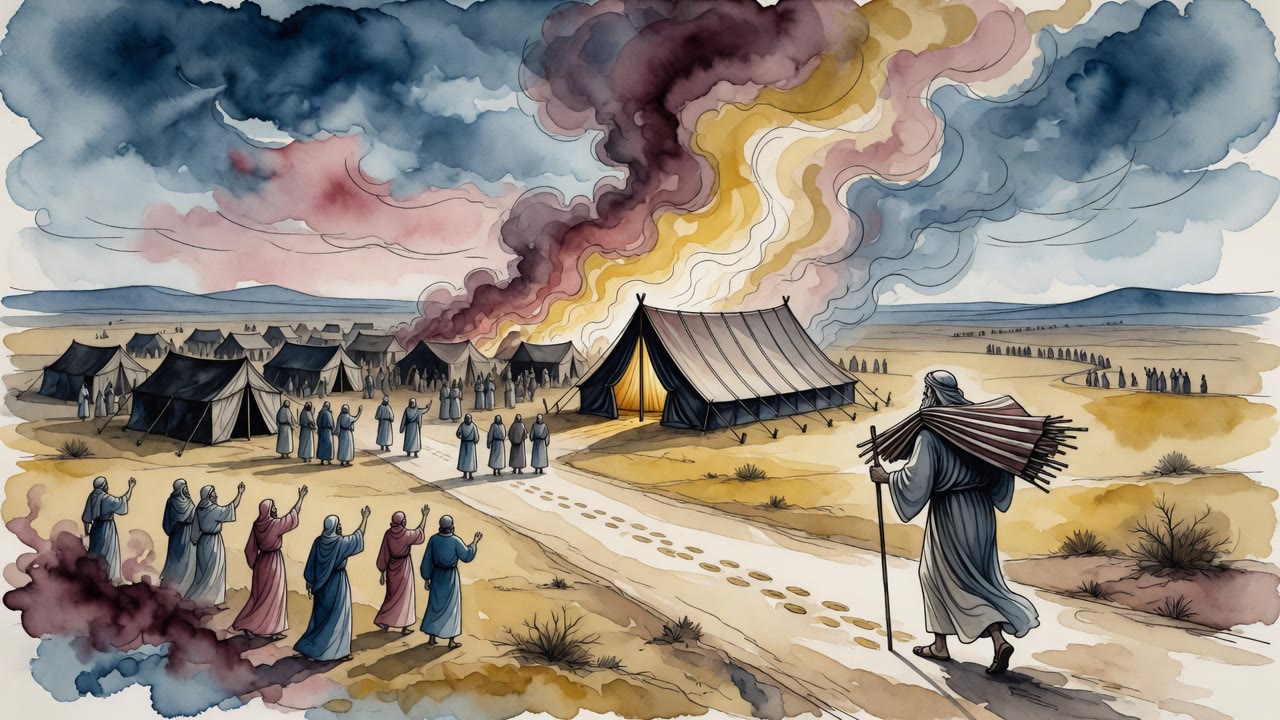
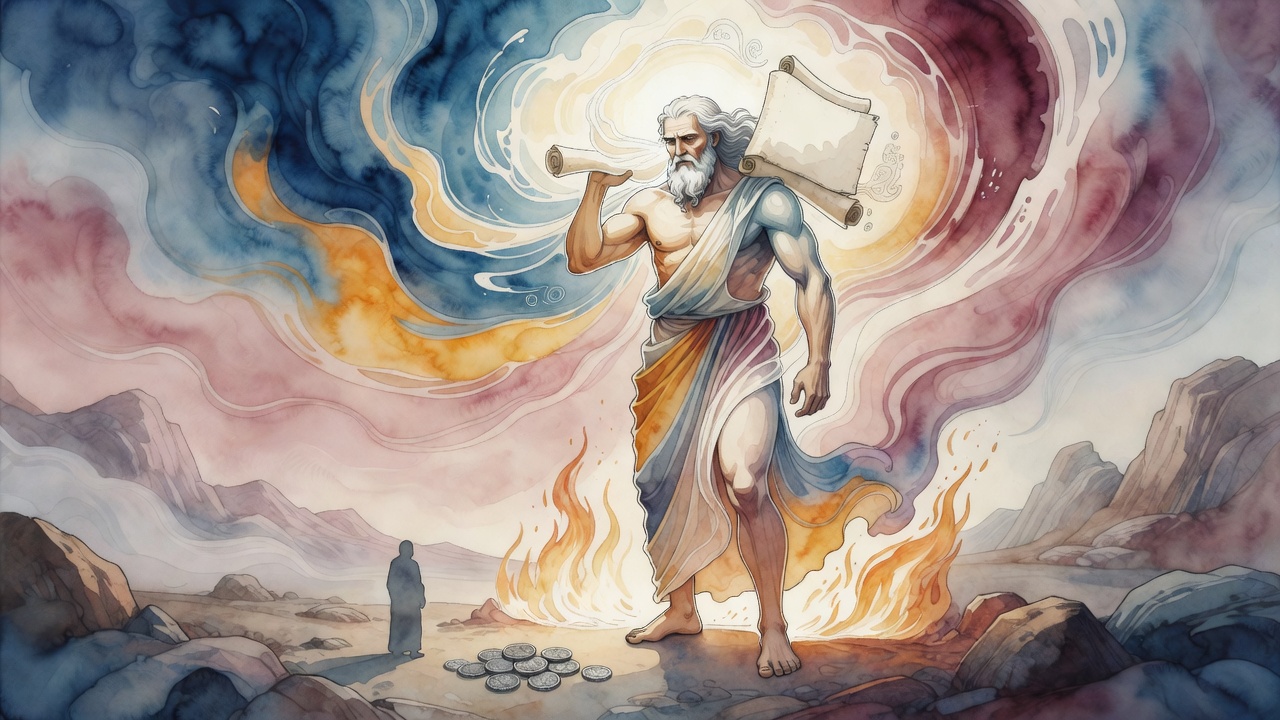
Moses stood at the door of the Tent with the silver stacked in the open behind him, and he would not begin. The craftsmen waited. The women who had brought their mirrors waited. He had been appointed over the whole treasury by God, answerable to nobody in the camp, and he stood there with his hands at his sides until Itamar came.
Itamar arrived with a wax tablet. Aaron's son, the youngest of the priestly household, given the Levites and their carts to manage and now given this. Moses called the weights out loud and Itamar wrote them. Gold, so much. Silver, so much. Bronze, and the sockets it went into, and the hooks, and the clasps that held the sheeting on the pillars. Anyone who had given a ring could stand in the crowd and follow the number to the object it had become.
When the account was read back it did not say that Moses reckoned. It said the reckoning was made at the mouth of Moses, by the hand of Itamar.
He had been appointed alone. He refused to serve alone.
The Levite Who Was in a Hurry
Years later a Levite named Korah stood in front of the same Tent and asked why the priesthood should sit in one family forever. He had two hundred and fifty men behind him holding fire pans. He wanted the office, and he wanted it that season, and he said so in front of the whole assembly.
The ground under his feet split. It opened like a mouth and took him down with his household and his fire pans while the camp ran from the sound. A man who hurries to get rich does not come away clean, and Korah went down into the earth alive.
Moses had spent the years of the Tabernacle making that accusation impossible against himself. Not by being incorruptible. By keeping a witness in the room.
Six Hundred and Eleven Through One Throat
At the mountain the people had heard exactly two commandments in the voice that made the world. I am the Lord your God. You shall have no other gods before me. Both of those went straight into their ears with nothing in between.
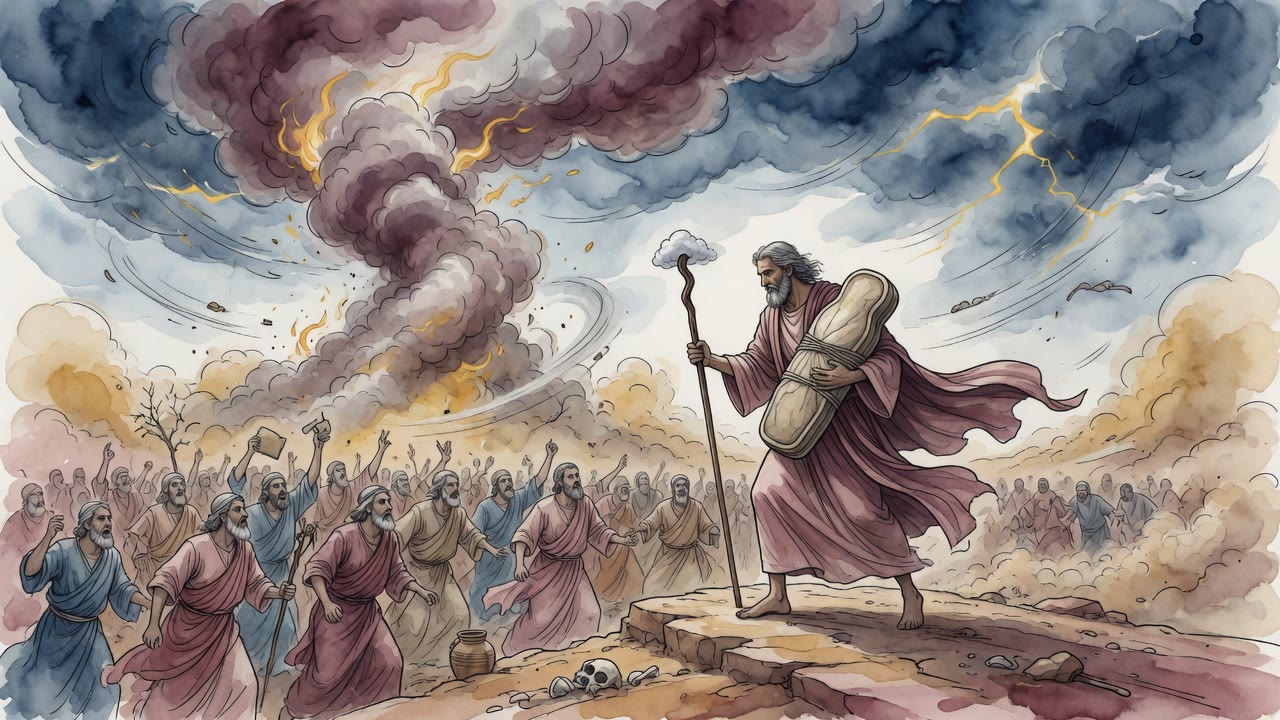
Everything else came through Moses. Six hundred and eleven laws, which is the number folded into the letters of the word Torah, carried down in one man's memory and handed over in one man's speech. What to do with a goring ox. What to do with a widow. When to rest, whom to marry, how to weigh, when to let a field go quiet for a year. He said them and the people took them and that was how the law arrived.
Whatever he was put in charge of came out blessed, and God said of him that in the whole household there was nobody like him for trust.
The Climb That Ended
Before Sinai, when Moses wanted God, he climbed. Up the mountain into the cloud and down again, up and down, a man walking to the house of the one he wanted to be near. A young man goes to his father-in-law's house every day until the wedding. After the wedding the father comes to him.
So the climbing stopped. Make me a sanctuary, God said, and I will dwell among them, and the whole traffic reversed direction. Moses was no longer the man going up. He was the man holding the door.
Ten Curtains and the Water That Could Not Reach Them
The curtains came out of the camp one at a time. Fine twisted linen shot through with blue and purple and scarlet, cherubim worked into the weave by hands that had spun thread in Egyptian brickyards, ten of them, joined by fifty gold clasps into one skin. Every cubit was measured. Nothing about it was approximate.
Nations would roar at that tent afterward the way the sea roars at a shore, and rivers would rise against it out of the east, and none of it would put out what those curtains had bought. A man who offered his entire house for love would be laughed at in the street. These people had offered wool and thread and the metal off their own arms, and it worked.
The Door He Could Not Walk Through
The cloud came down on the finished Tabernacle and settled there, and the glory filled the inside of it until there was no room left for a body.
Moses stopped at the entrance. He had carried six hundred and eleven commandments down a mountain and named every shekel of the silver in front of witnesses, and he stood at the doorway of the house he had built and could not go in.
← All myths