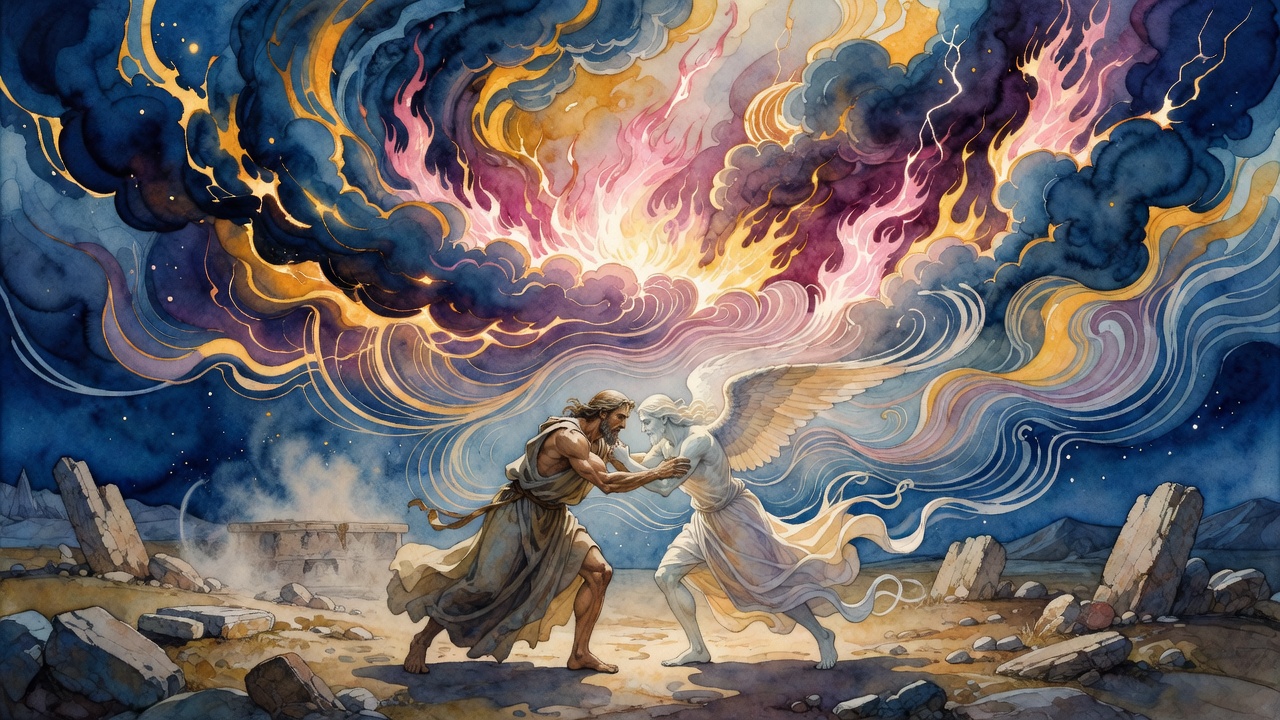
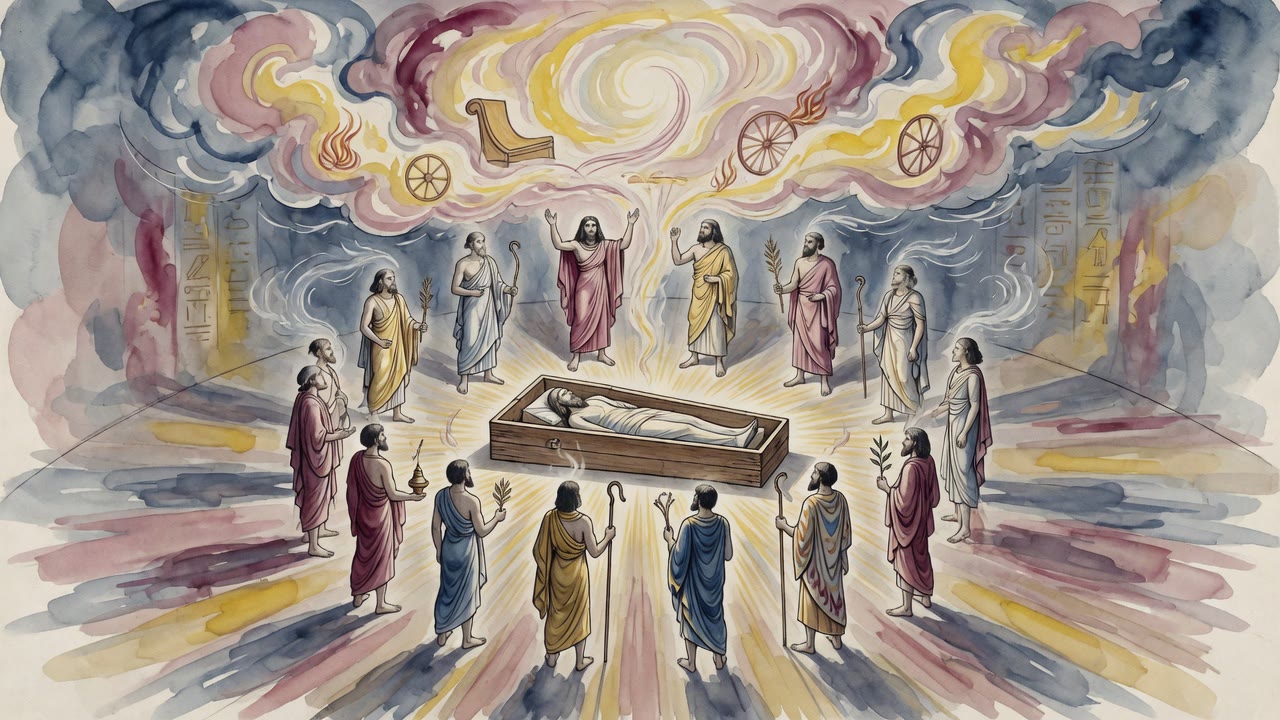
Moses Carried Joseph's Bones While Israel Turned Against Him
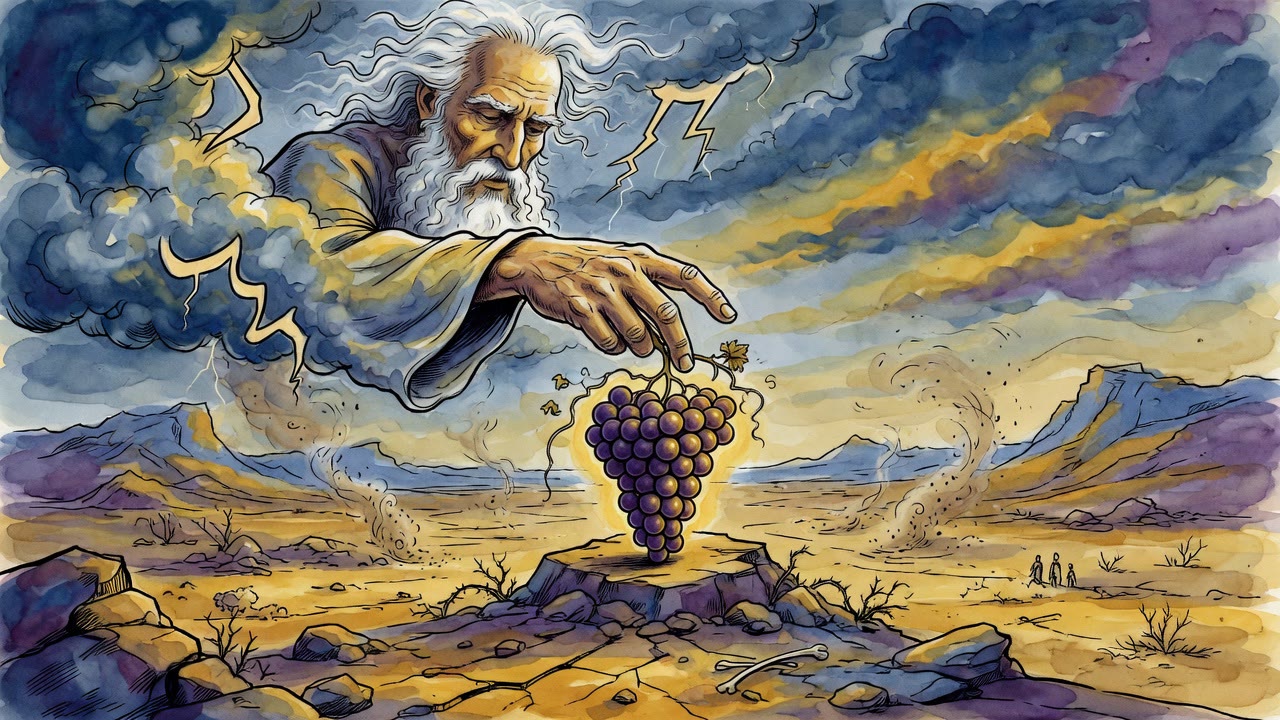
The people wept for meat and called the manna worthless. Moses told God the weight was too heavy and asked to be killed rather than watch it.
Table of Contents
 Click for full size
Sinai Was Chosen Because It Was Low
God chose Mount Sinai for the revelation. Other mountains objected. Tabor said: I am high, give me the Torah. Hermon said: I bore the crossing of the Jordan, give it to me. Sinai was low and said nothing. The tradition recorded in the Legends of the Jews holds that what qualified Sinai was its silence and its modesty. A mountain that did not argue for itself was the right place for a law given to people who were supposed to become humble before it.
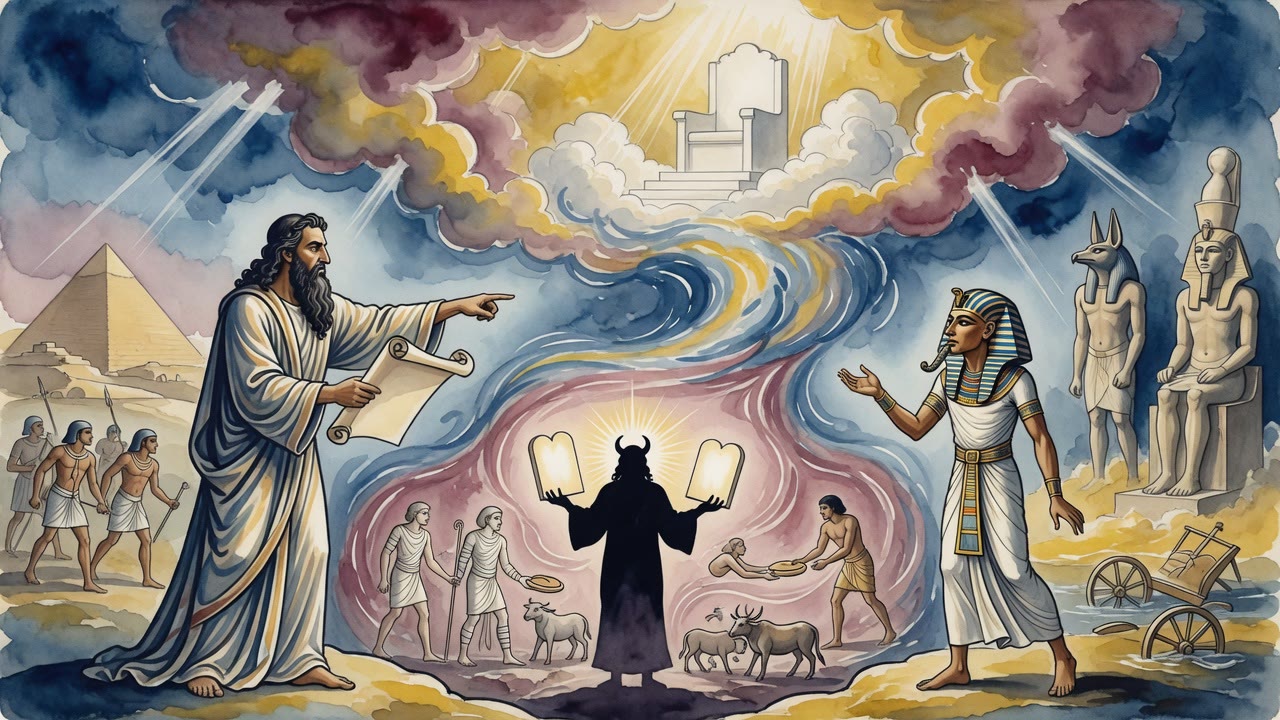
Moses was chosen on the same principle. When God appeared at the burning bush and commanded him to go to Pharaoh, Moses produced every reason why someone else should go instead. He was slow of speech. He had already failed once. His people were stubborn and Pharaoh was powerful. He was not the right man for this work. What he could not hear in his own objections was that they made him exactly right: a leader who does not want the role cannot be corrupted by it the way a leader who craves it can.
Joseph's Memory Traveled With the Camp
When Israel left Egypt, everyone else gathered what they could carry. Gold, silver, garments. Moses went to recover Joseph's bones. Joseph had made the children of Israel swear to carry his bones out of Egypt when God remembered them and took them out. The oath had been made four hundred years earlier. Moses honored it before he honored anything else at the departure.
That act is the first lesson of Moses's leadership: the debts of the past travel with the camp. You do not begin fresh at the Exodus. You carry what was promised to those who came before you, who suffered before you, who extracted oaths from their descendants because they understood that promises cross generations or they die. Moses took the bones because Joseph had been right to ask, and the camp that carries its debts is not burdened but anchored.
The Census Counted Embryos
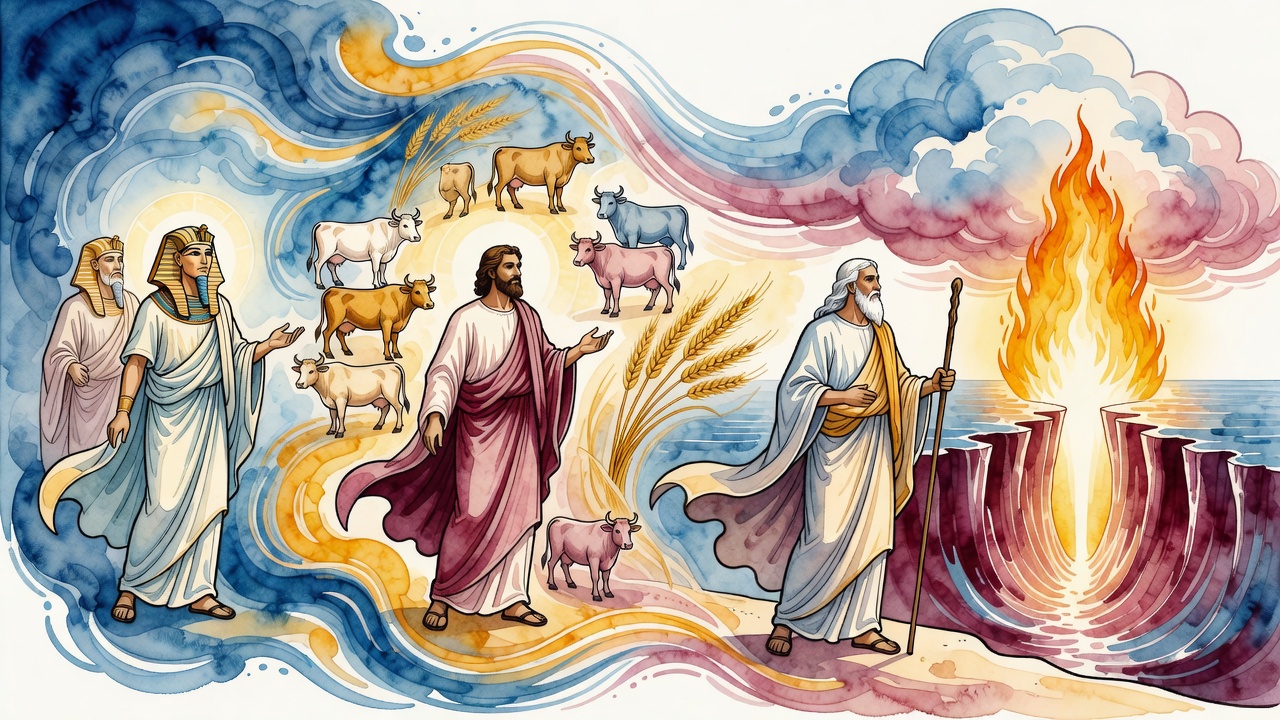
When God commanded the census of the Levites, Ginzberg records the tradition that even Levite children still in the womb were counted. God could see into the bodies of the mothers and count what was not yet born. Moses could not. He had to rely on what God told him, which is how the numbers arrived precisely. The census was not a count of what was visible. It was a count of what God knew and Moses trusted.
That trust becomes a form of leadership: the ability to carry numbers you cannot verify because you believe the source of the count. Moses led a people whose full size he could not see. He led them into a wilderness where the provisions were not visible until the morning they arrived. Leadership under these conditions is not about commanding what you control. It is about moving toward what you have been promised is there.
Moses Reached His Breaking Point
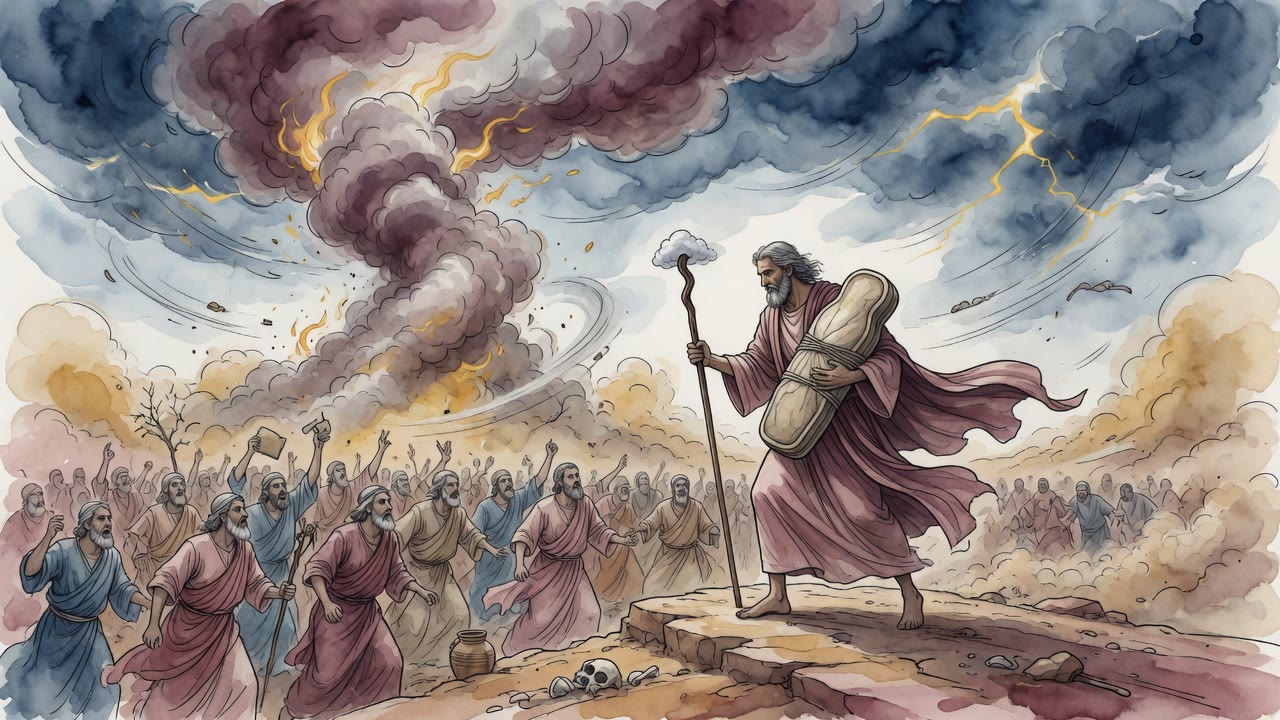
At some point in the wilderness, the complaints became too heavy. The people wept and demanded meat. They said Egypt had been better. They said the manna was worthless. Moses turned to God and said: I cannot carry this whole people alone. The weight is too heavy for me. Kill me, if this is what you have for me. Let me not see my own misery.
Ginzberg reads that moment not as failure but as the honest edge of a human being who has been carrying more than a human frame was built for. God's response was not rebuke but distribution: gather seventy elders, and I will take of the spirit that is on you and put it on them. Moses's breaking point produced the council. The limit of one person's endurance became the occasion for expanding the network of those who could share the weight.
The Waterless Desert and the Final Turn
At the waters of Meribah, there was no water. The congregation assembled against Moses and Aaron. They said: why have you brought us into this wilderness to die? The wording was familiar. Moses had heard the complaint in different forms for forty years. At Meribah, he struck the rock instead of speaking to it. That deviation, after everything, was the one that cost him the land.
He carried Joseph's bones for forty years, honored an oath made four hundred years before his birth, led a people who called Egypt paradise when they were thirsty, and the precise boundary between what he was permitted to do and what he was not was a single gesture at a single rock. The leader who had been chosen for his modesty could not, in the end, keep the modesty intact when the people were calling for his death for the hundredth time. He was human after all, which is what made everything he had managed until then extraordinary.
← All myths