5 min read

Three Times Moses Corrected God and Feared Og

Moses argued law with God, spared children from inherited guilt, sent peace to Sihon, then trembled before Og's ancient shadow.

Curated by Arthur · Told by Maggid ·
Table of Contents
  1. The Calf Made the Singular Burn
  2. Children Left Their Fathers' Shadow
  3. Peace Went Before the Sword
  4. The Ravines Carried the Proof
  5. Og Still Made Moses Tremble

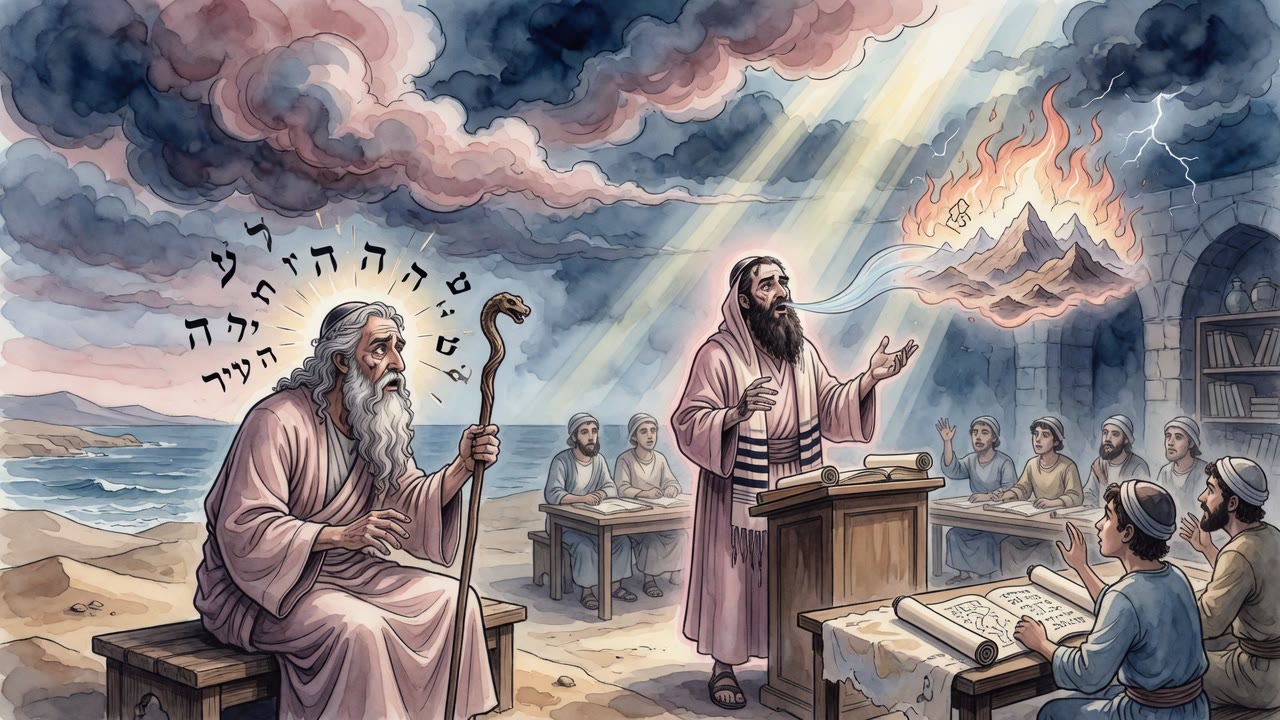
Moses did not only bring law down from heaven. Three times in the wilderness, he pushed law back upward.
\n\n

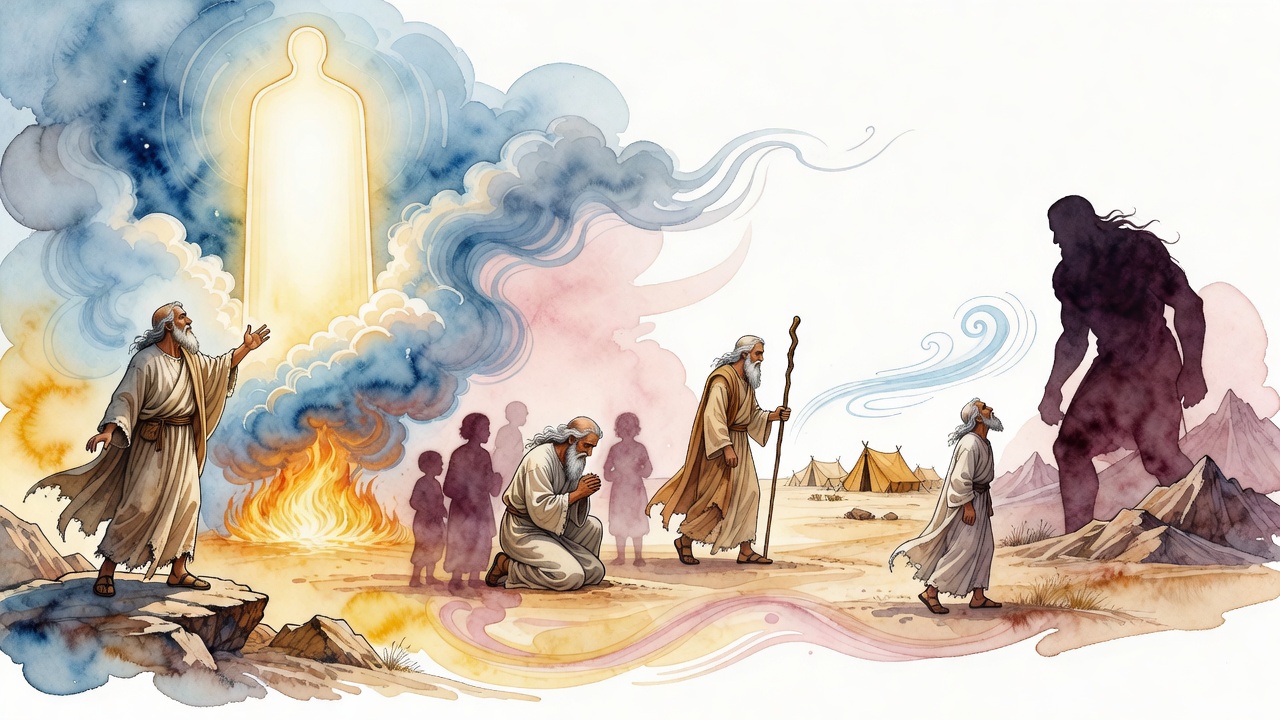
He had once stood barefoot and afraid before the burning bush. After Sinai, something in him had changed. He still feared sin. He still feared giants. But when a decree struck him as wrong for Israel, he stood before God and made the case.

\n\n

The Calf Made the Singular Burn

\n\n

The first argument rose from the golden calf.

\n\n

Israel had come out of Egypt with idolatry still clinging to the eye. They had heard thunder at Sinai, but they had also stood at a distance. Moses had gone up the mountain. Moses had received the words. Even the command began in the singular: I am the Lord your God, using the form that could be heard as one man addressed.

\n\n

So Moses stood before God and pressed the heart of it. \"From where were they supposed to know? You spoke to me. Did I sin?\"

\n\n

It was a dangerous defense. Moses did not excuse the calf. He argued jurisdiction. If the law had landed formally in one pair of hands, how could the whole camp be judged as if each person had received it face to face?

\n\n

God accepted the argument. \"You have spoken well,\" God said. From now on the word would widen from the singular to the plural, from elohekha to eloheikhem, from one addressed servant to the whole people standing under command.

\n\n

Children Left Their Fathers' Shadow

\n\n

The second argument cut into inheritance.

\n\n

God had spoken of reckoning the iniquity of fathers upon children. Moses brought names, not theory. Terah served idols, but Abraham rose from his house righteous. Ahaz was wicked, but Hezekiah stood upright after him. Amon did evil, but Josiah cleansed what his father had stained.

\n\n

Should the son be crushed because the father's hands were dirty?

\n\n

Moses would not let bloodline swallow judgment. A house can hand down gold, wounds, habits, and shame. It cannot make a righteous child guilty by birth. God answered with the same astonishing phrase: \"You have taught Me.\"

\n\n

The decree bent. Fathers would not be put to death for children. Children would not be put to death for fathers. Each soul would stand in its own place. God even wrote the changed law under Moses' name, as if the prophet's argument had become part of the Torah's own memory.

\n\n

Peace Went Before the Sword

\n\n

The third argument came at the border of war.

\n\n

Sihon, king of Heshbon, stood ahead of Israel. God told Moses to rise, cross the Arnon ravine, take possession, and provoke war. Moses did not begin with the sword. He sent messengers.

\n\n

Peace went first.

\n\n

The messengers carried a path that could have spared blood: let Israel pass. Sihon refused. Only then did battle come, and God gave him into Israel's hand.

\n\n

Again the answer came from above. \"You have taught Me.\" From then on, when Israel approached a city for war, peace had to be called to it first. Moses had not weakened the command. He had forced violence to wait at the door while mercy knocked.

\n\n

The Ravines Carried the Proof

\n\n

Sihon's open army was not the only danger.

\n\n

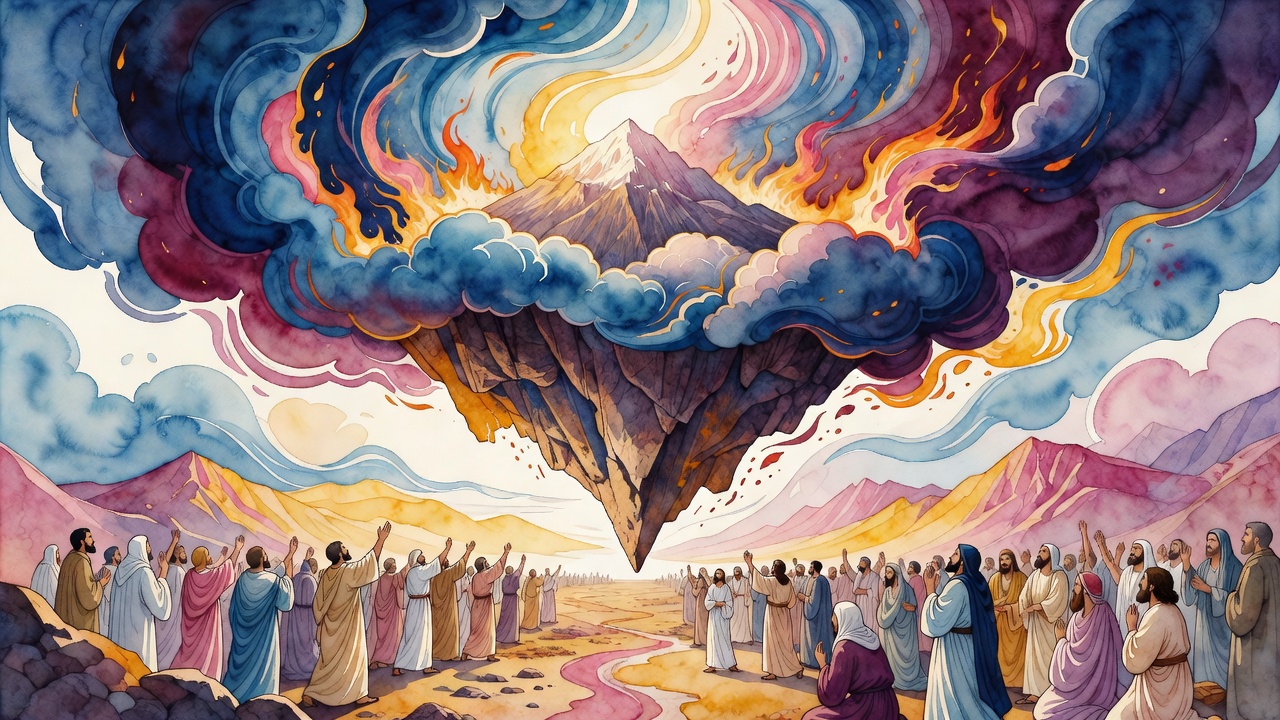
Men hid in caves, waiting to strike Israel from the dark. God hinted to the mountain, and the mountain crushed them. The dead remained hidden where Israel could not see the rescue. A hidden miracle can leave a saved people thankless, so God moved the mountains apart and let the streams wash the remains through the ravines.

\n\n

Only then did Israel sing.

\n\n

Their song rose beside the well, but Moses' name was missing. He heard the music and felt the decree around him tighten. From the wilderness came Matana, the gift of Torah. From Matana came Nachaliel, God's inheritance. From Nachaliel came Bamot, and in that name Moses heard death climbing out of the ravine. From Bamot the path ran toward the canyon in Moab, where his own grave waited.

\n\n

Og Still Made Moses Tremble

\n\n

After Sihon fell, Og king of Bashan stood before him.

\n\n

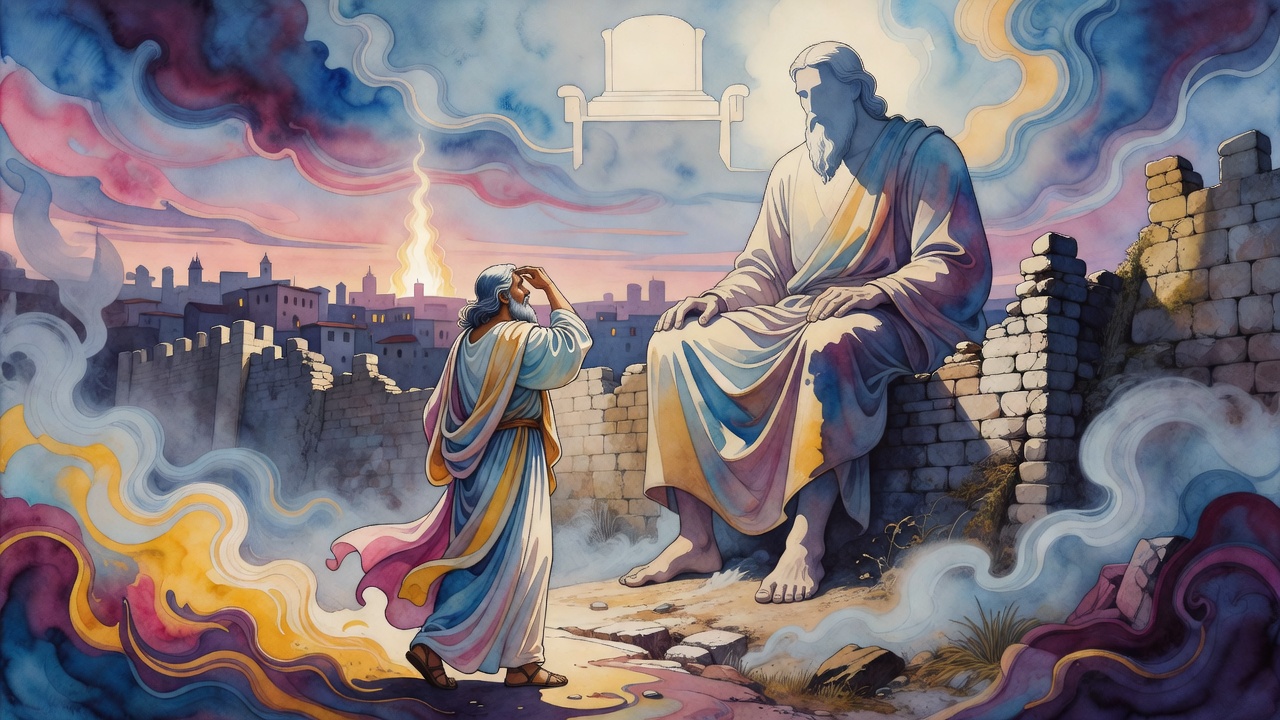
Moses had corrected decrees, argued law, and watched mountains obey a hint from God. Still, Og's size shook him. The giant was more than five hundred years old. Moses was one hundred and twenty. Long life might mean hidden merit. Og had escaped Amraphel when other giants fell. Perhaps God had favored him. Perhaps Israel had sinned in the war just finished, and protection had thinned.

\n\n

The pious do not treat promises like armor they can own. They fear the damage sin can do.

\n\n

God cut through the shadow. Og's fall had been decreed long before, from the hour he looked with an evil eye on Jacob and his family as they entered Egypt. That eye would burst. The giant would fall into the hands of the children he had despised.

\n\n

Moses went forward, not because fear vanished, but because God named the fear and answered it.

\n\n

← All myths

From the tradition

Sources

4 sources

The texts this telling draws on, in full. Open a card to read inline, or expand it for a wider, quieter read.

Bamidbar Rabbah 19:33Bamidbar Rabbah

In Jewish tradition, there are moments where even MOSES, our greatest prophet, seems to do just that. to one of those fascinating instances from Bamidbar Rabbah 19.

The verse But this isn't just about a song. According to this Midrash (rabbinic interpretive commentary), it's one of three times Moses essentially tells God, "You know, maybe we can do this a little differently."

The first instance touches upon the giving of the Torah. Moses asks God, essentially, how the Israelites were supposed to know right from wrong after the sin of the Golden Calf. They grew up in Egypt, surrounded by idolatry! God gave the Torah to Moses alone, as (Exodus 24:1) states, “To Moses, He said: Ascend to the Lord.” And when God gave the commandments, He said in (Exodus 20:2), "I am the Lord your God [elohekha]" – using the singular "your," implying it was directed to Moses alone, not the entire nation. Did they even know they were sinning?

God's response? "As you live, you have spoken well. You have taught Me. From now on I will speak with the expression: 'I am the Lord your God [eloheikhem].'" God acknowledges Moses' point and shifts the language to address the entire community.

The second instance involves the concept of inherited sin. God says in (Exodus 34:7), "Reckoning the iniquity of the fathers upon children." Moses challenges this, pointing out that many wicked men have righteous sons – Terach and Abraham, Ahaz and Hezekiah, Amon and Josiah, to name a few. Should the righteous suffer for their fathers' sins?

Again, God concedes. "You have taught Me," He says. "As you live, I am voiding My words and fulfilling your words." This principle is then enshrined in (Deuteronomy 24:16): "Fathers shall not be put to death for children, and children shall not be put to death for fathers." And God makes sure it's written in Moses' name, as we see in II (Kings 14:6): "As it is written in the book of the Torah of Moses that the Lord commanded..."

The third instance is perhaps the most striking. God initially commands Moses to attack SIHON, king of Heshbon, even if Sihon doesn't provoke war. (Deuteronomy 2:24) says, "Rise, and travel, and cross the Arnon ravine... begin taking possession, and provoke war with him." But Moses doesn't. He sends messengers instead, as described in (Deuteronomy 2:26).

God, again, says, "You have taught Me. As you live, I am voiding My words and fulfilling your words." This leads to the commandment in (Deuteronomy 20:10): "When you approach a city to wage war against it, you shall call to it for peace." And when Sihon refuses, God delivers him into their hands, as it says in (Deuteronomy 2:33), "We smote him."

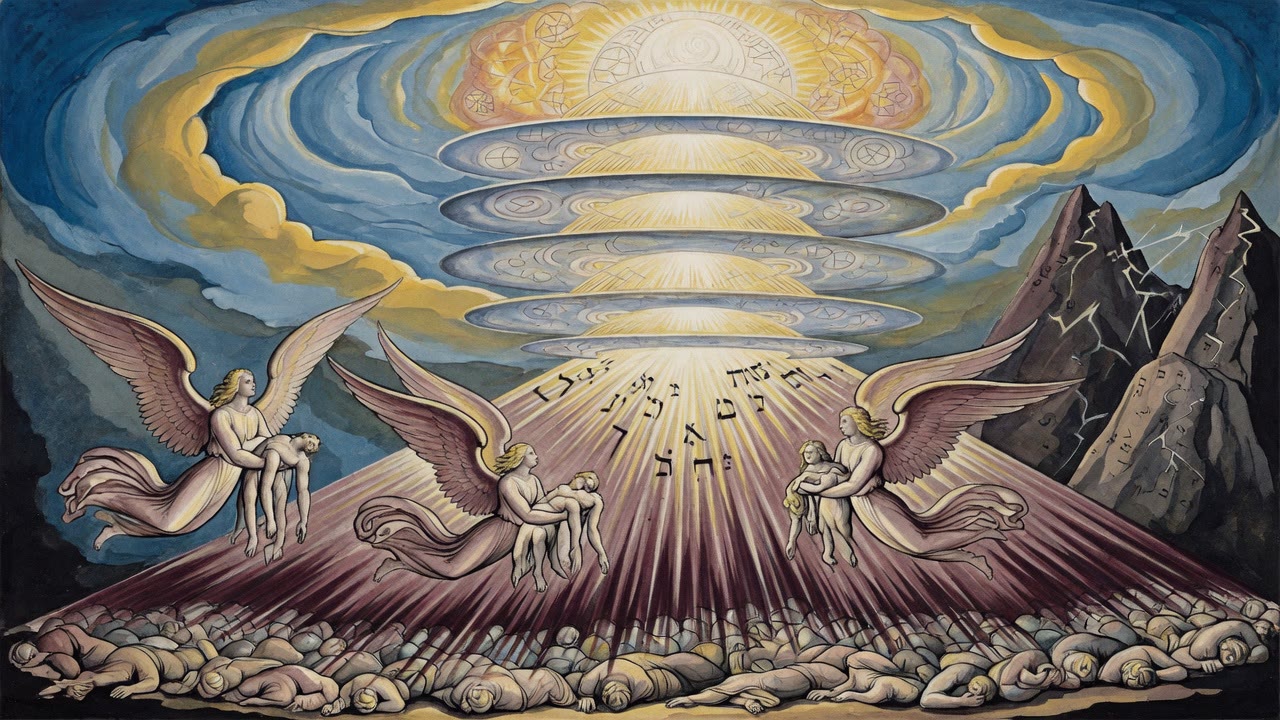
But the story doesn't end there. Even those who hid in caves to ambush the Israelites were defeated. The Midrash says that God intimated to the mountain, and it crushed them, as it says in (Psalms 74:13-14), "You broke the heads of crocodiles on the waters. [You] crushed the heads of leviathan." To ensure that Israel knew the good God performed on their behalf, He distanced the mountains and the streams washed away the remains of the enemy, as in (Numbers 21:15), "The outpouring of the ravines."

This leads to the song of Israel, acknowledging God's miracles. But Moses, strangely, isn't mentioned in the song. He cries out, "Master of the universe, after all the miracles that You performed on their behalf, will I die at their hand?" He points out how he led them from the wilderness, giving them the Torah – a matana, or gift. Yet, it seems his death is now decreed. The Midrash interprets the place names in (Numbers 21:18-20) as alluding to Moses' fate: from Matana to Nachaliel (God became their heritage), then from Nachaliel to Bamot (from the ravine came death – mot), and finally to the canyon in Moab where he was buried.

So, what does it all mean? This passage in Bamidbar Rabbah paints a picture of a God who is not only all-knowing but also open to dialogue, even correction. It suggests a dynamic relationship between God and humanity, where even Moses, in his humility and wisdom, can offer insights that shape divine action. It reminds us that even the greatest leaders are not above learning, and that true leadership involves listening and adapting. It's a potent reminder that our understanding of God is not static, but a continuous process of discovery and refinement.

Full source
Legends of the Jews 5:102Legends of the Jews

The familiar version gives us Moses. The guy who led the Israelites out of Egypt, received the Torah on Mount Sinai… a pretty big deal. But even Moses, seasoned leader and prophet, felt a tremor of fear when he encountered Og, king of Bashan.

Why? Well, for starters, Og wasn’t your average king. He was a giant. And not just any giant, but a giant whose strength and size Moses witnessed firsthand. It’s one thing to hear stories; it’s another thing entirely to stand face-to-face with a behemoth.

It wasn’t just Og's size that gave Moses pause. Moses, as the verse says, wasn’t just worried about Og's physical prowess. He reasoned, "I am only one hundred and twenty years old, whereas he is more than five hundred. Surely he could never have attained so great an age, had he not performed meritorious deeds." (Legends of the Jews). In other words, Moses wondered if Og's longevity was a sign of divine favor, a reward for good deeds that Moses couldn't see.

There was more. Moses remembered that Og was the only giant who had escaped the clutches of Amraphel (perhaps another story for another time!). Could this escape also be a sign of God's protection? Moses even worried about the Israelites themselves. Had they sinned in their recent war against Sihon? Would God withdraw his support? "The pious are always afraid of the consequences of sin, and therefore do not rely upon the assurances God had made to them."

So, here's Moses, wrestling with doubt, fear, and a healthy dose of humility. Even with God’s promise of victory, he hesitated. Have you ever been there? Promised success, but still feeling that nagging fear of failure?

But then, God speaks. And what does God say? It's fascinating. God essentially tells Moses, "Don't worry about Og's supposed good deeds or his age. His fate was sealed long ago." God reminds Moses that Og's destruction was decreed when he looked with an evil eye upon Jacob and his family when they arrived in Egypt. "O thou wicked knave, why dost thou look upon them with all evil eye? Verily, thine eye shall burst, for thou shalt fall into their hands" (Legends of the Jews). According to this tradition, Og's downfall wasn't about his strength or even his present actions. It was about a past act of malice, a moment of looking upon the children of Israel with ill intent. It was about that "ayin hara," the evil eye.

So, what's the takeaway? Maybe it's this: Appearances can be deceiving. A long life doesn't necessarily equal a righteous life. And sometimes, the seeds of our destruction are sown long before we even realize it. Og may have seemed invincible, but his fate was already written. And Moses, despite his fears, was exactly where he needed to be.

Full source
Midrash Tanchuma, Chukat 25Midrash Tanchuma

(Numb. 21:34:) “But the Lord God said unto Moses, ‘Do not fear him.’” This text is related (to Prov. 28:14), “Fortunate is the one who is always afraid […].” Such is the nature of the righteous. Although the Holy One, blessed be He, assures them, they do not cast off fear. And so it is written about Jacob (in Gen. 32:8]), “And Jacob was [greatly] afraid.” Why was he afraid? He said, “Perhaps I was tainted by something at Laban's,” since it is written (in Deut. 23:15), “so [the Lord] is not to see anything indecent among you and turn away from you.” Thus the Holy One, blessed be He, may have forsaken me. Moses also acquired fear in the manner of his ancestor. Why was he afraid? He said, “Perhaps Israel sinned in the war with Sihon or became tainted by a transgression.” The Holy One, blessed be He, said to him (in Numb. 34:21), “’Do not fear,’ as they all fulfilled [their actions] with justice. ‘Do not fear him,’ [even though] a warrior more formidable than himself has never arisen in the world [since his time].” Thus it is stated (in Deut. 3:11), “For only Og King of Bashan was left over from the remaining Rephaim.” Now he had been left from the warriors whom Amraphel and his colleagues (Gen. 14:1, 9) had slain, as stated (in Gen. 14:5), “and they smote the Rephaim […].” But this [man] was their refuse, like olive pits that come out as survivors from the bottom of the oil press. It is so stated (in Gen. 14:13), “Then the survivor came and told Abram (about Lot's capture).” This was Og. And here [Scripture] made him into leftovers, as stated (in Josh. 13:12), “he was left over from the remaining Rephaim.” It was his intention that Abraham would go out [to war] and be killed. The Holy One, blessed be He, gave him a reward for [what] his feet had earned [for the good that ended up resulting]; in that he lived all those years until he fell at the hand of [Abraham's] children. When Moses came to wage war with him, he was afraid of him. He said, “I am a hundred and twenty years old, while he is five hundred years old.” If he did not have merit, he would not have lived all these years. The Holy One, blessed be He, said (in Numb. 21:34 = Deut. 3:2:) “Do not fear him, for I have given him into your hand,’ you with your hand shall kill him, (Numb. 21:34 = Deut. 3:2, cont.) ‘and you shall do to him as you did to Sihon….’” (Deut. 3:6:) “And we shall utterly destroy it […].” But is it not written (in Deut. 3:7), “But all the cattle and the booty of the towns we took as booty for ourselves?” It is simply that they utterly destroyed their bodies, so as not to benefit from any of them at all. (Numb. 21:35:) “So they smote him, his sons [and all his people].” The written text (ketiv) [reads] “his son,” because he had a son more formidable than himself. The Holy One, blessed be He, said to Israel, “In this world you destroy the nations little by little, but in the world to come, I will remove them from the world at a single stroke. It is so stated (in Is. 33:12), “And the people shall become burnings of lime, thorns cut down that are burned in the fire.” Amen, may it be His will!

Full source
Midrash Aggadah, Numbers 21:14Midrash Aggadah

"Therefore it is said in the Book of the Wars of the LORD." This is the book of And these are the names (Exodus), in which is written the war that the Holy One, blessed be He, made against Egypt, and the war at the Sea, as it is said, "The LORD will fight for you, and you shall hold your peace" (Exodus 14:14), this is the war of the Sea; "for the LORD fights for them against Egypt" (Exodus 14:25), this is the war of Egypt. What is written there? Just as the Holy One, blessed be He, did for them at the Red Sea, as it is said, "till Your people pass over, O LORD, till the people pass over whom You have acquired" (Exodus 15:16). "Till they pass the brooks of Arnon", "till they pass the Jordan." Therefore it is said, "Vahev in Suphah," that which He gave at the Sea, so He did at the brooks of Arnon. And what miracles were done for them at the brooks of Arnon? When the Amorites heard that Israel wished to pass the brooks of Arnon, and there were caves there, the Amorites hid themselves there, and they thought in their hearts: when Israel passes, we will make war with them and slay them. But they did not know that the Ark went with them and lowered the mountains before them. When it arrived there, there were two mountains resembling two breasts, and the Ark brought them together into the caves, and they were all slain. And this is what is written, "and the slope of the brooks", these are the two mountains "which incline toward the dwelling of Ar, and lean upon the border of Moab." A parable: to what is the matter like? To a maidservant who saw the son of her mistress in danger and went to save him; so was that mountain which had the breasts upon it, and they were upon the land of Israel; and when it saw that Israel were in danger within it, it inclined toward the dwelling of Ar to save them. And who told this to Israel? The Rabbis explain: there were two lepers there, "Vahev in Suphah," and the cloud cast them outside, and they saw the blood of the Amorites that came forth from the caves, and they came and told Israel. And the Rabbis of the Land of Israel explain that the Well went with them and entered those caves and brought forth the dead from there, and therefore it is said, "and from there to Beer" (Numbers 21:16), for there the Well passed; and through it occurred the miracles that the Holy One, blessed be He, did for them, and He made known to them the vengeance He had wrought upon their enemies.

Full source