5 min read

Moses Demands the Measure of Paradise from Its Own Prince

Moses will not cross heaven as a guest. He interrogates Nuriel, counts the guarded thrones, and presses the prince who cannot measure his own garden.

Curated by Arthur · Told by Maggid ·
Table of Contents
  1. Where the Air Was Fire and Water at Once
  2. Seventy Thrones and Their Watchmen
  3. The Prince Who Could Not Measure His Own Garden
  4. The Throne of Copper

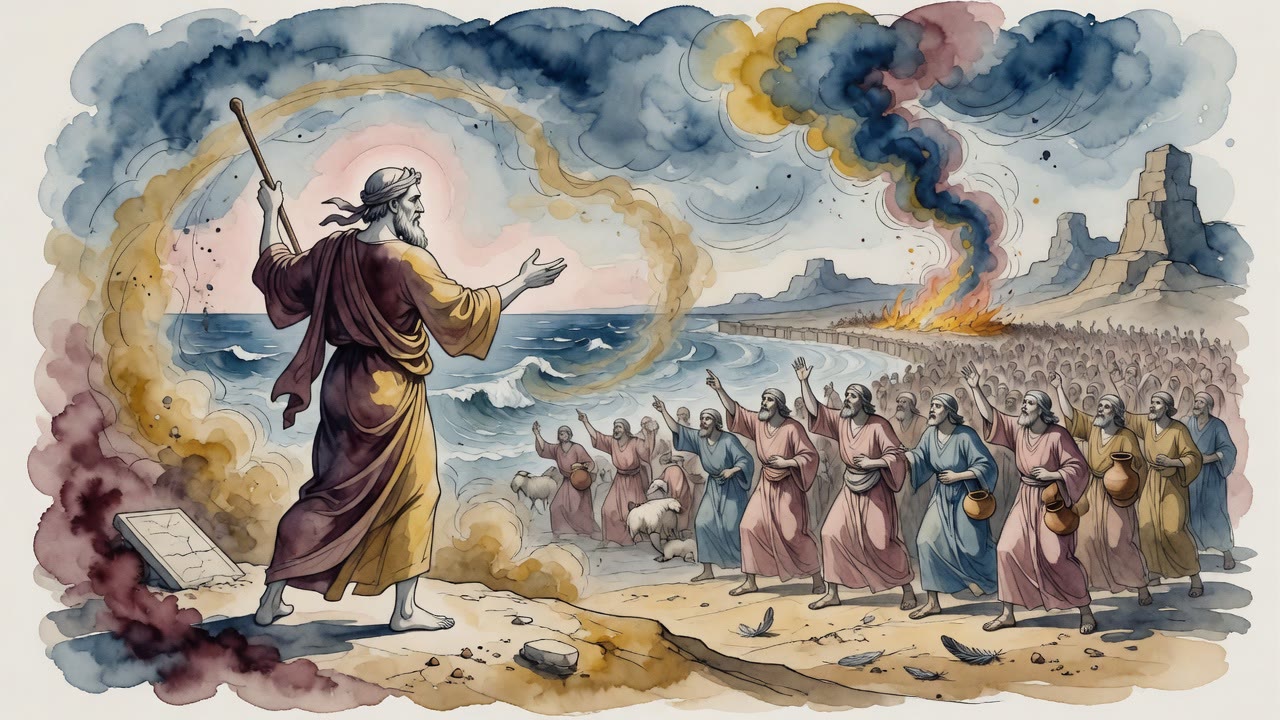
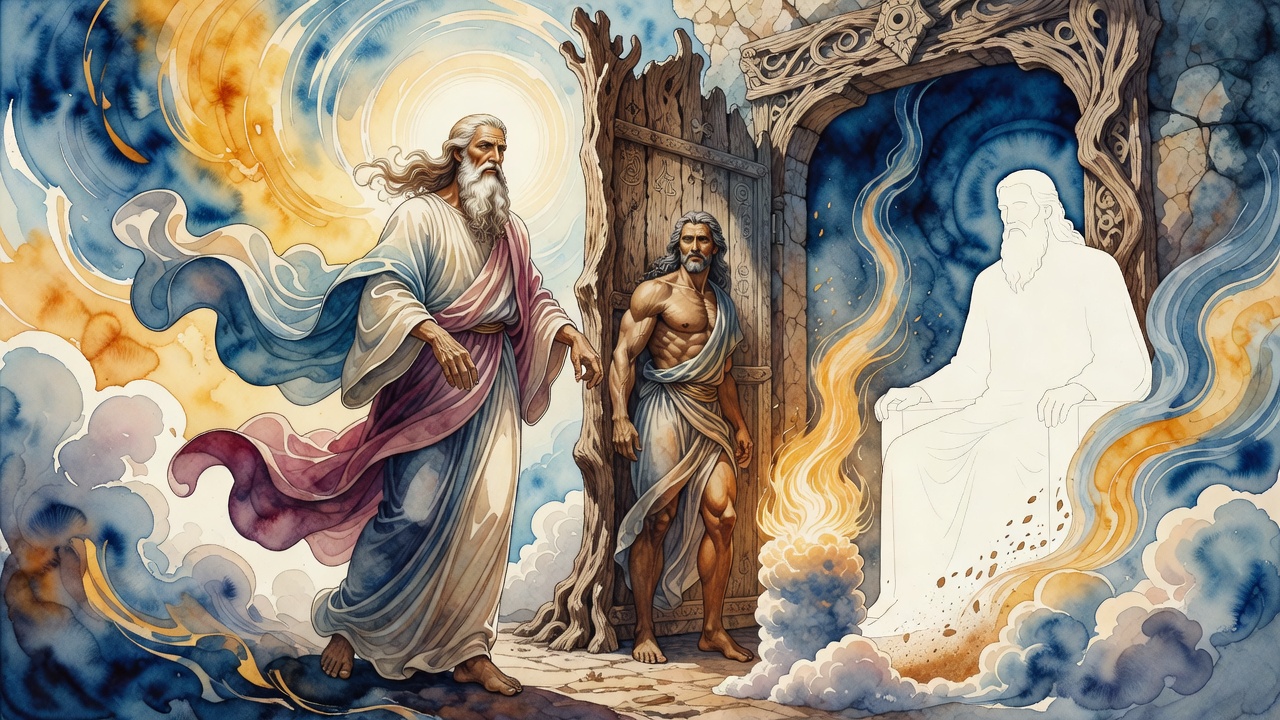
Moses climbed past the last cloud a mortal is meant to see, and he did not slow down to admire it. Another man would have folded his hands and been grateful for the view. Moses wanted a map. He wanted numbers. He wanted the guardians of the place to open their mouths and account for exactly what they were keeping.
Moses Demands the Measure of Paradise from Its Own Prince Click for full size

The first thing that answered him was not soft.

Where the Air Was Fire and Water at Once

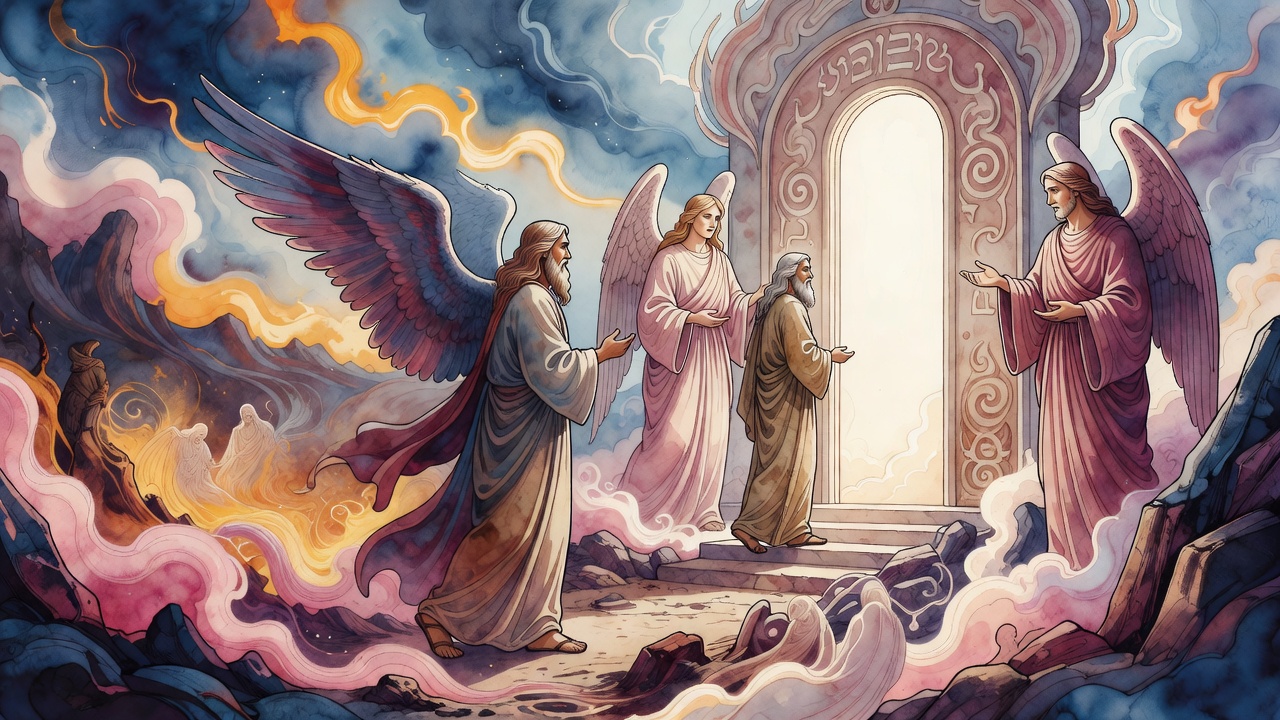
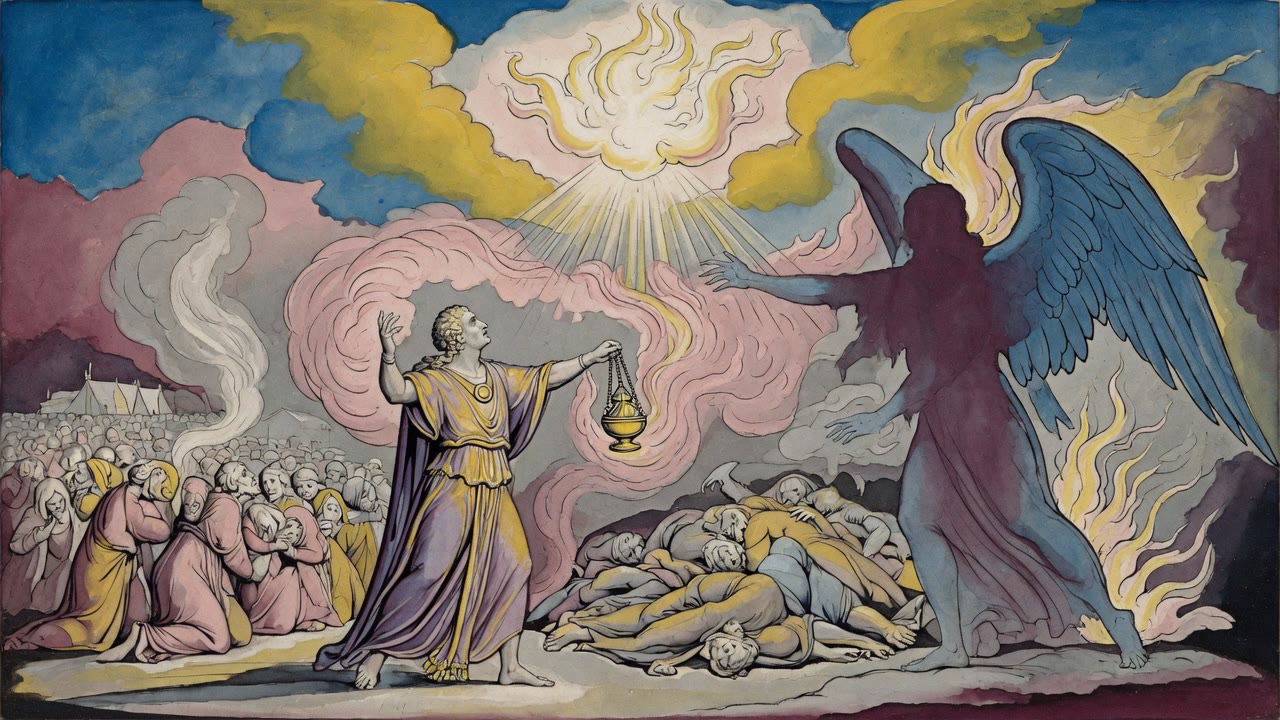
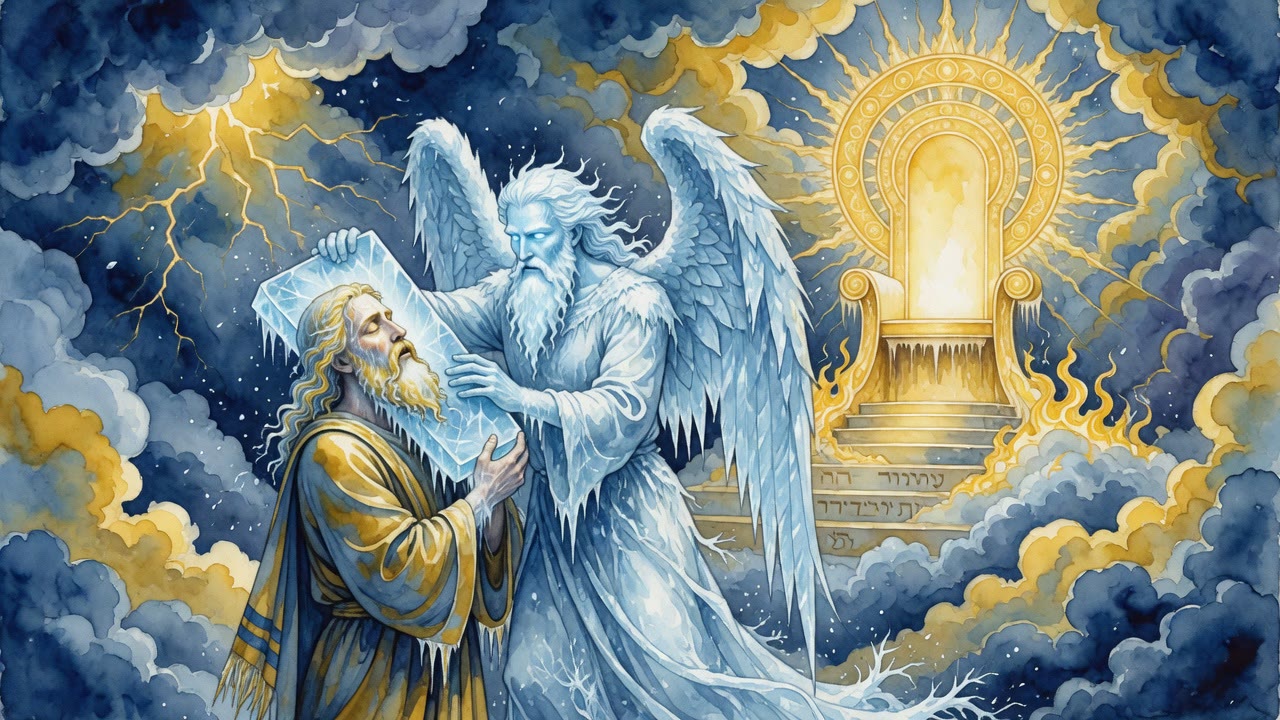
An angel stood in his path so tall that Moses lost the top of him in the light. Three hundred parasangs high, and a single parasang swallows three or four miles. This was Nuriel, and the realm he held looked nothing like the pillowed heaven anyone imagines. Behind him waited fifty myriads of angels, each one braided out of water and fire at the same time, and neither element quenched or scorched the other. Every face was turned one way, toward the Shekinah, and every mouth was open in a song that did not stop. Moses stood small beneath the count of them, one man against millions, and the sound of the praise pressed on him from every side.

Moses wanted to know what all this burning and singing was for. It was Metatron who answered him. These were the angels set over the weather, he said, the ones who hold the clouds, the winds, and the rains. The instant God's will went out, they broke from the choir, drove a storm across some far field or bent a wind where it was needed, and rushed straight back to their stations in the second heaven to take up the hymn where they had dropped it.

Seventy Thrones and Their Watchmen

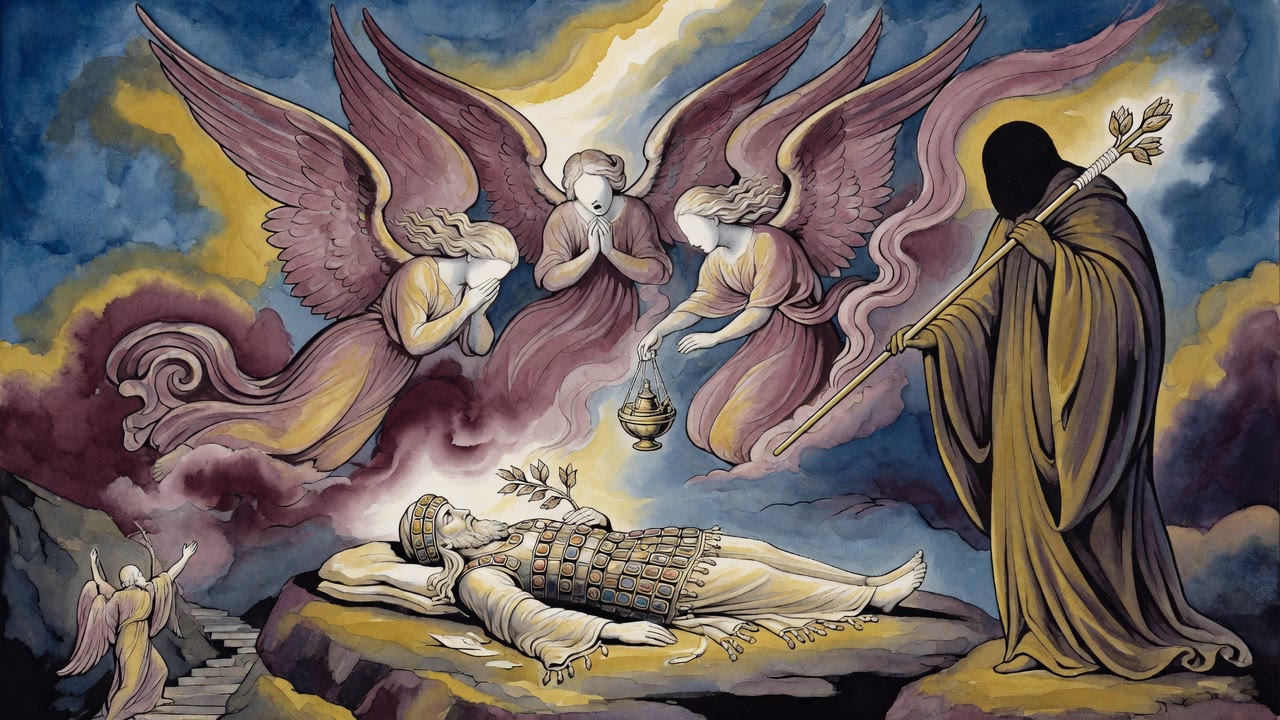
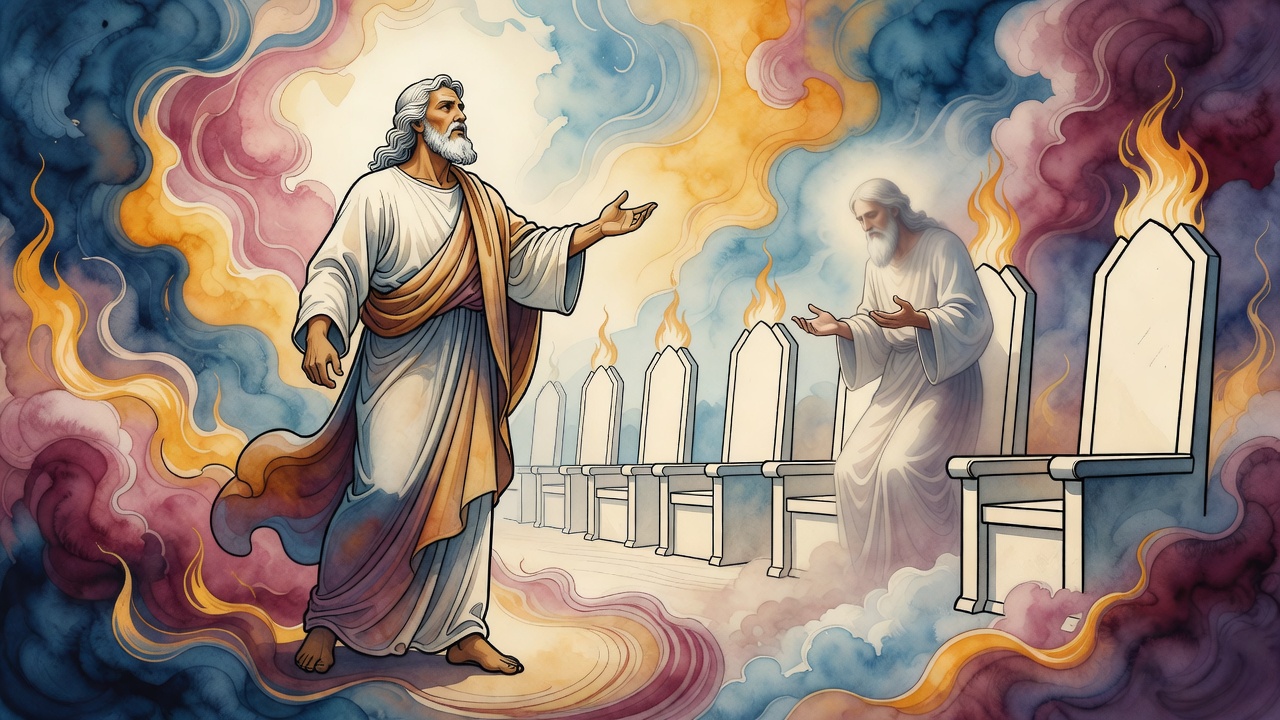
Farther in, the thrones began. Seventy of them, each one cut from precious stone and standing on legs of pure gold, and around every single throne seventy angels kept watch. The light broke off the gold legs and scattered through the whole hall until Moses could not tell where one dazzle ended and the next began. He counted the guard the way a man counts an army on a field. Then he reached the throne that broke his count. One hundred and twenty angels ringed this one, and the soul seated on it did not wait to be addressed. When Abraham understood who had come and why he had climbed so far, he did not offer a king's welcome or a word about himself. He called out, "Praise ye the Lord, for He is good, for His mercy endureth forever."

The Prince Who Could Not Measure His Own Garden

Somewhere past the thrones stood Shamshiel, prince of the whole garden, and to him Moses put the blunt question. How large is Paradise. Give me its measure. Shamshiel, who ruled the place, had to admit that he did not have one to give. The garden, he confessed, "can neither be measured nor fathomed nor numbered." The ruler of Paradise did not know the size of Paradise.

What he could do was name the thrones and say who each one waited for. The thrones of pearl, he told Moses, are set aside for the scholars, the ones who wore themselves down over the Torah day and night for the love of it alone. The thrones of precious stone belong to the pious. The rubies gleam for the just. The gold is kept for sinners who turned back before the end, and the silver for righteous converts who came to the faith from outside it. Greatest of them all is the throne of Abraham, then the thrones of Isaac and Jacob, then the prophets, and then the righteous, each seat sized to the weight of a life.

The Throne of Copper

Among all that gold and jewel and pearl, one throne was beaten out of plain copper, and Moses stopped at it. Copper, here. He asked what it was doing in such company and who could possibly be waiting to sit on it. Shamshiel's answer was short. "For the sinner that has a pious son." The man who earned nothing for himself would still be given his place, drawn up into the garden on the merits of a child who lived well. Moses had climbed for measurements and left with something he could not weigh. Even here, at the top of everything, a soul could be saved by someone standing a generation below it.


← All myths

From the tradition

Sources

3 sources

The texts behind this telling. Some cards carry a translation of the source; others are our own retelling of it, and each card says which. Every card links out to the original.

Legends of the Jews 4:166Legends of the Jews

Retold in our words. Read the original at the link below.The Legends of the Jews by Louis Ginzberg (1909) · Public Domain

The story goes that during one of his ascensions, Moses got a peek behind the cosmic curtain, so to speak. It wasn’t just fluffy clouds and pearly gates, let me tell you. According to Legends of the Jews, specifically Ginzberg's retelling, Moses encounters the angel Nuriel.

Nuriel isn’t your average cherub. Try to picture this: an angel standing three hundred parasangs high. Now, a parasang is an ancient unit of distance, somewhere between 3 and 4 miles. So, yeah, Nuriel is big.

He's not alone. Nuriel commands a retinue – a divine entourage – of fifty myriads of angels. That’s… a lot. Millions upon millions of angels, all formed from a mind-bending combination of water and fire.

The real kicker? All these fiery-watery angels are facing the Shekinah – the divine presence of God – constantly singing praises. It's like the ultimate, eternal choir practice.

So, what’s the deal with all this celestial singing? Metatron, the angel often considered to be the highest-ranking, steps in to explain to Moses. These aren't just random angels belting out tunes. They're the angels in charge of… the weather! Specifically, the clouds, winds, and rains. for a second. The forces of nature, the very elements that shape our world, are governed by these powerful, praising beings. As soon as they carry out God's will – bringing the rain, pushing the winds – they zoom right back to their posts in the second heaven to continue their unending hymn.

A system of divine administration, where even the simplest raindrop is part of a grand, orchestrated plan, fueled by constant adoration of the divine.

Full source
Legends of the Jews 4:188Legends of the Jews

Retold in our words. Read the original at the link below.The Legends of the Jews by Louis Ginzberg (1909) · Public Domain

The Zohar, that foundational text of Jewish mysticism, speaks often of the incredible sights and sounds beyond our world, but this… this is something else.

Ginzberg, in his incredible work Legends of the Jews, paints a vivid picture. Moses isn’t just passing through some garden; he's witnessing a celestial realm. He beholds seventy thrones, each crafted from precious stones and resting on legs of pure gold. Think about the sheer artistry, the dazzling light! And each throne? Guarded by seventy angels.

Then… there’s one throne that dwarfs all the others.

This one isn’t surrounded by seventy angels, but a staggering one hundred and twenty. Can you imagine the radiant power emanating from such a place? This, my friends, is the throne of Abraham.

And here’s where the story takes an even more heartwarming turn. When Abraham sees Moses, when he understands who he is and why he’s visiting Paradise, he doesn't offer some regal greeting, but bursts into praise: "Praise ye the Lord, for He is good, for His mercy endureth forever!" It’s such a human moment, even in this otherworldly setting. Even in Paradise, even surrounded by such splendor, the recognition of goodness and mercy is the most fitting response. It's a reminder that even in the most extraordinary circumstances, gratitude and praise remain central to our connection with the Divine.

Full source
Legends of the Jews 4:189Legends of the Jews

Retold in our words. Read the original at the link below.The Legends of the Jews by Louis Ginzberg (1909) · Public Domain

Even MOSES himself couldn't get a straight answer.

The story goes that Moses, in his insatiable quest for knowledge, posed this very question to Shamshiel, the prince of Paradise. As we learn in Legends of the Jews, even Shamshiel couldn't give him a definitive answer about its size. He confessed that Paradise can "neither be measured nor fathomed nor numbered." Mind-boggling. The sheer scale is beyond human comprehension, perhaps even beyond angelic comprehension.

Shamshiel did offer Moses a tantalizing peek into the architecture of the afterlife. He described the thrones, and oh, what thrones they are! Forget your garden-variety gilded chairs. These thrones are crafted from the most exquisite materials imaginable.

Some are silver, some gold, others shimmering with precious stones, pearls, rubies, and carbuncles. Each material, it seems, corresponds to a different virtue or accomplishment. Shamshiel breaks it down for Moses, revealing that the pearl thrones are reserved for the scholars, those dedicated souls who immerse themselves in the Torah, Jewish sacred law, day and night, purely for the love of it – Torah lishmah. The thrones made of precious stones await the pious, the rubies gleam for the just, the gold shines for repentant sinners, and the silver is bestowed upon righteous proselytes.

And the hierarchy doesn't stop there! "The greatest of them all," Shamshiel continues, "is the throne of Abraham." Makes sense. Then come the thrones of Isaac and Jacob, followed by the prophets, the righteous ones, and the righteous. Each throne's size and splendor reflect the individual's worth, rank, and the good deeds they accumulated during their earthly existence. It's like a celestial meritocracy, where your actions speak louder than… well, louder than anything!

But here's where the story takes a truly unexpected turn. Moses, ever the inquisitive one, asks about a throne made of copper. Copper? Amongst all this gold and jewels? What's that doing there?

Shamshiel's answer is both surprising and deeply comforting: "For the sinner that has a pious son." Legends of the Jews tells us that through the merits of his son, this imperfect soul receives a share in Paradise.

Isn't that incredible? The idea that even in the face of our own failings, the good deeds of our children can elevate us. It highlights the powerful interconnectedness of generations and the enduring impact of righteous living.

So, what does this glimpse into Paradise tell us? Perhaps it's not just about the rewards that await us, but about the choices we make here and now. Maybe the thrones aren't just waiting for us; maybe we’re building them, stone by stone, pearl by pearl, with every act of kindness, every moment of devotion, and every effort to live a more righteous life. And maybe, just maybe, those efforts extend beyond ourselves, touching the lives of our loved ones and echoing through eternity.

Full source