Moses Held God to an Oath That God Had Sworn by Himself
After the calf, Moses climbs into wrath with a people already hunted at the birthstool, and will not leave until the Name honors its own forever oath.
Table of Contents
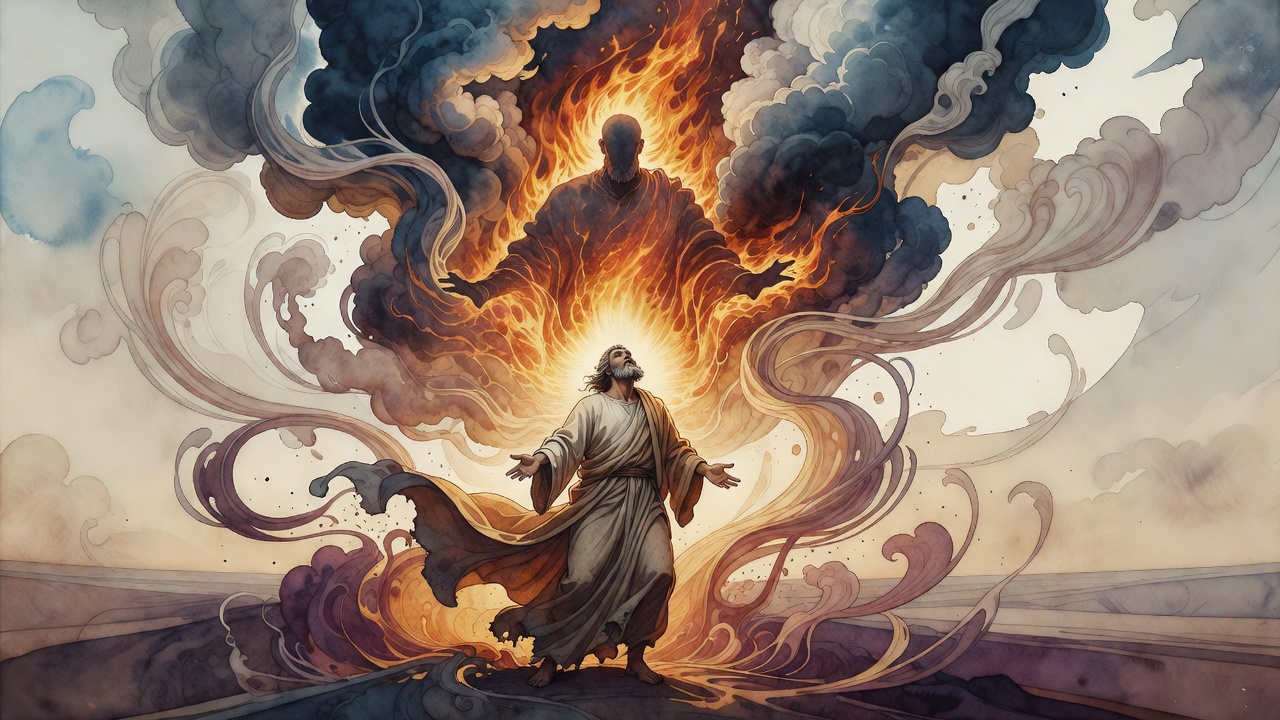
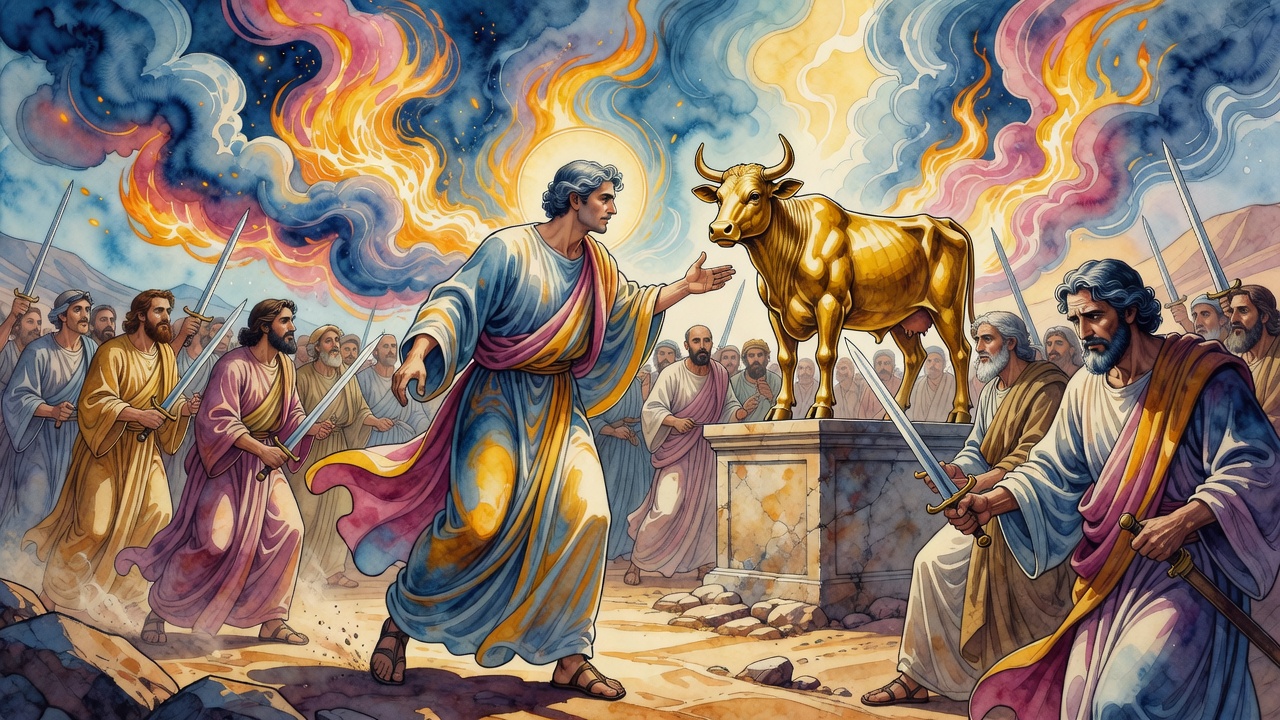
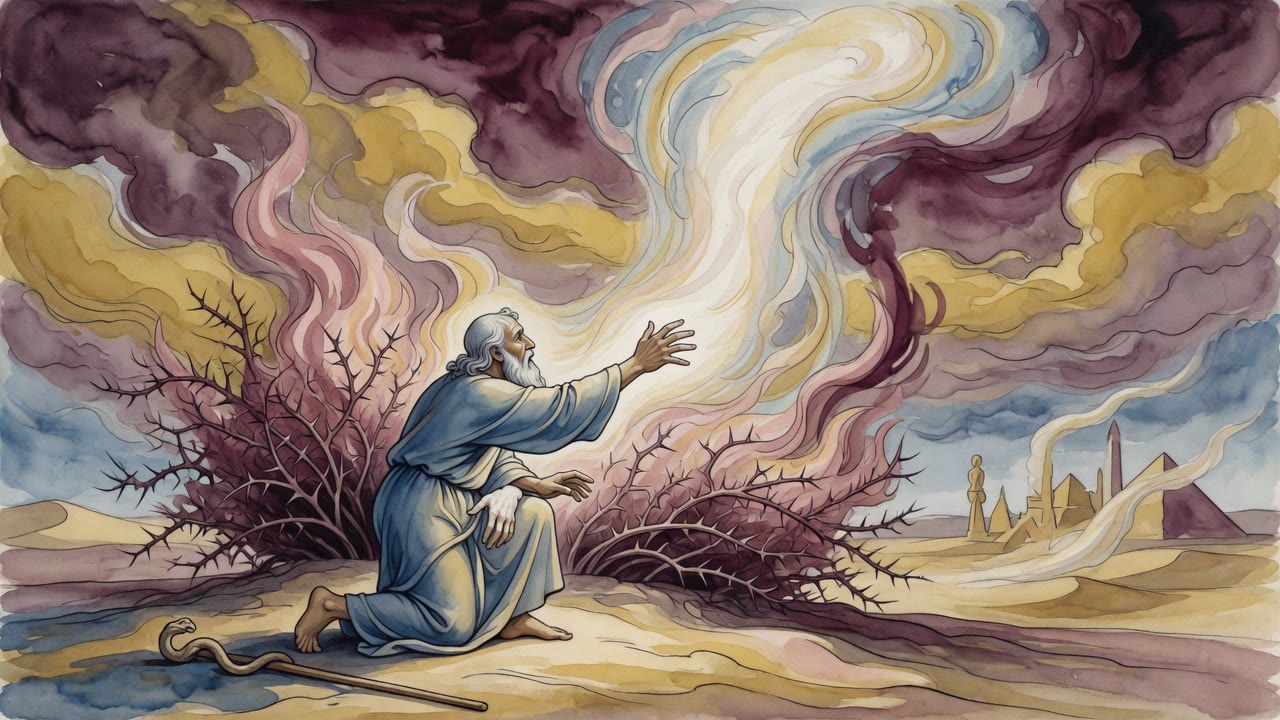
Moses climbed with powder still on his clothes from the smashed tablets. Below him the calf lay broken. Ash floated from the gold that had been a god for one long night. Above him the mountain smoked, and the voice that had carved law into stone now spoke of erasure. A nation that had walked out of Egypt under blood and fire was one sentence from vanishing as if the road from the sea had never been cut.
 Click for full size
He did not step aside. An advocate who steps aside is only a witness. Moses put his body between the threat and the camp and opened his mouth against a decree heavier than Pharaoh's.
The Birthstool Still Remembered
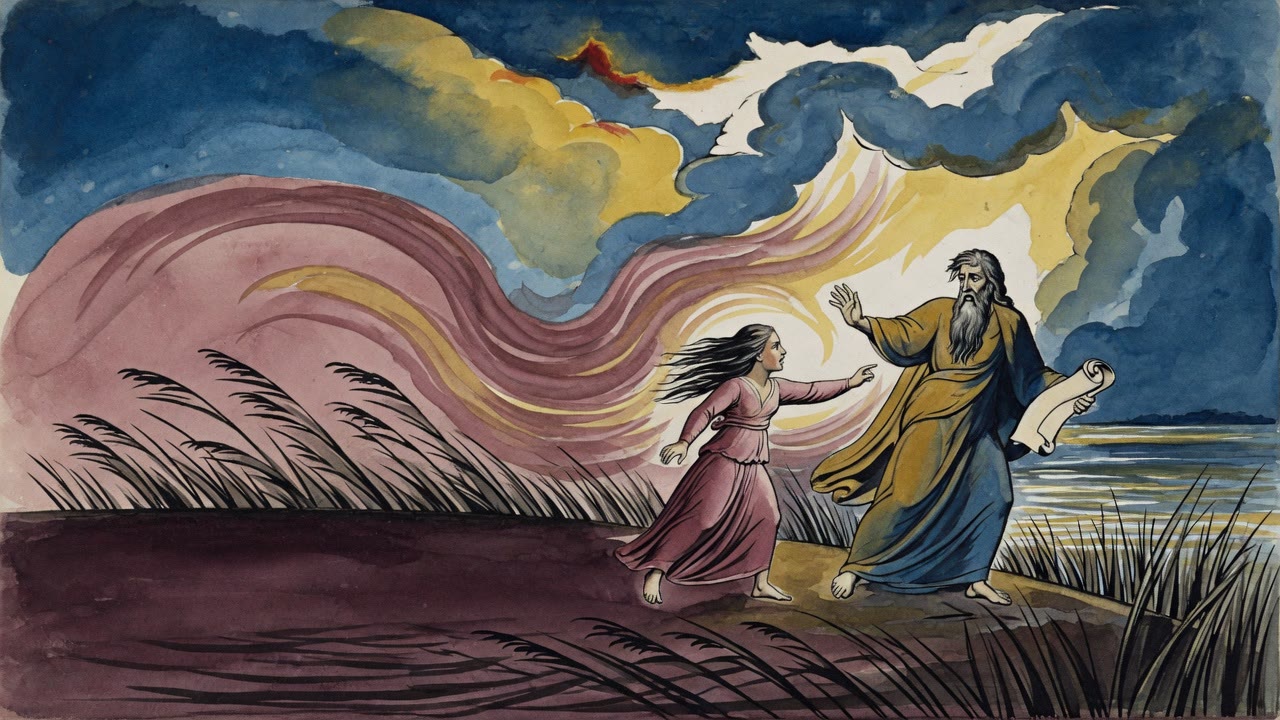
Years earlier, another king had tried to thin this people before they could stand. Pharaoh summoned the Hebrew midwives and named the place of birth as the place of murder. "When you deliver the Hebrew women," he said, "and you see them upon the ovnayim, if it is a son, you shall kill him, but if it is a daughter, she shall live" (Exodus 1:16).
He chose the midwives on purpose. He wanted their hands wet with the crime so that, if heaven struck, the blow would fall on them and not on the throne. Cowardice dressed as policy. The women refused him. Boys kept breathing. Girls kept breathing. The Nile took some of what the birthstool spared, but the people still grew.
The birthstool worked like a potter's wheel. One thigh on each side, clay in the middle, a new shape rising under pressure. God hardens a laboring woman's limbs like stones, avanim, so she does not shatter on the wheel. Pharaoh tried to turn the wheel into a slaughter bench. God kept turning it into a people.
That people now danced around a golden animal and broke the first word they had sworn at the mountain. Moses had watched both scenes: the infant hunted at the stone seat, and the adult nation hunting its own death in idol smoke.
The Oath That Cannot Die
On the height, God threatened to wipe Israel and raise a new nation from Moses alone. Moses answered with the patriarchs first, then with a harder edge. He took hold of the oath God had sworn by God's own self, not by heaven, not by earth (Exodus 32:13).
"Had You sworn by the heavens or by the earth," the advocate argued, "a man might say those things can end, and the oath ends with them. You swore by Yourself. As You live and endure, so the oath lives and endures. Act for the sanctity of Your name, so Your name will not be profaned."
He was not begging for a soft mood. He was locking the Name to the Name. A king who breaks a self-oath teaches the nations that holiness is temporary. Moses would not let that lesson leave the mountain.
He named Abraham, Isaac, and Jacob. He named the tribes as servants and inheritance. "Return for the sake of Your servants, the tribes of Your inheritance," a later prophet would still plead in the same vein (Isaiah 63:17). Merit stacked like stones in a wall. The wall held long enough for mercy to pass through.
A King Who Built His Own City
When God first arrived at Sinai, the mountain faced a claim no flesh-and-blood king could match. An earthly king entering a city finds streets cleaned, water sprinkled, lamps lit, fabrics hung, a whole capital rearranged for one rider.
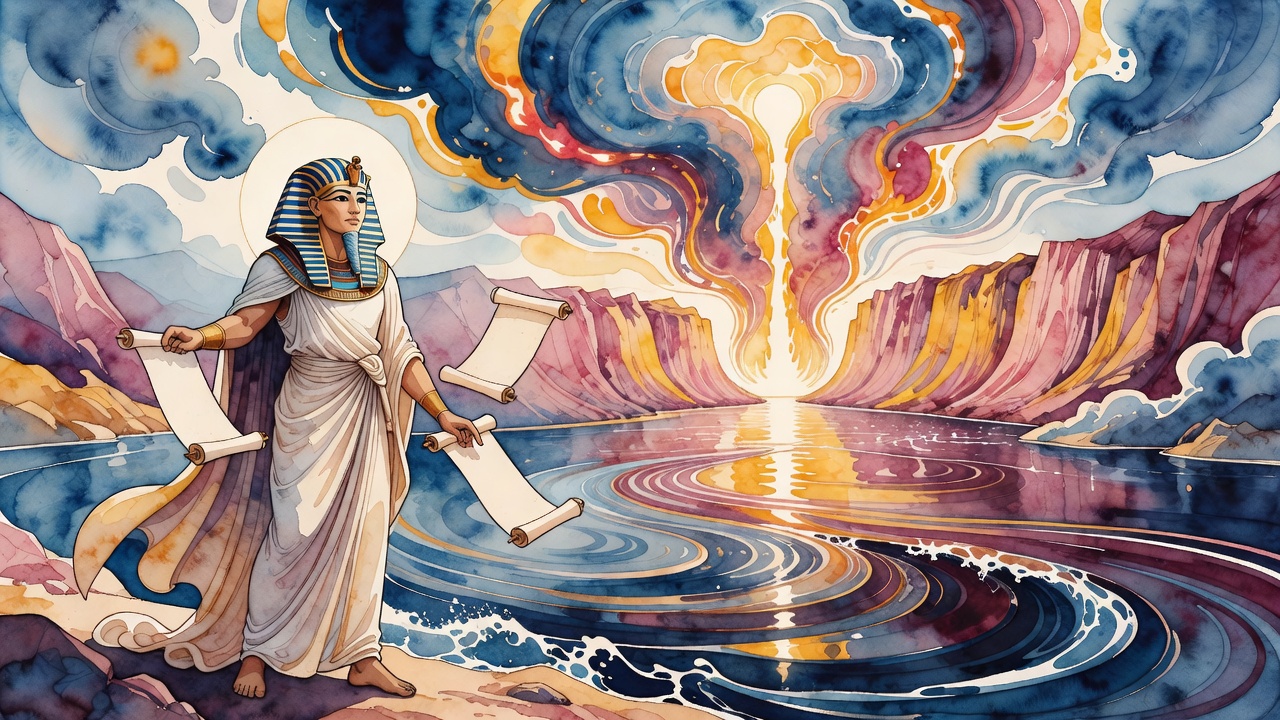
God is not that kind of king. An earthly ruler finds a city ready and demands polish. This King made the polish itself. He spread the heavens like a curtain (Isaiah 40:22). He set lights in the vault (Genesis 1:14). He gathered waters into their basins (Genesis 1:9). He completed the host of heaven and earth (Genesis 2:1). The world was not a rented hall for revelation. It was His workroom, already signed.
"I am the Lord your God" was never only a name tag. It was a claim of ownership over the stage on which Israel now stood guilty. Moses used that ownership. The people who had just kissed a calf still belonged to the One who had hung the lamps before any calf existed. Erasing them would not tidy the world. It would leave a hole in the city God had built for His own entrance.
Smoke still climbed. The camp below still smelled of melted gold. Moses kept speaking as if the mountain itself were a courtroom and the only admissible evidence was God's past word. His throat burned. Dust caked the cracks in his lips. He planted his feet wider on the rock and spoke the names again, slower, as if each patriarch could stand up in the smoke and vote.
The Evil Reconsidered
The Lord reconsidered the evil He had said He would do to His people (Exodus 32:14). No trumpet marked the turn. The pressure simply moved. Destruction, which had stood open like a pit at Moses's feet, closed. The tablets were gone. The calf was gone. The people remained, bruised by their own feast, still breathing because one man refused to treat an oath as decoration.
Moses came down into a camp that did not know how close it had stood to nonexistence. Pharaoh had tried to kill them on the wheel of birth. God had threatened to kill them on the mountain of law. Between those two erasures stood midwives who would not murder and a prophet who would not step aside.
In the night the people slept without knowing the sentence that had hung over their tents. Moses sat with his back to a rock and watched the last sparks die where the calf had stood. A dog sniffed the ash and left. The birthstool and the smashed tablets were two different stones, and both had refused to become the end of Israel.
← All myths