Moses Knew the Name But Not How to Save Them
Joseph rises in Egypt and needs his father's arrival to silence whispers. Moses kills with the Name, Amalek attacks, and Korah opens the earth.
Table of Contents
 Click for full size
Joseph Could Not Silence Egypt Without His Father
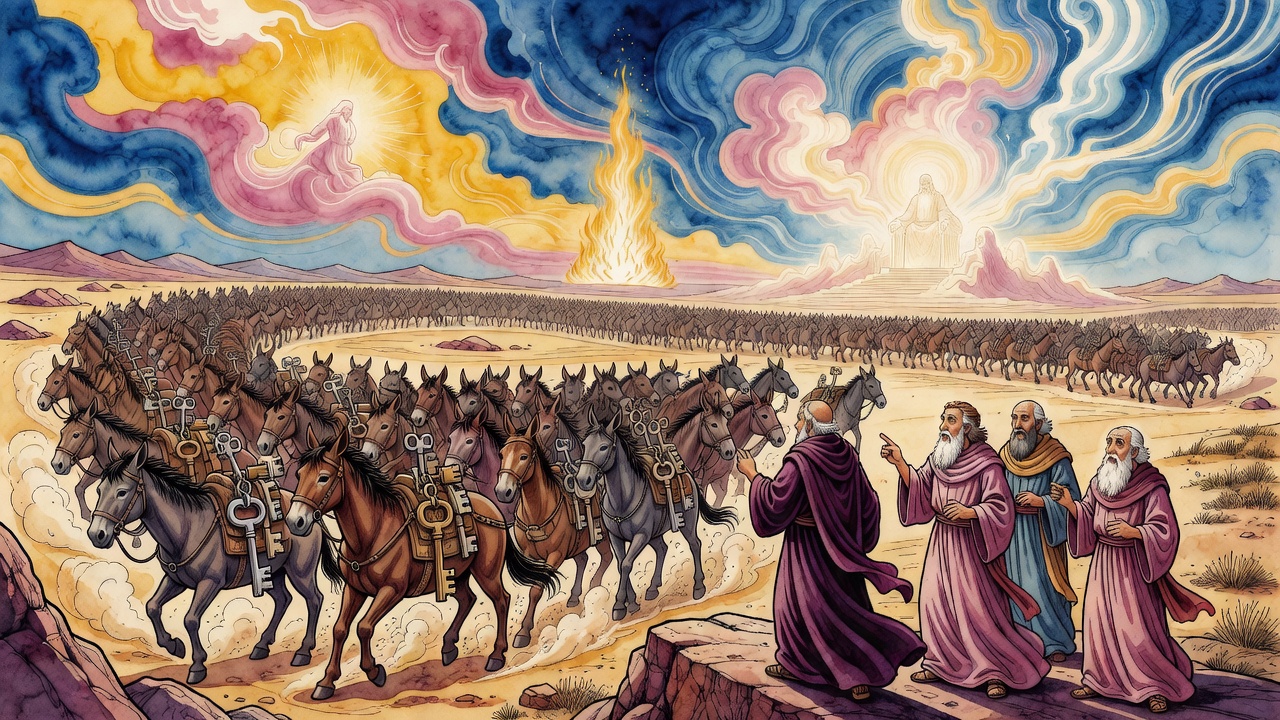
Joseph had risen from the prison to the palace. He commanded Egypt's grain and administered its survival. He rode in the second chariot while Pharaoh rode in the first. But the Egyptian court still whispered. The man who now held power had arrived in chains. He had been a slave before he was a viceroy, and the court remembered. Joseph needed Jacob. When his father's caravan approached Egypt, Joseph prepared his own chariot and went to Goshen to meet him. The gesture was devotion, but it was also testimony. Let Egypt see the father. Let them see the brothers. Let them understand that this man came from a family with history, covenant, and standing. Shame cannot always be answered by achievement. Sometimes it can only be answered by lineage arriving in person. Joseph had everything Egypt could give a man, and he still needed his father to complete the argument.
Moses Spoke the Hidden Name and an Egyptian Fell
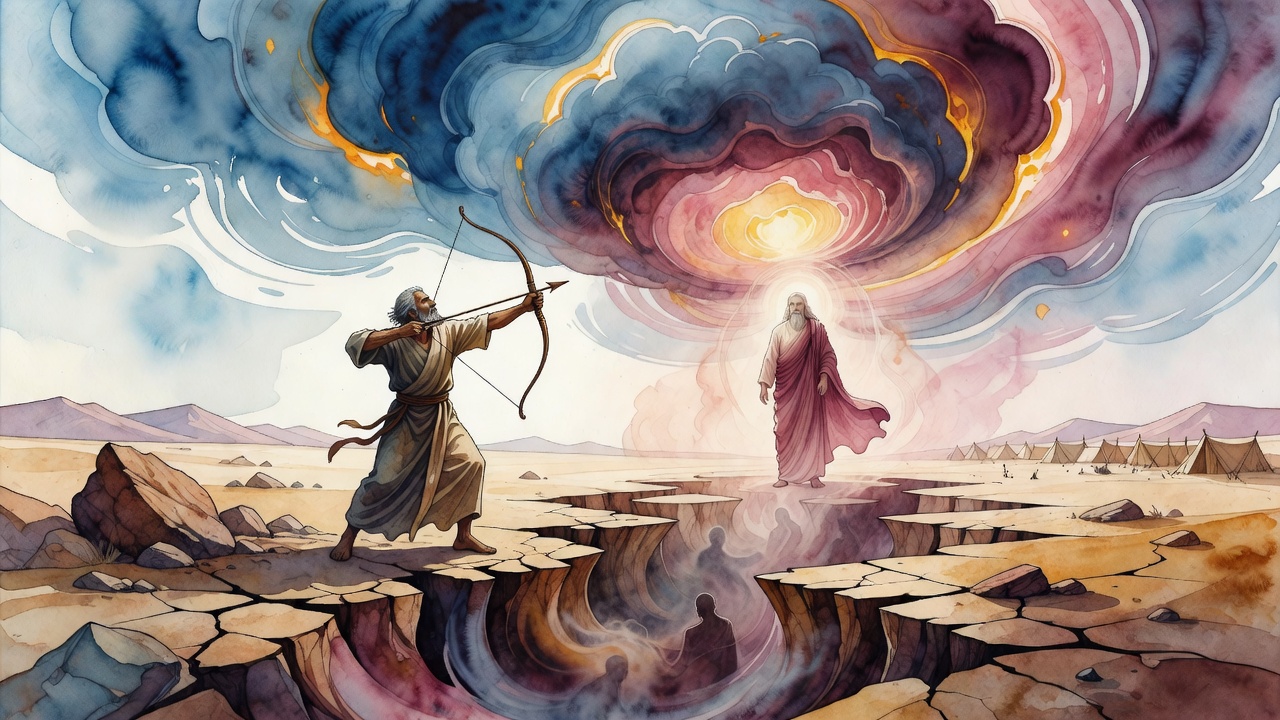
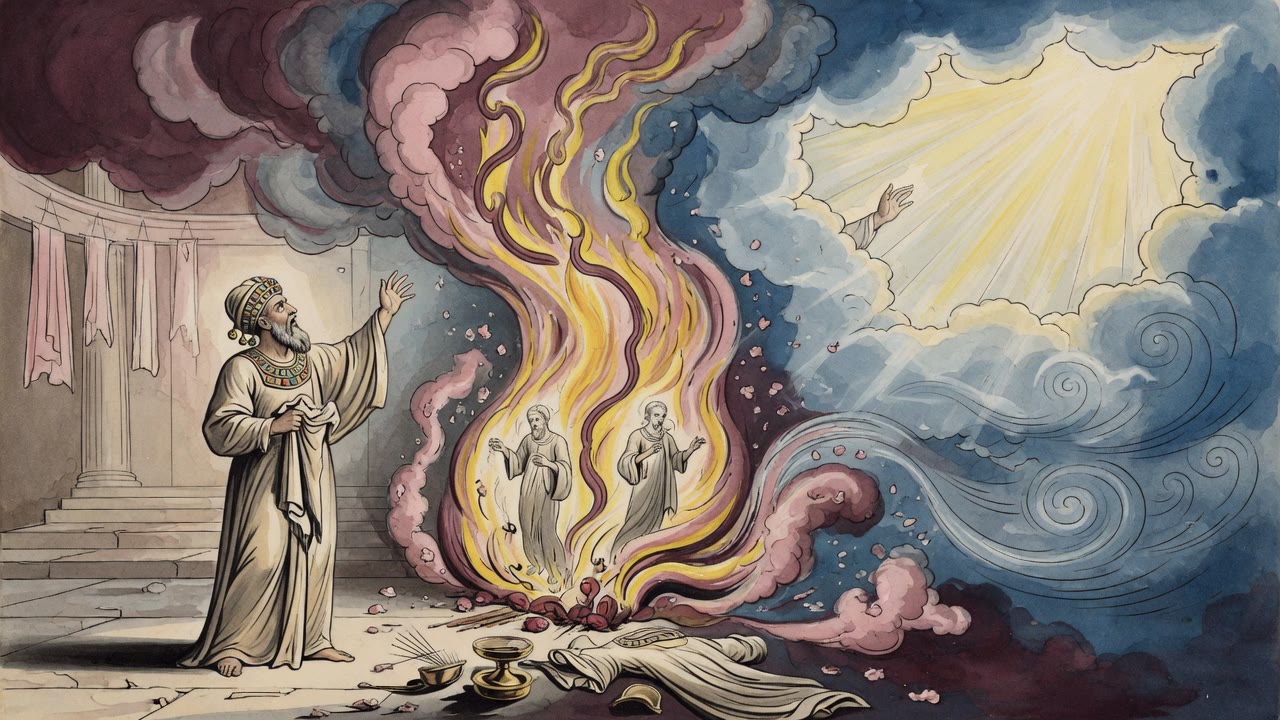
When Moses saw an Egyptian taskmaster beating a Hebrew worker, he looked both ways, saw no one, and killed the man. The Midrash adds what the Torah leaves unspoken. Moses did not strike the Egyptian with his hand. He pronounced the hidden Name of God, the name that creation itself had been made from, and the Egyptian died from the sound. The next day Moses found two Hebrews fighting and tried to intervene. The one who had started the fight answered: who made you a ruler and judge over us? Do you plan to kill me the way you killed the Egyptian? Moses was afraid. Not only of Pharaoh. He was afraid that the Name had been heard, that someone had been watching, that the most dangerous thing in the world had been uttered in public before Moses understood what he was doing with it. Power without preparation is a weapon that turns on the hand that holds it.
Amalek Attacked the Weakest Part of the Line
After the sea split and Israel crossed, Amalek came. They did not attack the front of the column where the warriors marched. They fell on the rear, cutting off the weak, the exhausted, the ones who had fallen behind. The Midrash reads Amalek as the first nation willing to test whether Israel was as protected as it appeared. The Flood generation had fallen. Sodom had fallen. Egypt had fallen. Every great power that had set itself against God's plan had been destroyed. Amalek looked at that record and attacked anyway, as if daring the pattern to apply to them. Moses held his hands up and Israel prevailed. His hands dropped and Amalek prevailed. Aaron and Hur supported his arms. By sunset, Amalek was defeated. But Amalek was not destroyed. The battle was declared eternal. God Himself would be at war with Amalek from generation to generation. Knowing the Name had not ended the conflict. It had clarified the stakes.
Korah Stood at the Edge of the Pit He Had Made
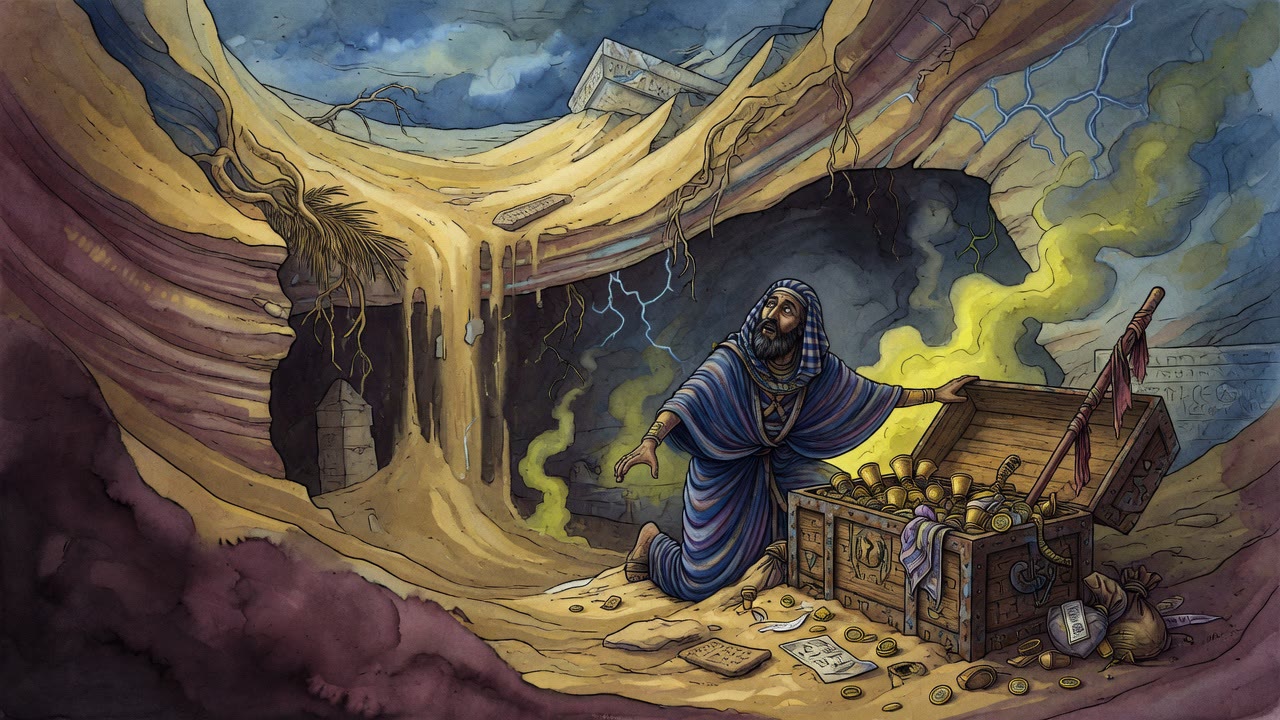
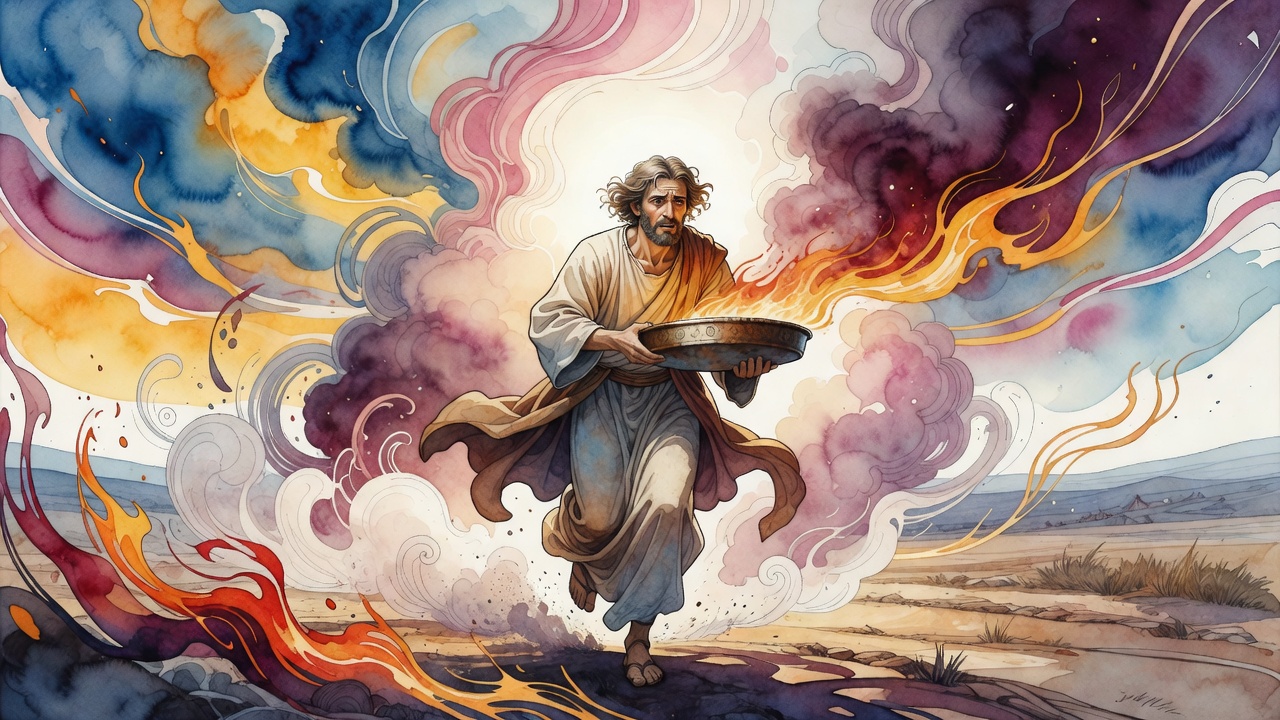
Korah organized two hundred and fifty men, all of them leaders, all of them carrying incense pans, and he stood before Moses and Aaron and said: you take too much upon yourselves. The entire community is holy. Why do you raise yourselves above God's assembly? Moses fell on his face. He had seen this before, the community turning against him, against Aaron, against everything that the wilderness had been built on. He proposed a test: in the morning, God would show who was holy. Each man would bring his fire pan, and the fire would decide. Moses then went to Dathan and Abiram, trying to address the grievance personally, and they refused to come. The morning came, the incense was offered, and the earth opened. Korah's household, Dathan, Abiram, and their families went down alive into Sheol (the pit of the dead beneath the earth). The fire came and consumed the two hundred and fifty. Moses knew the Name. He had spoken it before. But the Name had not made the community holy or made rebellion impossible. It had only ensured that rebellion would not be able to outlast its own consequences.
The Rock Gave Water Under Judgment
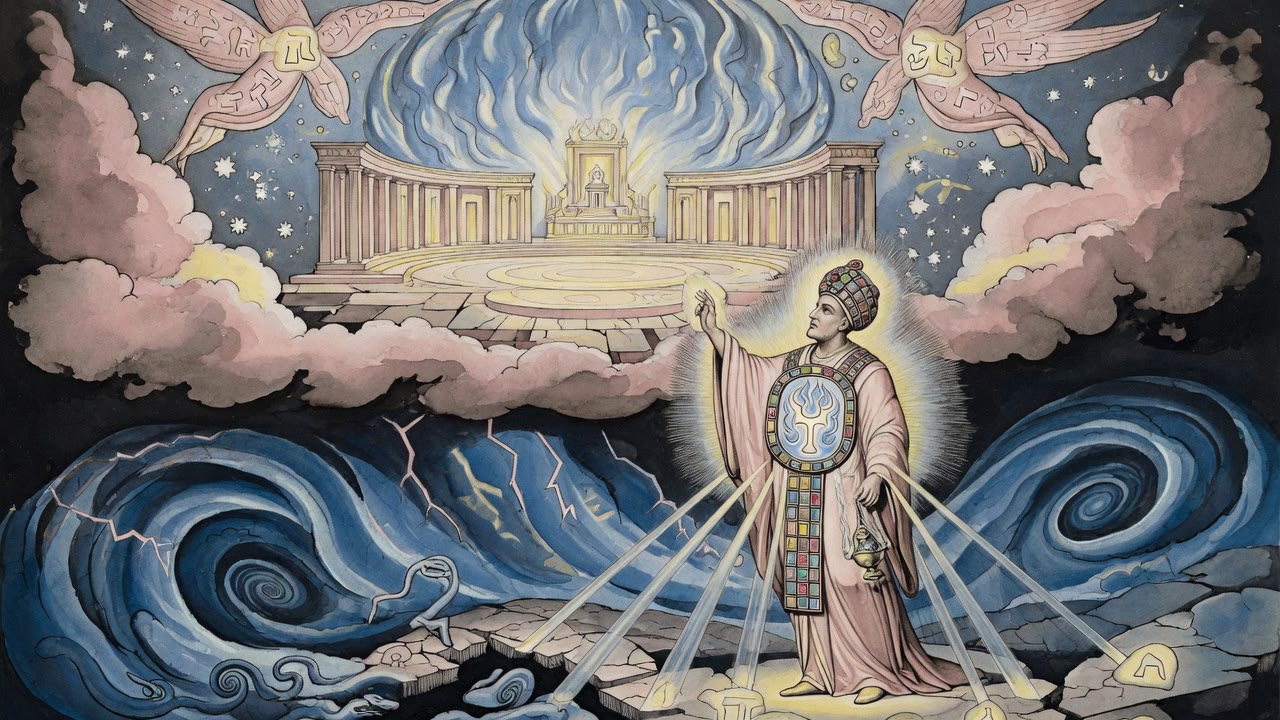
At the waters of Meribah, the assembly came against Moses and Aaron. Why did you bring us out of Egypt to die in the wilderness? There is no grain, no figs, no vines, no pomegranates, and no water. Moses and Aaron went to the entrance of the tent of meeting, fell on their faces, and the glory appeared. God told Moses to take the staff and speak to the rock and it would give water. Moses took the staff, gathered the assembly, called them rebels, and struck the rock twice. Water came out abundantly. The community drank and their animals drank. And God told Moses that because he had not trusted enough to sanctify God before the children of Israel, he would not bring the congregation into the land. Moses knew where the Name's power ran. He had used it, carried it, transmitted it, and explained it. But he struck instead of spoke, and the water that came out abundantly was also the sentence that came down finally. The Name gave water and took the land in the same moment.
← All myths