5 min read

Moses Named Bezalel and Counted Israel Twice

God asked Moses if Bezalel could build the Mishkan, then sent him to ask Israel. Before it rose, the camp was counted as treasure under heavy charge.

Curated by Arthur · Told by Maggid ·
Table of Contents
  1. Three Voices Name the Same Man
  2. Count Before the Boards Rise
  3. The Builder and the Ledgers
  4. What the Camp Could Not Unsay

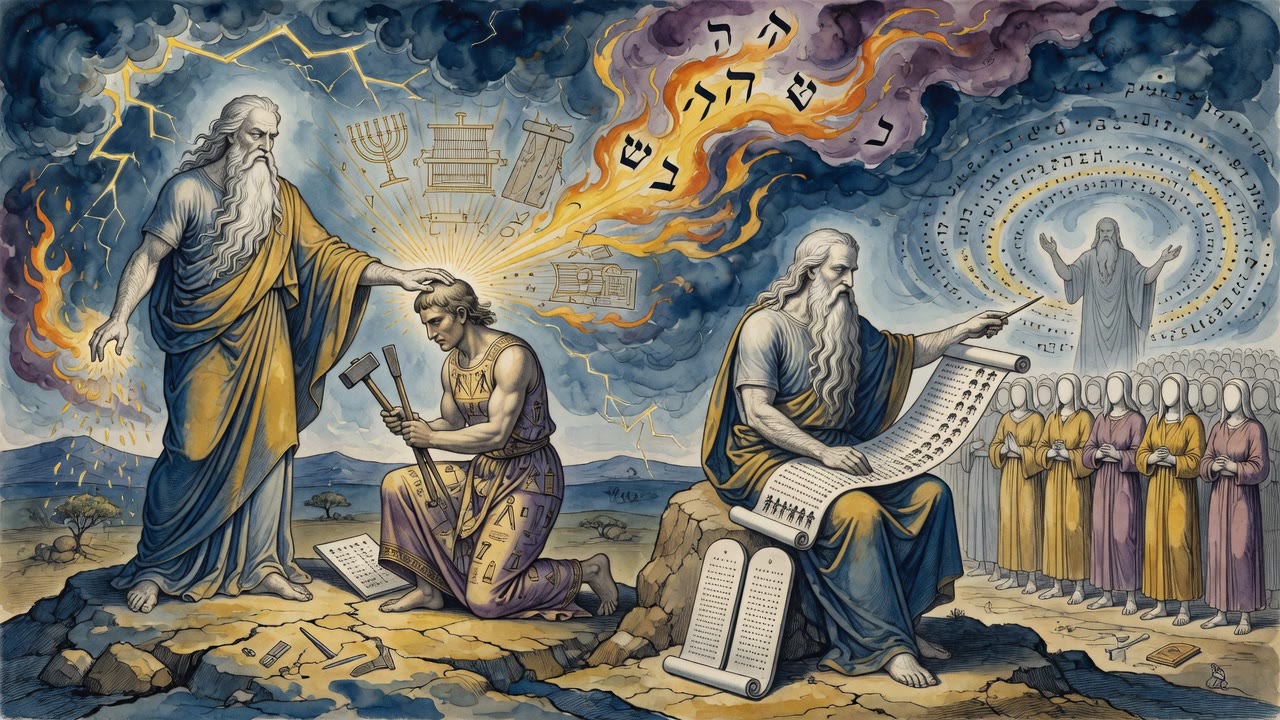
God already knew Bezalel could raise the Mishkan (the portable sanctuary Israel carried through the wilderness). Still He turned to Moses and asked the question as if the answer were not fixed. "Do you think Bezalel is up to the task?"
Moses Named Bezalel and Counted Israel Twice Click for full size

Moses did not reach for a second craftsman. He bowed into the test. "Lord of the Universe! If You deem him suitable, then surely I do too!" The answer pleased heaven, and still it was not enough. God sent Moses down among the tents. "Go and ask Israel if they approve My choice of Bezalel."

The leader who had stood at the bush and at the sea now had to stand in the dust and put a builder's name to a vote of the camp. Bezalel's skill was not the only weight. Consent was.

Three Voices Name the Same Man

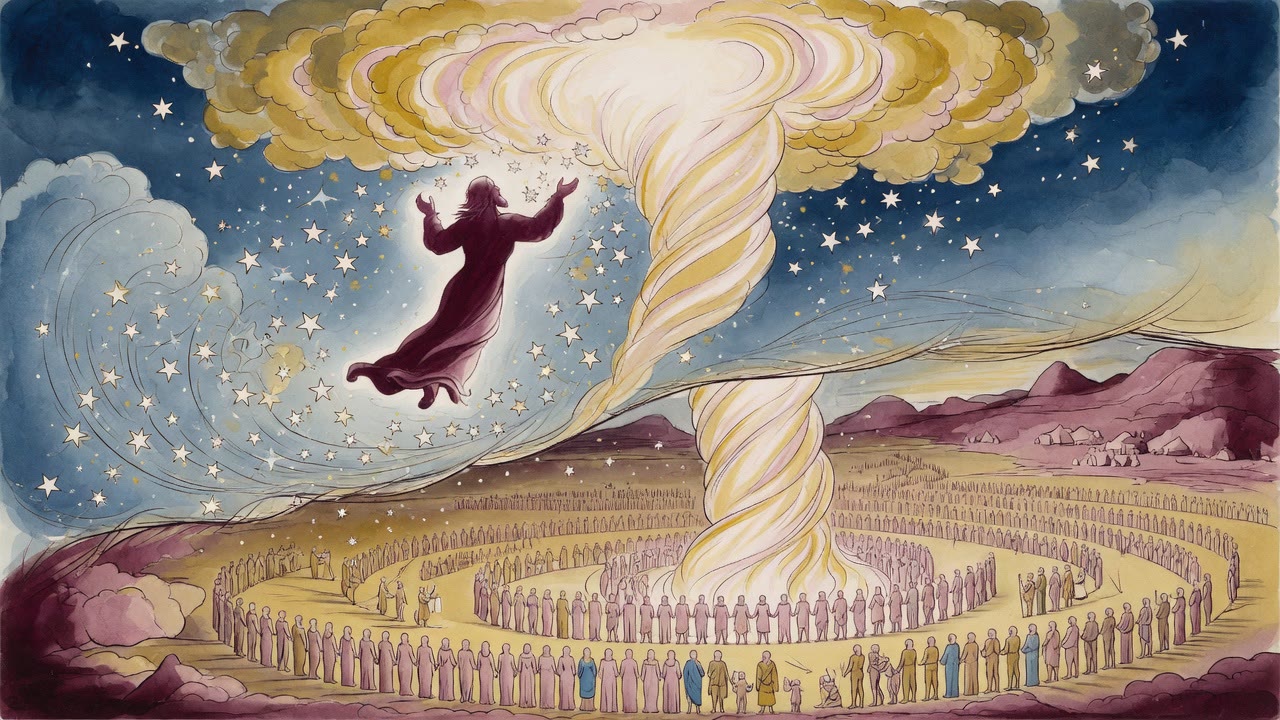
Moses carried the question into Israel. The people answered without delay. "If Bezalel is judged good enough by God and by you, assuredly he is approved by us." Heaven, prophet, and camp locked on one name. The man who would cut wood and beat gold had been beheld by all three.

God laid five further names on him, each a pressure and a gift. They called him Reaiah, "to behold," because he had been seen for this work since the beginning of the world. They called him son of Shobal, for the sanctuary would rise high like a dove-cote. They called him Jahath, the Trembler, because he would build the seat of the fear of God. They called him Ahamai, for through his hands sanctuary, Israel, and God would be bound together. They called him Lahad, the one who would bring splendor and loftiness, since the sanctuary is Israel's pride.

Bezalel stood under those names while the camp watched. A wrong man at the boards would leave the Presence without a house. A right man with no consent would leave the people outside their own holy place. Moses had to hold both truths at once.

Count Before the Boards Rise

Love also keeps a count. In less than six months, Israel was numbered twice: once just before the Mishkan was built, and again a month after its dedication. God wanted to know, with care, who and how many belonged to Him, the way a owner knows every star and every grain.

On the first day of Iyyar the word came to Moses. Count every man over twenty, every man strong enough to fight. Moses alone was not enough for the weight. God set Aaron beside him. "Two are better than one." Aaron would catch what Moses missed. Then came Eleazar and Ithamar, Aaron's sons, and twelve men, one from each tribe. They were not mere tally clerks. The sins of their tribes would sit on their heads if they failed to restrain them.

Moses and Aaron warned the princes even so. High place did not license tyranny. The people, in turn, were told to honor those set over them. Power and respect had to move both ways while the numbers were taken, or the treasure being counted would sour in the hand that claimed to love it.

The Builder and the Ledgers

Between the naming of Bezalel and the double census, the camp lived under a double demand. Someone had to be worthy to shape the dwelling. Everyone of fighting age had to be known, face by face, as belonging. Moses moved from the question about one craftsman to the labor of numbering thousands, with Aaron's hand on the same work and the princes sweating under spiritual charge.

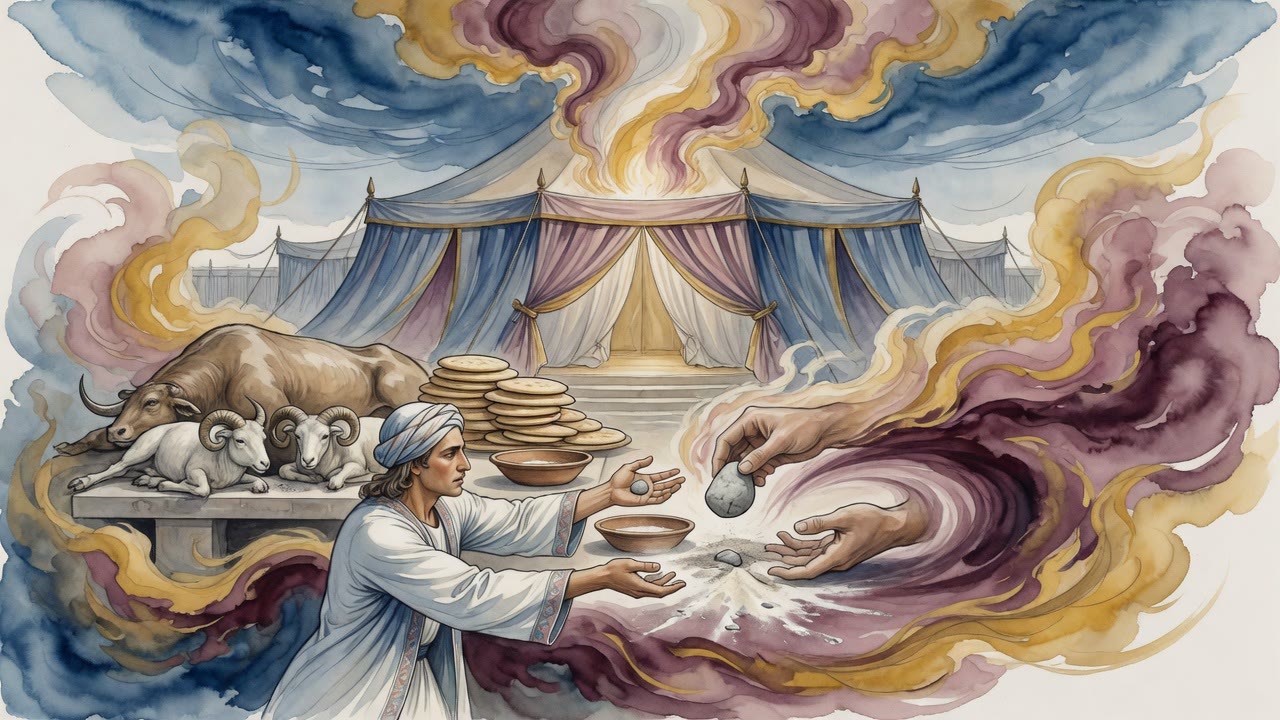
Bezalel began to gather material under the names heaven had sealed. Boards, sockets, gold, blue, and purple would answer a plan older than the wilderness. At the same time the princes walked their tribes, counting and cautioning, knowing a hidden sin in their ranks would climb onto their own heads. The Mishkan would not rise over an uncounted people, and the people would not pour gifts toward a builder heaven, Moses, and Israel had not all approved.

When the second count came after dedication, the house already stood. The numbers were not a cold list. They were the same cherishing that had forced Moses to ask the camp about Bezalel. God would not house His presence among strangers He refused to name, or under a craftsman the people had not accepted.

What the Camp Could Not Unsay

Moses could not take back the question once Israel had answered. Bezalel could not shrug off Reaiah and Jahath once those names had been spoken over him. The princes could not pretend the census was only arithmetic once tribal sin was tied to their necks.

The sanctuary would tower. The ledgers would close. In the dust between God's first test and the second counting, Israel had agreed who would build, and God had insisted on knowing exactly whom He was building among. Consent and cherishing stood together, and neither left the story reversible.


← All myths
From the tradition

Sources

2 sources

The texts behind this telling. Some cards carry a translation of the source; others are our own retelling of it, and each card says which. Every card links out to the original.

Legends of the Jews 3:8Legends of the Jews

Retold in our words. Read the original at the link below.The Legends of the Jews by Louis Ginzberg (1909) · Public Domain

The story of Bezalel, the architect of the Mishkan, the Tabernacle, gives us a glimpse.

It's a fascinating tale. Even though God Himself knew that Bezalel was absolutely the right person to build the Tabernacle, He still turned to Moses and asked, "Do you think Bezalel is up to the task?" The all-knowing God, seemingly seeking validation.

Moses, of course, responded with complete faith: "Lord of the Universe! If You deem him suitable, then surely, I do too!" But the story doesn't end there. God, in his infinite wisdom, then instructs Moses to ask the people of Israel for their opinion! "Go," God says, "and ask Israel if they approve My choice of Bezalel."

Can you imagine? Moses goes to the people, and they respond with resounding agreement: "If Bezalel is judged good enough by God and by you, assuredly he is approved by us." It's a beautiful moment of shared faith and communal trust. This story, found in Legends of the Jews, highlights not just Bezalel's skill, but the importance of collective approval and the interconnectedness of the divine, the leader, and the community.

But the story goes deeper. As the builder of the Tabernacle, God bestowed upon Bezalel five additional names, each reflecting an aspect of his character and accomplishment. These aren't just arbitrary titles; they are insights into his very essence.

First, he was called Reaiah, meaning "to behold." This is because, as Legends of the Jews tells us, Bezalel was "beheld by God, by Moses, and by Israel, as the one who had been decreed for his activity since the beginning of the world.” He was destined, chosen, and seen.

Next, he was named "the son of Shobal," because he erected the Tabernacle that towered high, like a dove-cote. The image evokes a sense of soaring heights and divine protection.

He was also called Jahath, "the Trembler," because he made the sanctuary, the seat of the fear of God. That sense of awe and reverence, so central to the sanctuary, was embodied in Bezalel's very being.

Another name was Ahamai, because, through his work, the sanctuary, Israel, and God were united. His craftsmanship wasn't just about physical construction; it was about forging a spiritual bond.

And finally, he was called Lahad, as the one who brought splendor and loftiness to Israel, for the sanctuary is the pride and splendor of Israel. He brought beauty and elevated the spirit of the entire nation. What a legacy!

So, what do we take away from the story of Bezalel? It's more than just a historical account. It's a reminder that true creation is a collaborative process, involving divine inspiration, leadership, and communal support. And it teaches us that the work we do, when done with intention and devotion, can have profound and lasting effects, uniting us with something larger than ourselves.

Full source
Legends of the Jews 4:2Legends of the Jews

Retold in our words. Read the original at the link below.The Legends of the Jews by Louis Ginzberg (1909) · Public Domain

The old stories, the aggadah, are full of fascinating hints. Take the way He kept track of the Israelites back in the desert.

It's said that God, in His infinite love, insisted on frequent censuses of the Israelites. Why? So He could accurately appreciate and cherish what was His. He wanted to know exactly who and how many were part of His people. It’s like knowing every star by name, every grain of sand on the shore.

It wasn’t just a one-time thing. According to Ginzberg’s retelling in Legends of the Jews, in less than six months, they were counted not once, but twice! The first time was just before the Tabernacle, the Mishkan, was built, and the second a mere month after its dedication.

Moses getting the word on the first day of Iyyar. He’s told to count every man over twenty, those strong enough to fight. But he wasn't alone in this monumental task. God knew it was a big job.

God instructed Moses to enlist Aaron as his assistant. "Two are better than one,". The idea was that Aaron could catch anything Moses might miss.

But it didn't stop there. Eleazar and Ithamar, Aaron's sons, were brought in as subordinate assistants, along with twelve men, one from each tribe. These weren't just number crunchers, though. They had a heavy responsibility. These men were tasked with the spiritual well-being of their tribes. As Legends of the Jews tells us, the sins of their tribes would weigh on their heads if they didn't do everything in their power to prevent them. A serious job!

Even with all this authority, Moses and Aaron made sure to caution the tribal princes. Despite their high status, they were told not to tyrannize the people. Power corrupts, as they say. And, on the flip side, the people were reminded to respect those in positions of leadership. A delicate balance.

About the care and attention to detail, the balance of power and responsibility. About what it means to truly cherish a people. It's more than just counting heads; it's about knowing each individual, and caring for their well-being. What does it mean to count, to be counted, to be seen and valued?

Full source