Bezalel, the Boy Who Knew the Letters God Built the World With
A martyr's grandson is handed the letters that made the world and told to raise God's house, then corrects Moses on where the building begins.
Table of Contents
 Click for full size
The Man Who Stood Between the People and the Calf
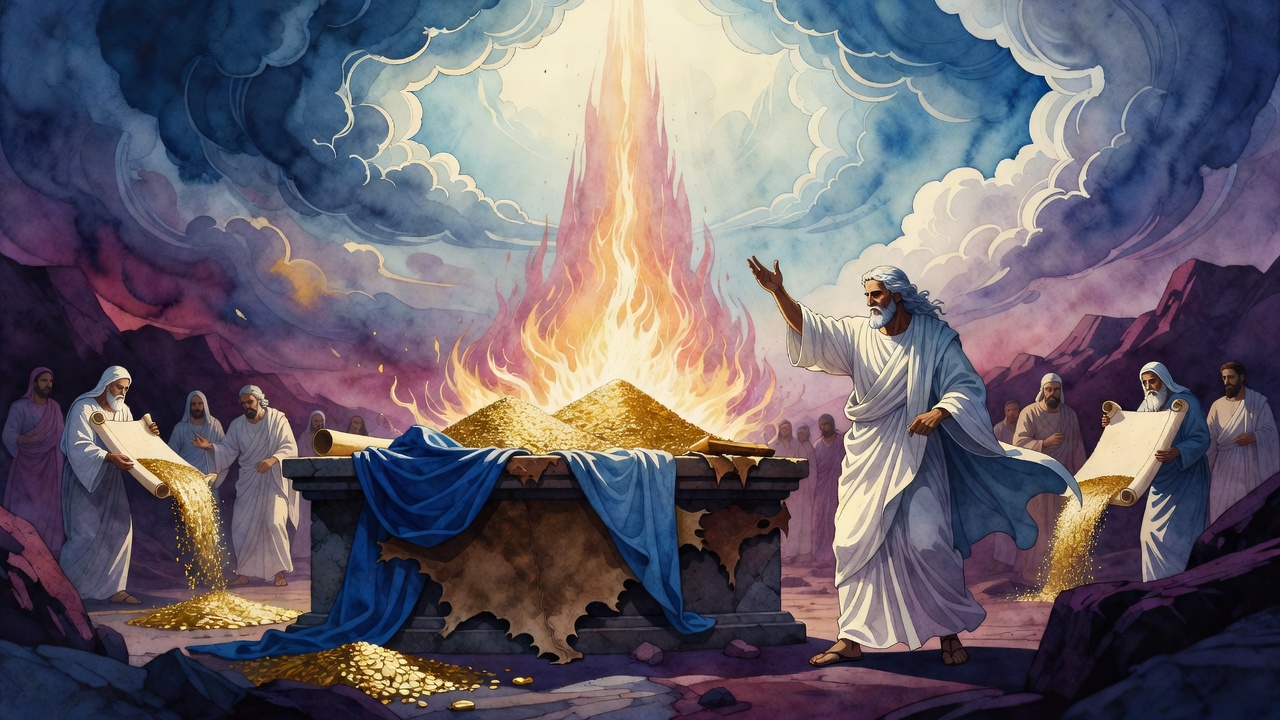
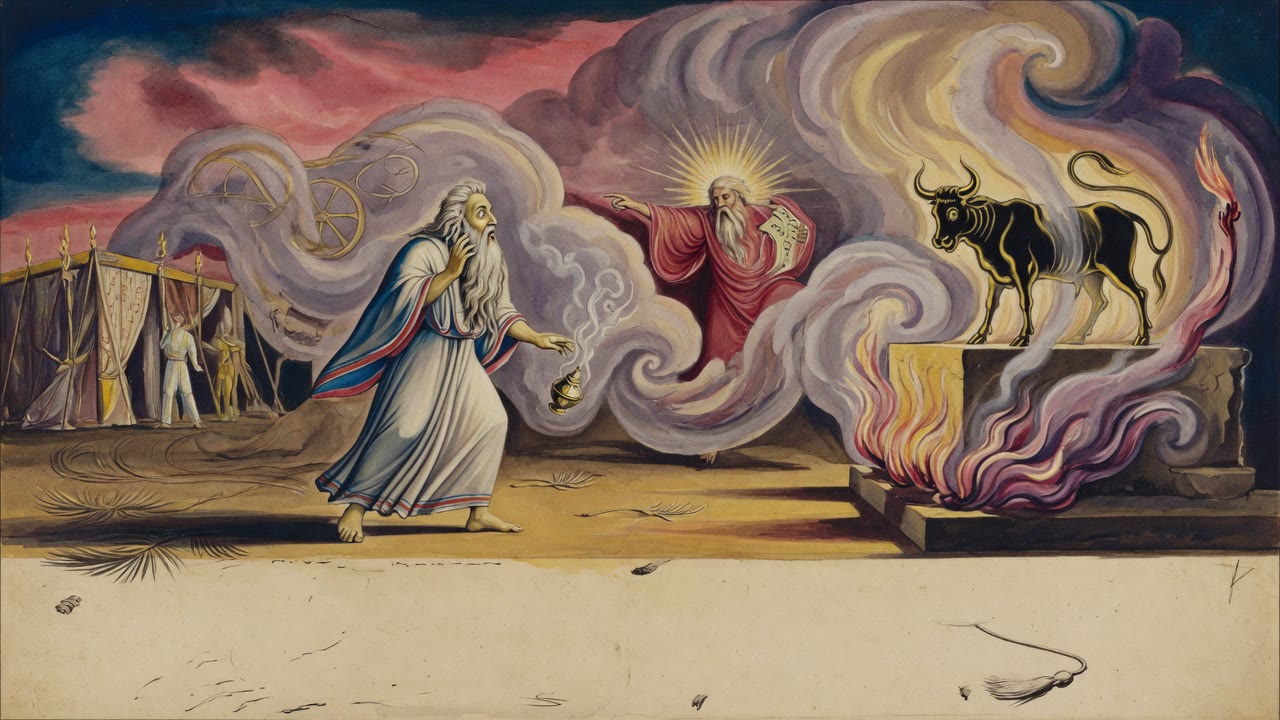
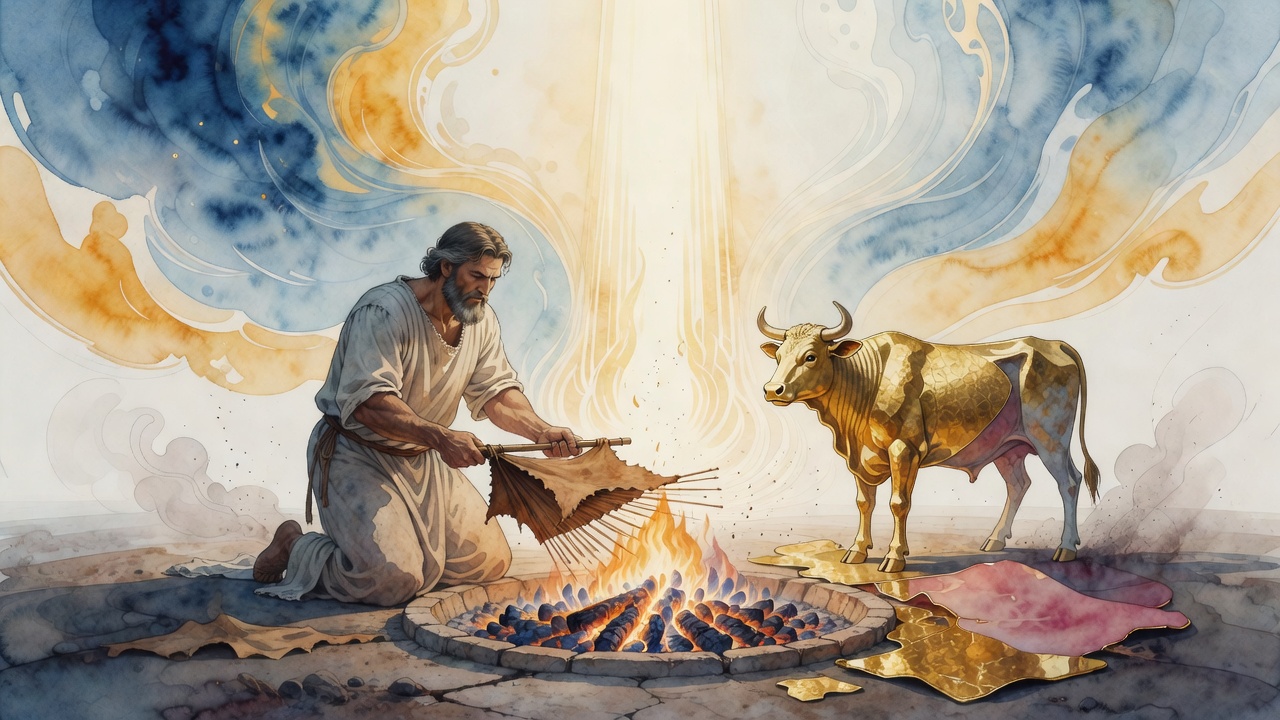
The camp had gone mad at the foot of the mountain. Gold poured from ears and fingers into the fire, and out of the fire came a calf, and the people danced around it as though the sea had never split. One man planted himself in front of the thing and would not move. Hur, grandson of Caleb, told them the calf was nothing, a lump of melted jewelry, and that the God who had drowned Pharaoh was not something you poured out of a furnace. The crowd killed him where he stood. They killed him and kept dancing.
Heaven did not forget the man who died against the calf. When the fury of that day had burned out and Israel needed a house for the divine presence, the reward for that blood came down into his own line. His grandson would raise the sanctuary that answered the sin that had murdered him.
The Boy Who Knew the Letters
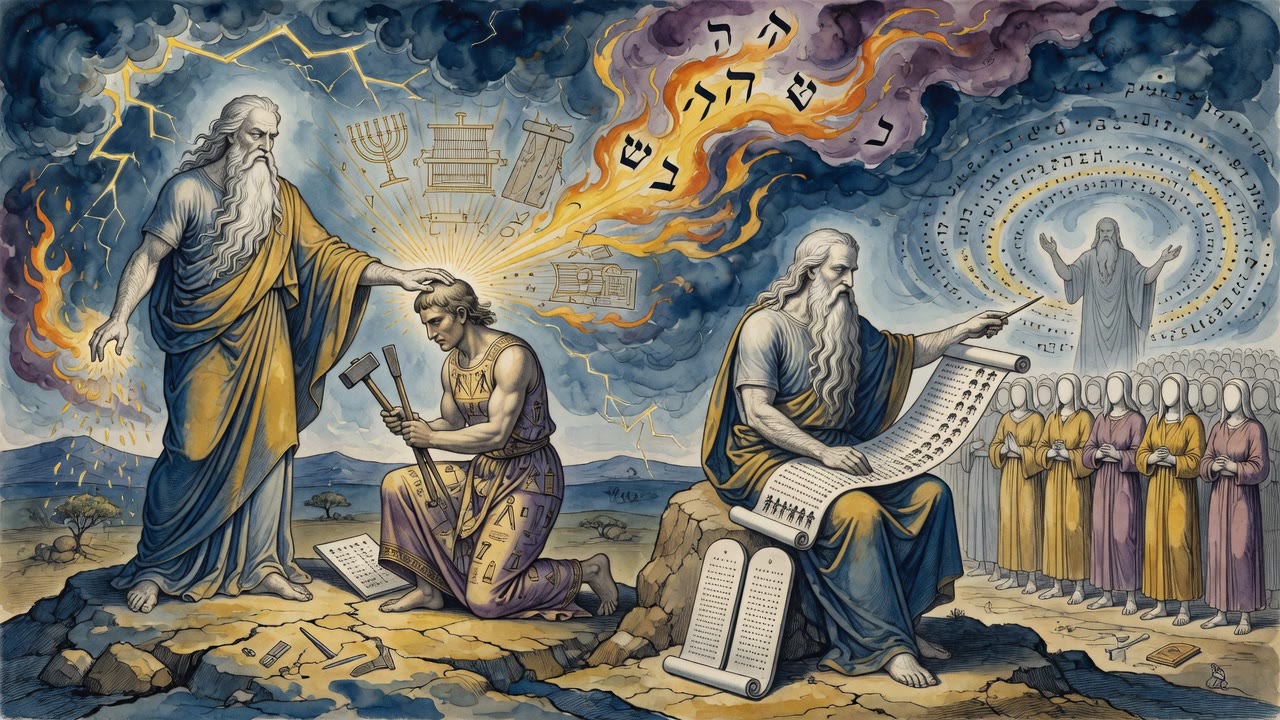
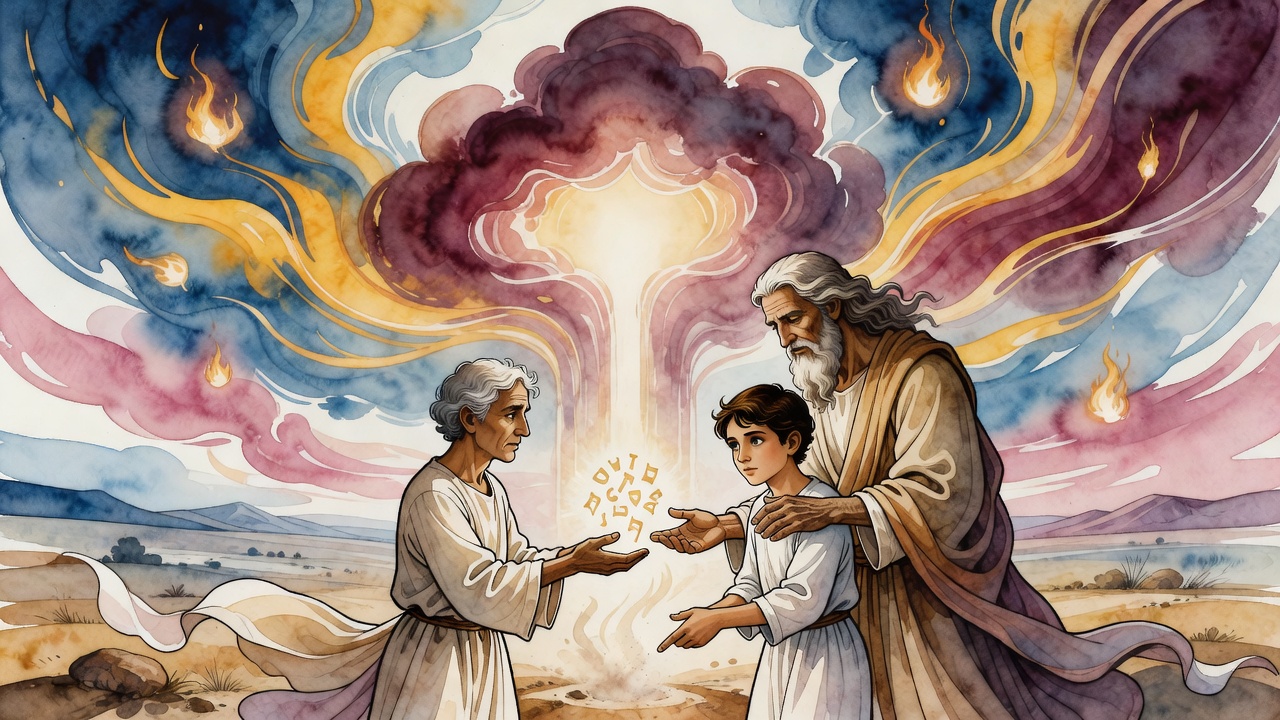
Bezalel, son of Uri, son of Hur, was little more than a boy. What he carried was older than his age. God had filled him with three things and called each by its name: hokhmah, wisdom, tevunah, insight, and da'at, understanding. These were not gifts for their own sake. They were the very tools with which the world had been made. With wisdom and insight and understanding God had laid the foundations of heaven and earth, and now He handed the same three to a child and told him to build.
Bezalel knew more than the working of gold and wood. He knew the secret the sages only whispered, the combination of letters by which God had spoken the world into being. Those letters had hung in the dark before there was light. They had been fitted together into sky and sea and the body of every living thing, and the boy knew how they locked. His name said as much. Bezalel means "in the shadow of God," and a man who stands in that shadow sees what stays hidden from everyone out in the light.
God Asks Whether the Boy Is Worthy
God already knew the answer. He turned to Moses anyway. "Do you think Bezalel is worthy of this work?" Moses did not hesitate. "Lord of the Universe," he said, "if he is good enough for You, he is surely good enough for me." That should have ended it. It did not. "Go down," God told him, "and ask Israel whether they approve My choice."
So Moses carried the question to the people who had danced around the calf, into the same camp where Hur had been beaten to death. He asked them whether they would accept the martyr's grandson as the builder of God's house. Their answer came back without a crack in it. "If Bezalel is good enough for God and good enough for you, he is surely good enough for us." The people who had made the calf blessed the boy who would undo it.
The Argument Over What Comes First
Moses gave the boy his instructions in the order he had received them on the mountain. First the Tabernacle, the great tent that would hold everything, and then the Ark to sit inside it. Bezalel listened, and then Bezalel pushed back. "What is the Tabernacle for?" he asked. Moses told him the truth, that the Shekinah, the divine presence, would settle inside it and teach Israel the Torah. The boy had him. "And where," he asked, "will the Torah live while I am still building the tent around it? It is not fitting to leave the Torah lying out in the open with no home of its own."
Build the Ark first, he argued, and lay the Torah inside it, and only then raise the tent around the thing the tent exists to guard. The Tabernacle was never anything but a house for what it would hold. Moses heard his own student correct him and knew the boy was right. It was the order of the beginning again, light made first, before the things the light would fall upon. Bezalel set his hands to the Ark before he touched anything else.
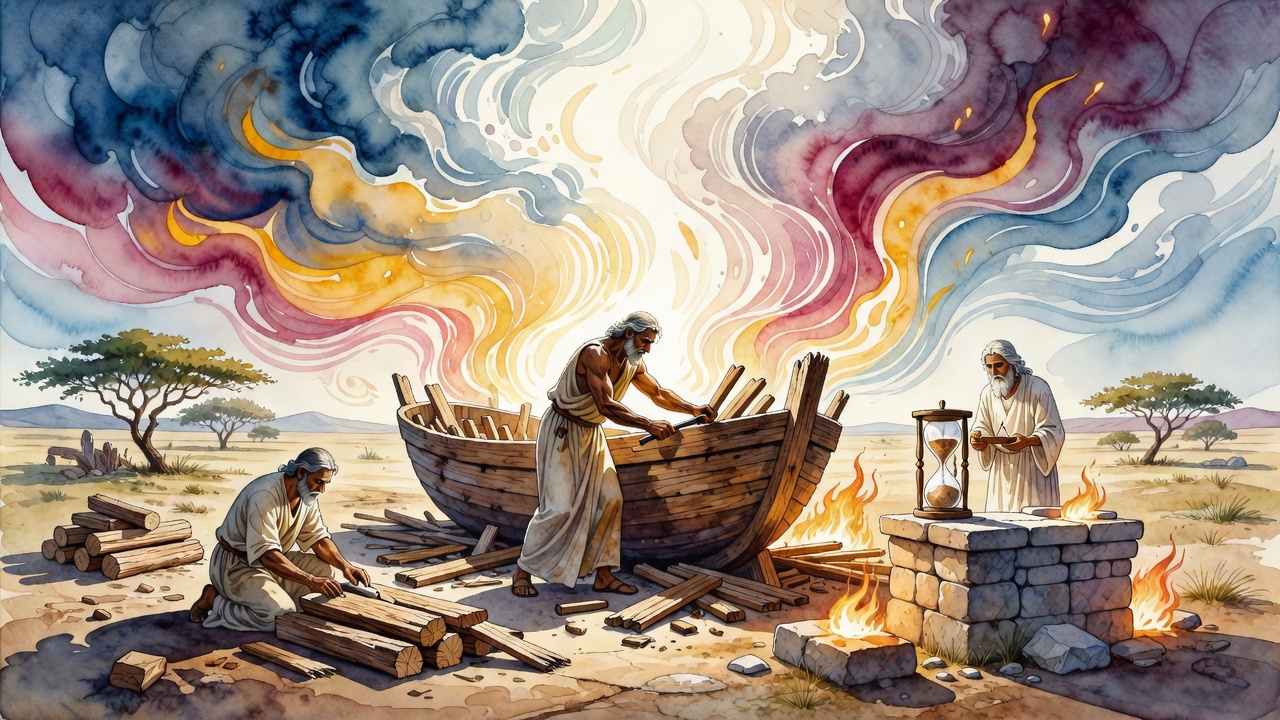
He did not work alone. Beside him stood Oholiab of the tribe of Dan, the smallest and least regarded of the tribes, set shoulder to shoulder with the grandson of a hero of Judah so that no one could ever say the sanctuary belonged to the great and not to the low. The spirit of holiness came down on the master workers. It came down even on the animals that hauled the timber, so that every ox dragging cedar through the sand carried its own portion of wisdom and insight and understanding.
The Sparks That Went Before Israel
What he built was a box inside a box inside a box, gold, then wood, then gold again, folded into itself like a secret kept three times over. Inside went the scrolls, the two tablets carried down from the mountain, and the Ineffable Name itself. Every measurement was fixed to a fraction of a span, because in a thing shaped after the Throne of heaven nothing could be left to guesswork. When Israel marched, a cloth wholly of blue covered it, blue because that was the color of the Throne it copied.
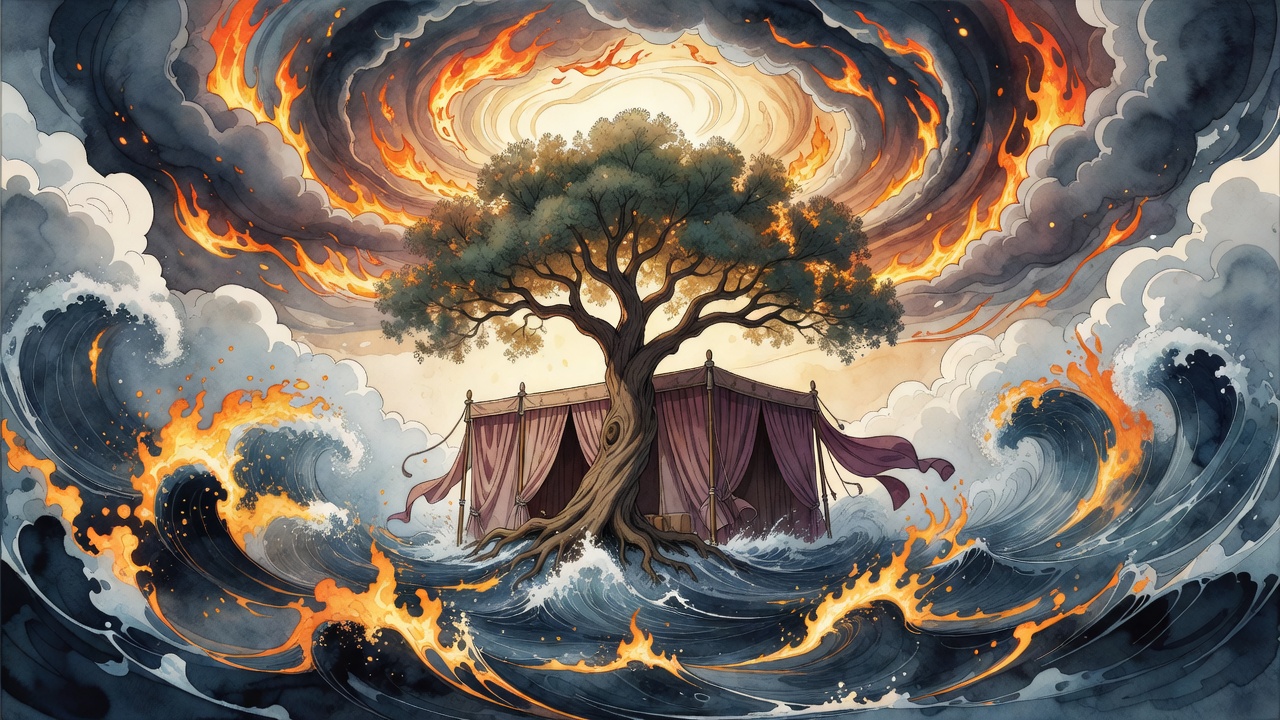
The Ark did not sit quietly. Two sparks leapt from the Cherubim that faced each other above its lid and shot out ahead of the camp, burning the serpents and scorpions in the sand before they could strike, scorching the thorns and thistles out of Israel's road. The smoke of those burning thorns rose in a single perfumed column that scented the whole world, and the nations looked up from far off and asked, "Who is this coming out of the wilderness like pillars of smoke, perfumed with myrrh and frankincense?" The martyr's grandson had built the thing that now walked before his people like a wall of fire.
← All myths