Moses Saw Jericho as a Cultivated Future
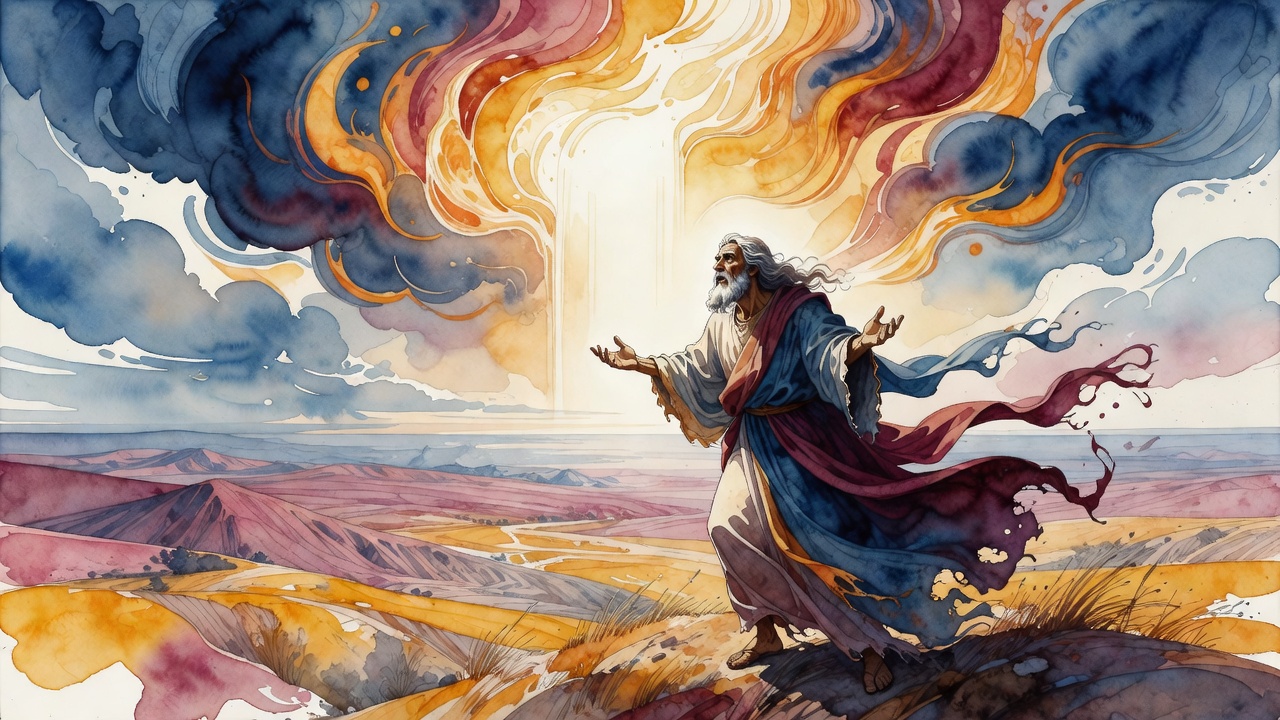
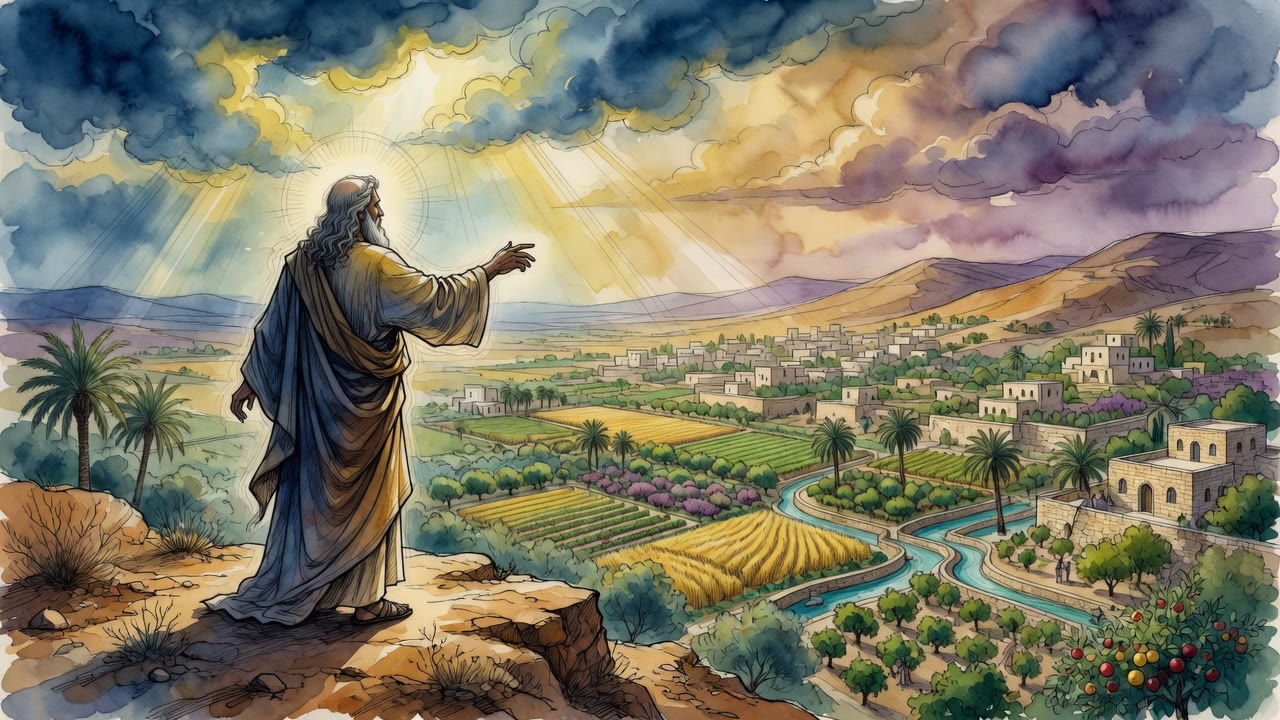
From Nebo Moses did not scan empty hills. God stretched the low Jericho plain into fields already planted, wheat and barley ordered before any plow arrived.
Table of Contents
 Click for full size
The Summit That Should Have Been Enough
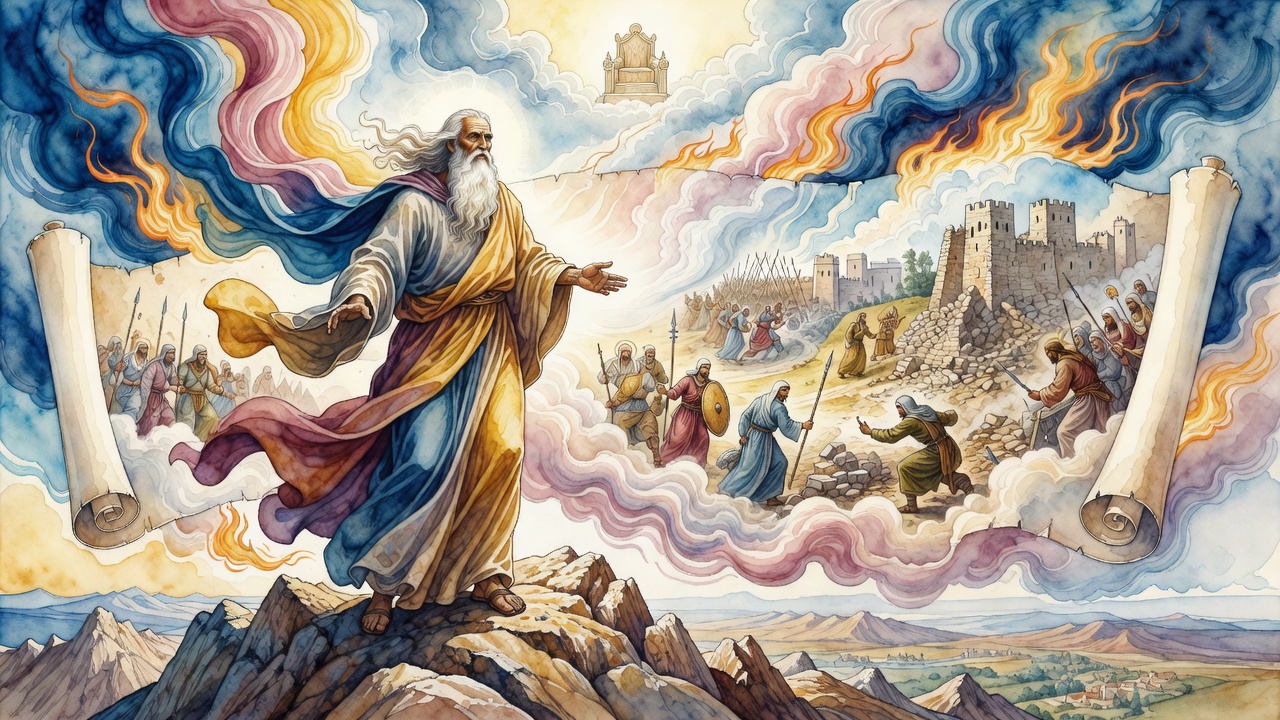
Moses planted both feet on the rock of Mount Nebo and waited for ordinary sight to fail him. Below him the valley of Jericho lay open, a low plain anyone with healthy eyes could name from a ridge. The wind off the Jordan pressed his cloak against his ribs. He had expected geography. He received a map that was not yet true.
God did not show him dust tracks and scrub. He showed him the plain the way a farmer sees land after rain has done its work. One field thick with wheat. Another set for barley. Rows that did not exist yet, drawn as if a hand had already measured them. The Torah would later write that he saw "the valley of Jericho" (Deuteronomy 34:3). The detail is almost too plain. A valley from a mountain is no miracle. The miracle was the future pressed into that low ground until Moses could taste harvest on the air.
His staff tapped once against stone. He did not speak. Speech would have made the vision thinner. He let the ordered green stay in his eyes until it hurt.
What Ordinary Eyes Cannot Hold
He knew the argument that would later circle the teaching halls. Why single out Jericho valley if height already grants the view? The answer climbed into his bones before any sage named it. God was not proving that Moses could see far. God was proving that Moses could see what had not yet been sown.
The land below still held enemies, walls, and names Israel had not earned the right to speak in peace. Moses saw past the present tense. He saw Eretz Yisrael as a cultivated plain, rich the way Jericho is rich when date palms darken and water finds every root. His eyes burned with a fertility that his feet would never touch.
A bird crossed the gap between ridge and plain. For a moment Moses tracked it as if it flew over real grain. When he blinked, the bird was only a black stroke over scrub. The grain remained, stubborn as a promise.
The Spies Still Stood Between Him and That Map
Years earlier the people had asked for scouts, and the plan had looked good in Moses own eyes. God had not shared the approval. The memory still sat under the vision like a stone in a shoe. A man wants to try a donkey before he buys it, the old comparison runs, and the seller laughs because the buyer already means to take it. Israel had meant to enter and still demanded proof. The proof came back heavy with fear. Clusters of grapes large enough to shame a market stall had not outweighed the report of giants. Now Moses stood where those men never stood, shown a land already ordered, already fed, already waiting for the generation that would cross without him.
He did not argue this time. Argument had spent itself on the road from Egypt to this ridge. He only watched the wheat that was not wheat yet, and felt the weight of a promise that would outlive his pulse. The spies had measured walls. God was measuring harvests that would outlast every wall.
Somewhere below, the Jordan kept cutting its channel toward salt. Moses thought of the night the people refused the land, of the tears that were not holy tears, of the decree that turned his own path into a long farewell. The vision did not cancel that decree. It made the decree sharper. He would die knowing exactly what he was denied.
Cities of Refuge in the Same Horizon
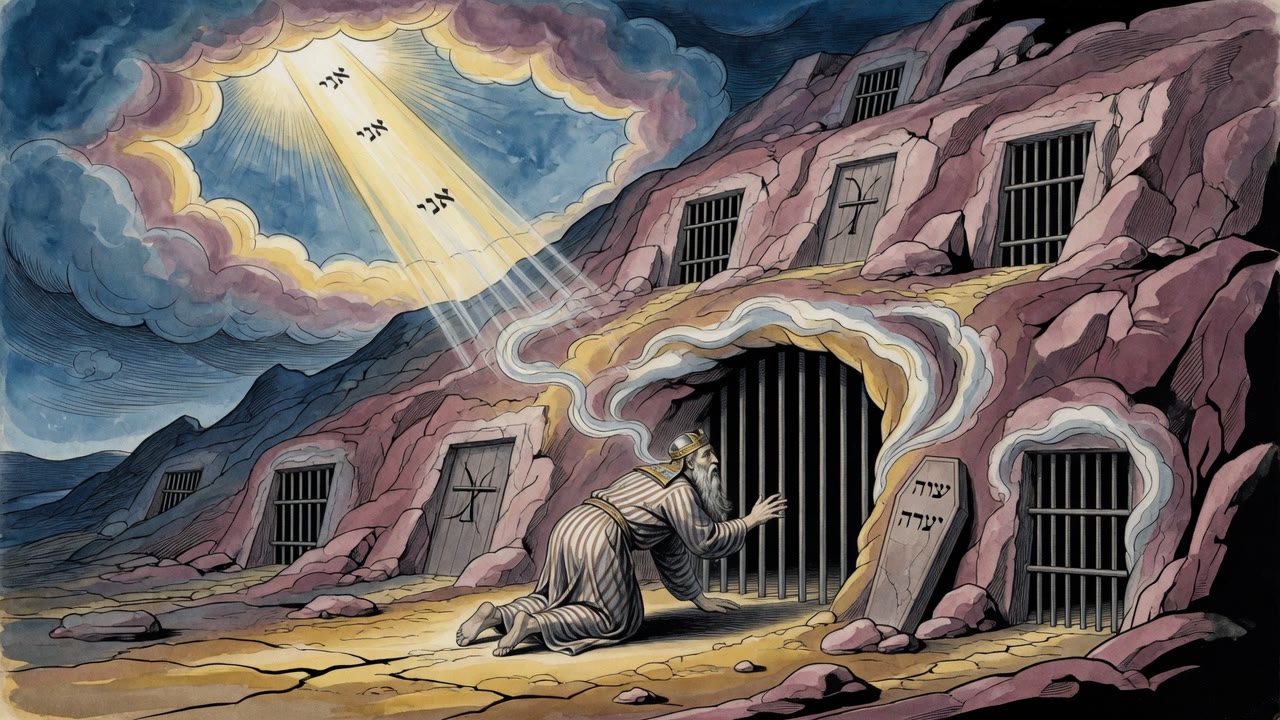
The vision did not stop at grain. East of the Jordan, in the strip his people already held, three cities waited to become doors for the manslayer who killed without hate. Pasturelands ringed them. Paths had to stay clear so a runner with blood on his hands and no malice in his heart could reach a gate before the avenger did. Moses saw markers of mercy set into the same map as barley and wheat.
That, too, was cultivation. Not only soil. Courts. Roads. Distance measured so flight could outrun rage. The low valley of Jericho and the refuge cities belonged to one picture: a people settled enough to farm, settled enough to judge, settled enough to leave a door open for accident and return. Conquest without refuge would be only teeth. Refuge without fields would be only tents. God showed both.
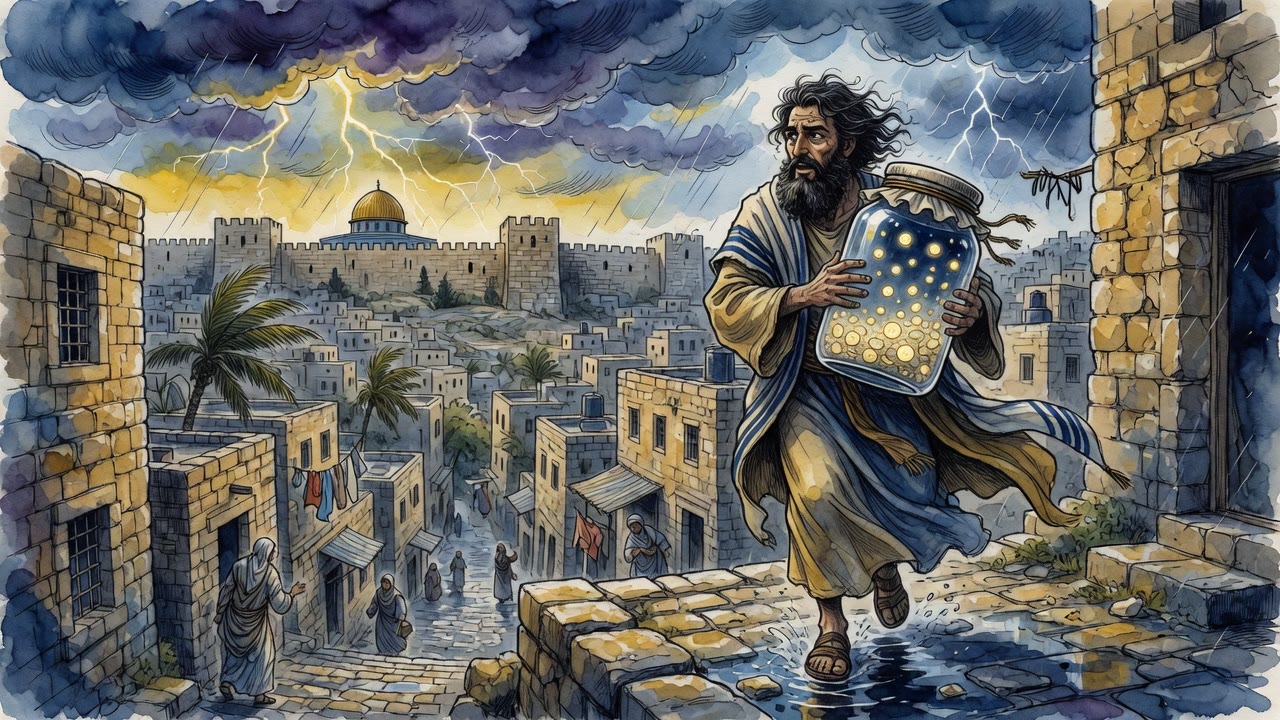
Moses imagined a man stumbling into one of those cities at dusk, chest heaving, voice cracked on the claim of accident. Elders at the gate. A bed that is not a prison and not freedom. Years that wait for the high priest death. The ridge wind smelled of river mud and something sweeter that was not there yet, the sweetness of grain drying after harvest.
He Closed His Eyes on Purpose
When the wind turned cold, Moses shut his eyes and still saw the rows. Opening them changed nothing. The plain of Jericho kept offering its double face, present scrub and future plenty. He understood why the verse bothered to name a valley any climber could find. The name was the hinge. God had borrowed the most ordinary view in the range and loaded it with a harvest Moses would never cut.
He stepped back from the edge. The staff in his hand felt heavier than wood. Below him the Jordan kept moving toward a sea that does not give fish. Above him the sky held no ladder he could climb. Joshua generation would walk into the green he had only been lent for an hour. Moses accepted the loan without smiling.
← All myths