5 min read

Moses Saw the Land, the Ruin, and Heaven's Temple

Barred from the soil, Moses sees tribe shares, kings, ruin, and judgment. He begs to meet the Messiah and learns the Name so the Shekinah will not burn him.

Curated by Arthur · Told by Maggid ·
Table of Contents
  1. Ages Pass Before His Eyes
  2. One Request Before Death
  3. Two Temples, One Light
  4. The Ridge He Cannot Cross

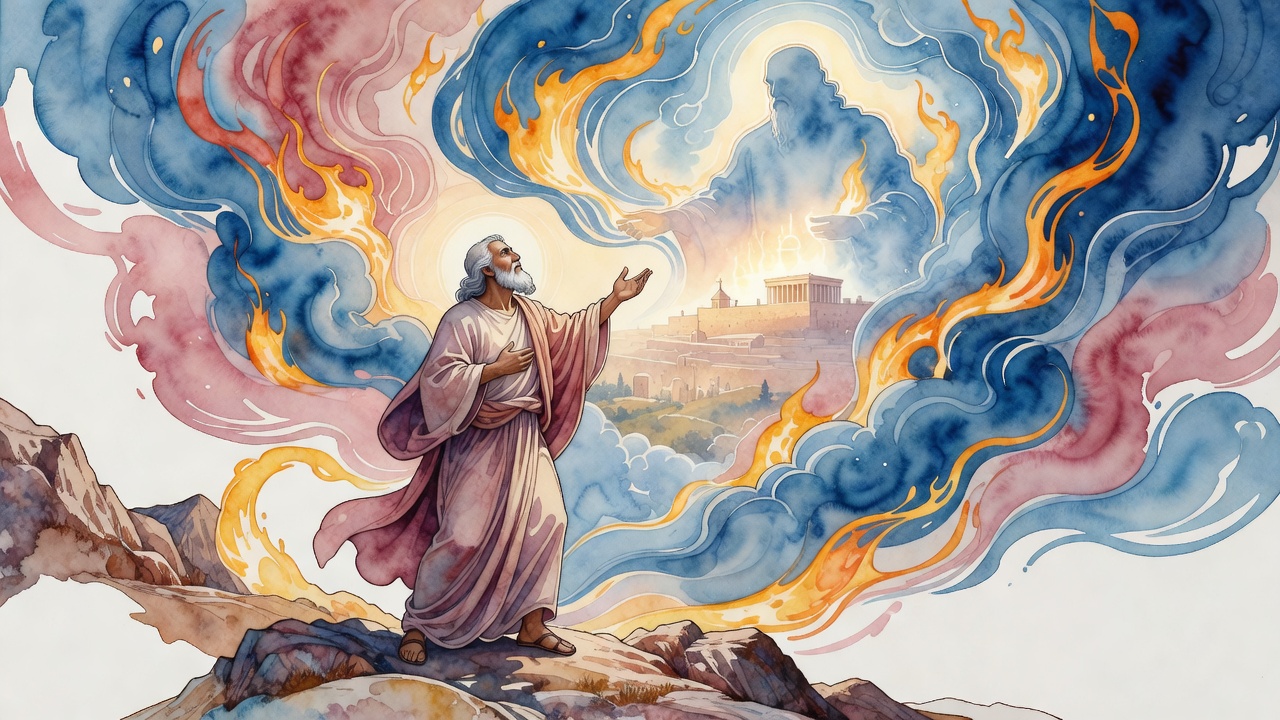
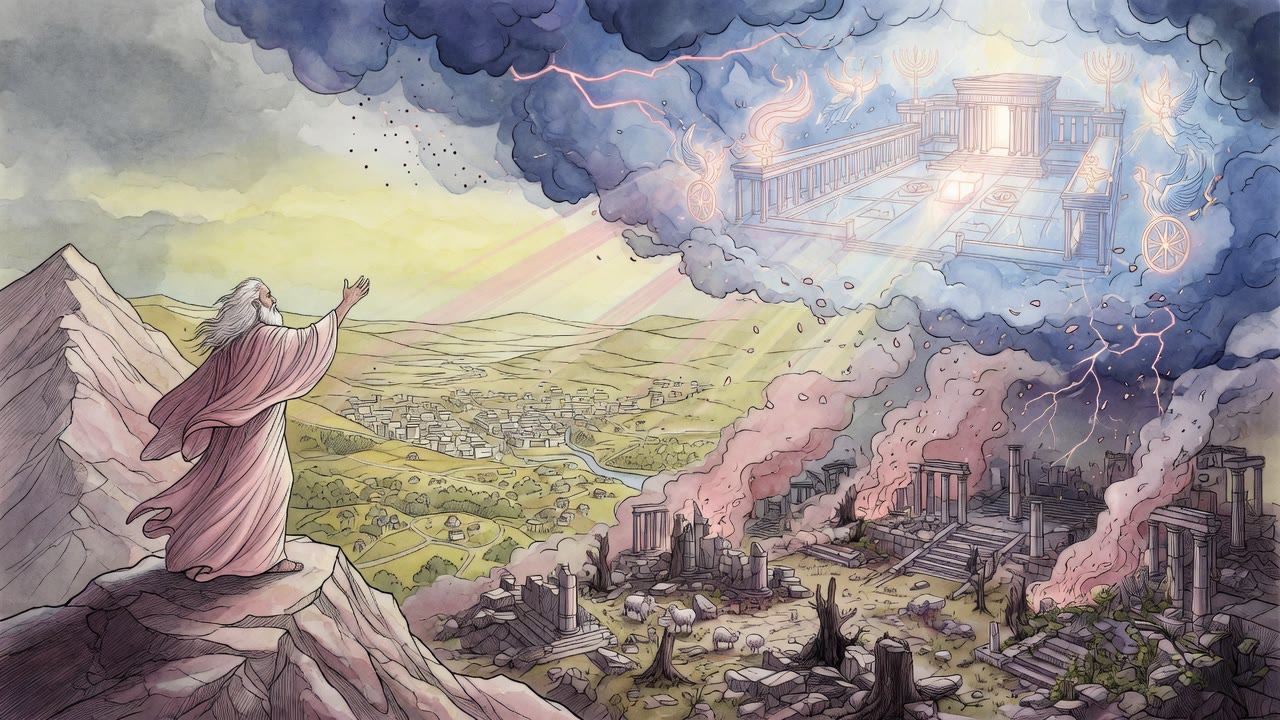
Moses stood where he could see and could not step. God pointed across the land promised to Abraham, Isaac, and Jacob. "This is the land which I sware unto them, saying, I will give it unto thy seed; to them did I promise it, but to thee do I show it."
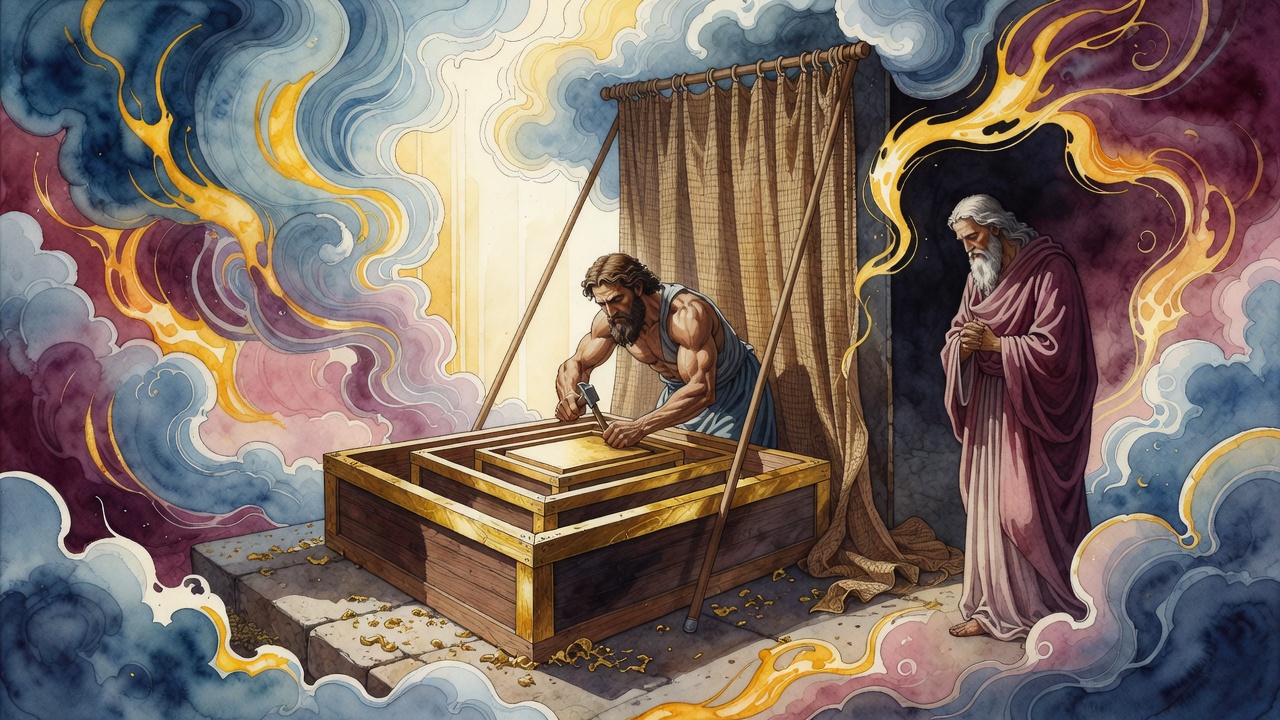
Moses Saw the Land, the Ruin, and Heaven's Temple Click for full size

The showing was not a map. God named shares as if the future already held title. "This is Judah's share, this Ephraim's." Moses watched borders that his feet would never cross. He saw the ground under glory and under foreign rule in the same long look.

Ages Pass Before His Eyes

The vision widened until time itself opened. From creation to the Day of Judgment, the sweep of Israel moved past him. He watched Joshua fight the Canaanites. He watched Samson strain against the Philistines. He watched the golden years under David, then Solomon raising the Temple stone by stone. Then he watched that house fall.

Kings from David's line walked the ridge of the vision. Prophets from the line of Rahab spoke in it. On the plains of Jericho he saw the later ruin of Gog and Magog. He was shown Gan Eden (the Garden of Eden, paradise of the afterlife) crowded with the righteous and Gehinnom (the place of punishment after death) holding the wicked. Reward and consequence stood as clear as the hills he could not enter.

Moses had begged to know the end of the work he had carried out of Egypt. Heaven answered by loading his eyes. Every triumph cut. Every destruction cut deeper. The man who would die on the near side of the Jordan had to hold both.

One Request Before Death

After the Torah was given, Moses did not ask for a longer life or a softer death. He asked for a meeting. "Permit me to speak to Thy Messiah before I die."

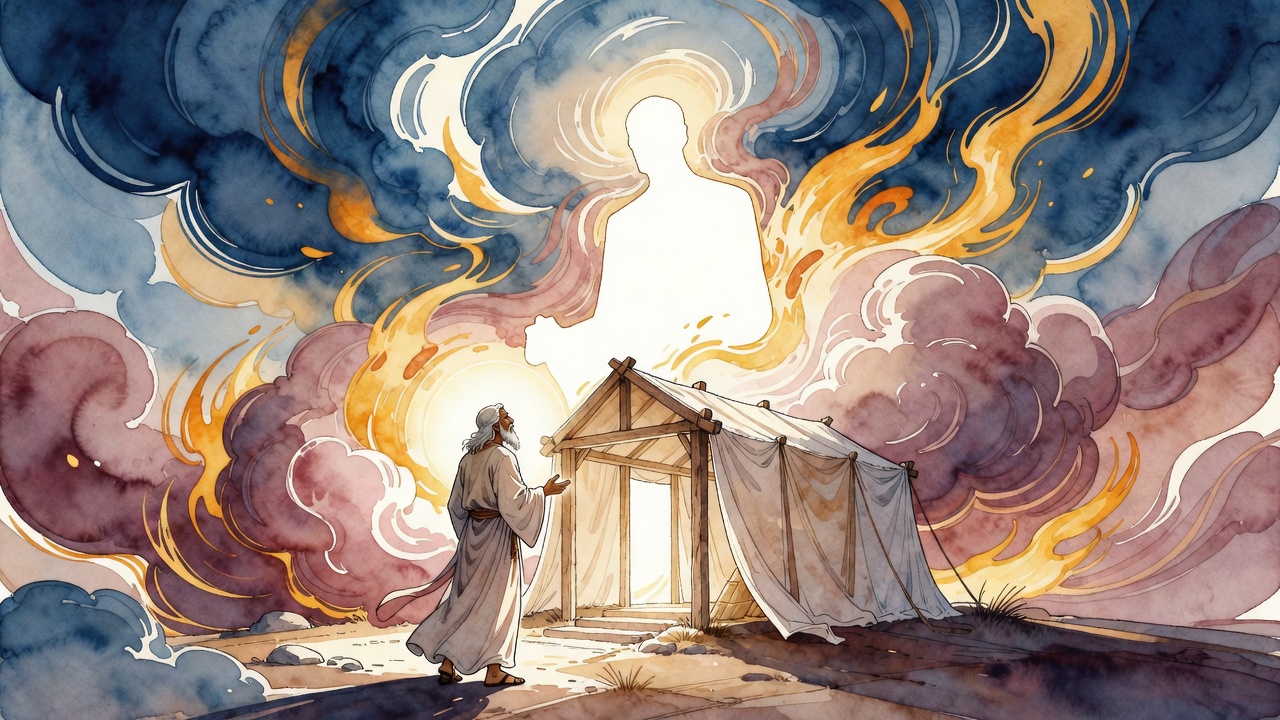
God granted it under a condition that could kill him if mishandled. "Come. I shall teach thee My great name, that the flames of the Shekinah (שכינה), the Divine Presence, not consume thee." The Name was power dense enough to burn. Moses took it the way a man takes a coal he must carry across a threshold.

Armed with that teaching, he approached the Messiah, son of David, and Aaron. They knew at once that he had been taught the great name. They greeted him with the words, "Blessed be he that cometh in the name of the Lord." Moses stood among them as a guest who still could not go home to the land he had just been shown.

Two Temples, One Light

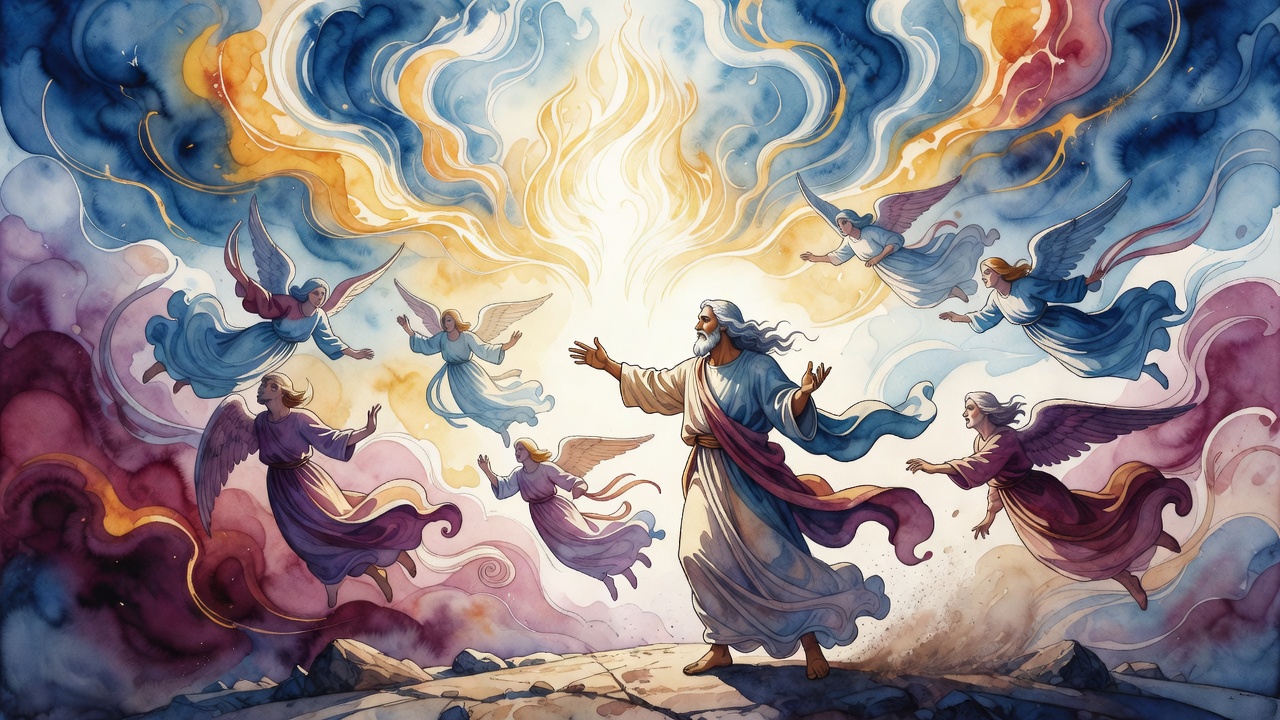
What he saw next broke him open with wonder. "God told me that Israel was to erect a Temple to Him upon earth, and I now see Him build His own Temple, and that, too, in heaven!" The house of wood and stone below was only the lower image. Above, God raised a house of jewels, pearls, and the light of the Shekinah with His own hand.

The Messiah answered from that light. Jacob had seen both Temples in a night when he slept on a stone: one Jerusalem on earth, one in heaven. God had told Jacob that the upper house of jewels and Presence was the one preserved for Israel to the end of all generations. Moses heard the old dream completed in the present tense of heaven.

The man barred from Canaan stood inside a sanctuary no army could burn. He had watched Solomon's Temple rise and fall in the earlier vision. Now he stood where fire could not reach the walls because the walls were God's own making. The contrast did not soften the decree against his feet. It sealed what he would carry into death: the lower house can fall; the upper house does not.

The Ridge He Cannot Cross

Moses returned from that audience still shut out of the soil. He had seen Judah's portion and Ephraim's, David's crown and the Temple's ruin, Gog's fall and Gehinnom 's (the realm of judgment after death) smoke. He had spoken with the Messiah under the shelter of the Name. He had watched God build what Israel would only copy.

Nothing in the vision moved the border under his sandals. The promise stayed with the seed. The sight stayed with the prophet. When he turned back toward the place of his dying, the land still glittered where he could not step, and the heavenly house still shone where no exile could tear the stones out.

He had wanted the future. He received it entire, glory and ash, lower Temple and upper light, and the irreversible knowledge that his own grave would face a country he had already walked with his eyes alone. The wind on the ridge did not change. The decree did not soften. Sight was the last gift, and it was also the last wall.


← All myths
From the tradition

Sources

2 sources

The texts behind this telling. Some cards carry a translation of the source; others are our own retelling of it, and each card says which. Every card links out to the original.

Legends of the Jews 7:7Legends of the Jews

Retold in our words. Read the original at the link below.The Legends of the Jews by Louis Ginzberg (1909) · Public Domain

The Torah says God showed Moses the land, but the Legends of the Jews fills in the blanks with breathtaking detail.

God, pointing to the land, says, "'This is the land which I sware unto Abraham, unto Isaac, and unto Jacob, saying, I will give it unto thy seed;' to them did I promise it, but to thee do I show it." It wasn't just a geographical overview, like looking at a map. Oh no. This was a divine tour, personalized and profound.

God didn’t just say, "There's the land." He specified, "This is Judah's share, this Ephraim's," meticulously instructing Moses about the future division of the land. It's like God was giving Moses the ultimate real estate briefing! Moses learned not just the geography, but the history embedded within the land itself. According to Ginzberg's retelling, he saw the land not just as it was, but as it would be, both in its glory and under the shadow of foreign rule.

It gets even more intense. God revealed to Moses the entire sweep of Israel's future, from creation to the Day of Judgment. for a second. He witnessed Joshua's battles with the Canaanites, Samson's heroic fight against the Philistines, the golden age under David, and the building of the Temple by Solomon. And then, tragically, he saw its destruction.

He saw the lineage of kings descended from David, and – surprisingly perhaps – the line of prophets stemming from Rahab. The Legends of the Jews paints a picture of Moses as a time traveler, witnessing pivotal moments in Jewish history before they even happened.

And the vision didn't stop there. Moses also saw the future destruction of Gog and Magog on the plains of Jericho. This wasn’t just history; it was prophecy unfolding before his very eyes!

But God didn't just show him earthly events. He showed him the ultimate destinations: Gan Eden (Paradise) with its righteous inhabitants, and Gehenna (hell) filled with the wicked. It was a complete picture of reward and consequence, a cosmic vision of justice.

What does it all mean? Perhaps it’s a way of understanding the weight of leadership, the burden of prophecy. Moses wasn't just being shown a piece of land; he was being entrusted with a legacy, a future he now had to help shape, knowing its triumphs and tragedies. How would it change you?

Full source
Legends of the Jews 7:15Legends of the Jews

Retold in our words. Read the original at the link below.The Legends of the Jews by Louis Ginzberg (1909) · Public Domain

Being in his sandals, standing in the very presence of God. It's a question that has captivated Jewish scholars and storytellers for centuries. The Legends of the Jews, that incredible compilation of rabbinic lore assembled by Louis Ginzberg, offers a glimpse into just such a mystical encounter.

In this tradition, after receiving the Torah, Moses pleaded with God. He didn't ask for power or glory. He asked for something far more profound: "Permit me to speak to Thy Messiah before I die." To speak to the Messiah before death.. what a powerful desire!

God, in His infinite wisdom, granted Moses this request. But there was a condition. "Come," God said, "I shall teach thee My great name, that the flames of the Shekinah (the Divine Presence) not consume thee." The Shekinah (שְׁכִינָה) refers to the divine presence, the radiant glory of God. The name God was to impart was so potent, so filled with divine energy, that it could be dangerous if not handled with the utmost reverence.

Moses, imbued with the secret, approaches the Messiah, David's son, and Aaron. They immediately recognized that Moses had been taught the great name. In a moment of profound respect, they greeted him with the words: "Blessed be he that cometh in the name of the Lord." A beautiful moment of recognition and blessing.

Moses, overwhelmed by what he was witnessing, then exclaimed, "God told me that Israel was to erect a Temple to Him upon earth, and I now see Him build His own Temple, and that, too, in heaven!" He realized that the earthly Temple was just a reflection of something far grander, a divine archetype existing in the celestial realms.

The Messiah responded, offering a profound insight. "Thy father Jacob saw the Temple that will be erected on earth, and also the Temple that God rears with His own hand in heaven, and he clearly understood that it was the Temple God constructed with His own hand in heaven as house of jewels, of pearls, and of the light of the Shekinah, that was to be preserved for Israel to all eternity, to the end of all generations. A Temple built of light and jewels, a celestial sanctuary meant to endure forever.

The Messiah continues, elaborating on Jacob's vision. "This was in the night when Jacob slept upon a stone, and in his dream beheld one Jerusalem upon earth, and another in heaven. God then said to Jacob, 'My son Jacob, to-day I stand above thee as in the future thy children will stand before Me.'" According to this legend, Jacob's famous dream wasn't just about angels ascending and descending a ladder. It was about seeing the two Jerusalems, the earthly and the heavenly, side by side.

Jacob, upon seeing these two cities, understood something crucial. "The Jerusalem on earth is nothing, this is not the house that will be preserved for my children in all generations, but in truth that other house of God, that He builds with His own hands." The earthly Jerusalem is important, yes, but it is the heavenly Jerusalem, the divine Temple, that holds the true promise of eternity.

But the Messiah offers a final, reassuring thought. "But if thou sayest that God with His own hands builds Himself a Temple in heaven, know then that with His hands also He will build the Temple upon earth." The Zohar, that foundational text of Jewish mysticism, often speaks of the interconnectedness of the earthly and heavenly realms. The Messiah's words echo this idea. The divine blueprint exists, and God will ensure its manifestation here on earth.

So, what does this all mean for us? Perhaps it's a reminder that even in the midst of our earthly concerns, we should never lose sight of the divine, the eternal, the heavenly Jerusalem that exists within us and above us. Perhaps the story encourages us to seek out those moments of connection, those glimpses of the Shekinah, that remind us of the grander, more beautiful reality that surrounds us. Can we, like Moses, strive to see beyond the veil?

Full source