Nimrod's Son Eliezer Served Abraham and Became Og of Bashan
Eliezer held the paper that named every flock as Isaac's. He could have kept it. He folded it away and rode north with ten camels.
Table of Contents
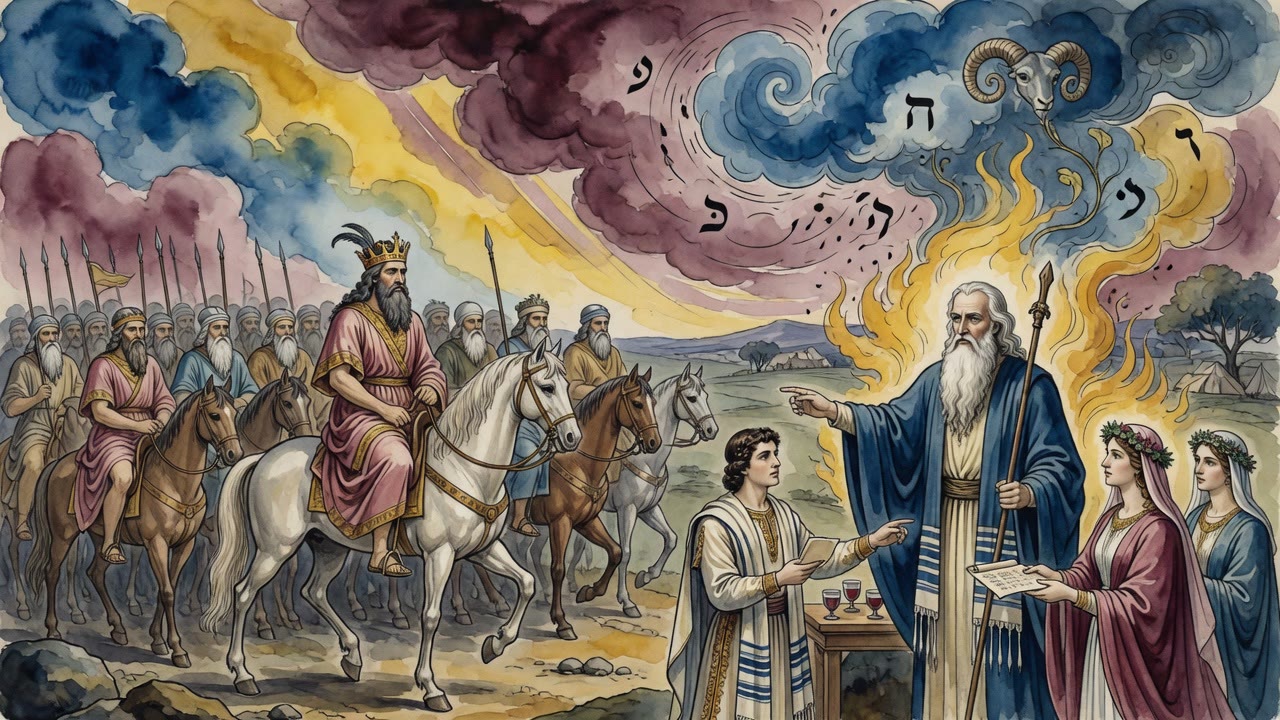
The great men of the kingdom came out to the road when Abraham left Ur of the Chaldees. They paid him because a man who walks away from a king's gods still has to be bought off if the king wants quiet. They brought silver, cloth, and beasts on lead ropes. Nimrod came last and brought none of that. He brought a boy.
 Click for full size
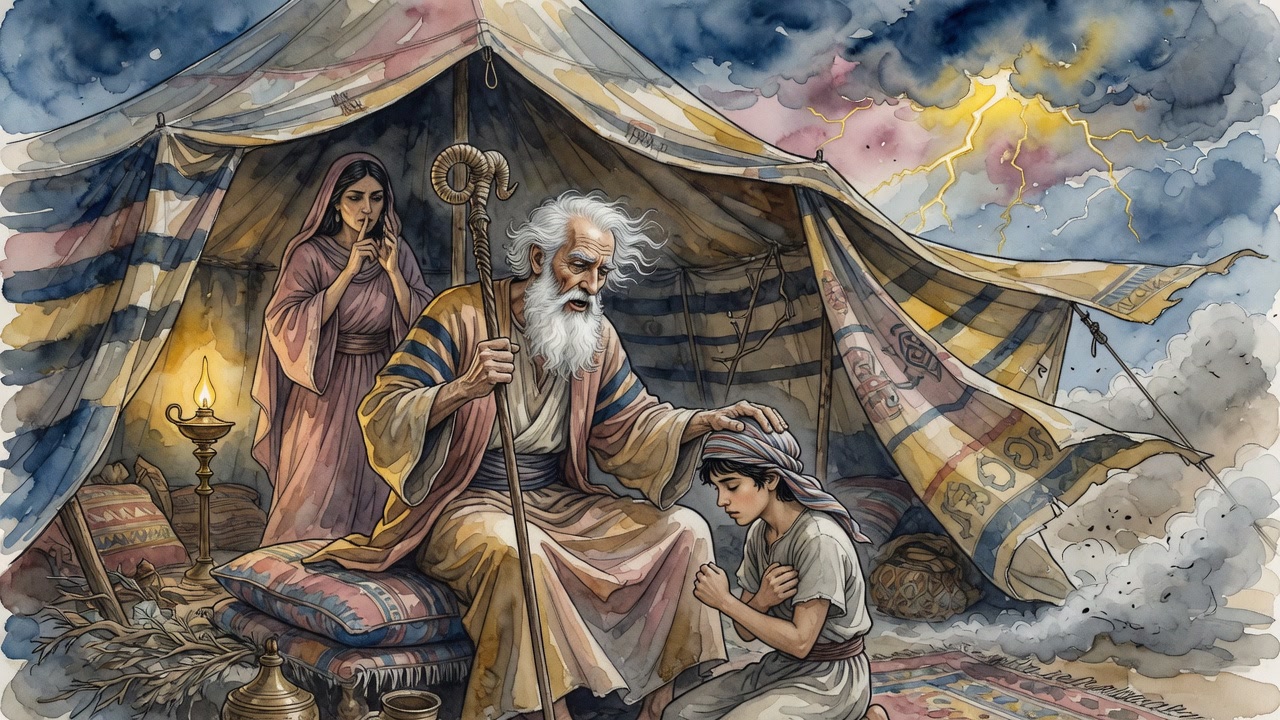
The boy was his firstborn, Eliezer. The king put a hand on the back of his neck and pushed him into the dust, so the gift would be heavier than metal. No term was named, and no price was named, and the seventh year would not open for this one, because Nimrod had called him a slave forever. The men holding the silver stood and watched a crown prince walk out of his father's city behind a man who had smashed those gods. Eliezer did not look back at the wall, because nothing behind him was going to open again.
The Document in His Hand
The household wore him into its own shape over the years. He learned the tents and the flocks and the altars on the high ground, and he learned the strange open-handedness that fed men his master had never met. He learned that everything his master owned was going to one son, because God had named that son, and he learned the son's name. Isaac.
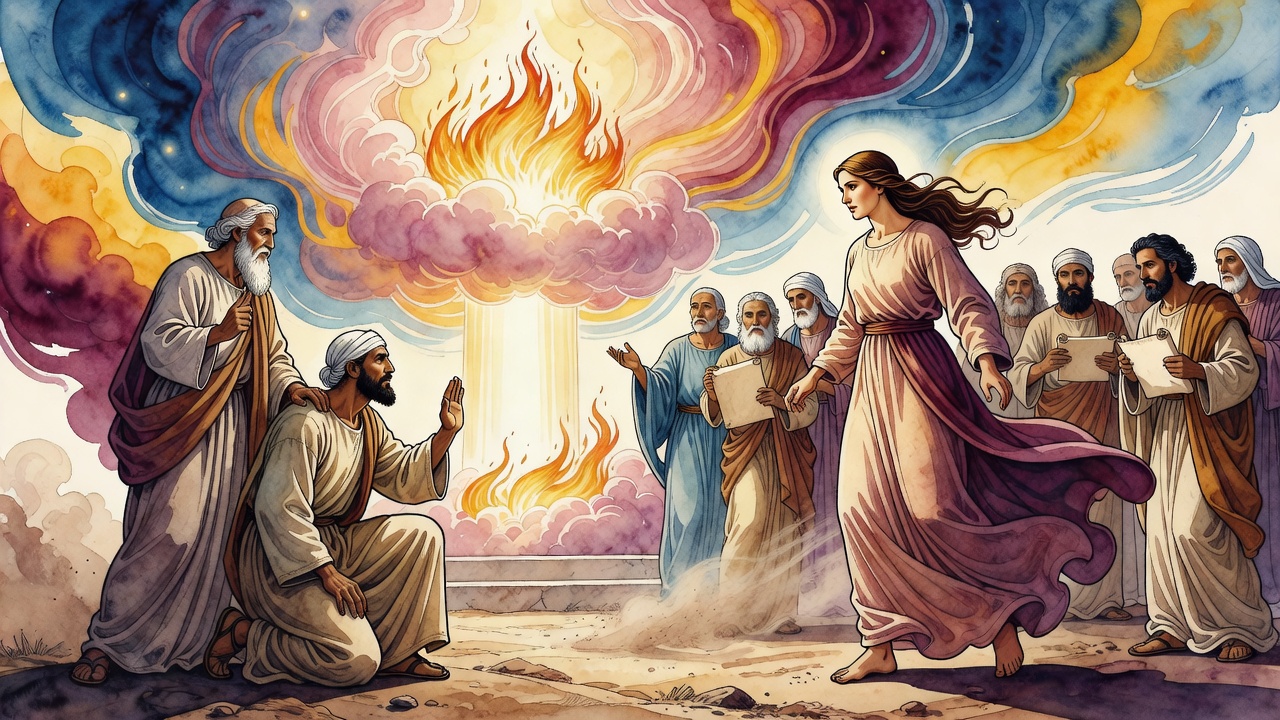
When Abraham grew old he wrote it out. All of it, deeded to Isaac, in a single document. Then he did the thing a careful man does not do. He put the document into the hand of his slave.
Eliezer held the paper and understood precisely what he was holding. While this is in my hand, he said to himself, all of his money is in my hand. Every flock and every well and every tent sat in that fold of cloth, and every ounce of the silver Nimrod's men had once carried out to the road. He folded it away, because the oath his master required was already waiting. He swore with his hand under Abraham's thigh, loaded ten camels, and rode north to find a wife for the boy who owned him.
Water for Ten Camels
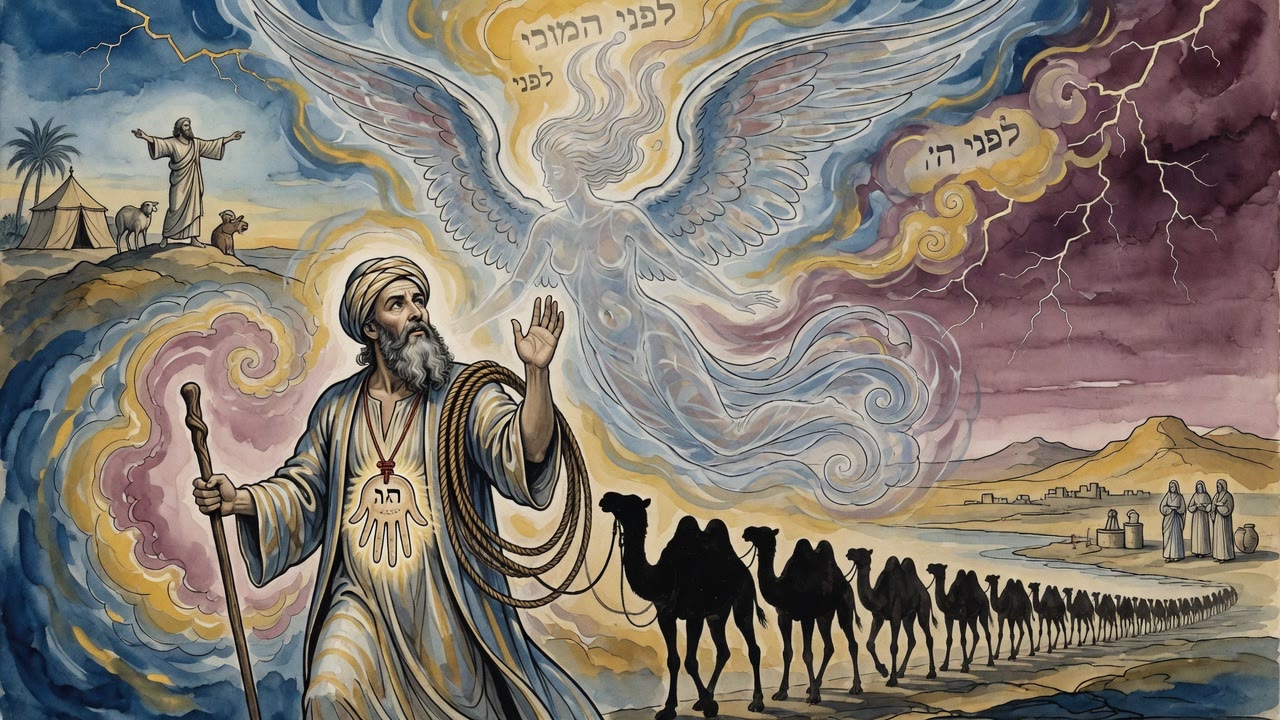
He stopped outside the city of Nahor in the evening, at the hour when the women come out to draw, and he made his bargain with God at the lip of the well. Let it be the girl who offers water to the camels, not to me. A girl who waters ten camels after a day on the road is a girl whose arms move before her mouth does.
Rebecca came down the path with the jar on her shoulder. She gave him drink. Then she ran, tipped the jar into the trough, ran back, drew again, and kept running until the last animal lifted its dripping head out of the water. Dust stuck to the wet on her wrists. The camels breathed hard and then slowed.
Eliezer said nothing the entire time, because he did not know yet whether the road behind him had been prospered or wasted. He stood at the well and watched her arms work, and he waited until the last rope of water stopped moving in the trough. Only then did he take out the gifts Abraham had packed, because a sign that costs a girl her evening is a sign you do not cheapen with talk.
What He Did Not Keep
In her father's house the document did exactly what he had known it would do. The family heard the size of what was coming to Isaac and did the arithmetic in front of him. Bracelets came out of a box and wine came out of a jar, so Laban could not do enough for him. They seated him near the lamp. They asked after the master's health as if the master's health were a well they hoped to drink from.
Nobody in that room could see the thing that mattered. The man doing the talking was carrying the whole estate in his robe. He had the paper, he had the family's full attention, and he had a house of people who badly wanted this match. If he bent the errand a hand's width toward himself, no one in Canaan would learn of it for a season. He could have named a price. He could have stayed.
He asked for the girl for Isaac. He took nothing out of the house except her, though the paper in his robe could have bought the house twice. For that kindness Abraham unmade the sentence Nimrod had passed at the gate. Perpetual slave, the king had said. Abraham said otherwise and let him go.
The Iron Bed at Edrei
Heaven closed the account after that, and it closed it here, on this earth, because the wicked were to draw nothing from the world to come. So the wage came in the one currency large enough to cover the whole debt at once, in this life, in full. They put a crown on him. The steward who had walked out of Bethuel's house with nothing in his hands became Og, king of Bashan.
Generations later the children of that same household came up out of the wilderness and found him waiting for them at Edrei with his people massed behind him, and he had grown enormous. They measured his bed afterward and wrote the number down, because nobody would believe it otherwise. Nine cubits of iron. He fought the house that had freed him, but he lost, and Moses stood over the body of a man who had once held Isaac's entire inheritance in his fist and handed it back.
Og's mouth was open in the dust. The bed would outlast the king. The wage had been paid out in full, and there was nothing left owing to him anywhere, not in Bashan and not in the world he had already spent.
← All myths