6 min read

No Enemy Coveted the Land While Israel Climbed to the Temple

Three times a year the men left fields for the Temple road, and God removed even the desire to seize their land while a cloud pulled every tent to worship.

Curated by Arthur · Told by Maggid ·
Table of Contents
  1. A Line From Suph to Pherat
  2. The Night Before He Went Up
  3. The Man on the Ridge
  4. What He Found When He Came Down

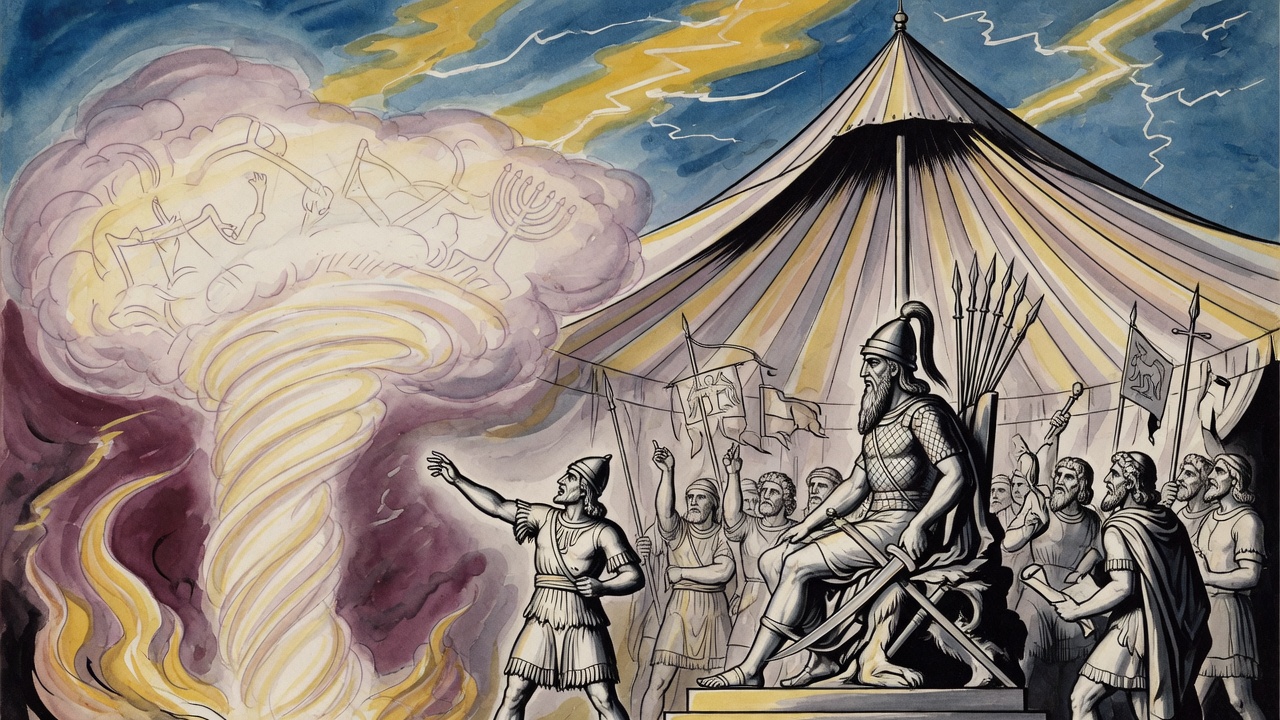
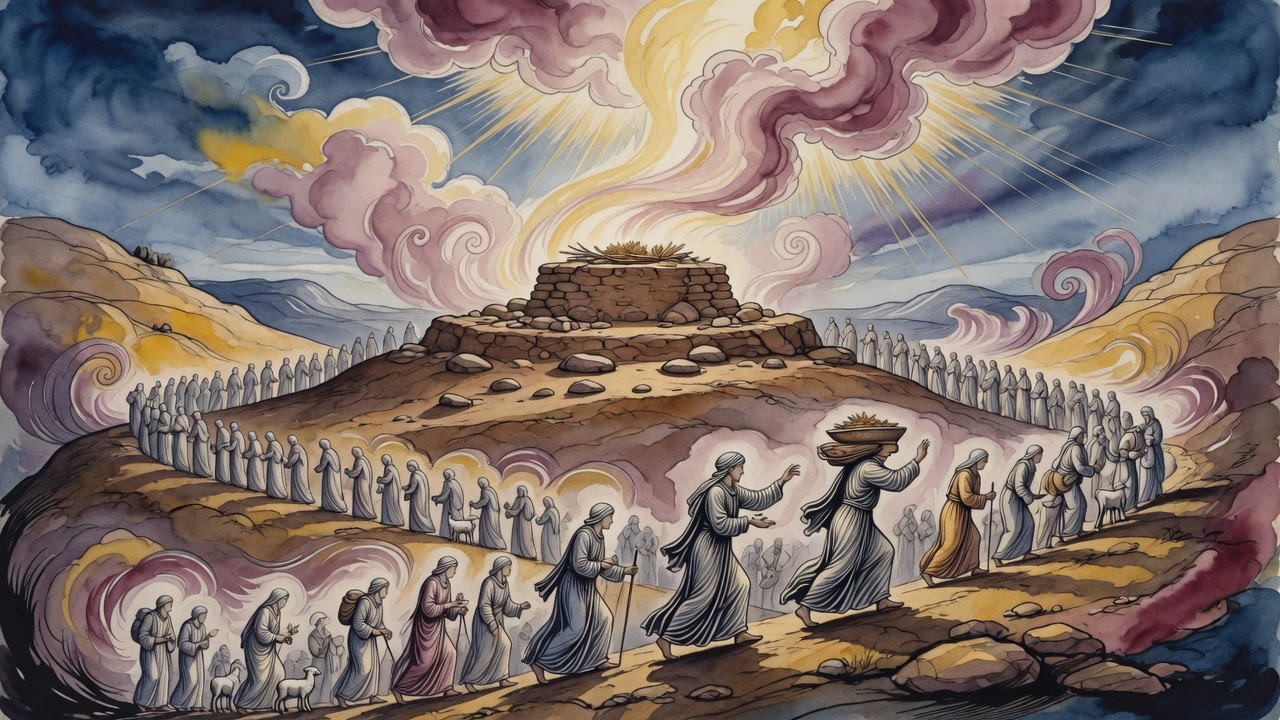
The cloud came down at the door of the tent of meeting, outside the camp, and every man in Israel walked to the flap of his own tent and bowed toward it. Nobody organized that. They rose together because the pillar was standing there in plain sight where all of them could see it at once, so there was nothing left to argue about and nobody left to argue with.
No Enemy Coveted the Land While Israel Climbed to the Temple Click for full size

Some of the men bending in that field of backs had melted their earrings into gold a few months earlier. They bowed too. Whatever they had been calculating collapsed when the pillar came down, since a column of cloud at a tent door is not the kind of evidence a man talks his way around.

That was the shape the wilderness pressed into them, a whole people turning the same direction in the same moment, each one at his own threshold. In the land the same movement would cost them something.

A Line From Suph to Pherat

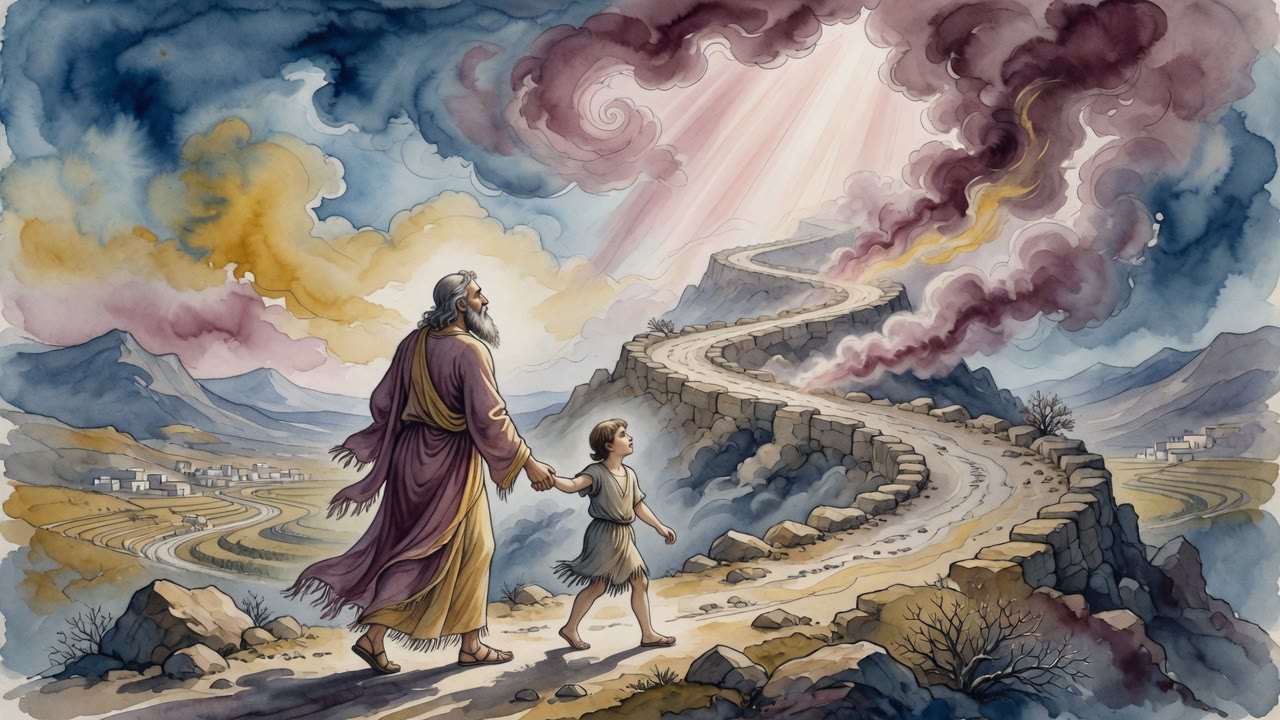
The borders were drawn before anyone lived inside them. From the sea of Suph to the sea of the Philistines, from the desert up to the Pherat, with every inhabitant of that span delivered into Israel's hand and driven out ahead of them (Exodus 23:31). It was the widest line the Torah ever drew for them, wide enough that neither David nor Solomon ever walked the whole of it.

But a border only settles who is outside. The enemy that mattered in a hill village was never camped on the far bank of the Euphrates. He was the man on the next ridge, already well inside the line, who had spent three summers looking down at a vineyard that was not his.

The Night Before He Went Up

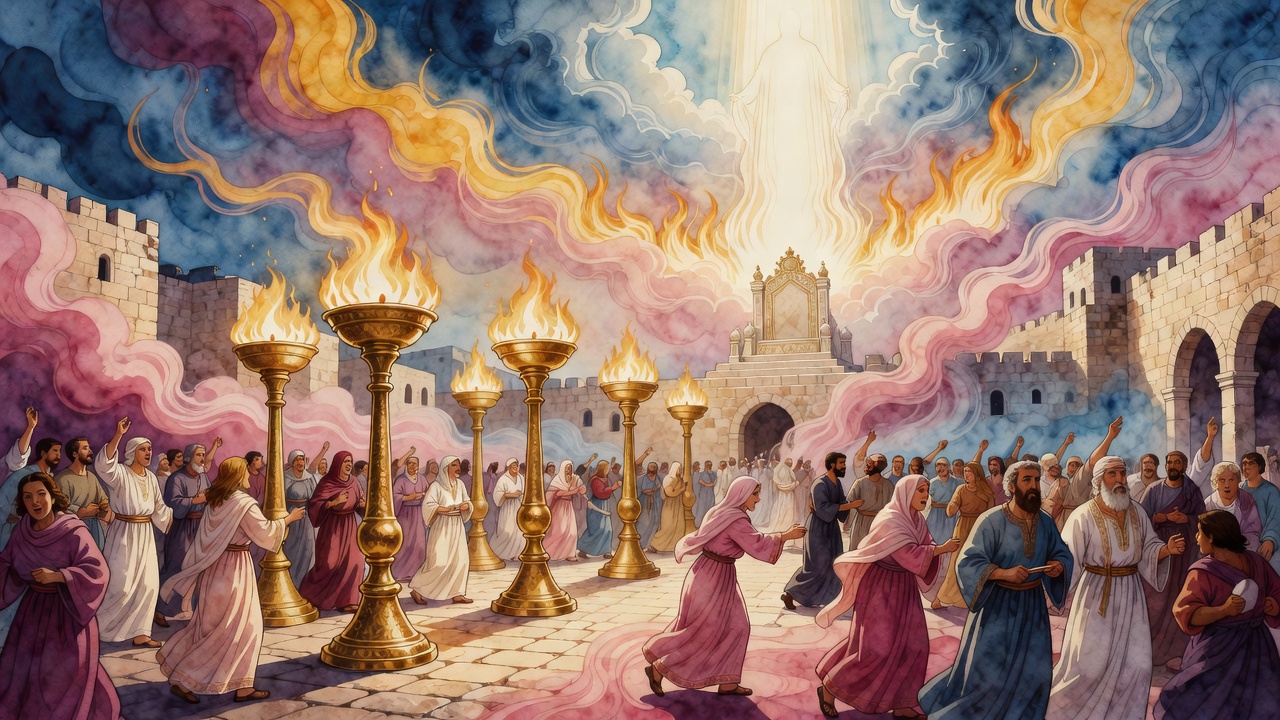
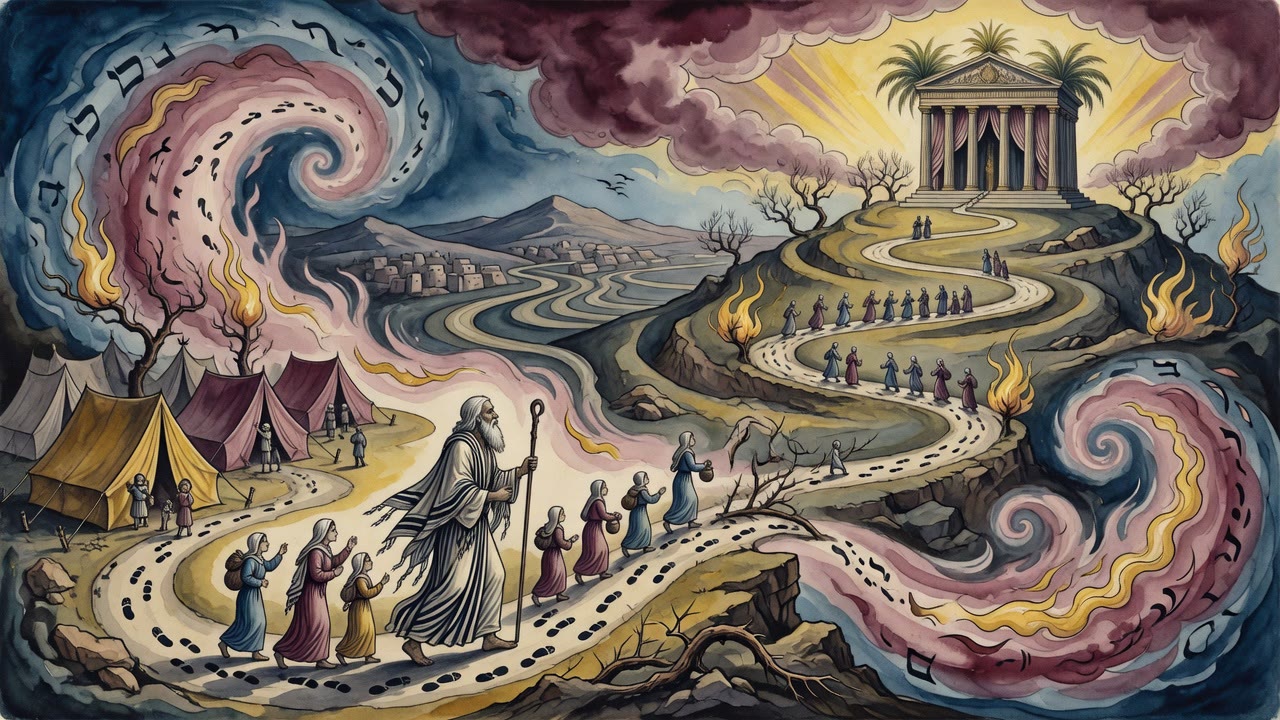
Three times a year the law emptied the villages. Every man was to go up and appear before the Lord, which was the wilderness movement all over again, a whole people turning the same way at once, except that now the turning took a man four days from his own gate and held him there through the festival.

He counted his vines the evening before he left, because counting them was the last useful thing he could do for them. His wife asked who would sit on the wall. Nobody would sit on the wall. His sons were walking up with him, his brother's household was going, and the lane would be left to three old women and a deaf man, which he knew exactly how to see from the ridge.

He said what his father used to say, that the Holy One had promised no man would covet the land while Israel went up (Exodus 34:24). Spoken out loud in his own courtyard, with the press standing there still dark from last season, it sounded thinner than it had in his head. He went anyway, and he got as far as the turn in the road before he stopped looking back, and after that the dust and the singing took him.

The Man on the Ridge

The neighbor waited two days. Then he climbed the ridge with a cousin on either side of him, because a thing like that goes easier with company, and he stood where he had stood every summer for three years and looked down at it.

The vines were there. The gate hung open on its strap, since the man had not bothered to bar what he could not defend, and the press sat uncovered with its stone lip dark from the last pressing. Everything he had coveted for three summers was lying under him with nobody standing on it.

And he did not want it. He waited up there with his hand flat on a warm rock for the old hunger to come, the way it always came when he looked down that slope, but nothing came up in him at all. The vines were vines. He caught himself thinking instead about a lame donkey he had been meaning to sell before the rains.

One of the cousins asked what they were waiting for. He said the sun was too high, which was not true and did not need to be, and the three of them went back down the way they had come up. By the bottom none of them could have said what they had climbed for.

What He Found When He Came Down

The road home ran slower than the road up, because a man coming back from the house of the Name is in no hurry and his feet hurt. He came over the last rise at evening expecting to read the whole week off the slope before he reached it, the way a farmer reads his own land from a distance, looking for trampled rows and a broken trellis and a gate torn off its strap.

The rows were standing. His wife came out and said nothing about it, because there is nothing to say about seven days in which nothing happened. He walked the length of the trellis anyway, all the way to the end, with one hand on the wood.

Across the wadi the neighbor was up on his roof with his back turned, mending something. Neither man called out to the other. The vines went on standing between them, and inside three days the village was arguing again about water rights and boundary stones, since an appetite lifted for the length of a festival is only lifted for the length of a festival.


← All myths
From the tradition

Sources

3 sources

The texts behind this telling. Some cards carry a translation of the source; others are our own retelling of it, and each card says which. Every card links out to the original.

Targum Pseudo-Jonathan on Exodus 34:24Targum Pseudo-Jonathan on Exodus

Retold in our words. Read the original at the link below.The Targum of Jonathan ben Uzziel, trans. J. W. Etheridge, London, 1862 · Public Domain

Three times a year, every Jewish man was commanded to leave his house, his fields, and his family and walk to Jerusalem. The obvious question. And the rabbis asked it often, was practical: while half the population of a village was climbing the road to the Temple, what was stopping a neighboring tribe from raiding the unguarded homes?

Targum Pseudo-Jonathan on (Exodus 34:24) records the divine reply. God Himself will drive out the nations from before Israel, enlarge the borders, and, the crucial promise, no man shall covet thy land during the pilgrimage. Not "no one will attack." Something deeper: no one will even want to.

The Targum's wording locates the miracle in the human heart, not the battlefield. The desire itself is removed. Enemies who would, in any other week, cast a hungry eye on Israelite vineyards simply don't. Their attention slides elsewhere. The pilgrim walks to Jerusalem and finds his home exactly as he left it, not because his walls are stronger, but because God has quietly adjusted the appetites of the surrounding world.

This is a distinctly Jewish theology of protection. It does not promise an angel at the door or a sword over the threshold. It promises something stranger: that the covenant with the Holy Land includes a hidden insulation, given to those who keep the pilgrimage, the three festivals, and the presence of the Shekhinah.

The takeaway: when you go up to serve, what you leave behind is guarded by the One you go up to serve. The pilgrim does not need to look back.

Full source
Targum Pseudo-Jonathan on Exodus 33:10Targum Pseudo-Jonathan on Exodus

Retold in our words. Read the original at the link below.The Targum of Jonathan ben Uzziel, trans. J. W. Etheridge, London, 1862 · Public Domain

When the cloud descended on the tabernacle outside the camp, the response of Israel was spontaneous and unanimous. Targum Pseudo-Jonathan, the Aramaic paraphrase of the Torah, captures the moment.

"All the people beheld the column of the Cloud standing at the door of the tabernacle, and the whole people at once rose up and worshipped toward the tabernacle, standing every man at the door of his tent" (Exodus 33:10).

Read that carefully. Every tent door. Not just the righteous. Not just the Levites. Every tent. The same camp that a few chapters earlier had been dancing around gold was now, to a man, standing at the threshold of his home, bowing in the direction of the cloud.

The Targum's Aramaic underlines the unity with the word kacheda, together, at once. There was no confusion, no delayed response, no holdouts. The sight of the cloud column over Moses' tent did what no speech could have done. It reminded them in a single instant what they had almost thrown away.

The wicked who had stared with the evil eye now stood with the rest. Whatever calculations they had been running collapsed when the pillar came down. Some evidence cannot be argued with.

Takeaway: Worship sometimes has to be earned back. And when it comes back, it often comes back all at once, the whole camp rising at the same time, at every door.

Full source
Targum Pseudo-Jonathan on Exodus 23:31Targum Pseudo-Jonathan on Exodus

Retold in our words. Read the original at the link below.The Targum of Jonathan ben Uzziel, trans. J. W. Etheridge, London, 1862 · Public Domain

Targum Pseudo-Jonathan on Exodus (Exodus 23:31) maps Israel's inheritance: I will set thy boundary from the sea of Suph, to the sea of the Philistaee, and from the desert unto the Pherat; for I will deliver into your hand all the inhabitants of the land, and thou shalt drive them out from before thee.

The Four Edges of the Land

Four corners. The sea of Suph, the Red Sea, the southern edge where Israel crossed on dry ground. The sea of the Philistaee, the Mediterranean, the western frontier. The desert, the wilderness below the Negev, the southern border. The Pherat, the Euphrates, the great river far to the northeast.

This is the widest description of the Promised Land in the Torah. It echoes the covenantal boundaries given to Abraham (Genesis 15:18): from the river of Egypt to the great river, the river Euphrates. The vision is expansive, a land stretching from the edge of Africa to the edge of Mesopotamia.

Why Borders Matter in the Torah

Borders are not incidental. They are the Torah's way of marking where the covenant is meant to flourish. Inside these boundaries, the commandments that depend on the Land, shemittah, bikkurim, the jubilee, have their full force. Outside, they do not.

The fulfillment has always outrun history. Even at the height of David and Solomon's kingdom, these borders were only partially realized. Many rabbis taught that the full inheritance waits for the messianic age.

The Takeaway

The Torah gives Israel a map drawn by God. Some of it was walked in. Some of it waits. The promise holds either way.

Full source