When the Child Could Hold His Father's Hand
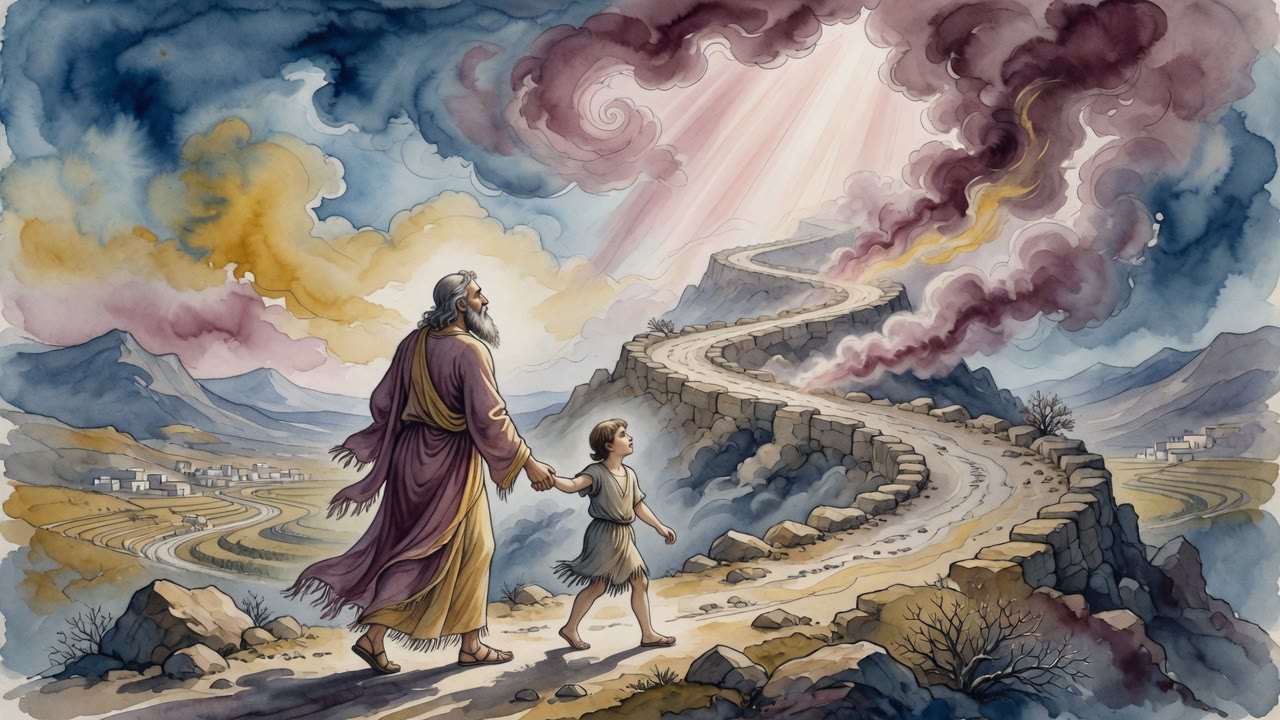
The road up to the Temple was steep and the boy's legs burned. He held on the whole way, and that grip is what made his father bring him each year.
Table of Contents
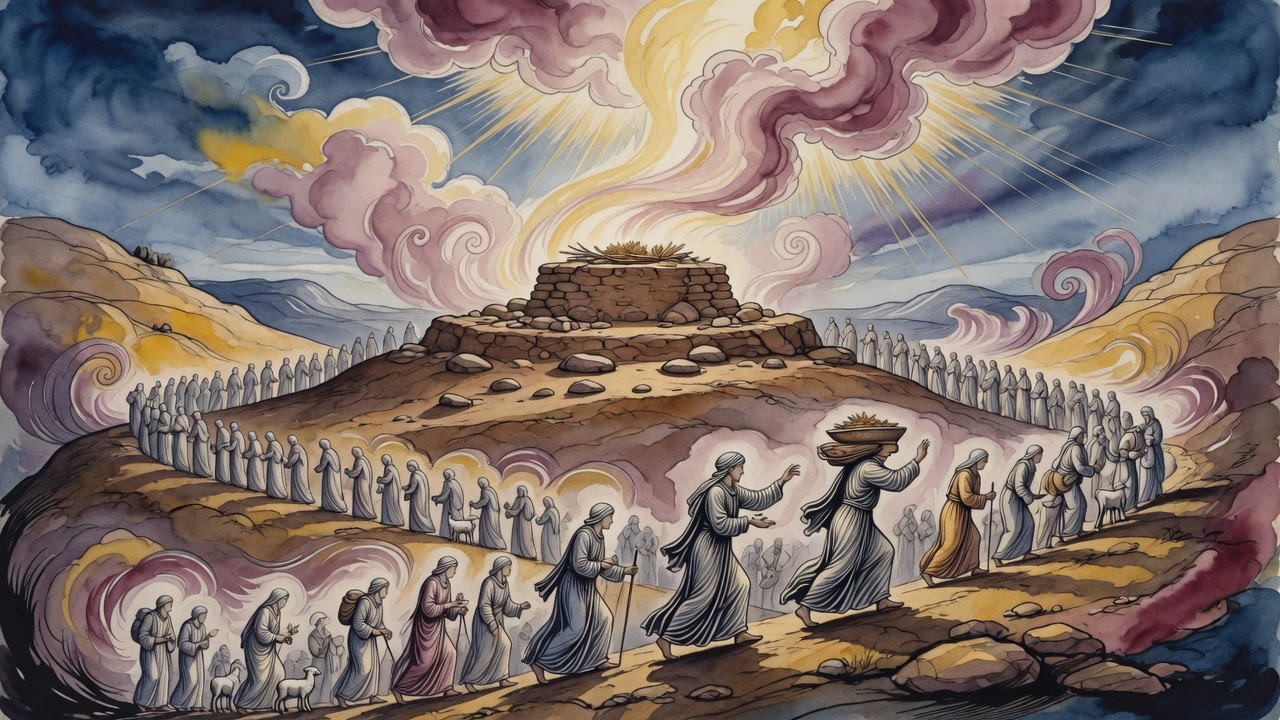
The boy's legs burned halfway up the road from Jerusalem's lower streets toward the Temple Mount, and he would not let go. His father's hand was a rope. Dust coated both their ankles. Behind them, a grandmother rode a donkey and sang under her breath to keep count of the climbs. Three times a year the males of Israel were commanded to appear, and the sages of the Mekhilta pressed the word until it widened to a child who can grasp a father's hand and walk.
 Click for full size
This was the first year the grip held all the way.
Who Counts as Going Up
"Three times a year" sounds like an adult calendar until a small fist changes the ruling. Any child who can take his father's hand and ascend from Jerusalem to the Mount obligates the father to bring him. The festival is not a men's club with a side room for future members. The next generation learns the road to God before it learns the prices of the market.
The same passage wrestles with divine titles, Lord of all and particular redeemer of Israel, holding universal kingship and covenant closeness without dissolving either. The boy knew none of that theory. He knew the shade of the walls and the way his father's palm sweat matched his own.
The Table With Hard Edges
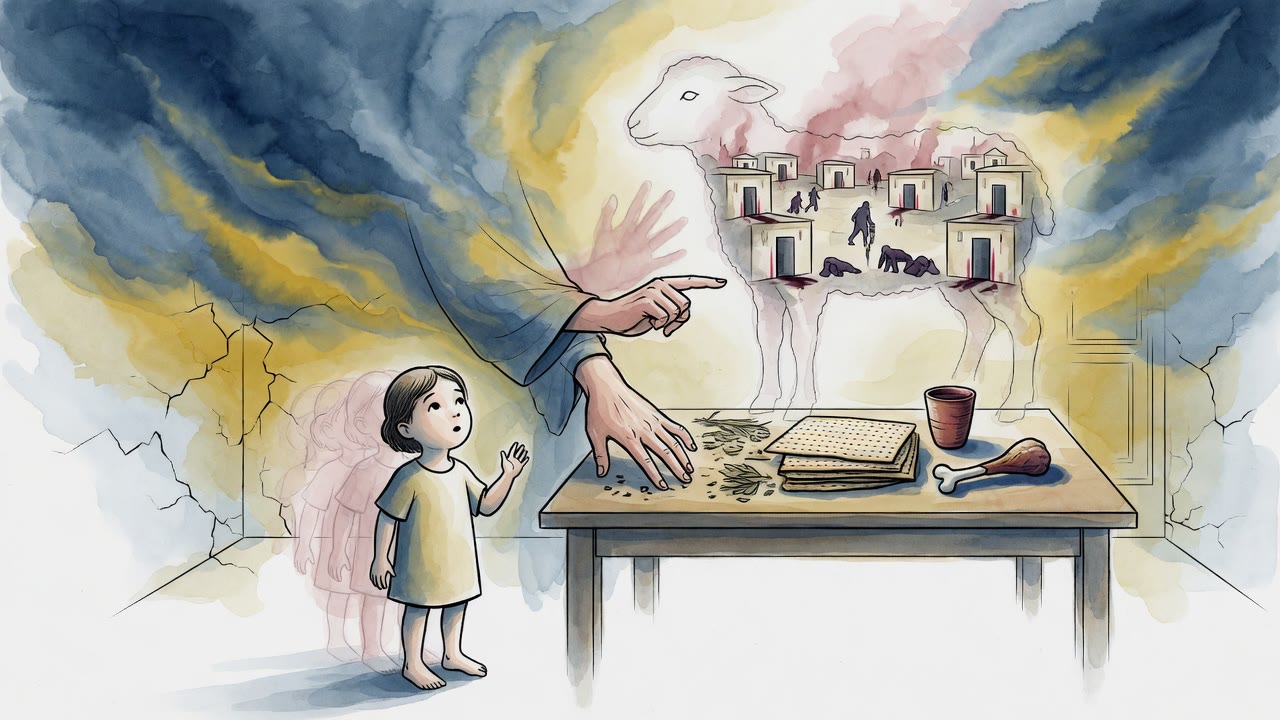
At the feast of Passover the boundaries of the meal sharpened. The word "it" in the laws of the offering becomes a hinge in the midrash. No foreigner shall eat of it. No uncircumcised person shall eat of it. Bones shall not be broken in it. Rabbi Yoshiyah reads the statutes as binding both the first night in Egypt and every night since. The table is hospitality under oath, not a free tavern of memory.
The boy watched who sat and who stood outside the circle of the roasted lamb. He asked why a certain neighbor's worker did not enter. His father answered without cruelty and without blur. Covenant meals have doors. Doors are not hatred; they are definition. The worker received bread and wine in another room with honor, and the distinction still held.
Nothing Left for Dawn
They ate in haste that felt practiced rather than panicked. What remained of the offering could not be left to become casual leftovers. "Until morning" is not a suggestion for tidiness. The sages press the phrase until it teaches that leftover meat is already a breach, and that burning the remnant has its own hour. Hoarding a sacred portion past its time turns feast into private stash.
The father let the boy carry a covered dish to the fire where remnants were burned as the law requires. Heat slapped their faces. The boy flinched and held on. "We do not keep what was meant for the night," the father said. "Morning belongs to a different kind of work."
Sleeping Between Strangers' Songs
That night they slept in a crowded room where three families snored in turns. Someone's baby cried in a dialect the boy did not know. He asked if next year he would be strong enough to climb without the hand. His father said the hand was not only for weakness. "Even when your legs are hard, you hold on so you remember who brought you."
In the dark the boy practiced the Amen he had heard when the levites' voices carried. He got the timing wrong and laughed into his blanket. Learning the road includes learning when to answer.
The Road Down
Descending was worse on the knees. The grandmother's donkey picked careful steps. At the bottom the father bought the boy a small cake and did not call it a reward for holiness. He called it food after work. Pilgrimage without ordinary kindness becomes theater.
Years later the boy would bring a son of his own, searching for the first year the child's fingers could close and hold. He would remember the Mekhilta's tender rule more clearly than any royal chronology. He would set the Passover table with the same hard edges and the same extra room for those who ate differently. He would burn what must not see dawn.
When asked what he learned on the Mount the first time, he did not say a vision. He said he learned that his arm had a job: to be a rope for someone lighter, on a road that is obligatory precisely when the handhold becomes possible.
On the walk home through the valley, the father named the three festivals in order as if counting beads. Passover for leaving. Shavuot for standing at the mountain of words. Sukkot for dwelling under thin roofs that teach dependence. The boy repeated the names until they stuck. He still preferred the cake, but the names had entered his mouth, and mouths that hold festival names become harder to sell entirely to ordinary errands.
← All myths