5 min read

Noah Taught Law to the World After the Flood

Noah stepped out of the ark into a ruined world and began with commandment, altar, and warning. The new earth needed law before houses.

Curated by Arthur · Told by Maggid ·
Table of Contents
  1. The First Work Was Teaching
  2. The Chain Came Through Enoch
  3. The Old Altar Received Fire Again
  4. The Covenant Reached Abraham

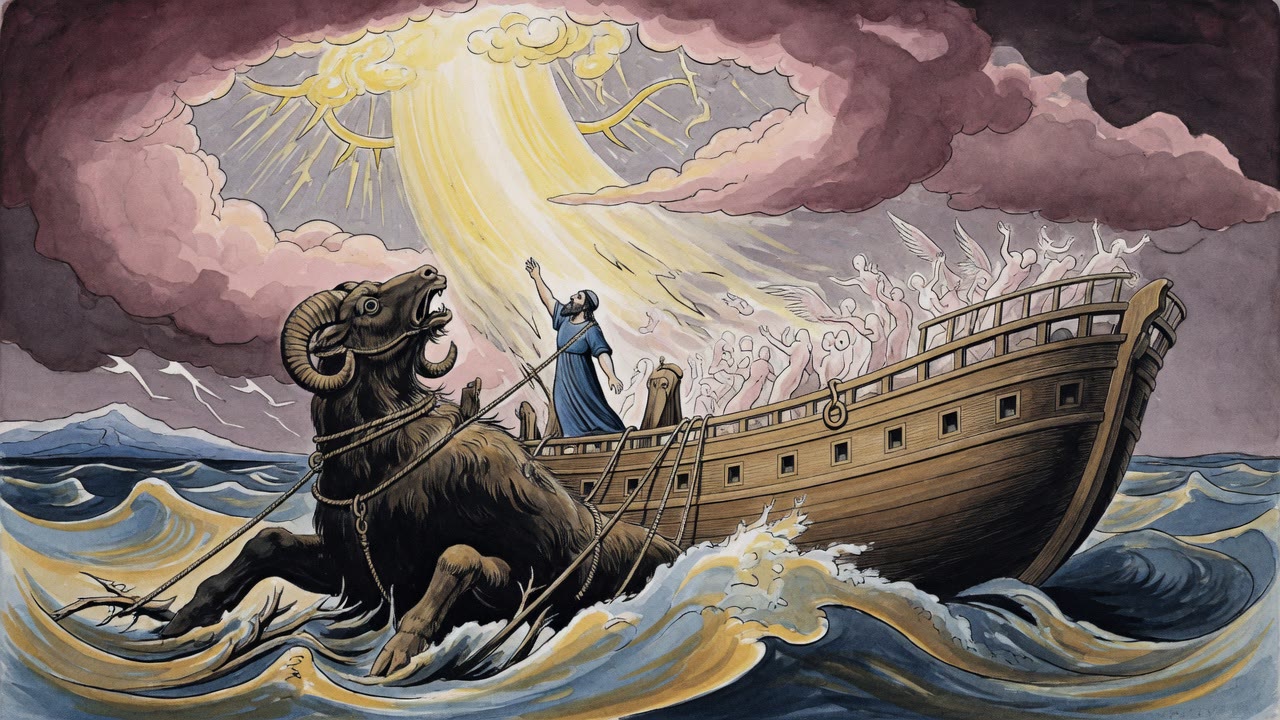
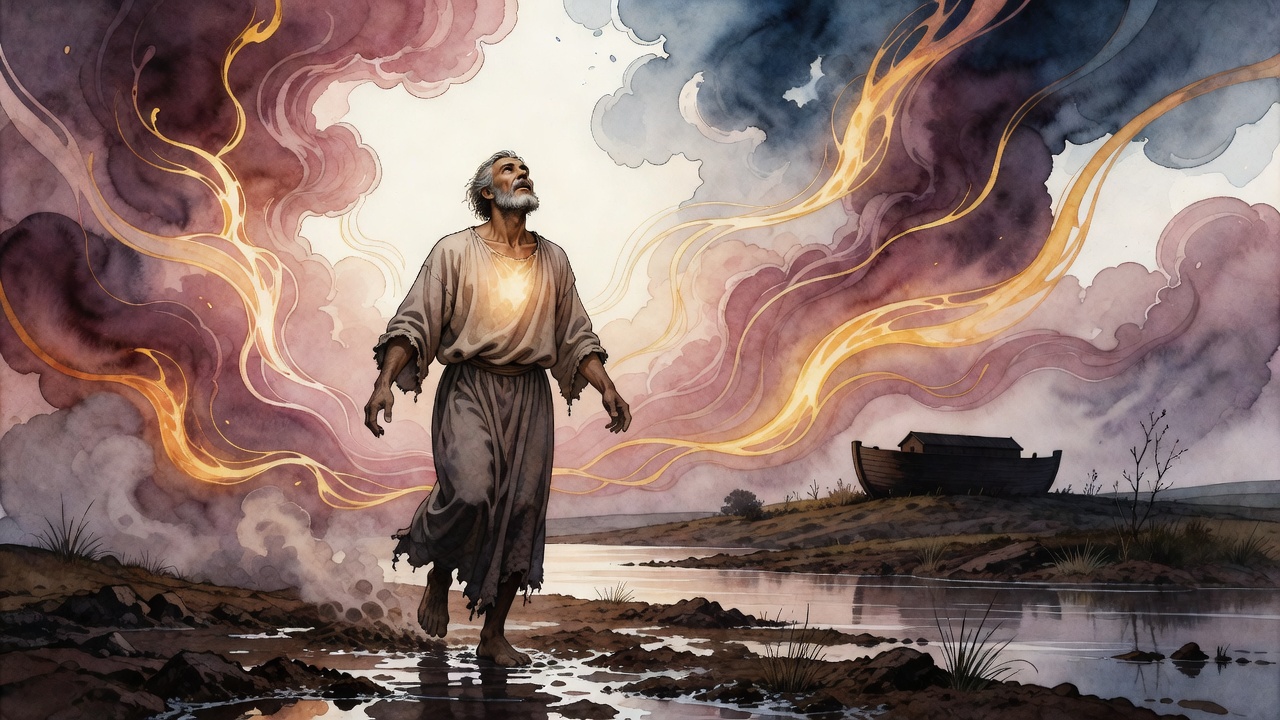
Noah stepped out of the ark into a world with no neighbors.

The ground was clean in the worst possible way. No markets, no arguments in the road, no children from another house shouting over a wall, no old man sitting at a gate with memory older than the flood. Only Noah's family, the animals, the mud, and the knowledge that everything else had drowned.

A man can survive a disaster and still not know how to begin after it.

The First Work Was Teaching

Noah did not begin by pretending the world had reset itself. Water can erase bodies. It cannot erase the forces that ruined a generation. Violence, sexual corruption, jealousy, separation, appetite without boundary, all of them could grow again from the small seed of one family if no one named them early.

So Noah taught.

He warned his children against the sins that had brought the flood. He rebuked them for drifting apart and nursing jealousies. He could already see how a divided household might become a divided earth, how brothers who would not live together might become nations willing to spill blood. He had watched one world die. He would not let the next one pretend innocence was automatic.

The ark had saved their bodies. Law had to save the days that came after.

The Chain Came Through Enoch

Noah did not speak as an inventor.

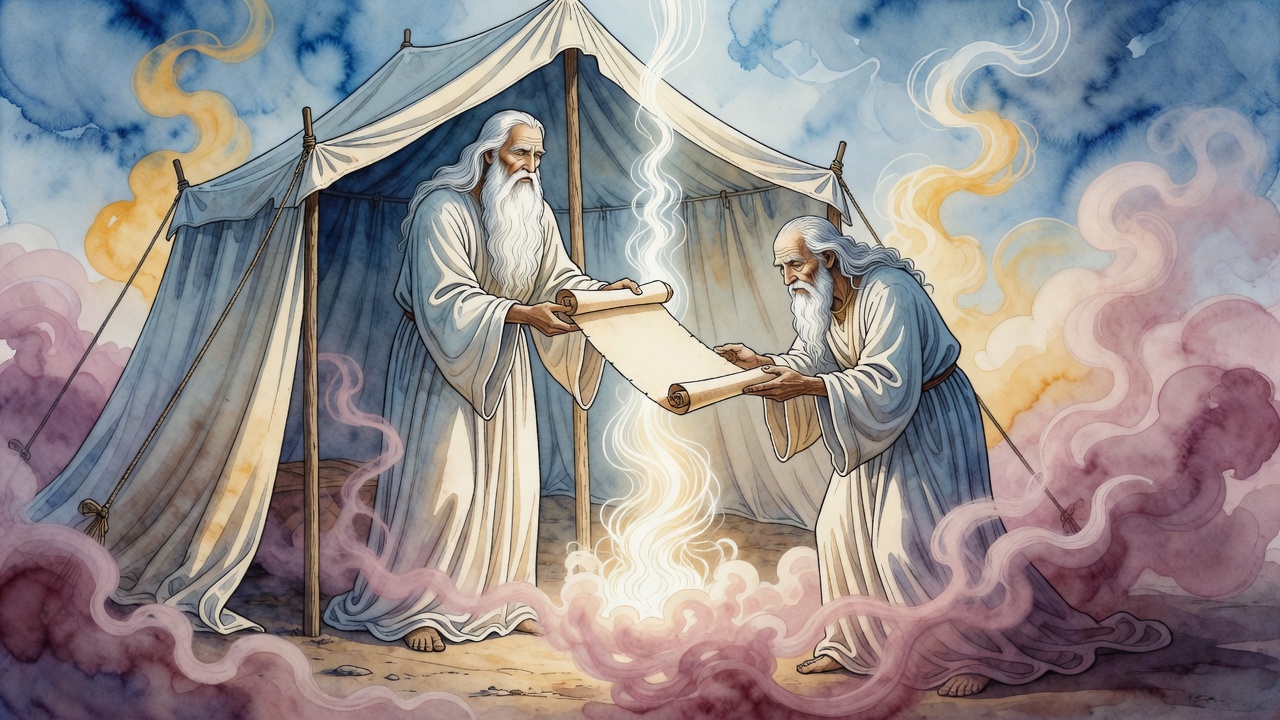
He passed on what had come through the old line: Enoch to Methuselah, Methuselah to Lamech, Lamech to Noah. The flood had broken cities, but it had not broken transmission. A commandment can cross water when a person carries it in the mouth.

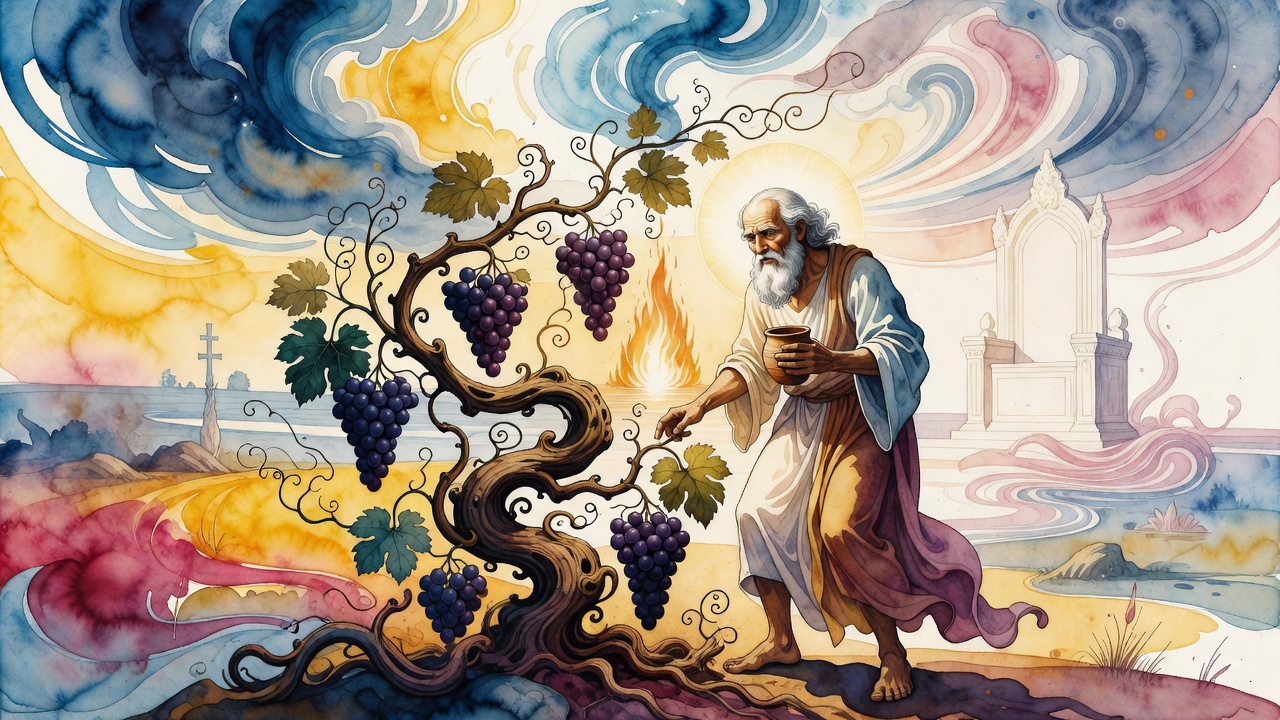
Among the teachings was a law of trees. For three years the fruit was not to be used. In the fourth year it was reserved for holy purpose, with a portion offered before God. The detail feels small beside the wreckage of the world, and that is why it matters. Civilization is not rebuilt only by grand speeches against violence. It is rebuilt by teaching a hungry survivor that even fruit has a time, that ownership begins with restraint, that the first growth of the new earth is not simply there to be grabbed.

Patience became architecture.

The Old Altar Received Fire Again

Then Noah remembered gratitude.

He sat and turned the matter over in his heart. God had delivered him from the waters and brought him out of the ark, a prison that had kept him alive. Should he not bring an offering.

He took clean animals and clean birds, an ox, a sheep, a turtledove, pigeons, and built on the first altar, the one tied back to Cain and Abel. The place where human worship had first split into acceptance and blood now received offerings from the survivor of a drowned world.

The smoke rose. The sweet savor rose with it. In that rising, the pre-flood and post-flood worlds touched for one trembling moment. The old altar had not been lost under water. The possibility of serving God had not been lost either.

The Covenant Reached Abraham

The covenant with Noah did not stay behind him as a private rescue.

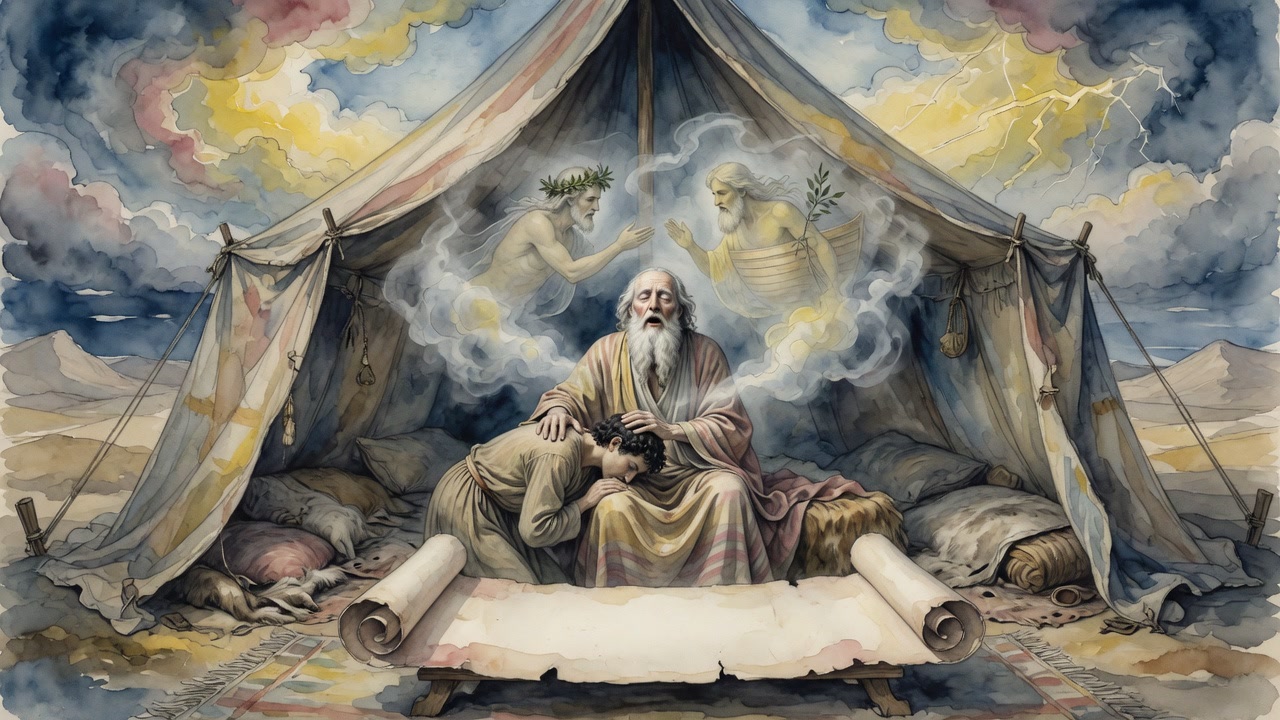
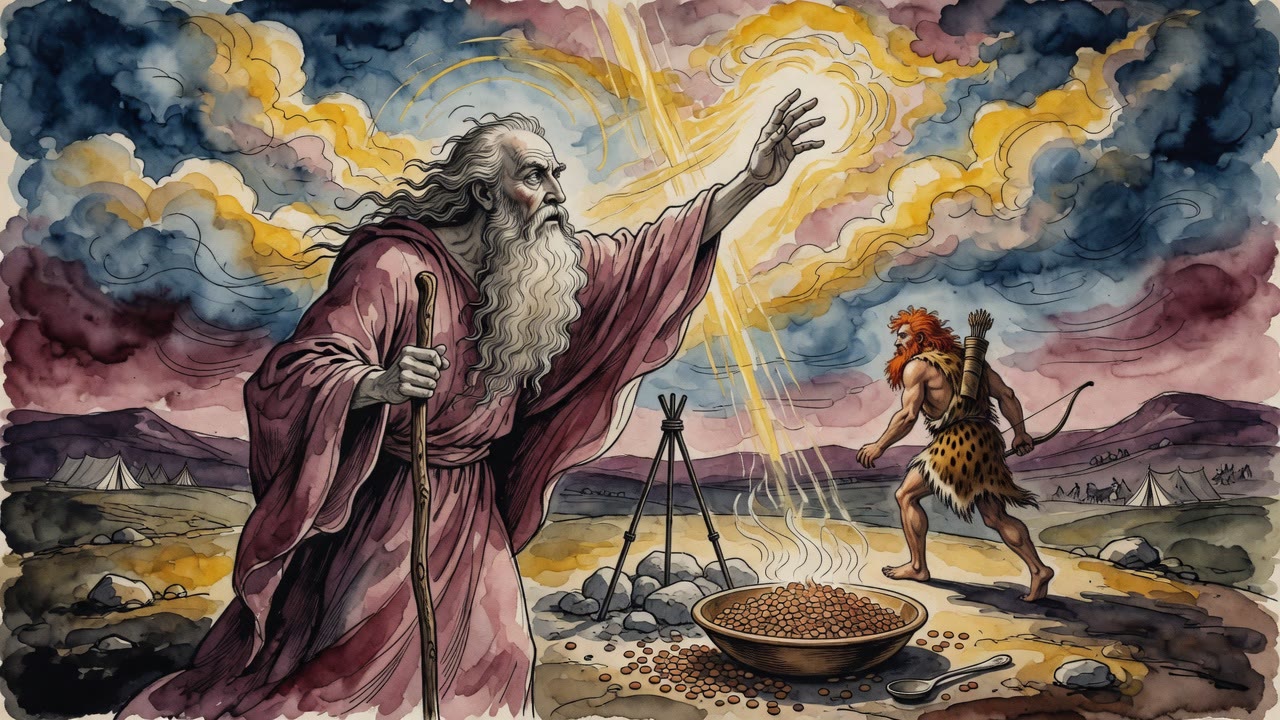
Generations later, Abraham stood among divided pieces, offerings and fire, and the heavenly voice framed the moment as renewal. The covenant made with Abraham echoed the covenant made with Noah in that same sacred season. The promise after the flood stretched forward into the promise to the patriarchs.

That continuity changes the shape of Noah. He is not merely the man before Abraham, a moral ancestor whose task ends when the rainbow appears. He is the first teacher after catastrophe, the one who receives the stripped earth and insists that the next world must have memory, law, offering, and covenant.

Without those things, the dry ground would only be a delay before another corruption took root.

The ark was lumber. It was necessary. It held life above the deep. But once the door opened, lumber could not teach the living how to live. Noah had to do that with warning, patience, altar smoke, and the commandments carried from the dead world into the new one.


← All myths

From the tradition

Sources

4 sources

The texts this telling draws on, in full. Open a card to read inline, or expand it for a wider, quieter read.

Legends of the Jews 4:82Legends of the Jews

The familiar story centers on Noah, the ark, and the animals. But what happened after the waters receded? Did life just magically reset?

Well, according to the Legends of the Jews, compiled by Rabbi Louis Ginzberg, it was Noah's job to pick up the pieces and try to rebuild civilization. He wasn't just building houses; he was building a moral code.

Being Noah. You’ve just witnessed the utter destruction of the world. Your family is all that's left. The weight of the world – literally – is on your shoulders. What do you do? You teach. You preach. You warn.

Noah, according to the legends, didn't just send his kids out into the world and say, "Good luck!". He actively tried to instill in them the laws and commandments he knew. He specifically warned them against the very sins that had brought about the flood in the first place: sexual immorality, impurity, and general wickedness.

He saw the seeds of discord already sprouting. He rebuked them for living separately, for their jealousies. He feared that after he was gone, these petty squabbles would escalate into something far more terrible: bloodshed. And that, he warned them, would lead to their own annihilation, just like those who came before. Talk about pressure!

But there was more to it than just avoiding the bad. Noah also passed on a specific law about fruit trees. He told them that for the first three years, the fruit of a tree was not to be used. And even in the fourth year, the fruit was to be reserved for the priests, with a portion offered as a sacrifice to God. This law, which sounds so specific, speaks to a larger principle: patience, respect for the land, and honoring the Divine.

And where did Noah get these teachings? He wasn’t just making them up as he went along! He traced them back through the generations.

"For thus did Enoch, your ancestor, exhort his son Methuselah, and Methuselah his son Lamech, and Lamech delivered all unto me as his father had bidden him, and now I do exhort you, my children, as Enoch exhorted his son."

It’s a beautiful image, isn't it? A chain of tradition, stretching back through the generations, a living evidence of the importance of passing down wisdom and values. Enoch, who lived in the seventh generation of humanity, commanded and testified to these principles to his descendants until the very day he died.

So, what does this tell us? It reminds us that rebuilding after devastation isn't just about physical structures. It's about rebuilding a moral framework, about learning from the past, and about passing on those lessons to the future. Noah's task wasn't just to repopulate the earth; it was to ensure that humanity didn't repeat its mistakes. And that, my friends, is a lesson that resonates just as powerfully today.

Full source
Pirkei DeRabbi Eliezer 23:13Pirkei DeRabbi Eliezer

It must have been overwhelming, the weight of a destroyed world, the responsibility of rebuilding it all.

Well, according to Pirkei DeRabbi Eliezer, a fascinating collection of stories and interpretations filling in gaps in the Torah narrative, Noah didn't just start planting vineyards (more on that later, perhaps!). First, he had a moment of… realization.

The verse reads, "Noah awoke from his wine, and he knew what the younger son of Ham had done unto him, and he cursed him, as it is said, 'And he said, Cursed be Canaan' (Gen. 9:25)." This is the infamous incident, the source of so much debate and pain throughout history. We won't explore the complexities of that right now, but it’s important to acknowledge it as the backdrop to what follows.

More crucially, the Pirkei DeRabbi Eliezer continues, "Noah sat and mused in his heart, saying: The Holy One, blessed be He, delivered me from the waters of the Flood, and brought me forth from that prison, and am I not obliged to bring before Thee a sacrifice and burnt offerings?" Noah, having survived the unimaginable, feels a deep sense of gratitude, a need to give thanks to the Divine. It's such a human reaction, isn't it? After experiencing such devastation, the instinct to offer something back, to acknowledge the miracle of survival.

So, what does he do? "What did Noah do? He took from the clean animals an ox and a sheep, and from all the clean birds, a turtle-dove and pigeons; and he built up the first altar upon which Cain and Abel had brought offerings…" That's right, the very same altar where Cain and Abel offered their sacrifices, now repurposed by Noah. A fascinating detail that links the pre-flood world with the post-flood world. He brings "four burnt offerings, as it is said, 'And Noah builded an altar unto the Lord; and took of every clean beast, and every clean fowl, and he offered burnt offerings on the altar' (Gen. 8:20)."

The text emphasizes the impact of this act. "It is written here only, 'and he offered burnt offerings on the altar,' and the sweet savour ascended before the Holy One, blessed be He, and it was pleasing to Him, as it is said, 'And the Lord smelled the sweet savour' (Gen. 8:21)." This isn’t just about following a ritual. It’s about the intention, the sincerity of the offering. The "sweet savour" is a metaphor, of course, for the genuine gratitude in Noah's heart.

And how does the Divine respond? "What did the Holy One, blessed be He, do? He put forth His right hand, and swore to Noah that He would not bring the waters of the Flood upon the earth, as it is said, 'For this is as the waters of Noah unto me; for as I have sworn that the waters of Noah should no more go over the earth' (Isa. 54:9)." This is the core of the story: God's promise, the assurance that such a catastrophic event will never happen again.

And the sign of this promise? "And He gave a sign in the rainbow as a sign of the covenant of the oath between Himself and the people, as it is said, 'I do set my bow in the cloud, and it shall be for a token of a covenant' (Gen. 9:13)." The rainbow, a symbol of hope, a reminder of the Divine commitment.

So, the next time you see a rainbow arcing across the sky, remember Noah. Remember his gratitude, his offering, and the unbreakable promise that followed. It's a reminder that even after the darkest of times, there's always the potential for renewal, for a new beginning, and for a covenant between humanity and the Divine. A powerful thought, isn’t it?

Full source
Book of Jubilees 14:27Book of Jubilees

It's a little different than what you might expect.

In Jubilees 14, we find Abraham in a very familiar role: making sacrifices. He offers up pieces of animals, birds, fruit-offerings, and drink-offerings. The text says, quite simply, that "the fire devoured them." This act of offering is a central component of ancient Near Eastern covenant making.

Then, something really interesting happens. The text says, "And on that day we made a covenant with Abram, according as we had covenanted with Noah in this month."

Who is "we"? It's the angels speaking in the Book of Jubilees, heavenly beings acting as intermediaries. They, in the name of God, are establishing this sacred agreement with Abraham, mirroring the covenant made with Noah after the flood. a lineage of promises stretching back to the very dawn of a new world.

It's important to remember the context here. The Book of Jubilees, a pseudepigraphal work (meaning it's attributed to a biblical figure but not included in the biblical canon), expands on the terse narratives of Genesis. It seeks to clarify and elaborate on the laws and traditions of the Torah. So, when it says "this month," it's not just a random detail. It's grounding the covenant in a specific time, emphasizing the importance of calendrical observance and the cyclical nature of God's relationship with humanity.

And what's the result of all this offering and divine agreement?

"Abram renewed the festival and ordinance for himself for ever."

This is key. This covenant isn't just a one-time event. It's meant to be renewed, celebrated, and remembered. It becomes a foundation for future generations. The act of renewal, of reaffirming the commitment, is what keeps the covenant alive.

Now, it's easy to skim over this section and think, "Okay, another covenant. Another sacrifice." But let’s linger on the idea of renewal. How often do we renew our commitments? To our values? To our relationships? To our understanding of the divine?

The Book of Jubilees reminds us that covenants aren't just ancient agreements etched in stone (or, in this case, perhaps, written in the heavenly realms). They are living, breathing relationships that require constant attention, constant renewal. And maybe, just maybe, that's the real message of Jubilees 14: that the covenant with Abraham, like all covenants, is only as strong as our willingness to keep it alive.

Full source
Book of Jubilees 15:32Book of Jubilees

Book of Jubilees turns to Waters of Noah and the Covenant.

A celestial court, filled with angels – not just any angels, but the angels of the presence and the angels of sanctification. These are beings intimately connected with the Divine, radiating holiness. And here's the really part: according to Jubilees 15, even before these exalted beings were created, God sanctified ISRAEL. Before the celestial hosts, before the angelic choirs, God set apart the children of Israel. Why? So that they "should be with Him and with His holy angels." It's a powerful image of inclusion, of belonging.

This divine connection comes with a responsibility. God commands Moses to instruct the children of Israel to observe "the sign of this covenant for their generations as an eternal ordinance." What is this sign? The text doesn't explicitly say it here, but often in Jewish tradition, the sign of the covenant refers to brit milah, circumcision. This act, this physical mark, becomes a constant reminder of the unbreakable bond between God and the Jewish people.

What's the reward for upholding this covenant? "They will not be rooted out of the land." It's a promise of permanence, of enduring connection to the land, to the heritage, and to the Divine. The Book of Jubilees emphasizes that this command is "ordained for a covenant, that they should observe it for ever among all the children of Israel." This isn’t a suggestion; it's a divine decree, a foundation of their identity.

So, what does this all mean for us today? Maybe it’s a reminder that even in our modern world, ancient covenants still resonate. That the choices we make, the traditions we uphold, connect us to something far greater than ourselves. Perhaps it’s an invitation to reflect on the nature of covenant, on the power of belonging, and on the enduring relationship between humanity and the Divine. Are we living up to our side of the bargain? And how can we strengthen the bonds that tie us to our heritage and to each other?

It's a question worth pondering, isn’t it?

Full source